


Can My Dog Eat That? Ham

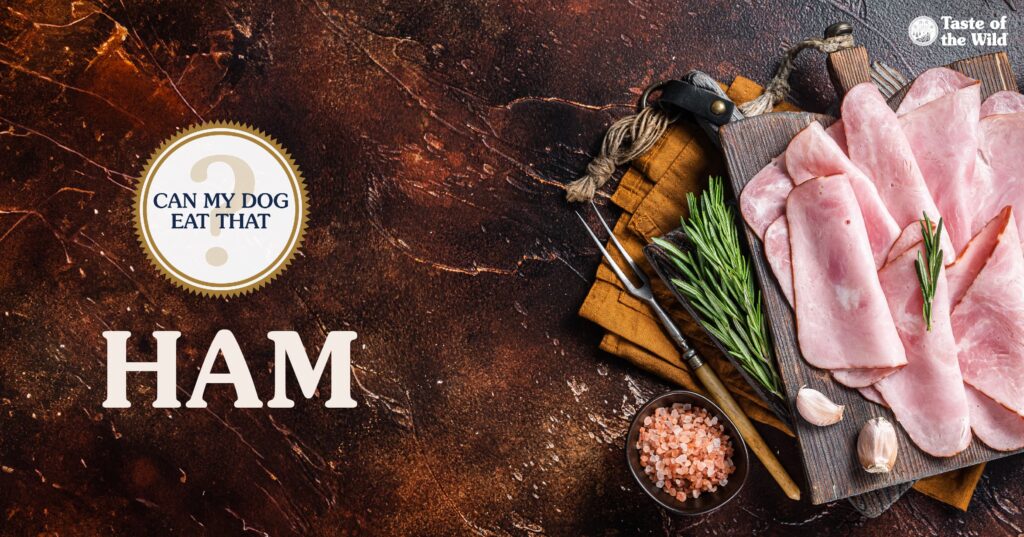
An interior graphic with text that reads ‘The Verdict: Can my dog eat ham? They probably shouldn’t’.

Welcome to “Can My Dog Eat That?,” our series that answers some obvious (and not-so-obvious) questions about what your dog can and can’t safely eat. Today we answer the question “Can dogs eat ham?” Read on!

You’ve been busy in the kitchen all day, cooking delicious foods like potatoes, roast turkey and sugar-glazed ham, and they’re ready to serve at the dinner table. You’re gone 30 seconds to get the side dishes, and you come back to find your drooling dog staring longingly at the ham. Or, if your dog’s a mischievous one, you find them on top of the table helping themselves.

So should you give in and throw your dog a tidbit of ham? Should you be concerned if they devoured half the ham before you could chase them away from the table? Well, anyone (human or canine) is going to feel bad after eating half a glazed ham. But there are a few reasons why even a small amount of ham isn’t a good idea for dogs.

Most Ham Isn’t Low Fat

Sure, you can buy 96 percent fat-free sliced ham, but most ham is not considered a low-fat food. Fat can be difficult for dogs to digest, and too much fat at one time can cause an upset digestive tract (e.g., vomiting and diarrhea). If your dog helped themselves to the holiday ham, there’s a good chance pancreatitis will ensue, as suddenly eating a high-fat meal is a common trigger. Not to mention, if your dog is regularly snacking on ham or other high-fat treats like coconut, the high fat intake can also lead to obesity.

Sugar, Salt and Preservatives, oh My

Depending on how it was prepared, ham can contain a high amount of sugar — which is not healthy for dogs. But the bigger problem is that ham is high in sodium (salt). The preservatives used to cure ham are also sodium-based. Too much salt in their diet can contribute to hypertension (high blood pressure) and heart disease. If your dog has chronic kidney disease, they should avoid ham (and other high-sodium foods) because hypertension can damage their kidneys further. Salt can also be toxic to dogs if they consume excess amounts of it, causing vomiting, diarrhea, dehydration, excessive thirst and urination.

How much sodium is in ham? According to one example on USDA FoodData Central, a 2 oz. portion of “maple glazed honey coat ham” contains 571 mg of sodium. That’s over twice the daily allowance of sodium (200 mg) recommended by the Committee on Nutrient Requirements of Dogs and Cats (for adult dogs weighing 33 pounds and consuming 1,000 calories per day). This means it doesn’t take much ham to put your dog over their recommended sodium intake for the day.

Ham Bones Are Not Chew Toys

A cooked ham bone may look like a tasty chewy treat for your dog, but any cooked bone can splinter into sharp pieces and puncture parts of their digestive tract. Pieces of bone could also cause a blockage in their digestive tract that requires surgery. Make sure you dispose of ham bones and anything used to wrap or tie meat (e.g., strings, bags, packaging) in a sealed trash bag and then in a container that your dog can’t get into.

The bottom line is that the very occasional tidbit of ham is not likely to cause problems for a healthy dog. Just don’t make ham a regular part of your dog’s diet — particularly if they’re already overweight. Give them a healthy treat instead.

An interior graphic with text that reads ‘The Verdict: Can my dog eat ham? They probably shouldn’t’.

RELATED POST: Can My Dog Eat That? Hot Dogs

Can My Dog Eat That? Cranberries

An interior graphic with text that reads ‘The Verdict: Can my dog eat cranberries? Yes. Plain and in moderation only’.

Welcome to “Can My Dog Eat That?,” our series that answers some obvious (and not-so-obvious) questions about what your dog can and can’t safely eat. Today we answer the question “Can dogs eat cranberries?” Read on!

We’re just a few short weeks from cranberry season! And by “cranberry season,” we mean “the holidays” because that’s when cranberries suddenly appear everywhere, from on the dinner table next to the turkey to the holiday decorations. So it’s the perfect time to examine whether you can share that can-shaped, sliceable purple goop (and all the other tasty cranberry concoctions, too) with your favorite begging buddy.

In short, unlike grapes, cranberries alone are not toxic to dogs. But as with nearly every other fruit or vegetable, there are preparation methods and other circumstances that make a simple “yea or nay,” not so simple. When fed properly, they’re a tasty, nutritious snack.

Cranberries Are a Superfood

First off, let’s look at any nutritional benefits of the tart red fruit that might benefit your dog. Cranberries are considered a “superfood.” For the uninitiated, a superfood is a food that has particularly high nutritional value. These nutrient-packed foods are key sources of antioxidants, omega fatty acids, fiber, vitamins, minerals and protein. Cranberries are no exception, as they offer high levels of vitamins C, K, E and B, not to mention manganese and copper.

In pet food, superfoods are considered “functional” ingredients. Functional ingredients provide bonus benefits beyond basic nutrition when they are part of a complete and balanced diet. Antioxidants, omega fatty acids and fiber provide some of these bonus benefits.

But Are Cranberries Super Good for Dogs?

You can feed your dog both fresh and dried cranberries without worry, if you do so in moderation. But preparation matters. They have to be plain, with the stems removed, and absolutely NOT from any kind of fruit mix. You see, dried cranberries are often mistaken for raisins, which are extremely toxic to dogs. No trail mix for Rufus!

Check the sugar levels of your cranberry offerings. Many dried cranberries have added sugar to take the edge off the tart flavor, and that sugar adds up quickly in such a little berry. Sugar or not, you should feed a medium or large dog only a small handful at most, and small dogs should only receive two or three in one sitting.

And while cranberry juice is known for helping humans get over urinary tract infections, it won’t help your dog. While a small amount of the tasty beverage won’t hurt your dog, they shouldn’t drink anywhere close to enough to help flush their urinary tract. Most cranberry juices are loaded with sugar so should just be avoided in general.

But Can My Dog Eat Cranberry Sauce?

This is why you’re reading this blog, isn’t it? Everyone at the table, your dog included, is eyeballing that jellied cylinder of cranberry sauce with either delight or disgust. If your dog is one of the delighted ones, should they partake? Just a slice?

Once again, a little bit of festive jellied cran won’t hurt your dog, but it’s probably best avoided since most recipes (canned and the more visually palatable homemade) are loaded with sugar. Too much sugar can cause vomiting or diarrhea in dogs, which is not something you want to deal with under the Thanksgiving Day table. For dogs with diabetes or other sugar-related health issues, it’s a much more serious issue.

Dogs and cranberries mix cautiously. If you absolutely must include your dog in the holiday spread, it’s best to offer up just a few plain cranberries. Fresh is best, and dried is OK if you’re absolutely sure they haven’t been mixed with dastardly raisins. It’s not the most festive answer, but neither is getting out the carpet cleaner at the holiday gathering!

An interior graphic with text that reads ‘The Verdict: Can my dog eat cranberries? Yes. Plain and in moderation only’.

RELATED POST: Can My Dog Eat That? Beverages!

Can My Dog Eat That? Beverages!

An interior graphic with text that reads ‘The verdict: Can my dog eat beverages? No. Water is best’.

Welcome to “Can My Dog Eat That?,” our series that answers some obvious (and not-so-obvious) questions about what your dog can and can’t safely eat. Today we answer the question “Can dogs eat (or drink) beverages?” Read on!

Most dogs aren’t shy about trying out a new food, crunchy snack or drink. If the opportunity arises, like a full glass at perfect tongue height, they’re going to take advantage of it. So which beverages should you be concerned about if your dog does lap up a few mouthfuls? Or what about if they drink the whole cup?

The quick answer is that your dog really shouldn’t be drinking anything but water. It’s the healthiest drink for them, and it’s all they need to keep hydrated. But if they do get into one of your cups, there are some beverages that are more of a concern than others.

Can Dogs Drink Milk?

Maybe. Like all mammals, puppies start off life by drinking milk from their mom. During this time, they produce the enzyme lactase which helps to digest the lactose in milk. As the puppies get older and are weaned from their mother’s milk, they start to produce less lactase. Most adult dogs are lactose intolerant because they don’t produce much lactase anymore.

This means that your adult dog may not be able to digest cow’s milk properly and that can cause diarrhea and very stinky gas. You’ll soon know if your dog is lactose intolerant! A little bit of milk may be OK for some dogs, but make sure it’s plain milk. Watch out for potentially toxic additives, like chocolate or nutmeg, and some milk substitutes, like macadamia nut milk.

Can Dogs Drink Sports Drinks?

Water is better. If you’re going on a long hike on a hot day, you might take a sports drink with you to help replace some of the electrolytes you lose through sweating. While this could be a good option for you, it’s best to stick with a flask of clean, fresh water for your dog to stay hydrated. Sports drinks often contain sugar and sodium which can be unhealthy for your dog, especially when all they really need is water. It’s probably OK if your dog does drink some of the sports drink, but don’t make it a regular thing for them.

Can Dogs Drink Soda?

No. If a few drops of soda bubbles out of your can onto the floor and your dog laps it up, that’s probably OK. But you should not purposefully give your dog soda or let them lick up a whole soda-can spill because it can contain ingredients that are dangerous for dogs. Xylitol is commonly used in diet soda as an artificial sweetener — but it’s toxic for dogs. Regular sodas contain a bunch of sugar which, although not toxic, is not healthy for dogs to consume in large amounts. And any cola-based sodas are definitely out as they contain caffeine, which is also toxic to dogs (more on that in the coffee section).

Can Dogs Drink Coffee?

Nope. It doesn’t matter whether you’re an espresso drinker, love a good pumpkin-spice latte or  are obsessed with caramel frappé, you should not share your coffee with your dog. Dogs are more sensitive to caffeine than people and can suffer from caffeine poisoning, causing agitation, vomiting, panting, elevated blood pressure, tremors and worse. Depending on the size of your dog and how much caffeine they ingested, it can be fatal.

If your dog drank some of your coffee (or cola), contact your veterinarian, the ASPCA Animal Poison Control Center or the Pet Poison Helpline immediately for advice. Make sure you keep the coffee pot out of reach of your dog and dispose of coffee grounds in a place that your dog can’t get to.

Can Dogs Drink Beer?

Beer, whiskey, wine: if it’s got alcohol in it, the answer is a hard no. Dogs can become intoxicated and experience ethanol poisoning, which causes symptoms like vomiting, diarrhea, decreased coordination, difficulty breathing and seizures. Like most toxins, the severity of ethanol poisoning depends on how much ethanol was consumed (drink volume and alcohol percentage) and the size of your dog. Call your veterinarian or one of the animal poison centers listed above if your dog does drink an alcoholic beverage. And if you really want to share a brew with your canine buddy, try a specially made dog beer instead.

The bottom line is: water is the best drink for your dog. Try to keep that curious tongue out of your beverages. Plus, who wants dog slobber in their drink!

An interior graphic with text that reads ‘The verdict: Can my dog eat beverages? No. Water is best’.

RELATED POST: Can My Dog Eat That? Cinnamon

Can My Dog Eat That? Corn

An interior graphic with text that reads ‘Can my dog eat corn? Yes (if it’s off the cob)’.

Welcome to “Can My Dog Eat That?,” our series that answers some obvious (and not-so-obvious) questions about what your dog can and can’t safely eat. Today we answer the question “Can dogs eat corn?” Read on!

Like carrots, corn is a common ingredient in many dog foods because of its nutrient content (more on that later). So yes, dogs can eat corn, but only if it’s off the cob and doesn’t have any of the delicious toppings that people love to put on it.

Plain, Loose Corn Is the Way to Go

Corn removed from the cob that doesn’t have any condiments or toppings on it, is a healthy treat for most dogs (in moderation). Similarly, popcorn that’s air-popped and doesn’t have any toppings (e.g., butter, salt, cinnamon sugar) is a delicious treat — just make sure you remove any kernels that didn’t pop.

It’s the other things that may be in corn-based human foods that you need to be wary of. Yummy foods like corn tortillas, corn chips, canned corn, hush puppies, corn dogs and polenta (depending on how it’s made) can be high in sodium (salt). Excessive sodium can cause dehydration, so if your dog does eat a bunch of salty products, make sure they have plenty of fresh water available.

It’s best to avoid sugary corn-based products, too. Foods like corn muffins, cornbread and creamed corn are typically high in sugar, fat, salt or other ingredients that aren’t good for dogs. Remember that some sweet foods (like some tomato-based ketchup products) contain the artificial sweetener xylitol, which is toxic to dogs. So be on the lookout for that, too.

No Corn Cobs or Husks!

Corn on the cob is a sweet, tasty side dish that’s especially good roasted on the grill. But as you finish chomping on the cob, juice running down your chin, don’t be tempted to throw it to your dog. It may look like a good treat for them to chew on, but dogs can choke on the cob and it can cause an intestinal blockage if swallowed.

If you bought some fresh corn in the husk from a roadside stand or from a store, you’re probably not going to eat the husk — and neither should your dog. Husks are hard to digest and, just like the cob, can be a choking hazard or cause an intestinal blockage. Compost the cob and husks instead.

Corn Isn’t Just a Filler

Two of the myths circulating about corn and dogs are that corn in pet food is only there as a filler,  and that many dogs are allergic to corn. These are indeed myths. Corn is used in dog food as a source of protein and carbohydrates in the form of digestible starch. Corn also provides essential amino acids and fatty acids, soluble and insoluble fiber, vitamins, minerals and antioxidants.

It is true that dogs can develop allergies to any meat or grain protein. However, corn isn’t on the list of top allergens in dogs. The allergens that are more likely to cause reactions in dogs are beef, dairy products and wheat, followed by lamb, eggs, chicken and soy. PetMD tells us that food allergies are less common than seasonal allergies or flea and tick allergies, and that only 0.2% of dogs have food allergies. So the risk of a true corn allergy is very low.

It’s also important to know that a food intolerance is different to a food allergy. A food allergy is an abnormal reaction to a normal food due to the dog’s immune system misjudging a safe substance as a disease-causing invader. A food intolerance, on the other hand, does not involve the immune system.

Corn is a healthy treat for most dogs. Just make sure it’s been removed from the cob and doesn’t have any extra toppings or flavorings on it.

If you’re curious about your dog’s ability to eat other snacks like nuts, bookmark our blog!

An interior graphic with text that reads ‘Can my dog eat corn? Yes (if it’s off the cob)’.

RELATED POST: Can My Dog Eat That? Popcorn

Can My Dog Eat That? School Lunch Items

Interior graphic with text that reads ‘Can my dog eat school lunch items? It depends on what they are’.

Welcome to “Can My Dog Eat That?,” our series that answers some obvious (and not-so-obvious) questions about what your dog can and can’t safely eat. Today we answer the question “Can dogs eat school lunch items?” Read on!

Oh no! The dog didn’t eat my homework — they ate my lunch!

For people with school-aged kids, the mornings can be chaotic as you’re trying to get everyone dressed, fed and out the door on time. So it’s possible that an open backpack on the floor would go unnoticed by everyone — except your dog. That highly sensitive nose is sure to sniff out whatever yummy food is packed in your kid’s lunch, and it may have you asking, “Can dogs eat school lunches?”

If your cunning canine does eat food from your kid’s backpack, deciding on whether you should be concerned or not depends on what food they found and which parts of it they ate. We’ll go through some of the common items found in school lunches and see which food gets a passing grade and which food fails the test.

Before We Start…

We wrote this article assuming lunch-sized proportions of food were in the backpack. For some of the foods we discuss, eating larger quantities can have more severe consequences. When in doubt over the risk to your dog, ask your veterinarian.

Also, if your dog eats any packaging, plastic or the lunch bag itself, that’s obviously not good. You should have your veterinarian check that the packaging isn’t going to cause a blockage in your dog’s intestinal tract.

Going along with the school lunch theme, we’re going to follow the food groups from the USDA’s MyPlate, but with some treats thrown in, too!

Protein: A Canine Favorite

Protein is an important part of any dog’s diet, but some protein sources may not be good for your dog to eat. Some common lunch items are ham, hot dogs, pepperoni (on pizza), eggs and chicken nuggets. The problem with ham, hot dogs and pepperoni is their fat and salt content. Too much salt and fat can lead to an upset stomach. Similarly, chicken is a great source of protein for dogs, but not so much when it’s in the form of breaded nuggets. The high fat content of chicken nuggets can cause an upset stomach.

Eggs are an excellent source of protein, and they’re safe for dogs to eat as long as they’re cooked — which they should be if they’re in your kid’s lunch! If they’re mixed with something else, that’s where some caution’s needed (see the section on condiments below).

Grains: Breads, Pasta and Popcorn

Pita bread, wraps, bread, bagels, crackers, pasta, popcorn: all yummy grain-based food you’d find in a lunch box. Plain grain-based foods should be OK for your dog, as long as the food doesn’t have any toxic ingredients in them (and your dog doesn’t have a wheat allergy). But you also need to consider what toppings were used on them. For example, plain, air-popped popcorn is fine, but popcorn that’s heavily buttered or salted could cause an upset stomach in large amounts.

If there were toxic ingredients in the food your dog ate, like raisins, macadamia nuts, garlic or nutmeg, have your dog examined by your veterinarian, because even small amounts of some of these toxins can cause issues.

Bread Dough Oh-No!

Quick side note. If you make your own bread, make sure you don’t leave yeast-based dough out anywhere that your dog could find it. If they ingest the dough, it can cause bread dough toxicosis. According to the Merck Veterinary manual, the warm, moist environment of a dog’s stomach allows the yeast to replicate, which causes two potentially fatal issues. First, the dough mass expands, causing a distended stomach which can result in breathing difficulties. Additionally, yeast fermentation produces ethanol, which can cause ethanol intoxication and metabolic issues. If you see your dog eat some yeast-based bread dough or suspect that they have, seek emergency veterinary treatment.

Fruits and Vegetables

Most fruit and vegetables you’d find in a school lunch, like apples, oranges, bananas, watermelon, blueberries, carrots and cucumbers, are healthy and safe for dogs to eat (as long as it’s the fleshy parts they’re eating). If your dog eats the whole fruit or vegetable and it contains seeds, rind or the core, keep an eye on them: those parts can be choking hazards and can cause an upset tummy or a digestive tract blockage.

Grapes and raisins are the exception. They are toxic, and some dogs can become ill just by eating a small amount. It’s believed that some dogs are sensitive to the tartaric acid that’s found in grapes.

Dairy

Dogs can eat dairy products like plain yogurt, cheese and milk; however, some dogs have trouble digesting lactose, so they may have an upset stomach or diarrhea after eating or drinking it. Some dairy products have more lactose than others, so the response depends on the dairy product and the individual dog.

Some dairy products have high fat contents, which can cause upset tummies, too. You should also check if any flavors or toppings used with the dairy products are toxic to dogs (e.g., xylitol, chocolate, nutmeg).

Condiments and Treats

If peanut butter and jelly is a favorite school lunch in your house, make sure you purchase peanut butter varieties that don’t have xylitol in them. That way if your dog sneaks a bite or two, you won’t have to worry about xylitol poisoning. Check the label of sugar-free condiments (e.g., ketchup, BBQ sauce) to make sure they don’t contain xylitol, too.

Mustard is another condiment that’s toxic to dogs, particularly in large amounts. When you’re preparing lunch, be careful that your dog doesn’t find the mustard bottle and squeeze some out for themselves.

If your kid’s lucky enough to get a treat in their lunchbox, chances are it’s not a good treat for your dog. Many human treats contain ingredients that are toxic to dogs, like chocolate, cocoa powder, or xylitol.

Due to their small amount, most lunch bag items are probably OK for your dog, or they may just cause an upset stomach and diarrhea. But if the food contained ingredients that are toxic to dogs, make sure you have your dog checked out by your veterinarian. Now you just have to make your kid’s lunch — again.

Interior graphic with text that reads ‘Can my dog eat school lunch items? It depends on what they are’.

Can My Dog Eat That? Pineapple

Interior graphic with text that reads ‘Can my dog eat pineapple? Yes (the fleshy part)’.

Welcome to “Can My Dog Eat That?,” our series that answers some obvious (and not-so-obvious) questions about what your dog can and can’t safely eat. Today we answer the question “Can dogs eat pineapple?” Read on!

One of the best parts of summer is biting into juicy, fresh fruit — watermelon, papaya, blueberries, peaches and, of course, the spiky one, pineapple. If your dog is pining for a piece of pineapple and you’re wondering if that’s OK, go ahead and toss them a small wedge of that sweet deliciousness. Just make sure it’s only the fleshy part and you cut it up into bite-sized pieces first.

A Tasty Pineappley Treat

Pineapple is a yummy and healthy treat for dogs. It’s packed full of vitamins, minerals and antioxidants, and because it has a high water content, it can help keep your dog hydrated on a sweltering summer day. Pineapple is also high in fiber, which helps keep your dog’s digestive tract moving. Too much fiber can lead to an upset digestive tract, though, so if you don’t want a mess to clean up, it’s best to feed pineapple in small amounts.

Pineapple also has a high natural sugar content which is another reason it should be a treat not a meal. Too much sugar (for example, from eating a large amount of pineapple) is likely to cause an upset gastrointestinal tract.

Can the Canned Pineapple

Canned pineapple not only has natural sugar from the pineapple, it typically has added sugar as well. The sugar content of the syrup in canned pineapple may be high enough to upset your dog’s stomach. The same goes for dehydrated pineapple. The dehydration process condenses the natural sugar in pineapple, and, unless you’re making your own, there is usually a bunch of extra sugar added. Both of these products may also contain the artificial sweetener xylitol, which is toxic to dogs.

Just Give ’Em the Good Part

The fleshy part (around the core) is the part of the pineapple people typically like to eat, and it’s the only part your dog should eat. The core, stem and skin are too tough to chew and can be choking hazards. They are also hard to digest so could cause an intestinal blockage. And no one wants to eat those spiky leaves!

The “Pineapple Stops Dogs Eating Poop” Myth

There is a popular pineapple parable circulating the internet that feeding pineapple can help stop your dog from eating their poop. Pineapple contains bromelain, a mixture of enzymes that digest protein. The “theory” is that the bromelain makes the poop taste yucky so dogs won’t eat it. There is no scientific evidence that this actually works, though. If your dog is eating their own or another animal’s poop (it’s called coprophagia), speak with your veterinarian, as coprophagia can be caused by a medical condition.

As a treat, pineapple is a great choice but, like all good things, only in moderation. Try frozen pineapple pieces on a hot summer day as a cool treat for your dog!

Interior graphic with text that reads ‘Can my dog eat pineapple? Yes (the fleshy part)’.

RELATED POST: Can My Dog Eat That? Watermelon

Can My Dog Eat That? Hot Dogs

Interior graphic with text that reads ‘Can my dog eat hot dogs? They probably shouldn’t’.

Welcome to “Can My Dog Eat That?,” our series that answers some obvious (and not-so-obvious) questions about what your dog can and can’t safely eat. Today we answer the question “Can dogs eat hot dogs?” Read on!

First, let’s get one thing clear. Your dog most certainly should not eat a dachshund in a Halloween costume or a dog that’s been out in the sun too long. Now, if you’re asking whether your dog should eat the processed meat product that’s typically sandwiched between halves of a bun and smothered in onions, ketchup and mustard, that’s another story. Well, not too different a story. The answer is similar — your dog probably shouldn’t eat hot dogs. But as a treat, they may be OK for some dogs.

A Hot Dog’s Insides Can Upset Your Dog’s Insides

Hot dogs are a cookout staple, much like sweet potatoes, tomatoes and corn. If you’ve got some hot dogs sizzling on the grill, it’s inevitable that you’re going to turn around and see a drooling dog looking at you with pleading eyes. While hot dogs are not toxic for dogs, some of their ingredients may make you reconsider a one-for-you and one-for-me situation.

Many hot dogs contain things like onions, various spices and seasonings, sweeteners and other additives to help make that tube of meat taste… better. Some of those ingredients may upset your dog’s tummy, particularly if garlic and onion powder are part of the seasoning mix. Fat is another key component of hot dogs that can cause digestive upset if your dog eats too much. As well as an upset tummy, too much fat in your dog’s diet can cause pancreatitis, which can be life threatening.

So. Thirsty. Water! I Need Water!

What could be worse than fat in a hot dog? Salt. The average sodium (salt) content of one regular beef frankfurter is 472 mg according to the USDA FoodData Central integrated data system. That’s about 20 percent of the 2,300 mg recommended daily sodium intake for adult humans reported in the Dietary Guidelines for Americans, 2020–2025. And for dogs? That’s over twice the amount of 200 mg recommended by the Committee on Nutrient Requirements of Dogs and Cats (for adult dogs weighing 33 pounds and consuming 1,000 calories per day). So even half a hot dog could put your dog over their recommended sodium intake for the day.

Salt causes thirst in dogs just like it does in people, and too much salt can cause dehydration. So if your dog does eat a hot dog, make sure they have plenty of fresh water available, because they’ll probably be thirrrs-ty. If your dog has chronic kidney disease, they should avoid hot dogs (and other high-sodium foods) because sodium can increase their blood pressure, which can damage their kidneys further.

If You Feed Your Dog a Hot Dog…

An occasional plain hot dog is probably not going to be too harmful for a healthy adult dog, other than potentially causing vomiting or diarrhea and increased thirst. If you do decide to treat your dog to a hot dog, make sure you cut it into bite-sized pieces. Your dog might think they can swallow the whole thing at once, but it could cause them to choke. Make sure you serve it au naturel, too. Garnishing it with onions and mustard is a no-no since both of these toppings are toxic to dogs.

If you really must give in to those pleading eyes, toss them a dog treat instead. Or, if you only have human food around, a healthy snack can work too, like bananas, blueberries or apples (fed in moderation). That way your cookout won’t end with a trip to the veterinary clinic or a mess to clean up.

Interior graphic with text that reads ‘Can my dog eat hot dogs? They probably shouldn’t’.

Can My Dog Eat That? Watermelon

Interior graphic with text that reads ‘Can my dog eat watermelon? Yes (but no seeds or rind)’.

Welcome to “Can My Dog Eat That?,” our series that answers some obvious (and not-so-obvious) questions about what your dog can and can’t safely eat. You can view some of the previous foods we’ve looked at in our “Can my dog eat that?” guide. Today we answer the question “Can dogs eat watermelon?” Read on!

You’re having a picnic with your canine buddy and enjoying a warm, sunny day with some blueberries or peaches and a slice of juicy watermelon. But you’re not the only one who wants some of that yummy watermelon deliciousness. Those big puppy-dog eyes are getting harder and harder to resist. Which raises the question, can dogs eat watermelon?

They sure can — as long as you prepare it appropriately. If you’ve carved up the watermelon into wedges, it may be tempting to throw your dog a slice, rind and all. But the rind can cause an upset tummy in dogs and it’s also a potential choking hazard. It’s best to cut the rind off and slice the watermelon into chunks before giving it to your dog. You should also take any seeds out because they can block your dog’s digestive system.

Watermelon Is a Cool Treat

Watermelon is a healthy treat for most dogs (when it’s free of seeds and rind). It has low calories, no fat and no cholesterol. Plus, its high water content makes it a tasty way to help keep your dog hydrated on a hot day. If your dog is a fan of frozen treats, you can freeze some watermelon puree into bite-sized chunks for them.

As always, limit the amount of treats (including watermelon) to no more than 10 percent of your dog’s recommended daily calorie intake. And avoid canned or syruped watermelon that contains artificial sweeteners (like xylitol) that are toxic to dogs.

So go ahead and surrender a chunk of juicy watermelon to those puppy-dog eyes and enjoy the rest of your picnic in peace — until they want some more.

Interior graphic with text that reads ‘Can my dog eat watermelon? Yes (but no seeds or rind)’.

Can My Dog Eat That? Popcorn

Can my dog eat popcorn? Yes!

Welcome to “Can My Dog Eat That?,” our series that answers some obvious (and not-so-obvious) questions about what your dog can and can’t safely eat. You can view some of the previous foods we’ve looked at in our “Can my dog eat that?” guide. Today we answer the question “Can dogs eat popcorn?” Read on!

It’s movie night! You’ve got the latest release on pause, ready to go. You’ve dimmed the lights and grabbed the blankets ready for snuggles with your canine bestie. The last, but essential, part of your movie night preparations is the popcorn. You’ve popped a big bowl, but on the way to the couch, you trip over your dog’s ball and some popcorn falls to the floor.

Before you can say “No people food!” your canine vacuum cleaner has sucked it all up and is looking very proud of themselves for helping you clean. But now you’re thinking, “Can my dog eat popcorn?” It’s a valid question that’s probably been asked by many pet parents preparing for movie night with their canine couch companion.

So, Can Dogs Eat Popcorn?

The answer is yes, depending on the amount and the toppings. Air-popped popcorn that doesn’t have any salt, butter or other toppings on it is generally safe for your dog.

As an occasional treat, plain popcorn is great, as long as you keep to the guideline of feeding no more than 10 percent of your dog’s total daily calorie intake as treats. Plain air-popped popcorn is also a good alternative to traditional dog treats if your dog has chronic kidney disease or another health issue that requires them to limit their protein and sodium intake.

Popcorn does have some nutritional benefits for dogs, like fiber and some minerals and vitamins. However, your dog should already be getting the right nutrients in the right amounts from a complete and balanced dog food, so the popcorn nutrients aren’t really needed.

You do need to make sure you clear the popcorn bowl of kernels that didn’t pop. Dogs can’t digest these and they could get stuck in their teeth, which can be painful. If you have a toy breed, unpopped kernels could also be a choking hazard for them.

Plain Popcorn Only

Popcorn isn’t toxic to dogs, but it does become a problem when you start adding toppings to it. Butter and salt are not healthy for dogs. Let’s be honest, they’re not really healthy for people either — but they make the popcorn sooo tasty. Butter, oil and salt can cause your dog to have an upset gastrointestinal tract (think vomiting and diarrhea) and all of that delicious fat can stack on the pounds if your dog is eating buttered popcorn regularly. Eating too many high-fat foods can also increase your dog’s risk of developing pancreatitis. If your dog happens to “vacuum” up a few pieces from the floor, they will probably be OK. Just make sure they don’t have access to the whole bowl.

Sweet Toppings Are a No-No, Too!

The oh-so-sweet toppings for kettle corn, cinnamon-sugar popcorn and caramel popcorn can also switch popcorn over to the “That’s not good for you” list with all of their sugar content. And you should definitely avoid feeding popcorn to your dog if it’s coated in an ingredient that is toxic to dogs, like chocolate or xylitol (artificial sweetener).

So, if you’re wanting to share some popcorn with your dog next movie night, it’s generally OK to make them a little bowl of plain, air-popped popcorn. Just make sure they don’t get any of the delicious buttery popcorn — that’s for people only.

If you’re curious about your dog’s ability to eat other crunchy snacks, bookmark our blog!

Interior graphic with text that reads ‘Can my dog eat popcorn? Yes (if it's plain)’.

Can My Dog Eat That? Apples

Two black and white English springer spaniels with red collars sitting in an apple orchard surrounded by scattered red apples.

Welcome to “Can My Dog Eat That?,” our series that answers some obvious (and not-so-obvious) questions about what your dog can and can’t safely eat. You can view some of the previous foods we’ve looked at in our “Can my dog eat that?” guide. Today we answer the question “Can dogs eat apples?” Read on!

You know what they say about an apple a day, right? While it’s not exactly true that eating an apple a day will keep your canine companion out of the veterinarian’s office, the sentiment of the modern proverb is dead-on: fresh apple slices are pretty good snacks for your dog — and you, too! Most dogs enjoy the sweet, crunchy taste of apples, which are a healthy, low-calorie treat that provides added benefits such as fiber and vitamins.

Are Apples Good for Dogs?

In moderation, “nature’s candy” is a healthy treat. Fresh apples are a great source of fiber, vitamin C, vitamin A and potassium. And an underrated aspect of feeding apples to your dog is that the rough texture can work as a natural tooth cleaner and breath freshener. This aspect in no way replaces actual dental care; it’s more of an added perk you get for feeding the fibrous fruit.

Can Dogs Eat Applesauce?

Yes, dogs can eat unsweetened applesauce in moderation. In fact, many dogs love its naturally sweet flavor and smooth texture. You can freeze applesauce into an ice cube tray for a cool treat on a hot summer’s day. You can also use applesauce as a topper for your dog’s regular food to add variety to their diet.  

If you offer applesauce as a treat, choose unsweetened products with no added sugars, artificial sweeteners or other additives. Apples already contain plenty of natural sugar, so there’s no need for anything extra. Make sure that you check the ingredients and avoid any artificial sweeteners such as xylitol, which is toxic to dogs. 

Can Dogs Eat Apple Skin? 

The good news is that you don’t have to peel the apple before slicing it and handing it over to your dog. The peels are excellent sources of potassium and are not harmful, although they could get stuck between teeth (which is another reason to maintain good dental hygiene). This makes apples a great switch from other fruits like avocados that need to be peeled first.

Can Dogs Eat Green Apples?

Yes, dogs can have green apples, and the good news is that they contain less sugar than red ones. They provide a satisfying crunch and hydration without the extra sweetness, making them a great choice for pet owners whose dogs need to watch their weight. Like their red counterparts, they contain vitamin A and C, along with fiber that can help regulate your dog’s digestive system. 

Can Dogs Drink Apple Juice?

Apple juice is not safe for dogs to drink. While it may not be toxic, the added ingredients in store-bought apple juice can lead to digestive upset. If your dog accidentally consumes a few sips, it is more than likely that they will be fine, but it is not a drink that should be offered to them in their regular diet.

How to Safely Give Your Dog Apples

When feeding apples to dogs, it’s important to follow some safety guidelines. First, make sure to wash the apples thoroughly to remove any dirt, pesticides or residue. Before serving, always cut the apples into small pieces that are easy for your dog to chew and swallow. 

There are many creative ways to serve apples. You can chop up small apple pieces or purée and mix them into your dog’s regular food, adding some variety to their dinner-time routine. Alternatively, you can grate the apples and spread them on a silicone lick mat for a tasty, interactive treat. Apples can also be fed raw or cooked. For a longer-lasting snack, consider making homemade dried apple chews using a food dehydrator. Just remember to remove the seeds and core before preparing the apples.

Many pet parents find that puppies eat apples with great enthusiasm when they are cut into small, manageable slices. However, puppies have sensitive stomachs and should be monitored when you’re feeding them new food for the first time. 

Can Dogs Eat Apple Cores?

Apple cores are definitely off-limits. The core is hard to chew, making it a choking hazard or even a digestion issue if your dog does eat it. If your dog accidentally eats an apple core, monitor your dog for symptoms like vomiting, lack of appetite or abdominal pain. If your dog is choking or showing signs of a blockage, contact your veterinarian immediately. 

Apple seeds also pose a potential hazard, but the risks of actual toxicity are low. Apple seeds contain amygdalin, a compound that releases cyanide, a dangerous poison. When a dog chews apple seeds, the amygdalin reacts with enzymes in the digestive tract, releasing cyanide that can be absorbed into the bloodstream. It is extremely rare that a dog will eat enough apple seeds for them to exhibit signs of cyanide poisoning. 

How Much Apple Can I Give My Dog?

As with any treat, apples and unsweetened applesauce should be fed in moderation as part of a balanced diet. The general rule to follow is that dog treats should only make up about 10 percent of a dog’s daily calorie intake. Apples are rich in fiber, which can support digestion in appropriate amounts, but too much apple may lead to gastrointestinal upset, including diarrhea. One or two slices a couple of times per week are usually enough to satisfy your pup while keeping their diet balanced. 

When to Avoid Apples

While offering a whole apple isn’t recommended, the concern goes beyond just the seeds and core. Apples are naturally high in sugar, with a medium apple containing nearly 20 grams. While natural sugars are generally healthier than added sugars, too much can still cause digestive discomfort, including an upset stomach. Excessive sugar intake over time can lead to weight gain and obesity in dogs. It can also complicate blood sugar management for dogs with diabetes. If your dog is diabetic, it’s important to consult your veterinarian before offering your dog apples. 

While most dogs can safely eat apples, as with any new food, it’s wise to ask your veterinarian first and start with small portions to see if your dog tolerates apples. If you notice no adverse reactions when feeding your dog apples, you can begin to slice and incorporate apples into your dog’s diet. 

Apple slices and unsweetened applesauce can be a healthy and tasty treat for dogs when served properly. Remember, to safely feed apples, it’s important to remove the seeds and core before offering them, and to feed them in moderation. By following these simple precautions, you can share this great low-calorie snack with your furry friend and add a little variety to their treat routine.


Interior graphic with text that reads ‘Can my dog eat apples? Yes!’.