Contact

Support
Recipe Recommendations For Puppy Owners Health and Nutrition Tips All Dog Articles Personalized Feeding Guide Compare Recipes
Virtual Pet Park
Explore our wild world of adorable pet photos and videos.
Support
Recipe Recommendations Health and Nutrition Tips All Cat Articles Personalized Feeding Guide Compare Recipes
Virtual Pet Park
Explore our wild world of adorable pet photos and videos.
 Where to Buy
 Contact Us
Can My Dog Eat That? Bread
Category: Can My Dog Eat That
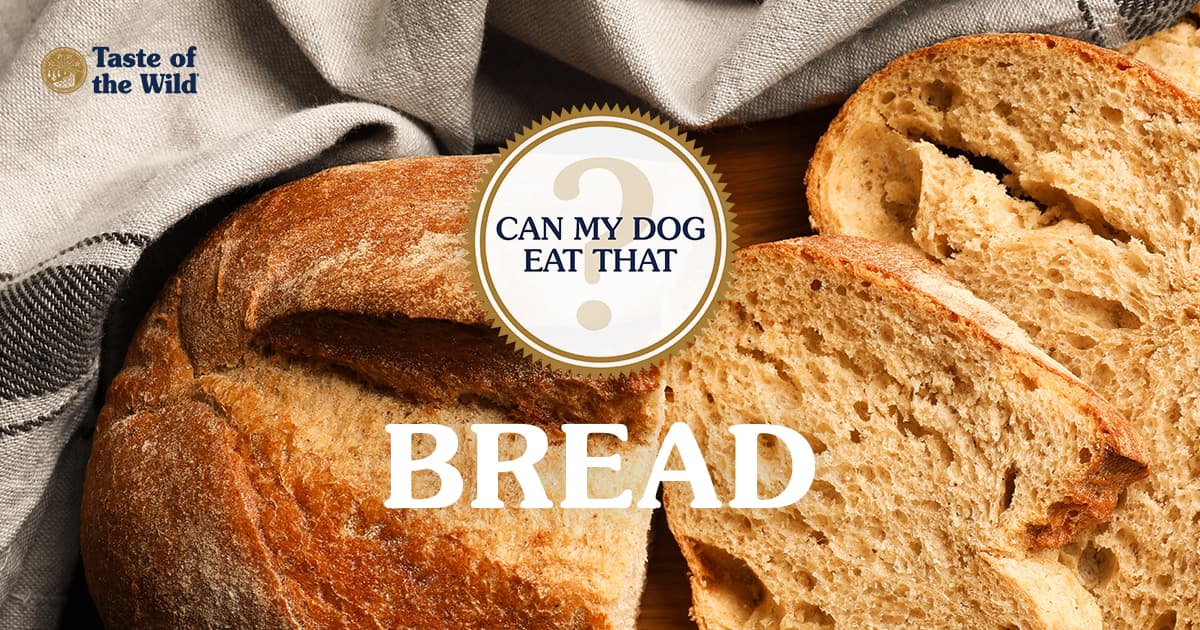
Welcome to “Can My Dog Eat That?,” our series that answers some obvious (and not-so-obvious) questions about what your dog can and can’t safely eat. You can view some of the previous foods we’ve looked at in our “Can my dog eat that?” guide. Today we answer the question “Can dogs eat bread?” Read on!
How many times have you eaten a sandwich and tossed the last bite of bread to your faithful companion? In general, bread isn’t bad for dogs, but that doesn’t mean it should be a regular part of their diet.
Is Bread Good for Dogs?
Bread is generally safe for most dogs. Small pieces of fully baked, plain bread can be given occasionally as a treat, but it shouldn’t be a regular part of your dog’s diet. Because it provides extra calories, too much bread can unbalance the diet.
But you need to know that not all bread is the same. Stay away from banana bread and other sweet breads; they usually are high in sugar, fat and excess calories and can contribute to obesity and other health problems. Breads like brioche and croissants contain a higher amount of butter than other breads and can lead to digestive upset, and the fat can cause inflammation of the pancreas.
Also note that some bread varieties have extra ingredients, so make sure the bread does not contain ingredients that are potentially toxic to dogs such as raisins, onions, certain nuts, chocolate, specific seeds (poppy) or garlic.
Some bread also contains artificial sweeteners such as xylitol. Xylitol, also known as birch sugar, is highly toxic to dogs, so keep any food containing it safely out of your pet’s reach.
Bread should be given only as an occasional treat, not as a regular part of your dog’s diet. Too much bread can add unnecessary calories and increase the risk of obesity.
Raw Bread Dough Is a Big No!
Raw yeast dough is dangerous and can be life-threatening. Yeast dough can expand inside a dog’s stomach, causing severe bloating. A dog’s stomach provides the perfect warm environment for the raw dough to rise. As the dough ferments, it can also produce ethanol, which may lead to alcohol poisoning.
If you know or suspect that your pet has eaten human food that may be toxic or has had raw bread dough, contact your veterinarian or an after-hours emergency veterinary clinic immediately. You can also contact one of the two animal poison control centers in North America:
Can Dogs Eat Sourdough Bread?
Plain, fully baked sourdough bread is not toxic to most dogs and is generally safe to give occasionally as a treat. However, like other types of bread, raw sourdough dough can pose life-threatening health risks and should never be given to dogs.
Can Dogs Eat White Bread?
Yes, most dogs can generally eat plain white bread in small amounts, as long as it is fully baked and does not contain harmful ingredients. Kinds of white bread such as English muffins, plain bagels, French baguette and pita bread are also not toxic to dogs as long as they are free of ingredients like raisins, garlic spread or poppy seeds that are toxic.
Can Dogs Eat Wheat Bread?
Most dogs can eat plain wheat bread in moderation, but it may not be suitable for every dog. Dogs with wheat or grain sensitivities may experience digestive upset or skin-related problems. Symptoms of a dog wheat allergy may include chronic itching, paw licking, ear infections and skin irritation and sometimes digestive issues. Talk to your veterinarian to learn if your dog has an allergy.
So, Can Dogs Eat Bread Crust?
Bread crust is not significantly different from the rest of the bread in terms of what dogs can safely eat. If you’re eating pizza, just realize that it’s extra calories and isn’t needed as part of a balanced diet. Avoid giving dogs pizza crust covered with cheese, sauces or heavily seasoned toppings; the same applies for garlic bread, as these may cause digestive upset.
While an occasional bite of plain bread is generally safe for most healthy dogs, bread should not be a substitute for a complete and balanced diet. Instead of sharing food from your plate, choose healthy treats and dog foods specifically formulated to meet your dog’s nutritional needs.

The information in this blog has been developed with a Doctor of Veterinary Medicine and is designed to help educate pet parents. If you have questions or concerns about your pet’s health or nutrition, please talk with your veterinarian.