


Can My Dog Eat That? Cheese

Taste of the Wild

Welcome to “Can My Dog Eat That?,” our series that answers some obvious (and not-so-obvious) questions about what your dog can and can’t safely eat. You can view some of the previous foods we’ve looked at in our “Can my dog eat that?” guide. Today we answer the question “Can dogs eat cheese?” Read on!

Cheese. Similar to avocado, it’s a snack that is easy to munch without too much guilt, right? After all, cheese is a dairy product and it’s high in calcium and protein! It’s way better than french fries or a candy bar, right? Well, perception isn’t always reality, especially when it comes to snacks that we might share with our dogs. Can dogs eat cheese? Yes, they can. Should they eat a lot of it? For all the reasons that humans might want to check their cheese intake, no.

When it comes to snacks, there are certainly worse things you can feed your dog. Most dogs can, in moderation, eat cheese without any serious repercussions outside of possibly a stinky room a few hours later. Cheese, in general, can be healthy, and dogs seem to love it. It’s a nutrient-rich treat, just like eggs are. The high amounts of calcium are good for strong teeth and bones. Vitamins A, D and B are usually prominent. Like fish, cheese is an excellent source of protein. Where’s the bad, here?

When we say that your dog can eat cheese in moderation, the term “in moderation” does a lot of heavy lifting. Cheese can be great to use as a training tool and it seems custom made for coaxing your pooch into happily scarfing pills. But cheese is almost always high in fat, and too much can cause pancreatitis. Too much for too long can cause obesity and all the issues that come with that.

Lacking Tolerance for Lactose

Dogs are much more frequently lactose intolerant than humans. As dogs age out of puppyhood, they produce less of the enzyme lactase, which helps their puppy systems digest their mother’s milk. Without (or with less of) the enzyme, adult dogs can have a very hard time digesting milk products. This doesn’t mean your dog can’t digest dairy, but it does mean that lactose can stay in their systems long enough to ferment, which can cause gas, cramps and diarrhea. There are varying degrees of lactose intolerance in dogs, and the only way to know for sure how well your dog’s system can handle it is to talk to your veterinarian — although your nose might give you a clue.

Not All Cheese Is Created Equal

To put it simply, there are a lot of cheeses out there, and they aren’t all created the same way. Some are highly processed and filled with sodium. Some are much higher in fat than others, like cheddar, Swiss and goat cheese. Cheddar and American cheese are high in cholesterol. If you want to treat your dog with healthy cheese, stick with mozzarella, ricotta and cottage cheese. There are hundreds of cheeses out there, but these are the more common varieties on both ends of the spectrum.

Of course, you can also find fat-free versions of most popular cheese varieties. Your dog’s mileage may vary!

Oh Cheese, Just Give Them Some, Already!

Yes, with a few considerations, your dog can have the occasional cheesy treat. As with every food or treat not formulated specifically for your dog, make sure to read the label very carefully. If you have any questions, consult your veterinarian.

True: dogs can eat cheese.

Can My Dog Eat That? Snow

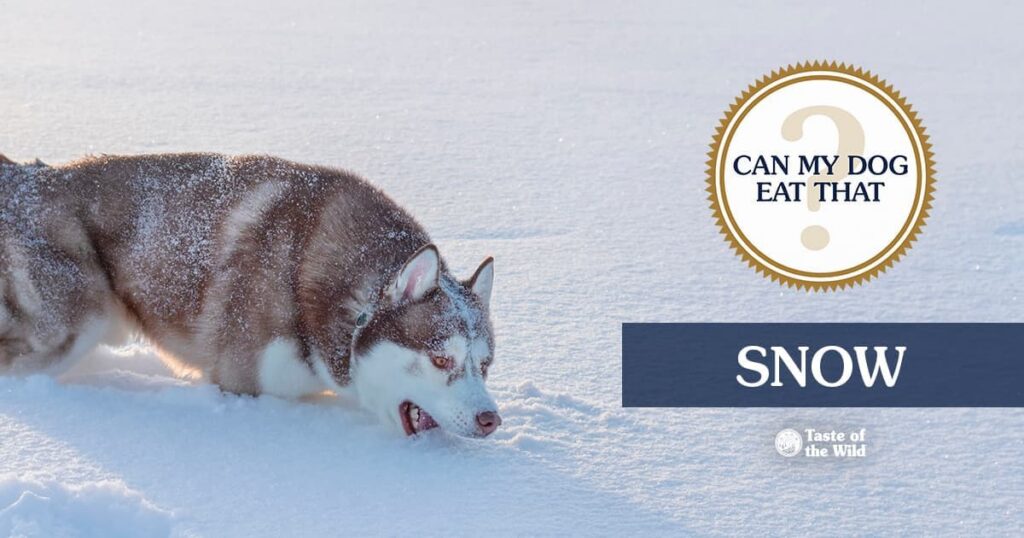
A tan and white Siberian husky biting into deep snow in a frost-covered field.

Welcome to “Can My Dog Eat That?,” our series that answers some obvious (and not-so-obvious) questions about what your dog can and can’t safely eat. You can view some of the previous foods we’ve looked at in our “Can my dog eat that?” guide. Today we answer the question “Can dogs eat snow?” Read on!

It’s a romantic notion to head out into a winter wonderland and catch snowflakes on your tongue, isn’t it? Most people have probably done it at least once or twice in their lives. Dogs, too, seem to enjoy fresh snow on their tongues. The difference is that while people rarely chow down on snow, some dogs…do.

So, can ingesting snow hurt your dog?

No. Not in small amounts, anyway. Snow is just frozen water; for dogs it’s like a cool treat, like a slushy. However, eating too much snow does contain dangers, although they don’t necessarily come from the snow itself.

Is It Bad for Dogs to Eat Snow?

Dogs explore the world with their nose and mouths, so it’s only natural for them to test that frozen fluffy fun on their tongues, especially during the first snowfall of the cold weather season. Tasting snow is safe, especially if it’s a fresh new layer. The issues arise if your dog is one of those who plows through mouthfuls of the stuff. The deeper they go, the more chances that there’s something nefarious in the snow. Rocks, sticks, leaves or other ground debris can make their way into the lower layers, and you obviously don’t want your dog eating rocks and sticks.

Can Dogs Eat Snow That’s Colored?

We’ve all heard jokes about yellow snow, but many dogs will make a beeline right for it. Yellow snow is a smelly signifier that friends (or enemies!) have been hanging around, so it’s necessary to investigate. Light investigation with noses or tongues is pretty harmless, but you don’t want your dog eating big mouthfuls of yellow. You’re not sure who it came from, after all.

However, yellow isn’t the worst color in snow that your dog can ingest. Brown, black, pink, blue or pretty much any other color in snow is probably bad news. If the snow in question is covering pavement, there’s a good chance that cars have been there, and cars can leak all sorts of bad (yet colorful) toxins into the environment. Harmful chemicals like motor oil, wiper fluid and especially engine coolant can be deadly in even small amounts. Engine coolant (antifreeze) can be deadly in tiny doses, so be extremely wary of green, blue or orange spots of contaminated snow. You also want to avoid any discolored snow when walking your dog so that any of these hazardous substances don’t get onto your dog’s paw pads, and then they lick it off when they get home. Getting dog booties for your dog can help protect your dog’s paws. 

Salt used for de-icing walkways is often tinted blue but might not have any coloration at all. If mixed with the snow your dog is eating, it can cause indigestion in small amounts or be deadly in bulk. You should also keep your dog away from dirty snow. Brown, grey or black spots in snow might be dirt picked up from the ground, and it’s never a good idea for dirt and gravel to make its way into your pondering pup’s belly. 

Why Do Dogs Like to Eat Snow?

No one really knows why dogs love to gobble up snow. If they’re an active dog that enjoys outdoor activities in the winter (potentially requiring dietary changes), they may be thirsty, and the snow tastes fresher than what’s in their water bowl. Or perhaps they like the granular texture or the sensation of the cold snow melting in their mouth. Hydration or curiosity, whatever the reason, for most dogs it seems like it keeps them going back for more!

Can Dogs Eat Too Much Snow or Ice ?

Eating large amounts of snow or ice can cause a dog’s body temperature to drop to dangerously low levels (hypothermia), causing heart irregularities or even death. This would take a LOT of snow, but it’s definitely concerning behavior.

If your dog is eating that much snow or regularly eating a lot of snow, it could be a sign of something more serious, like kidney failure or Cushing’s disease, an abnormality of the adrenal gland. If you think that your furry friend is regularly eating too much snow, contact your vet for advice.

Should I Stop My Dog From Eating Snow?

In short, a little bit of fresh, clean snow probably won’t hurt your dog. But eating too much, digging too deep or eating colored snow puts your dog’s health at risk. If you suspect that your dog has ingested something they shouldn’t have, call the ASPCA Animal Poison Control Center immediately, or consult your veterinarian.

An interior graphic with text that reads ‘Can my dog eat snow? Yes! (in small amounts)’.

Can My Dog Eat That? Cinnamon

An interior graphic with text that reads ‘Can my dog eat cinnamon? Yes! (in small amounts)’.

Welcome to “Can My Dog Eat That?,” our series that answers some obvious (and not-so-obvious) questions about what your dog can and can’t safely eat. You can view some of the previous foods we’ve looked at in our “Can my dog eat that?” guide. Today we answer the question “Can dogs eat cinnamon?” Read on!

Cinnamon. It’s a spice that literally shaped the world once upon a time, and now it’s everywhere — it’s the perfect pumpkin pairing, the star of breakfast foods and a must-have for spiced drinks. With cinnamon used so frequently in human foods, there’s a good chance that your dog is going to sneak a sampling of cinnamon at some point, and this may have you wondering if it’s OK if dogs eat cinnamon.

Is Cinnamon Safe for Dogs?

Cinnamon isn’t toxic to dogs, so there’s no reason to panic if your dog swipes a snickerdoodle while you’re not looking. But (there’s always a but!) cinnamon is a spice, and dogs as a general rule don’t do well with spicy foods. Cinnamon, especially powdered cinnamon or cinnamon oil, is an irritant, and it’ll likely cause your dog to cough or sneeze at the very least. An upset stomach is a possibility if too much cinnamon is ingested.

Of course, how much cinnamon a dog can safely eat is all about the dosage and the dog’s size. A little ground cinnamon dusted on a cookie might not be an issue at all, but an entire cinnamon stick can make any dog sick, and small breeds really sick. Essential oils are super concentrated, so even a little cinnamon essential oil can cause stomach upset. Extended exposure of cinnamon essential oils to skin (including lips, mouth and tongue) or eyes can cause burns or rashes. Seems like it’s far from essential!

Is Cinnamon Bad for Dogs?

A small amount of cinnamon is generally OK for dogs — it’s what it’s mixed with that can be the problem. If cinnamon is involved, the food itself is probably sugary and sweet, and those foods are great big no-nos for your dog — think cookies, apple pie and pumpkin pancakes. Many foods with cinnamon also contain raisins, which are toxic to dogs and most certainly something to avoid. Here are some more cinnamon-containing foods that you might be wondering if it’s OK for your dog to eat.

Can Dogs Eat Cinnamon Rolls?

While the cinnamon itself might not hurt your dog, the rest of the cinnamon roll certainly isn’t good for them. Whatever the other ingredients are in ooey gooey, bakery-made cinnamon rolls, the high fat content alone can cause pancreatitis or an upset stomach. If your dog is eating high-calorie foods long-term, it can also lead to diabetes and obesity. So try to keep those gooey cinnamon rolls out of your dog’s reach.

Can Dogs Eat Cinnamon Toast Crunch™?

If your dog ate a couple of squares that dropped onto the floor while you were pouring cereal into your bowl, they’ll likely be OK. But if they sneak into the pantry and eat the whole box of cereal, you may want to call your veterinarian.

It’s not so much the cinnamon that’s the problem with Cinnamon Toast Crunch — although a whole box may cause an upset stomach — it’s the other ingredients. The sugar, fat and calorie content means it’s not the healthiest breakfast food for dogs to eat. So it’s best to keep the cereal box on the top shelf.

Can Dogs Eat Cinnamon Sticks?

If you catch your dog swirling a cinnamon stick in their water bowl, you should put an end to their spiced-drink dreams. Cinnamon sticks can irritate their mouth and eating a large amount can upset their tummy.

Can Dogs Eat Cinnamon Powder?

A sprinkle of powder on a cookie probably won’t hurt, but inhaling cinnamon powder or eating a full jar is nothing to sneeze at — you should probably contact your vet to be safe.

Can Dogs Eat Cinnamon Applesauce?

If your dog eats some cinnamon applesauce, the cinnamon content probably won’t cause a problem, but check what other ingredients are in the applesauce to make sure those aren’t toxic to dogs.

What Happens If a Dog Eats Too Much Cinnamon?

As with any questionable food (or non-food) item your dog might ingest, when in doubt, call your vet — especially if your dog is showing troubling symptoms like coughing or diarrhea. If your vet clinic isn’t open or your dog has ingested an alarming amount of cinnamon powder, cinnamon essential oil or other cinnamon products, call the Pet Poison Helpline.

So Is Cinnamon OK for Dogs to Eat?

Feeding dogs cinnamon in small amounts isn’t harmful and it is even an approved ingredient in pet food. There are nutritional benefits of cinnamon: for example, it has antioxidant and anti-inflammatory properties. However, most of the foods that use cinnamon as an ingredient are far from good for dogs, so it’s best to avoid sharing any cinnamon-flavored food with your dog.

An interior graphic with text that reads ‘Can my dog eat cinnamon? Yes! (in small amounts)’.

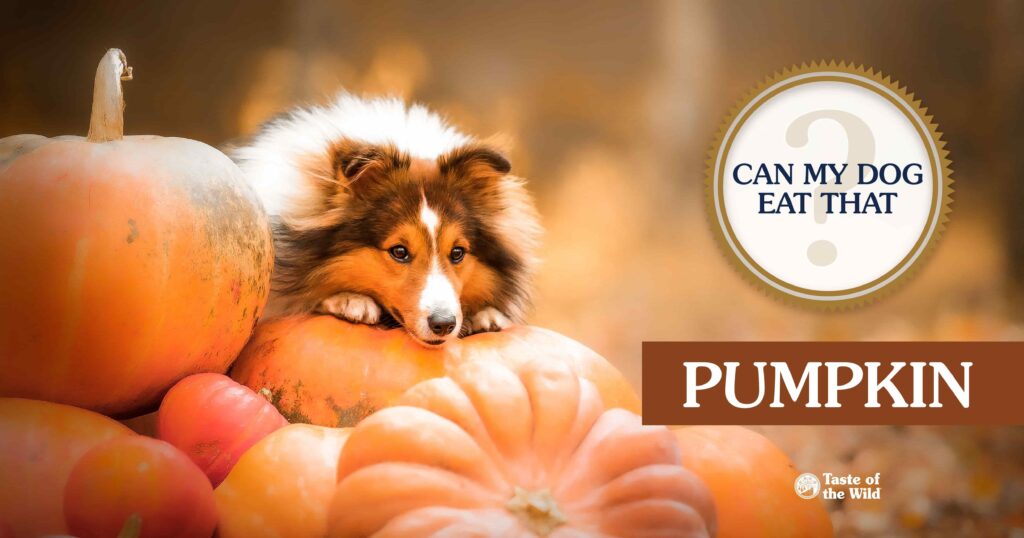
Can Dogs Eat Pumpkin?

The Verdict - Dogs Can Eat Pumpkin Infographic

Welcome to Can My Dog Eat That?,” our new series that answers some obvious (and not-so-obvious) questions about what your dog can and can’t safely eat. Read on!

Is Pumpkin Good for Dogs?

Can my dog eat pumpkin? The answer is a hearty oh yeah. Not only is pumpkin safe (in most cases), it’s full of nutrients and considered a superfood by many.

Pumpkin has many nutritional benefits. It’s high in fiber, which aids in digestion. It offers plenty of antioxidants, which help support a healthy immune system. And it’s packed with vitamins and minerals. Vitamin A can support healthy vision, while the high levels of vitamin C are another boost to the immune system. Meanwhile, magnesium supports easy digestion and zinc helps the skin and coat look and feel good.

Pumpkin has quite a few other gourd qualities for pets and owners. Plain, canned pumpkin with its gentle blandness is a popular stomach-soother if there’s an upset tummy in the (dog) house. In addition, the fiber levels in pumpkin can help stem the flow of doggy diarrhea. That fiber can be a factor in weight loss; since pumpkin is filling, you can supplement a dog’s diet with it so they won’t make so many visits to the food bowl.

Can Dogs Eat Raw Pumpkin?

As with everything you feed your dog that doesn’t come directly from a pet food bag, preparation is everything. Though raw pumpkin isn’t bad at all for your dog on a nutritional level, there are some physical dangers. Letting your dog chew on an actual pumpkin can mean choking hazards from chunks. Big chunks of raw pumpkin are harder to digest than cooked pumpkin, as well. And finally, stems and raw seeds aren’t good for your pup. So avoid using pumpkins as chew toys — otherwise your pup may need to visit their veterinarian!

If you want to feed fresh pumpkin, stick to unsweetened, fresh pumpkin puree. When a dog eats their regular food, a dab of pumpkin puree can be a nice little treat!

Raw pumpkin also comes with pumpkin seeds, which technically aren’t bad for dogs but can create issues in a dog’s diet. While pumpkin seeds count as superfoods for people, dogs don’t digest pumpkin seeds very efficiently, so they don’t really get much of the nutritional value. If they steal one or two during carving sessions, there’s no need to panic. But we wouldn’t make it a habit to feed your dog pumpkin seeds.

Can Dogs Eat Pumpkin Pie Filling?

The best way to offer pumpkin, other than as an ingredient in your pup’s favorite dog food, is canned pumpkin: cooked, 100 PERCENT pumpkin, NOT pumpkin pie filling. Pie fillings contain sugar, spices and other ingredients that can upset a dog’s stomach, contribute to obesity, or worse. Make sure the canned pumpkin you offer is plain and without any additives. Can dogs eat canned pumpkin? Yes. Pumpkin pie filling: no.

So, Can Dogs Eat Pumpkin?

When feeding your dog any food, moderation is important. Too much pumpkin, like anything else, can cause an upset stomach. But when you feed pumpkin, how much pumpkin is too much pumpkin? You’ll have to check with your vet before you feed pumpkin to your dog. Check with your vet before offering any non-dog-food treat and feed according to your dog’s size, age and weight.

While largely good for your dog, pumpkin is a high-fiber food, and too much of a good thing can cause problems. Are you wondering, “Can dogs eat pumpkin?” The answer is yes!

An interior graphic with text that reads ‘Can my dog eat pumpkins? Yes!’.

Can My Dog Eat Tomatoes?

Taste of the Wild

Welcome to “Can My Dog Eat That?,” our new series that answers some obvious (and not-so-obvious) questions about what your dog can and can’t safely eat. Read on!

If your dog’s eyes are saying “Please throw that red, juicy, ball-looking food my way,” the good news is you can! Ripe tomatoes (either raw or cooked) are nontoxic and can be included on the list of snacks for your dog, as long as they’re eaten in moderation.

Like all new food, it’s a good idea to introduce your dog to tomatoes gradually to make sure they tolerate them well. Due to their acidity, tomatoes can cause an upset stomach if your dog eats too many. Dogs with sensitive stomachs may find the acidity of just one tomato too much for them. And while ripe tomatoes are safe for dogs, a lot of human foods that are tomato-based also contain ingredients that are harmful to dogs (e.g., garlic, onion, chives). So be sure to check the ingredient label before feeding your dog any tomato-based people food.

A Good Source of Antioxidants and Fiber

Tomatoes or dried tomato pomace (the skin, pulp and seeds) are often included in dog food formulas, like Taste of the Wild, Taste of the Wild PREY and Taste of the Wild with Ancient Grains, because they are a good source of nutrients. Tomatoes are a source of vitamin C and lycopene, which are important antioxidants. Free radicals are produced during normal metabolism and can damage molecules in your dog’s body that are essential for maintaining good health. Antioxidants help protect your dog from these damaging free radicals.

Dried tomato pomace is a good, balanced source of soluble and insoluble fiber, as well as a source of vitamin C and lycopene. Dietary fiber helps support digestive health and firm stools. The tomato pomace fiber is fermented in your dog’s large intestine to produce short-chain fatty acids that are an energy source for intestinal cells. Dietary fiber also regulates colon pH and encourages the growth of beneficial bacteria in the colon.

Can Dogs Eat Cooked Tomatoes?

When dogs eat tomatoes, it generally doesn’t matter if they’re cooked or raw, as long as you cook them yourself. Pre-cooked tomatoes might have additives like salt or sugar that aren’t good for your pup. Same goes for tomato sauce. If you make it yourself and don’t add anything but the tomatoes, tomato sauce should be a nice addition to a bowl of dog food.

Can Dogs Eat Canned Tomatoes?

Dogs should not eat canned tomatoes for the same reasons they shouldn’t eat tomatoes you didn’t cook yourself. There are too many added ingredients, like salt or onions, that aren’t good for your dog, so avoid the can.

Can Dogs Eat Cherry Tomatoes?

Yes, if you apply the same rules to cherry tomatoes as you do with regular tomatoes, dogs can eat them. No leaves or other green parts, and cherry tomatoes should be cleaned and ripe.

Ripe Tomatoes or Unripe Tomatoes?

Always ripe. Unripe tomatoes can be dangerous for your dog due to the presence of toxins like solanine and tomatine, which are found in the green parts of the tomato plant, including the tomato itself when it’s still green. A good rule of paw is to NEVER give anything green from a tomato plant to your dog.

Avoid Everything Else on the Tomato Plants

Tomatoes are members of the nightshade family of plants. Nightshades, which also include potatoes, peppers and eggplant, contain alkaloids that can be toxic in large amounts. The alkaloid solanine is used by nightshade plants as an insecticide while they’re growing. Tomato plants also contain the toxin tomatine, which is found in the green parts of the plant, in unripe (green) tomatoes and in the flowers.

Your dog could be at risk of tomatine poisoning if they ingest a large amount of green tomatoes or the tomato plant. However, it’s unlikely that your dog would actually eat enough to become seriously ill, and if they do, it usually isn’t fatal. If your dog has eaten a large amount of green tomatoes or the plant itself, contact your veterinarian so they can determine if treatment is needed. Tomato poisoning is a real danger when you feed tomatoes to your dog, so always exercise caution.

So, Can Dogs Eat Tomatoes?

When you ask “Can dogs eat tomatoes?” the answer is a hearty “Yep!” A ripe tomato is a great snack choice for most dogs. Just make sure your dog doesn’t get into the vegetable patch and snack on the plants instead.

An interior graphic with text that reads ‘Can my dog eat tomatoes? Yes! (If they're ripe)’.

Can Dogs Eat Avocado?

Taste of the Wild

Welcome to “Can My Dog Eat That?,” our series that answers some obvious (and not-so-obvious) questions about what your dog can and can’t safely eat. You can view some of the previous foods we’ve looked at in our “Can my dog eat that?” guide. Today we answer the question “Can dogs eat avocado?” Read on!

Good for Humans, Good for Dogs?

For people, avocados are a superfood. Like eggs, they are a nutrient- and antioxidant-dense food. Avocados are arguably the best fruit for supplying your potassium, fiber and vitamin E. They’re such useful foodstuffs that there always seems to be a threat of either rising prices or outright shortages here in the United States. Avocado oil seems to trend regularly, and many houses have an avocado plant as a functional decoration.

So if eating avocado flesh has so many nutritional benefits for humans, your dog should be able to benefit too, right?

Can Dogs Eat Avocado? It’s Not That Simple.

Well, yes and no. The actual avocado flesh, or meat (the green part of the avocado that goes in your guacamole), of the avocado is generally pretty safe and healthy, providing that your dog doesn’t eat too much of it.  But avocado peel and pits contain persin, a substance that is poisonous to dogs. Since the peel and pit are typically discarded before prepping the meat, what is left can be safely consumed by most dogs. But too much persin from avocado flesh can cause vomiting and diarrhea in dogs, and there’s a small chance of worse problems, even death, if they ingest a LOT. And the green flesh can be an issue in bulk, because the high fat content that avocados are lauded for can cause pancreatitis.

So make sure the skin and pit are disposed of properly, where your dog can’t get them. Are avocados good for dogs? They can be, but there are too many drawbacks to risk it.

Choking Is A Danger When You Feed Your Dog Avocado

In addition to the dangers of persin poisoning, the avocado pit is a major choking hazard. It’s often the size of a ping-pong ball and can cause a complete blockage if it is ingested, especially by bigger, enthusiastically eating dogs.

Can Dogs Eat Guacamole?

All the reasons that a dog shouldn’t eat avocado apply to whether a dog can eat guacamole, but guacamole contains other problem ingredients as well. Many guacamole recipes contain doggy dangers like onion and garlic, which are even more dangerous than dogs eating avocado.

Can Dogs Eat Avocado Oil?

The drawbacks of avocado oil are also much the same as they are with avocado itself. Avocado oil is extremely high in fat, which can lead to pancreatitis in dogs. Any food that is high in fat — whether it’s solid, liquid or somewhere in between — should be fed to your dog in small amounts to avoid harmful impacts. Persin oil is colorless, so it might be found in avocado oil which is why avocado oil is best avoided by dogs.

Use Precaution When Dogs Eat Near Avocado Prep

So if you’re a fan of avocados, keep your dog in mind when prepping and disposing of them. Make sure that discarded peels, leaves and pits are thrown away where your dog can’t get to them. If you think that your dog may have ingested the peel or pit, be on the lookout for vomiting, diarrhea, lethargy or abdominal pain.  If you suspect that they’ve eaten the peels, pit or leaves, contact your veterinarian or the ASPCA Animal Poison Control Center.

Reconsider Before Your Dog Eats Avocado

Can dogs eat avocado? Short answer is “no.” It’s far safer to keep the avocados, avocado toast, avocado pits and avocado pulp away from your dog, especially if your dog has a history of pancreatitis or sensitive stomach issues.

There are plenty of other ways to give them superfoods! When in doubt, stick to veterinarian-approved dog food, and if you suspect that your dog — or any pet — has eaten avocado or shows symptoms of persin poisoning, contact your vet immediately.

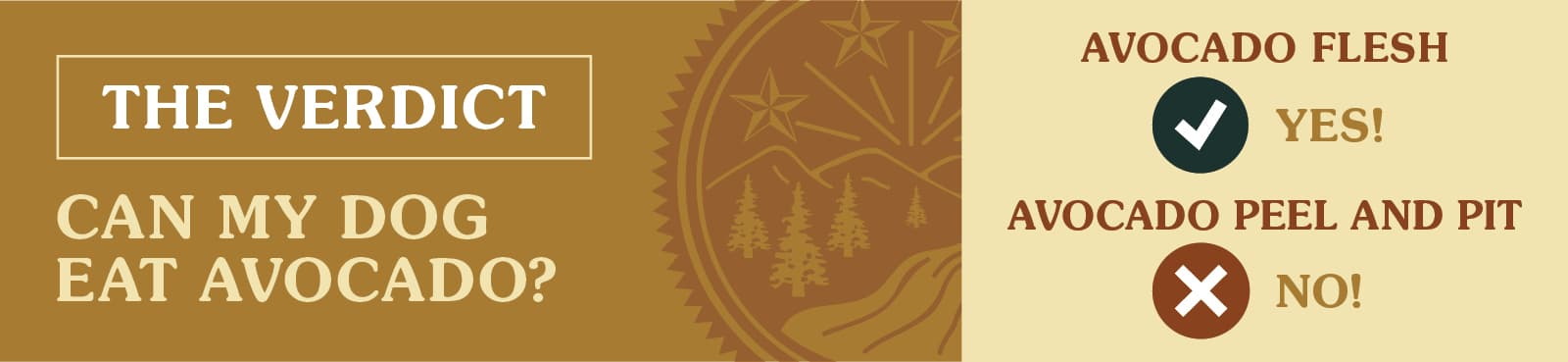
An interior graphic with text that reads ‘Can my dog eat avocado? Avocado Flesh — Yes! Avocado Peel and Pit — No!’.

Can Dogs Eat Sweet Potatoes?

Verdict: Dogs May Eat Sweet Potatoes Graphic

Welcome to “Can My Dog Eat That?,” our series that answers some obvious (and not-so-obvious) questions about what your dog can and can’t safely eat. You can view some of the previous foods we’ve looked at in our “Can my dog eat that?” guide. Today we answer the question “Can dogs eat sweet potatoes?” Read on!

Sweet potatoes are a divisive food on the human table. It seems that people either love ’em or hate ’em, and there’s no in-between. In the dog world, however, it’s a “people food,” so chances are, your dog would scarf them down if given the opportunity.

But should you give your dog the opportunity? Can dogs eat sweet potatoes?

What is a sweet potato, anyway?

It might surprise you to hear this, but sweet potatoes are not potatoes at all. Or at least they’re not stem tubers, as most potatoes are classified. Sweet potatoes are actually root vegetables and only distantly related to your standard ’tater. But that’s not to say that they aren’t similar. Both sweet and regular (white) potatoes offer roughly the same calories, protein and carbs, but they differ in their additional benefits. White potatoes provide plenty of potassium, and the sweet potato’s bragging rights are attached to their copious amounts of vitamin A. Now, despite the name, a raw sweet potato isn’t actually sweet; it just tastes starchy, like the other kinds of potatoes. But when you start cooking sweet potatoes, the heat releases an enzyme that breaks down all that starch and turns it in to a form of sugar. This “sugar” isn’t half as sweet as the stuff you put in your coffee, but compared to a normal white potato, it seems like candy — which may explain why your dog would be so eager to eat a sweet potato.

Are Sweet Potatoes Good for Dogs?

Sweet potatoes can be very beneficial, providing energy while helping support gut health, thanks to the high levels of antioxidants. The vitamins like vitamin A in sweet potatoes help maintain healthy eyes and skin. The dietary fiber in sweet potatoes helps support the digestive system. Yes, sweet potatoes are good foods for dogs!

How Do I Cook Sweet Potatoes for Dogs?

Don’t feed your dog raw or whole sweet potatoes; the skin can be hard to bite through and isn’t great for the digestive tract, and if your dog bites large chunks of the ’tater, they could choke. Prepare them by baking, boiling or mashing them. DON’T candy sweet potatoes as you would for your family’s Thanksgiving dinner, though. When dogs eat sweet potatoes, they should be as plain as possible.

In fact, the best way to offer your dog sweet potatoes is as an ingredient in their dog food, to make sure that it’s part of a balanced diet. Many dog food recipes use sweet potatoes as a healthy source of carbohydrates, so check the ingredients panel on the bag or can. Your dog might already be enjoying sweet potato!

Can Dogs Eat Raw Sweet Potatoes?

No, your dog should never eat raw sweet potatoes. Unsweetened, cooked sweet potatoes are fine, but uncooked sweet potatoes are choking hazards and can cause intestinal blockages. Make sure those sweet potatoes are cooked!

Can Dogs Eat Sweet Potato Skins?

When feeding your dog sweet potatoes, make sure you remove the sweet potato skin. It isn’t poisonous, but the skin of sweet potatoes is hard to chew and can be a choking hazard or even block the intestines. Skin those sweet potatoes!

There’s a Caveat with the Sweet Potato

As with anyone’s diet, your dog’s diet should be judged for your individual dog. Diabetic or overweight dogs shouldn’t indulge in sweet potatoes outside of a reputable dog food recipe. If you have any questions about your dog’s diet and whether they can or can’t eat a sweet potato or two, contact your veterinarian.

Can my dog eat sweet potatoes?

They can, if the sweet potato is prepared properly and served in moderation, considering your individual dog’s diet needs. Introducing sweet potatoes as an occasional snack could be a welcome variation!

The Verdict?

Your dog will love them if you feed sweet potatoes in small amounts. Plenty of nutritional benefits for a pet of any size.

An interior graphic with text that reads ‘Can my dog eat sweet potatoes? Yes!’.

Can My Dog Eat That? Candy

A brown dog sitting in a chair next to an orange plastic pumpkin bucket.

Welcome to “Can My Dog Eat That?,” our series that answers some obvious (and not-so-obvious) questions about what your dog can and can’t safely eat. You can view some of the previous foods we’ve looked at in our “Can my dog eat that?” guide. Today we answer the question “Can dogs eat candy?” Read on!

If people overindulge in candy, they may wind up with a stomachache (and some regrets). But dogs who eat chocolate or candy may not get away with it that easily. Candy is not a healthy treat for dogs, but more importantly, chocolate and some sugar-free candy are toxic to dogs — even a small amount can be dangerous. So keep your candy stash safely hidden from your dog!

Can Dogs Eat Chocolate?

No. Chocolate contains two potentially toxic substances for dogs: caffeine and theobromine, with theobromine being the greater concern. Both are rapidly absorbed from the small intestine and across the bladder wall, and returned to the bloodstream to recirculate again. Dogs can’t metabolize theobromine as easily as humans, which puts them at risk of theobromine reaching dangerous levels. 

As a general rule of thumb, the darker and more bitter the chocolate (e.g., cocoa powder, dark chocolate), the more theobromine it contains, and the more dangerous it can be. Unsweetened baker’s chocolate, for example, can contain around 450 mg of theobromine per ounce, compared with milk chocolate, which contains around 60 mg per ounce. Although white chocolate contains only a small amount of theobromine, it’s still best to keep it out of your dogs’ reach.

What to Do If Your Dog Eats Chocolate

If your dog eats any amount of chocolate, it’s important to contact a veterinarian or animal poison control immediately. They will want to know the type of chocolate eaten (e.g., dark chocolate, milk chocolate), an estimate of how much was eaten, your dog’s weight and how long ago the chocolate was consumed.

A dog’s size can make a difference to how chocolate affects them. For example, a Great Dane that eats a small amount of chocolate may show mild signs, but the same amount could be fatal for a Pomeranian. Timing can be critical, too; if your dog just ate the chocolate, your veterinarian may be able to induce vomiting before much of the chocolate is digested (do not induce vomiting at home unless directed to by your vet).

Signs of Chocolate Poisoning

Depending on the type of chocolate, the amount eaten and the size of your dog, signs of toxicity can range from mild to severe and life-threatening. Here are some of the most common signs of chocolate toxicity:

  • Increased thirst
  • Vomiting
  • Diarrhea
  • Lethargy
  • Panting and pacing
  • Restlessness or hyperactivity
  • Muscle spasms (tremors)
  • Irregular heart rhythm
  • Seizures

Don’t wait for these symptoms to appear. If you know or suspect your dog ate chocolate, call your veterinarian immediately. After assessing your dog’s condition, your veterinarian may induce vomiting, administer activated charcoal to coat the digestive tract and prevent further chocolate absorption, or recommend additional supportive care.

Can Dogs Eat Sugar?

Let’s break this down. Is sugar toxic to dogs? No. Should dogs eat sugar regularly? Also no. While sugar won’t cause a life-threatening illness, it still isn’t healthy for dogs. If they eat a large amount of sugar in one sitting, (e.g., they swiped a sheet cake off the counter and devoured it), it can upset your dog’s digestive system, causing vomiting, appetite loss and diarrhea. The only type of sugar dogs should eat is the natural sugar found in dog-safe foods (like in strawberries or pineapples). However, too much natural sugar can also be unhealthy, so remember to keep to the rule of limiting treats to only 10 percent of your dog’s daily calorie intake.

Why is too much sugar bad for dogs? If your dog regularly eats sugar-filled sweet treats, the high sugar content could contribute to weight gain and increased health risks like obesity, diabetes and dental problems. 

Sugar-Free Products Can Be Toxic to Dogs

The more serious, short-term concern for dogs is not sugar but the natural sweetener xylitol. It is often used in sugar-free foods like gum, candy, peanut butter, syrup and sweeteners as a sugar substitute. Xylitol can also be found in non-food items like toothpaste, mouthwash and chewable vitamins. 

Xylitol poisoning can cause the dog’s blood sugar levels to drop (causing hypoglycemia) and can also cause liver failure if toxic amounts are ingested. Before giving your dog any human food, make sure you check the label carefully for xylitol and its other names: birch sugar, wood sugar and birch bark extract. If you think your dog ingested candy or food that contains xylitol, contact your veterinarian or animal poison control immediately. 

Keep Dogs Away from Dangerous Halloween Candies

If you have kids (or even if you don’t), Halloween is probably the peak time for candy and chocolate to be in the house — baskets full of candy corn, Skittles, Twizzlers and other tasty Halloween treats. Not only do you need to watch out for chocolate and xylitol, you also need to look out for the other Halloween candy ingredients. Candies and chocolate can contain other potentially toxic ingredients, such as raisins (chocolate-covered raisins are out for two reasons!) and macadamia nuts. 

Too many fatty treats can lead to pancreatitis, a painful inflammation of the pancreas that may require hospitalization. And since dogs don’t bother unwrapping candy before feasting, eating large quantities of candy wrappers could cause a digestive tract obstruction that requires surgery to correct.

Can Dogs Eat Candy?

No. Dogs should definitely not eat chocolate or sugar-free varieties of candy containing xylitol because these are toxic to dogs and can cause serious health issues. Dogs should also avoid eating large amounts of sugary foods. The best plan is to keep candy and chocolate treats out of the reach of your dog and limit your dog’s sugar consumption. There are plenty of dog treats made just for dogs, so stick to those for your furry friend.

An interior graphic with text that reads, ‘Can my dog eat candy? No’.