

Can My Dog Eat That? Fish

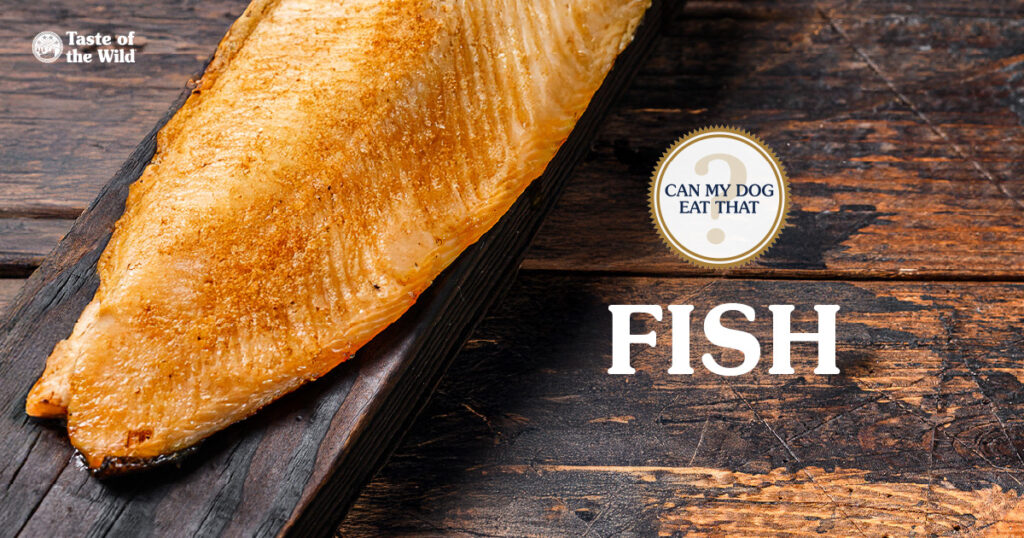
A slice of cooked fish served on a wooden serving board.

Welcome to “Can My Dog Eat That?,” our series that answers some obvious (and not-so-obvious) questions about what your dog can and can’t safely eat. You can view some of the previous foods we’ve looked at in our “Can my dog eat that?” guide. Today we answer the question “Can dogs eat fish?” Read on!

If your dog’s nose is working overtime sniffing the delicious smell of fish wafting down from the dinner table, the good news is that dogs can safely eat fish — as long as it’s deboned, cooked, unseasoned and only fed as a treat.

Fish as an Ingredient in Dog Food

Fish is a common ingredient in nutritionally balanced commercial dog foods. The types of fish we use in some Taste of the Wild recipes include menhaden whitefish, salmon, small ocean fish and trout. Like turkey and cheese, fish is an excellent source of protein. It is also a good source of minerals and omega-3 fatty acids such as DHA (docosahexaenoic acid) and EPA (eicosapentaenoic acid).

DHA is a component of mother’s milk and is critical for brain and vision development in growing puppies. Studies show that the benefits of DHA in the diet continue after weaning. DHA and EPA also help maintain a healthy coat and skin, and have roles in inflammation and the immune response.

Dogs Should Avoid Raw Fish and Fish Bones

Fish is safe for dogs as long as it’s prepared correctly and fed in moderation. Always cook fish for dogs to the same temperature recommended for safe consumption by people. Fish that is baked, steamed or grilled is safe for dogs, but if dogs eat fried fish, the fat content may upset their digestive tract. When cooking fish for dogs, make sure you don’t use any seasonings or ingredients that could upset their stomach or are toxic to dogs (like garlic and onion).

It’s really important to make sure all the fish bones have been removed, as bones can be a choking hazard and can perforate the digestive tract. You should also limit how much fish your dog eats. Too much fish can cause an upset digestive system, so just offer a small amount of fish as an occasional treat.

Can Dogs Eat Raw Fish?

No, you shouldn’t feed your dog raw fish. If dogs eat raw fish, they risk ingesting harmful bacteria like salmonella or listeria. Some fish are also known to harbor parasites. Fish for dogs should be cooked to the same temperature recommended for humans to safely consume fish.

Can Dogs Have Tuna?

Canned tuna in plain water (not oil or salted water) is safe for dogs to eat in moderation as a treat. However, some experts recommend avoiding fresh-caught fish like albacore tuna, king mackerel, shark and swordfish. These fish are typically harvested when they are older and larger, and can contain relatively high mercury levels, which can cause toxicity if your dog eats too much.

Can Dogs Eat Salmon?

Dogs can eat plain salmon as long as it is cooked — do not feed your dog raw salmon. Salmon is a highly digestible source of protein as well as omega-3 fatty acids. In some of our recipes, we use smoke-flavored salmon for enhanced taste!

Can Dogs Eat Tilapia?

Yes, dogs can eat tilapia if it is deboned and cooked correctly. If your dog has kidney problems, you may want to avoid feeding them tilapia, though. Like some other types of fish, tilapia is high in phosphorus. Too much phosphorus in the blood interferes with calcium metabolism and contributes to further progression of chronic kidney disease.

Can Dogs Eat Fish Sticks?

Any type of fried or breaded fish is not good for dogs due to the high fat and salt content. Fish sticks may also contain seasonings that are not healthy for dogs. Stick with plain, unseasoned fish.

Are Fish Oil Supplements Good for Dogs?

Some dog owners provide fish oil as a supplement to their dog’s diet. Some dogs may benefit from a fatty fish oil dietary supplement; however, you should always talk to your veterinarian before you change your dog’s diet, including feeding them any kind of supplement.

Can Dogs Eat Fish?

Dogs can eat fish as long as it is unseasoned, cooked and deboned and offered in small amounts as occasional treats in addition to their regular complete and balanced diet. Fish also offer some benefits for your dog’s health.

An interior graphic with text that reads ‘The verdict: Can my dog eat fish? Yes, plain, deboned and cooked’.

Can My Dog Eat That? Peaches

An overhead view of a pile of freshly picked peaches.

Welcome to “Can My Dog Eat That?,” our series that answers some obvious (and not-so-obvious) questions about what your dog can and can’t safely eat. You can view some of the previous foods we’ve looked at in our “Can my dog eat that?” guide. Today we answer the question “Can dogs eat peaches?” Read on!

Yes! Dogs can eat peaches safely, as long as you only give them the fleshy part of the fruit. Just make sure that peaches are only an occasional treat and make up no more than 10 percent of your dog’s daily calorie amount. Too many peaches can cause an upset stomach and diarrhea. And neither your dog or you want that!

Are Peaches Good For Dogs?

Just like cherries, pineapple, cranberries and other fruits and vegetables, peaches contain beneficial nutrients, including vitamin A and vitamin C, as well as antioxidants that support the immune system and skin health. Peaches are also high in fiber which helps support a healthy digestive system. However, if your dog is eating a complete and balanced commercial dog food, your dog’s diet is already providing all of the nutrients they need, so the nutrients from peaches aren’t required.

Are Peach Pits Poisonous?

Yes, the peach pits, also called stones, are poisonous for dogs. They contain trace amounts of a sugar-cyanide compound that is toxic. A dog would need to eat multiple peach pits to be affected by cyanide poisoning; however, there are other reasons not to let them eat the pits.

Peach pits are rough and risk damaging the esophagus or intestine as they pass through. Just like avocado pits, they pose a choking hazard and could cause an intestinal blockage. All good reasons for your dog to avoid peach pits!

Can Dogs Eat Canned Peaches?

No, canned peaches are not a good idea for dogs as they usually have a bunch of added sugar and preservatives. Too much sugar on a regular basis can contribute to diabetes or obesity. Canned peaches may also contain the artificial sweetener xylitol which is toxic to dogs. It’s best to stick with fresh peaches as a tasty snack for your dog.

Can Dogs Eat Peach Yogurt?

Similar to canned peaches, store-bought peach yogurt may contain added sugars, preservatives or xylitol which aren’t healthy for dogs. Again, it’s better to share just fresh peaches as treats instead of peach yogurt.

Can Dogs Eat Peach Skin?

As long as you wash the skin thoroughly, dogs can eat peach skin. The parts of the peach to avoid include the pit, the stem and the leaves as these all contain the sugar-cyanide compound. That’s why dog owners should stick to the peach flesh when giving their dog peaches.

Can Dogs Eat Nectarines?

Dogs can also eat the flesh of nectarines safely. But, as with all stone fruits, the nectarine pits should be avoided to prevent choking or intestinal blockage. You should limit the amount of nectarines your dog eats to avoid an upset stomach or diarrhea.

Can Dogs Eat Peaches Safely?

Yes, you can feed your dog peaches in moderation as long as they are washed and the pits are removed. How many peaches your dog can eat depends on your dog’s size. If your dog accidentally eats a peach pit, contact your veterinarian for advice.

An interior graphic with text that reads ‘The verdict: Can my dog eat peaches? Yes, the fleshy part’.

Can My Dog Eat That? Cat Food

An interior graphic with text that reads ‘Can my dog eat cat food? Yes, but they shouldn’t’.

Welcome to “Can My Dog Eat That?,” our series that answers some obvious (and not-so-obvious) questions about what your dog can and can’t safely eat. You can view some of the previous foods we’ve looked at in our “Can my dog eat that?” guide. Today we answer the question “Can dogs eat cat food?” Read on!

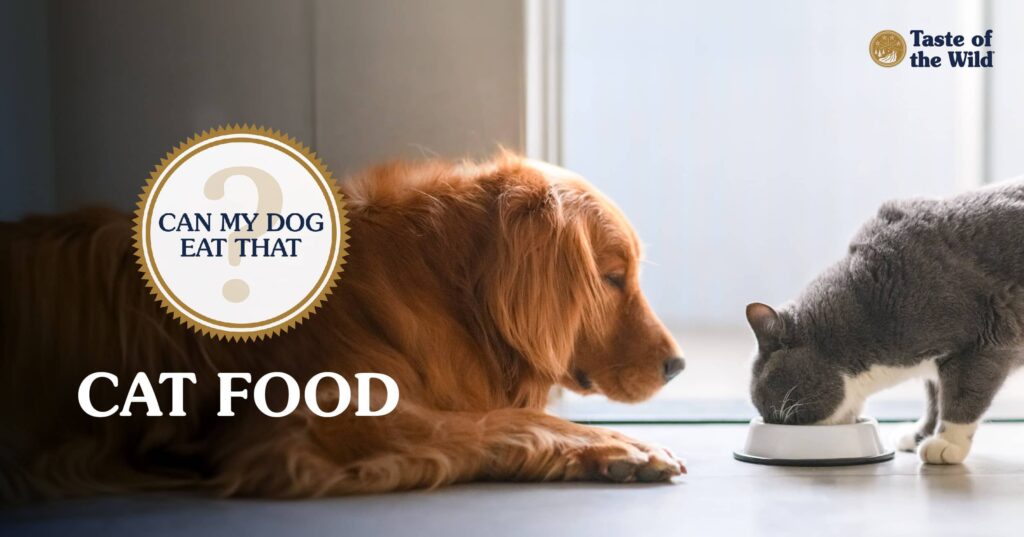
As many dog parents will tell you, some dogs will eat anything. From crumbs on the floor, a forgotten snack, or even the cat’s food. So is it ok if they sneak some of your cat’s food? Let’s find out.

Can Dogs Eat Cat Food?

Yes, dogs can eat cat food, but it’s not advisable for their health. This applies to both dry and wet cat food. While an occasional small amount may not harm a healthy adult dog, regular consumption can lead to negative health effects due to the higher protein and fat content in cat food. To ensure your dog’s well-being, it’s best to stick to a complete diet specifically formulated for their nutritional needs.

Is Cat Food Bad For Dogs?

It’s important to realize that dogs and cats are very different animals and their nutritional requirements are not the same. While feeding cat food in small amounts may not harm your dog, feeding only cat food can lead to nutritional imbalances and health issues. It’s best to provide a balanced diet of dog food formulated specifically for dogs to ensure their optimal health.

Additionally, cat food typically contains higher levels of specific amino acids, such as taurine and arginine, which are part of a cat’s nutritional requirements, while dog food is formulated with a different balance of amino acids to meet the nutritional needs of dogs.

What Happens If My Dog Eats Cat Food?

You turn your back for a minute and realize “Oh no, my dog ate cat food!” The next thought you may have is “Can a dog die from eating cat food?”

If your dog eats cat food once or twice, they might experience mild gastrointestinal upset, such as diarrhea or vomiting, due to the higher meat-based protein and fat content found in cat food compared to dog food. Pancreatitis can also be a concern for dogs that are sensitive to fat. Dogs may also show signs of an upset stomach or bloating, especially if they consume too much cat food or have sensitive stomachs. While occasionally sneaking small amounts is usually not dangerous, it’s important to monitor your dog for any adverse reactions. If your dog seems lethargic, continues to vomit, or shows other concerning symptoms, it’s best to consult your veterinarian for advice.

In the long term, consistently eating cat food can lead to serious health issues for dogs. Since kitty food is formulated to meet the nutritional needs of cats, it contains higher levels of protein and fat, which can cause weight gain and obesity in dogs if consumed regularly. Over time, this imbalance may result in nutritional deficiencies, as dogs require different vitamins and minerals than cats. Additionally, for dogs with chronic health issues such as kidney or liver disease, feeding foods with high protein levels can exacerbate their symptoms.

If your dog frequently eats your cat’s food, it’s important to transition them back to a balanced dog diet to prevent these long-term complications. Dog foods are specially formulated to meet the nutritional requirements for your dog. Regular veterinary check-ups can help monitor their health and address any concerns.

How to Stop My Dog From Eating Cat Food

If your dog’s interest in cat kibble becomes a habit, you may need to consider additional steps to manage their fixation on other food. Consider relocating the cat’s food bowl to a spot that’s out of your dog’s reach. Generally, cats are more agile and can often access places that are off-limits to dogs, so relocate the cat’s bowl higher; or you can also feed them in separate rooms.

Can Dogs Eat Cat Treats?

Generally, cat treats are not dangerous for dogs, but it is not recommended that they eat them regularly. It’s always important to read the ingredients list for any potential hazards if your dog does eat kitty treats. And make sure this does not become a habit; cat snacks can be exceptionally high in fat, which may cause pancreatitis or obesity in dogs.

Instead of feeding cat treats, give your dog treats designed for dogs or healthy snacks like bite-sized carrot, cucumber or sweet potato slices. These tasty snacks are not only nutritious, they can also provide a satisfying crunch that most dogs enjoy.

Can Dogs Eat Dry or Wet Cat Food?

As a dog owner, there may be times when you find yourself out of dog food, and the only option available is feeding them cat food. For healthy adult dogs, a meal or two of wet or dry cat food may not pose a significant problem. However, it’s crucial not to risk your dog’s health by feeding kitty food for an extended period.

So can dogs eat cat food? While it’s not necessarily dangerous for dogs to consume cat food occasionally — as in cases of a temporary shortage or if they sneak a few bites — it’s not advisable. Cat food is specifically formulated to meet a cat’s unique dietary needs, which differ from those of dogs. Feeding your dog cat food can lead to digestive upset, pancreatitis, and may create a nutrient imbalance long term. For your dog’s overall health, it’s always best to stick to a diet specifically designed for dogs.

An interior graphic with text that reads ‘Can my dog eat cat food? Yes, but they shouldn’t’.

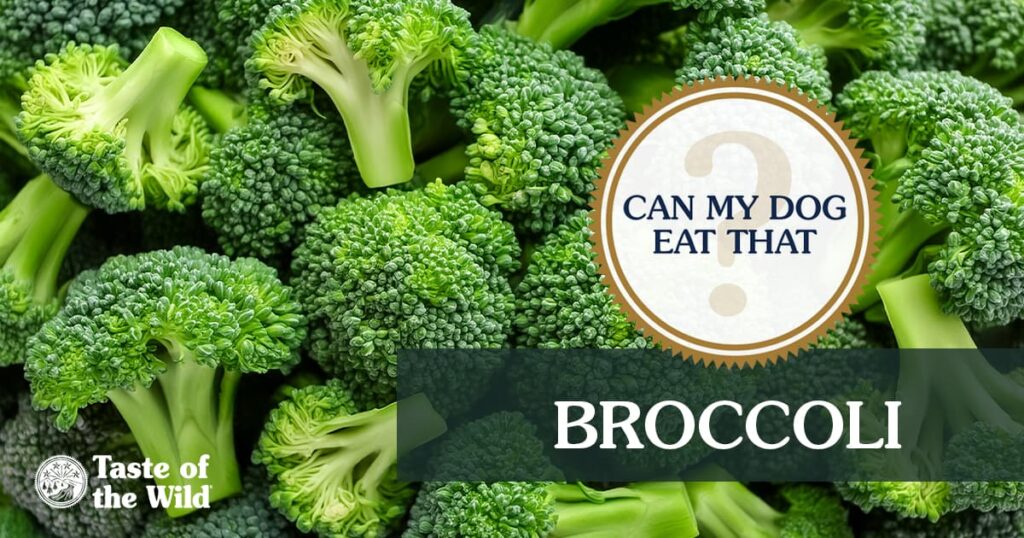
Can My Dog Eat That? Broccoli

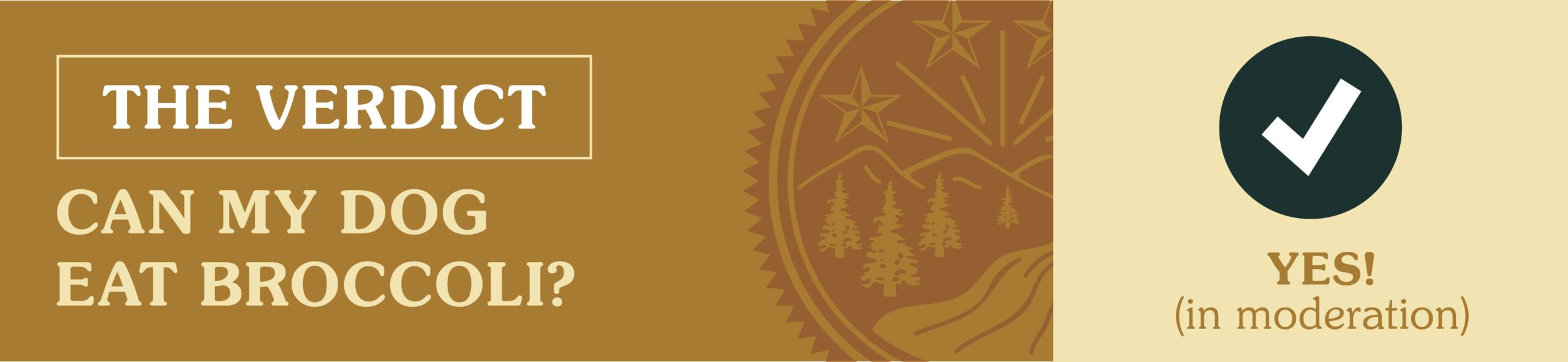
An interior graphic with text that reads ‘The verdict: Can my dog eat broccoli? Yes! In moderation’.

Welcome to “Can My Dog Eat That?,” our series that answers some obvious (and not-so-obvious) questions about what your dog can and can’t safely eat. You can view some of the previous foods we’ve looked at in our “Can my dog eat that?” guide. Today we answer the question “Can dogs eat broccoli?” Read on!

Can Dogs Eat Broccoli?

Yes, whether it’s cooked or straight from your garden (washed of course), dogs can eat broccoli. However, you’ll want to make sure broccoli makes up less than 10 percent of your dog’s total calorie intake to avoid any nasty effects on their digestive system. These effects could be as simple as noticing some stinky gas coming from your dog’s nether regions or more severe (and messy) effects like diarrhea.

Can Dogs Eat Cooked Broccoli?

Whether it’s steamed broccoli or broccoli that’s cooked any other way, eating cooked broccoli is safe for dogs in moderation. Just make sure it doesn’t have any seasonings or toppings on it that could upset your dog’s digestive system (e.g., lots of cheese) or that are toxic to dogs (e.g., garlic and onion). Even though the stems are softer when cooked, make sure you cut them up into bite-sized pieces to avoid a choking hazard.

Can Dogs Eat Raw Broccoli Florets?

Just like other vegetable treats that are crunchy when raw, like carrots and cucumbers, dogs can eat broccoli that is raw. Just make sure it’s washed and cut into bite-sized pieces, especially for puppies or small adult dogs, so any gulped pieces don’t cause an obstruction.

Is Broccoli Good for Dogs?

If you’re looking for a healthy low-calorie treat for dogs, broccoli is a great choice — in moderation. How much broccoli your dog can eat depends on the individual dog; like with any treat, broccoli should make up no more than 10 percent of your dog’s recommended daily calorie intake. What’s not so good is that broccoli florets contain isothiocyanates — if your dog eats too much broccoli, isothiocyanates can cause an upset stomach and digestive tract.

Some of the nutritional benefits of broccoli include that it’s a good source of fiber, vitamin C and vitamin K. However, if you’re feeding your dog a commercial dog food that is complete and balanced, all nutritional needs are fulfilled by your dog’s food. There’s no need to supplement them with other food. So while broccoli is good for your dog in small amounts, they don’t need to eat broccoli as a nutrient source — just as a treat.

Can Dogs Eat Broccoli Stems?

Yes, dogs can eat the stem part of the broccoli; however, it’s best to cut them into bite-sized pieces, particularly for small dogs. That way you can reduce the risk of your dog or puppy choking or the broccoli stalks causing an obstruction. Cooking the broccoli stems will also make them softer and easier to eat and digest.

Can Dogs Have Cauliflower?

If all this talk of broccoli has got you thinking about other vegetables dogs can eat and you’re wondering whether dogs can eat cauliflower, the answer is yes! Like broccoli, it contains vitamins C and K, and is a healthy treat for dogs in moderation. But it is also a cruciferous vegetable, so it contains the isothiocyanates that can cause stomach upset or diarrhea in excess amounts. Make sure you cut the cauliflower into bite-sized pieces and feed your dog small quantities.

Can You Give Your Dog Broccoli?

Broccoli for dogs is a nutritious snack (in moderation) that also has some nutritional benefits. Just remember that too much broccoli could cause some digestive issues for your dog, and to always cut the broccoli into small pieces to avoid it being a choking hazard.

An interior graphic with text that reads ‘The verdict: Can my dog eat broccoli? Yes! In moderation’.

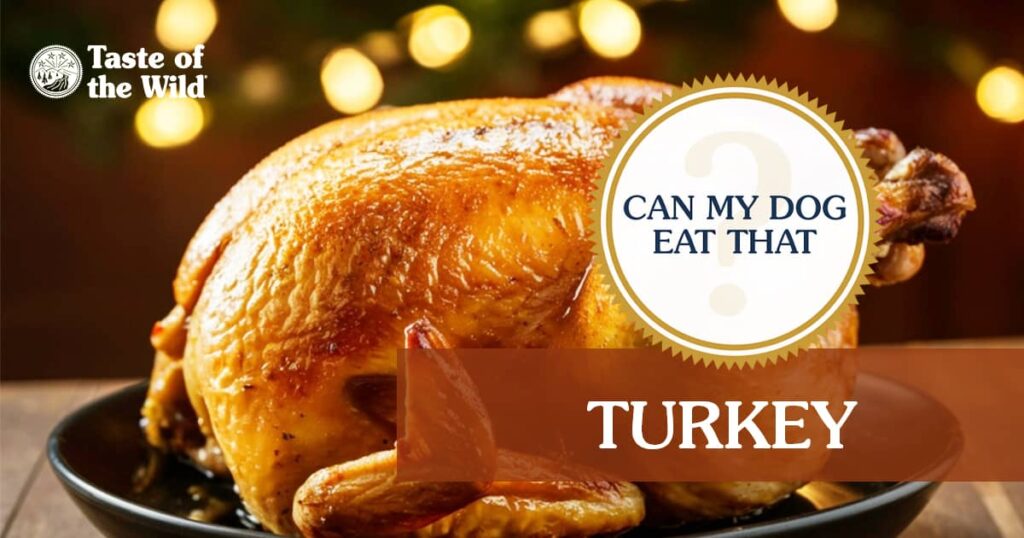
Can My Dog Eat That? Turkey

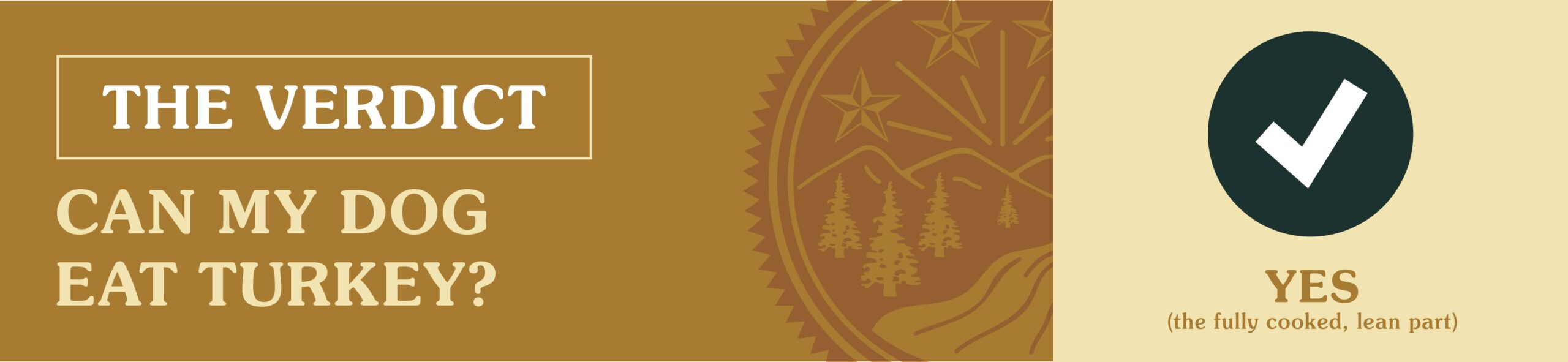
An interior graphic with text that reads ‘The verdict: Can my dog eat turkey? Yes, the fully cooked, lean part’.

Welcome to “Can My Dog Eat That?,” our series that answers some obvious (and not-so-obvious) questions about what your dog can and can’t safely eat. You can view some of the previous foods we’ve looked at in our “Can my dog eat that?” guide. Today we answer the question “Can dogs eat turkey safely?” Read on!

If you’re carving a turkey on Thanksgiving (or any day) and you notice some puppy-dog eyes pleading at you from under the table, it may have you wondering, can you feed your dog turkey? We’ve gone over other Thanksgiving foods before, like ham, potatoes and cranberry sauce, so now let’s talk about the main event — the turkey.

Can Dogs Eat Turkey?

Turkey “meat” is definitely safe for your dog to eat — unless they’re allergic, of course. Turkey is an ingredient in commercial dog food, including some of our dog food formulas. But if you’re serving turkey at home, whether it’s safe for your dog or not depends on how you’re preparing it and which part of the turkey you’re serving.

Make sure you only serve your dog turkey that is fully cooked, as raw or undercooked turkey can contain Salmonella bacteria that can cause an upset gastrointestinal system. You should also avoid feeding your dog turkey skin (it’s too fatty) and turkey bones. Cooked or raw, the bones can easily splinter and damage your dog’s mouth or digestive tract and can also block their gastrointestinal tract. So stick with feeding them small amounts of the “turkey meat.”

Fun Fact: Turkey Isn’t Meat

That’s right — in the world of pet food, there’s no such thing as “turkey meat.” There are rules about how pet food ingredients are described, and one of them is that “meat” only comes from mammals. Muscle from non-mammalian species like turkeys, chickens, ducks or fish must be identified as poultry or fish or by their specific species (e.g., turkey, duck, salmon or tuna).

Is Turkey Good for Dogs?

Yes, like fish, fully cooked turkey is good for dogs and has nutritional benefits — depending on the part of the turkey. We use turkey in our dog food formulas because it’s a highly digestible, lean protein that enhances palatability (the tastiness). We use turkey liver as a nutritious source of iron and protein, and we use turkey broth, created from cooking turkey in water, in our canned products as a source of moisture.

The parts of the turkey that aren’t so good for dogs are the fatty parts. As much as most dogs would love the taste, turkey skins and trimmings are high in fat and difficult for your dog to digest. Eating fatty foods is not good for your dog’s health and can lead to pancreatitis, a painful inflammation of the pancreas that can lead to hospitalization. Symptoms of pancreatitis include vomiting, diarrhea, decreased activity, appetite loss and mild to severe abdominal pain. So make sure fat trimmings aren’t part of your dog’s diet.

What Type of Turkey Can Dogs Safely Eat?

While fully cooked turkey is safe for dogs to eat, it should still be considered a treat. How much turkey you can feed your dog depends on their recommended calorie intake. Turkey pieces or any treat should only provide up to 10% of your dog’s recommended daily calorie intake.

Can Dogs Eat Turkey Bacon or Turkey Sausage?

It’s not recommended for dogs to chow down on some bacon or turkey sausage because processed foods like these typically contain high amounts of sodium (salt), which isn’t healthy for dogs. Additionally, they may contain seasonings that are toxic to dogs (e.g., garlic and onion).

Can Dogs Eat Turkey Lunch Meat?

The answer is the same for this one. The high amounts of salt typically in turkey lunch “meat” make it an unhealthy choice for dogs.

Can Dogs Eat Turkey Burgers? What About Ground Turkey?

You can safely feed your dog a small amount of cooked ground turkey that doesn’t have any seasonings or other additives. If you make your own turkey burgers that are plain and cooked well, those are also fine. But store-bought turkey burgers will probably have seasonings added, so stay clear of those if so.

Can Dogs Eat Turkey Bones?

No. Turkey bones, especially cooked bones, can splinter and cause damage to your dog’s mouth and other parts of their digestive tract. They can also cause a blockage in their gastrointestinal tract. Raw bones are not okay either, for the reasons below.

Can Dogs Eat Raw Turkey?

No, dogs should not eat raw turkey or turkey bones as they may be contaminated with viruses, bacteria or parasites that put your dog at risk of becoming sick. The Centers for Disease Control and Prevention does not recommend feeding raw pet food or treats to dogs (or cats). So make sure you serve fully cooked turkey to your dog (and people)!

Should You Feed Your Dog Turkey?

You can safely feed turkey to your dog as a treat as long as it’s the lean portion, not the skin, fatty parts or bones, and it’s fully cooked. Make sure it’s plain turkey without gravy or seasonings, too.

An interior graphic with text that reads ‘The verdict: Can my dog eat turkey? Yes, the fully cooked, lean part’.

Can My Dog Eat That? Spicy Food

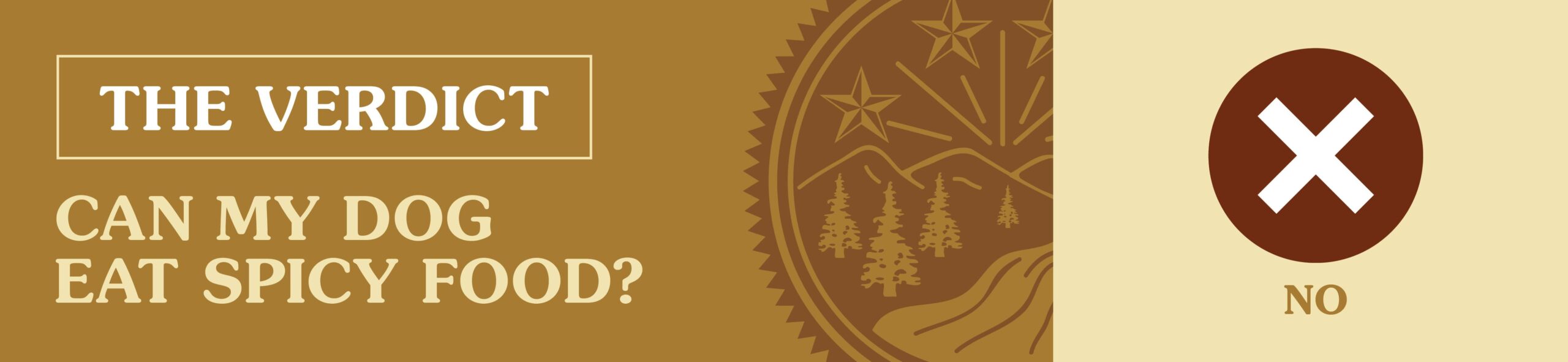
An interior graphic with text that reads ‘The verdict: Can my dog eat spicy food? No’.

Welcome to “Can My Dog Eat That?,” our series that answers some obvious (and not-so-obvious) questions about what your dog can and can’t safely eat. You can view some of the previous foods we’ve looked at in our “Can my dog eat that?” guide. Today we answer the question “Can dogs eat spicy food?” Read on!

Can Dogs Taste Spicy Food?

Before we dive into whether eating spicy foods is OK for your dog, let’s go over whether dogs can taste spicy food. Dogs have around 1,700 taste buds that can taste bitter, sour, sweet and salty flavors. In comparison, humans have around 9,000 taste buds. So while dogs can taste and experience spicy flavors, it’s probably not to the same extent as we can. Bonus fact: dogs have special taste buds that can taste water, whereas water is tasteless to us.

Can Dogs Eat Spicy Foods?

While your dog may not be able to taste spicy food as well as we can, most spicy foods will cause that burning and heat sensation that many people know so well. It’s definitely not a pleasant experience for your dog, and it can also be painful. Therefore, letting your dog eat spicy food is not recommended because it can cause discomfort as well as upset your dog’s digestive system.

Can Dogs Eat Jalapenos?

No, you should not feed jalapenos or food containing jalapenos to your dog.

Can Dogs Eat Chili Peppers?

No, you should not feed chilis or food containing chilis to your dog.

Can Dogs Eat Hot Sauce?

No, you should not let your dog eat food covered in hot sauce.

What Makes Spicy Food Bad for Dogs?

For some foods, the problem is obvious (e.g., hot dogs aren’t good for dogs because of their fat and salt content). When it comes to spicy foods, the problem is a tiny but potent molecule called capsaicin. It’s found naturally in hot peppers and is released when you or your dog bites into the pepper. Capsaicin is what produces the heat and burning sensations.

If your dog ingests a large amount of spicy food, it can upset the digestive tract and result in vomiting, diarrhea and stinky gas, so if this happens, call your veterinarian for advice. Milk can help bind the capsaicin molecules; but dogs can also be lactose intolerant, which means milk is not a good remedy for dogs.

You also need to think about the other ingredients that may be in spicy foods, like garlic and onion, which are toxic to dogs. So it’s best to keep all spicy dishes away from curious canine tongues.

Can Dogs Eat Spicy Food in Small Quantities?

While small amounts of capsaicin are not toxic to dogs, they can still experience the unpleasant burning sensation from capsaicin, so make sure you keep spicy foods out of your furry friend’s reach.

What Seasoning Can Dogs Eat?

While chili powder and other ingredients that make food spicy should be avoided, there are some seasonings that are OK for your dog to eat (as long as the other ingredients in the food are safe, too). Here are some herbs and spices that dogs can eat in small quantities, as long as they are not in the oil or essential oil form (and your veterinarian approves):

  • Cinnamon
  • Dill
  • Parsley
  • Peppermint
  • Sage
  • Thyme (not Spanish thyme)

Some of the herbs and spices that dogs should avoid include:

  • Bay leaf
  • Cocoa or cocoa powder
  • Chives
  • Garlic
  • Hops
  • Mustard seed or powder
  • Nutmeg
  • Onion
  • Spanish thyme

Can dogs taste spicy food? Yes. Should they eat spicy food? No. It’s not recommended to give your dog spicy foods, as it could cause an uncomfortable experience for them. Avoiding spicy foods, as well as herbs and spices that are toxic to dogs, is important to keep your dog healthy and happy.

An interior graphic with text that reads ‘The verdict: Can my dog eat spicy food? No’.

Can My Dog Eat That? Cucumbers

An interior graphic with text that reads ‘Can my dog eat cucumbers? Yes!’.

Welcome to “Can My Dog Eat That?,” our series that answers some obvious (and not-so-obvious) questions about what your dog can and can’t safely eat. You can view some of the previous foods we’ve looked at in our “Can my dog eat that?” guide. Today we answer the question “Can dogs eat cucumbers?” Read on!

Can Dogs Eat Cucumbers?

If a cucumber slice drops to the floor and your dog vacuums it up, it’s OK — dogs can eat cucumbers. They are a healthy snack and safe for dogs to eat in moderation, much like cranberries, pineapple, broccoli and other fruits and vegetables. Cucumbers are rich in vitamins and minerals, have a very high water content and are low in calories, making them healthy and hydrating dog treats.

When Are Cucumbers Bad for Dogs?

Feeding cucumbers to your dog is generally OK as long as you follow the same rules that apply for most human food treats — feed cucumbers in moderation, slice them into small pieces and check with your veterinarian first. Even a healthy treat should make up no more than 10 percent of your dog’s recommended daily calorie intake. With cucumbers, you’ll need to be more aware of the effects of fiber — cucumbers are a good source! — than of calories: if your dog eats too much fiber at once, that can cause an upset stomach. It’s also important that the size of the cucumber slices are appropriate for your dog’s size to reduce the risk of choking or an intestinal blockage.

What Happens If Dogs Eat Too Much Cucumber?

Even the healthiest of foods can cause a problem if they’re eaten in large quantities. Dogs eating cucumbers whenever they want could cause an upset gastrointestinal tract, so make sure you’re limiting your dog’s access to them. How much cucumber a dog can eat depends on their size — it makes sense that a Great Dane can generally eat more (of anything) than a Yorkshire terrier!

Which Parts of a Cucumber Can Dogs Eat?

There are a few different parts of a cucumber fruit, so let’s go over some common questions about which parts are safe for dogs to eat.

Can Dogs Eat Cucumber Skin?

As long as you wash it first, most dogs can eat the whole cucumber fruit, including the skin. However, some dogs have trouble digesting cucumber skin, so you may need to remove it if your dog has a sensitive stomach.

Can Dogs Eat Cucumber Seeds?

Cucumber seeds are not toxic to dogs, so they’re fine for dogs to eat. However, like the skin, some dogs have trouble digesting the seeds — you may want to scoop those out.

Can Dogs Eat Cucumbers Raw?

Yes, just like when we eat cucumber slices, it’s perfectly safe for dogs to eat raw cucumbers. It’s the other ingredients that might be mixed with cucumbers that are the concern. For example, cucumber and onion salad is off the menu, as onions are toxic to dogs. Sticking with plain cucumbers is best for your dog.

Can Dogs Drink Cucumber Water?

If you’re making cucumber water at home and know the ingredients going into it are safe for dogs, that’s fine. If you’re buying cucumber water from a store, check for ingredients like xylitol that are toxic for dogs.

Can Dogs Eat Pickles?

No, it’s not recommended that dogs eat pickled cucumbers. Pickles, like hot dogs, typically have a high salt (sodium) content, which isn’t healthy for dogs. The pickle brine may also contain ingredients like garlic or onion that are toxic to dogs.

Can Puppies Eat Cucumbers?

Pups can safely eat cucumbers as long as they’re sliced into puppy-sized pieces. You could use cucumber slices as a refreshing and crunchy reward during a training session. Blueberries and carrots are some other fruits and vegetables that can serve as healthy training treats.

Are Cucumbers Good for Dogs?

Yes! Cucumber slices can be a healthy, low-calorie snack for dogs. Just make sure you wash them and keep your dog from over indulging on these crunchy treats. And as always, check with your vet before adding a new food to your dog’s diet.

An interior graphic with text that reads ‘Can my dog eat cucumbers? Yes!’.

Can My Dog Eat That? Carrots

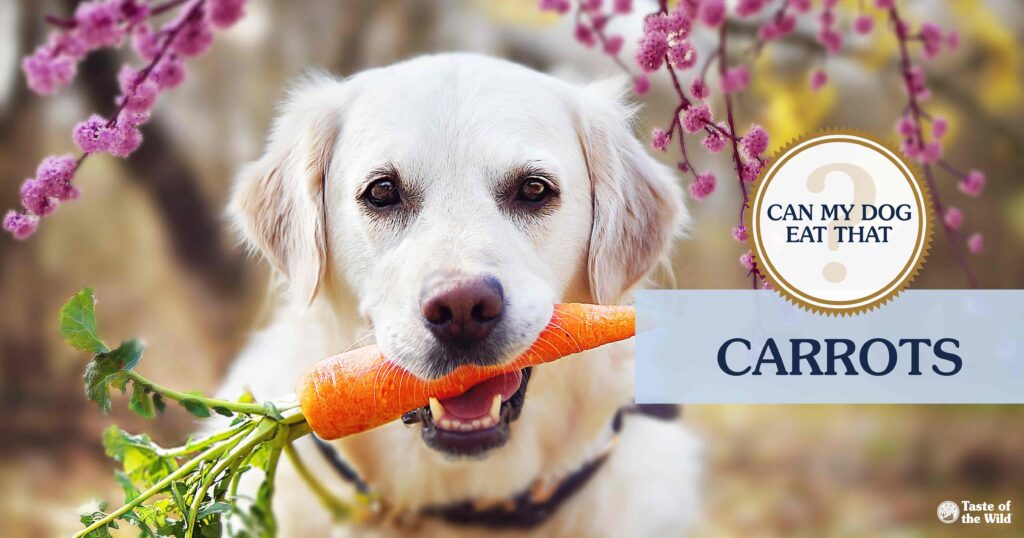
An interior graphic with text that reads ‘Can my dog eat carrots? Yes!’.

Welcome to “Can My Dog Eat That?,” our series that answers some obvious (and not-so-obvious) questions about what your dog can and can’t safely eat. You can view some of the previous foods we’ve looked at in our “Can my dog eat that?” guide. Today we answer the question “Can dogs eat carrots?” Read on!

If you’re looking for a healthy snack for your dog to supplement their dog food, fruits and vegetables (like broccoli) are a great choice — particularly if your dog is tipping the scales in the wrong direction and you’re looking for a low-calorie treat. But not all fruits and vegetables are safe for dogs. So what about carrots? They’re healthy for most humans, but are they good for dogs?

Can My Dog Eat Carrots?

Yes, dogs can eat carrots! As long as they don’t have any seasonings or toppings, they make a great low-calorie alternative to treats. Much like cucumbers, most dogs love the texture of carrots and that classic carrot crunch. As with most things though, make sure you feed your dog carrots in moderation, as they are high in natural sugars.

There Is a Carrot Caveat, Though

You can add carrots to your dog’s diet, but make sure that carrots (and other treats) make up no more than 10 percent of your dog’s daily calorie allowance. Also, it’s always a good idea to ask your veterinarian before adding anything new to your dog’s diet or before switching dog food.

Are Carrots Good for Dogs?

Yes, carrots are a healthy snack for dogs. Carrots are a good source of fiber, certain vitamins and minerals and other nutrients. Their orange color comes from beta carotene, which produces vitamin A and is a powerful antioxidant. The nutritional benefits of carrots are why they’re often used as an ingredient in commercial dog foods.

Can Dogs Eat Raw Carrots?

If you find your dog in the garden chewing on a freshly dug-up carrot, don’t panic. It’s OK for your dog to chomp on the leafy green tops of carrots, the carrot skin and the raw carrot itself. Hopefully they left some in the garden for you!

If you have store-bought carrots, you can also feed those to your dog without cooking them. Just give the raw carrots a wash first or peel them. It’s also a good idea to chop them up into bite-size chunks of carrot, as raw carrots could be a choking hazard, especially for small dogs.

Can Dogs Eat Cooked Carrots?

Sure! It’s fine for your dog to eat plain cooked carrots. You can boil, steam, microwave, roast or use any other method to cook carrots for dogs. You could even get fancy and julienne them first. However, make sure they’re plain carrots — don’t give your dog carrots that have seasonings, butter or oil on them. You should especially avoid any seasonings or flavoring that contain ingredients that are toxic to dogs like garlic and onion.

Can Puppies Have Carrots?

Yes, your pup doesn’t need to miss out — they can eat carrots as a healthy treat, too. Just make sure that, raw or cooked, you cut the carrot up into puppy-sized pieces so your puppy doesn’t choke on it. Carrots may even help teething puppies feel better. If you put bite-size pieces in the freezer, the frozen carrots may help soothe your dog’s teeth when they’re feeling discomfort from teething.

What About Carrot Cake, Carrot Juice or Carrot Soup?

Can dogs eat carrots when they’re used as an ingredient in people food? It depends on what else is in the food. Carrot cake is off the list because it often contains a generous amount of sugar, which isn’t healthy for dogs. It may also contain the artificial sweetener xylitol which is toxic to dogs. Similarly, with carrot juice and carrot soup, it depends on what else is in them. If you aren’t sure of the other ingredients, it’s best to avoid feeding the carrot-containing food to dogs.

So, Can Dogs Eat Carrots?

Yes, you can feed carrots to your dog. Raw or cooked carrots are safe for dogs and can be used as a healthy snack (when cut into small pieces), much like other vegetables such as corn or peas. They’re a common ingredient in commercial dog food and are perfect for an occasional treat.

An interior graphic with text that reads ‘Can my dog eat carrots? Yes!’.

Can My Dog Eat That? Potatoes

An interior graphic with text that reads ‘Can my dog eat potatoes? Yes! (if they are cooked and plain)’.

Welcome to “Can My Dog Eat That?,” our series that answers some obvious (and not-so-obvious) questions about what your dog can and can’t safely eat. You can view some of the previous foods we’ve looked at in our “Can my dog eat that?” guide. Today we answer the question “Can dogs eat potatoes?” Read on!

Taters. Spuds. Pommes de terre. Whichever name you use, potatoes are a popular vegetable at the dinner table. That’s possibly because, much like mushrooms, they’re such a versatile ingredient: we’ve got mashed potatoes, roasted potatoes, baked potatoes, boiled potatoes, potato salad, potato soup, tater tots, French fries — the list goes on. With all of these options passing by their nose, there’s a good chance that your dog is going to beg you for a taste of your ’taters at some point. So should you give in? Can dogs eat potatoes?

The short answer is yes, it’s OK if dogs eat potatoes as long as the potatoes are cooked and plain. But there are a few more things you should know about potatoes before your dog slurps down a spoonful of spud.

Can Dogs Eat Cooked Potatoes?

If you’re going to feed your dog potatoes, they should be cooked. As you’ll read later on, raw potatoes can cause an upset digestive system for dogs. Whichever method you use to cook potatoes, don’t add salt or butter to them because these aren’t healthy for dogs. You should feed your dog plain potatoes that don’t have any toppings or seasonings — especially if the seasonings are toxic to dogs (garlic and onion powder).

For example, if you’re making mashed potatoes, get a spoonful out for your dog before you put the butter, salt or other ingredients in that make it so tasty for you. Similarly, instant mashed potatoes are not good for your dog if they have seasonings mixed in with them.

Are Potatoes Good for Dogs?

Yes, potatoes are healthy for dogs if they are plain, cooked and fed in moderation. Potatoes are often used in commercial dog foods as a carbohydrate source. Carbohydrates provide energy and help promote gastrointestinal health. Potato protein is used as a protein source in some high-protein dog food recipes. Potatoes are also a good source of some vitamins and minerals.

Can Dogs Eat Raw Potatoes?

No, don’t let your dog eat raw potatoes. They can be hard to digest, potentially causing gastrointestinal issues. Additionally, if your dog bites off large chunks of hard, raw potato, they could choke. Cooking the raw potato breaks down the starch and lectin in the potato making it easier to digest (and easier to eat). You should also avoid cooking raw potatoes that have green spots or have started to sprout (see the garden section below).

Can Dogs Eat Potato Skin?

No. Potato skins can be hard to digest and can upset your dog’s digestive tract, so it’s best to feed them potatoes without the skin on. If you baked potatoes with the skin on, scoop out the potato and give that to your dog — before you add the sour cream, butter, cheese, chives and bacon, of course. You should also make sure your dog can’t hunt down any raw potato skins you’ve peeled.

Can Dogs Eat French Fries?

No. Any type of oil-fried potato, like French fries, tater tots and hash browns, is not healthy for dogs due to the fat content. If you feed your dog one or two French fries, they’ll probably be OK, but large amounts of fatty food can cause pancreatitis or an upset digestive tract. The large amount of salt that can be in or on fried food is also not healthy for dogs.

Can Dogs Eat Sweet Potatoes?

Yes. Sweet potatoes have the same guidelines as potatoes — as long as sweet potatoes are cooked and don’t have any toppings or seasonings, your dog can eat sweet potatoes. Fun fact: despite their similar name, sweet potatoes are actually distant relatives of potatoes.

Can Dogs Eat Potatoes from the Garden?

No. Potatoes belong to the nightshade family of plants which also includes tomatoes and eggplants. Nightshades contain glycoalkaloids (solanine and chaconine in the case of potatoes) which can be toxic in large amounts. Potato plants, green potatoes and sprouts contain solanine, and raw potatoes and skins contain chaconine. In toxic amounts, these glycoalkaloids can cause an upset digestive tract as well as other symptoms. If your dog eats large amounts of a potato plant, raw potatoes, green potatoes or potatoes with sprouts, contact your veterinarian.

Can Dogs Eat Potato Chips?

No. The thing that makes potato chips sooo tasty is the seasonings on them. But the seasoning may contain ingredients like garlic and onion powder that are toxic to dogs. Potato chips are usually high in salt and fat which isn’t good for dogs either. So letting them lick the seasoning and chip crumbs from the bottom of the bag is not a good idea!

Keep the Potato Portions Petite

If you do decide to give your dog some potato, use it as a treat or food topper. It shouldn’t be used to replace your dog’s diet and shouldn’t be more than 10 percent of their daily calorie allowance. A small dollop of plain mashed potatoes on top of your dog’s kibble is a good place to start. As always, check with your veterinarian before changing your dog’s diet, including adding new foods.

Can My Dog Eat Potatoes?

Yes, it’s OK if dogs eat mashed potatoes or any other type of cooked potato, as long as they’re plain with no seasonings or toppings. Stay away from raw potatoes and potato skin, though, and remember to only give your dog potatoes as a treat.

An interior graphic with text that reads ‘Can my dog eat potatoes? Yes! (if they are cooked and plain)’.

Can My Dog Eat That? Nuts

An interior graphic with text that reads ‘Can my dog eat nuts? It depends’.

Welcome to “Can My Dog Eat That?,” our series that answers some obvious (and not-so-obvious) questions about what your dog can and can’t safely eat. You can view some of the previous foods we’ve looked at in our “Can my dog eat that?” guide. Today we answer the question “Can dogs eat nuts?” Read on!

Not All Nuts Are Toxic to Dogs, But They’re Not Healthy Either

If you’re snacking on some nuts, you might think, “What’s the harm in tossing one or two nuts to my furry friend” (who’s over there drooling and giving you sad puppy dog eyes). Well, there are a few types of nuts that could harm your dog. The general rule is that you should avoid giving your dog nuts as a special treat, because even if they’re not toxic, nuts are not healthy for dogs. Other crunchy snacks are a better alternative, like popcorn that has been air-fried with no toppings.

Are Nuts Bad for Dogs?

If we put nut toxicity aside for a minute, one of the main problems with nuts is that, like coconut, most have a high fat content and are loaded with calories. If your dog is overweight or obese — or even if they’re not — a high-fat, calorie-dense treat like nuts is not a great idea.

Additionally, if your dog consumes a large serving of nuts in one sitting, they could develop pancreatitis, which is commonly triggered by a sudden increase in fat in a dog’s diet. Many nuts are also coated in salt, and too much salt (sodium) is unhealthy for dogs.

Certain nuts pose choking hazards for dogs, especially for small dogs. Notorious for scarfing down food instead of chewing it carefully, dogs can choke on nuts if they swallow them whole or in large pieces. Nut husks or shells and some of the nuts themselves can be hard to digest and could cause an intestinal blockage or damage to the intestine, which could require surgery.

Will Nuts Make My Dog Sick?

There are a few reasons why most nuts can make dogs sick. The coating or seasoning used on nuts may be toxic, for example, chocolate or garlic or onion seasoning. Some nuts themselves (e.g., macadamia nuts) are toxic to dogs, and should never be fed to your dog. Additionally, any nut that is moldy is not safe for dogs to eat. Mold can produce toxins (mycotoxins) that can make dogs sick, including vomiting, tremors and seizures.

Which Nuts Are Safe for Dogs to Eat?

There are some nuts which are not toxic and don’t pose choking hazards; however, any type of nut fed in large amounts is not healthy for dogs. So if you’re feeding your dog any of the nuts which are considered “safe” for dogs (e.g., cashews or peanuts), make sure it’s only in small amounts.

Can Dogs Eat Acorns?

No. As well as being a choking hazard, acorns contain tannins which can cause vomiting and diarrhea.

Can Dogs Eat Almonds?

No. Almonds are a choking hazard, especially for small dogs. Almond nut butters are safe in small quantities as long as they don’t contain the artificial sweetener xylitol.

Can Dogs Eat Brazil Nuts?

No. Brazil nuts are not toxic, but they do have one of the highest fat contents and are difficult for dogs to digest.

Can Dogs Eat Cashews?

Cashews that are roasted (not raw cashews) are safe for dogs in very small quantities. They can be a choking hazard, though.

Can Dogs Eat Macadamia Nuts?

No, do not feed macadamia nuts to your dog as they are very toxic to dogs. They produce gastrointestinal and neurological signs in dogs that include lethargy, vomiting, fever, loss of coordination, muscle weakness and tremors. If your dog eats macadamia nuts, contact your veterinarian immediately.

Can Dogs Eat Peanuts?

Unsalted peanuts are safe in small quantities as long as they’re not seasoned. Many dogs eat peanut butter which is safe in small amounts as long as you purchase peanut butter brands that don’t contain the artificial sweetener xylitol. As much as dogs love it, too much peanut butter isn’t healthy for dogs, either.

Can Dogs Eat Pecans?

No. Pecans are not toxic, but they are at risk of mold and mycotoxin production and could cause an intestinal blockage.

Can Dogs Eat Pistachios?

No. Pistachios are not toxic to dogs, but they are potential choking hazards, are difficult to digest and could cause an intestinal blockage. Pistachios are also susceptible to mold, which can result in poisoning from mycotoxins produced by the mold.

Can Dogs Eat Walnuts?

It depends on whether they’re English or black walnuts. English walnuts, commonly used for cooking, are generally safe in small amounts. Black walnuts, however, contain the chemical juglone, which can cause an upset stomach. Walnuts are also susceptible to mycotoxin-producing mold which is harmful to dogs.

Can Dogs Eat Trail Mix?

Other than nuts, many trail mixes contain ingredients that are toxic to dogs, like chocolate and raisins. So avoid sharing your trail mix with your dog.

My Dog Ate Nuts. What Should I Do?

If your dog ate toxic nuts, moldy nuts or too many nuts of any type, contact your veterinarian or an after-hours emergency clinic. You could also call an animal poison control center, ASPCA Animal Poison Control Center or Pet Poison Helpline.

Can Dogs Eat Nuts? It Depends!

There’s not a clear answer to “Can my dog eat nuts?” It depends on the type of nut, the amount eaten and the condition of the nut (e.g., moldy walnuts). But there are certainly much healthier treats for dogs to eat which have fewer calories and a lower fat content.

An interior graphic with text that reads ‘Can my dog eat nuts? It depends’.