
Vet Visits for Cats: What to Expect

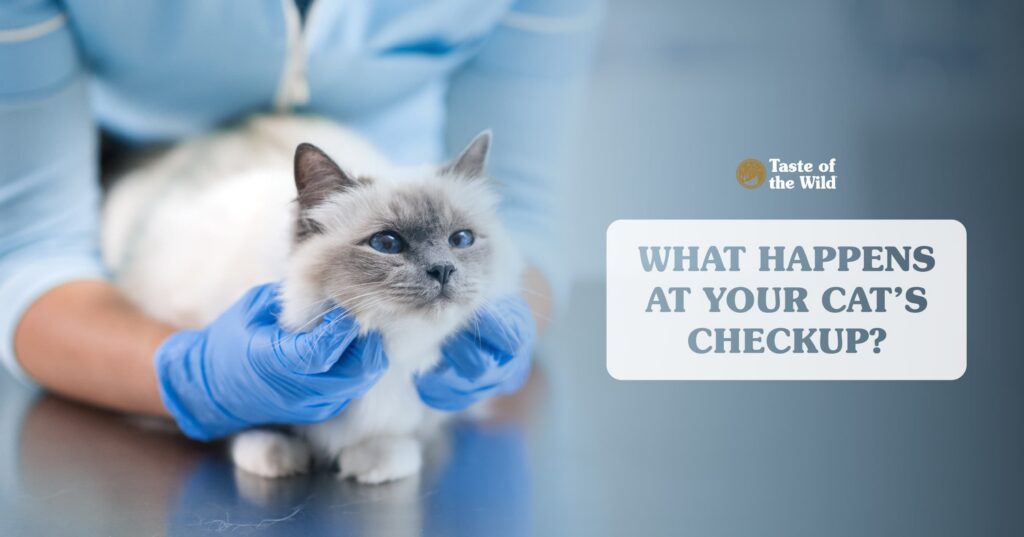
A long-haired white and gray cat with bright blue eyes being gently held on an exam table by a person wearing blue medical gloves.

Wellness exams for your cat are necessary appointments to make, just like an annual physical for your own preventive care. But what can you expect during your cat’s checkup? Your cat may have some questions about what to expect during a checkup, too. Typically, this vet visit won’t last more than 30 minutes, yet within that small window of time, your veterinarian will be checking your furry companion from whiskers to tail.

Do Cats Need Yearly Checkups?

Cats older than one year of age, including healthy adult cats, should visit the veterinarian at least once a year for routine wellness examinations, with the frequency adjusted based on the cat’s lifestyle, age and overall well-being. Kittens need to visit the vet every month until they receive their last round of immunization boosters at four months of age and have completed their other routine kitten procedures like spaying/neutering and receiving a microchip. Then they can begin their yearly vet visit schedule. 

For senior cats over 10 years old, more frequent monitoring becomes important, and visits every six months are typically recommended to keep a closer eye on age-related health changes. Because cats mask illnesses and age quickly, semi-annual visits allow for early diagnosis of age-related issues like kidney disease, diabetes, cancer or arthritis.

If your feline friend has an underlying health condition, your veterinarian will develop a plan specifically for your cat and the health condition they are tackling.

Preparing Your Cat for a Regular Vet Visit

When preparing for your regular vet visits, there are a few things to do at home before you go. First, make sure you have a way to transport your cat, such as a cat carrier, to keep them safe. Your cat may develop some anxiety when the time comes for a vet visit, but there are some things you can do to help keep your cat calm at the vet. Prepare them in advance by making their carrier a comfortable space, minimizing stress during travel, and using gentle handling and calming techniques throughout the visit. Staying calm yourself is important, as cats are very perceptive and can pick up on your emotions.

What Happens During Your Cat’s Wellness Exam?

Once you’re in the exam room, the veterinarian technician or assistant will ask key questions about your cat’s age, gender, diet, appetite, litter box activity, routine care and whether they’re an indoor-only cat or if they spend any time outside. They’ll also ask you if there have been any changes in your cat’s behavior or if you have any concerns. They’ll place your answers in your cat’s file for the veterinarian and for future visits.

Next, it’s time to get your cat’s weight, body temperature, heart rate and respiratory rate. Your cat’s temperature will be taken with a rectal thermometer, so if your pet is anxious, this step may be skipped for now. They may loop back to it later after your cat has calmed down or attempt a different method.

After all pertinent information has been collected, the veterinarian will evaluate your pet’s chart and then start a physical examination.

Your veterinarian will review the following:

  • Body condition: Are they in an ideal body condition for their breed and age? Does your cat have any hair loss or inflammation? How does their coat look overall?
  • Heart and lungs: When the vet listens to your cat’s heart and lungs, how do they sound?
  • Abdominal palpation: Does your cat have any tenderness in the abdomen? Are there any abdominal masses?
  • Alertness: Does your cat appear responsive and aware of their surroundings? Your vet will look at your cat’s eyes and body language to measure it.
  • Walk: Is your cat walking with a limp? Are they steady on their paws? Does their body seem stiff at all?
  • Mouth: How are those pearly whites looking? Is periodontal disease present? Are there any dental problems? Are there signs of dental disease?
  • Ears: Is there any wax buildup? What about ear mites or yeast infections? And do they seem to be hearing everything going on currently?
  • Nose: How is their nasal cavity looking? Can they breathe well?
  • Eyes: Coming back to their eyes, is there any sign of infection or irritation? Do they seem to follow movement well with both eyes?

Using the information from the physical exam, the veterinarian can make a well-rounded assessment of your cat’s overall health. They’ll discuss any concerns and whether additional tests, such as X-rays, blood tests or a fecal exam, are a necessary next step in evaluating your pet’s overall health, provide core vaccine suggestions, booster shot reminders and if any dietary changes are needed to improve your cat’s well-being.

This is the perfect time for you to ask any questions you have as well. Your veterinarian is there to help provide answers and clarifications along the way. 

Preventive Care for Cats

Preventive care is one of the most important ways to keep your cat healthy and catch problems early. Scheduling a regular wellness check or routine vet visit allows you to see the vet before small issues become serious. Remember, early detection and treatment can make a big difference in your cat’s long-term health. During routine checkups, a veterinarian can monitor weight, dental health, vaccination needs and screen for common conditions. Even if your cat seems perfectly fine, it’s still important to make an appointment for your cat to visit the vet clinic at least once a year (or more often for older cats).

Another key part of prevention is protecting your cat from parasites. If your cat spends any time outside, tick prevention, along with protection against fleas, heartworm and intestinal parasites, helps avoid diseases that can be difficult and costly to treat. Your vet can recommend safe, effective products and guide you on proper use. With consistent preventive care, you’re giving your cat the best chance at a long, comfortable life.

The Average Cost of a Vet Visit for Cats

For many pet parents, the cost of a veterinary visit can be a real source of stress. Whether it’s a routine checkup, emergency visit or more complex surgical procedures, understanding what to expect financially can make the experience much more manageable.

The national average cost of a vet visit for cats varies based on location, the amount of care and other factors. The national average is often published by the American Veterinary Medical Association. It’s important to note that additional services, such as diagnostic tests, vaccinations or medications can increase the total cost of the wellness exam significantly. For example, blood tests, dental cleanings or minor surgical procedures can run several hundred dollars or more. But given an emergency vet visit can cost significantly more, treating a problem early is often better for your cat and for your bank account. 

Before moving forward with treatments, your vet’s office can provide a clear breakdown of the actual cost of treatment, including exams, recommended tests and optional services. This gives you the chance to make informed decisions and prioritize what needs to be addressed immediately versus what can safely wait.

How to Reduce Pet Care Costs

Preventive care is one of the most effective ways to control long-term vet visit costs. Annual exams can catch issues early, like dental disease, weight changes or early signs of illness before they turn into more serious and expensive conditions. For instance, addressing plaque buildup now may help you avoid costly treatments for periodontal disease or other complications later.

You might also consider pet insurance as a way to offset unexpected expenses. Many pet insurance plans help cover emergency visits, illnesses and even some routine care, making it easier to budget for your cat’s health over time.

By investing in pet insurance early, ideally while your cat is young and healthy, you can often secure lower premiums and avoid exclusions for pre-existing conditions. Over time, this can provide peace of mind, knowing you’re better prepared for both routine veterinary visit costs and unexpected medical situations.

Annual Checkups Are Important for Your Cat

Ultimately, while veterinary visit costs can vary widely, open communication with your veterinarian and a focus on preventive care can go a long way in keeping your cat, and your finances, in good shape.

So, what are you waiting for? Get your cat’s wellness exam booked. Regular checkups can equal a happier, healthier cat.

Are Pets’ Mouths REALLY Cleaner Than Humans’?

Taste of the Wild

Whether your dog is leaning in for a big slobbery kiss or your cat is insisting on drinking out of your water cup, it’s not uncommon to think, “Oh, it’s fine! Pets’ mouths are cleaner than our own.”

Is this somewhat prevalent belief true, though?

The short answer is “Maybe.” If you clean Fido’s mouth more than your own, then yes, they might have a cleaner mouth than you. However, if you’re not brushing your pet’s teeth multiple times a day, then it’s safe to say your pet does not have a cleaner mouth than you (assuming you do brush your own teeth regularly!). Unbrushed teeth are prone to bacteria buildup, and there could even be parasites hiding in your pet’s mouth.

Lower Bacteria Count, Higher Health Outcomes

We’re told that flossing and brushing our teeth twice a day will reduce the bacteria in our mouths, leading to healthier gums and teeth as well as fresher smelling breath. The same holds true for pets. Veterinarians agree that regularly brushing your pet’s teeth can reduce the overall number of bacteria in their mouths, helping to prevent periodontal disease and bad breath. Also, like with humans, not brushing your pet’s teeth could lead to heart, liver or kidney issues.

You can reduce bacteria by brushing your pet’s teeth at least once a day. Dog and cat toothbrushes as well as toothpaste can be found at your local pet store. Never reach for the human toothpaste when brushing your pet’s teeth. What may be safe for us is harmful to our pets.

Infectious Saliva and Open Wounds

Researchers have found that both humans and dogs have roughly 600 different types of bacteria in their mouths. Cats, on the other hand, have about 200 different types of bacteria in their mouths — and no, that does not mean cats have the cleanest of all mouths. Bacteria are still bacteria.

The types of bacteria in your pet’s mouth are dependent on the animal’s genetics, diet, lifestyle and hygiene habits. It’s important to remember that not all bacteria are bad — some are actually helpful. But too much bacteria, or bacteria that gets where it shouldn’t be, like in the bloodstream through scratches, licks or bites, isn’t good for anyone.

If you have any sort of open wound — a scratch, a small puncture from kitty teeth or anything like it — your first reaction should be to care for the wound before your pet can lick the spot in question. While hugs and kisses from your pet can bring comfort, their saliva can pass along diseases or cause an infection when they lick the punctured skin.

Capnocytophaga canimorsus is a common bacteria found in the mouths of both cats and dogs and serves as a good example of why you should heed this advice. If this bacteria strand is transmitted into an individual’s open wound AND they have a weakened immune system, the injury could become infected leading to sepsis or death if proper medical care is not sought. This is a rare occurrence – especially for people who have healthy immune systems – but nonetheless something to be aware of moving forward.

In the case of pets who live or play outside, you have the added possibility they could transfer parasites they picked up from putting dirt, feces or small animals in their mouth. You don’t want to introduce bacteria or parasites to that wound, so keep it clean and covered.

Just remember: If you have a wound and a pet licks it, immediately clean it out as best as you can — no matter your age or health. Then keep an eye on those wounds for any abnormalities so you can call your doctor and receive the care you might need.

Lastly, we should mention when a pet licks a wound that is already healing, their rough-textured tongue can damage your skin and reopen the sore. Take the right precautions and keep that healing wound away from your pet’s tongue.

Are Pet Kisses Dangerous, Then?

No, not necessarily! This article is not meant to make you nervous if Fido gives you a big kiss across the cheek. However, it does serve as a great reminder to brush your pet’s teeth and have caution in situations where their saliva can enter your bloodstream.

In addition to keeping your pet’s tongue away from open wounds, scientists and veterinarians say you shouldn’t encourage your pet to lick your mouth, nose and eyes. Those three spots on your face could be entry points for pathogens like E. coli into your bloodstream. So, it’s better to play it safe.

RELATED POST: Are Small Dogs More Prone to Dental Disease?

Can My Dog Eat That? Cheese

Taste of the Wild

Welcome to “Can My Dog Eat That?,” our series that answers some obvious (and not-so-obvious) questions about what your dog can and can’t safely eat. You can view some of the previous foods we’ve looked at in our “Can my dog eat that?” guide. Today we answer the question “Can dogs eat cheese?” Read on!

Cheese. Similar to avocado, it’s a snack that is easy to munch without too much guilt, right? After all, cheese is a dairy product and it’s high in calcium and protein! It’s way better than french fries or a candy bar, right? Well, perception isn’t always reality, especially when it comes to snacks that we might share with our dogs. Can dogs eat cheese? Yes, they can. Should they eat a lot of it? For all the reasons that humans might want to check their cheese intake, no.

When it comes to snacks, there are certainly worse things you can feed your dog. Most dogs can, in moderation, eat cheese without any serious repercussions outside of possibly a stinky room a few hours later. Cheese, in general, can be healthy, and dogs seem to love it. It’s a nutrient-rich treat, just like eggs are. The high amounts of calcium are good for strong teeth and bones. Vitamins A, D and B are usually prominent. Like fish, cheese is an excellent source of protein. Where’s the bad, here?

When we say that your dog can eat cheese in moderation, the term “in moderation” does a lot of heavy lifting. Cheese can be great to use as a training tool and it seems custom made for coaxing your pooch into happily scarfing pills. But cheese is almost always high in fat, and too much can cause pancreatitis. Too much for too long can cause obesity and all the issues that come with that.

Lacking Tolerance for Lactose

Dogs are much more frequently lactose intolerant than humans. As dogs age out of puppyhood, they produce less of the enzyme lactase, which helps their puppy systems digest their mother’s milk. Without (or with less of) the enzyme, adult dogs can have a very hard time digesting milk products. This doesn’t mean your dog can’t digest dairy, but it does mean that lactose can stay in their systems long enough to ferment, which can cause gas, cramps and diarrhea. There are varying degrees of lactose intolerance in dogs, and the only way to know for sure how well your dog’s system can handle it is to talk to your veterinarian — although your nose might give you a clue.

Not All Cheese Is Created Equal

To put it simply, there are a lot of cheeses out there, and they aren’t all created the same way. Some are highly processed and filled with sodium. Some are much higher in fat than others, like cheddar, Swiss and goat cheese. Cheddar and American cheese are high in cholesterol. If you want to treat your dog with healthy cheese, stick with mozzarella, ricotta and cottage cheese. There are hundreds of cheeses out there, but these are the more common varieties on both ends of the spectrum.

Of course, you can also find fat-free versions of most popular cheese varieties. Your dog’s mileage may vary!

Oh Cheese, Just Give Them Some, Already!

Yes, with a few considerations, your dog can have the occasional cheesy treat. As with every food or treat not formulated specifically for your dog, make sure to read the label very carefully. If you have any questions, consult your veterinarian.

True: dogs can eat cheese.

Behind the Breed: Shiba Inu

Taste of the Wild

The shiba inu is an ancient Japanese breed that was originally bred to hunt both small and large game, but they have become one of the country’s most popular companion animals. Brought to America from Japan only 60 years ago, shibas are good-natured and compact dogs that are often described as more like a cat than a dog.

Just like basenji dogs, shibas are classified as a “basal” breed, which means they predate modern breeds that originated mostly in the 19th century. In fact, researchers have traced the breed’s origins to 7,000 B.C. Archaeologists have even found remains of shiba-like dogs in ancient sites associated with the Jomon people who lived in the Japanese archipelago from 14,000 B.C.

Before World War II, there were three common types of shiba inu: Minos, Sanins and Shunshus. But the breed almost went extinct due to the war, when many died in bombing raids or from distemper, which became incredibly common in the following years. Now, two types of shibas, the Mino and Sanin, are very rare. All surviving shibas, however, were bred from one of the three distinct bloodlines.

Firewood Dogs

“Shiba” means brushwood, while “inu” means dog, so their name literally translates to “firewood dog,” likely due to the fact that many are the color of fire kindling. Compact and muscular, male shibas measure 14 to 16 inches at the withers, while females measure 13 to 15 inches. Shibas are double coated and the outer coat, which is stiff and straight, covers a very thick and soft undercoat that is prone to shedding. They can come in black and tan, cream, red or red sesame colors and usually have white markings.

Shiba Inus Aren’t for Beginners

Their foxlike features give them a quizzical and approachable look, but they are known for their aloofness — even with their owners! It’s important for owners to set boundaries with shibas as they can have dominant personalities. This is why they are not recommended for first-time dog owners.

Overall, shibas are a healthy breed and will give their experienced owners many years of companionship.

Shiba inu quick facts.

Cat Breeds Made For Winter Weather

Taste of the Wild

“Winter Wonderland” might be a song humans are humming this January, but not all cats enjoy the dropping temperatures. However, some cat breeds have developed the physical traits to not just survive but even enjoy colder climates. If you live where the winters are harsh (or, let’s be honest, even if you don’t), these might be the cats for you.

Siberian Cat

Siberian cat in the snow.

The title for most cold-resistant feline goes to Siberian cats. While this fluffy feline was officially recognized as a breed in the late 1980s, they were actually introduced in Siberia as early as the 17th century as a way to control the rat population.

Since Siberia is known for some of the coldest temperatures in the world, these cats went on to grow dense heavy coats to survive. Their fur became resistant to moisture and their ears are also well-insulated. This additional fluff has helped them survive temperatures as cold as 5– 14 °F until they could find shelter to hunker down.

When adapting to harsher climates, this breed developed a keen ability to think and plan ahead – making them excellent hunters and survivalists. As a house pet, you’ll notice their high level of intelligence shine through when they play or strategize their next move.

Norwegian Forest Cat

Norwegian forest cat in the snow.

Norwegian forest cats are dense-coated felines with a mysterious origin. Legend has it that this breed was the real-life inspiration for the myth of Norwegian skogkatts — large cats who lived in the mountains and had a magical ability to climb extremely rocky terrain with ease.

Norwegian forest cats are also known for their ability to run down a tree headfirst. How? This breed has sturdier claws than most cats — likely developed to survive that rocky terrain.

A cousin to the Maine coon, the Norwegian forest cat is known for its big body, bushy tail and double-layered coat used to repel moisture. As they’ve adapted to surviving snowy climates in Scandinavia, this breed has also developed tufted ears and toes to serve as natural ear warmers and booties. They’re friendly to children and usually adaptable to other pets, making them perfect family cats.

Maine Coon

Maine coon cat in the snow.

Though they originate on different continents, the Maine coon is often mistaken for the Norwegian forest cat. One way to tell the breeds apart is by looking at their faces. Maine coons have a wedge-shaped head and Norwegian forest cats have a triangle-shaped face. The Maine coon is husky breed developed naturally in the state of Maine where they experience average winter temperatures of 15 to 25 °F.

The exact age and origin story of the Main coon is still a mystery to researchers, but one thing we know for sure is that many members of this breed love spending time outside in the winter.

Maine coons have adapted to colder elements by growing a thick, luscious, semi-water-resistant coat — perfect for repelling snow and staying warm. Another unique feature this large-bodied feline possesses is winter-ready paws. Their large, wide paws act like snowshoes in the winter, preventing them from sinking into the snow as they walk. It’s a great feature to develop in a state that sees an average of 50 to 70 inches of snow along the coast and 60 to 110 inches of the winter precipitation inland.

Maine coons can be great family pets because they’re super friendly and affectionate. And they draw attention due their size: The average male Maine coon weighs more than 15 pounds, while females regularly top 10 pounds. The largest of the breed can approach a whopping 25 pounds!

Turkish Van Cat

Turkish van cat in the snow.

Turkish vans are a large, rugged and rare breed that dates back to ancient times. This active breed originated in the Lake Van area of Turkey. The vast geographical origins have caused the breed to develop a unique ability that lets their coats adapt to a wide range of climates.

When temperatures begin to drop, the Turkish van’s coat becomes longer and thicker, and tufts of hair emerge between their toes. They have a water-resistant, single-layer coat for enduring winter elements or staying dry after going for a swim in warmer months. Yes, we said swim! Another unique characteristic of Turkish vans is their love for water. A Turkish van is a strong, capable swimmer.

If you ever own a Turkish van, you’ll frequently find them in the elevated locations in your dwelling. When adapting to the environment in Europe and Asia, this breed developed strong hind legs and a fondness of jumping and climbing to see their surroundings — likely needed for survival.

Even though these cats have a history of surviving winter weather, it doesn’t mean these bundles of fur should be left out in freezing temperatures for very long. They can stand to be out in colder temperatures compared to most cats, but they do need a warm shelter when temperatures fall below 30 °F. Hardy felines can still suffer from frostbite and hypothermia!

Note: Most cats cannot tolerate anything below 45 °F for too long. Bring your pets inside or provide them with a warm refuge to prevent frostbite on their ears, tails and paws.

Can My Dog Eat That? Snow

A tan and white Siberian husky biting into deep snow in a frost-covered field.

Welcome to “Can My Dog Eat That?,” our series that answers some obvious (and not-so-obvious) questions about what your dog can and can’t safely eat. You can view some of the previous foods we’ve looked at in our “Can my dog eat that?” guide. Today we answer the question “Can dogs eat snow?” Read on!

It’s a romantic notion to head out into a winter wonderland and catch snowflakes on your tongue, isn’t it? Most people have probably done it at least once or twice in their lives. Dogs, too, seem to enjoy fresh snow on their tongues. The difference is that while people rarely chow down on snow, some dogs…do.

So, can ingesting snow hurt your dog?

No. Not in small amounts, anyway. Snow is just frozen water; for dogs it’s like a cool treat, like a slushy. However, eating too much snow does contain dangers, although they don’t necessarily come from the snow itself.

Is It Bad for Dogs to Eat Snow?

Dogs explore the world with their nose and mouths, so it’s only natural for them to test that frozen fluffy fun on their tongues, especially during the first snowfall of the cold weather season. Tasting snow is safe, especially if it’s a fresh new layer. The issues arise if your dog is one of those who plows through mouthfuls of the stuff. The deeper they go, the more chances that there’s something nefarious in the snow. Rocks, sticks, leaves or other ground debris can make their way into the lower layers, and you obviously don’t want your dog eating rocks and sticks.

Can Dogs Eat Snow That’s Colored?

We’ve all heard jokes about yellow snow, but many dogs will make a beeline right for it. Yellow snow is a smelly signifier that friends (or enemies!) have been hanging around, so it’s necessary to investigate. Light investigation with noses or tongues is pretty harmless, but you don’t want your dog eating big mouthfuls of yellow. You’re not sure who it came from, after all.

However, yellow isn’t the worst color in snow that your dog can ingest. Brown, black, pink, blue or pretty much any other color in snow is probably bad news. If the snow in question is covering pavement, there’s a good chance that cars have been there, and cars can leak all sorts of bad (yet colorful) toxins into the environment. Harmful chemicals like motor oil, wiper fluid and especially engine coolant can be deadly in even small amounts. Engine coolant (antifreeze) can be deadly in tiny doses, so be extremely wary of green, blue or orange spots of contaminated snow. You also want to avoid any discolored snow when walking your dog so that any of these hazardous substances don’t get onto your dog’s paw pads, and then they lick it off when they get home. Getting dog booties for your dog can help protect your dog’s paws. 

Salt used for de-icing walkways is often tinted blue but might not have any coloration at all. If mixed with the snow your dog is eating, it can cause indigestion in small amounts or be deadly in bulk. You should also keep your dog away from dirty snow. Brown, grey or black spots in snow might be dirt picked up from the ground, and it’s never a good idea for dirt and gravel to make its way into your pondering pup’s belly. 

Why Do Dogs Like to Eat Snow?

No one really knows why dogs love to gobble up snow. If they’re an active dog that enjoys outdoor activities in the winter (potentially requiring dietary changes), they may be thirsty, and the snow tastes fresher than what’s in their water bowl. Or perhaps they like the granular texture or the sensation of the cold snow melting in their mouth. Hydration or curiosity, whatever the reason, for most dogs it seems like it keeps them going back for more!

Can Dogs Eat Too Much Snow or Ice ?

Eating large amounts of snow or ice can cause a dog’s body temperature to drop to dangerously low levels (hypothermia), causing heart irregularities or even death. This would take a LOT of snow, but it’s definitely concerning behavior.

If your dog is eating that much snow or regularly eating a lot of snow, it could be a sign of something more serious, like kidney failure or Cushing’s disease, an abnormality of the adrenal gland. If you think that your furry friend is regularly eating too much snow, contact your vet for advice.

Should I Stop My Dog From Eating Snow?

In short, a little bit of fresh, clean snow probably won’t hurt your dog. But eating too much, digging too deep or eating colored snow puts your dog’s health at risk. If you suspect that your dog has ingested something they shouldn’t have, call the ASPCA Animal Poison Control Center immediately, or consult your veterinarian.

An interior graphic with text that reads ‘Can my dog eat snow? Yes! (in small amounts)’.

Behind the Breed: Cocker Spaniel

Taste of the Wild

Though they originated in England, cocker spaniels may have been counted among the first guests at the American Thanksgiving table. Records and ships’ manifests indicate that there were two dogs aboard the Mayflower when it landed in New England in 1620 — a mastiff and a cocker spaniel. Now, cocker spaniels are counted among the most beloved, merry and frolicsome of all breeds.

Originally bred to hunt, the breed gets its name from the term “cocker,” referring to their use in flushing out Eurasian woodcock, a type of wading bird. These “gun dogs” are bred to use their keen sense of smell to stay low to the ground and flush out birds for hunters. Not ones to rest on their laurels, these well-rounded sporting dogs then use their sharp eyes to locate the downed birds, and then they retrieve the fowl.

An American Original

Refinements to the English version of cocker spaniels led to the more Americanized breed, which was officially recognized by the American Kennel Club in 1878. Purposefully bred smaller in the States because American woodcocks are also smaller, the breed’s appearance changed slightly as American breeders preferred a more stylized look. American cockers are smaller with shorter backs, have a more domed head and shorter muzzle, and are generally shorter. American cockers are between 14.5 and 15.5 inches at the withers for males (a little shorter for females) and their typical weight is between 20 and 24 pounds. American cockers are broken into categories for judging in the sporting group based on their coats: black, black with tan points, parti-color, and ASCOB (any solid color other than black).

Grooming is Key

They require a bit of dedicated grooming to keep their coats long and luxurious. Ear issues can arise if you don’t keep their ear canals clean, and keeping them groomed is important in warding off any skin problems.

Easy to train, cocker spaniels are rock stars in a whole host of companion events including agility, rally/obedience and nose work, and their personalities help them excel as therapy dogs. They are considered loving, affectionate and great additions to the family.

To learn more about similar spaniel dogs, like the Boykin spaniel or the Cavalier King Charles spaniel, explore our other articles!

An interior graphic listing five quick facts about cocker spaniels.

How to Calm an Anxious Dog During the Holidays

A Bernese mountain dog wearing a red and white Santa hat and smiling while sitting in front of a Christmas tree.

The holiday season is often the happiest time of the year for many people. But for some dogs, it can be quite upsetting! Treats left out that they’re not allowed to have. Weird footsteps on the roof. Strangers traipsing through their home and stealing their spot on the couch. The horror!

So how do you keep your dog calm among the many stressful situations that the holidays often bring? From calming treats to prescription medications and more, discover some ways to reduce anxiety and keep your dog jolly and ho-ho-healthy this holiday season!

What Are Some Symptoms of Anxiety in Dogs?

If you’re in the middle of a holiday party and your dog starts acting a little abnormal, it might be due to anxiety — stress and anxiety in dogs is often expressed through body language. In general, your dog’s behavior can vary depending on what kind of stressful event or situation is triggering their anxiety. For example, loud noises may cause them to run and hide, while strangers in the home may cause them to bark or act aggressively. There are a variety of behavioral signs to look out for, but some of the most common signs of anxiety in dogs include:

  • Excessive barking or whining
  • Destructive behaviors, such as chewing or digging
  • Seeking constant attention or being clingy
  • Ears pinned back, or their tail tucked between their legs
  • Shaking or trembling
  • Soiling in the house 
  • Loss of appetite

While many of these behaviors can be a common indicator of stress, it’s important to be on the lookout for any behavior that seems out of the ordinary. From pups to senior dogs, a break from their normal routine may be a warning sign of distress or illness. If you notice changes in eating and drinking habits, sleep patterns or atypical social behavior, contact your veterinarian.

Do Calming Treats for Dogs Work?

Yes! Calming treats can be an effective way to reduce anxiety and help keep your pup calm when they’re feeling stressed. However, the effectiveness of calming bites and calming chews can vary depending on the active ingredients used in the product. The most common ingredients that have calming properties and may help soothe dogs include melatonin and the amino acids L-theanine and L-tryptophan. Treats and soft chews containing these ingredients can help with relaxation and reduce stress in situations that cause mild anxiety. However, always check with your veterinarian before giving any calming treats to your dog or adding supplements to your dog’s diet.

While we’re on the subject of treats, be sure to limit feeding your pup any snacks or treats while cooking holiday meals, and always make sure that any table scraps are safe for dogs to eat. Even if a holiday treat isn’t toxic, sugary sweets and other festive treats can lead to unexpected energy bursts and anxiety spikes, so try your best to say no to any begging attempts.

Do Calming Meds for Dogs Work?

Yes, calming medications for dogs have been shown to be quite effective when it comes to managing anxiety. However, it’s always important to first consult with your veterinarian before attempting to give your dog any kind of medication. A veterinarian can help prescribe the right medication and dosage for your pup to help reduce anxiety, fear and any destructive behaviors that holiday-related stressors can cause. 

The impact of prescribed medication and other pet supplements can vary, and oftentimes medication alone is not enough. Relaxation therapies, behavior modification techniques and physical exercise can all go a long way towards helping your dog manage everyday stress.

Other Common Calming Aids for Dogs

If some of the best calming treats or prescription medications aren’t having an impact, there are plenty of other common calming aids for you to explore that promote relaxation in dogs. First, provide your dog with a safe space away from the hustle and bustle of the holidays that provides a secure and comforting space for them to retreat to. Make sure they have access to food and water and give them puzzle toys as a distraction from the stressful experience. If you’re busy, have a friend check on your dog regularly to ensure they’re doing OK.

There are a variety of products that provide physical comfort — like anxiety vests and blankets — that can soothe your pup and help reassure them that they’re safe when feeling scared. You can also find anxiety collars that use calming pheromones and aromatherapy scents like lavender to help reduce stress levels. 

It’s also important to remember that, like humans, nervous dogs can often work out their anxiety through physical activity. Playtime activities like chewing on a favorite chew toy, playing fetch or going on a simple walk through the neighborhood can have a calming effect and help relieve stress. These remedies also come with the added benefit of expending excess energy, which may help your dog relax with the rest of the family after a big holiday meal. 

Remember, Stress Relief for Dogs Is Important All Year Long!

At the end of the day, it’s important to remember that a dog’s life isn’t only stressful during the holiday season. Whether the cause is a stressful car ride to the vet, separation anxiety, Fourth of July fireworks or a storm in the middle of the night, your dog’s anxiety can be triggered by a variety of different events or changes to their environment at any time of the year. 

It’s important to pay attention to your dog’s body language and do your best to prioritize their physical and mental health during every season. Socializing with other dogs, a healthy diet and regular exercise can all help keep your dog’s anxiety at bay. Regular health exams with your vet can help ensure that you’re taking the right steps to address the specific triggers for your canine companion. 

Doing so will not only improve your dog’s quality of life, it can also help reduce your own stress levels as well!

What to Do if Your Puppy Eats More Than Food

Taste of the Wild

“What do you have in your mouth??!?”

It’s a question every puppy owner asks. Sometimes, very often.

Chewing is a natural instinct for a growing puppy. But puppies need to be taught what’s okay to chew and what’s not. They’re still learning how to navigate life, after all. Pet owners have seen anything from sticks to couch cushion pieces wedged between those chompers.

We recommend diverting their attention away from potentially hazardous items with the help of chew toys or the use of pet gates to keep the chewers confined to safe locations when they cannot be constantly supervised.

However, while we can recommend these tactics to divert a crisis, it’s also extremely realistic to expect accidents to happen. Puppies can be quick on their toe beans and chewing on an item one moment can turn into accidentally swallowing it the next. Puppy owners need to be prepared to act fast in these instances.

Hazardous Items Puppies Commonly Eat

Puppies eat items they shouldn’t out of boredom, hunger, scavenging instincts, underlying health conditions or because they’re teething. Watch out for these household items puppies commonly try to chew, rip up and/or swallow.

An interior graphic detailing common items that puppies like to chew.

Call Your Local Veterinarian ASAP

If you see your puppy eat something they shouldn’t, your first step is to call your local veterinarian’s office or the nearest emergency animal clinic. Let them know what your pup ate and how much they consumed.

The doctor will be able to tell you if the object is small enough to pass (which happens within a matter of days), if there are any toxicity concerns, or if it’s best to come in for an exam.

Veterinarians may induce vomiting, utilize endoscopy, or perform surgery to safely retrieve the object before serious issues set in. They can also look for tears in the mouth, esophagus or stomach if the item in question has sharp edges, like sticks, rocks or pencils.

Note: Do not try to take matters into your own hands and make your dog throw up without talking to your vet first. It is best to have professional supervision in case anything goes awry.

What if I Only Suspect Something Was Ingested

Little Fido has just finished up playing outside and is ready for a rest on the living room floor. Over the next hour or so, your pupper seems to be a little off. You didn’t see them ingest anything they shouldn’t, but now you begin to question if they got into something.

What signs should you look for to know if they ate a hazardous item without your knowledge?

  • Vomiting or dry heaving
  • Not eating
  • Lethargic
  • Stretching a lot like they’re trying to relieve pressure built up in their stomach
  • Grunting or moaning like they’re in pain

Call your veterinarian to discuss your situation as soon as you notice these symptoms. It’s better to go in for a visit and an X-ray to know what you’re dealing with — especially if you start to suspect they may have ingested something without you knowing.

My Puppy Repeatedly Eats Non-Food Items

If your puppy goes from chewing on items to repeatedly eating non-food items, it’s time to call your veterinarian. Repeatedly eating non-food items could indicate boredom, dietary issues, anxiety, stress, obsessive compulsive disorder, gastrointestinal disease or other health issues.

Your veterinarian can work with you and your puppy to find the root of the issue and ways to manage it. These management techniques can be as simple as proper anxiety treatments or adding in more exercise opportunities throughout the week. Your veterinarian will know best.

We hope your furry companion does not need to have an item removed from his or her stomach, but in the event they do, you’ll now properly be prepared to act fast. Keep your veterinarian’s phone number in an easily accessible location not only for you, but for any puppy sitters to have on hand as well.

RELATED POST: Common Household Items That Are Pet Poisons

A new puppy text graphic showing a white, tan and black puppy lying in the grass.

Can My Dog Eat That? Cinnamon

An interior graphic with text that reads ‘Can my dog eat cinnamon? Yes! (in small amounts)’.

Welcome to “Can My Dog Eat That?,” our series that answers some obvious (and not-so-obvious) questions about what your dog can and can’t safely eat. You can view some of the previous foods we’ve looked at in our “Can my dog eat that?” guide. Today we answer the question “Can dogs eat cinnamon?” Read on!

Cinnamon. It’s a spice that literally shaped the world once upon a time, and now it’s everywhere — it’s the perfect pumpkin pairing, the star of breakfast foods and a must-have for spiced drinks. With cinnamon used so frequently in human foods, there’s a good chance that your dog is going to sneak a sampling of cinnamon at some point, and this may have you wondering if it’s OK if dogs eat cinnamon.

Is Cinnamon Safe for Dogs?

Cinnamon isn’t toxic to dogs, so there’s no reason to panic if your dog swipes a snickerdoodle while you’re not looking. But (there’s always a but!) cinnamon is a spice, and dogs as a general rule don’t do well with spicy foods. Cinnamon, especially powdered cinnamon or cinnamon oil, is an irritant, and it’ll likely cause your dog to cough or sneeze at the very least. An upset stomach is a possibility if too much cinnamon is ingested.

Of course, how much cinnamon a dog can safely eat is all about the dosage and the dog’s size. A little ground cinnamon dusted on a cookie might not be an issue at all, but an entire cinnamon stick can make any dog sick, and small breeds really sick. Essential oils are super concentrated, so even a little cinnamon essential oil can cause stomach upset. Extended exposure of cinnamon essential oils to skin (including lips, mouth and tongue) or eyes can cause burns or rashes. Seems like it’s far from essential!

Is Cinnamon Bad for Dogs?

A small amount of cinnamon is generally OK for dogs — it’s what it’s mixed with that can be the problem. If cinnamon is involved, the food itself is probably sugary and sweet, and those foods are great big no-nos for your dog — think cookies, apple pie and pumpkin pancakes. Many foods with cinnamon also contain raisins, which are toxic to dogs and most certainly something to avoid. Here are some more cinnamon-containing foods that you might be wondering if it’s OK for your dog to eat.

Can Dogs Eat Cinnamon Rolls?

While the cinnamon itself might not hurt your dog, the rest of the cinnamon roll certainly isn’t good for them. Whatever the other ingredients are in ooey gooey, bakery-made cinnamon rolls, the high fat content alone can cause pancreatitis or an upset stomach. If your dog is eating high-calorie foods long-term, it can also lead to diabetes and obesity. So try to keep those gooey cinnamon rolls out of your dog’s reach.

Can Dogs Eat Cinnamon Toast Crunch™?

If your dog ate a couple of squares that dropped onto the floor while you were pouring cereal into your bowl, they’ll likely be OK. But if they sneak into the pantry and eat the whole box of cereal, you may want to call your veterinarian.

It’s not so much the cinnamon that’s the problem with Cinnamon Toast Crunch — although a whole box may cause an upset stomach — it’s the other ingredients. The sugar, fat and calorie content means it’s not the healthiest breakfast food for dogs to eat. So it’s best to keep the cereal box on the top shelf.

Can Dogs Eat Cinnamon Sticks?

If you catch your dog swirling a cinnamon stick in their water bowl, you should put an end to their spiced-drink dreams. Cinnamon sticks can irritate their mouth and eating a large amount can upset their tummy.

Can Dogs Eat Cinnamon Powder?

A sprinkle of powder on a cookie probably won’t hurt, but inhaling cinnamon powder or eating a full jar is nothing to sneeze at — you should probably contact your vet to be safe.

Can Dogs Eat Cinnamon Applesauce?

If your dog eats some cinnamon applesauce, the cinnamon content probably won’t cause a problem, but check what other ingredients are in the applesauce to make sure those aren’t toxic to dogs.

What Happens If a Dog Eats Too Much Cinnamon?

As with any questionable food (or non-food) item your dog might ingest, when in doubt, call your vet — especially if your dog is showing troubling symptoms like coughing or diarrhea. If your vet clinic isn’t open or your dog has ingested an alarming amount of cinnamon powder, cinnamon essential oil or other cinnamon products, call the Pet Poison Helpline.

So Is Cinnamon OK for Dogs to Eat?

Feeding dogs cinnamon in small amounts isn’t harmful and it is even an approved ingredient in pet food. There are nutritional benefits of cinnamon: for example, it has antioxidant and anti-inflammatory properties. However, most of the foods that use cinnamon as an ingredient are far from good for dogs, so it’s best to avoid sharing any cinnamon-flavored food with your dog.

An interior graphic with text that reads ‘Can my dog eat cinnamon? Yes! (in small amounts)’.