Tips for Your Puppy’s First Week at Home

Taste of the Wild

It’s puppy time! Your new puppy is here and ready to explore their furever home. But are you ready for puppy’s first week at home? You’ve got food bowls, chew toys and a cozy bed, but what should you do now that they’re here? We have some tips to make your puppy’s transition to their new home as safe and as stress-free as possible.

Safe and Supervised Sniffing

One of the first things your new puppy is probably going to do is smell everything. Puppies are born deaf and their eyes are closed for the first 2 to 3 weeks, but that nose works hard from day 1 and doesn’t stop. Your curious puppy will want to explore every nook and cranny in your house and that may include places they shouldn’t be and objects they shouldn’t be touching.

It’s best to puppy-proof your house before you welcome your new puppy home. That way you know the house is (relatively) safe. There are always going to be things that you didn’t think they could get into but they somehow find a way. So for the first few days, supervise their exploration time so you can watch out for hazards that you may have missed.

Some items that should be kept out of a puppy’s reach include electrical cords, sharp objects and anything else puppies shouldn’t be chewing on (e.g., stinky trash, your fluffy pillow, the TV remote, the cat’s food bowl). Make sure you put away anything toxic to dogs like medicines, cleaning chemicals, poisonous plants, human-only food (e.g., grapes, onions, chocolate) and anything else that might harm a nosy puppy.

Help Make Nighttime Less Scary

Have you ever stayed in a new place (e.g., hotel, cabin, friend’s house) and woken up in the middle of the night and forgotten where you were? Scary, right? Think about how scary a new home would be for a little pup (especially at night) with all of those strange new sounds, smells and surroundings.

Plus, depending on where you adopted your new puppy, they were probably with their mom, siblings or had other dogs around them that they knew, and now they’re alone or with unfamiliar dogs. According to VetBabble, when puppies are separated from the pack for the first time, their natural instinct is to be as loud as possible. So it’s likely that your new pup is going to cry (howl, whine or whimper) for a few days or even a few weeks when they’re alone.

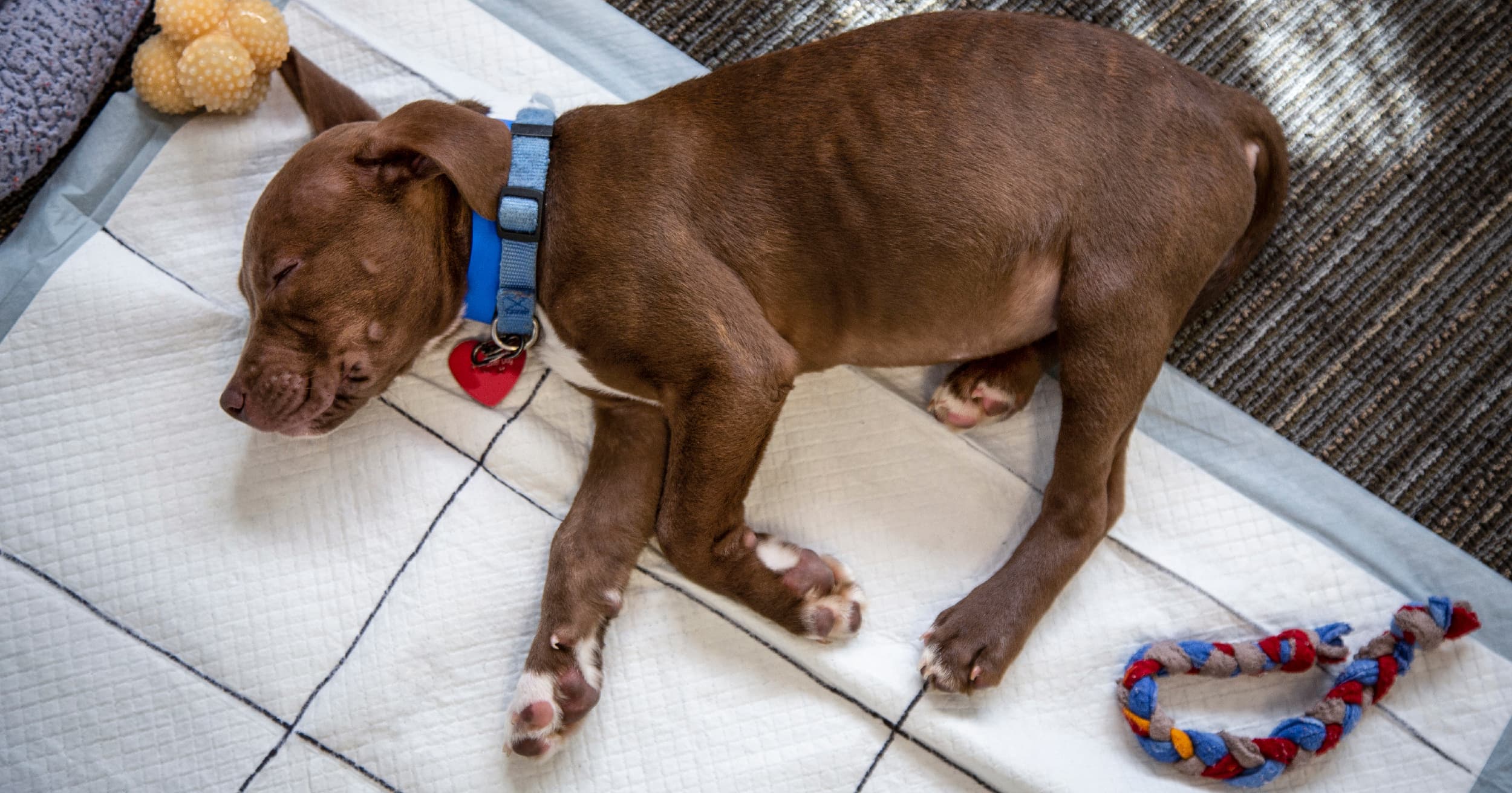
You can make nighttime a little more comforting for your puppy by choosing a quiet area of your house for their bed. Make them a snuggly bed in a crate so they will have a secure space to make their own — and keep them out of mischief while you’re asleep. Putting a piece of your clothing near their crate can be comforting for them, plus it will help with bonding. Just make sure it’s far enough away that they don’t use it as a chew toy. You could also consider placing the crate in your bedroom, but if you would like your puppy to sleep in your bed, hold off until they’re potty trained — because, well, you get it.

Spend Time with Your New BFF

Nighttime isn’t the only part of the day that can be scary for a puppy — being left alone during the day can be worrying and overwhelming for your puppy, too. If possible, schedule some vacation days for the first few days that your pup is adjusting to their new home. It will help with bonding, and your puppy will have a friend with them while they’re exploring their new digs. If you can’t be home with them all day, see if a family member or a friend can stay with your puppy, or consider hiring a pet sitter while your puppy is settling in.

Practice Alone Time

Being left alone is going to happen eventually, though. Even if you work from home, there will still be times when you need to go out and you can’t take your little buddy with you. It’s important that your new sidekick learns how to handle being alone and that it isn’t something to worry about.

Certified Professional Dog Trainer (CPDT-ka) and Certified Separation Anxiety Trainer (CSAT) Shoshi Parks, PhD, has some useful tips on how to help your puppy become comfortable with being alone. First of all, place your puppy in their crate (or other confined space) with a high-value treat or toy and leave the house for five minutes. You’ll probably hear some barking or whining which is normal. Quickly come back in when there’s silence. It’s important to wait for a break in their barking otherwise they’ll learn that making noise is what makes you come back. Once they’re used to you being away for five minutes, try extending the time little by little.

Eventually your pup should learn that being alone isn’t too bad and that you do come back. Separation anxiety can occur in dogs of all ages, so it’s a good idea to start teaching them that alone time isn’t bad during your puppy’s first week at home.

Time to Go Potty. Again.

Stock up on cleaning supplies because you’re gonna need ’em. A lot. Potty training is another thing that should be started the day you bring your puppy home. But it’s going to take some time and quite a few potty accidents before they get the hang of it — which probably won’t be until they’re around 12 to 16 weeks old.

You can help reduce the number of accidents by taking your puppy on potty breaks every two to four hours — including in the middle of night, if needed. Crate training can also help with potty training because dogs are naturally averse to soiling their “den,” so they will go potty somewhere else. By taking them out of their crate and then immediately outside or to the designated potty place inside, they will learn that that’s where they need to go when they need to go. Eventually they will realize that your whole house is their “den” and not a place to go potty.

Stick to a Schedule

Consistent messaging and keeping to a routine are really important for helping your puppy adjust to their new home and family. Stick to the same schedule (as much as possible) for mealtimes, bedtime, play sessions and potty breaks. And if you have rules that your puppy needs to follow, make sure all of your household is enforcing the rules. If pupster isn’t allowed on the couch, you shouldn’t pull them up for a quick snuggle. It will just confuse them when they get in trouble for jumping onto the couch the next day.

Feeding Your Puppy

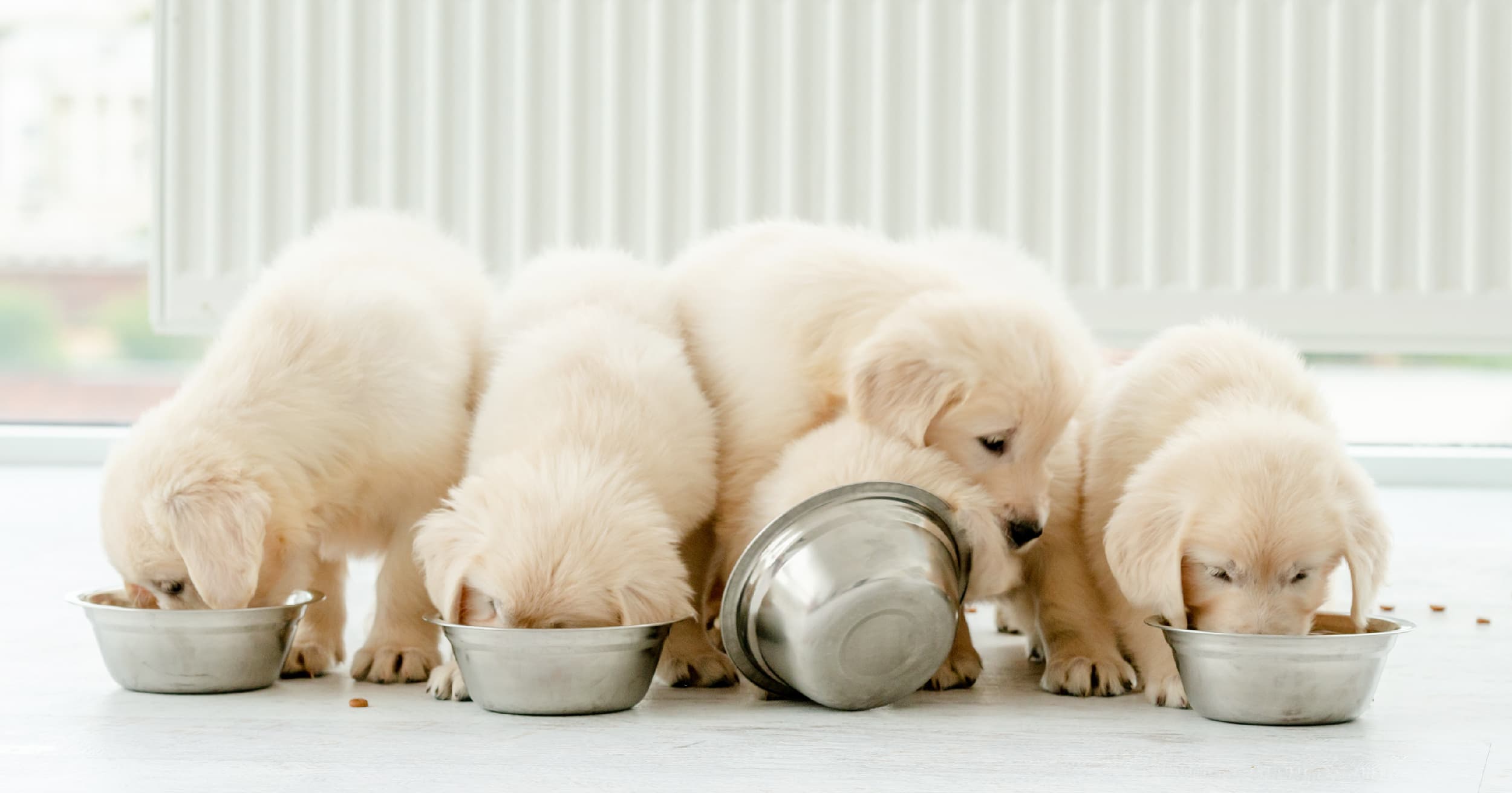
For mealtimes, veterinary nutritionists recommend feeding puppies at least two meals and possibly three or four meals daily until your puppy is 4 to 6 months old. Once they’re 6 months old you can stick with two meals a day, although some large and giant breeds may benefit from three meals a day. Feeding the right food is important to ensure your puppy grows into a healthy dog at the correct rate. Your veterinarian can help you determine the best food for your puppy and how much they should be eating.

The first week with a new puppy can be overwhelming and a little scary for both of you. But spending quality time with your puppy and setting up a routine will help everyone adjust in no time. Don’t forget to schedule your pup’s first visit with their veterinarian, too!

POST: Socialize Your Puppy Now for a Friendlier Tomorrow

A new puppy text graphic with a white, tan and black puppy lying in the grass.

Should You Really Not Pet On-Duty Service Dogs?

Taste of the Wild

If you see a dog where dogs generally aren’t allowed, chances are it’s a service dog, and chances are that it’s on the job.

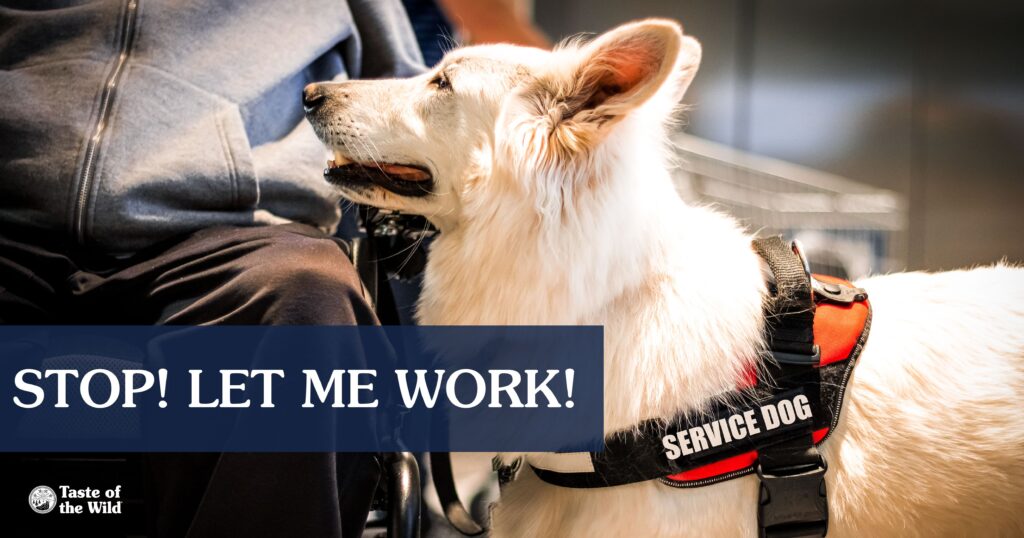
We get it: When you see an adorable dog while you’re shopping, running errands or doing something else where seeing cuddly dogs isn’t the norm, it’s hard to resist the urge to pet it, despite the clearly labeled vest that indicates that they’re on the job and off limits. That dog is providing valuable and necessary service to someone in need. We stress that if you notice the dog in question is a service animal, do not pet the canine or make eye contact with it. You shouldn’t talk to the dog or wave at it either. Avoid distracting a service animal at all costs.

Service animals are not pets. They’re often considered a healthcare option. One small distraction could be the difference between the dog staying alert to assist its owner or that owner’s safety being risked. So when you see the ”SERVICE DOG” or “WORKING DOG, DO NOT PET,” indicator, please take it seriously!

How do you know if a dog is a service animal?

Most service animals wear special collars, vests or harnesses. Service dogs have received specialized training to perform certain tasks for an individual with a disability — including physical, sensory, psychiatric, intellectual or other mental disabilities. This specialized training is what sets service animals apart from therapy dogs, emotional support animals and pets.

If you watch a service dog’s behavior from afar, you’ll notice that they tend to have impeccable manners, they appear calm, and they won’t seek attention. They’re meticulous employees operating efficiently with their handler. You’ll probably never see a service dog pulling on its leash or chasing a wayward squirrel – during working hours, anyway!

Service animals are always on call.

Being able to rely on a service animal can provide great comfort to those who need the trained dog’s assistance. Even if you think a service dog is doing “nothing” at that moment, you can rest assured that the canine is always providing essential care. The dog may be helping the owner keep their balance. They may be on high alert to predict a seizure before it occurs so the owner can take necessary precautions. Or they could be assisting an owner with a hearing impairment to navigate busy aisles at a grocery store. The list goes on with ways a service animal could be helping their owner, which could be invisible to other members of society.

It’s against the law to interfere with service dogs.

The Americans with Disabilities Act (ADA) of 1990 protects the rights of people with disabilities to have their service animals by their sides. Most states take it a step further and have some laws in place to punish those who interfere with a service dog’s duties. Yes, you read that correctly. Each state has its own laws on how they handle individuals who interfere with a service animal doing its job, and punishment ranges from paying a hefty fine to being charged with a felony. So bottom line, do not interfere with a service dog’s duties.

How should you react around a service dog?

Rather than engage with the animal, contain your excitement. Give the dog and its owner space. Service dogs are trained to tune out commotion, but it can still be difficult for them to concentrate if you are persistent in trying to distract them. They are still dogs, after all.

Second, be courteous of the service dog’s owner by not asking questions. The owner may not feel comfortable talking to strangers about the service dog or their disability. Respect their privacy and resist the urge for initiating such conversations.

Are there any exceptions to this advice?

Yes, there is one exception. If a service dog ever approaches you without its owner, this is the only time to scrap the guidance above and follow that dog! A service dog without its owner is seeking help. Follow the dog, identify the situation at hand, and if the owner needs medical assistance, call 911.

Long story short: Let service dogs perform their service, and we’ll all be better off!

How to Choose the Best Food for Your Growing Puppy

Taste of the Wild

The right nutrition is essential for keeping your puppy healthy, but if you search online for “What’s the best puppy food?” you’re going to get a LOT of options. You want the very best for your puppy to ensure they grow up healthy and strong, so how do you choose which food is actually the “best” for them?

Puppies have different nutrient requirements compared to adult dogs, and all of those nutrients have specific roles in fueling the needs of an energetic and fast-growing puppy. We’ll discuss why particular nutrients are important for puppies and explain which statements you should be looking for on the dog food label to determine the “best” food for your pup.

Grow Puppy, Grow!

You bring home your new puppy and — Bam! — a few short months later they’re not your tiny little puppy anymore. The first three to six months of a pup’s life is the most rapid growth period, and most puppies (except giant breeds) will reach 80 percent of their adult weight between 4.5 and 8 months of age.

All this growth is why puppies have nutrient needs that are different from adult dogs, who need nutrients only for maintenance (unless they’re pregnant or lactating). Maintenance requirements means adult dogs have enough nutrients to satisfy normal tissue repair and physical activity, and if they have any extra energy (calories) left over, it’s stored as fat.

Growing Puppies Need More Nutrients

Compared to adult dogs, puppies need more of most of the essential nutrients, and like adults, their health depends on receiving those nutrients in the correct amounts and proportions. Nutritional factors that are particularly important for puppies include energy, protein, calcium, phosphorus, DHA (docosahexaenoic acid) and antioxidants. Let’s dive deeper into why those nutritional factors are important for puppies.

Energy Is Your Puppy’s Fuel

It doesn’t matter whether your pup is a shiba inu or a Saint Bernard, the amount of energy they need for growth will be greater than at any other life stage except lactation. After weaning, puppies need twice as much energy per pound of body weight as adult dogs of the same weight. As your puppy’s growth rate starts to decline, their energy requirement will also start to decrease (usually around 6 months of age).

But be careful… too much of a good thing can lead to a chubby puppy. Your puppy needs to have their energy needs met for optimal growth (not maximal growth), so it’s important not to overfeed them. If they eat too many calories, it can lead to an increased growth rate and an overweight or obese puppy, which in turn could become an overweight or obese adult dog with an increased risk of health issues.

Protein Is Vital for a Healthy Puppy

Protein, which is found in every cell of your puppy’s body, is important for building and maintaining muscle, bone, cartilage, skin and multiple organs. Puppies need more protein than adult dogs because puppies are growing all of those protein-dependent body parts. Protein also supplies the amino acids necessary to support a heathy immune system and to synthesize hormones, antibodies and enzymes.

The protein in your puppy’s food should be highly digestible to ensure all essential amino acids are delivered to and used by your puppy’s body for growth and development. Protein-containing ingredients in pet food include meat muscles (e.g., bison, venison, beef, lamb), meat meal (e.g., chicken meal, duck meal, lamb meal), fish, fish meal (e.g., salmon meal), eggs and ancient grains (e.g., chia seed, millet, quinoa and grain sorghum).

A Healthy Skeleton Needs Calcium and Phosphorus

Calcium and phosphorus partner together to keep your pup’s bones and teeth healthy. Nearly all the calcium and most of the phosphorus in your puppy’s body are found in their teeth and skeleton. Puppy foods have slightly higher levels of calcium and phosphorus to promote a skeletal growth rate that is appropriate for a puppy’s size.

Calcium requirements vary based on breed size. It’s important that large- and giant-breed puppies have the proper calcium-to-phosphorus ratio in their food, as they are especially prone to developmental bone issues.

DHA Helps Your Puppy’s Brain and Vision

The omega-3 fatty acid DHA helps support brain and vision development in your puppy. DHA is found in mother’s milk, and studies have shown that the benefits of DHA in the diet continue after weaning. Research has also shown that trainability can improve when DHA is included in a puppy’s food.

Antioxidants Support Immunity and Overall Health

Antioxidants like vitamin E, beta-carotene, vitamin C, zinc and selenium support your puppy’s developing immune system and may help it respond to vaccinations. Antioxidants also help protect your pup’s body from the damaging effects of free radicals. Some of the ingredients in pet food that are sources of antioxidants include chia seed, quinoa, blueberries, raspberries, tomato and sweet potato.

Look at the Pet Food Label

As you can see, growing puppies have very different nutrient requirements as compared to adult dogs. The “best” food for your puppy is one that is a complete and balanced diet and displays the Association of American Feed Control Officials (AAFCO) nutritional adequacy statement for “growth” or “all life stages.” If your puppy is a large breed, make sure the AAFCO all life stages statement also says, “including growth of large size dogs (70 lb. or more as an adult).” These statements ensure your puppy’s nutritional needs will be met by the nutrients in the food.

With so many choices available, choosing the right food for your puppy can be overwhelming. If you need help, your veterinarian can determine which foods meet the nutritional needs of your puppy. Then you just have to work out which flavor they like best!

RELATED POST: A Taste of the Wild Guide to Choosing the Right Pet Food

A new puppy text graphic with a white, tan and black puppy lying in the grass.

How Not to Pet Your Pet

Taste of the Wild

Head, shoulders, knees and noooo! As much as your pet probably likes all sorts of snuggles, it’s possible to pet your furry companion in areas they don’t like and invoke the claws, growls or side eye. Cats and dogs have spots on their body they prefer you pet over others — and it’s worth noting cats might have different “don’t pet” areas than dogs. Here are some tips to make sure you have petting down pat. Just remember that every pet is different, and your best bet is to know their body language for signs of discomfort.

How to Best Pet Your Dog

Research shows petting your pup boosts their level of happiness (and maybe even yours). Cue the TikTok audio, “I’m just a happy, happy dog,” as you bend down to their level, extend your hand and let your canine come to you. Your pet’s body language will speak volumes to let you know if now is the right time for all the pets.

A dog that comes your way when you extend your hand wants to be petted. If their eyes look happy and their tail is wagging, this is another indicator it’s petting time! Pet, pat or scratch your doggo, going with the fur, not against it. They don’t want that bed head look when you’re done petting them.

If your pupper starts to put space between you, begins licking their lips or raising their paw, this indicates now is not the right time for petting. In addition, a dog that is sleeping or playing will likely not want to be interrupted for petting time.

Animals not wanting to be petted is nothing to take personally. If you move forward with unwanted petting, you increase your chances of being growled at or bitten. Therefore, it’s best to listen to what your dog is telling you.

What areas should you focus your petting on?

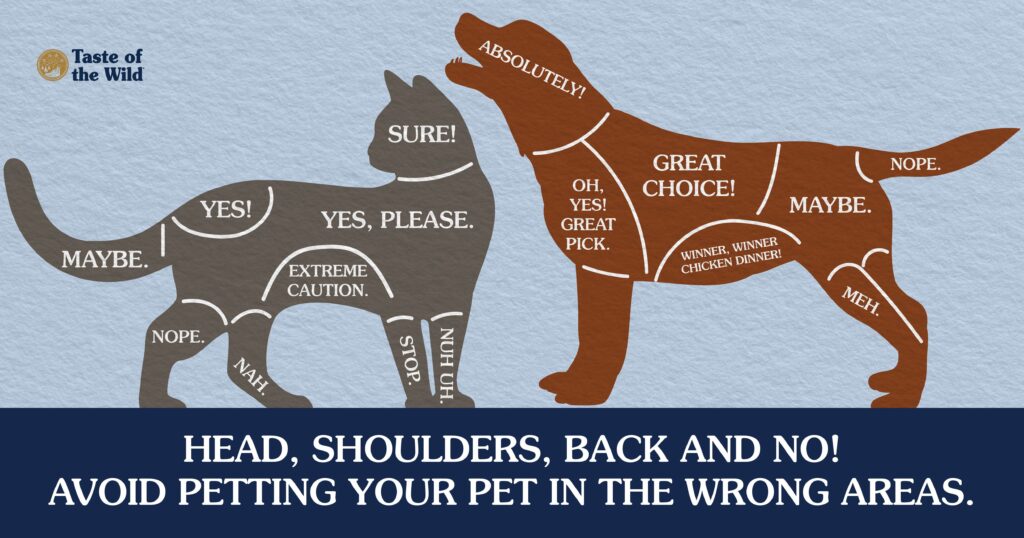
An infographic detailing which spots on a dog are okay to pet and which spots are not okay.

Not all dogs are the same, but typically canines prefer to be petted on their head, neck, chest, belly and middle back. When you find their sweet spot, your dog might start to kick their leg with joy. And if you roll over a spot that they don’t want you to touch, you’ll notice a shift in the way they respond. Areas to typically avoid petting include their tail, legs and paws. The lower back is a “maybe,” so pet this area with caution.

How to Pet Your Cat

Cats can be a little more standoffish than dogs, but that doesn’t mean your feline doesn’t want to be petted. They love attention from their people, as well! You might need to be a bit more in tune with your cat’s body language to know how and when they want to be petted.

You’ll also want to note that contrary to dogs, cats do not believe in the phrase “Give me all the pets!” Typically, cats prefer to be petted in smaller increments of time than your needy, needy dog.

Prior to petting, be sure you have your cat’s attention. Do not sneak up for a surprise petting. This could result in a draw of the claws. Let your cat sniff your hand or perk up with excitement.

Next, gently pet your cat, moving in the same direction as their fur, just like we recommended for doggos. If they begin to lean into your hand for more pets (bunting), relax their posture, knead or purr, you know you’re on the right track.

If your cat gently nips or paws at you during a petting session, you might need to readjust your touch. You might be petting too firmly. You might need to scratch behind their ears instead of petting their belly. Or they might want to be patted on the lower back opposed to just pets on the head. Adjust your level of firmness and location of petting until you find the sweet spot for your furry feline.

Aggressive jerks of their body or head can indicate your cat does not want to be petted. Raising a paw to bat at you, hissing and meowing in an unfriendly tone also indicate it is time to step away. Your cat will give you direct cues so you know what your next move should be. Listen to their desires — even if it means resisting the urge to pet them at that moment.

What areas should you focus your petting on?

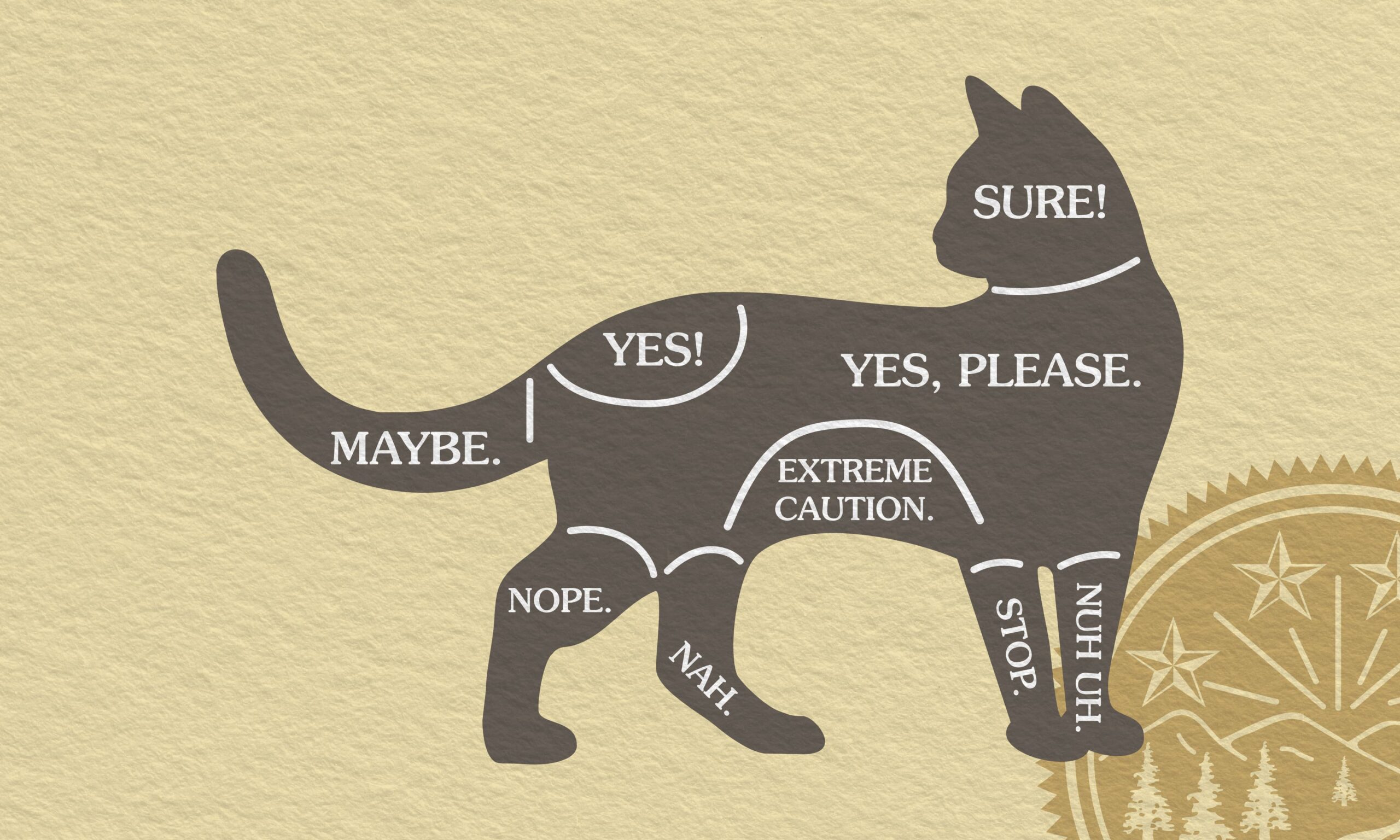
An infographic detailing which spots on a cat are okay to pet and which spots are not okay.

While it’s true that each cat has their own wants and needs, studies show there are general areas that cats prefer to be petted. Felines favor being petted near their scent glands — all around their ears, on their cheeks and under their chin. Another highly preferred area is the lower back right before you reach their tail. The rest of their back and their sides are good spots to pet, but they don’t go as gaga over these locations.

Belly rubs are iffy territory. We say lean into this spot with caution. Some cats say, “Yes, please” while others say, “No, thank you!” Steer clear of the tail, legs, paws and toe beans for pets. Cats typically don’t prefer to be petted there.

When following the advice above, hone in on how your fluffy friend responds to touch. Adjust your petting techniques and the length of time you’re petting them to meet your animal’s needs. The right form of petting strengthens your bond with Mittens and Fido, and in the process, petting can boost your overall mood as well. A win-win all around!

RELATED POST: A Taste of the Wild Guide to Pet Grooming

Can My Dog Eat That? Apples

Taste of the Wild

Welcome to “Can My Dog Eat That?,” our series that answers some obvious (and not-so-obvious) questions about what your dog can and can’t safely eat. You can view some of the previous foods we’ve looked at in our “Can my dog eat that?” guide. Today we answer the question “Can dogs eat apples?” Read on!

You know what they say about apples and the DOGtor, right? While it’s not exactly gospel that eating an apple a day will keep your pooch out of the veterinarian’s office, the sentiment of the modern proverb is dead-on: Apples are pretty good snacks for your dog (and you, too!)

In moderation, nature’s candy won’t hurt your dog in any way and is, in fact, a healthy treat. Apples are great sources of fiber, vitamin C and vitamin A, not to mention potassium. And an underrated aspect of feeding apple to your dog is that the rough texture works as sort of a natural tooth cleaner and breath freshener. This aspect in no way replaces actual doggy dental care; it’s more of an added perk you get for feeding the fibrous fruit.

A not-so-underrated aspect of apples is that they taste great to your dog (especially with a sprinkling of cinnamon), despite being low in calories. This is all your dog really cares about, after all.

A Is for Effort

Of course, there’s prep work involved with feeding apples. You can’t just chuck a whole Sweet Tango at your drooling doggo and let them chow down. You have to slice that apple up first because (sigh) like all good things, there is a catch: Apple seeds and cores are no-nos. The seeds contain a tiny amount of cyanide, a dangerous poison. And the core is just hard to chew, making it a choking hazard or even a digestion issue if your dog does choke it down. The good news? You don’t have to peel that apple before slicing it and handing it over. The peels are great sources of potassium, and not harmful in any way, lest they get stuck between teeth (another reason not to duck out on the dental). What a nice switch for a fruit!

There’s an App(le) for That

Dogs can easily handle most forms of simple apple. Slicing or cubing raw apples is the most popular way to feed them, but don’t hesitate to bust out that old food dehydrator and offer up some chewy dried apple snacks. Another sweet spot is applesauce. Most dogs will wag uncontrollably over a saucer of the sauce. Just make sure that you go for unsweetened applesauce. Apples come pre-loaded by Mother Nature with more than enough sugar, so there’s no need for more.

Moderation, as Always

Remember when we said that offering a whole apple isn’t the way to go? There are reasons besides your seed and core issues. An average apple has nearly 20 grams of sugar which is…a lot. Too much sugar can cause bellyaches in the short term, and too much sugar on a regular basis can cause obesity or diabetes. If your dog is diabetic, it’s best that they avoid apples. Too much apple may also cause digestive upset, because of the large amounts of fiber. And doggy diarrhea isn’t a problem anyone wants. Stick to a few slices at a time and everything will be good.

There’s a small chance that your dog is allergic to apples, so for their first taste, stick to just a taste. If you don’t see any reaction, start slicing!

Interior graphic with text that reads ‘Can my dog eat apples? Yes!’.

Things to Do After Your Pup Turns One

Taste of the Wild

Did your puppy recently celebrate their first birthday? Woo hoo! How was your first year together? There were probably some highs — your first hike together, graduating from puppy school, all of those sweet cuddles. Annnnd some not-so-highs — cleaning up potty training accidents, failing puppy school the first time ‘round, your favorite shoes getting chewed.

All in all, the first year of puppyhood was likely pretty fun for you both, but now you might be wondering what comes next. Here are a few things that you can (or should) do in the next few months, now that your puppy is officially a young adult.

Unleash Those Athletic Talents

If you’ve been itching to get your dog into a canine sport, we’ve got great news — your dog is (probably) old enough now! When choosing a sport for your dog to try, think about what skills they’re naturally good at and what type of things their breed usually likes to do. Herding events may be perfect for your dog if they spend a good part of their day trying to herd your backyard chickens into their coop. If your dog loves playing in water, maybe dock diving is their thing. Or if they’re an avid fetcher, try flying disc events.

The caveat is that some large-breed puppies haven’t finished growing yet and may need a little extra time to let their bones and joints develop properly before they can start their athletic career. Also, other breeds may not be able to take part in certain events due to their physical characteristics. For example, brachycephalic breeds (those with short muzzles, like bulldogs, pugs and Boston terriers) probably shouldn’t participate in swimming or long-distance running events due to their tendency for breathing challenges.

Before beginning a new sport, check with your veterinarian that your dog is healthy and old enough to start that particular sport. Some sports may be go-go-go but others may be no-no-no, or at least, no-no until your dog is a little older.

Brush Those Teeth

Remember those sharp little puppy teeth that were oh-so-good at chewing and biting things they shouldn’t? Well, they’re gone now, and have been replaced by your dog’s adult teeth. To keep those chompers in tip-top condition and reduce the risk of gum disease or “doggy breath,” it’s important that you continue (or start) making dental care a regular part of your dog’s routine care. Try to brush your dog’s teeth at least once a day and schedule professional veterinary cleanings regularly, too. Your veterinarian will likely perform these cleanings under anesthesia so they can conduct a thorough cleaning that’s also comfortable for your dog.

There are special pet toothbrushes available that fit over your finger, or you can use a child’s toothbrush or a piece of gauze wrapped around your finger. There are also pet toothpastes available that come in dog-approved flavors like peanut or poultry. Make sure you don’t use human toothpaste as the ingredients can cause an upset tummy.

Puppy Food or Adult Food?

Has your dog been enjoying a food formulated with puppies in mind? Something like High Prairie Puppy Recipe with Roasted Bison & Roasted Venison? Or maybe Pacific Stream Puppy Recipe with Smoke-Flavored Salmon? We certainly hope so! The good news is that you can continue feeding “puppy” food, as long as the label says the food “is formulated to meet the nutritional levels established by the AAFCO Dog Food Nutrient Profiles for All Life Stages including growth of large size dogs (70 lbs. or more as an adult).” If the label has that particular statement, there’s no need to switch to a food that doesn’t say “puppy” on it now that your dog is no longer a puppy.

Alternatively, if you’re ready for your dog to try a new food, maybe something like Southwest Canyon Canine Recipe with Wild Boar, you can do that, too — as long as your veterinarian agrees with the diet change.

It’s Time for a Visit to Your Veterinarian

You want year 2 for your dog to be a healthy one, so it’s important to take them for their annual checkup around this time. Your veterinarian can check that they’re growing well and don’t have any health issues that are hiding from you. The annual checkup is also a good time for you to ask questions about your dog, if you have any.
The vaccines that your dog was given as a puppy typically require a booster around one year of age or 12 months after the last puppy booster. They will include core vaccines that protect against distemper, canine adenovirus, canine parvovirus and rabies, as well as any non-core vaccines your veterinarian recommends, depending on your geographic location and your dog’s lifestyle (e.g., leptospirosis and kennel cough).

Raising a puppy can be challenging at times, but you did it! And now a lifetime of adventures awaits!

Behind the Breed: Yorkshire Terrier

Taste of the Wild

Beneath the silken, lustrous coat of the Yorkshire terrier, or “Yorkie,” lies the heart of a feisty companion equally as eager to work as to snuggle.

Hailing from Yorkshire, England, the Yorkie was bred in the 19th century by cotton and wool workers from Scotland who had immigrated in search of work. These workers needed a ratting terrier that was scrappy and could keep the mills and workspaces free of rodents and disease-carrying mice, so they bred black-and-tan terriers with what was then known as a Clydesdale terrier. And so the Yorkie was born.

Because of their small size and scrappy demeanor, Yorkies were the agile, lively and responsive ratter the workers needed, often catching vermin with ease. As their popularity spread and their work wasn’t needed as much, Yorkies became the favorite lapdogs of Victorians everywhere.

The “Tomboy Toy”

Much like the French bulldog, miniature schnauzer and shih tzu, Yorkies have become incredibly popular family pets. Their tenacious personalities and dogged determination have earned them the nickname “the tomboy toy,” and their confidence helps them excel today at all dog sports including agility and “Fast CAT,” a timed 100-yard dash. Because of their innate ratting abilities, Yorkies also often accompany hunters to flush out prey in the field.

The Yorkshire terrier is among the most popular toy breeds in America, and because of their size (between 5 and 7 pounds), they are often named the most popular dog breed in many American cities. City-dwelling Yorkies can often be seen sporting their long, luxurious coats, which are tan on the head and a steely gray on the body. Frequently compared to human hair, the coat of a Yorkie, when long, rarely sheds but does need constant grooming. Most owners prefer a “puppy coat” that’s clipped and scruffy for easier care.

The American Kennel Club recognized Yorkies as a breed in 1872, and as members of the Toy Group are described as alert, compact and spirited. Health issues can include bronchitis and a delicate digestive system, but given the right environment and attention, a Yorkie can be a companion who delights and entertains for years.

Yorkie quick facts.

At-Home Dental Care for Your Dog

Taste of the Wild

Does this sound familiar? You’re sitting on the couch, your dog climbs up for some snuggles and “Uck, what is that smell?!” Doggy breath. Every dog parent has probably experienced it at some point. But the good news is that by performing at-home dental care, you can help prevent doggy breath and keep your dog’s teeth and gums healthier — which keeps your dog healthier. And it’s not as hard as it sounds — with some training and plenty of patience.

Gum Disease Can Go Unnoticed

Your dog’s teeth may look pretty clean, but there could be inflammation lurking beneath the surface. The buildup of plaque and tartar can allow bacteria to invade under the gum line, causing painful inflammation called periodontal or gum disease. According to the American Veterinary Medical Association, gum disease is the most common oral problem veterinarians seen in dogs, with most dogs having some degree of periodontal disease by the time they’re three years old.

The early stages of gum disease often go unnoticed, which is why it’s important to brush your dog’s teeth regularly, even if they look fairly clean. You don’t want gum disease to progress, as it can allow bacteria to enter the bloodstream and damage other organs.

Brush, Brush, Brush Those Teeth

The best way to fight plaque and gum disease is by brushing your dog’s teeth — preferably daily. You can use a finger brush, a pet toothbrush, a child’s toothbrush or gauze wrapped around your finger. Make sure you use dog-friendly toothpaste as human toothpaste can cause an upset tummy. Dogs will like the taste of the pet toothpaste better anyway, since it comes in flavors like poultry and peanut.

Start by letting your dog lick a small amount of their toothpaste from your finger. Then introduce their toothbrush by letting them lick the toothpaste from it. Gently rub the toothbrush under your dog’s chin and gradually work up to touching their lips and rubbing along their gums. Once they’re used to the brush, place the toothbrush in their mouth and focus on brushing the outside surfaces. Keep in mind that it may take a few months of training before you can brush your dog’s teeth successfully.

Chewing Things Can Be a Good Thing

Most dogs like to chew on all sorts of objects — including some things that we wish they wouldn’t. But the right object to chew on can be helpful in keeping your dog’s teeth clean and reducing tartar buildup. The Veterinary Oral Health Council (VOHC) has a list of VOHC-approved foods and chew treats, as well as toothbrushes, toothpastes, dental wipes and water additives that have been proven to help reduce plaque and tartar on dogs’ teeth.

Hard treats or toys (e.g., bones, antlers, hard nylon toys) are not recommended as they can break your dog’s teeth or possibly shatter and be swallowed, leading to gastrointestinal tract blockage or damage. Toys or treats that have some give in them are better choices for your dog to chew on and get those teeth cleaner. The American Animal Hospital Association has a graphic showing common products that may cause problems for your dog.

If Brushing Is a No, Try an Antiseptic Rinse

If you’ve tried and tried and your dog just doesn’t like having their teeth brushed, you could try an anti-plaque antiseptic rinse like chlorhexidine. Available as a gel or liquid, chlorhexidine is safe for pets with few negative side effects, although it may taste icky to your dog.

Professional Cleanings Are Important, Too

To help keep our teeth and gums healthy, it’s recommended that people brush their teeth twice a day and visit the dentist regularly for a professional cleaning. The same recommendation applies to dogs, too. Daily brushing can help remove plaque, but a professional cleaning performed by your veterinarian or a board-certified veterinary dentist is necessary to remove the tartar that’s above and below the gum line. Your veterinarian will likely perform these cleanings under anesthesia so they can conduct a thorough cleaning that’s also comfortable for your dog.

At-home dental care is probably not going to be high on your dog’s list of fun things to do — particularly when you first start out. But hopefully over time and with lots of praise and rewards they will become used to it and dental care can become just another (but important) part of your daily routine.

What Happens at Your Dog’s Annual Checkup?

Taste of the Wild

Your veterinarian has probably recommended that your dog visit the clinic at least once a year for a checkup. But if your dog appears healthy, should you still go? And what exactly is your veterinarian looking for during the exam? Here’s what to expect at your dog’s checkup.

A Healthy Dog Still Needs an Annual Checkup

If your dog doesn’t feel good, they will often try to hide their sickness or pain from you — a behavior their ancestors likely used so they wouldn’t appear weak to predators. By visiting the veterinary clinic for an annual checkup, your veterinarian can look for any health issues your dog may have that aren’t obvious to you. It also establishes a baseline for future visits and allows you and your veterinarian to keep track of your dog’s health status over time.

Most dogs that are healthy probably only need to have a checkup once a year. But your dog may need more frequent checkups, depending on their age (e.g., puppies and senior dogs), health status (e.g., dogs with a chronic disease) and breed (e.g., some breeds are more prone to certain diseases). Your veterinarian will recommend how often to bring your dog to the clinic.

During the visit, your veterinarian will ask questions to learn more about your dog’s history, perform a physical examination and possibly perform routine laboratory or screening tests. This information can help your veterinarian determine if your dog has a disease in an early stage that isn’t showing obvious symptoms yet (e.g., diabetes, chronic kidney disease) or if they have an infectious disease (e.g., Lyme disease, heartworm disease, or canine parvovirus).

Tell Me About Your Dog

To help your veterinarian get a complete picture of your dog’s health, they will ask you some questions about your dog’s behavior, bathroom habits, nutrition, general health and exercise routines (among others). It may be useful to think about the answers to these questions ahead of time so you are ready to answer them at the clinic.

This is also a great time for you to ask any questions you have about your dog. Is there a behavior you would like to curb but need some help on how to do it? Do you have questions about which food your dog should be eating or how much they should be eating? Writing them down before your dog’s appointment can help you remember what to ask while you’re there.

Let’s Get Physical

Part of the examination will include palpating (feeling around) your dog’s body to check for any issues with their skin, coat, mouth (teeth and gums), eyes, ears, abdomen, muscles (and how they walk) and their general condition. While they’re looking your dog over, they will also check for external parasites (e.g., ticks, fleas or mites). Your veterinarian will listen to your dog’s heart and lungs to make sure they’re healthy, take their temperature and also check that your dog’s weight and body condition score are in a healthy range for their age and breed.

What’s Going on Inside Your Dog?

A physical examination can help your veterinarian check for external problems, but laboratory tests may be recommended to check for issues that your veterinarian can’t see. They may recommend collecting blood, urine, fecal or other samples from your dog to get a more complete picture of your dog’s health. They may also ask you to bring a fecal sample to the appointment so they can check for intestinal parasites (e.g., hookworm, roundworm, tapeworm).

If your dog has a medical condition, they can use the results of these laboratory tests and also the physical examination to check how the condition is progressing and if any adjustments to the treatment plan are needed.

It’s Booster Time

There are two vaccine types that your dog can receive — core and non-core vaccines. Core vaccines are considered essential for all dogs due to the exposure risk of the disease it protects against, the disease severity and its ability to be transmitted to humans. Non-core vaccines are not essential for all dogs and will be recommended by your veterinarian depending on your dog’s age, geographic location, risk of exposure and lifestyle.

Boosters are typically required for core vaccines 12 months after the last vaccination, so your dog’s annual checkup is the perfect time for these boosters. Some vaccines may have different schedules; for example, there is a rabies vaccine that can be given every three years instead of every year. Your veterinarian will determine which vaccines your dog needs and how often they are needed.

Help Make the Clinic Visit a Happy One

Dogs can become stressed about visiting the veterinary clinic, but there are things you can do to help them remain calm — including staying calm yourself. Your dog could pick up on any anxiety you’re feeling and feel less secure themselves, so try to keep a positive, relaxed demeanor before, during and after the visit. It may also help to stop by the veterinary clinic for a social visit occasionally so that your dog doesn’t associate the clinic only with examinations, laboratory tests or other procedures. If they’re lucky, they may get a treat for visiting, too!

Hopefully your dog’s annual checkup will end with a “You’re all good. See you next year!” But if your veterinarian does have some concerns, they may recommend further testing, a change of diet, a lifestyle change or starting/changing prescription medication — all with the goal of keeping your dog healthy and ready for more adventures with you.

RELATED POST: Are Pet Wellness Plans Worth It?

Fueling Your Puppy’s Growth with the Right Food

Taste of the Wild

If there’s one thing puppies like to do (other than chew), it’s eat. Food is what fuels their rapid growth and development, which is why it’s important that the food they eat helps them grow and develop properly.

Once you bring your puppy home (and name them), it’s important to understand that puppies have different nutritional needs than adult dogs, and puppies of different breeds and sizes have different nutritional requirements. For example, a dachshund will reach their mature size and weight a lot quicker than a large breed pup like a Great Dane, so they will have different nutritional requirements. Keep reading to learn about how puppy growth rates affect nutrient requirements and the food options that are available for your puppy.

Puppies Reach Adult Size at Different Ages

Dog breeds are typically categorized as small (including toy and teacup), medium and large (including giant). As adults, small breeds are usually less than 20 pounds, medium breeds range between 25 and 55 pounds and large breeds are more than 50 pounds — although the Association of American Feed Control Officials (AAFCO) uses 70 pounds or more for their large breed definition.

All puppies grow rapidly during the first 3 to 6 months of life. Small breed dogs will end their rapid growth period earlier (around 3 months of age) compared to giant breed puppies, who will continue growing rapidly for a couple more months. The graph below shows the growth rates of puppies from a range of breeds of different sizes.

Body-weight changes during growth in puppies of different breeds.
Adapted from Hawthorne AJ, Booles D, Nugent PA, Gettinby G, Wilkinson J. Body-weight changes during growth in puppies of different breeds. J Nutr. 2004;134(8 Suppl):2027S-2030S.

When your puppy celebrates their first birthday, they are officially considered an adult dog. But that doesn’t necessarily mean they have reached their adult size, as not all puppies reach adult size by 12 months. Toy, small and some medium-sized dogs reach adult size at around 8 to 10 months of age, while other medium dogs take until 9 to 12 months. Large and giant breeds don’t typically reach mature size until around 11 to 15 months, with some giant breeds reaching adult size at around 18 to 24 months old.

Every dog is different, so some puppies may grow faster or slower than their breed average. Even after they reach their mature size, dogs still continue developing for several more months — for example, after their bones have fully developed they will continue to add fat and muscle. To support all of this growth and development, they need to receive a complete and balanced diet that contains the right nutrients in the correct amounts.

Puppies Are Full of Energy — and So Is Their Food

Compared to adult dogs, puppies have a greater requirement for energy (calories), amino acids, and minerals such as calcium and phosphorus (for strong bones) and copper and zinc (for healthy immune systems). Puppies can also benefit from increased levels of the omega-3 fatty acid DHA (docosahexaenoic acid), which is important for brain and vision development.

Energy is the most important factor affecting puppy growth rates. Early in life, about half of a puppy’s caloric intake goes toward growth, but as they get older and their growth rate slows, so do their energy needs. Puppies obtain most of their energy from the fats and carbohydrates in their food, which is why you’ll find higher fat levels in puppy foods.

Calcium is important for puppy growth and development, but too much calcium in the diet can also be a bad thing. During the rapid growth period, puppies can have trouble regulating calcium absorption in their body as that mechanism isn’t fully mature. Large breed puppies tend to be more sensitive to excessive dietary calcium than small and medium breeds, and it can negatively affect their skeletal formation and growth. Once the calcium absorption process in their small intestine is fully mature, they can protect themselves better from absorbing too much calcium from their diet.

Choosing the Right Food for Your Pup

Puppies can eat food formulated for puppies or they can eat an all-life-stages food. Some formulas labeled for puppies, like High Prairie Puppy Recipe with Roasted Bison & Roasted Venison and Pacific Stream Puppy Recipe with Smoke-Flavored Salmon provide the nutrients puppies need in an easy-to-enjoy small kibble size. Both of these formulas have guaranteed levels of DHA and perfectly balanced nutrition, which means they can be fed to pregnant or nursing mothers or other adult dogs, too.

If you have a large breed puppy, make sure you check for a specific AAFCO statement on the label. AAFCO uses life stages, not weight, to distinguish between their nutrient profile categories — with one exception. If a growth or all-life-stages dog food has been formulated to meet the nutritional requirements specified in the AAFCO dog food nutrient profiles, the statement must specifically state if the food meets the growth of large size dogs. Two example AAFCO statements are below.

In this example, the second recipe is formulated for small breeds and doesn’t meet the AAFCO requirements for the growth of large size dogs.

How Much Should Your Puppy Eat?

Some puppies will guzzle down as much food as you give them. But while puppy rolls are cute, it’s important for your puppy’s long-term health that they eat an amount appropriate for their age and size. Veterinarians recommend feeding a measured amount of food at each meal to avoid obesity issues later in life. The feeding guide on the dog food package can be used as a starting point on how much to feed, but this may need to be adjusted to keep your puppy within their ideal body condition range.

How often you feed your puppy depends on their age. Nutritionists recommend feeding puppies at least two meals and possibly three or four meals daily until your puppy reaches 4 to 6 months of age (the rapid growth period). After 6 months, two meals a day is the recommended amount, but some large and giant breeds may benefit from three feedings.

Nutrition is an important part of ensuring your puppy grows up to become a healthy adult dog. If you have questions about which food or how much food to feed your puppy, ask your veterinarian or a veterinary nutritionist for advice.

RELATED POST: A Taste of the Wild Guide to Choosing the Right Pet Food

A new puppy text graphic with a white, tan and black puppy lying in the grass.