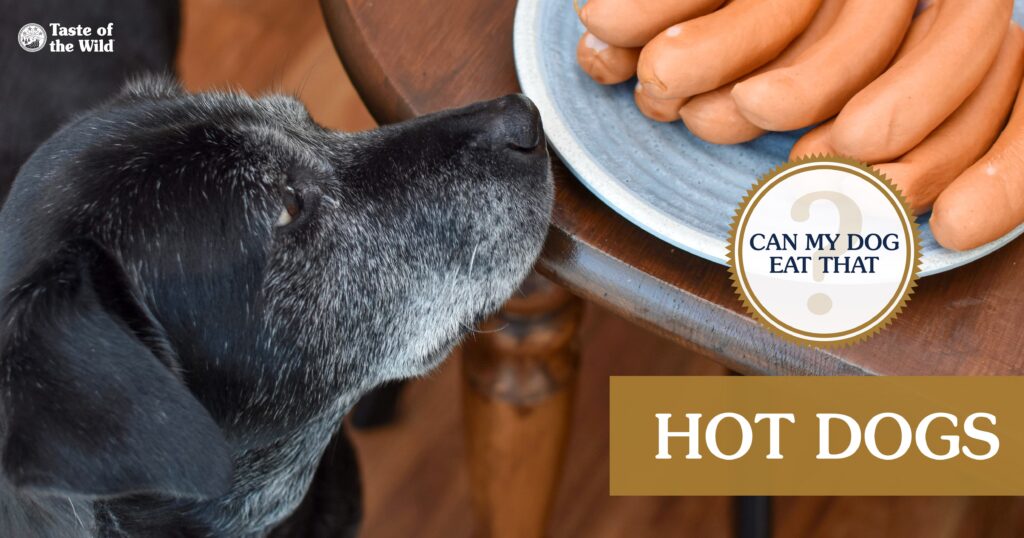

Can My Dog Eat That? Hot Dogs

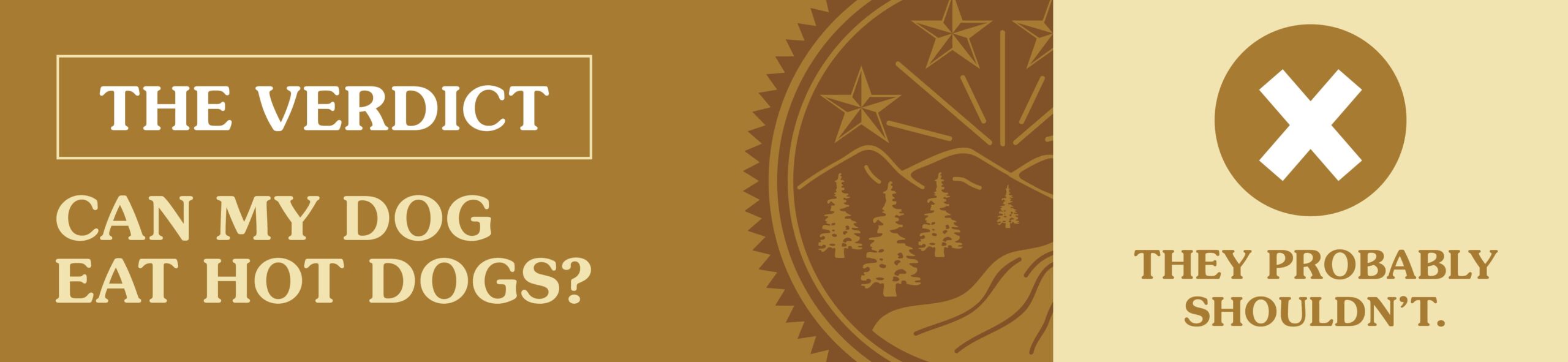
Interior graphic with text that reads ‘Can my dog eat hot dogs? They probably shouldn’t’.

Welcome to “Can My Dog Eat That?,” our series that answers some obvious (and not-so-obvious) questions about what your dog can and can’t safely eat. Today we answer the question “Can dogs eat hot dogs?” Read on!

First, let’s get one thing clear. Your dog most certainly should not eat a dachshund in a Halloween costume or a dog that’s been out in the sun too long. Now, if you’re asking whether your dog should eat the processed meat product that’s typically sandwiched between halves of a bun and smothered in onions, ketchup and mustard, that’s another story. Well, not too different a story. The answer is similar — your dog probably shouldn’t eat hot dogs. But as a treat, they may be OK for some dogs.

A Hot Dog’s Insides Can Upset Your Dog’s Insides

Hot dogs are a cookout staple, much like sweet potatoes, tomatoes and corn. If you’ve got some hot dogs sizzling on the grill, it’s inevitable that you’re going to turn around and see a drooling dog looking at you with pleading eyes. While hot dogs are not toxic for dogs, some of their ingredients may make you reconsider a one-for-you and one-for-me situation.

Many hot dogs contain things like onions, various spices and seasonings, sweeteners and other additives to help make that tube of meat taste… better. Some of those ingredients may upset your dog’s tummy, particularly if garlic and onion powder are part of the seasoning mix. Fat is another key component of hot dogs that can cause digestive upset if your dog eats too much. As well as an upset tummy, too much fat in your dog’s diet can cause pancreatitis, which can be life threatening.

So. Thirsty. Water! I Need Water!

What could be worse than fat in a hot dog? Salt. The average sodium (salt) content of one regular beef frankfurter is 472 mg according to the USDA FoodData Central integrated data system. That’s about 20 percent of the 2,300 mg recommended daily sodium intake for adult humans reported in the Dietary Guidelines for Americans, 2020–2025. And for dogs? That’s over twice the amount of 200 mg recommended by the Committee on Nutrient Requirements of Dogs and Cats (for adult dogs weighing 33 pounds and consuming 1,000 calories per day). So even half a hot dog could put your dog over their recommended sodium intake for the day.

Salt causes thirst in dogs just like it does in people, and too much salt can cause dehydration. So if your dog does eat a hot dog, make sure they have plenty of fresh water available, because they’ll probably be thirrrs-ty. If your dog has chronic kidney disease, they should avoid hot dogs (and other high-sodium foods) because sodium can increase their blood pressure, which can damage their kidneys further.

If You Feed Your Dog a Hot Dog…

An occasional plain hot dog is probably not going to be too harmful for a healthy adult dog, other than potentially causing vomiting or diarrhea and increased thirst. If you do decide to treat your dog to a hot dog, make sure you cut it into bite-sized pieces. Your dog might think they can swallow the whole thing at once, but it could cause them to choke. Make sure you serve it au naturel, too. Garnishing it with onions and mustard is a no-no since both of these toppings are toxic to dogs.

If you really must give in to those pleading eyes, toss them a dog treat instead. Or, if you only have human food around, a healthy snack can work too, like bananas, blueberries or apples (fed in moderation). That way your cookout won’t end with a trip to the veterinary clinic or a mess to clean up.

Interior graphic with text that reads ‘Can my dog eat hot dogs? They probably shouldn’t’.

Behind the Breed: Chesapeake Bay Retriever

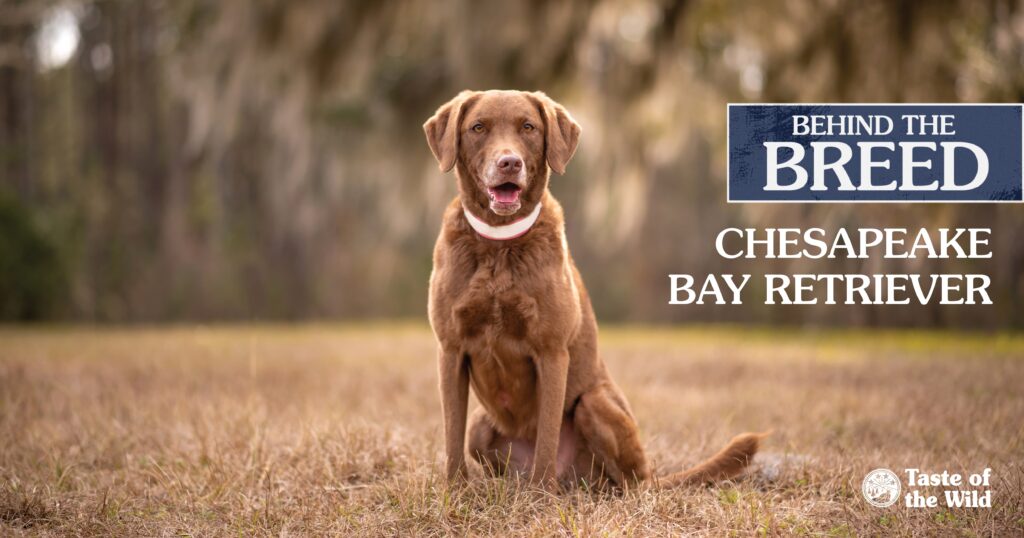
A fact sheet listing three facts about Chesapeake Bay retrievers.

Every dog breed came from somewhere. Most of the breeds we’ve discussed in our Behind the Breed series originated in Europe before ending up as beloved American dogs. But the Chesapeake Bay retriever? An American breed through and through.

Chesapeake Bay Retriever History

Although “retriever” is in their name, Chesapeake Bay retrievers aren’t related to other retriever dog breeds, like golden retrievers or Labrador retrievers. The Chesapeake Bay retriever was truly “made in America.”

According to an account posted by the American Chesapeake Club, a man named George Law rescued two pups from a ship that was sinking in the, you guessed it, Chesapeake Bay of Maryland in 1807. The pups were unrelated but of Newfoundland descent.

The dogs, a black female and a “dingy red” male, proved to be great water dogs with natural duck hunting instincts. They were sold off to separate parties but their offspring became the bones of the Chesapeake Bay retriever breed as we know it today.

One of the Popular Retriever Breeds

Today, the Chesapeake Bay retriever (or Chessie) is a favorite hunting and outdoor sports dog, but they also make good family pets due to their calm temperament and willingness to train. They’re solid dogs, weighing up to 80 pounds while reaching more than two feet tall at the shoulder. Their large size means that when a Chesapeake Bay retriever leans on you for scratchies, you know it!

Chesapeake Bay Retriever Colors

Though they’re most famous for their red, rusty color, Chesapeake Bay retrievers can be chocolatey brown or a tan/straw color known as deadgrass — an interesting way to describe the color of a Chessie!

Chesapeake Bay Retriever Lifespan

A typical Chesapeake Bay retriever will live for around 10 to 12 years. Regular veterinary checkups can help detect any health issues early on and keep your Chessie healthy well into their senior years. Adopting a puppy from a reputable breeder who screens for health issues will also help ensure you come home with a healthy pup.

Do Chesapeake Bay Retrievers Shed?

Like other dogs, Chessies do shed, but their short hair doesn’t need much attention. For most dogs, a regular grooming session once a week will be all they need. If you find a hair mat, hold the hair between the skin and the mat, and using a metal comb, start on the outside and gently pick the mat apart, working toward the center. It may seem like a quick solution, but you should avoid using scissors to cut the mat out because you might accidentally cut your dog’s skin.

A Waterproof Coat Comes in Handy

Possibly the most unique thing about the Chesapeake Bay retriever breed is their waterproof coat. Bred to hunt ducks and other waterfowl on the Chesapeake Bay, the dogs needed to be able to withstand fearsome weather and frigid water. The inner layer of their double coat is thick enough to prevent water from getting to the skin, and the short outer coat prevents snags from reeds or burrs. Both coats produce natural oils that repel water. Chesapeake Bay retrievers also have webbed feet for maximum efficiency when swimming after downed prey.

The Chesapeake Bay Retriever Personality

Like other dogs in the sporting group category, Chesapeake Bay retrievers handle obedience training well, but that doesn’t mean they’re simple dogs to have around the house. They are high-energy dogs who have minds (and noses) of their own and often decide to do what they want to do, especially if they catch a scent.

You will need to provide your canine companion with activities for both mental stimulation and physical exercise to avoid having a mischievous dog on your hands. Dog sports, like agility, tracking and dock diving, can be a good option to provide Chesapeake Bay retrievers with physical and mental exercise. Given their waterfowl-retrieving background, swimming is another great option for Chessies to burn some energy!

Otherwise, Chesapeake Bay retrievers are loyal companions and perfect dogs for active owners who love the great outdoors. Their heightened senses make for diligent guard dogs, and they are inherently protective of their owners, much to the detriment of strangers at times.

Like all puppies, Chesapeake Bay retriever puppies should be socialized from a young age and attend puppy training classes. This will help them to know how to behave around other dogs and people, and to become confident and well-behaved adult dogs.

The Chesapeake Bay Retriever Breed Loves to Work

Their heightened senses and endless energy come in handy when Chesapeake Bay retrievers have working dog jobs. Chesapeake Bay retrievers have been known to make comforting therapy dogs and scent hounds who can hold all manner of positions, from disease sensing to search and rescue missions.

Is a Chesapeake Bay Retriever the Breed for You?

These intelligent, high-energy, loyal but somewhat stubborn dogs are perfect for active families who have the time to exercise their Chesapeake Bay retriever’s mind and body. Especially if you live near water — they love to swim!

Chesapeake Bay Retriever Fun Facts

  • The breed was “established” in 1884, when the American Kennel Club was founded.
  • The Chesapeake Bay retriever was named the official dog of Maryland in 1964.
  • The University of Maryland–Baltimore County chose the Chesapeake Bay retriever as the school’s athletic mascot, and a cartoon version named True Grit is on all team logos.
  • President Teddy Roosevelt’s prized pet was a Chesapeake Bay retriever named Sailor Boy.

National Barks: Walking Through the Grand Canyon

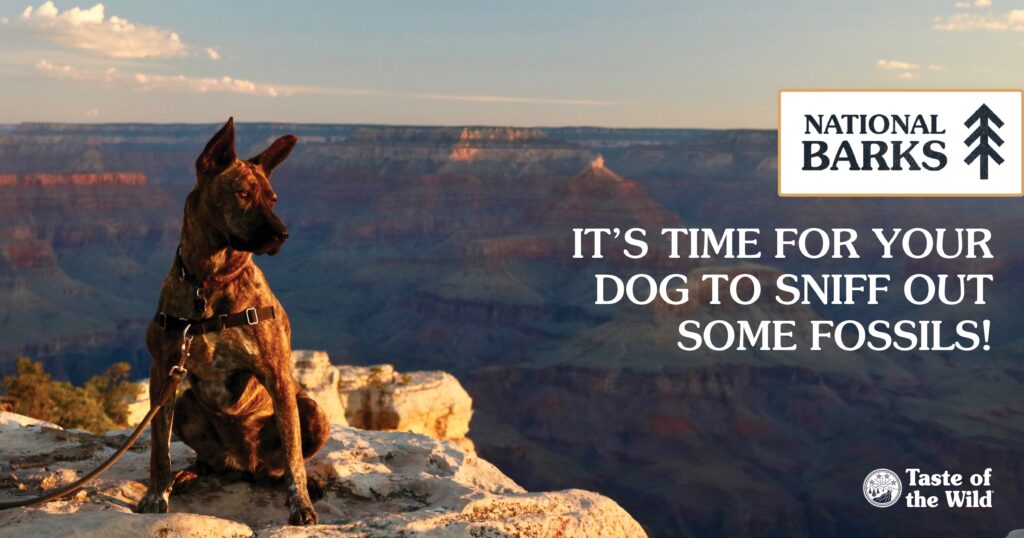
A dog on a leash staring out over the grand canyon next to text that reads ‘It’s time for your dog to sniff out some fossils’.

Welcome to National Barks, our semi-regular guide to taking your dog sightseeing in the national parks. This month we’re going to have you and your doggo daydreaming about a visit to Grand Canyon National Park.

It’s a rockin’ place to take your dog.

Northern Arizona is home to one of the seven natural wonders of the world: the Grand Canyon! Known for its layered bands of rock, the Grand Canyon National Park showcases roughly 1.7 billion years of fossils and geological history across a 277-mile span. And this park is pet friendly to boot! Let’s unearth what portions of the park are open to doggos and how to keep your pet safe while admiring the Grand Canyon’s absolutely stunning views.

Trip Timing

Northern Arizona may experience all four seasons, but the region’s weather is mild enough for you to visit the South Rim of the canyon any time of the year. The North Rim entrance is closed between December 1 and May 15.

The South Rim houses the park’s visitor center and other facilities. They are open from 7 a.m. to 6 p.m. during the park’s peak time of May–September and from 8 a.m. to 5 p.m. during the park’s off-peak months of October–April. There isn’t a timed entry or reservation system to enter the park either.

While the park is open 24 hours, it is important to note that daytime temperatures in Northern Arizona during June, July and August average 93 to 95 degrees Fahrenheit. The heat, coupled with elevation changes, can affect your doggo. If traveling to the Grand Canyon in the summer, be sure to pack enough water, snacks and paw protection for your pet. Don’t forget to pack enough water and snacks for yourself, too.

Neither of you want to be without these essentials in that summer heat!

If Fido gets nervous around large groups of people, travel experts recommend visiting during the off-peak months. Off-peak months of October–April can be less crowded and provide more comfortable temperatures during the daytime hours. Evening temperatures in the off-peak months can fall below freezing, so either make sure you’re at your vehicle by dusk or pack plenty of layers for both you and your doggo.

B.A.R.K. Ranger in Training

Your pet can even become a B.A.R.K. ranger when touring the Grand Canyon. This program is part of the Healthy Parks Healthy People initiative for furry companions traveling to national parks across the country. B.A.R.K. stands for:

B = Bag your poop

A = Always wear a leash

R = Respect wildlife

K = Know where you can go

Let’s go on a W.A.L.K.

Cats and dogs are allowed in the following locations at the Grand Canyon:

  • South Rim Trail: a 12-mile paved trail that includes the Yavapai, Hopi, Mojave and Mather Points. Perfect for burning off a lot of energy and catching your breath while seeing breathtaking views.
  • Bridle Trail: a 3.2-mile hike that connects the North Kaibab Trail and the Arizona Trail on the North Rim. Great for all skill levels and for those hoping to see wildlife in a nearby forest.
  • Established roads and the campground at Tuweep: also on the North Rim. This remote location is great for unplugging from the real world.

No matter which trail or road you choose, your dog must be kept on a leash no longer than 6 feet in length at all times and don’t forget the B in B.A.R.K. Always bag your doggo’s poop and properly dispose of the waste.

For the safety of your furry friend and you, pets are not permitted on trails below the rim or on park busses. Your doggo could attract predators such as cougars or coyotes below the canyon rim, so park rangers, travel experts and our team strongly urge you to follow the guidance set forth for pets. The Grand Canyon is home to 70 species of mammals, 250 types of birds, 25 species of reptiles and five types of amphibians.

Now, keeping this mind, if your pet barks at other animals or scares easily, we recommend reading through our list of helpful tips for unwanted barking and overcoming fears. After working with your pupper to overcome their fears or excessive barking, reevaluate Fido’s behavior. You’ll know best if your dog is truly ready for the adventure.

Lastly, we should mention when deciding between visiting the North or South Rims, keep in mind the South Rim offers more pet-friendly options. Most trails and sleeping options on the North Rim are not pet-friendly.

Lodging with Your Pet at the Grand Canyon

You and the fur baby have a variety of sleeping options at Grand Canyon National Park. No matter which option you choose, pets must be kept on a leash and with an owner at all times.

Campground reservations can be made up to 6 months in advance and must be done prior to your arrival. National Park Service campgrounds do not have RV hook-ups. The only pet-friendly RV campground in the park is at Trailer Village.

South Rim Lodging Options:

  • Mather Campground – open all year
  • Desert View Campground – open April 15 through October 15
  • Ten-X Campground – open May 15 through September 30
  • Trailer Village – open all year
  • Yavapai Lodge – open all year and is the only in-park lodge that has pet-friendly rooms
  • Grand Canyon Plaza Hotel – open all year

North Rim Lodging Options:

  • Tuweep Campground – open all year but make note that it is fully remote and getting to the grounds can be challenging. There is no water, gas, food, Wi-Fi or cell service.

Boarding is also available when you want to explore areas where your doggo is not permitted. The only kennel option is located on the South Rim. The Grand Canyon Kennel requires proof of vaccination upon entering the facility. Necessary vaccinations include rabies, DHLP, bordetella and parvo. It is best to make reservations in advance to ensure there’s room for your doggo.

So now that you know the ins and outs of taking your furry companion to the Grand Canyon National Bark, who’s ready to see this natural wonder? We can hear your doggo barking that they’re ready in the background. They’ve got fossils to sniff out and scenic routes to explore.

Can My Dog Eat That? Watermelon

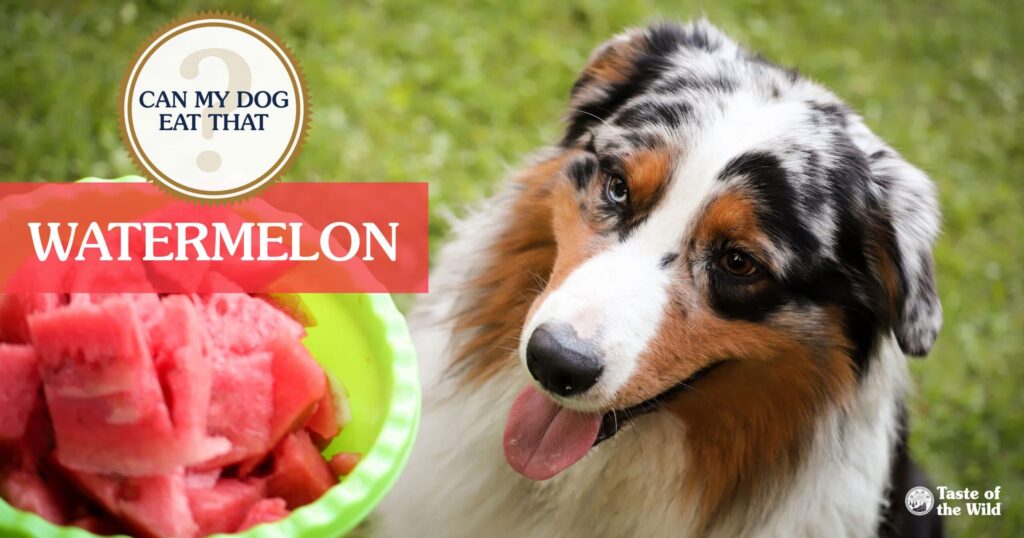
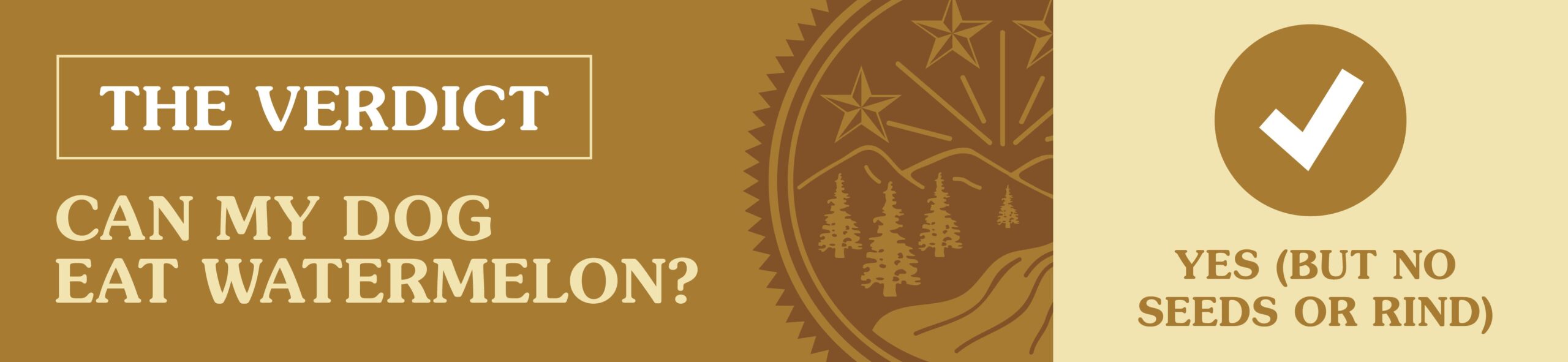
Interior graphic with text that reads ‘Can my dog eat watermelon? Yes (but no seeds or rind)’.

Welcome to “Can My Dog Eat That?,” our series that answers some obvious (and not-so-obvious) questions about what your dog can and can’t safely eat. You can view some of the previous foods we’ve looked at in our “Can my dog eat that?” guide. Today we answer the question “Can dogs eat watermelon?” Read on!

You’re having a picnic with your canine buddy and enjoying a warm, sunny day with some blueberries or peaches and a slice of juicy watermelon. But you’re not the only one who wants some of that yummy watermelon deliciousness. Those big puppy-dog eyes are getting harder and harder to resist. Which raises the question, can dogs eat watermelon?

They sure can — as long as you prepare it appropriately. If you’ve carved up the watermelon into wedges, it may be tempting to throw your dog a slice, rind and all. But the rind can cause an upset tummy in dogs and it’s also a potential choking hazard. It’s best to cut the rind off and slice the watermelon into chunks before giving it to your dog. You should also take any seeds out because they can block your dog’s digestive system.

Watermelon Is a Cool Treat

Watermelon is a healthy treat for most dogs (when it’s free of seeds and rind). It has low calories, no fat and no cholesterol. Plus, its high water content makes it a tasty way to help keep your dog hydrated on a hot day. If your dog is a fan of frozen treats, you can freeze some watermelon puree into bite-sized chunks for them.

As always, limit the amount of treats (including watermelon) to no more than 10 percent of your dog’s recommended daily calorie intake. And avoid canned or syruped watermelon that contains artificial sweeteners (like xylitol) that are toxic to dogs.

So go ahead and surrender a chunk of juicy watermelon to those puppy-dog eyes and enjoy the rest of your picnic in peace — until they want some more.

Interior graphic with text that reads ‘Can my dog eat watermelon? Yes (but no seeds or rind)’.

Springtime Is Catio Time

Two cats sitting in an enclosed catio playroom out on a patio.

Is there better porch weather than spring weather?  And is there a better purrson to share porch time with than your cat? Well, to make sure you both get the most out of your porch (or backyard, in lieu of a good sittin’ porch), here’s how to add a catio to your recreation area.

What’s a catio, you ask? Essentially, it’s a patio built with cats in mind. They come in all shapes, sizes and colors, depending on your space and preference. The only real requirement is that your catio is an enclosed space where your cat can enjoy the wonders of the great outdoors safely. They can be small window-set enclosures or giant free-standing play areas. Catios are something cats of all ages can enjoy.

How to Make the Right Catio for Your Cat and Home

You don’t have to have a big backyard or wraparound porch to make this cat dream work! You’ll find that there’s a catio layout for nearly every situation. This means you can make a catio work whether you’re in an apartment, duplex, house or otherwise.

First, if you’re renting your dwelling, we recommend getting permission from your property manager prior to getting started. There are catio options that are less permanent than others.

Next, choose the best location for your catio. This could be a window, an existing deck or a level spot in the backyard. Once you roughly know what dimensions you’re looking at, you can decide whether you want to buy a cat enclosure to assemble or build one from scratch. Cat enclosures are sold at most pet stores as well as online retailers like Amazon.

Building a catio from scratch can mean purchasing all new materials OR it could mean visiting your local Habitat ReStore and thrift shops for repurposed materials. Who knows, a refurbished chicken coop from the local thrift shop could be the starting point for your new catio! You don’t have to be a carpenter to build a catio, and you don’t have to break the bank crafting one either.

The main things to remember are that your catio is secured to the ground and/or side of the dwelling, and that there are no sharp edges or exposed nails that could harm your cat. We don’t want Mittens to escape or get hurt.

Don’t Forget the Decorations

Once you’re done building your cat enclosure, it’s time to decorate. Cats enjoy climbing and a bird’s-eye view. If your catio is big enough, add multiple perches, platforms and ladders.  Also, place a blanket, cat bed or cat hammock in the enclosure for your furry feline to curl up and relax. Provide their favorite toys, a water bowl and a couple of treats.

Bonus tip: Add a birdbath or bird-friendly plants a safe distance from the catio so your feline has hours of birding ahead of them.

Introducing Your Cat to Their Oasis

It may take Mittens a week or two to fully get used to the new space. We recommend keeping an eye on your feline to determine when they need to go back inside. Each cat is unique, so you may notice during the first catio experience that Mittens is okay with 10 minutes or they may be alright with 30 minutes. Slowly work your cat up to spending more time in their catio.

Before you know it, they’ll be eager to enjoy their oasis for hours on end.

Benefits of a Catio

Think about the potential veterinary bills that come from a free-roaming cat. Cringe. Now, release a sigh of relief as you envision Mittens safe in their enclosure. Ahhhh. But that’s not the only benefit a catio can provide!

  • A catio allows your furry companion to take in a variety of smells, sights and noises. This provides them an outlet for expending pent-up energy.
  • Cats are a significant threat to birds, so a catio is the perfect solution for protecting cats and birds alike. More birding for you and Mittens on the horizon!
  • Like humans, cats can feel cooped up. When your pet can take in fresh air, they’ll be more relaxed and content.
  • May reduce exposure to strays and the diseases they carry.
  • A happy, healthy indoor cat is a cat with a longer life span. Yes, keeping your pet safe in a catio opposed to letting them roam the neighborhood increases your cat’s longevity.
  • You get to introduce your furry friend to some of your favorite activities, like gardening or family BBQs.

So are you ready to get your cat into their new catio?  We’re pretty sure your cat is ready! With the right amount of creativity and passion, you’ll have the perfect oasis for your cat in no time. Warmer weather, here you both come!

RELATED POST: Enrichment Tips to Keep Your Indoor Cat Happy

Behind the Breed: Greyhounds

A cartoon greyhound with his tongue out next to display text ‘greyhound quick facts’.

Most people know greyhounds as long, lean, running machines. This impression is entirely true: they have been clocked at over 40 miles per hour and are considered the fastest dog breed. What you may not realize is that these speedy sprinters don’t need to be constantly running — they would love to snuggle with you on the couch, too. The regal greyhound dog is a true snuggler compared to many other dogs!

The Greyhound Dog: An Ancient Breed with Regal History

Greyhounds are one of the oldest dog breeds. They are graceful and elegant, which may be why they’ve been popular subjects for artists throughout time. They have been depicted in ancient Greek and Egyptian art and have been associated with pharaohs, English royalty and a U.S. president. Rutherford B. Hayes, the 19th president of the United States, brought his 2-year-old greyhound Grim to the White House with him. It’s reported that Grim liked to sing “The Star Spangled Banner” with First Lady Lucy Hayes.

Recognized as a breed by the American Kennel Club in 1885, the greyhound dog breed is part of the hound group. A similar breed is the Italian greyhound, which is a toy version of the greyhound. Like their bigger counterparts, Italian greyhounds have a natural chase instinct, but they are also affectionate and love to cuddle. Another similar breed is the Spanish greyhound.

Greyhounds Are the Racers of the Dog World

A greyhound’s lean body is built for speed, which is probably why they were used to chase prey. Unlike other hunting breeds like basset hounds and beagles, scenthounds that can track prey, greyhounds are sighthounds bred to hunt by sight and outrun their prey, especially small animals.

Today there are two types of greyhounds in the U.S.: racing and show greyhounds (same breed, different goals). Most pet greyhounds are retired racing greyhounds. Greyhound racing tracks were first built in the U.S. in the 1920s when the mechanical lure was invented. The money wagered on dog races peaked in 1991 at $3.5 billion, according to Racing Commission International, and has since significantly declined due to less interest from bettors and dog racing bans. According to Grey2K USA, a nonprofit entity that advocates banning modern greyhound racing and promotes the rescue and adoption of greyhounds, West Virginia is the only state with active, legal dog racing tracks (two active tracks).

Greyhounds Characteristics Make Them More Than Your Average Rescue Dog

Adopting a retired greyhound is a little different than adopting another breed of dog. They have probably never lived in a home, and it’s likely that the only dogs they have been around are other greyhounds. This means that they will need to learn to socialize with other dogs in a neutral space and be introduced to common household objects like vacuums, windows and hardwood floors. The good news is that because racing greyhounds tend to be crated and on strict schedules, they are usually easy to potty train.

Greyhound characteristics dictate that they will always have the instinct to chase, so they should be kept on a leash unless they’re in an enclosed area — which will be needed so that they can do some zoomies. Other than a burst of speed in a secure area, a short walk once or twice a day will generally be enough exercise for them. Even though they were athletes, they don’t typically need performance food, but check with your veterinarian about which dog food is best for them.

The Greyhound Personality Is Gentle for Such a Large Dog

A pet greyhound is calm, gentle, sweet-natured and very affectionate. Most greyhounds are also not big barkers and have a quiet demeanor which makes them perfect for apartment living, even better than some other pets. The greyhound temperament is wonderful for pet owners looking for terrific dogs to be the family pet. Retired greyhounds are large dogs but much more adaptable, low-maintenance dogs than many other breeds.

What Are Greyhound Colors?

Despite their drab name, you can find greyhound puppies and adults in a variety of hues. In fact, the “grey” greyhounds are technically called “blue” and are the rarest color of greyhound puppies. The most common greyhound color is brindle, followed by a spotted white, black and red. They also can be found in “fawn” colors, which makes sense since they’re quick like a deer!

Where Can I Find a Greyhound Puppy?

The most common (and needed) way to adopt a greyhound is to offer a home to retired racers, but you can also find a greyhound puppy from a reputable breeder. Puppies are getting harder to find because there aren’t as many greyhound breeders since racing was regulated in most places. Whether you find a puppy or a retired racer, these loyal couch potatoes offer traits that are perfect for families with children and active dog owners alike.

Do Greyhounds Shed?

They shed all year round, although their short hair is a little easier to manage than most dogs. Regular brushing can minimize the hair left on your couch, and their smooth coat means that the brushing is easier than with some dogs. These dogs’ coats are sleek, and with regular maintenance the shedding is more than manageable.

For more information about this gentle dog breed, check out the Greyhound Club of North America here. It’s the national breed club for greyhounds within the AKC. Many greyhound owners have this page bookmarked.

To read more about racing dogs or other breeds similar to greyhounds, like the mighty Weimaraner, bookmark our blog!

A cartoon greyhound with his tongue out next to display text ‘greyhound quick facts’.

Can My Dog Eat That? Popcorn

Can my dog eat popcorn? Yes!

Welcome to “Can My Dog Eat That?,” our series that answers some obvious (and not-so-obvious) questions about what your dog can and can’t safely eat. You can view some of the previous foods we’ve looked at in our “Can my dog eat that?” guide. Today we answer the question “Can dogs eat popcorn?” Read on!

It’s movie night! You’ve got the latest release on pause, ready to go. You’ve dimmed the lights and grabbed the blankets ready for snuggles with your canine bestie. The last, but essential, part of your movie night preparations is the popcorn. You’ve popped a big bowl, but on the way to the couch, you trip over your dog’s ball and some popcorn falls to the floor.

Before you can say “No people food!” your canine vacuum cleaner has sucked it all up and is looking very proud of themselves for helping you clean. But now you’re thinking, “Can my dog eat popcorn?” It’s a valid question that’s probably been asked by many pet parents preparing for movie night with their canine couch companion.

So, Can Dogs Eat Popcorn?

The answer is yes, depending on the amount and the toppings. Air-popped popcorn that doesn’t have any salt, butter or other toppings on it is generally safe for your dog.

As an occasional treat, plain popcorn is great, as long as you keep to the guideline of feeding no more than 10 percent of your dog’s total daily calorie intake as treats. Plain air-popped popcorn is also a good alternative to traditional dog treats if your dog has chronic kidney disease or another health issue that requires them to limit their protein and sodium intake.

Popcorn does have some nutritional benefits for dogs, like fiber and some minerals and vitamins. However, your dog should already be getting the right nutrients in the right amounts from a complete and balanced dog food, so the popcorn nutrients aren’t really needed.

You do need to make sure you clear the popcorn bowl of kernels that didn’t pop. Dogs can’t digest these and they could get stuck in their teeth, which can be painful. If you have a toy breed, unpopped kernels could also be a choking hazard for them.

Plain Popcorn Only

Popcorn isn’t toxic to dogs, but it does become a problem when you start adding toppings to it. Butter and salt are not healthy for dogs. Let’s be honest, they’re not really healthy for people either — but they make the popcorn sooo tasty. Butter, oil and salt can cause your dog to have an upset gastrointestinal tract (think vomiting and diarrhea) and all of that delicious fat can stack on the pounds if your dog is eating buttered popcorn regularly. Eating too many high-fat foods can also increase your dog’s risk of developing pancreatitis. If your dog happens to “vacuum” up a few pieces from the floor, they will probably be OK. Just make sure they don’t have access to the whole bowl.

Sweet Toppings Are a No-No, Too!

The oh-so-sweet toppings for kettle corn, cinnamon-sugar popcorn and caramel popcorn can also switch popcorn over to the “That’s not good for you” list with all of their sugar content. And you should definitely avoid feeding popcorn to your dog if it’s coated in an ingredient that is toxic to dogs, like chocolate or xylitol (artificial sweetener).

So, if you’re wanting to share some popcorn with your dog next movie night, it’s generally OK to make them a little bowl of plain, air-popped popcorn. Just make sure they don’t get any of the delicious buttery popcorn — that’s for people only.

If you’re curious about your dog’s ability to eat other crunchy snacks, bookmark our blog!

Interior graphic with text that reads ‘Can my dog eat popcorn? Yes (if it's plain)’.

Behind the Breed: Australian Shepherd

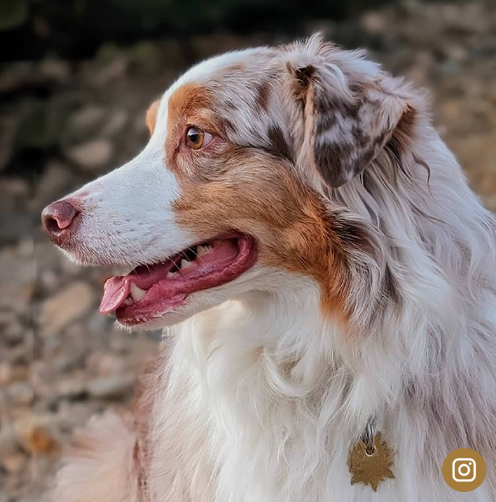
A view from the side of a brown and white Australian shepherd.

Have you ever wondered about the origins of a dog breed? In our “Behind the Breed” series we’ll dive into the history, personality and physical appearance of a particular breed. We’ll also cover some of the FAQs about the breed and maybe some fun facts, too!

History of the Australian Shepherd Breed

First things first: Australian shepherds aren’t really Australian, and it’s unlikely that you’ll find many in Australia, as they are actually a United States breed. The origins of Aussies, as they’re affectionately known, start in the Basque region of Spain. In the 1800s, Basque shepherds took the dogs to pastures in the Australian Outback, where they were crossed with border collies and other dogs, and gained a popular following. As news of these remarkable, energetic herding dogs spread around the world, ranchers, most notably in California, started importing the dogs to work on their ranches, where they perfected today’s standard of the breed. So you could say that Aussies have some serious mileage on them.

Aussies Are Hard Workin’ Tricksters

Beyond their use as working dogs, the breed gained popularity by performing both herding feats and tricks at traveling rodeos. In the 1950s and 1960s, Jay Sisler, a popular rodeo owner and performer, popularized his touring rodeo by promoting it with his trained Aussies. The breed’s instinctive need to have a job quickly made them popular as seeing eye dogs, hearing dogs, search and rescue dogs and even explosive detection dogs. Australian shepherds also excel at trick training, obedience trials, agility and many other dog sports. 

Are Australian Shepherds Smart Like a Border Collie?

Yes, Aussies are very smart. An Australian shepherd puppy is generally easy to train (as are adults). But they are one of the dog breeds who definitely need jobs, as being productive is ingrained into their DNA. If they’re not stimulated, Australian shepherds will act out, which could be bad news for your couch cushions. Frequent exercise is also a requirement for Aussies — meaning this breed is best for active people. But given a good vocation, these dogs can be content family pets. Just keep them busy, or they’ll wear you out!

Australian Shepherd Size and Life Expectancy

Male Aussies weigh up to 65 pounds and can be up to 23 inches at the shoulders, while females are slightly smaller at 55 pounds and up to 21 inches tall. The Australian shepherd’s lifespan is around 12 to 15 years. They are generally healthy dogs, but relatively common breed issues include hip or elbow dysplasia, epilepsy and eye conditions (e.g., progressive retinal atrophy).

Mini Australian shepherds range from 20 to 40 pounds and 13 to 18 inches tall. Mini Aussies didn’t lose their natural herding instincts with the size; they have an affinity for horses that means they can be commonly found at horse shows.

Australian Shepherd Colors and Appearance

Australian shepherds have four “acceptable” coat colors by AKC standards: black, blue merle, red and red merle. Their coats can also have white markings. The outer coats of Australian shepherds are usually a moderate length and coarse, while the undercoat is soft. They need regular weekly brushing sessions and maybe even more during shedding season, when you might want to use a specialized undercoat rake to help remove that loose fur from their double coat.

Their tails are either naturally bobbed or docked by their owners; and their ears break forward and over, giving them a friendly look. Their eyes can be any color combination, and many Aussies will have two different colored eyes. Blue eyes are common in Australian shepherds that have the merle gene.

Australian Shepherd Temperament

Aussies are an intelligent, medium-sized breed that possess strong herding instincts (hence the name). They are very active dogs that love stimulation and being a part of the daily grind, often enjoying car rides and being with their owners. Their herding dog instincts mean that early socialization of an Australian shepherd puppy is important, so they learn from a young age that other animals and kids don’t need to be herded into a corner of the yard! If you can supply these high-energy dogs with physical exercise and a variety of mental stimulation options, they make great family dogs.

From herding livestock to service dogs to family pets, Australian shepherds seem to be able to master it all. They’re a playful, loyal and energetic breed that thrives on mental stimulation and consistent structure — even as a family pet. If you have an active lifestyle and can provide plenty of mental challenges for your canine companion, an Aussie puppy or dog might be the one for you!

Puppy Adoption: A Taste of the Wild Guide

Taste of the Wild

Puppy adoption can be the best time of your life and certainly the best time (so far!) of your puppy’s life. But the process isn’t without stress. Questions and uncertainty abound, especially if this is your first time adopting a puppy. What kind of puppy food should you get? Is puppy food actually that different from adult dog food? When should puppy potty training happen, and how do you handle the inevitable messes? What about leash training and socialization? You’ll likely have dozens of questions about puppy adoption, which is why we’ve assembled a number of tips for puppy adoption to help you and your new pal get off on the right…paw.

The Building Blocks of Your Puppy’s Diet

A group of puppies eating food from metal bowls on the floor.

One of the more important things you need right away is a solid understanding of puppy food nutrition. An often-raised question is “Do I really need puppy food?” and the answer is always “You really need puppy food,” or at least an all-life-stages food that is appropriate for puppies. So, when choosing a recipe, make sure you look for a “puppy diet” food or that the bag or can is very clearly labeled as “for puppies.”

Building the right nutrition into their diet now will set your puppy up for long and healthy journey into adulthood. Protein and fat are absolutely vital to your pup’s growing body, so look for those levels specifically before making your choice. But how much protein does a puppy need? There’s no exact answer to that question, since puppies vary wildly in size from breed to breed and age to age and so do their needs regarding puppy food nutrition. VCA Animal Hospitals recommend that the protein range for optimal puppy growth is 22–32 percent for dry puppy food.

To make things a bit more confusing, small breed and large breed puppies have their own specific requirements, partly because small breed puppies tend to have a higher metabolism and need more calories to keep up with their higher energy levels. Long story short: Consult with your veterinarian before choosing your puppy food. In the meantime, you can read our blog about puppy food nutrition, where we discuss:

  • The difference between puppy food and all-life-stages dog food
  • Why nutrients matter in a puppy-diet food
  • Where to find portion sizes

Getting your puppy started off properly from a nutritional standpoint will set up a lifetime of success and happiness for both of you.

READ MORE ABOUT THE BUILDING BLOCKS OF PUPPY NUTRITION

It’s Go Time: Cleaning Up When Potty Training Your Puppy

A brown puppy lying on a pee pad on the floor.

Puppy potty training. It isn’t always easy, and it will most certainly be messy at times. Every puppy is different, so every puppy potty training timeline will be different. Your pup goes on their own schedule, especially at the beginning of their potty training.

To avoid puppy messes as much as possible, here are some tried-and-true puppy potty training tips.

  • Start early. You can “officially” start potty training your pup as soon as you bring them home. Invest in some pee pads and get to work!
  • Be positive. That old “rub their nose in it” method has no place in any civilized puppy home, and it probably never should have been used. This is because it simply doesn’t work! Scolding, yelling or rubbing their nose in the spot only breeds confusion. “Am I not supposed to poop at all?” Instead, praise your pooch for doing what they need to do while immediately taking them outside, or wherever the desired target location is.
  • Set an indoor location. Unless you are on a 24/7 vigil, your puppy will go indoors. But you can control where they go and set expectations that there are designated puppy potty zones. This is where pee pads come in handy. If they know that they can go only on a pee pad, soon that pee pad will become “the grass,” and they’ll understand.
  • Crate training is puppy potty training. Dogs really try to avoid going to the bathroom where they sleep, so crate training doubles as potty training. This isn’t to say that they won’t have accidents in their crate; but most pups will hold it as long as they possibly can while crated.
  • Stick to a routine. Dogs are creatures of habit, so turn puppy potty breaks into a habit. If you take them outside at random, they won’t learn when it’s time to go. Eliminate the time variable and eventually they’ll eliminate…on time!

No matter how thorough your puppy potty training methods are, there will be accidents. And that’s OK! When it’s go time and they don’t make it to the pee pad or to the front yard, you’ll be prepared, thanks to our puppy potty training cleanup tips. We’ll tell you how to block smells and stains from your temporarily thwarted puppy potty training methods, and offer up some tips and tricks for easy cleanup.

Together, we’ll get through this. It’s go time!

READ MORE ABOUT CLEANING UP WHEN POTTY TRAINING A PUPPY

How to Train Your Puppy to Walk on a Leash

A black and tan dog walking on a leash outside.

Get outside and unleash fun by starting puppy leash training. You can start leash training a puppy as soon as you bring them home. All you need to do to start leash training your puppy is to acquire the correct size harness and leash length. Most leashes and harnesses have height/weight requirements right on the package, but you can ask your veterinarian for advice, too. Once you have that ironed out, let the puppy leash training commence.

Follow our comprehensive blog about leash training your puppy, where you’ll learn:

  • How to get your puppy comfortable with their leash
  • How to practice walking on the leash before venturing out for the real thing
  • When it’s time to test out your skills in a new environment

With these tips about puppy leash training, you’ll be going for multiple walks a day in no time.

READ MORE ABOUT HOW TO TRAIN YOUR PUPPY TO WALK ON A LEASH

Puppy Safety in the Summer

A wet puppy sitting in the sand at the beach.

Summer is never too far away. If you have a new puppy, summer is either happening or about to happen or happened not too long ago! Whatever time of year it is, you’ll need summer safety tips for your new puppy sooner or later. Why not now?

Here are a few basic tips for a new puppy’s journey through the dog days of our favorite season.

  • Don’t stay out too long! When the sun is beating down, 15–20 minutes is more than enough. When in doubt about your puppy’s safety, look for excess panting or lethargy. If that’s happening, head for the AC!
  • Stay inside! When it’s blazing out there, remember that you don’t have to go outside to have fun.
  • Never leave your puppy in a parked car. Seriously. Just don’t do it.
  • Know your puppy! Every dog has different preferences and, more importantly, tolerances. If your puppy is uncomfortable in the summer sun, get out of it!

If you’re wondering how hot is too hot to walk dogs, the American Kennel Club suggests that when the air is 85 degrees F or higher, the pavement is simply too hot for your pup’s feet without protection. But again, your puppy may be uncomfortable at a cooler temperature, so your best barometer for puppy safety in the summer sun is…your puppy! Pay attention to their needs and wants, and you’ll rarely go wrong.

READ MORE SUMMER SAFETY TIPS FOR YOUR NEW PUPPY

Socialize Your Puppy Now for a Friendlier Tomorrow

Two dogs playing near water.

Wondering when to socialize a puppy? The answer is “right now!”

If you’re engaging in leash training your puppy, socialization is a natural next step, and builds a foundation of friendliness. Socializing your puppy between 7 and 16 weeks of age can set them up to get along with everyone for the rest of their lives.

But mostly, you want to get them used to other dogs so you can traverse trails and do the dog parks without worry. So how do you socialize a puppy? It sounds like a lot of work!

Well, it is. But here’s our handy puppy socialization checklist where you’ll learn:

  • How to begin socializing your puppy
  • How to expand your puppy socialization territory
  • Interacting with other dogs for the first time (and many others)
  • What to expect when socializing your puppy in new locations
  • Meeting people with your puppy

Knowing how to socialize a puppy with other dogs is a vital part of giving your newly adopted puppy a long, full life.

READ MORE ABOUT SOCIALIZING YOUR PUPPY

Puppy Adoption Stress

A woman holding a white and black puppy on her shoulder.

You’ve found your ideal best friend on Petfinder or by perusing rescue shelters or online ads. No matter how you’ve decided on your puppy adoption, you’re about to seal the deal. But how do you do it without majorly stressing out your new puppy?

The adoption process can be rough on a four-legged young one. A new home, a new puppy parent, new smells, new…everything. It’s no wonder that puppy anxiety is a common occurrence during the puppy adoption period. Here are a few tips for easing the puppy anxiety generated by the adoption process.

  • Be available. Your puppy’s entire life has been upended! They need constant comfort, so if you can take a few days off work to ease their transition, we urge you to do so.
  • Give them a home within your home. Puppy anxiety can be lightened if they have a “safe space” to go when they’re feeling stressed out. Usually, this is their crate, but it can be a pile of blankets or some sort of hidey-hole that lets them get away from the commotion.
  • Puppyproof the house. The last thing an anxiety-filled puppy needs is to constantly be told “No,” so try to pre-empt those situations by thoroughly going through your home and making sure that there’s nothing that your puppy can hurt or can hurt your puppy.
  • Ease them in slowly. Don’t inundate your puppy with new people, pets, sights and sounds. Let them explore at their own pace, meeting people and checking things out as they want to. A stressed-out puppy probably doesn’t want to meet a new cat, for instance.
  • Be positive. As with all things relating to puppy adoption, be positive at all times. Negative reinforcement only causes stress and anxiety, which is what we’re trying to avoid.

There are a million other ways that you can ease puppy anxiety during the pet adoption process. We don’t cover all of them, but here’s a comprehensive look at puppy anxiety and stress during the puppy adoption process.

READ MORE ABOUT EASING STRESS DURING PUPPY ADOPTION

Puppy Spay and Neutering

A group of puppies lying in the grass outside.

Neutering or spaying your puppy can be an important part of the puppy-having process. And while it can seem cruel or painful in the moment, spaying or neutering your puppy can provide a number of long-term health benefits.

In 2013, a review of American pet health records found that the states with the healthiest and longest-living pets also had the highest neutering and spaying rates. Neutered male dogs were found to live 18 percent longer than unneutered male dogs. For male dogs, neutering can contribute to a longer life span because it eliminates the possibility of testicular cancer and decreases the risk of enlarged prostate gland, prostatitis and perineal hernias. If you have a female puppy, spaying helps prevent breast cancer and uterine infections.

There are a number of other reasons to spay or neuter a puppy. Puppies who haven’t been neutered or spayed are more likely to misbehave, as in wander away, display aggression or mark their territory with urine. If you look at the bigger picture, spaying puppies and neutering puppies prevents unwanted litters, which helps reduce pet overpopulation.

If you’re wondering when to spay or neuter your puppy, there (surprise!) isn’t a single, universal answer, because growth rates vary with breed and size. The best time for surgery for your pup depends on factors such as breed, behavior, environment and so on — your vet can help you make this important decision. Small breed puppies are often spayed or neutered around six months of age, but it is not uncommon to hold off on surgery for large breed puppies until they are closer to a year old.

Puppy Adoption: A Little Prep, A Lifetime of Fun

A black puppy on a leash standing next to its owner outside.

Puppy adoption can be taxing at times, but it’s worth the effort, especially if you use the available tips for puppy adoption to start your journey together off right.

RELATED POST: A Taste of the Wild Guide to Pet Anxiety and Stress

A new puppy text graphic with a white, tan and black puppy lying in the grass.

National Barks: How to take your pet to Yellowstone

Taste of the Wild

Welcome to National Barks, our semi-regular guide to taking your dog sightseeing in the national parks. Today, we visit Yellowstone National Park!

Yellowstone National Park is home to 2.2 million acres of mountains, lakes, geysers, forests, hot springs and canyons. This National Bark…um…we mean, National Park is also home to more than 200 species of wild animals.

The world’s first national park attracts millions of people and doggos each year. However, it’s vital to make note of Yellowstone’s necessary pet guidelines before you begin mapping out your trip. Park officials want to ensure you and your dog stay safe while touring.

Trip Timing

If you want Fido to join you in your travels, it’s best to visit Yellowstone National Park in the spring, summer or fall. Depending on your crowd preference, you’ll want to choose accordingly. June, July and August are Yellowstone National Park’s busiest months for visitors. Warmer weather means all the roads and facilities at the park are open, allowing tourists the chance to explore the park to the fullest.

The park is typically less crowded in mid-April to May, and September to October. Most roads are usually open during these months, but there is a chance for winter weather so be sure to watch the forecast and plan accordingly. Another benefit of planning around May is the chance to see baby wildlife and blossoming wildflowers. Many animals during late April or May (as temperatures are warming) will migrate within the park so you’ll likely see more animals crossing roads and walkways during this timeframe.

The least favorable times to see Yellowstone are November through the beginning of April because most roads, restaurants, campgrounds and visitor centers are closed for winter. Winter visitors mostly book guided, one-of-a-kind experiences during these months — something Fido would not be able to take part in.

Campground Reservations Are a Must

Pets are not allowed in any of the hotels or lodges at Yellowstone National Park. When making your travel arrangements, you will want to stay at one of 12 campgrounds in the park. All are dog friendly.

Campground registration opens on the fifth of each month, 13 months in advance of your travel timeframe. Yes, that means you’ll be able to make a reservation for August 2024 in July 2023. And during those summer months, you really will need to book that far in advance to secure your registration.

Once at the campsite, remember that you are in bear country. Store your food and other scented items in the bear boxes provided at each reservation area, and keep your pet on a leash and within sight. You must clean up after your dog and properly dispose of pet waste as well. These rules prevent wildlife from being lured close to your sleeping grounds.

Take a Hike

Get ready to stretch those legs after driving around to find the perfect lookout area! Dogs are allowed to roam alongside you on a leash (6 feet or less in length) in parking lots, public areas and within 100 feet of any road. Park rules state that a pet must never be unaccompanied, even if it’s only for a few moments.

Pets are not allowed on geyser boardwalks, trails or Yellowstone’s back country. Why is your dog not allowed in these locations?

  1. Geysers are a must for humans to see, but too dangerous for domesticated animals. Both humans and animals have been severely burned or even killed by a geyser. When geysers erupt the temperature is about 200°
  2. Bears, wolves and other wildlife located deeper in Yellowstone’s terrain prey on domesticated animals. Your dog may be able to outrun a bear, but your dog could lead wildlife straight back to you—a chance none of us at Taste of the Wild or the park rangers at Yellowstone want you to take.
  3. Diseases can be spread from Yellowstone’s wildlife to pets, and vice versa. Mange, parvo and distemper are just a few highly contagious diseases wild animals can transmit to your dog.

Riding in the Car

Yellowstone is humungous and often requires riding in the car for long periods of time, which might come as a surprise to first-time visitors, but it’s part of the experience for you and your dog. The park is spread out across 3,471 square miles with five different entrances to choose from. How much of the park you’d like to see will determine how far you’ll be driving. Consider it a road trip when it comes to knowing how comfortable your dog needs to be in the car.

Now, as you travel along Yellowstone National Park’s windy roads, make note that you are not alone out on the pavement. Even though the speed limits are low, make sure that your pooch is secured inside the vehicle and not hanging out the window. Not only could you encounter traffic jams or slow-moving drivers soaking up the scenery, but wildlife could dart out in front of your car at any moment. Enticing!

Remain flexible and account for extra time spent out on the road. This means you’ll also want to pack extra food and water for both you and Fido. And be sure to make extra pitstops along the way for stretching the paws and bathroom breaks. Remember to bag and dispose of pet waste, too!

Altitude Sickness

Pay attention to how your dog is doing on your travels to Yellowstone National Park, and while traveling around the park. Along the way does it seem like they are struggling with the elevation changes? Your dog may need to slowly work up to a higher elevation. Each pet’s needs are unique, and you know your furry companion best.

If you notice the following symptoms, be sure to offer your pet water and gradually work your way to a lower elevation as soon as possible. They’re likely experiencing altitude sickness.

  • Hard time breathing
  • Vomiting/nausea
  • Panting or drooling more than normal
  • Bloody nose
  • Decreased appetite
  • Increased heart rate
  • Swelling of face, limbs
  • Passed out

Get those plans made now for the year ahead! Yellowstone National Park has a lot to offer you and your dog. We know we’ve run through a lot of rules, tips and tricks for your travels to the park, but all of it is to make sure you both stay safe while having the time of your lives. You and Fido will fall in love with the sights, sounds and wonders the park has to offer. Yellowstone, here you come!

RELATED POST: A TASTE OF THE WILD GUIDE TO VACATIONING WITH YOUR PET