
A List of Dog Commands and Hand Signals for Beginners

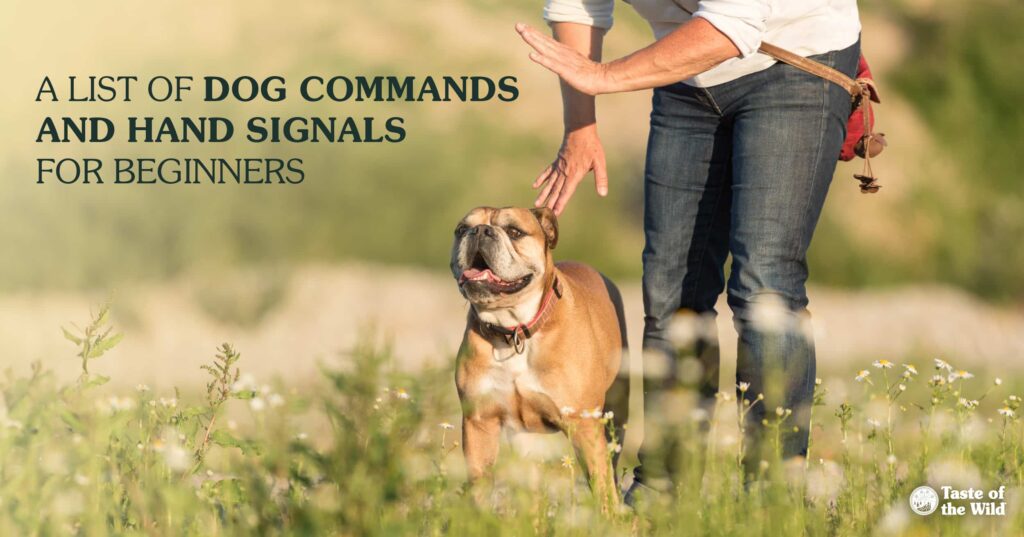
A dog standing next to its owner in a field while the owner uses a hand signal to command the dog to stay.

When you’re choosing how to train your dog, there are many things to consider (including their food), but most importantly may be which training method to use. Another decision to make is whether to teach your dog training hand signals. Dogs use body language to communicate with other dogs, so it makes sense that they can also use body language to communicate with us. It’s why most dogs respond well to hand signal training.

Why Should You Teach Your Dog Hand Signals?

There are many situations where a hand signal can come in handy. If you’re in a noisy environment where your dog can’t easily hear you (e.g., at the dog park with what seems like every dog in town), a hand signal allows your dog to see what you’re asking them to do. That way you’re not shouting or running after them until they hear you. Dog training hand signals are also useful for competing in dog sports like agility where your dog needs to pay attention to you in a very distracting environment where verbal communication is difficult.

Many dogs develop hearing loss as they age. By teaching them visual signals when they’re younger, you will still be able to communicate with them if they do become hard of hearing or deaf in their senior years. If your dog was born deaf or becomes deaf, they can learn to obey commands that are given by hand signals. The hardest part of training deaf dogs is getting their attention. Some of the methods we list in our article about caring for a deaf dog include broadly waving, stomping your foot or gently touching them in the same spot each time.

Can I Teach My Dog Hand Signals If They Know Verbal Cues?

Yes, if you have trained your dog to respond to verbal commands, you can still use hand signals for dog training. The first step is getting their attention — we have more on how to do that below. Once they’re looking at you, show them the hand signal, say the verbal command and, of course, give them lots of praise when they complete the task. Eventually you should be able to drop the verbal command and just show your dog the hand signal.

How to Teach Hand Commands for Dogs

Obviously knowing hand signals is pointless if your dog doesn’t look at you. So that’s the first task you need to teach your dog — “look at me.” To do this, get their attention by calling their name or stomping or broadly waving at them if they’re deaf. When they look at you, say “look” or another cue, and immediately reward them with treats, a toy or another reward (skip the verbal cue if they’re deaf). Keep repeating this and eliminate the reward when they’re looking at you consistently. The goal is that eventually your dog will regularly look at you to “check in” and, once trained with hand signals, will see if you’re using visual cues.

Praise is an important part of verbal cue training and it’s critical for hand signal training, too. It’s important to have a command that tells your dog that they have completed the command or desired behavior correctly, particularly if they are deaf or hearing impaired and they can’t hear you say “Good job.” This hand signal could be as simple as a thumbs up (closed fist with your thumb pointing upward).

If your puppy or dog is just beginning the training process and doesn’t know voice commands yet, lure-and-reward training can be useful to teach hand signals. This is where you use a lure (e.g., a treat or favorite toy) to help your dog learn what you’re asking them to do. For example, holding a treat in the palm of your hand and passing your hand over your dog’s nose toward the back of their head can encourage them to “sit.”

Just like any other training session, teaching hand signals should be done in a quiet area where your dog won’t be distracted. You should also keep your dog’s training sessions short so that your dog’s attention doesn’t wander.

Which Dog Training Hand Signals Should You Use?

You can use almost any hand signal for dog training, as long as you are consistent with the hand signals you use, they are easy to understand and your dog can see the signals at a distance. There aren’t really any standard dog training hand signals. Just make sure that whichever signals you choose, everyone in your household is using the same hand signal for each command and you stick with it. Don’t change the hand signal once you’ve started the training process.

Basic Hand Signals for Dogs to Learn

Below are seven basic commands that your dog should know, whether that’s verbal commands, hand signals or both. We have suggested some dog hand signals, but you can also use your own.

1. Sit

Hold your arm straight out. When you’re starting to teach “sit,” your hand will go above and over your dog’s nose, encouraging them to sit.

2. Come

Hold your arm straight out then bring it to your opposite shoulder. You could also use both arms and bring them to your chest.

3. Stay

Hold your arm out with your hand up like you’re telling someone to stop. Hold your arm at an angle to the ground so it’s directed toward your dog’s head.

4. Heel

Tap your leg on the side you want them to heel on.

5. Drop or Leave It

Make a fist with your hand and hold it toward the ground. You could also open your hand.

6. Down

Hold your arm out straight and move your arm to the floor. You could also point to the floor with your index finger while you’re moving your arm down.

7. Good Job

Make a fist with your thumb pointing upward (like you’re giving someone a thumb’s up).

Any type of dog training takes patience, practice and praise, but the end result is well worth it. You can even use hand signals to teach your dog fun tricks! Try teaching your dog to spin by moving your hand in a circular motion. Ask your dog to do this at a party without uttering a word, and your guests are sure to be impressed!

Can My Dog Eat That? Nuts

An interior graphic with text that reads ‘Can my dog eat nuts? It depends’.

Welcome to “Can My Dog Eat That?,” our series that answers some obvious (and not-so-obvious) questions about what your dog can and can’t safely eat. You can view some of the previous foods we’ve looked at in our “Can my dog eat that?” guide. Today we answer the question “Can dogs eat nuts?” Read on!

Not All Nuts Are Toxic to Dogs, But They’re Not Healthy Either

If you’re snacking on some nuts, you might think, “What’s the harm in tossing one or two nuts to my furry friend” (who’s over there drooling and giving you sad puppy dog eyes). Well, there are a few types of nuts that could harm your dog. The general rule is that you should avoid giving your dog nuts as a special treat, because even if they’re not toxic, nuts are not healthy for dogs. Other crunchy snacks are a better alternative, like popcorn that has been air-fried with no toppings.

Are Nuts Bad for Dogs?

If we put nut toxicity aside for a minute, one of the main problems with nuts is that, like coconut, most have a high fat content and are loaded with calories. If your dog is overweight or obese — or even if they’re not — a high-fat, calorie-dense treat like nuts is not a great idea.

Additionally, if your dog consumes a large serving of nuts in one sitting, they could develop pancreatitis, which is commonly triggered by a sudden increase in fat in a dog’s diet. Many nuts are also coated in salt, and too much salt (sodium) is unhealthy for dogs.

Certain nuts pose choking hazards for dogs, especially for small dogs. Notorious for scarfing down food instead of chewing it carefully, dogs can choke on nuts if they swallow them whole or in large pieces. Nut husks or shells and some of the nuts themselves can be hard to digest and could cause an intestinal blockage or damage to the intestine, which could require surgery.

Will Nuts Make My Dog Sick?

There are a few reasons why most nuts can make dogs sick. The coating or seasoning used on nuts may be toxic, for example, chocolate or garlic or onion seasoning. Some nuts themselves (e.g., macadamia nuts) are toxic to dogs, and should never be fed to your dog. Additionally, any nut that is moldy is not safe for dogs to eat. Mold can produce toxins (mycotoxins) that can make dogs sick, including vomiting, tremors and seizures.

Which Nuts Are Safe for Dogs to Eat?

There are some nuts which are not toxic and don’t pose choking hazards; however, any type of nut fed in large amounts is not healthy for dogs. So if you’re feeding your dog any of the nuts which are considered “safe” for dogs (e.g., cashews or peanuts), make sure it’s only in small amounts.

Can Dogs Eat Acorns?

No. As well as being a choking hazard, acorns contain tannins which can cause vomiting and diarrhea.

Can Dogs Eat Almonds?

No. Almonds are a choking hazard, especially for small dogs. Almond nut butters are safe in small quantities as long as they don’t contain the artificial sweetener xylitol.

Can Dogs Eat Brazil Nuts?

No. Brazil nuts are not toxic, but they do have one of the highest fat contents and are difficult for dogs to digest.

Can Dogs Eat Cashews?

Cashews that are roasted (not raw cashews) are safe for dogs in very small quantities. They can be a choking hazard, though.

Can Dogs Eat Macadamia Nuts?

No, do not feed macadamia nuts to your dog as they are very toxic to dogs. They produce gastrointestinal and neurological signs in dogs that include lethargy, vomiting, fever, loss of coordination, muscle weakness and tremors. If your dog eats macadamia nuts, contact your veterinarian immediately.

Can Dogs Eat Peanuts?

Unsalted peanuts are safe in small quantities as long as they’re not seasoned. Many dogs eat peanut butter which is safe in small amounts as long as you purchase peanut butter brands that don’t contain the artificial sweetener xylitol. As much as dogs love it, too much peanut butter isn’t healthy for dogs, either.

Can Dogs Eat Pecans?

No. Pecans are not toxic, but they are at risk of mold and mycotoxin production and could cause an intestinal blockage.

Can Dogs Eat Pistachios?

No. Pistachios are not toxic to dogs, but they are potential choking hazards, are difficult to digest and could cause an intestinal blockage. Pistachios are also susceptible to mold, which can result in poisoning from mycotoxins produced by the mold.

Can Dogs Eat Walnuts?

It depends on whether they’re English or black walnuts. English walnuts, commonly used for cooking, are generally safe in small amounts. Black walnuts, however, contain the chemical juglone, which can cause an upset stomach. Walnuts are also susceptible to mycotoxin-producing mold which is harmful to dogs.

Can Dogs Eat Trail Mix?

Other than nuts, many trail mixes contain ingredients that are toxic to dogs, like chocolate and raisins. So avoid sharing your trail mix with your dog.

My Dog Ate Nuts. What Should I Do?

If your dog ate toxic nuts, moldy nuts or too many nuts of any type, contact your veterinarian or an after-hours emergency clinic. You could also call an animal poison control center, ASPCA Animal Poison Control Center or Pet Poison Helpline.

Can Dogs Eat Nuts? It Depends!

There’s not a clear answer to “Can my dog eat nuts?” It depends on the type of nut, the amount eaten and the condition of the nut (e.g., moldy walnuts). But there are certainly much healthier treats for dogs to eat which have fewer calories and a lower fat content.

An interior graphic with text that reads ‘Can my dog eat nuts? It depends’.

Sustainable Gift Ideas for Dogs

A dog lying on its owner's lap on a couch next to text that reads, ‘Maybe you are the best gift of all’.

The holidays are fun for human and dog alike (usually). But as anyone who has been on trash duty the day after the fun is over knows, they can also be pretty wasteful. So much plastic, non-recyclable wrapping paper and other landfilling refuse piles up. What’s an environmentally friendly dog owner to do? Come up with some sustainable gifts for dogs, of course.

What Exactly Is a Sustainable Dog Gift?

“Sustainability” is a pretty broad term, but for our purposes, we’re focusing on the environmentally friendly aspect. Sustainable dog products largely don’t produce more waste. They’re fully recyclable, made with organic materials or free from dangerous chemicals and plastics. Luckily for pet parents, dogs don’t require much to be happy. That doesn’t stop us from lavishing them with gifts, though. On that note, here are a few dog-friendly sustainable gift ideas for you.

Recycled Dog Leashes

There are a number of eco-friendly, organic or sustainable dog leashes out there. Cycle Dog Leashes are made from recycled plastic bottles right here in the USA, and as an added bonus, the clasp doubles as a bottle opener. Admittedly, that last feature is more for the dog parent than the dog, but any excuse to buy a new leash is an excuse for…

More Walks is More Sustainable

Getting out into the fresh air more often is a gift that any dog will love, and the benefits are plentiful for you, your dog and the environment. Obviously, exercise is good for both of you. More walks mean more time together, which is likely the thing your dog wants most of all. But it’s also an opportunity for more social interaction and training. And it doesn’t cost you or the environment a single thing!

A Dog Bed Made with Love

These MollyMutt dog beds are essentially mattress covers with “stuff-sacks” that you can fill with your own materials. Which means that instead of tossing your old towels, T-shirts or other clothes-like objects in the trash, you can give them a good wash and literally make your dog’s bed out of them. You cut down on the trash pile, make some space in your closets and your dog gets to sleep on something that was close to his or her favorite person. Even after washing, your dog can smell whose concert shirt that was, after all.

Make a Donation in Your Dog’s Honor

Rather than waste wrapping paper, tape, ribbon, whatever packaging the toy came in, etc., consider making a monetary donation to a local animal shelter. Many shelters put photos of the “donors” up on their wall, so your dog could be a minor local celebrity, which is certainly good for some extra head pats from strangers. If your shelter prefers donations of food or other supplies, maybe your dog would enjoy a trip to the pet store to help pick out a few items. Sustainable and eco-friendly, of course.

Extra “You” Time Is the Most Sustainable Dog Gift of All

Your dog wants nothing more than to spend time with you, which makes YOU the best gift of all. Make an extra effort for more snuggle time this holiday season and beyond. More couch time, more playtime, more walk time….more you time will make both of you happy, and maybe even a little healthier. Isn’t that what the holidays are all about?

RELATED POST: WHY WE’RE THANKFUL FOR DOGS

Can My Dog Eat That? Ham

An interior graphic with text that reads ‘The Verdict: Can my dog eat ham? They probably shouldn’t’.

Welcome to “Can My Dog Eat That?,” our series that answers some obvious (and not-so-obvious) questions about what your dog can and can’t safely eat. Today we answer the question “Can dogs eat ham?” Read on!

You’ve been busy in the kitchen all day, cooking delicious foods like potatoes, roast turkey and sugar-glazed ham, and they’re ready to serve at the dinner table. You’re gone 30 seconds to get the side dishes, and you come back to find your drooling dog staring longingly at the ham. Or, if your dog’s a mischievous one, you find them on top of the table helping themselves.

So should you give in and throw your dog a tidbit of ham? Should you be concerned if they devoured half the ham before you could chase them away from the table? Well, anyone (human or canine) is going to feel bad after eating half a glazed ham. But there are a few reasons why even a small amount of ham isn’t a good idea for dogs.

Most Ham Isn’t Low Fat

Sure, you can buy 96 percent fat-free sliced ham, but most ham is not considered a low-fat food. Fat can be difficult for dogs to digest, and too much fat at one time can cause an upset digestive tract (e.g., vomiting and diarrhea). If your dog helped themselves to the holiday ham, there’s a good chance pancreatitis will ensue, as suddenly eating a high-fat meal is a common trigger. Not to mention, if your dog is regularly snacking on ham or other high-fat treats like coconut, the high fat intake can also lead to obesity.

Sugar, Salt and Preservatives, oh My

Depending on how it was prepared, ham can contain a high amount of sugar — which is not healthy for dogs. But the bigger problem is that ham is high in sodium (salt). The preservatives used to cure ham are also sodium-based. Too much salt in their diet can contribute to hypertension (high blood pressure) and heart disease. If your dog has chronic kidney disease, they should avoid ham (and other high-sodium foods) because hypertension can damage their kidneys further. Salt can also be toxic to dogs if they consume excess amounts of it, causing vomiting, diarrhea, dehydration, excessive thirst and urination.

How much sodium is in ham? According to one example on USDA FoodData Central, a 2 oz. portion of “maple glazed honey coat ham” contains 571 mg of sodium. That’s over twice the daily allowance of sodium (200 mg) recommended by the Committee on Nutrient Requirements of Dogs and Cats (for adult dogs weighing 33 pounds and consuming 1,000 calories per day). This means it doesn’t take much ham to put your dog over their recommended sodium intake for the day.

Ham Bones Are Not Chew Toys

A cooked ham bone may look like a tasty chewy treat for your dog, but any cooked bone can splinter into sharp pieces and puncture parts of their digestive tract. Pieces of bone could also cause a blockage in their digestive tract that requires surgery. Make sure you dispose of ham bones and anything used to wrap or tie meat (e.g., strings, bags, packaging) in a sealed trash bag and then in a container that your dog can’t get into.

The bottom line is that the very occasional tidbit of ham is not likely to cause problems for a healthy dog. Just don’t make ham a regular part of your dog’s diet — particularly if they’re already overweight. Give them a healthy treat instead.

An interior graphic with text that reads ‘The Verdict: Can my dog eat ham? They probably shouldn’t’.

RELATED POST: Can My Dog Eat That? Hot Dogs

A Taste of the Wild Guide to Dog Obesity

A man rubbing the belly of a dog lying on a bed.

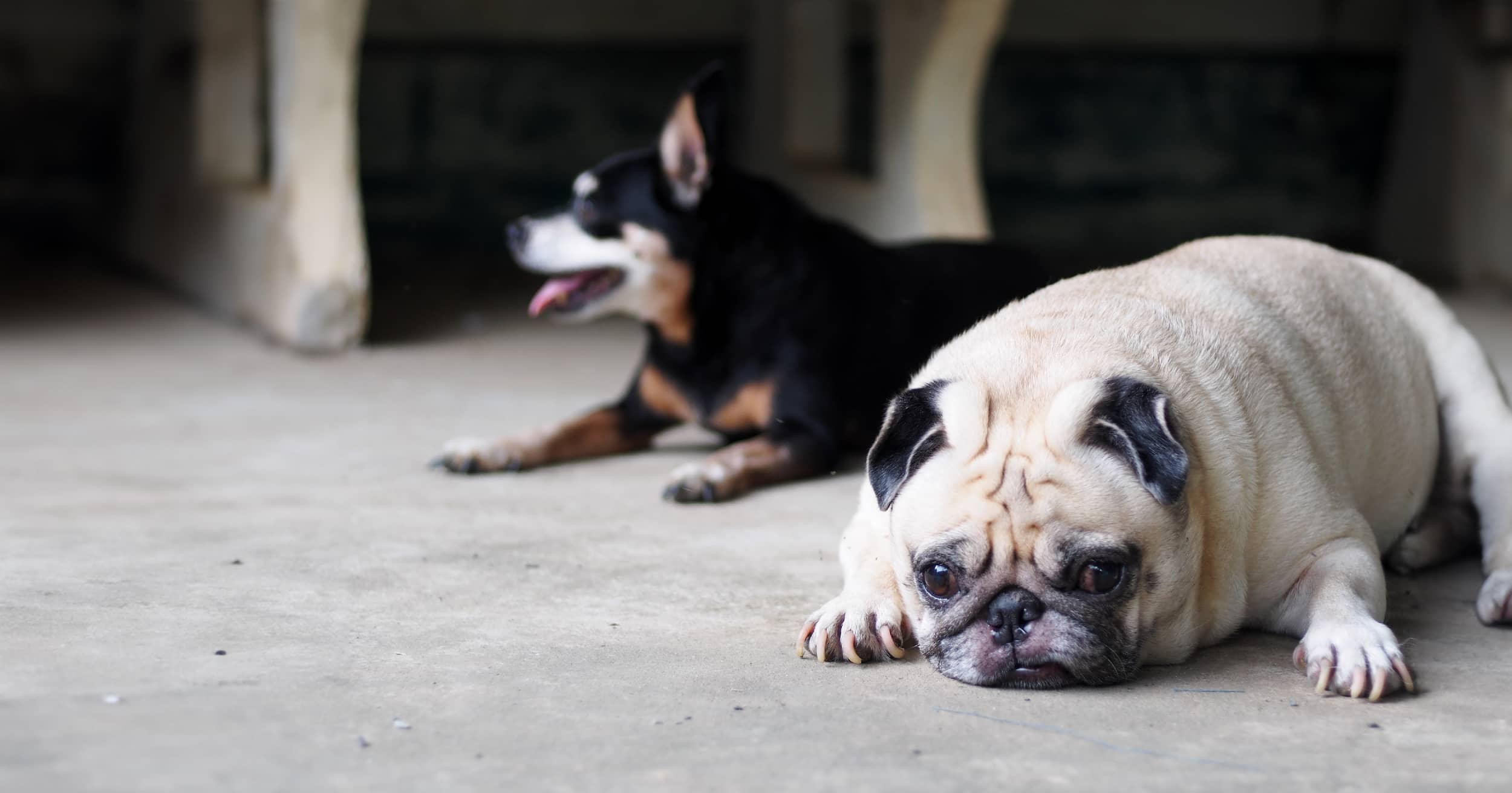
Dog obesity is a serious issue facing dogs and their owners, and it’s only becoming more prevalent. A 2022 survey by the Association for Pet Obesity Prevalence revealed that 59 percent of dogs in the U.S. are classified as overweight, a 3 percent increase from 2018. Since only 36 percent of dog owners think that their best pal is overweight, the issue of dog obesity does not appear to be going anywhere anytime soon.

But how do you tell if your dog is overweight, or worse? What can you do about your dog’s body weight? And how much does it matter if your begging buddy is classified as obese? Our Taste of the Wild Guide to Dog Obesity can help answer some of your questions, but when in doubt about obesity in dogs, dog diets or any other health issues, consult your veterinarian.

How to Tell If Your Dog Is Overweight

A man rubbing the belly of a dog lying on a bed.

As proven by the survey we mentioned earlier, many dog owners don’t know if their dog is overweight. How do you tell if a little baggage around the belly is natural or if it’s excess for your dog? First, an adult dog’s weight isn’t the only thing you need to measure. You should start by consulting a Body Condition Score System (BCS) chart and comparing it to your dog’s ribs, waist and hips. Veterinarians recommend monitoring and evaluating your pet’s BCS once a month to make sure you stay ahead of the increasing pounds.

READ MORE ABOUT BODY CONDITION SCORING AND YOUR DOG

Do Overweight or Obese Dogs Really Need to Lighten Up?

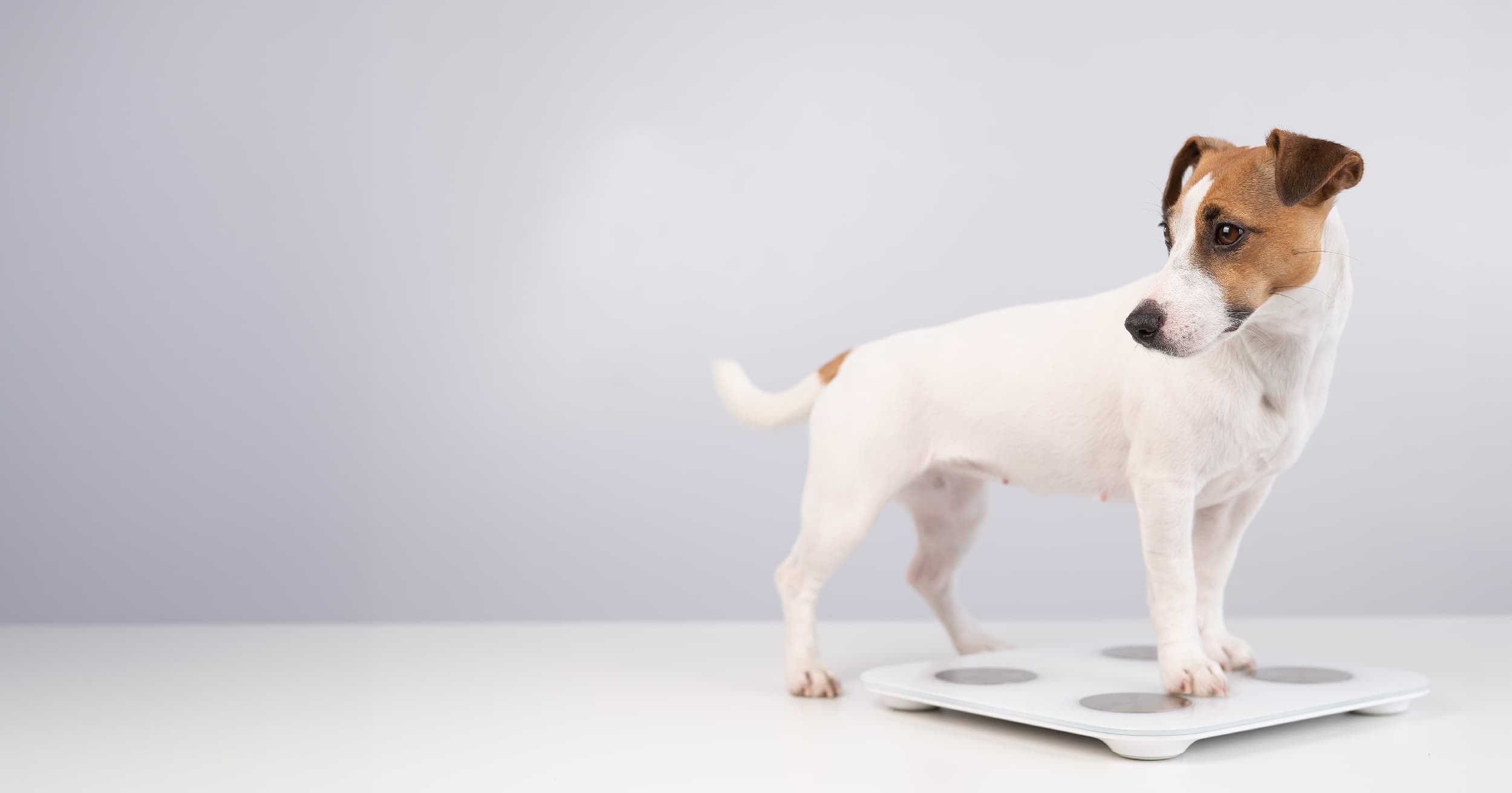
A small dog standing on a scale.

If you determine that you do have an overweight dog on your paws, is that such a bad thing? Someone coined the term “fat and happy” for a reason, so is it really necessary that your overweight dog slims down? Well, yes. Extra pounds unequivocally mean extra health risks for your dog, and researchers have proven that dogs with an ideal BCS live an average of 2.5 years longer than overweight dogs of similar size and breed. If less weight means more years with your best friend, why wouldn’t you work toward that long and happy dog life? Here’s more information about that research along with some tips for getting started slimming down your overweight dog.

READ MORE ABOUT WHY OVERWEIGHT DOGS SHOULD SLIM DOWN

6 Tips to Stop Your Dog’s Begging and Help Them Lose Weight

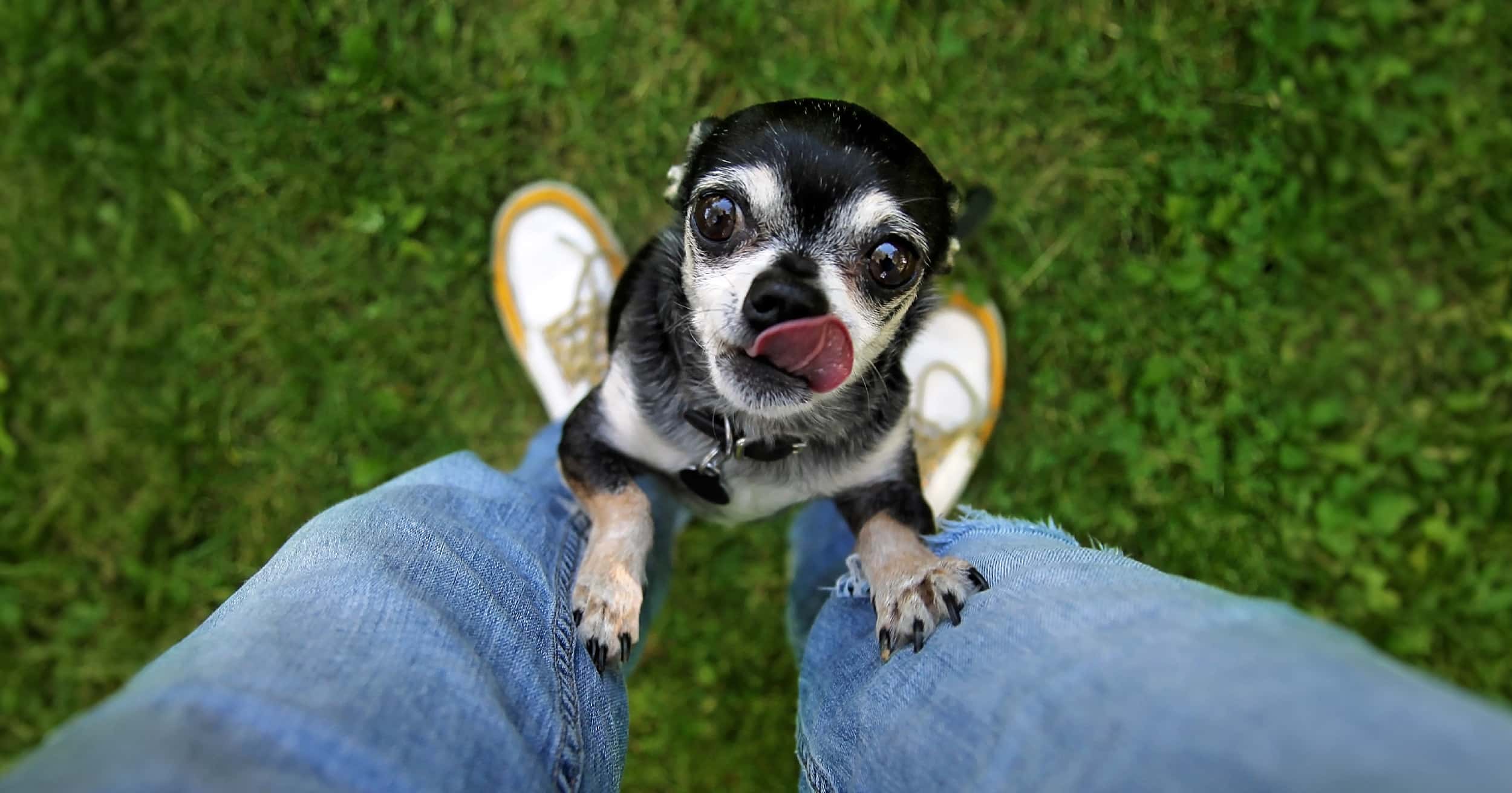
A small dog begging with its front paws up on its owner's legs.

Talking about helping your overweight dog slim down is easy; actually doing it is much harder. Have you tried staring into those big begging eyes when they’re pleading for a sliver of sausage or a bite of bacon and saying “no”? Easier said than done.

We often can’t resist slipping them just a tiny bite of our dinners. But those bites add up, and when the scales start to tip, you need to shut them off cold turkey. It might be time to have them help you by training them not to beg in the first place.

Need some tips on curbing your dog’s begging habits? We have the blog for you.

READ MORE ABOUT TRAINING YOUR DOG NOT TO BEG

How to Tell If Your Dog Has Diabetes

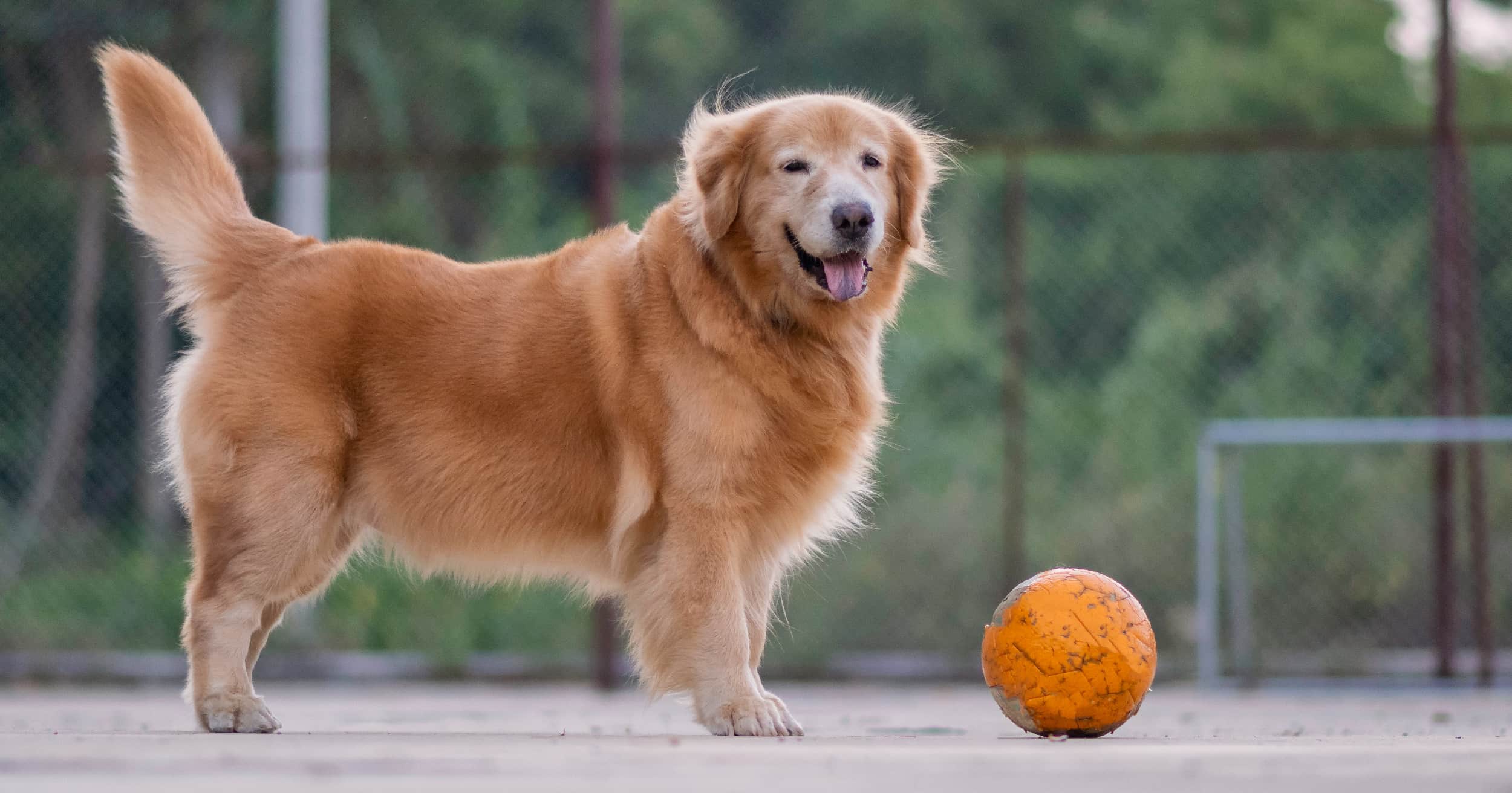
An overweight older dog standing in front of a soccer ball outside.

Canine obesity leads to a plethora of health problems, and diabetes is one of the chief concerns when the walk becomes a waddle. But a dog doesn’t have to be overweight to have diabetes. Knowing the warning signs of diabetes can go a long way toward preventing it or letting the disease get out of hand, but prevention is always the best medicine.

Of course, sometimes your dog has diabetes, and it needs to be managed. The good news is that dog diabetes isn’t a death sentence; with proper care and management, even diabetic dogs can live long, healthy lives.

Here’s our post about the signs of diabetes and everything you should do to prevent diabetes in dogs, and care for those who have the disease.

READ MORE ABOUT THE WARNING SIGNS OF DIABETES IN DOGS

Increasing Numbers of Pudgy Pooches Are Tipping the Scales

Two overweight dogs lying on the floor next to each other.

Despite the best efforts of veterinarians, the number of overweight or obese dogs is increasing faster than the numbers on the scale. Canine obesity is an ever-increasing problem for a number of reasons, but the average dog’s diet is a leading culprit. Of course, diet isn’t just the cause; it’s also the solution. Knowing how to feed a healthy diet is key to keeping your dog healthy for years to come. But that knowledge seems to be lacking in many dog households these days!

Here’s a look at the growing trend of overweight dogs and what pet owners can do to reverse it.

READ MORE ABOUT OVERWEIGHT OR OBESE DOGS IN AMERICA

Excess Body Weight on Dogs Gets in the Way

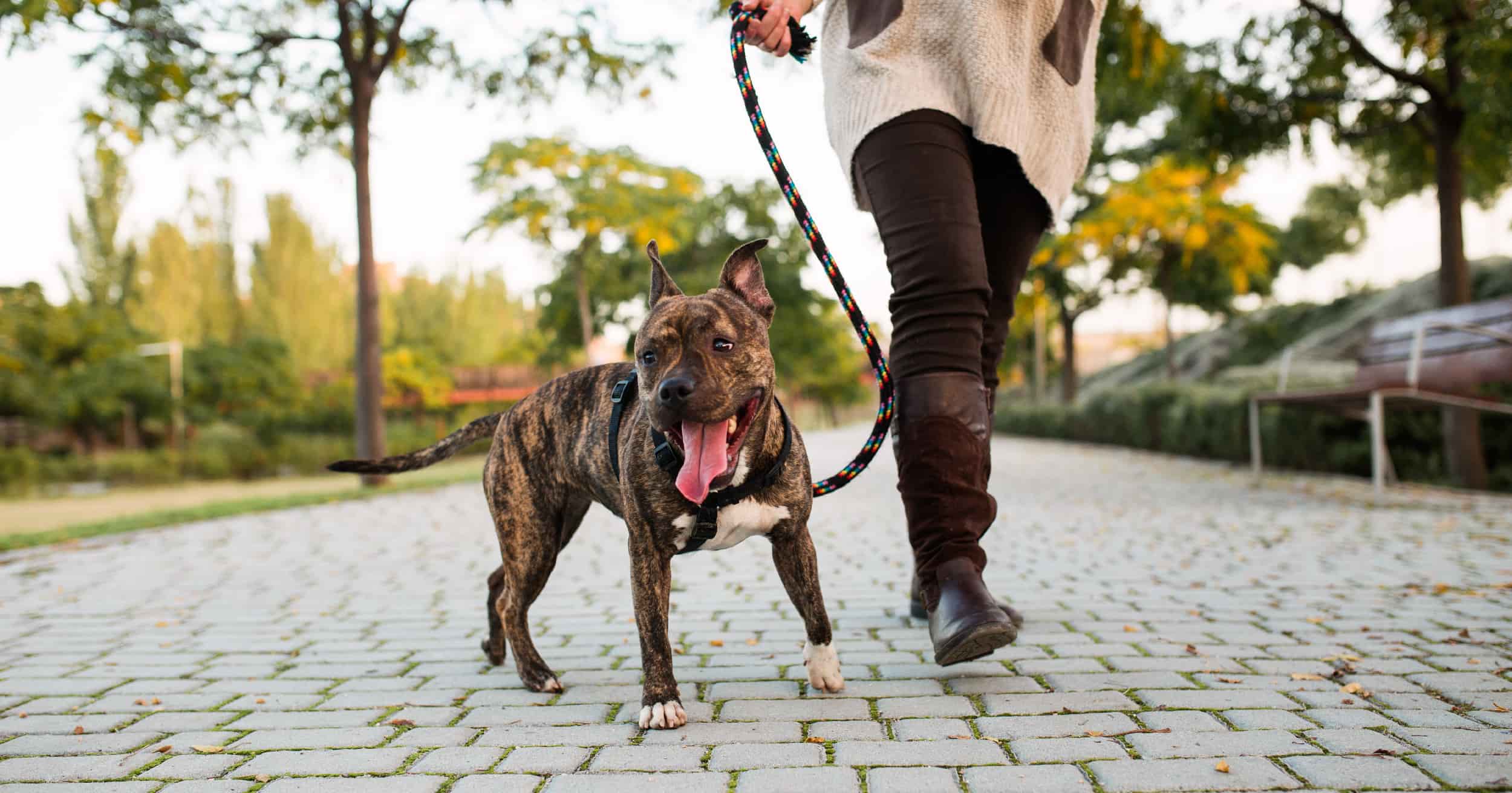
A dog on a leash walking with its owner through a park.

As dog owners, our main goal is for our best friends to be happy and healthy. Knowing how to tell if they’re pleasantly plump or upsettingly obese is the first step toward fulfilling that goal.

But there’s more to the prevention of excess weight on dogs than simply noticing if the scales are tipping over. A healthy diet, plenty of exercise, regular vet visits and other good habits will help your dog live a long time, with a high quality of life, by your side.

And who could ask for more?

Why We’re Thankful for Our Pets

A dog lying with its head in its owner’s lap on the floor next to a Christmas tree.

What are you most grateful for this Thanksgiving season? If your pet(s) made the list, you’re not alone! Let’s dive into all the reasons we’re thankful for pets this season and beyond.

We’re Thankful That Pets Bring the Funny

Laughter relaxes our body, boosts our immune system and lowers our blood pressure, epinephrine and glucose levels. We never know what our pets will do next or when they’ll provide us with a good laugh. Just off the top of our thankful, chuckling heads, we’re thinking about:

  • Unexpected zoomies
  • Those times they think they’re ninjas, trying to sneak people food in plain sight
  • Talking to their favorite toy and carrying it around like a baby
  • The endless chasing of their elusive tails

It’s an endless parade of laughs and giggles trying to figure out what goes on in those cat and dog brains. And we love every minute of the comedy fest.

But they offer health benefits beyond the healing power of comedy. Research shows that simply being around our pets decreases levels of cortisol (a stress-related hormone), which leads to reduced feelings of loneliness, anxiety, depression and/or symptoms of PTSD. Petting an animal for at least 10 minutes at a time can provide us with comfort and pause. That brings us back to the present moment. Simply thinking about our favorite fluff can immediately boost our mood. Did you just think about your pet as you read that? Did you feel that glimmer of joy? We bet you did.

We’re Thankful for the Unconditional Love Pets Provide

Pets provide us with unconditional love, no matter how we look, who we voted for or how many Instagram followers we have. Returning home from a long day at work, our pets are the first to greet us with wet, slobbery kisses or headbutts. When we’ve had a bad day, our pets sense it and snuggle up to help provide us with comfort. They love us for who we are and the care we show them. Pets also show us how deeply we can love another being, too! They’re part of our family, after all.

We’re Thankful For All the Jobs Our Pets Do

Our pets may work many jobs, being there for us in ways that they might not even be aware of. With a pet, you don’t have to wonder if the mail has been delivered or if your houseguests have arrived. They’ll be the first to alert you to someone or something in the area. Guard pet on duty!

You’ll also never be without a furry bathroom attendant. They may not have opposable thumbs to fetch you another roll of toilet paper, but by golly they’ll make sure you’re not without company.

If you’re cold in bed, there’s always a fluffy foot (or arm, chest, back and neck) warmer ready to snuggle in and raise the temperatures. Sometimes whether you want it or not!

Lastly, they are great at listening to our problems and comforting us in our times of need; they maybe don’t understand, but they also don’t interrupt when we spill our hearts. They don’t know it, but many pets wear the furry hat of an in-home therapist. We are grateful for each and every hat they wear.

We’re Thankful Our Pets Get Us into Shape

To quote Sir Isaac Newton, a body in motion stays in motion. The more active we are with our pets, the better it is for their health and our health. Between walking the dog or dragging a ribbon around the house for the cat to chase, we’re getting those steps in! Need ideas for staying active with your pet in cooler weather? We’ve got you covered.

Adventures Await Us When Pets Are Around

Our pets are always up for an adventure, and we can learn from their examples! Cooking in the kitchen, a furry tail is close behind you. Ready to rake a pile of leaves? You know Rover’s nose is pressed up against the back door eager to help. There’s not much your animal won’t accompany you with around the house. Pets who love adventuring outside of the neighborhood also make great companions for running errands or sightseeing. Oh, the adventures that await us!

We’re Thankful to Pets for Helping Develop Our Younger Generations

Pets help teach our younger family members how to be responsible. Whether they’re helping refill the water bowl or they’re being diligent about playtime with Rover, our young ’uns learn to understand consistency and obligations through the power of pets. Caring for an animal gives a child a sense of feeling valued and grows their self-esteem. Pets can also teach children the importance of patience, trust, compassion and respect. These are just some of the many benefits of raising kids with pets.

Did we miss any reasons YOU might be grateful for your pet(s)? Follow us on Facebook, Instagram and X (formerly Twitter), and let us know why you’re grateful for your animal companion. Your pet photos and stories are something we’re also grateful for!

Can My Dog Eat That? Cranberries

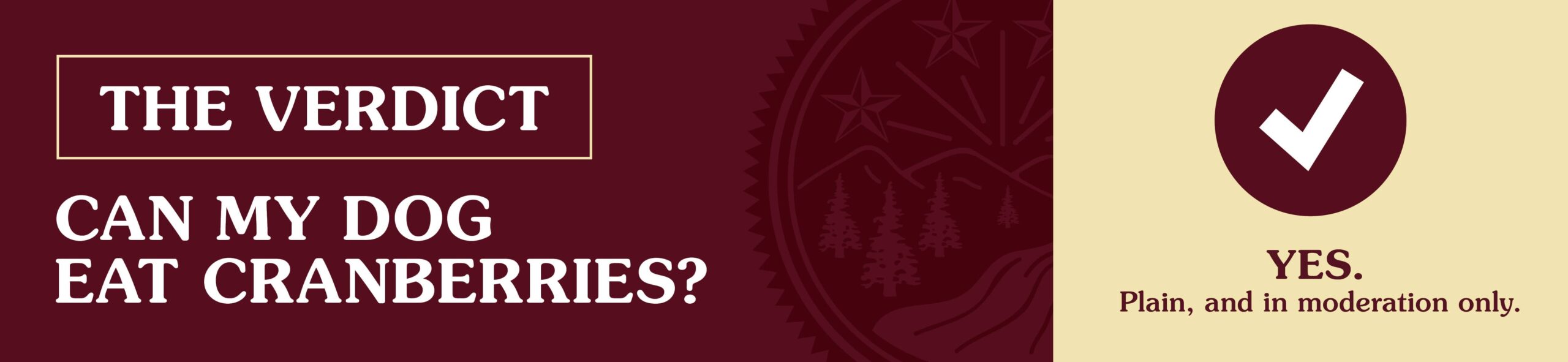
An interior graphic with text that reads ‘The Verdict: Can my dog eat cranberries? Yes. Plain and in moderation only’.

Welcome to “Can My Dog Eat That?,” our series that answers some obvious (and not-so-obvious) questions about what your dog can and can’t safely eat. Today we answer the question “Can dogs eat cranberries?” Read on!

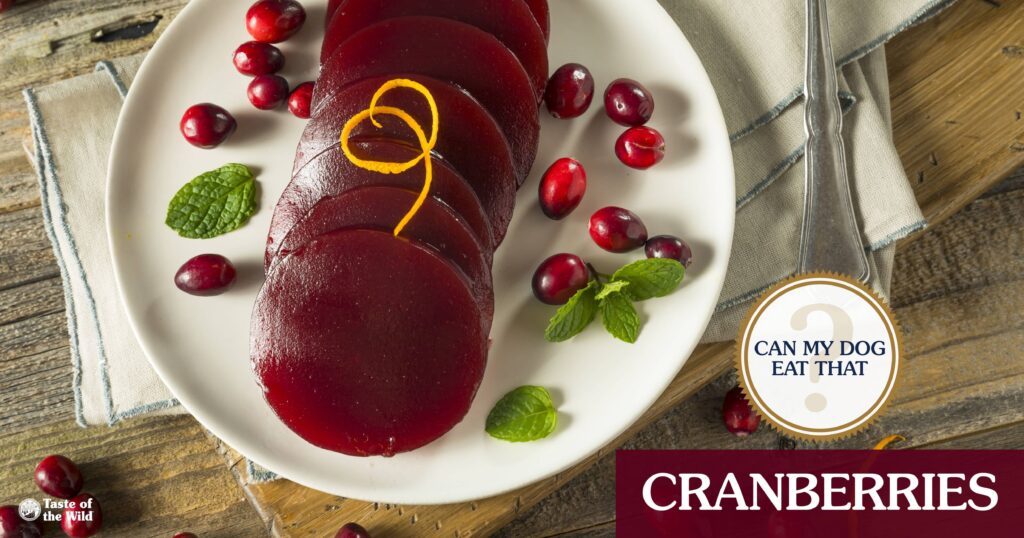
We’re just a few short weeks from cranberry season! And by “cranberry season,” we mean “the holidays” because that’s when cranberries suddenly appear everywhere, from on the dinner table next to the turkey to the holiday decorations. So it’s the perfect time to examine whether you can share that can-shaped, sliceable purple goop (and all the other tasty cranberry concoctions, too) with your favorite begging buddy.

In short, unlike grapes, cranberries alone are not toxic to dogs. But as with nearly every other fruit or vegetable, there are preparation methods and other circumstances that make a simple “yea or nay,” not so simple. When fed properly, they’re a tasty, nutritious snack.

Cranberries Are a Superfood

First off, let’s look at any nutritional benefits of the tart red fruit that might benefit your dog. Cranberries are considered a “superfood.” For the uninitiated, a superfood is a food that has particularly high nutritional value. These nutrient-packed foods are key sources of antioxidants, omega fatty acids, fiber, vitamins, minerals and protein. Cranberries are no exception, as they offer high levels of vitamins C, K, E and B, not to mention manganese and copper.

In pet food, superfoods are considered “functional” ingredients. Functional ingredients provide bonus benefits beyond basic nutrition when they are part of a complete and balanced diet. Antioxidants, omega fatty acids and fiber provide some of these bonus benefits.

But Are Cranberries Super Good for Dogs?

You can feed your dog both fresh and dried cranberries without worry, if you do so in moderation. But preparation matters. They have to be plain, with the stems removed, and absolutely NOT from any kind of fruit mix. You see, dried cranberries are often mistaken for raisins, which are extremely toxic to dogs. No trail mix for Rufus!

Check the sugar levels of your cranberry offerings. Many dried cranberries have added sugar to take the edge off the tart flavor, and that sugar adds up quickly in such a little berry. Sugar or not, you should feed a medium or large dog only a small handful at most, and small dogs should only receive two or three in one sitting.

And while cranberry juice is known for helping humans get over urinary tract infections, it won’t help your dog. While a small amount of the tasty beverage won’t hurt your dog, they shouldn’t drink anywhere close to enough to help flush their urinary tract. Most cranberry juices are loaded with sugar so should just be avoided in general.

But Can My Dog Eat Cranberry Sauce?

This is why you’re reading this blog, isn’t it? Everyone at the table, your dog included, is eyeballing that jellied cylinder of cranberry sauce with either delight or disgust. If your dog is one of the delighted ones, should they partake? Just a slice?

Once again, a little bit of festive jellied cran won’t hurt your dog, but it’s probably best avoided since most recipes (canned and the more visually palatable homemade) are loaded with sugar. Too much sugar can cause vomiting or diarrhea in dogs, which is not something you want to deal with under the Thanksgiving Day table. For dogs with diabetes or other sugar-related health issues, it’s a much more serious issue.

Dogs and cranberries mix cautiously. If you absolutely must include your dog in the holiday spread, it’s best to offer up just a few plain cranberries. Fresh is best, and dried is OK if you’re absolutely sure they haven’t been mixed with dastardly raisins. It’s not the most festive answer, but neither is getting out the carpet cleaner at the holiday gathering!

An interior graphic with text that reads ‘The Verdict: Can my dog eat cranberries? Yes. Plain and in moderation only’.

RELATED POST: Can My Dog Eat That? Beverages!

National Barks: How to Become a B.A.R.K. Ranger

A dog with a ranger vest on walking through a forest.

National parks offer some of the most beautiful places in the United States for you and your dog to explore. It can also be a bit overstimulating for your dog in comparison to a trip to a local trail or park. This is why Healthy Parks Healthy People members created the B.A.R.K. Ranger program,  which helps guide your dog on a safe adventure. To get the most out of your trip taking your dog to a national park, we recommend checking out the B.A.R.K. Ranger program.

Bark or B.A.R.K.

Since each national park offers its own set of terrain, wildlife, layouts and rules, each B.A.R.K. Ranger program is uniquely designed around that specific park — the program is not a one-size fits all approach. The goal of the program is to increase awareness of positive dog behaviors and reduce the number of pet-related accidents within a park.

All breeds and ages are welcome, as long as your dog is friendly and leash trained.

B.A.R.K. stands for:

  • Bag your pet’s waste: many visitor centers offer poop bags if needed.
  • Always leash your pet: a 6’ or shorter leash is a must for your dog at all times.
  • Respect wildlife: no barking, digging, sniffing or chasing.
  • Know where you can go: learn which trails and areas are pet friendly.

Some programs require you and your canine to take a pledge, while others offer a “walk with a ranger” program. We recommend contacting the visitor center of your destination prior to arrival to understand what their B.A.R.K. Ranger Program en-taIls.

Dogs who go through each program are sworn in by park officials near the visitor center. You’ll receive a bandana, a wallet card with the B.A.R.K. Ranger pledge, a certificate and the option to purchase a special B.A.R.K. Ranger tag to add to your pet’s collar. Pets are not allowed inside most visitor center buildings, so plan accordingly.

How to Sign Your Dog Up to Be a B.A.R.K Ranger

You can pick up a B.A.R.K. Ranger booklet at the park’s visitor center upon your arrival, or you can reach out to the park prior to your travels to request a digital copy of the booklet. Complete the activities in the booklet at a pace your dog is comfortable with. If you need to take extra time on some activities over others, we encourage you to do so. It could be the difference between knowing how to safely exit a situation with unexpected wildlife or what trails/areas are safest for your pet to adventure out on.

Prior to the Program

You are responsible for your canine’s safety and the safety of others while taking your pet to a national park. Pets can and will become overstimulated with the many sights, smells and sounds within the park. Make sure your adventure partner is leash trained, in good health and acclimated around groups of people and knows how to walk on a trail prior to enrolling in a B.A.R.K. Ranger program. The program will enhance the positive behavior foundation you’ve set for your dog so you and everyone else involved can enjoy the pet-friendly portions of the parks. Need extra positive-behavior training before planning your National Barks trip? Check out our blog for all sorts of fun training articles.

Ready…Set…Woof

Are you and Fido ready to set off to a national park? Your furry companion is ready to become a B.A.R.K. Ranger and embark on a trip to remember. Adventures like these will provide all furry tails with a tale or two to share when they return home. Ready…set… woof — here you come!

Can My Dog Eat That? Beverages!

An interior graphic with text that reads ‘The verdict: Can my dog eat beverages? No. Water is best’.

Welcome to “Can My Dog Eat That?,” our series that answers some obvious (and not-so-obvious) questions about what your dog can and can’t safely eat. Today we answer the question “Can dogs eat (or drink) beverages?” Read on!

Most dogs aren’t shy about trying out a new food, crunchy snack or drink. If the opportunity arises, like a full glass at perfect tongue height, they’re going to take advantage of it. So which beverages should you be concerned about if your dog does lap up a few mouthfuls? Or what about if they drink the whole cup?

The quick answer is that your dog really shouldn’t be drinking anything but water. It’s the healthiest drink for them, and it’s all they need to keep hydrated. But if they do get into one of your cups, there are some beverages that are more of a concern than others.

Can Dogs Drink Milk?

Maybe. Like all mammals, puppies start off life by drinking milk from their mom. During this time, they produce the enzyme lactase which helps to digest the lactose in milk. As the puppies get older and are weaned from their mother’s milk, they start to produce less lactase. Most adult dogs are lactose intolerant because they don’t produce much lactase anymore.

This means that your adult dog may not be able to digest cow’s milk properly and that can cause diarrhea and very stinky gas. You’ll soon know if your dog is lactose intolerant! A little bit of milk may be OK for some dogs, but make sure it’s plain milk. Watch out for potentially toxic additives, like chocolate or nutmeg, and some milk substitutes, like macadamia nut milk.

Can Dogs Drink Sports Drinks?

Water is better. If you’re going on a long hike on a hot day, you might take a sports drink with you to help replace some of the electrolytes you lose through sweating. While this could be a good option for you, it’s best to stick with a flask of clean, fresh water for your dog to stay hydrated. Sports drinks often contain sugar and sodium which can be unhealthy for your dog, especially when all they really need is water. It’s probably OK if your dog does drink some of the sports drink, but don’t make it a regular thing for them.

Can Dogs Drink Soda?

No. If a few drops of soda bubbles out of your can onto the floor and your dog laps it up, that’s probably OK. But you should not purposefully give your dog soda or let them lick up a whole soda-can spill because it can contain ingredients that are dangerous for dogs. Xylitol is commonly used in diet soda as an artificial sweetener — but it’s toxic for dogs. Regular sodas contain a bunch of sugar which, although not toxic, is not healthy for dogs to consume in large amounts. And any cola-based sodas are definitely out as they contain caffeine, which is also toxic to dogs (more on that in the coffee section).

Can Dogs Drink Coffee?

Nope. It doesn’t matter whether you’re an espresso drinker, love a good pumpkin-spice latte or  are obsessed with caramel frappé, you should not share your coffee with your dog. Dogs are more sensitive to caffeine than people and can suffer from caffeine poisoning, causing agitation, vomiting, panting, elevated blood pressure, tremors and worse. Depending on the size of your dog and how much caffeine they ingested, it can be fatal.

If your dog drank some of your coffee (or cola), contact your veterinarian, the ASPCA Animal Poison Control Center or the Pet Poison Helpline immediately for advice. Make sure you keep the coffee pot out of reach of your dog and dispose of coffee grounds in a place that your dog can’t get to.

Can Dogs Drink Beer?

Beer, whiskey, wine: if it’s got alcohol in it, the answer is a hard no. Dogs can become intoxicated and experience ethanol poisoning, which causes symptoms like vomiting, diarrhea, decreased coordination, difficulty breathing and seizures. Like most toxins, the severity of ethanol poisoning depends on how much ethanol was consumed (drink volume and alcohol percentage) and the size of your dog. Call your veterinarian or one of the animal poison centers listed above if your dog does drink an alcoholic beverage. And if you really want to share a brew with your canine buddy, try a specially made dog beer instead.

The bottom line is: water is the best drink for your dog. Try to keep that curious tongue out of your beverages. Plus, who wants dog slobber in their drink!

An interior graphic with text that reads ‘The verdict: Can my dog eat beverages? No. Water is best’.

RELATED POST: Can My Dog Eat That? Cinnamon

Behind the Breed: Brittany

An interior graphic detailing three quick facts about Brittanys.

If you search online for “hunting dog painting,” chances are, it’s going to feature a Brittany. These photogenic bird dogs have been the subject of countless paintings since the breed originated sometime around the 17th century. And their popularity in fields and homes continues today.

The versatility of the Brittany has made them popular hunting partners for hundreds of years, but they’re also devoted family dogs who love spending time with their humans. They’re not overly big dogs, typically maxing out at 40 pounds, which makes this outdoor-loving breed well suited to couch life as well. But that’s only after they’ve exhausted all of their energy — and they have a lot of that!

Lazing around an apartment is not going to be a Brittany’s favorite thing to do. Ideally they should have access to a large, fenced yard that they can run around and explore in, but even that is not going to be enough to satisfy their exercise needs. They will need plenty of actual exercise each day, like a loooong walk or an ample run with their favorite running buddy. Activities like flyball, agility, tracking or dock-diving are fun ways for them to exercise. Their high exercise needs make Brittanys great for active families who love taking their dog on outdoor adventures with them.

Brittanys are very social and want to be friends with everyone, including cats if they’re introduced the correct way — although their strong prey drive may still have them chasing your cat around the house occasionally. Their prey drive is also why it’s important to start training them as a puppy and why it’s a good idea to keep them on a leash whenever they’re not in a fenced area. You never know when they’ll get a whiff of something interesting in the air and run off to investigate!

To read more about similar hunting dogs, like the Boykin spaniel, bookmark our blog.

An interior graphic detailing three quick facts about Brittanys.