Contact

Support
Recipe Recommendations For Puppy Owners Health and Nutrition Tips All Dog Articles Personalized Feeding Guide Compare Recipes
Virtual Pet Park
Explore our wild world of adorable pet photos and videos.
Support
Recipe Recommendations Health and Nutrition Tips All Cat Articles Personalized Feeding Guide Compare Recipes
Virtual Pet Park
Explore our wild world of adorable pet photos and videos.
 Where to Buy
 Contact Us
Behind the Breed: Great Danes
Category: Behind the Breed
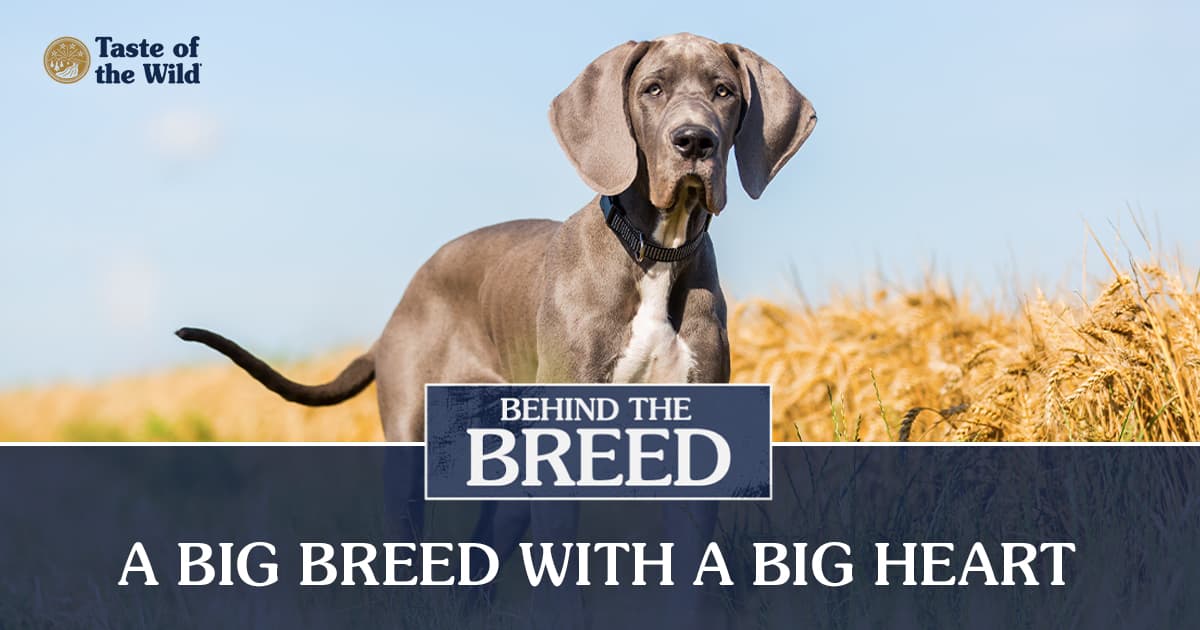
Have you ever wondered about the origins of a dog breed? In our “Behind the Breed” series we’ll dive into the history, personality and physical appearance of a particular breed. We’ll also cover some of the FAQs about the breed and maybe some fun facts, too!
A Great Dane can be a wonderful companion for the right family. They are known as gentle, affectionate and loyal dogs with a memorable presence. But this breed is also a big commitment in every sense of the word.
Great Dane History
Despite the name, this German breed did not originate in Denmark. The breed was developed from powerful boar hounds and English mastiff-type hunting dogs that were used to hunt wild boar. These early dogs needed strength, speed and courage to help hunters manage large, dangerous animals.
The breed has also been called the German mastiff, and the name became more common in English-speaking countries after the French phrase Grand Danois was translated into English. The name stuck, even though the breed’s history is tied to Germany.
Over time, German nobles and German nobility began using these dogs for more than hunting. They helped protect country estates and were sometimes kept as chamber dogs, staying close to their people for protection and human contact. As the breed moved away from its hunting past, it became more polished, affectionate and better suited to life as a family pet.
Great Dane Size
The size of a Great Dane is one of the first things people notice about this breed. Males are typically 30 inches or taller, while females are usually at least 28 inches tall. Some males may reach around 32 inches or more, making them one of the tallest dog breeds in the world.
Their large size, long front legs, powerful hind legs and deep chest are all part of their impressive appearance. But those same traits also mean pet parents need to think practically. A giant dog needs space to stretch out, a sturdy leash, a large bed and enough room in the house to move comfortably.
Because they grow so quickly, puppies should be monitored closely as they age. Too much weight or intense exercise too early in life can put extra stress on developing bones and joints, which may contribute to joint problems later.
Great Dane Weight
The weight of a Great Dane varies by age, sex, genetics and body condition. Adult males are usually heavier than females, and many healthy Great Danes weigh well over 100 pounds. Because they are such large dogs, even small changes in body condition can add extra stress to their joints, legs and heart. Keeping a Great Dane at a healthy weight is an important part of their care.
Like any breed, Great Danes need food that supports their age, activity level and body condition. It is best to avoid table scraps, cooked bones or foods that could upset their stomach. A consistent feeding routine can help support digestion, and pet parents should ask their veterinarian about meal timing and exercise around meals, especially because bloat is a serious concern for Great Danes.
Great Dane Personality and Temperament
Great Danes are often described as gentle, loyal and friendly. Like any breed, their personalities can vary from dog to dog, but many are affectionate companions who enjoy being close to their people. They may look intimidating because of their size, but many Great Danes are known as gentle giants for a reason.
With proper training and socialization, this breed can do well with children, other dogs, other animals and other pets. However, supervision is important, especially around smaller breeds or young kids. Even a friendly giant dog can accidentally knock someone over without meaning to.
Because they often enjoy human contact, some may struggle with separation anxiety if they are left alone for long periods. Early training, a predictable routine and positive experiences away from their owners can help.
Great Dane Colors
The many colors of the Great Dane coat are part of what makes the breed so striking. Common coat colors and patterns include fawn, brindle, blue, black, harlequin, mantle and merle. Fawn Great Danes are typically golden with a black mask, while brindle dogs have darker striping. Harlequin Great Danes have a white base coat with irregular black patches, and mantle Great Danes have a black and white pattern.
No matter the color, Great Danes have a short coat that is usually easy to maintain. Their coat should look smooth and healthy, and routine grooming can help keep loose hair, dirt and dander under control. Regular nail trims, ear checks and dental care should also be part of their care routine.
Do Great Danes Shed?
While the smooth coat of a Great Dane is short, that does not mean it is shed-free. Most Great Danes shed a moderate amount throughout the year, and you may notice hair on furniture, clothing, rugs and car seats.
Brushing your Great Dane regularly can help remove loose hair before it ends up around the house. Bathing as needed can also help keep their skin and coat clean. If your Great Dane has sudden hair loss, itchy skin, redness, odor or recurring ear issues, talk with your vet.
Great Dane Lifespan
The lifespan of a Great Dane is typically shorter than that of many smaller breeds. Many Great Danes live around 7 to 10 years, though every dog is different. This is one reason the breed is sometimes called a heartbreak breed, because their life expectancy can feel far too short for the families who love them. Genetics, nutrition, preventive care, exercise, weight management and early attention to health concerns can all play a role in a dog’s quality of life.
Common Great Dane Health Issues
Like many large breeds, Great Danes can be prone to certain health issues that owners should understand before bringing one home. Bloat, also called gastric-dilatation volvulus, is one of the most urgent dog health concerns for deep-chested breeds and requires immediate veterinary care. Symptoms may include a swollen stomach, restlessness, drooling, retching without producing vomit and signs of pain.
Other possible concerns can include joint problems, hip dysplasia, heart disease and bone cancer. Because of these risks, regular veterinary care is important. Your veterinarian can talk with you about nutrition, growth, exercise, preventive care and have early conversations about breed-specific risks.
Giant dogs may also cost more to care for than other breeds because food, medicine, beds, surgery and routine supplies are often sized to match the dog. Other large breeds like bullmastiffs can have similar big-dog considerations, so it’s worth planning for both the emotional and practical sides of life with a giant breed.
Is a Great Dane Right for You?
Before bringing home a Great Dane, think about space, training, food costs, grooming, exercise, veterinary care and whether your household is ready for a giant dog. If you are considering a Great Dane puppy, look for a reputable breeder who prioritizes health testing and temperament. You can also check breed-specific rescues for Great Danes in need of homes.
With the right care, training and attention, the Great Dane can be a loving companion whose size is matched only by their heart.
The information in this blog has been developed with a Doctor of Veterinary Medicine and is designed to help educate pet parents. If you have questions or concerns about your pet’s health or nutrition, please talk with your veterinarian.