Contact

Support
Recipe Recommendations For Puppy Owners Health and Nutrition Tips All Dog Articles Personalized Feeding Guide Compare Recipes
Virtual Pet Park
Explore our wild world of adorable pet photos and videos.
Support
Recipe Recommendations Health and Nutrition Tips All Cat Articles Personalized Feeding Guide Compare Recipes
Virtual Pet Park
Explore our wild world of adorable pet photos and videos.
 Where to Buy
 Contact Us
Can My Dog Eat That? Pickles
Category: Can My Dog Eat That
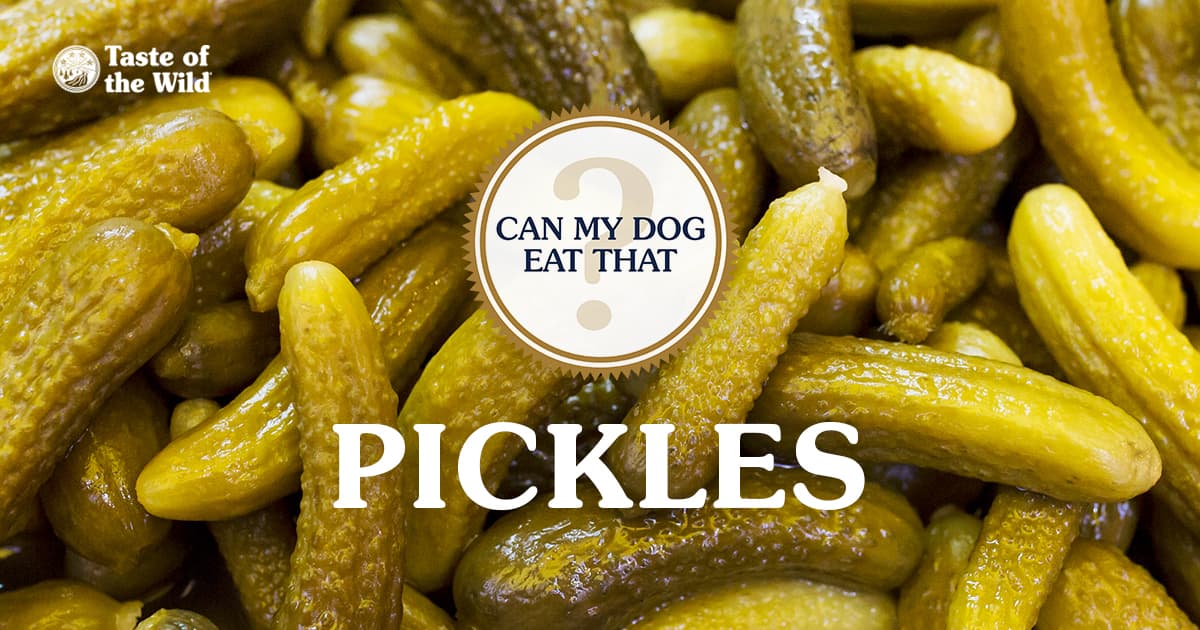
Welcome to “Can My Dog Eat That?,” our series that answers some obvious (and not-so-obvious) questions about what your dog can and can’t safely eat. You can view some of the previous foods we’ve looked at in our “Can my dog eat that?” guide. Today we answer the question “Can dogs eat pickles?” Read on!
If your dog loves watching you eat crunchy, salty snacks, you may wonder if sharing a bite of your pickle is a big deal. But the prickly truth is pickles are not a recommended snack for dogs. A small nibble may not cause a problem for most dogs, but pickles often have a high salt content and may contain ingredients that are toxic to dogs. If your pup likes crunchy treats, there are safer alternatives to offer instead.
Can Dogs Eat Pickles?
Pickles are made from cucumbers, but the pickling process changes what your dog is actually eating. Most pickles are cucumbers soaked in a brine made with salt, vinegar, water, dill and other spices. That brine gives pickles their familiar flavor, but it also makes them much less dog-friendly than a plain raw cucumber.
The biggest concern is sodium (salt). Dogs need some sodium in their diet, but too many pickles can add a large amount of sodium very quickly. In large quantities, salty foods can increase the risk of sodium toxicity or salt poisoning, which can cause serious harm and require veterinary care.
Are Pickles Bad for Dogs?
Pickles can be bad for dogs because of what is added to the jar of cucumbers to make them pickles. Many pickles contain garlic, onions, added spices, sugar or other ingredients that are not healthy for dogs. Garlic and onions are especially concerning because they can damage a dog’s red blood cells.
Vinegar, brine and other spices may also upset a dog’s stomach. Even if the pickle does not contain ingredients considered toxic, the high sodium content alone makes it a poor snack choice. This is especially true for dogs with certain health problems, including kidney concerns, heart disease or other conditions where salt intake needs to be carefully monitored.
Can Dogs Eat Dill Pickles?
Fresh dill itself is not usually a concern for dogs in small amounts. The problem with dill pickles is the brine and added ingredients. Dill pickles can still be very salty, and some varieties include garlic, onions, mustard seed, peppercorns or other spices. Because recipes vary, one jar of dill pickles may be different from another. Some may be relatively simple, while other pickles may contain seasonings that are harmful to dogs.
Can Dogs Eat Sweet Pickles?
Sweet pickles are not a better option for dogs. They often contain added sugar, and sugary foods can contribute to weight gain and dental issues if fed regularly. Some sweet or low-sugar products may also contain xylitol, which is toxic to dogs.
Sweet pickles and relish can also include garlic, onions or other flavorings. Since relish is chopped and mixed, it can be harder to tell exactly what ingredients are included. For that reason, it is best to avoid feeding relish or sweet pickles to your dog.
Can Dogs Drink Pickle Juice?
No, dogs should not have pickle juice. Pickle juice is mostly brine, which means it can be extremely high in salt and vinegar. It may also contain garlic, onions, dill, spices or flavoring from the jar.
Because pickle juice is liquid, dogs drink pickle juice faster than they would eat pickles, which can make it easier for them to consume too much salt. Keep pickle jars sealed and out of reach, and do not pour pickle juice over your dog’s food.
What Should You Do If Your Dog Ate Pickles?
Pickles are not an ideal snack, but a single small bite may not be a serious concern for every dog. Offer fresh water and watch for symptoms such as diarrhea, vomiting, excessive thirst, lethargy, loss of appetite or signs that your dog is uncomfortable.
Call your veterinarian if your dog ate a large amount of pickles, drank pickle juice or ate pickles that contain garlic, onions, xylitol or spicy ingredients. You should also call your vet if your dog is very small, has existing health problems or is showing adverse reactions that worry you. Your veterinarian can give advice based on your dog’s size, health history and how much they ate.
Healthy, Alternative Snacks for Dogs
If your pup wants a crunchy snack, plain raw cucumber is a better choice than pickles. Cucumbers are lower in salt and do not contain the same brine, vinegar or added spices. Wash the cucumber, cut it into small pieces and serve it plain with no seasoning, dip or dressing.
Other simple vegetables, such as green beans or carrots, may also be appropriate treats for some dogs. As with any new food, introduce small amounts slowly and limit treats to less than 10 percent of your dog’s recommended daily calorie intake.
The Bottom Line on Dogs and Pickles
Pickles may seem harmless because they start as cucumbers, but the salt, vinegar, brine and added ingredients make them a risk to your dog’s health. A small bite may not cause a problem for some dogs, but pickles are not a snack you should intentionally feed your dog. When in doubt, skip the pickle jar and choose a dog-friendly snack instead.

The information in this blog has been developed with a Doctor of Veterinary Medicine and is designed to help educate pet parents. If you have questions or concerns about your pet’s health or nutrition, please talk with your veterinarian.