
Is My Dog Overweight?

An interior graphic detailing a body condition score chart for dogs with cartoon depictions of underweight, ideal weight and overweight dogs.

When Fido looks up at you with those big, beautiful eyes asking for one more handful of treats, it can be hard to say no — even if they were just asking for treats two hours earlier. Wanting a full, happy, healthy life for your dog is every pet owner’s ultimate desire. But how do you know if your doggo is getting too heavy? Or how do you know what the ideal weight even is for their breed?

Body Condition Score

Rather than calculating your dog’s body mass index (BMI), veterinarians recommend pet parents look to the body condition score (BCS). Your pet’s BCS is found by evaluating fat on their ribs, waist and hips. Veterinarians recommend monitoring and evaluating your pet’s BCS once a month to stay on top of any potential issues. An ideal weight will lower your pet’s chance of arthritis, diabetes, high blood pressure, breathing problems, kidney disease and, in some cases, cancer. Making sure your pet is at their optimal weight can also reduce the concern of joint injuries associated with excess weight.
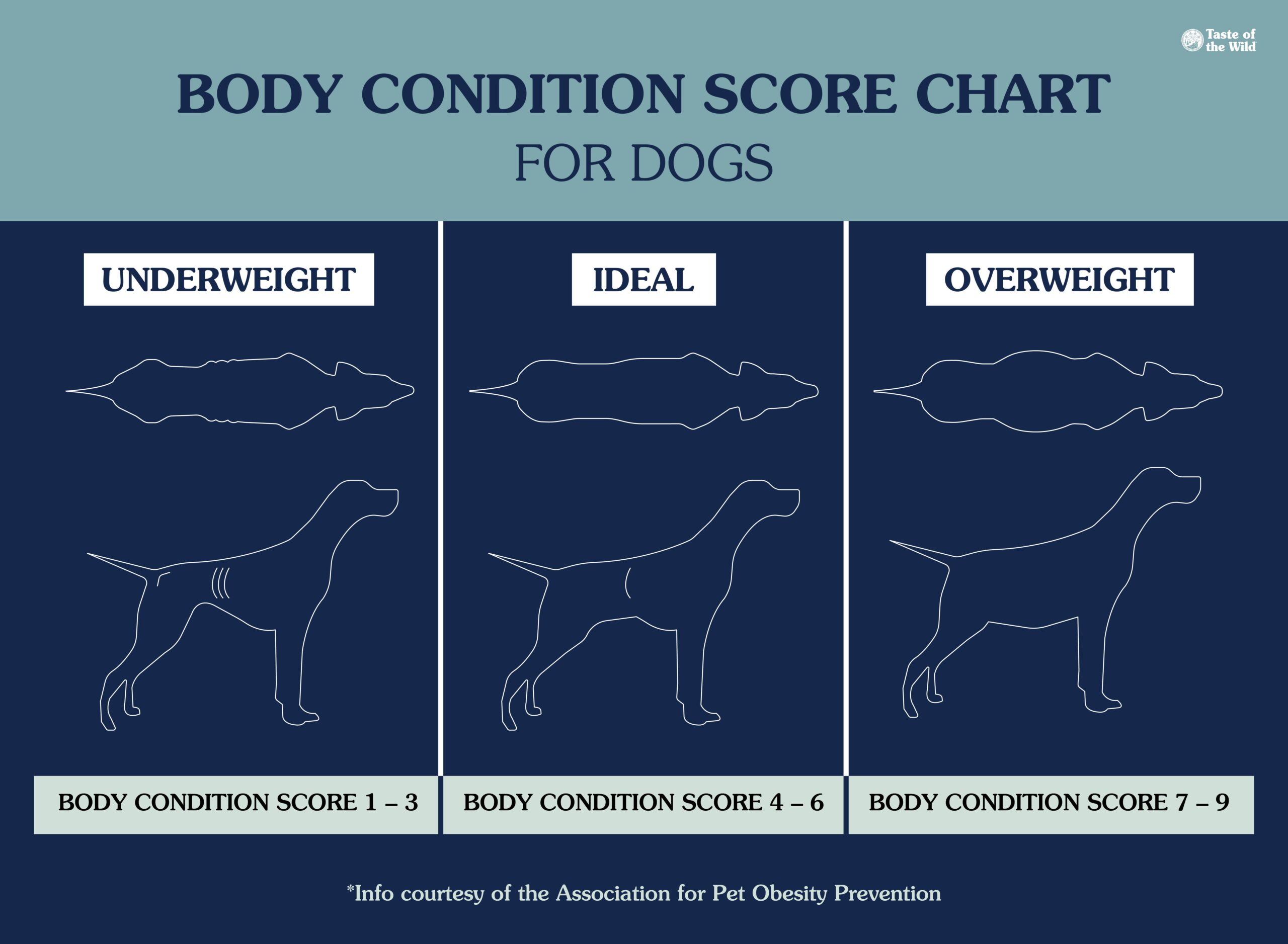
An interior graphic detailing a body condition score chart for dogs with cartoon depictions of underweight, ideal weight and overweight dogs.

How to Evaluate Your Dog’s Ribs

When evaluating the ribs, you should ideally be able to lay your fingers flat to feel the bones. If you need to press your fingertips into their body to locate their ribs, your pet is closer to a 6 out of 9 on the scale. If you have difficulty finding your pet’s rib cage with your fingertips, they’re more likely a 7 out of 9 on the scale. If you can’t find your dog’s rib cage at all using your fingertips, they’re pushing an 8 or 9 on the scale.

Moving in the opposite direction, if you can easily feel your dog’s ribcage and can barely see them, they’re a 4 out of 9. A dog whose ribcage is very visible upon sight and touch are likely under their ideal weight. There are some dog breeds who naturally have very lean body types, like greyhounds, who are an exception to this rule.

A Visible Waist Is Key

Looking past your dog’s ribcage, there should be a visible waist. On fluffier breeds, you should be able to feel their waist or see it when they are wet. Evaluating your pet from the side, you should see a “tuck” by the abdomen starting where the chest ends and going up toward the hips.

If your pet’s belly hangs lower and there’s not much of a tuck, they are likely on the overweight or obese portion of the scale. If the opposite situation occurs and you’re seeing no belly fat and a prominent tuck, they could be underweight.

Hips, It’s All in the Hips

Lastly, let’s evaluate your pet’s love handles — yes, doggos can get love handles just like we humans do. Ideally, you should be able to feel your pet’s hips easily, with no squishy layers on either side. If you can easily see your pet’s hip bones or there is no muscle felt, they are likely underweight.

Re-Evaluating Your Dog’s Diet

After gauging Fido’s body condition score, what do you think? Has Fido lost too much weight in the last month? Consider how active they’ve been and if their appetite has changed. Make an appointment with your veterinarian to discuss potential underlying conditions that may be affecting your dog’s weight. Fido’s weight loss could be a sign of digestive issues, dental problems, parasites or other underlying medical conditions that require immediate attention.

Does Fido seem a little too pudgy? It may be time to look at how much you’re feeding your dog as well as the types of foods you’re giving them. Reach for complete and balanced dog foods and visit with your veterinarian or nutritionist to discuss how much you should feed your pet based on their breed, age and current weight. Automatic pet feeders can be a solution in helping control the portion size of kibble Fido eats throughout their day. Consider adding an extra walk or two throughout the day, too, to help them shed the extra pounds. Bonus: an extra walk means extra bonding time with Fido!

The right steps today can make for a healthier tomorrow.
A Taste of the Wild Guide: Help Your Dog Survive the Summer

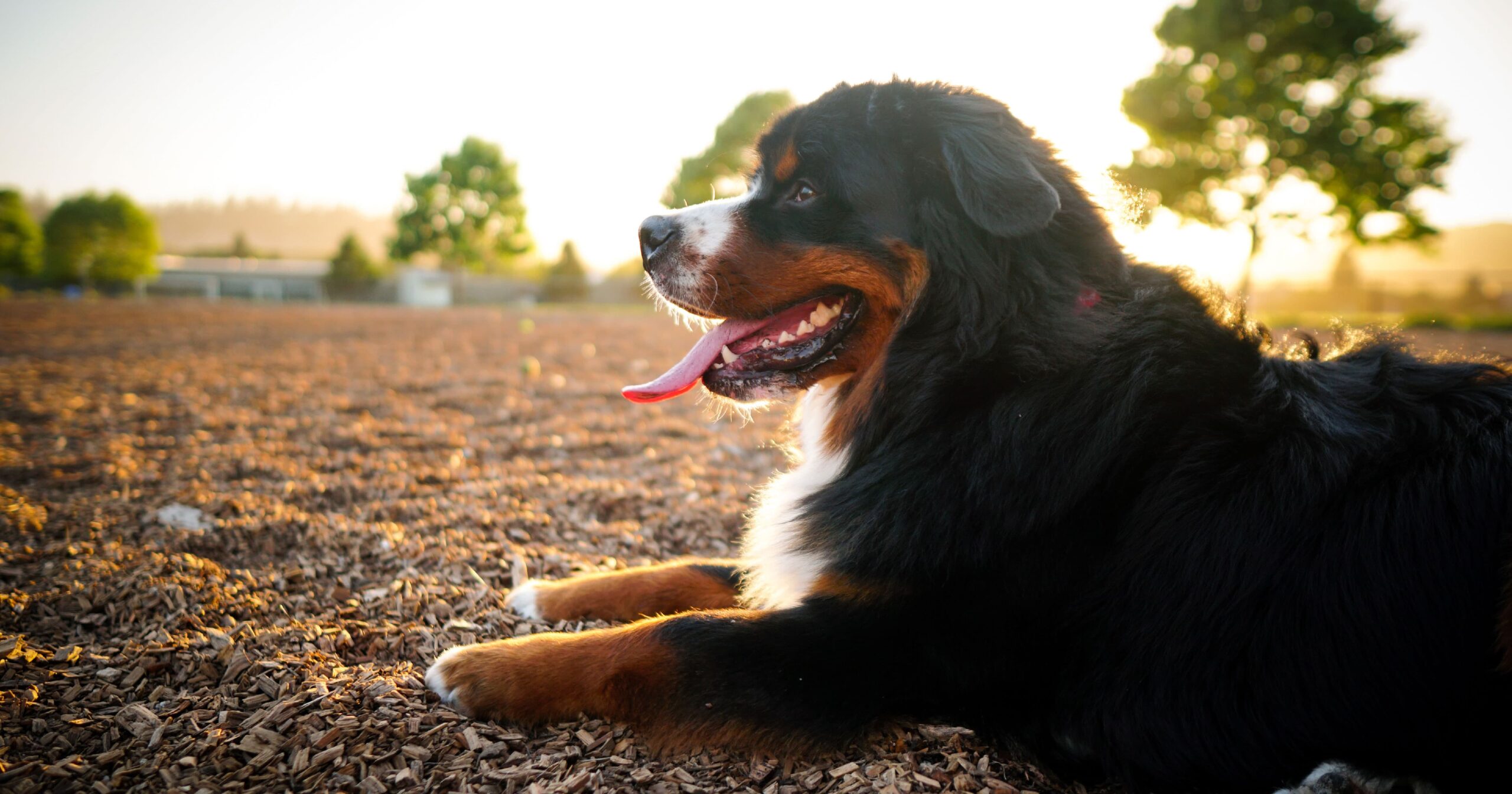
A dog panting while lying on the ground in the sun.

Dogs in the summer. Is there a better combination of our favorite things? Dogs in the summer just seem to go hand-in-paw with fond memories. Whether they’re galloping on a beach, lazing in the sun or leaving a trail of drool from the water dish to the shade of your hammock, dogs in the summer are our happy place.

But that summer sun is no joke for our best pals. Our four-legged friends wear fur coats all year round, so extra precautions should be taken for dogs in the summer sun. That’s why we’ve put together this Taste of the Wild Guide to Summer Dog Safety. Read on for all sorts of hot weather safety tips for you and your dog, from diet issues to “how hot is too hot for walking the dog?”

Hot Weather Safety Tips for Dogs

A dog panting while lying on the ground in the sun.

How does hot weather affect dogs? In a number of ways. Most of them are good, too! More exercise, more outdoor time, more sunny spots to sleep in. But the sun and your dog don’t always mix; hot weather affect dogs negatively as well. Car rides with your dog become more short-term affairs, unless that A/C is ice-cold. Walkies might need to be taken in the mornings and evenings, after the sun has turned in for the day, especially if asphalt or other heat-absorbing surfaces are involved. And when the temperatures race toward triple digits, there’s no such thing as “too much water.”

But how do you tell when “just right” has veered into “too hot” territory? Here are some signs that your dog is too hot, and what you can do to avoid getting there in the first place.

READ MORE HOT WEATHER SAFETY TIPS FOR DOGS

For Many Dogs, Summer Is Ear-Infection Season

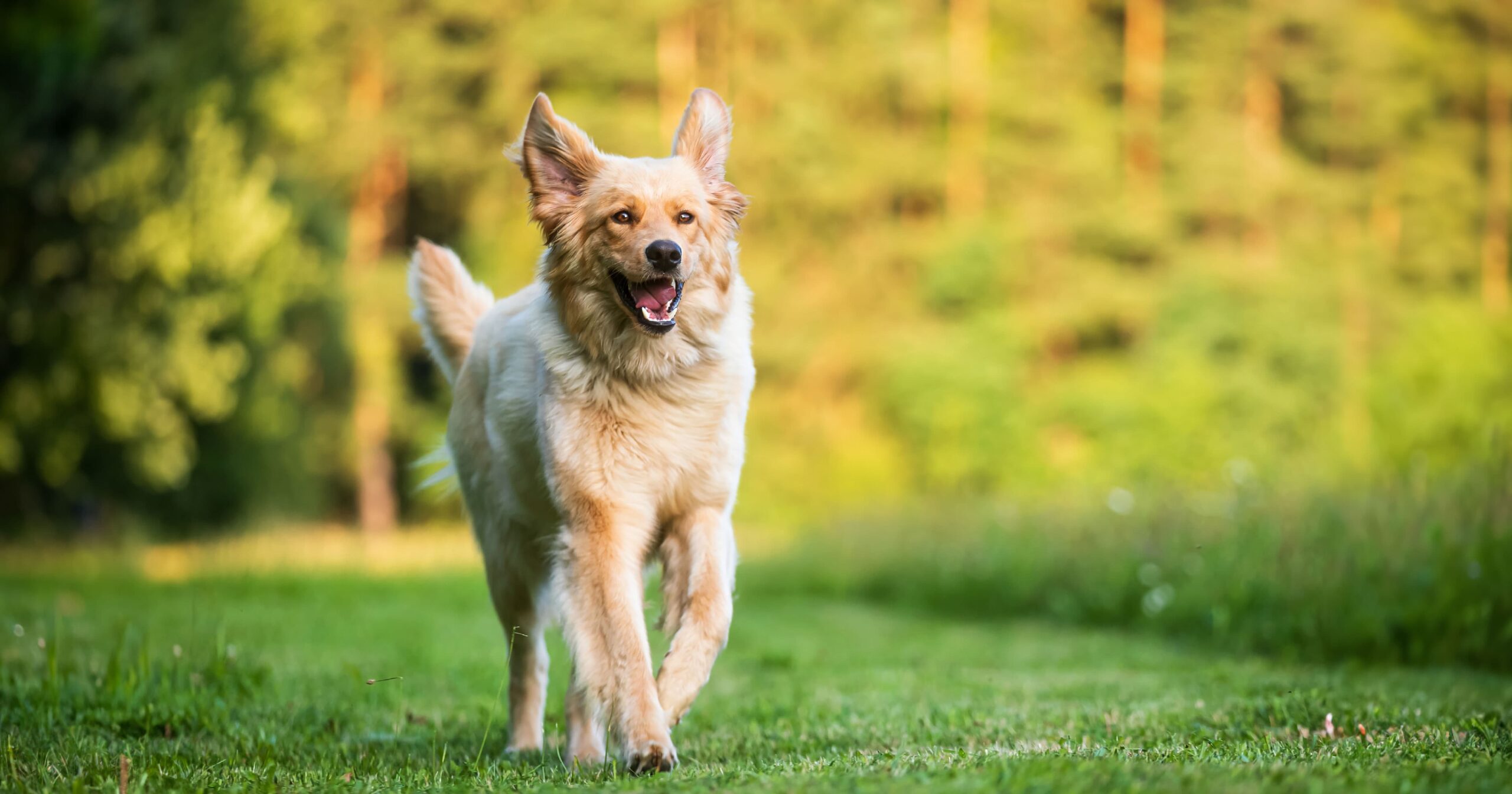
A dog walking on green grass with his ears perked up.

Ear infections aren’t the first things that come to mind when we think about summer. But contrary to somewhat popular belief, ear infections aren’t always seasonal. And when you have large, furry or floppy ears, any season can be prime ear infection season.

A dog’s ear infections are often caused by environmental allergies. Warm air allows, pollen, mold spores and other allergens to explode in population and swim around on the wind, causing allergies to flare up. These allergies can inflame the skin that lines the ear canal, opening the door for secondary bacterial and fungal infections.

If your dog is an avid swimmer, excess water in the ear canal can create a dark, moist environment where yeast and bacteria thrive. (Food allergies can cause ear infections, too, but in these cases, the infections tend to occur all year long rather than seasonally.)

So how do you prevent ear infections in dogs this summer? And if prevention doesn’t work, what is the best ear infection treatment for dogs? Flap your ears and listen to our advice!

READ MORE ABOUT DOG EAR INFECTION AND TREATMENTS

Should My Pet’s Diet Change for Summer?

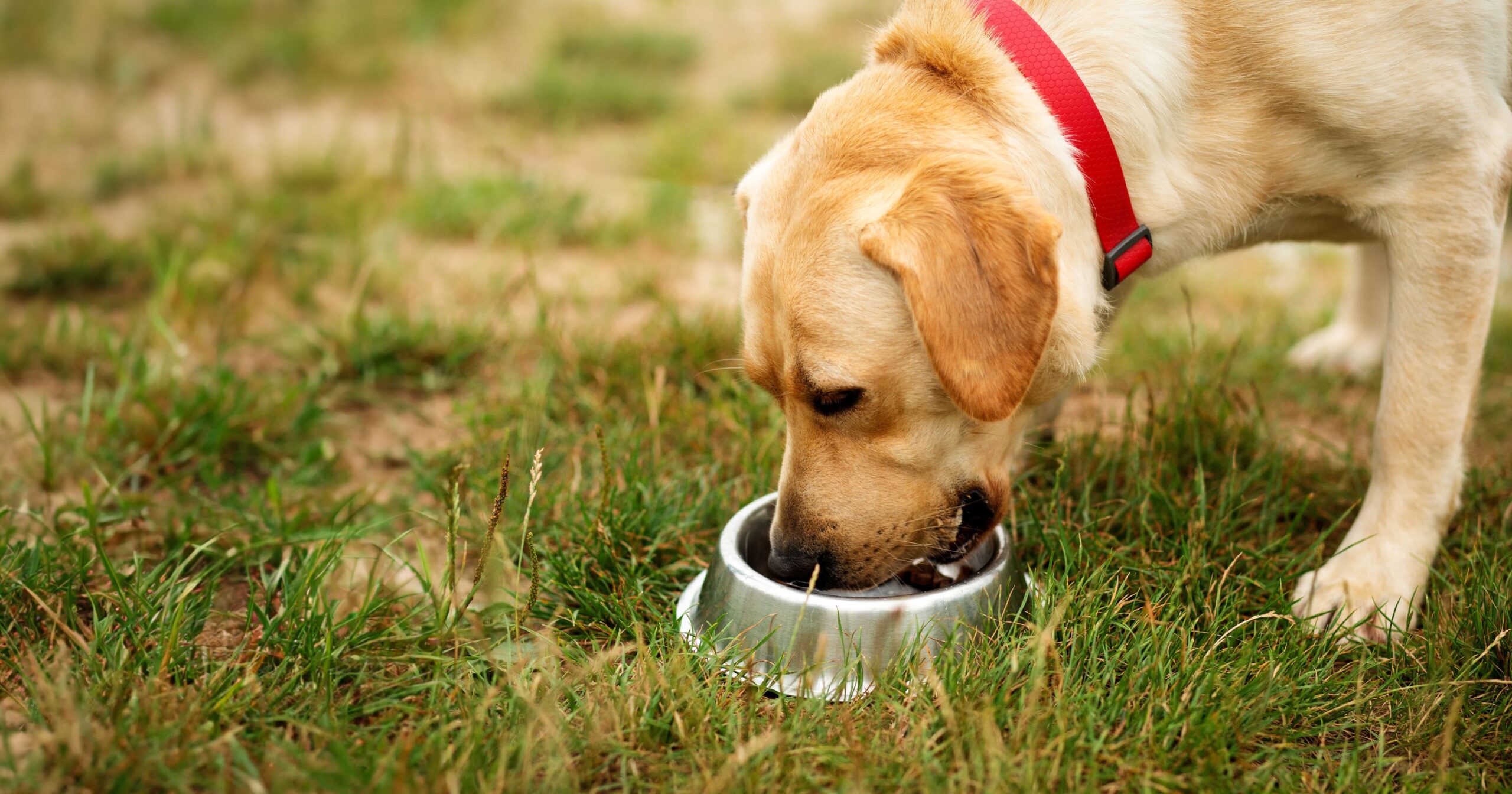
A dog eating kibble out of a metal bowl on the ground outside.

Many dogs seem to lean out when the weather gets warmer. More activity and less lazing around can naturally lead to weight loss. There’s just so much running and hiking and swimming to do! But does a change in season mean a change in diet for your dog?

It’s a good question: What should you feed your dog in the hot weather months? Do active dogs need more calories? Should couch potatoes get the same amount as always? Is a drastic change in your dog’s diet necessary when summer hits? Don’t sweat it, because we have some answers for you!

READ MORE ABOUT WHAT TO FEED DOGS IN HOT WEATHER

Summer Care for Dogs with Heavy Coats

A husky standing outside in the sun in long grass and flowers.

A husky is clearly a dog suited for colder weather. But have you ever considered how other breeds with heavy coats fare in the summer sun? Think of that golden retriever who loves to soak in the kiddie pool. It’s not just our classic winter dogs who might need different care in the summer.

But what can you do to keep dogs cool in the summer? Is a shave in the cards for our fluffier friends? And for dogs who seem to leave a second dog behind every time they shake, how do you keep shedding under control? Here are a few tips about how to keep dogs cool in the summer, from grooming tips to best practices for outdoor fun in the sun.

READ MORE ABOUT HOW TO KEEP DOGS COOL IN THE SUMMER

How to Protect Dog Paws from Hot Pavement

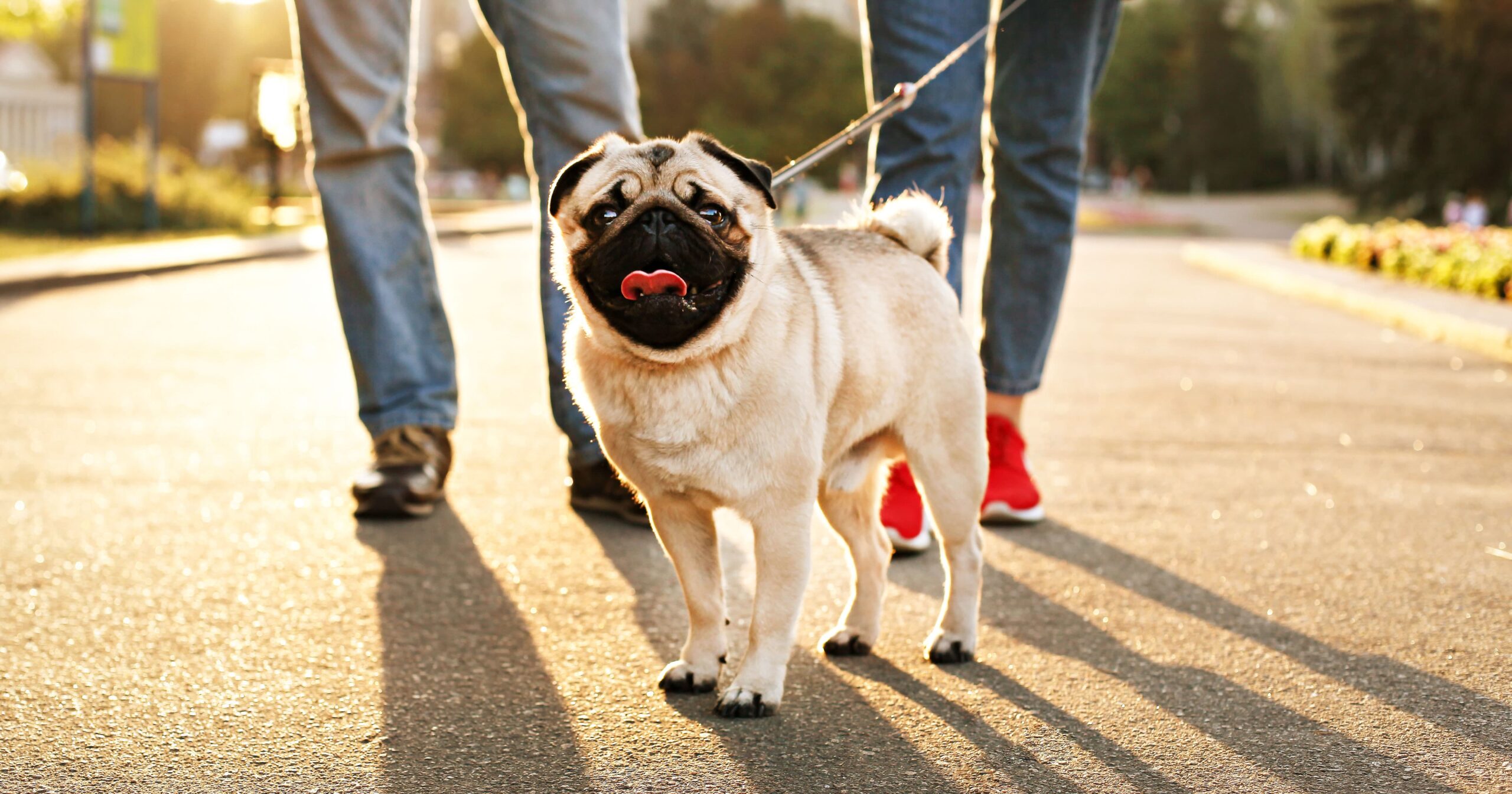
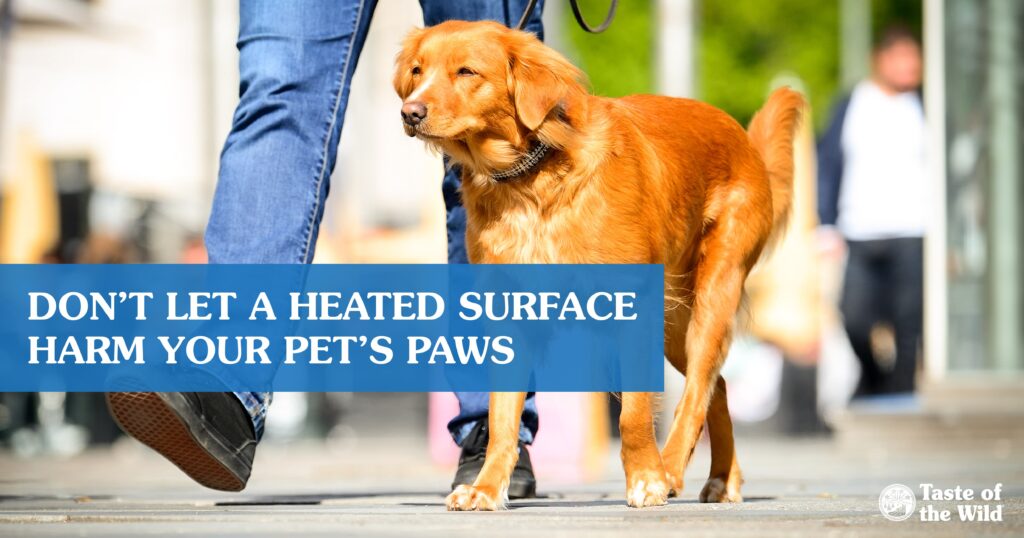
Two people walking a small dog on pavement in the sun.

Your dog’s favorite thing about summer? More walkies! It feels great to get out multiple times a day with your best pal, walking the neighborhood or hiking the trails. But a hot topic you should think about all summer long is “How hot is too hot for your dog?” We’re specifically talking about your dog’s feet, because hot pavement can be dangerous for paw pads.

Walking your dog in the summer heat can be pleasurable for both of you, especially with plentiful shade and water. But even as the sun drops below the horizon, that pavement can hold a LOT of heat. You’re probably wearing shoes or sandals, but your dog’s paws are exposed, and a lot more sensitive than you might think.

READ MORE ABOUT PROTECTING DOG PAWS FROM HOT PAVEMENT

Keep It Fun and Safe for Your Dogs in Summer

A dog jumping through a shallow pool of water.

Summer is a fun time for dogs. The kids are out of school, the days are a lot longer (which means that the walks should be a lot longer, too!), and the options for fun in the sun are nearly unlimited. With just a little care and change in behavior for you and your dog, you can make sure that dogs in summer stay safe and, most importantly, stay happy.

Behind the Breed: Airedale Terrier

An interior graphic with three quick facts about Airedale terriers.

Airedale terriers: All the feisty energy of a typical terrier, but in a body that’s three times the size. No wonder they’re often called the “King of Terriers”!

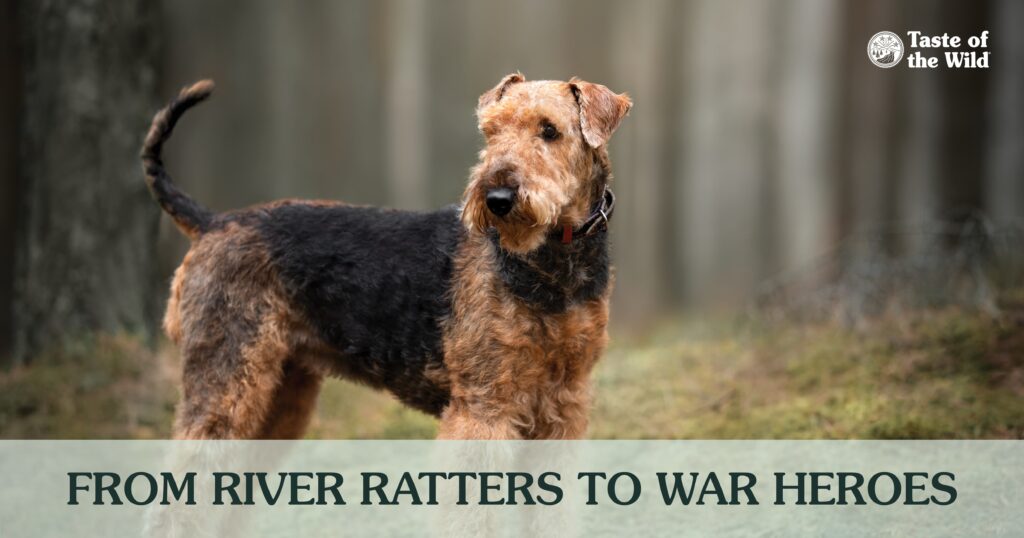
Unlike many breeds that originated in Victorian England, however, Airedales weren’t bred by nobles for hunting purposes. No, the noble Airedale was created in the mid-1800s by the working people of the Valley of Aire, near Yorkshire, to hunt down the large river rats polluting the local rivers. The rats were so pervasive that the town held contests designed to encourage hunting them. Competitive locals cross bred black-and-tan terriers with otter hounds for an ideal water-rat hunter, and the Airedale terrier was born.

This terrier-like instinct to hunt rats expanded to otters, ducks and other water-adjacent game, and the breed’s size, love of water and scenthound abilities made it a breath of fresh, er, air for hunters throughout the Valley Aire and beyond.

But the Airedale’s calm demeanor around people and intimidating size meant that they could be perfect guard dogs for the home and family, so their popularity just kept expanding, eventually crossing the ocean to North America. The first Airedale to hit American shores was named Bruce, in 1881, and the American Kennel Club recognized the breed in 1888.

Dogged War Heroes

Though they’d expanded globally by the time World War I began, the England-based breeds did what good dogs do and helped their Allies. Because they’re sturdy, all-terrain dogs, Airedales were perfect for delivering messages cross-country during the war. The Red Cross used them to deliver supplies all over the front. American soldiers also recognized the Airedale’s wartime qualities, using them as sentries.

Airedale Terriers Are Perfect Family Companions

Today, Airedales have found their place in the home. They remain the largest terrier breed, standing almost two feet at the shoulder and weighing up to 80 pounds. Their wiry coat is virtually shedless, so they appeal to families who aren’t keen on vacuuming constantly. But mostly, they’re so popular today because they’re smart, friendly and patient with children while their unique looks and size offer an inherent protectiveness.

Airedales have proven that they can be trained to almost anything, and they’ve been known to become police dogs, scenthounds and even actors. But Airedales do have that hound-dog streak, meaning that they can be stubborn and determined. Especially if they catch the scent of a river rat!

An interior graphic with three quick facts about Airedale terriers.

National Barks: Badlands National Park

A close-up of Saddle Pass trail at the Badlands National Park.

Leash up for the next National Bark you and your dog need to visit: Badlands National Park in western South Dakota. The varying terrain and sediments throughout the park will leave you feeling like you’ve been transported to a sci-fi planet one moment and the moon the next. You and your hiking hound can truly get back to nature here.

The various formations throughout the park are made up of sandstones, siltstones, mudstones, claystones, limestones, volcanic ash and/or shale — a result of millions of years of deposition and erosion. Through all these ecological changes, visitors and researchers alike have found an abundance of fossils in the area. This includes 28-million-year-old fossils of the hesperocyon, one of the earliest dogs or canids to walk our planet. So, as you can see, it’s only right that your dog experiences the Badlands. Their ancestors once walked those lands, after all. But to ensure you and Fido stay safe, there are a few guidelines to note.

A close-up of Saddle Pass trail at the Badlands National Park.
A close-up of Saddle Pass trail at The Badlands National Park.

Timing Is Everything When Taking a Dog to a National Park

Most of the terrain Fido can walk on at Badlands National Park will be grassless and unshaded, so it’s important to factor in that summer heat when planning your visit. The best time to visit the Badlands is April, May or early June before the heat becomes too unbearable; or, for perfect fall temperatures, head there during September and October.

While this national park is open year-round, you’ll want to take proper precautions if traveling in the summer and the winter. Temperatures can soar up above 110° Fahrenheit during the summer months and as cold as -40° Fahrenheit in the winter. If traveling during the summer, make sure you have plenty of water for Fido (and yourself!), stick to early morning or late evening ventures outside of a vehicle and keep an eye out for when your dog gets too hot so you can immediately seek a cooler location. If hiking or camping in the winter, limit the exposure to the cold and consider snow boots to prevent frostbite or hypothermia for both you and Fido.

Sleeping Arrangements for Dogs at Badlands National Park

A common theme you’ll notice in our National Barks series is camping. This is because pets are not allowed in cabins or public buildings at national parks. Under the starry skies, it is!

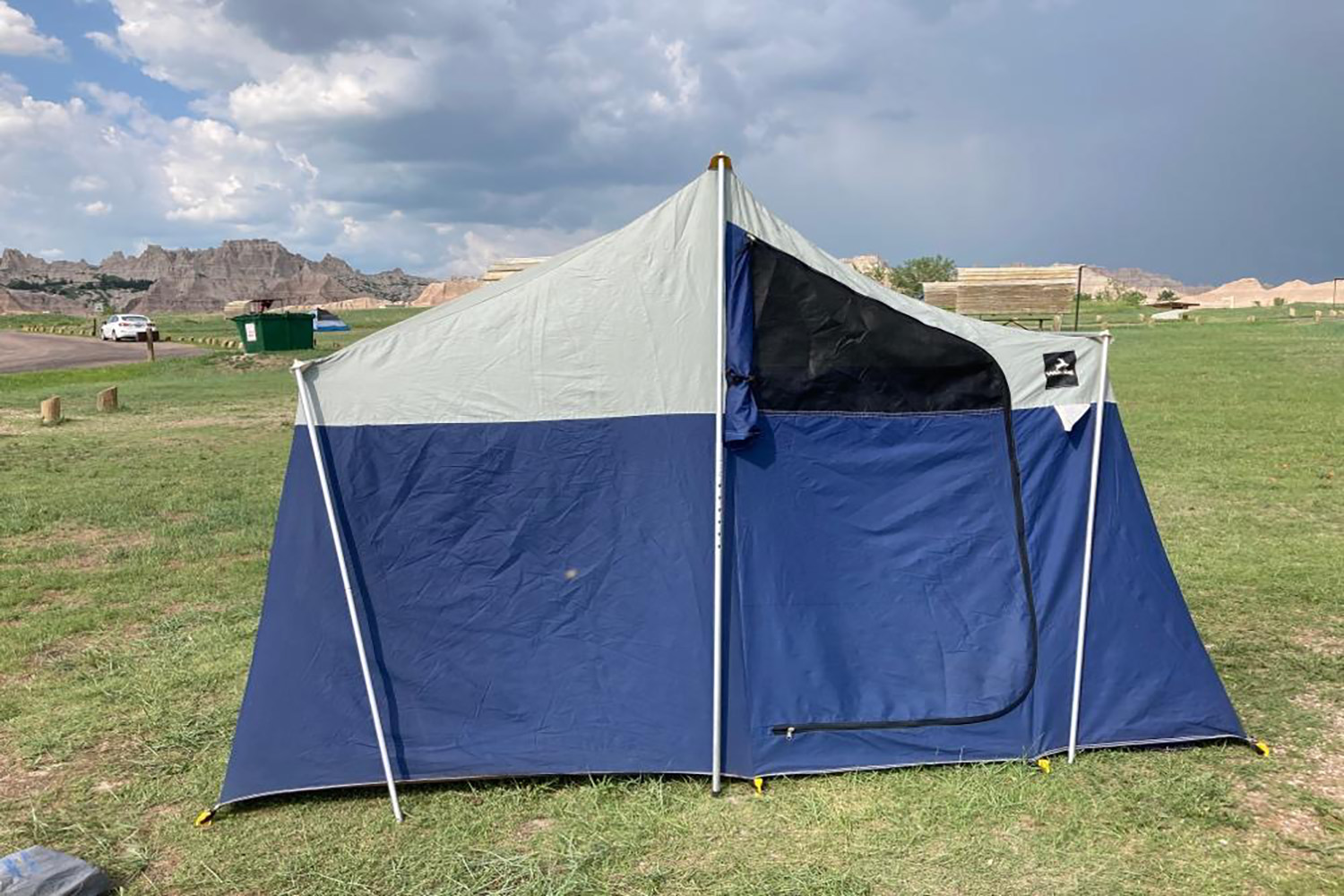
The Badlands National Park provides visitors with two campsites: Cedar Pass Campground and Sage Creek Campground. Reservations for Cedar Pass Campground can be made prior to your arrival. Summer is one of the busiest seasons, so if traveling during June, July or August, consider booking your reservation as far out as March. This will help ensure there’s a spot available for you and Fido.

A blue and white tent set up at a campground at the Badlands National Park.

At Cedar Pass Campground you will have access to covered picnic tables, showers ($0.50 for 4 minutes), running water and toilets. You’ll also be mere minutes from the visitor center and café. Cedar Pass Lodge handles all the reservations and questions for the campground.

Sage Creek Campground is a free, first-come first-serve location. You’ll have access to covered picnic tables and pit toilets, but make note to take extra fluids for you and Fido. There is no running water at this location. This campground is located off the unpaved Sage Creek Rim Road, which is sometimes temporarily closed to travelers when winter weather or heavy rains roll through — something to be cognizant of when planning your trip.

Pets must be kept on a leash no more than six feet in length at the campgrounds and throughout the entire park. Additionally, remember to clean up after your dog and properly dispose of pet waste during your stay.

Hiking with Your Dog at Badlands National Park

When walking up to hiking trails, boardwalks, most overlook areas and public buildings, you’ll notice “No Pets Allowed” signage. But don’t worry. There’s plenty of beautiful scenery to see from walking or driving throughout the Badlands. The Badlands Loop Road alone provides 30 miles of walking through the heart of the park!

Pets are allowed on all public roads (paved and unpaved) and in the campgrounds mentioned above as well as:

  • The grassy area outside of Ben Reifel Visitor Center (bonus: there are picnic tables at this location)
  • Roadside pullouts and parking lots
  • Bigfoot Pass Overlook picnic area
  • Conata picnic area

Take proper care when hiking on paved and unpaved roads. Watch out for cars. Move out of the way of oncoming traffic. Keep a safe 100-foot distance from all wildlife — big or small. If the wildlife notices you, you’re too close for comfort. And lastly, always take extra fluids for you and Fido while walking. It’s important you both stay hydrated no matter how far you hike.

Due to the lack of grassy or shaded options along the walk, this is why it’s important to make sure you either choose a month where it’s cooler or hike only in the early morning or late evening daylight hours. The pavement will be hotter than the outside temperature due to its reflective nature.

A scenic view from the Badlands Loop Road near Ben Reifel Visitor Center.
The view from The Badlands Loop Road near Ben Reifel Visitor Center.

Roadtripping Through Badlands National Park with Your Dog

Driving from one end of the park to the other takes about an hour and a half. Wildlife could prolong that travel schedule though, so be sure you and Fido keep an eye out for any movement outside of the vehicle. Unpredictable and speedy wildlife make it imperative that travelers follow designated speed limits throughout the park. You can be driving along without a critter in view and blink to find a bighorn sheep darting in front of your vehicle.

If you see something you want to explore further while on the drive, remember Fido must be able to go with you. Do not leave Fido in a parked car as a compromise — even if it’s just for a few minutes. An air conditioned, running vehicle can become a dangerous piece of machinery unattended. You never know when a car could malfunction, nor can you anticipate how your dog will behave without you inside the vehicle. They could accidentally bump the gear shifter, gas pedal or emergency break. If you anticipate you’ll want to hike the trails throughout your drive, we recommend traveling with friends or family. You can take shifts on who walks a trail while the other hikes a dog-friendly road with Fido.

So now, the only other question you may have is “How long should I plan to stay at the Badlands National Park?” We recommend mapping out two to three days for exploring and hiking pet-friendly areas. Yes, you can drive straight through the park within an hour and a half. But there are roads to hike, fellow traveling doggos to greet and memories to make at this 244,000-acred park full of incredible geological formations, wildlife and fossils dating back to the Eocene and Oligocene epochs.

RELATED POST: National Barks: How to Take Your Pet to Yellowstone

Can My Dog Eat That? School Lunch Items

Interior graphic with text that reads ‘Can my dog eat school lunch items? It depends on what they are’.

Welcome to “Can My Dog Eat That?,” our series that answers some obvious (and not-so-obvious) questions about what your dog can and can’t safely eat. Today we answer the question “Can dogs eat school lunch items?” Read on!

Oh no! The dog didn’t eat my homework — they ate my lunch!

For people with school-aged kids, the mornings can be chaotic as you’re trying to get everyone dressed, fed and out the door on time. So it’s possible that an open backpack on the floor would go unnoticed by everyone — except your dog. That highly sensitive nose is sure to sniff out whatever yummy food is packed in your kid’s lunch, and it may have you asking, “Can dogs eat school lunches?”

If your cunning canine does eat food from your kid’s backpack, deciding on whether you should be concerned or not depends on what food they found and which parts of it they ate. We’ll go through some of the common items found in school lunches and see which food gets a passing grade and which food fails the test.

Before We Start…

We wrote this article assuming lunch-sized proportions of food were in the backpack. For some of the foods we discuss, eating larger quantities can have more severe consequences. When in doubt over the risk to your dog, ask your veterinarian.

Also, if your dog eats any packaging, plastic or the lunch bag itself, that’s obviously not good. You should have your veterinarian check that the packaging isn’t going to cause a blockage in your dog’s intestinal tract.

Going along with the school lunch theme, we’re going to follow the food groups from the USDA’s MyPlate, but with some treats thrown in, too!

Protein: A Canine Favorite

Protein is an important part of any dog’s diet, but some protein sources may not be good for your dog to eat. Some common lunch items are ham, hot dogs, pepperoni (on pizza), eggs and chicken nuggets. The problem with ham, hot dogs and pepperoni is their fat and salt content. Too much salt and fat can lead to an upset stomach. Similarly, chicken is a great source of protein for dogs, but not so much when it’s in the form of breaded nuggets. The high fat content of chicken nuggets can cause an upset stomach.

Eggs are an excellent source of protein, and they’re safe for dogs to eat as long as they’re cooked — which they should be if they’re in your kid’s lunch! If they’re mixed with something else, that’s where some caution’s needed (see the section on condiments below).

Grains: Breads, Pasta and Popcorn

Pita bread, wraps, bread, bagels, crackers, pasta, popcorn: all yummy grain-based food you’d find in a lunch box. Plain grain-based foods should be OK for your dog, as long as the food doesn’t have any toxic ingredients in them (and your dog doesn’t have a wheat allergy). But you also need to consider what toppings were used on them. For example, plain, air-popped popcorn is fine, but popcorn that’s heavily buttered or salted could cause an upset stomach in large amounts.

If there were toxic ingredients in the food your dog ate, like raisins, macadamia nuts, garlic or nutmeg, have your dog examined by your veterinarian, because even small amounts of some of these toxins can cause issues.

Bread Dough Oh-No!

Quick side note. If you make your own bread, make sure you don’t leave yeast-based dough out anywhere that your dog could find it. If they ingest the dough, it can cause bread dough toxicosis. According to the Merck Veterinary manual, the warm, moist environment of a dog’s stomach allows the yeast to replicate, which causes two potentially fatal issues. First, the dough mass expands, causing a distended stomach which can result in breathing difficulties. Additionally, yeast fermentation produces ethanol, which can cause ethanol intoxication and metabolic issues. If you see your dog eat some yeast-based bread dough or suspect that they have, seek emergency veterinary treatment.

Fruits and Vegetables

Most fruit and vegetables you’d find in a school lunch, like apples, oranges, bananas, watermelon, blueberries, carrots and cucumbers, are healthy and safe for dogs to eat (as long as it’s the fleshy parts they’re eating). If your dog eats the whole fruit or vegetable and it contains seeds, rind or the core, keep an eye on them: those parts can be choking hazards and can cause an upset tummy or a digestive tract blockage.

Grapes and raisins are the exception. They are toxic, and some dogs can become ill just by eating a small amount. It’s believed that some dogs are sensitive to the tartaric acid that’s found in grapes.

Dairy

Dogs can eat dairy products like plain yogurt, cheese and milk; however, some dogs have trouble digesting lactose, so they may have an upset stomach or diarrhea after eating or drinking it. Some dairy products have more lactose than others, so the response depends on the dairy product and the individual dog.

Some dairy products have high fat contents, which can cause upset tummies, too. You should also check if any flavors or toppings used with the dairy products are toxic to dogs (e.g., xylitol, chocolate, nutmeg).

Condiments and Treats

If peanut butter and jelly is a favorite school lunch in your house, make sure you purchase peanut butter varieties that don’t have xylitol in them. That way if your dog sneaks a bite or two, you won’t have to worry about xylitol poisoning. Check the label of sugar-free condiments (e.g., ketchup, BBQ sauce) to make sure they don’t contain xylitol, too.

Mustard is another condiment that’s toxic to dogs, particularly in large amounts. When you’re preparing lunch, be careful that your dog doesn’t find the mustard bottle and squeeze some out for themselves.

If your kid’s lucky enough to get a treat in their lunchbox, chances are it’s not a good treat for your dog. Many human treats contain ingredients that are toxic to dogs, like chocolate, cocoa powder, or xylitol.

Due to their small amount, most lunch bag items are probably OK for your dog, or they may just cause an upset stomach and diarrhea. But if the food contained ingredients that are toxic to dogs, make sure you have your dog checked out by your veterinarian. Now you just have to make your kid’s lunch — again.

Interior graphic with text that reads ‘Can my dog eat school lunch items? It depends on what they are’.

Hot Weather Safety Tips for Dogs

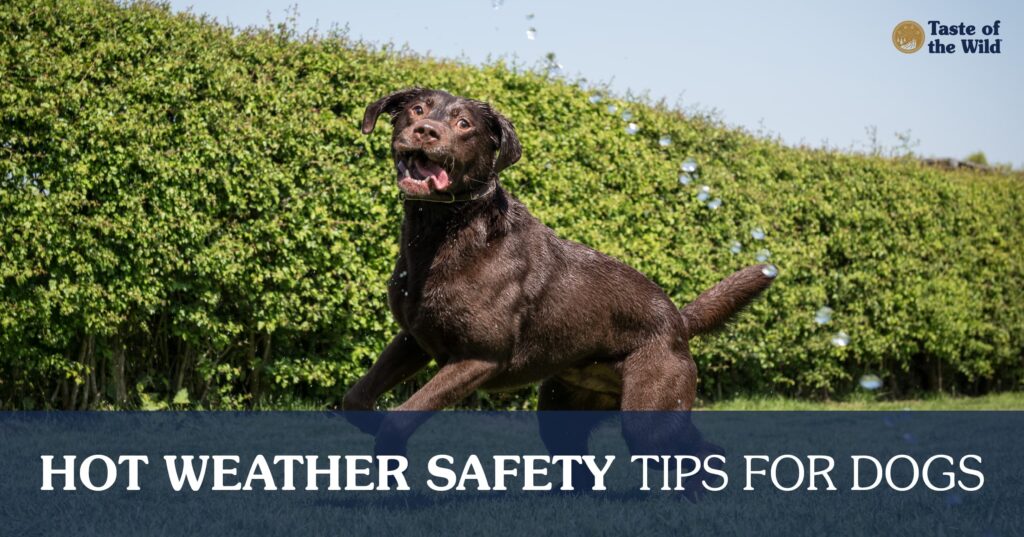
A brown dog playing in green grass in the sun.

Summer is time for vacations and getting outside for all kinds of fun! Whether you’re taking your dog to the beach or just getting in your daily walks, how do you ensure your dog stays safe out in the summer heat? We’re here with a few cool ways you can keep your canine from overheating during the hotter months.

Avoid Hot Pavement

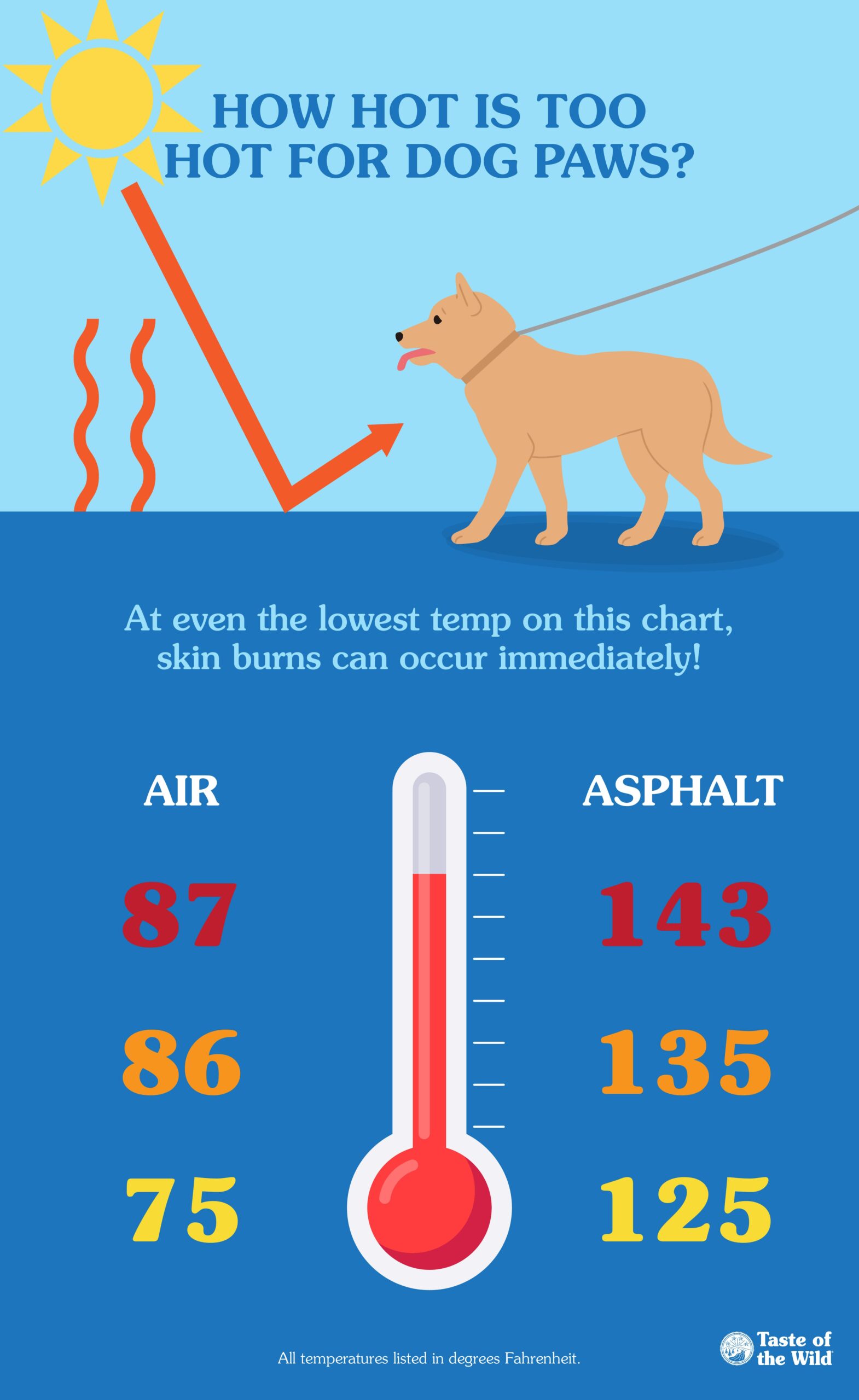
When temperatures rise to 75° Fahrenheit, be sure to keep a more watchful eye on how your dog is doing on walks. Pavement temperatures can become 40° to 60° hotter than the air temperature, leading to burns or blisters on your pet’s paws. On those warm, sunny days, we recommend walking your dog in the grass or considering dog booties when walking on the sidewalk, asphalt or other heat-reflected surfaces. A good way to tell if the surface is too hot for your dog’s paws is by placing your hand on the ground for at least 10 seconds. Was the surface temperature too hot for you to handle? That means it’s too hot for doggy paws, too.

Plenty of H2O is A-OK

Hydration is key to keeping your canine from overheating in hot weather. Cold water can immediately cool your dog down from the inside out.

When turning your doggo loose in an enclosed area, ensure their water bowl remains full of cold water. A freezable water bowl placed in the shade can help keep drinking water colder, longer.

On walks or outdoor adventures, always carry a collapsible bowl and cold water so your dog can stay hydrated. Freeze a couple of water bottles or icepacks to provide instant cooling relief. If your dog allows you, place the frozen bottles or packs on your pet’s neck, under their armpits or near their groin. Ice applied to these locations provides quicker cooling relief.

Lastly, some dogs like being sprayed down with a hose, running through a sprinkler or being spritzed by a spray bottle full of lukewarm water. Experts recommend spraying your doggo under the legs, on the belly and on the paws for instant relief from the heat — if your pet is comfortable with this measure. Some dogs may be frightened by this method so slowly test this out on your pet’s legs and evaluate how they react.

Steer Clear of a Toasty Car

Never, EVER leave your dog in a hot car for more than a few minutes. The outside temperature might read 80° Fahrenheit, but the inside of your car can quickly reach a deadly 120°. Cracking the windows doesn’t keep the car cool enough.

In the event that you need to leave your doggo in a car unattended for a few moments, make sure the air conditioning is running at full blast and provide them with a water bowl where they can access it. Veterinarians recommend only doing this for five minutes or less, and only resorting to this option if you have no other alternatives. Why? You never know when a car could malfunction or if Fido will accidentally bump the gear shifter.

Signs a Doggo Is Getting Too Hot

Experts recommend limiting exercise and outdoor time on hotter days — the amount of time varies based on age, breed, health complications and amount of fur. Your pet will let you know when it’s time to go in with their panting and breathing patterns. Increased panting and rapid breathing is an indication it’s time to get out of the heat.

While all dogs are prone to heat stroke under scorching conditions, pets who are obese, have extremely thick fur, respiratory issues or flat faces (short noses) are prone to overheating more quickly. If your canine exhibits any of the following symptoms while out in the heat, be sure to immediately move them to a cooler location with plenty of cold water:

  • Increased panting or rapid breathing
  • Stumbling or bumping into nearby objects
  • Excessive drooling
  • Increased thirst
  • Lethargic
  • Bright red gums and tongue
  • Vomiting or diarrhea

For strolls lasting more than 10 minutes, we recommend adjusting your daily walk schedule. The coolest daylight hours will be around sunrise and sunset. In addition to having a cool, safe and healthy doggo, you can take advantage of the golden hour for stunning photos of your dog on those early morning or evening walks.

Behind the Breed: Lagotto Romagnolo

An interior graphic detailing four quick facts about the Lagotto Romagnolo breed.

What happens when you can’t do your job anymore? You adapt and become an expert at your new one! That’s what happened with dogs of the Italian Lagotto Romagnolo (pronounced Lah-GOH-toe Ro-man-YO-lo) breed.

These water-loving workers were originally bred for retrieving waterfowl for hunters in the Northern Italy marshes. But when the land was developed and the marshes disappeared in the 19th century, the Lagotti Romagnoli (that’s the plural version) were trained for a new job — to be the best truffle hunters in the world. Lagotti Romagnoli are the only purebred breed recognized for their abilities to sniff out truffles, which are delicious but pricey delicacies enjoyed by people. Training Lagotti to sniff out — but not eat — truffles seems like it would be a challenge!

These curly-haired super-sniffers are muscular, medium-sized dogs that live for around 17 years and weigh up to 35 pounds. They are great for people who are looking for a low-shed breed because their waterproof double coat rarely sheds. Keep in mind, though, that their thick curly coat still needs to be groomed so it doesn’t become matted.

Boisterous and playful, Lagotti Romagnoli love their humans, following a routine and having a job to do. When they’re not sticking by their human’s side, they’re happy splashing about in water or using their exceptional nose for a good cause, like urban search and rescue or detecting a medical problem (e.g., low blood sugar in a person with diabetes).

If you’re thinking about bringing a Lagotto Romagnolo into your family, make sure you have the time and the area for them. These intelligent dogs need to be mentally stimulated and allowed to exercise daily. They are friendly with children, cats and other dogs as long as they were socialized well as puppies.

An interior graphic detailing four quick facts about the Lagotto Romagnolo breed.

How to Protect Dog Paws from Hot Pavement

An interior graphic detailing how hot is too hot for dog paws, showing the effect of air temperature on asphalt temperatures.

A stroll through the neighborhood on a sunny summer day is great for you and your dog. But when temperatures heat up above 75 degrees Fahrenheit, that hot pavement could burn your dog’s paws. As a pet parent, you want to make the right choices to keep your dog safe, so here’s how to tell if it’s too hot for a walkie, and how to protect those dog paws when the temps rise.

How Hot Is Too Hot for Dog Paws?

When the temperatures outside are scalding, it’s important to check how hot the pavement is before letting your dog walk on a paved surface. Place your hand on the surface your dog will be walking on. If you cannot comfortably hold your hand in the same place for ten seconds, the pavement or artificial turf is too hot for your pet to stroll on. Try one of the following best practices to keep your pet’s paws safe from that summer heat. A hot surface can cause discomfort, blisters and burns.

An interior graphic detailing how hot is too hot for dog paws, showing the effect of air temperature on asphalt temperatures.

Adjust Your Schedule for Dog Walks

Obviously, as the day gets hotter, so do potential walking surfaces. The hottest time of day during the summer is between 3 p.m. and 6 p.m., while the coolest daylight hours are right around sunrise and after 6 p.m. as the sun is starting to go down. Early morning and evening strolls can help you and your doggo beat that summer heat!

Go with Grass

Asphalt, sidewalks and artificial turf have higher solar reflectance than natural grass. Therefore, more heat is reflected on these surfaces and remains hotter than grass. Instead of trotting out on a sidewalk for your lunchtime stroll, check the temperature of the grass in your backyard or a local park. As a best practice, go ahead and place your hand on the grass for ten seconds to check the temperature compared to the sidewalk. You’ll notice grass remains a cooler alternative for your pet. But always check, just to be sure!

Protective Possibilities for Pooch Paws

The most stylish way to help your pet walk on warmer surfaces is to invest in some dog booties. You can pick up booties at your local pet store or online. Just like with leash training, you’ll need to factor in time for your dog to get acclimated to the booties before taking them out and about. Remember to help your pet get used to new petware at a pace they are comfortable with and use pawsitive reinforcement to let them know what a great job they are doing!

Getting acclimated to dog booties is a quicker process for some pets compared to others. If your dog doesn’t want any part of wearing booties, though, that’s OK, too. Some dogs prefer to be bootie free.

Damaged Paws

How do you know if your pet’s paws received damage from a prior walk? Your dog will exhibit the following symptoms:

  • Limping
  • Excessive licking or chewing their paws
  • Paw pads appear darker than normal
  • Blisters or redness
  • Paw pads look visibly damaged

We recommend visiting your local vet as soon as possible if you notice paw-pad damage. Burns and blisters can easily become infected if not treated properly.

In addition to keeping your pet’s paws safe during the summer, pack ice packs and cold water to help cool your doggo down on your walk if needed. And lastly, watch for signs that your pet is getting too hot — so you know when it’s time to go back indoors. Warning signs include excessive panting, extreme salivation, anxiety and labored breathing.

Behind the Breed: Irish Setter

Interior image listing quick facts about Irish setters.

It’s no surprise that Irish setters originated from Ireland. They were bred to sniff out gamebirds for hunters and quietly announce their success by “setting” (lying down on their tummy). Their vibrant red coats made it easy for hunters to spot them across fields, although they weren’t always a solid red color —the original Irish setters were actually red and white.

Irish setters are friendly, affectionate, lively dogs that, like Chesapeake Bay retrievers, make wonderful family pets as well as reliable hunting partners. They’re great with children and love to be involved in an energetic family’s outdoor activities. However, their playful, boisterous nature, paired with their large size, means you’ll probably need to shield little kids from an accidental “Big Red” bump.

Irish setters are large dogs (weighing 60–70 pounds as adults) and typically live into their early to mid-teens. They are usually healthy but, like other deep-chested breeds, they can be susceptible to bloat or stomach twisting (called gastric dilation-volvulus).

If your idea of exercising a dog is a game of fetch in the backyard, that’s not going to cut it with an Irish setter — and a bored Irish setter can lead to a naughty Irish setter. Ideally they should be allowed to run their energy out over a long distance. Sports like agility, flying disc or tracking are great for temporarily tiring out Irish setters, and as they were bred to be hunting partners, they like games that use their brain, too.

Interior image listing quick facts about Irish setters.

How to Host a Bark-tastic Pool Party

A tan pug standing on a pink flotation raft in a pool.

Calling all water-loving doggos and their aquatic owners! It’s time for a summer pool party.

Swimming can be an enjoyable activity for your pet, and it can also be quite beneficial to their health. Both reasons to party! Why not combine the two? By planning a doggy pool party, you’re providing pups with exercise to strengthen their muscles and improve their cardiovascular health as well as offering an opportunity for pets and their parents to mingle and be social. Talk about a well-rounded afternoon!

Let’s dive into how you can plan a bark-tastic doggy pool party that will leave your guests ready and hungry for more.

RSVP for the Party of the Summer

First, decide on a safe location for your party. You’ll want to choose a fenced-in location outside with shade and a designated doggy bathroom area. Then begin thinking about days and times that work best for you and your guests.

Once you have your time, date and location secured, you can select your party theme! From “tropical luau” to “pirates of the backyard,” there’s an endless list of themes to choose from. Pinterest is a good place to start for ideas.

After choosing a theme, make a guest list to see how many invites you need to send. We recommend limiting your guest list to 10 dogs or fewer unless you have extra supervisors on duty. Avoid inviting dogs who tend to be aggressive or whom your pet has not met yet. This will help avoid any potential conflicts the day of the party.

Lastly, ask guests to bring a pet life jacket for older fur babies or those who have little to no swimming experience. A life jacket is an extra safety measure for canines during their time splishing and splashing.

Extra Doggy Approved Activities

Dogs will typically swim for 10 to 30 minutes at a time, so it’s best to make sure your furry guests have other activities to enjoy throughout the party. Extra activities also give the dogs another outlet to socialize with other humans and dogs alike.

Consider these activities and gear for your pool party. We’re sure they’ll be met with happy woofs and wagging tails.

  • Obstacle courses
  • Sprinklers or splashpads
  • Aquatic dog toys for the pool
  • Tug of war with a sturdy toy
  • Hide and seek with dog treats
  • Tennis balls for everyone!
  • Frisbee run

Yummies for the Dog Tummies

A great party isn’t complete without some good grub! Prior to making the shopping list, check in with your guests to make note of any allergies or sensitivities furry and non-furry guests may have. Also, research foods that are toxic to dogs prior to making any treats from scratch.

For healthy treat options, consider adding frozen banana slices, baby carrots or green beans to the lineup. For indulgent options — your doggo is burning off four times more calories swimming than walking, so it’ll even out — add pupsicles, canine cookies, doggie ice cream or a pawesome dog-friendly cake to the shopping list.

When choosing food for your human guests, keep in mind there will be a lot of hungry dogs circling their owners. We recommend feeding your guests foods that are also safe for dogs in case anything accidentally falls into the mouth of a furry companion. Have a question about what is safe or unsafe for dogs to eat at their dog pool party? We have you covered!

Food isn’t the only thing your guests will need. Make sure there are enough water bowls around the backyard to keep your furry guests hydrated. You’ll also want to make sure you refill these bowls throughout the party.

Get Your Party Area Doggo Ready

Make sure your pool is clean before everyone’s arrival. We also recommend adding a ramp for the dogs to get in and out of the pool safely. Dogs should never be forced to jump in or out of the pool. Ramps or zero-depth entry pools can reduce the strain on a dog’s joints, and they can also assist older or smaller dogs with getting out of the pool safely.

Next, locate a safe, quiet time-out area for the dogs in case they get stressed or start to play too rough. Inform your guests of this area upon their arrival.

On the day of the party, you’ll want to make sure the pool temperature is between 70 and 88 degrees Fahrenheit. A pool that is too cold or too hot can pose health risks to the dogs.

It’s Pawty Time

You’ve got the decorations set up. The food all laid out. And an eager host dog wagging their tail in anticipation of a pawty about to begin! Before the party gets started, establish basic ground rules to ensure everyone stays safe.

  1. If a dog is attending, the owner must be in attendance, too.
  2. Ask guests to bring their dog’s leash just in case an unexpected conflict arises.
  3. Require all dogs be up to date on their vaccinations. This prevents the spread of any infections or diseases.
  4. Provide plenty of poop bags and ask guests to clean up after their dog.
  5. Swimmers must always be supervised.
  6. Point out all the shaded locations in case Fido needs a break from the summer heat.

After the dogs exit the water for the final time, make sure their owners have access to a hose to give them a good, cool rinse before the drive home. We recommend dog owners rinse their dog for at least 20 seconds to make sure they remove all the chlorine and pool chemicals from Fido’s coat. This helps your doggy guests from having dry, itchy skin after enjoying a fun afternoon in the pool.

Now you’ve got the 411 on how to host a bark-tastic doggy pool party. It’s time to start planning what your party is going to look like!