
Prepare Your Cat for Moving

A gray cat standing in an empty moving box.

Moving is a stressful time for everyone, but imagine how stressful it is for your cat who has no idea what is going on. What are all these boxes? Why am I in a new house? Where do I poop?!?! Don’t let Mittens get all their fur in a fluff. We’ll walk you through how to make moving easier on your cat.

Before the Move

In the days or weeks leading up to moving with a cat, there are a few things you should do to prepare kitty for the journey and ease their stress and anxiety.

Carriage of Comfort

No matter how far you’re moving, your favorite feline will need to be safely transported, which usually means that they’ll ride in their carrier. So it’s best to start getting Mittens comfortable with being in the cat carrier prior to the move. Place the open carrier in a central area in the weeks leading up to the move. Add treats and toys to the carrier to encourage your cat to get into it and get reacquainted with the enclosure. If your cat dislikes their carriage, they might need more lead time to get comfortable with their new temporary enclosure. If you suspect that your cat will be nervous about their carrier, you’ll want to start this process earlier. If they’ve ridden in it before with little or no issue, you can likely wait until closer to moving day.

Have Fun with Boxes and Piles of Items

You’ve probably noticed your cat’s love of cardboard boxes. Now that you’re moving, you’re going to have a fortress of boxes for your furry prince or princess. Use all that extra cardboard to take their mind off the big move.

As you’re putting together boxes, let them explore at their leisure. Consider giving them a box or two to play in while you’re packing. Adding treats, toys or catnip to a box can also help them get over any uncertain feelings they may be exhibiting. It may just be unfamiliar smells that deter them at first.

Keep Your Routine When Moving with a Cat

We know getting ready for the big move can be a busy time. However, amid the chaos, it’s important to maintain your cat’s routine. Moving can be stressful on pets due to rapid changes in their environment and schedule. Keeping a routine with meals, play time and kitty cuddles can help Mittens ease into the upcoming changes. Following your normal routine can also provide you with a constant among all the adjustments, too. It’s a comfort for both pet parent and feline alike.

Find a Safe Spot for Moving Day

In the days leading up to the move, scout out a room that Mittens can stay in while you’re loading everything onto the moving truck. Take as much out of that room as possible ahead of time, so it can be the last room to be cleared out. The week of the big move, place your cat’s food, water, toys, litter box and carrier in that room to help get them situated. On the day of, make sure Mittens is OK on all their necessities and close the door to keep them from bolting out of the house while the furniture and boxes get moved. If you or someone in your moving party can sit in that room while everything is being hauled out, that’s great! However, if it’s not possible we recommend checking on your lil’ buddy once an hour to assure them everything is OK with all the racket they may be hearing. Plus, this gives you a great excuse to catch your breath and take a ten-minute break in between hauls.

During the Move

You’ve made it to moving day! As you’re getting your cat ready in their safe space, we recommend feeding them a smaller meal than normal. Stress can induce all kinds of bodily reactions in your cat — including stomach concerns. A lighter breakfast can reduce the chances of your cat experiencing an upset stomach or getting sick during the travels.

Don’t Play “Where’s My Cat?”

Next, let your moving crew know which room Mittens is in so they avoid opening the door and letting them out. You’ll want to load your cat in their carrier right before you’re ready to hit the road. Keep a cool, calm and collected composure as you load them in their carrier and gather all their belongings. If they pick up you’ve got moving stress, they’ll begin to feel uneasy, too.

Moving Time for Kitty

When placing Mittens in your vehicle, secure the carrier with a seat belt or other means to make sure they don’t slip and slide around. Place their favorite toy(s) in the carrier for comfort. Some cats prefer to look out and others do not, so don’t be alarmed if they stay toward the back of the carrier or face the wrong way. Keep a light blanket or cloth handy for the drive because you may want to drape it over the carrier to ease their fears. You may also want to pack some earplugs for your travels since Mittens could meow loudly throughout the drive. Talk to them in a calm tone throughout the trip to reassure them all will be alright.

For long-distance moves, identify pet-friendly hotels ahead of time and incorporate water and bathroom breaks for Mittens along the route. Make sure your pet has a leash or collar on when stopping for potty breaks.

Once you arrive at the new location, be sure to first unload your cat, their box, food, water and other items of comfort. Place them all in a room that you don’t mind unloading last, and let your moving crew know not to open the door so Mittens doesn’t bolt out. You’ll want to check on Mittens a bit more frequently throughout the unloading process since they’re in completely new territory. If someone Mittens is familiar with could sit in the room while everyone else is unloading, that would be ideal.

After the Move

Whew! You did it! You and your feline are all moved into your new place. Once everything is situated the way you want it, place your cat’s food, water and litter box in their permanent designations. Show your cat which rooms everything has been moved to, and allow them to explore at their own pace.

Let Them Explore Their New Home

It’s going to take some time for your cat to get familiar with their new space. Try to keep your routine so they have at least some familiar aspects of life before the move. They may cry, hide or seem a little skittish as they adjust. These are normal cat reactions. You can be there for them in these times of need with extra petting, calm reassuring words and patience.

If you notice your pet is still not adjusting well after a couple of weeks, make an appointment with a local veterinarian. They can provide possible solutions to make the transition easier. Sometimes stress can lead to lack of appetite, gastrointestinal system issues, urinary tract concerns or behaving in a way that owners have not seen before.

Can My Dog Eat That? Beverages!

An interior graphic with text that reads ‘The verdict: Can my dog eat beverages? No. Water is best’.

Welcome to “Can My Dog Eat That?,” our series that answers some obvious (and not-so-obvious) questions about what your dog can and can’t safely eat. Today we answer the question “Can dogs eat (or drink) beverages?” Read on!

Most dogs aren’t shy about trying out a new food, crunchy snack or drink. If the opportunity arises, like a full glass at perfect tongue height, they’re going to take advantage of it. So which beverages should you be concerned about if your dog does lap up a few mouthfuls? Or what about if they drink the whole cup?

The quick answer is that your dog really shouldn’t be drinking anything but water. It’s the healthiest drink for them, and it’s all they need to keep hydrated. But if they do get into one of your cups, there are some beverages that are more of a concern than others.

Can Dogs Drink Milk?

Maybe. Like all mammals, puppies start off life by drinking milk from their mom. During this time, they produce the enzyme lactase which helps to digest the lactose in milk. As the puppies get older and are weaned from their mother’s milk, they start to produce less lactase. Most adult dogs are lactose intolerant because they don’t produce much lactase anymore.

This means that your adult dog may not be able to digest cow’s milk properly and that can cause diarrhea and very stinky gas. You’ll soon know if your dog is lactose intolerant! A little bit of milk may be OK for some dogs, but make sure it’s plain milk. Watch out for potentially toxic additives, like chocolate or nutmeg, and some milk substitutes, like macadamia nut milk.

Can Dogs Drink Sports Drinks?

Water is better. If you’re going on a long hike on a hot day, you might take a sports drink with you to help replace some of the electrolytes you lose through sweating. While this could be a good option for you, it’s best to stick with a flask of clean, fresh water for your dog to stay hydrated. Sports drinks often contain sugar and sodium which can be unhealthy for your dog, especially when all they really need is water. It’s probably OK if your dog does drink some of the sports drink, but don’t make it a regular thing for them.

Can Dogs Drink Soda?

No. If a few drops of soda bubbles out of your can onto the floor and your dog laps it up, that’s probably OK. But you should not purposefully give your dog soda or let them lick up a whole soda-can spill because it can contain ingredients that are dangerous for dogs. Xylitol is commonly used in diet soda as an artificial sweetener — but it’s toxic for dogs. Regular sodas contain a bunch of sugar which, although not toxic, is not healthy for dogs to consume in large amounts. And any cola-based sodas are definitely out as they contain caffeine, which is also toxic to dogs (more on that in the coffee section).

Can Dogs Drink Coffee?

Nope. It doesn’t matter whether you’re an espresso drinker, love a good pumpkin-spice latte or  are obsessed with caramel frappé, you should not share your coffee with your dog. Dogs are more sensitive to caffeine than people and can suffer from caffeine poisoning, causing agitation, vomiting, panting, elevated blood pressure, tremors and worse. Depending on the size of your dog and how much caffeine they ingested, it can be fatal.

If your dog drank some of your coffee (or cola), contact your veterinarian, the ASPCA Animal Poison Control Center or the Pet Poison Helpline immediately for advice. Make sure you keep the coffee pot out of reach of your dog and dispose of coffee grounds in a place that your dog can’t get to.

Can Dogs Drink Beer?

Beer, whiskey, wine: if it’s got alcohol in it, the answer is a hard no. Dogs can become intoxicated and experience ethanol poisoning, which causes symptoms like vomiting, diarrhea, decreased coordination, difficulty breathing and seizures. Like most toxins, the severity of ethanol poisoning depends on how much ethanol was consumed (drink volume and alcohol percentage) and the size of your dog. Call your veterinarian or one of the animal poison centers listed above if your dog does drink an alcoholic beverage. And if you really want to share a brew with your canine buddy, try a specially made dog beer instead.

The bottom line is: water is the best drink for your dog. Try to keep that curious tongue out of your beverages. Plus, who wants dog slobber in their drink!

An interior graphic with text that reads ‘The verdict: Can my dog eat beverages? No. Water is best’.

RELATED POST: Can My Dog Eat That? Cinnamon

Behind the Breed: Brittany

An interior graphic detailing three quick facts about Brittanys.

If you search online for “hunting dog painting,” chances are, it’s going to feature a Brittany. These photogenic bird dogs have been the subject of countless paintings since the breed originated sometime around the 17th century. And their popularity in fields and homes continues today.

The versatility of the Brittany has made them popular hunting partners for hundreds of years, but they’re also devoted family dogs who love spending time with their humans. They’re not overly big dogs, typically maxing out at 40 pounds, which makes this outdoor-loving breed well suited to couch life as well. But that’s only after they’ve exhausted all of their energy — and they have a lot of that!

Lazing around an apartment is not going to be a Brittany’s favorite thing to do. Ideally they should have access to a large, fenced yard that they can run around and explore in, but even that is not going to be enough to satisfy their exercise needs. They will need plenty of actual exercise each day, like a loooong walk or an ample run with their favorite running buddy. Activities like flyball, agility, tracking or dock-diving are fun ways for them to exercise. Their high exercise needs make Brittanys great for active families who love taking their dog on outdoor adventures with them.

Brittanys are very social and want to be friends with everyone, including cats if they’re introduced the correct way — although their strong prey drive may still have them chasing your cat around the house occasionally. Their prey drive is also why it’s important to start training them as a puppy and why it’s a good idea to keep them on a leash whenever they’re not in a fenced area. You never know when they’ll get a whiff of something interesting in the air and run off to investigate!

To read more about similar hunting dogs, like the Boykin spaniel, bookmark our blog.

An interior graphic detailing three quick facts about Brittanys.

Is My Dog Overweight?

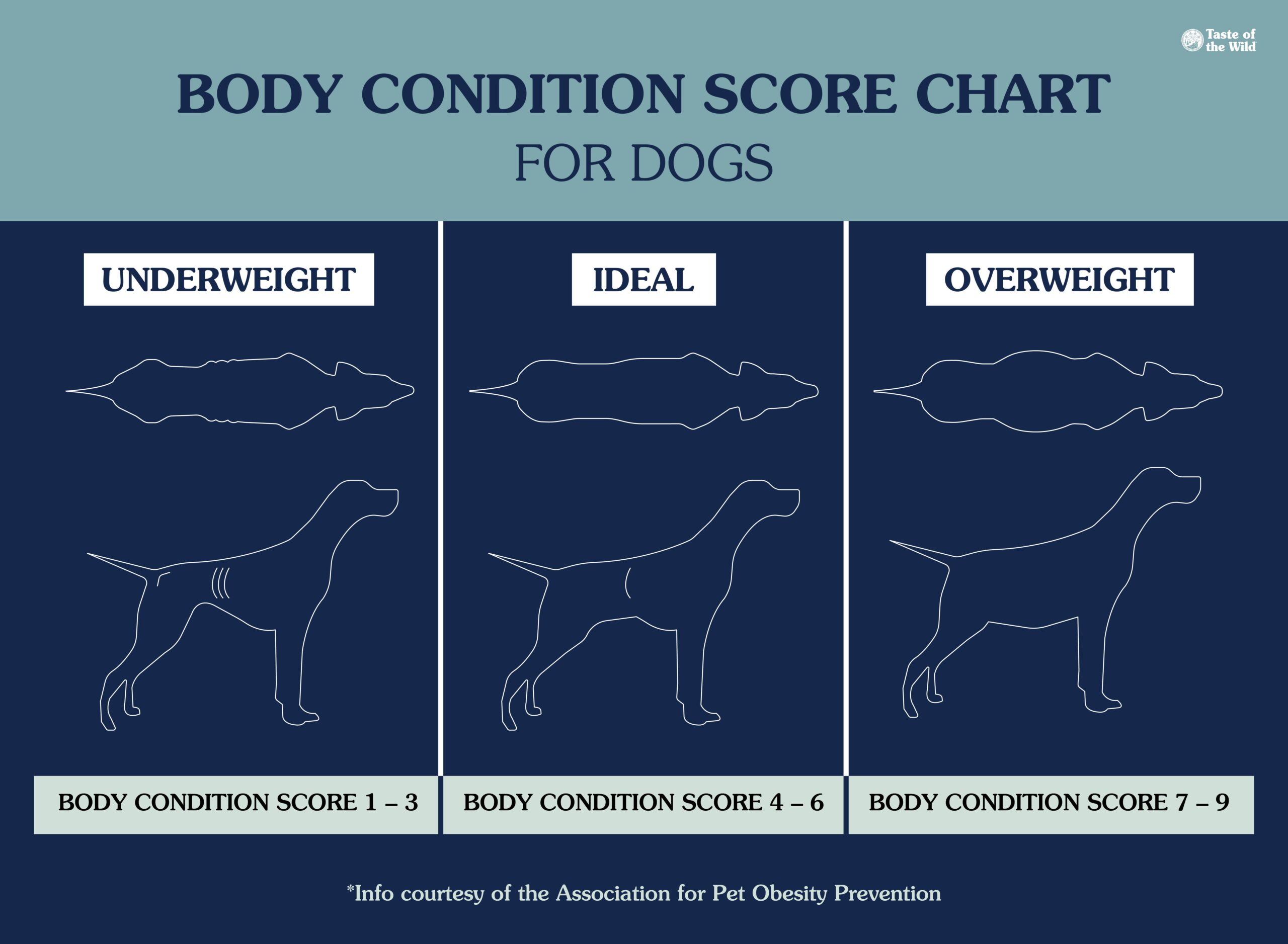
An interior graphic detailing a body condition score chart for dogs with cartoon depictions of underweight, ideal weight and overweight dogs.

When Fido looks up at you with those big, beautiful eyes asking for one more handful of treats, it can be hard to say no — even if they were just asking for treats two hours earlier. Wanting a full, happy, healthy life for your dog is every pet owner’s ultimate desire. But how do you know if your doggo is getting too heavy? Or how do you know what the ideal weight even is for their breed?

Body Condition Score

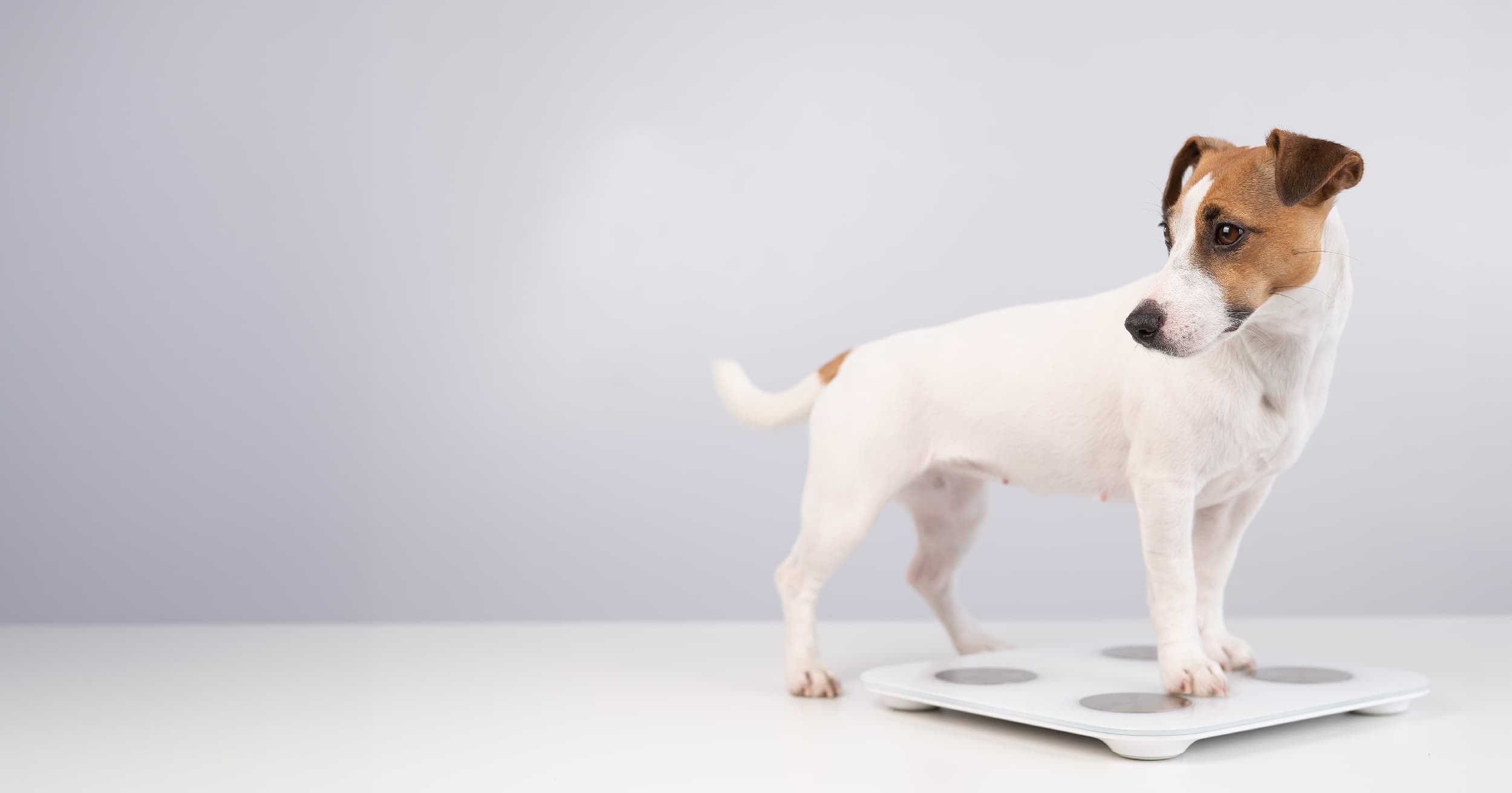
Rather than calculating your dog’s body mass index (BMI), veterinarians recommend pet parents look to the body condition score (BCS). Your pet’s BCS is found by evaluating fat on their ribs, waist and hips. Veterinarians recommend monitoring and evaluating your pet’s BCS once a month to stay on top of any potential issues. An ideal weight will lower your pet’s chance of arthritis, diabetes, high blood pressure, breathing problems, kidney disease and, in some cases, cancer. Making sure your pet is at their optimal weight can also reduce the concern of joint injuries associated with excess weight.

An interior graphic detailing a body condition score chart for dogs with cartoon depictions of underweight, ideal weight and overweight dogs.

How to Evaluate Your Dog’s Ribs

When evaluating the ribs, you should ideally be able to lay your fingers flat to feel the bones. If you need to press your fingertips into their body to locate their ribs, your pet is closer to a 6 out of 9 on the scale. If you have difficulty finding your pet’s rib cage with your fingertips, they’re more likely a 7 out of 9 on the scale. If you can’t find your dog’s rib cage at all using your fingertips, they’re pushing an 8 or 9 on the scale.

Moving in the opposite direction, if you can easily feel your dog’s ribcage and can barely see them, they’re a 4 out of 9. A dog whose ribcage is very visible upon sight and touch are likely under their ideal weight. There are some dog breeds who naturally have very lean body types, like greyhounds, who are an exception to this rule.

A Visible Waist Is Key

Looking past your dog’s ribcage, there should be a visible waist. On fluffier breeds, you should be able to feel their waist or see it when they are wet. Evaluating your pet from the side, you should see a “tuck” by the abdomen starting where the chest ends and going up toward the hips.

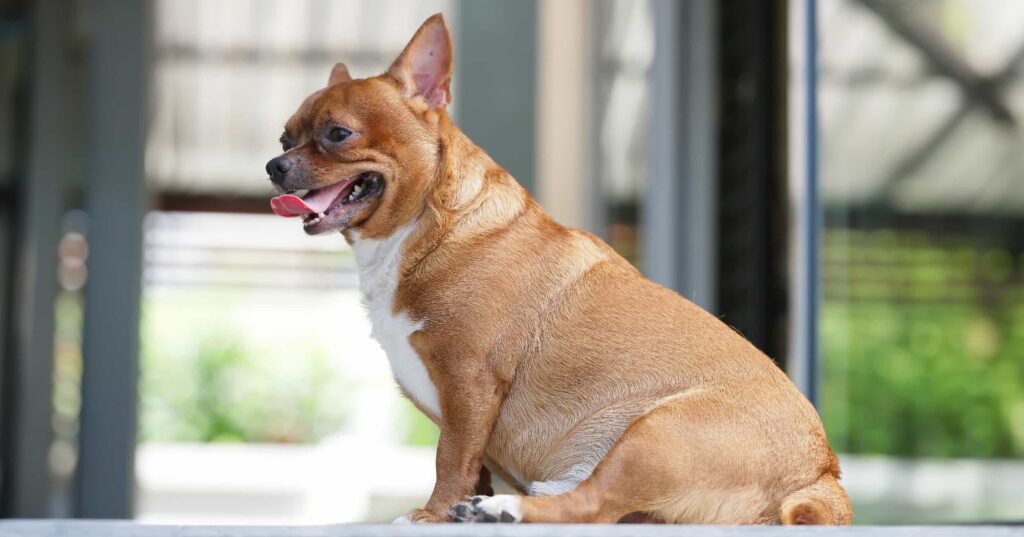
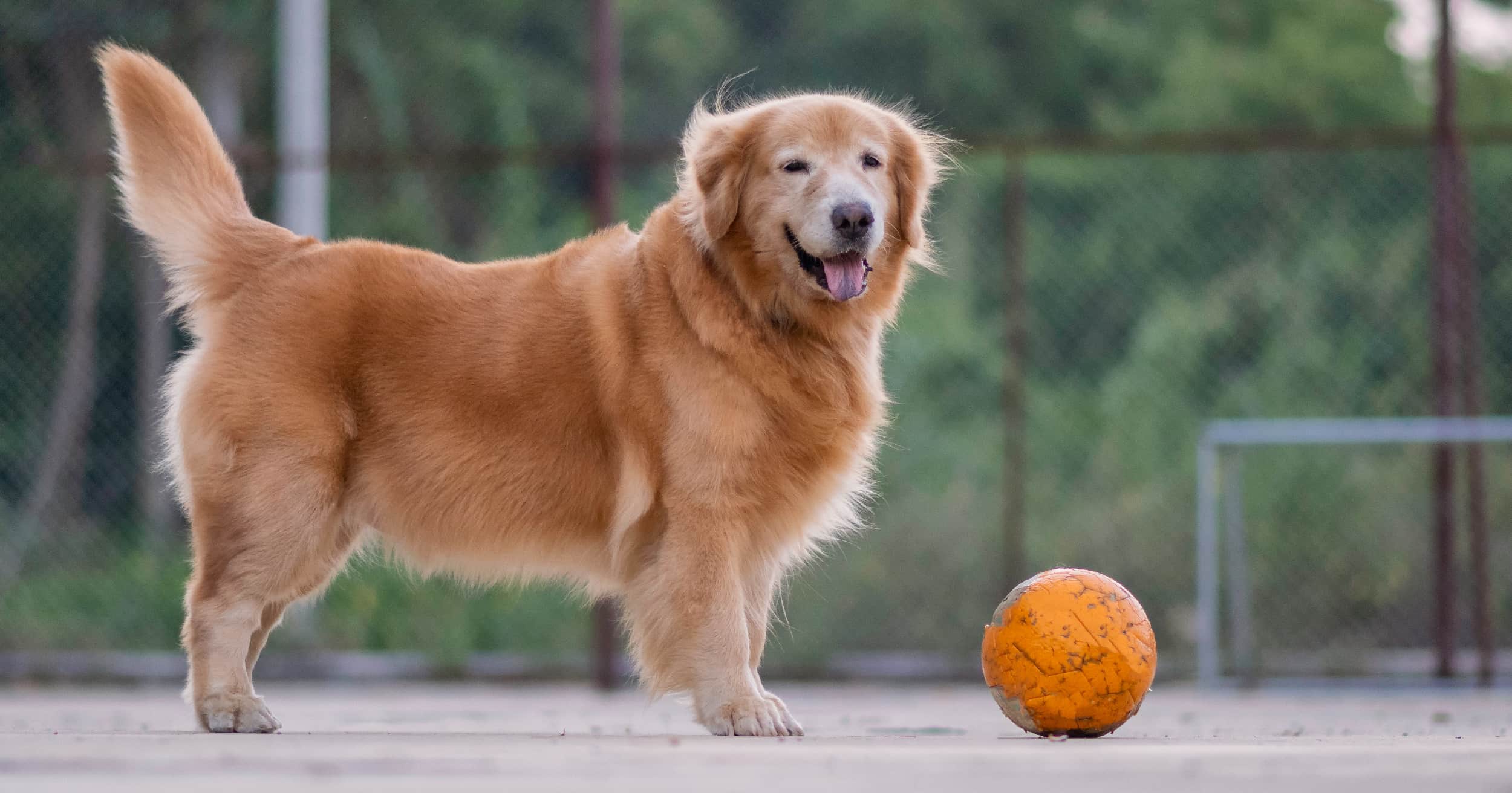
If your pet’s belly hangs lower and there’s not much of a tuck, they are likely on the overweight or obese portion of the scale. If the opposite situation occurs and you’re seeing no belly fat and a prominent tuck, they could be underweight.

Hips, It’s All in the Hips

Lastly, let’s evaluate your pet’s love handles — yes, doggos can get love handles just like we humans do. Ideally, you should be able to feel your pet’s hips easily, with no squishy layers on either side. If you can easily see your pet’s hip bones or there is no muscle felt, they are likely underweight.

Re-Evaluating Your Dog’s Diet

After gauging Fido’s body condition score, what do you think? Has Fido lost too much weight in the last month? Consider how active they’ve been and if their appetite has changed. Make an appointment with your veterinarian to discuss potential underlying conditions that may be affecting your dog’s weight. Fido’s weight loss could be a sign of digestive issues, dental problems, parasites or other underlying medical conditions that require immediate attention.

Does Fido seem a little too pudgy? It may be time to look at how much you’re feeding your dog as well as the types of foods you’re giving them. Reach for complete and balanced dog foods and visit with your veterinarian or nutritionist to discuss how much you should feed your pet based on their breed, age and current weight. Automatic pet feeders can be a solution in helping control the portion size of kibble Fido eats throughout their day. Consider adding an extra walk or two throughout the day, too, to help them shed the extra pounds. Bonus: an extra walk means extra bonding time with Fido!

The right steps today can make for a healthier tomorrow.

A Taste of the Wild Guide: Help Your Dog Survive the Summer

A dog panting while lying on the ground in the sun.

Dogs in the summer. Is there a better combination of our favorite things? Dogs in the summer just seem to go hand-in-paw with fond memories. Whether they’re galloping on a beach, lazing in the sun or leaving a trail of drool from the water dish to the shade of your hammock, dogs in the summer are our happy place.

But that summer sun is no joke for our best pals. Our four-legged friends wear fur coats all year round, so extra precautions should be taken for dogs in the summer sun. That’s why we’ve put together this Taste of the Wild Guide to Summer Dog Safety. Read on for all sorts of hot weather safety tips for you and your dog, from diet issues to “how hot is too hot for walking the dog?”

Hot Weather Safety Tips for Dogs

A dog panting while lying on the ground in the sun.

How does hot weather affect dogs? In a number of ways. Most of them are good, too! More exercise, more outdoor time, more sunny spots to sleep in. But the sun and your dog don’t always mix; hot weather affect dogs negatively as well. Car rides with your dog become more short-term affairs, unless that A/C is ice-cold. Walkies might need to be taken in the mornings and evenings, after the sun has turned in for the day, especially if asphalt or other heat-absorbing surfaces are involved. And when the temperatures race toward triple digits, there’s no such thing as “too much water.”

But how do you tell when “just right” has veered into “too hot” territory? Here are some signs that your dog is too hot, and what you can do to avoid getting there in the first place.

READ MORE HOT WEATHER SAFETY TIPS FOR DOGS

For Many Dogs, Summer Is Ear-Infection Season

A dog walking on green grass with his ears perked up.

Ear infections aren’t the first things that come to mind when we think about summer. But contrary to somewhat popular belief, ear infections aren’t always seasonal. And when you have large, furry or floppy ears, any season can be prime ear infection season.

A dog’s ear infections are often caused by environmental allergies. Warm air allows, pollen, mold spores and other allergens to explode in population and swim around on the wind, causing allergies to flare up. These allergies can inflame the skin that lines the ear canal, opening the door for secondary bacterial and fungal infections.

If your dog is an avid swimmer, excess water in the ear canal can create a dark, moist environment where yeast and bacteria thrive. (Food allergies can cause ear infections, too, but in these cases, the infections tend to occur all year long rather than seasonally.)

So how do you prevent ear infections in dogs this summer? And if prevention doesn’t work, what is the best ear infection treatment for dogs? Flap your ears and listen to our advice!

READ MORE ABOUT DOG EAR INFECTION AND TREATMENTS

Should My Pet’s Diet Change for Summer?

A dog eating kibble out of a metal bowl on the ground outside.

Many dogs seem to lean out when the weather gets warmer. More activity and less lazing around can naturally lead to weight loss. There’s just so much running and hiking and swimming to do! But does a change in season mean a change in diet for your dog?

It’s a good question: What should you feed your dog in the hot weather months? Do active dogs need more calories? Should couch potatoes get the same amount as always? Is a drastic change in your dog’s diet necessary when summer hits? Don’t sweat it, because we have some answers for you!

READ MORE ABOUT WHAT TO FEED DOGS IN HOT WEATHER

Summer Care for Dogs with Heavy Coats

A husky standing outside in the sun in long grass and flowers.

A husky is clearly a dog suited for colder weather. But have you ever considered how other breeds with heavy coats fare in the summer sun? Think of that golden retriever who loves to soak in the kiddie pool. It’s not just our classic winter dogs who might need different care in the summer.

But what can you do to keep dogs cool in the summer? Is a shave in the cards for our fluffier friends? And for dogs who seem to leave a second dog behind every time they shake, how do you keep shedding under control? Here are a few tips about how to keep dogs cool in the summer, from grooming tips to best practices for outdoor fun in the sun.

READ MORE ABOUT HOW TO KEEP DOGS COOL IN THE SUMMER

How to Protect Dog Paws from Hot Pavement

Two people walking a small dog on pavement in the sun.

Your dog’s favorite thing about summer? More walkies! It feels great to get out multiple times a day with your best pal, walking the neighborhood or hiking the trails. But a hot topic you should think about all summer long is “How hot is too hot for your dog?” We’re specifically talking about your dog’s feet, because hot pavement can be dangerous for paw pads.

Walking your dog in the summer heat can be pleasurable for both of you, especially with plentiful shade and water. But even as the sun drops below the horizon, that pavement can hold a LOT of heat. You’re probably wearing shoes or sandals, but your dog’s paws are exposed, and a lot more sensitive than you might think.

READ MORE ABOUT PROTECTING DOG PAWS FROM HOT PAVEMENT

Keep It Fun and Safe for Your Dogs in Summer

A dog jumping through a shallow pool of water.

Summer is a fun time for dogs. The kids are out of school, the days are a lot longer (which means that the walks should be a lot longer, too!), and the options for fun in the sun are nearly unlimited. With just a little care and change in behavior for you and your dog, you can make sure that dogs in summer stay safe and, most importantly, stay happy.

Surprise Things You Can Do to Make Your Cat Happy

A black, white and brown cat sitting in a white room surrounded by confetti and balloons.

Happy Cat Month, pet owners! Yes, you read that right. September marks the annual Happy Cat Month created by CATalyst Council. This celebratory month was established to spread education about the health, happiness and importance of companion cats. So, keeping this in mind, what ways can you surprise your cat and bring them some extra joy this September?

Quality Time Makes Happy Cats

Cats may seem like independent, quiet creatures, but they appreciate socializing with their humans just as much as dogs do. They’re usually a little less vocal than a doggo about needing attention, but they need it all the same. So, our first surprise for Mittens is to add extra spurts of playtime and cuddles throughout your daily routine. Life can get busy, but cat time can be the purrfect excuse to take a much-needed break. Quality time often improves Mittens’ mental health, which lessens anxiety and destructive behavior. An extra ten to twenty minutes here and there adds up. And according to Pet MD, at least one hour of play a day can increase your cat’s life span. Studies have also shown that cuddling your cat can lower your blood pressure and help fight off loneliness, depression, anxiety and stress. Just make sure Mittens is in the mood for kitty cuddles before going all ham on them.

Throw a Party for Your Cat

Happy cats sometimes call for a cat-themed parties for your toe-beaned friend. If your pet is a more social individual, consider inviting some family and friends over for snacks and showering the cat of the hour with all kinds of attention. Whip up a cat-friendly treat or visit a local pet store for the perfect cupcake-like cat treat to go along with the human foods. Top off the party with photo booth props and an area where attendees can snap some pics with Mittens.

If your pet is not a social butterfly, that’s OK! Pick a day where you and/or your household hosts a tiny party for Mittens. You can still surprise them with some yummy homemade treats and photo opportunities around the house. We’re pawsitive that as long as your pet is partying it up with you, they’ll be a happy camper.

Outdoors Is a Natural Cat Happy Place

Cats who spend time outside are stimulated by all the sights, sounds and smells of nature. Try leash training your cat to take them on short strolls through the backyard. They’ll have new areas to sniff, grass to eat and wildlife to watch. Reach for the flea and tick medicine before taking Mittens outside, though, so you don’t bring any parasites back into your house. One way to make your feline unhappy is dealing with literal blood suckers.

Another way to get your cat outdoors and enjoying the fresh air is with the help of a pet tent or a catio. Pet tents can be found at local pet stores or online. This portable option can be set up anywhere outside (or inside). It can be stocked with a water bowl, toys and other comfort items, too, to help Mittens enjoy their time lying in a collapsible shelter outdoors. We recommend setting up the tent indoors first, to help your cat get acquainted with the new item prior to its outdoor use.

An upgrade from a pet tent is a catio. This option is less portable but could offer your pet more space to climb and crawl around in. Catios can be ordered online or created from various materials picked up at the local hardware store and thrift shops. It provides your cat with a stable, stationary enclosure anywhere in the yard. They’re often weatherproofed and can be fitted with multiple shelves, cat hammocks and cat huts. We’re sure Mittens is happy just envisioning this possibility!

Planting Catnip and Cat Grass

Continuing with the nature theme, bring a little outdoors inside for Mittens. Consider planting pots of catnip and cat grass near your cat’s favorite window. Both plants are feline favorites!

Cat grass may look like grass from your backyard, but rest assured it’s not! It’s typically grown from rye, barley, oat, wheat or alfalfa seeds. Cat grass provides your favorite feline with antioxidants, chlorophyll, vitamins and additional nutrients that promote overall gut and immune health. It also aids in removing hairballs and enhances mental stimulation. Cat grass can be found online or at a local pet store.

Catnip plants are a member of the mint family. You can add catnip to a homemade recipe or give it to them raw as a treat. This plant can help reduce anxiety and enhance positive associations to objects, events or locations. Because of its holistic calming effect, some veterinarians recommend catnip when anxious pets must travel. When cats come into contact with the catnip plant, they’ll likely roll around, show increased affection or may play-bite. Do not be alarmed — they’re just showing you how happy they are with their new catnip.

Dental Toys Make a Healthy and Happy Cat

Who doesn’t love a new toy? And when a new cat toy can double as a way to better your cat’s health, it’s a win-win! Add cat dental toys to the lineup of surprises to upgrade your cat’s hygiene habits. From catnip sticks to wiggle worm (plastic) chew toys, there’s a wide array of options at your local pet store or online.

Now, it’s important to note that cat dental toys do not replace a vet visit and teeth cleaning, but they do freshen your pet’s teeth as they play and chew. Cat dental toys can also keep your pet mentally stimulated as they gnaw on something throughout the day. We think Mittens will be delighted to maintain their mouth health and get a new toy to play with.

Ensure Optimal Health for a Happy Cat

Now a surprise Mittens might not be expecting is an annual vet checkup. But it’s worth adding to your September to-do list. By taking your favorite feline in for an annual checkup, you can catch any potential issues early (cats are notorious for hiding pain or discomfort), and this will save money in the long run. Surprise, Mittens! You get to live a healthier, fuller life.

No matter which surprises you choose to bestow upon your furry friend, we’re sure they are going to love the thought and time you put into celebrating this annual holiday. We hope this September enhances the care your cat needs, strengthens the human-feline bond you’ve already established and leads to a lifetime of furry happiness for you both.

Can My Dog Eat That? Corn

An interior graphic with text that reads ‘Can my dog eat corn? Yes (if it’s off the cob)’.

Welcome to “Can My Dog Eat That?,” our series that answers some obvious (and not-so-obvious) questions about what your dog can and can’t safely eat. Today we answer the question “Can dogs eat corn?” Read on!

Like carrots, corn is a common ingredient in many dog foods because of its nutrient content (more on that later). So yes, dogs can eat corn, but only if it’s off the cob and doesn’t have any of the delicious toppings that people love to put on it.

Plain, Loose Corn Is the Way to Go

Corn removed from the cob that doesn’t have any condiments or toppings on it, is a healthy treat for most dogs (in moderation). Similarly, popcorn that’s air-popped and doesn’t have any toppings (e.g., butter, salt, cinnamon sugar) is a delicious treat — just make sure you remove any kernels that didn’t pop.

It’s the other things that may be in corn-based human foods that you need to be wary of. Yummy foods like corn tortillas, corn chips, canned corn, hush puppies, corn dogs and polenta (depending on how it’s made) can be high in sodium (salt). Excessive sodium can cause dehydration, so if your dog does eat a bunch of salty products, make sure they have plenty of fresh water available.

It’s best to avoid sugary corn-based products, too. Foods like corn muffins, cornbread and creamed corn are typically high in sugar, fat, salt or other ingredients that aren’t good for dogs. Remember that some sweet foods (like some tomato-based ketchup products) contain the artificial sweetener xylitol, which is toxic to dogs. So be on the lookout for that, too.

No Corn Cobs or Husks!

Corn on the cob is a sweet, tasty side dish that’s especially good roasted on the grill. But as you finish chomping on the cob, juice running down your chin, don’t be tempted to throw it to your dog. It may look like a good treat for them to chew on, but dogs can choke on the cob and it can cause an intestinal blockage if swallowed.

If you bought some fresh corn in the husk from a roadside stand or from a store, you’re probably not going to eat the husk — and neither should your dog. Husks are hard to digest and, just like the cob, can be a choking hazard or cause an intestinal blockage. Compost the cob and husks instead.

Corn Isn’t Just a Filler

Two of the myths circulating about corn and dogs are that corn in pet food is only there as a filler,  and that many dogs are allergic to corn. These are indeed myths. Corn is used in dog food as a source of protein and carbohydrates in the form of digestible starch. Corn also provides essential amino acids and fatty acids, soluble and insoluble fiber, vitamins, minerals and antioxidants.

It is true that dogs can develop allergies to any meat or grain protein. However, corn isn’t on the list of top allergens in dogs. The allergens that are more likely to cause reactions in dogs are beef, dairy products and wheat, followed by lamb, eggs, chicken and soy. PetMD tells us that food allergies are less common than seasonal allergies or flea and tick allergies, and that only 0.2% of dogs have food allergies. So the risk of a true corn allergy is very low.

It’s also important to know that a food intolerance is different to a food allergy. A food allergy is an abnormal reaction to a normal food due to the dog’s immune system misjudging a safe substance as a disease-causing invader. A food intolerance, on the other hand, does not involve the immune system.

Corn is a healthy treat for most dogs. Just make sure it’s been removed from the cob and doesn’t have any extra toppings or flavorings on it.

If you’re curious about your dog’s ability to eat other snacks like nuts, bookmark our blog!

An interior graphic with text that reads ‘Can my dog eat corn? Yes (if it’s off the cob)’.

RELATED POST: Can My Dog Eat That? Popcorn

Behind the Breed: Airedale Terrier

An interior graphic with three quick facts about Airedale terriers.

Airedale terriers: All the feisty energy of a typical terrier, but in a body that’s three times the size. No wonder they’re often called the “King of Terriers”!

Unlike many breeds that originated in Victorian England, however, Airedales weren’t bred by nobles for hunting purposes. No, the noble Airedale was created in the mid-1800s by the working people of the Valley of Aire, near Yorkshire, to hunt down the large river rats polluting the local rivers. The rats were so pervasive that the town held contests designed to encourage hunting them. Competitive locals cross bred black-and-tan terriers with otter hounds for an ideal water-rat hunter, and the Airedale terrier was born.

This terrier-like instinct to hunt rats expanded to otters, ducks and other water-adjacent game, and the breed’s size, love of water and scenthound abilities made it a breath of fresh, er, air for hunters throughout the Valley Aire and beyond.

But the Airedale’s calm demeanor around people and intimidating size meant that they could be perfect guard dogs for the home and family, so their popularity just kept expanding, eventually crossing the ocean to North America. The first Airedale to hit American shores was named Bruce, in 1881, and the American Kennel Club recognized the breed in 1888.

Dogged War Heroes

Though they’d expanded globally by the time World War I began, the England-based breeds did what good dogs do and helped their Allies. Because they’re sturdy, all-terrain dogs, Airedales were perfect for delivering messages cross-country during the war. The Red Cross used them to deliver supplies all over the front. American soldiers also recognized the Airedale’s wartime qualities, using them as sentries.

Airedale Terriers Are Perfect Family Companions

Today, Airedales have found their place in the home. They remain the largest terrier breed, standing almost two feet at the shoulder and weighing up to 80 pounds. Their wiry coat is virtually shedless, so they appeal to families who aren’t keen on vacuuming constantly. But mostly, they’re so popular today because they’re smart, friendly and patient with children while their unique looks and size offer an inherent protectiveness.

Airedales have proven that they can be trained to almost anything, and they’ve been known to become police dogs, scenthounds and even actors. But Airedales do have that hound-dog streak, meaning that they can be stubborn and determined. Especially if they catch the scent of a river rat!

An interior graphic with three quick facts about Airedale terriers.

National Barks: Badlands National Park

A close-up of Saddle Pass trail at the Badlands National Park.

Leash up for the next National Bark you and your dog need to visit: Badlands National Park in western South Dakota. The varying terrain and sediments throughout the park will leave you feeling like you’ve been transported to a sci-fi planet one moment and the moon the next. You and your hiking hound can truly get back to nature here.

The various formations throughout the park are made up of sandstones, siltstones, mudstones, claystones, limestones, volcanic ash and/or shale — a result of millions of years of deposition and erosion. Through all these ecological changes, visitors and researchers alike have found an abundance of fossils in the area. This includes 28-million-year-old fossils of the hesperocyon, one of the earliest dogs or canids to walk our planet. So, as you can see, it’s only right that your dog experiences the Badlands. Their ancestors once walked those lands, after all. But to ensure you and Fido stay safe, there are a few guidelines to note.

A close-up of Saddle Pass trail at the Badlands National Park.
A close-up of Saddle Pass trail at The Badlands National Park.

Timing Is Everything When Taking a Dog to a National Park

Most of the terrain Fido can walk on at Badlands National Park will be grassless and unshaded, so it’s important to factor in that summer heat when planning your visit. The best time to visit the Badlands is April, May or early June before the heat becomes too unbearable; or, for perfect fall temperatures, head there during September and October.

While this national park is open year-round, you’ll want to take proper precautions if traveling in the summer and the winter. Temperatures can soar up above 110° Fahrenheit during the summer months and as cold as -40° Fahrenheit in the winter. If traveling during the summer, make sure you have plenty of water for Fido (and yourself!), stick to early morning or late evening ventures outside of a vehicle and keep an eye out for when your dog gets too hot so you can immediately seek a cooler location. If hiking or camping in the winter, limit the exposure to the cold and consider snow boots to prevent frostbite or hypothermia for both you and Fido.

Sleeping Arrangements for Dogs at Badlands National Park

A common theme you’ll notice in our National Barks series is camping. This is because pets are not allowed in cabins or public buildings at national parks. Under the starry skies, it is!

The Badlands National Park provides visitors with two campsites: Cedar Pass Campground and Sage Creek Campground. Reservations for Cedar Pass Campground can be made prior to your arrival. Summer is one of the busiest seasons, so if traveling during June, July or August, consider booking your reservation as far out as March. This will help ensure there’s a spot available for you and Fido.

A blue and white tent set up at a campground at the Badlands National Park.

At Cedar Pass Campground you will have access to covered picnic tables, showers ($0.50 for 4 minutes), running water and toilets. You’ll also be mere minutes from the visitor center and café. Cedar Pass Lodge handles all the reservations and questions for the campground.

Sage Creek Campground is a free, first-come first-serve location. You’ll have access to covered picnic tables and pit toilets, but make note to take extra fluids for you and Fido. There is no running water at this location. This campground is located off the unpaved Sage Creek Rim Road, which is sometimes temporarily closed to travelers when winter weather or heavy rains roll through — something to be cognizant of when planning your trip.

Pets must be kept on a leash no more than six feet in length at the campgrounds and throughout the entire park. Additionally, remember to clean up after your dog and properly dispose of pet waste during your stay.

Hiking with Your Dog at Badlands National Park

When walking up to hiking trails, boardwalks, most overlook areas and public buildings, you’ll notice “No Pets Allowed” signage. But don’t worry. There’s plenty of beautiful scenery to see from walking or driving throughout the Badlands. The Badlands Loop Road alone provides 30 miles of walking through the heart of the park!

Pets are allowed on all public roads (paved and unpaved) and in the campgrounds mentioned above as well as:

  • The grassy area outside of Ben Reifel Visitor Center (bonus: there are picnic tables at this location)
  • Roadside pullouts and parking lots
  • Bigfoot Pass Overlook picnic area
  • Conata picnic area

Take proper care when hiking on paved and unpaved roads. Watch out for cars. Move out of the way of oncoming traffic. Keep a safe 100-foot distance from all wildlife — big or small. If the wildlife notices you, you’re too close for comfort. And lastly, always take extra fluids for you and Fido while walking. It’s important you both stay hydrated no matter how far you hike.

Due to the lack of grassy or shaded options along the walk, this is why it’s important to make sure you either choose a month where it’s cooler or hike only in the early morning or late evening daylight hours. The pavement will be hotter than the outside temperature due to its reflective nature.

A scenic view from the Badlands Loop Road near Ben Reifel Visitor Center.
The view from The Badlands Loop Road near Ben Reifel Visitor Center.

Roadtripping Through Badlands National Park with Your Dog

Driving from one end of the park to the other takes about an hour and a half. Wildlife could prolong that travel schedule though, so be sure you and Fido keep an eye out for any movement outside of the vehicle. Unpredictable and speedy wildlife make it imperative that travelers follow designated speed limits throughout the park. You can be driving along without a critter in view and blink to find a bighorn sheep darting in front of your vehicle.

If you see something you want to explore further while on the drive, remember Fido must be able to go with you. Do not leave Fido in a parked car as a compromise — even if it’s just for a few minutes. An air conditioned, running vehicle can become a dangerous piece of machinery unattended. You never know when a car could malfunction, nor can you anticipate how your dog will behave without you inside the vehicle. They could accidentally bump the gear shifter, gas pedal or emergency break. If you anticipate you’ll want to hike the trails throughout your drive, we recommend traveling with friends or family. You can take shifts on who walks a trail while the other hikes a dog-friendly road with Fido.

So now, the only other question you may have is “How long should I plan to stay at the Badlands National Park?” We recommend mapping out two to three days for exploring and hiking pet-friendly areas. Yes, you can drive straight through the park within an hour and a half. But there are roads to hike, fellow traveling doggos to greet and memories to make at this 244,000-acred park full of incredible geological formations, wildlife and fossils dating back to the Eocene and Oligocene epochs.

RELATED POST: National Barks: How to Take Your Pet to Yellowstone

Will Cats Notice It’s Back-to-School Time?

A black-and-white cat staring out a window.

Dogs are notorious for missing their owners two seconds after their human steps out the front door, sometimes with destructive results. But will your family’s favorite feline have separation anxiety after the kiddos go back to school? Fluffy was the go-to adventure buddy for your kids’ summer shenanigans, after all. So, it’s only natural that your cat will miss their tiny humans when the daily routine is altered later this August. But with cats, sometimes it’s hard to tell how they really feel.

Rest assured, your cat misses you (and the kids!) when you’re gone — especially if the absence is a drastic shift from the norm, like during back-to-school time.

Like dogs, cats are social creatures who crave consistency and have unbreakable bonds with their humans. They just have a different way of expressing themselves than our slobbier companions. Some of those ways might be easy to miss, and they can vary from cat to cat.

Cats Act Differently When They Miss You

As schedules pivot and their daily playmates go back to school, every cat might react a bit differently, but most will note the change if they’re suddenly alone more. They may experience some level of loneliness, depression or anxiety — similar to how a human might feel during changes in their environment. This separation anxiety could show up as:

  • Excessive meowing
  • Behavior changes like eating less or litter box accidents
  • Extreme excitement when the humans return
  • A swipe of the paw when the humans return
  • They may try to go with you the next time you leave

One reaction is not more worrisome than another. It’s simply their way of responding to the situation at hand. If you notice a drastic or lingering change in their eating or bathroom habits, contact your veterinarian.

Your Kids Can Be Part of the Solution

We recommend informing your kiddos of these potential reactions so they can be sympathetic to however Fluffy reacts. Let Fluffy come to the kids at their own pace when everyone returns home in the afternoon. Your pet will likely need grace and patience as they adjust, not to mention lots of attention when everyone is back together.

Prep Your Kitty for Back to School

What other ways can you help your cat adjust? Advance preparation. Making small shifts during the weeks ahead could help ensure the changes are not as jarring to your cat’s nervous system.

Most children spend about six to seven hours per day in school (not including after-school programs). In the time leading up to school starting back up, try leaving the house for short amounts of time. Start running errands or adventuring around town for an hour or so each day — slowly increasing the time you spend away from the house.

When arriving back home, greet Fluffy with love, affection and words of affirmation that all is OK. You’re letting them know they are still loved and that the tiny humans will return home — no matter how long they may be gone throughout the day.

Provide Sources of Entertainment for Your Cat

Add interactive toys around the house so your pet can stay entertained without their human playmates. These could include automatic laser pointers that come on throughout the day, catnip hide-and-seek toys or wall shelves for climbing. Before leaving the house, teach your cat how to use each option. Upon returning home, be sure to still spend one-on-one playtime with Fluffy for added mental stimulation.

Consider setting up a bird feeder outside a safe, secure window where your cat frequently looks out. Place their cat tree or pet bed nearby so they can sit in comfort and watch birds or small animals eat the food. It’s another great way to keep your cat entertained and happy throughout the day!

Warm Up to the School Year Routine

Visit with your kiddos about a new school year routine with Fluffy. Find guaranteed pet playtimes for showering your cat with attention that make sense with your family’s schedules. Whether it’s after breakfast before the bus arrives or after school before they start homework, Fluffy will be ready for a new consistent setup. So will the kids as they ease into their new fall routine.

Bonus tip that can help the whole family: On the days leading up to the new school year, try getting your kiddos and your cat on this new sleep, wake up, play and leave schedule. While the kids aren’t leaving for a full day of school quite yet, it can help your cat adjust to the new agenda before your kids start school. It might just help the kids adjust to it as well!

As Fluffy and the tiny humans adjust to their new routines, remember you could notice an increase in affection from your cat whenever the kids re-enter the house. Or you could notice a slightly standoffish cat who is trying to show the kids they didn’t like having their trusty playmate gone all day. Your cat’s reactions are completely normal. Once Fluffy understands that their playmates are back home for the evening, they’ll let go of any grumpy cat emotions and be ready for an adventure. Fluffy just missed their tiny humans is all.