

Sustainable Gift Ideas for Dogs

A dog lying on its owner's lap on a couch next to text that reads, ‘Maybe you are the best gift of all’.

The holidays are fun for human and dog alike (usually). But as anyone who has been on trash duty the day after the fun is over knows, they can also be pretty wasteful. So much plastic, non-recyclable wrapping paper and other landfilling refuse piles up. What’s an environmentally friendly dog owner to do? Come up with some sustainable gifts for dogs, of course.

What Exactly Is a Sustainable Dog Gift?

“Sustainability” is a pretty broad term, but for our purposes, we’re focusing on the environmentally friendly aspect. Sustainable dog products largely don’t produce more waste. They’re fully recyclable, made with organic materials or free from dangerous chemicals and plastics. Luckily for pet parents, dogs don’t require much to be happy. That doesn’t stop us from lavishing them with gifts, though. On that note, here are a few dog-friendly sustainable gift ideas for you.

Recycled Dog Leashes

There are a number of eco-friendly, organic or sustainable dog leashes out there. Cycle Dog Leashes are made from recycled plastic bottles right here in the USA, and as an added bonus, the clasp doubles as a bottle opener. Admittedly, that last feature is more for the dog parent than the dog, but any excuse to buy a new leash is an excuse for…

More Walks is More Sustainable

Getting out into the fresh air more often is a gift that any dog will love, and the benefits are plentiful for you, your dog and the environment. Obviously, exercise is good for both of you. More walks mean more time together, which is likely the thing your dog wants most of all. But it’s also an opportunity for more social interaction and training. And it doesn’t cost you or the environment a single thing!

A Dog Bed Made with Love

These MollyMutt dog beds are essentially mattress covers with “stuff-sacks” that you can fill with your own materials. Which means that instead of tossing your old towels, T-shirts or other clothes-like objects in the trash, you can give them a good wash and literally make your dog’s bed out of them. You cut down on the trash pile, make some space in your closets and your dog gets to sleep on something that was close to his or her favorite person. Even after washing, your dog can smell whose concert shirt that was, after all.

Make a Donation in Your Dog’s Honor

Rather than waste wrapping paper, tape, ribbon, whatever packaging the toy came in, etc., consider making a monetary donation to a local animal shelter. Many shelters put photos of the “donors” up on their wall, so your dog could be a minor local celebrity, which is certainly good for some extra head pats from strangers. If your shelter prefers donations of food or other supplies, maybe your dog would enjoy a trip to the pet store to help pick out a few items. Sustainable and eco-friendly, of course.

Extra “You” Time Is the Most Sustainable Dog Gift of All

Your dog wants nothing more than to spend time with you, which makes YOU the best gift of all. Make an extra effort for more snuggle time this holiday season and beyond. More couch time, more playtime, more walk time….more you time will make both of you happy, and maybe even a little healthier. Isn’t that what the holidays are all about?

RELATED POST: WHY WE’RE THANKFUL FOR DOGS

Do Cats Need Special Care in the Winter?

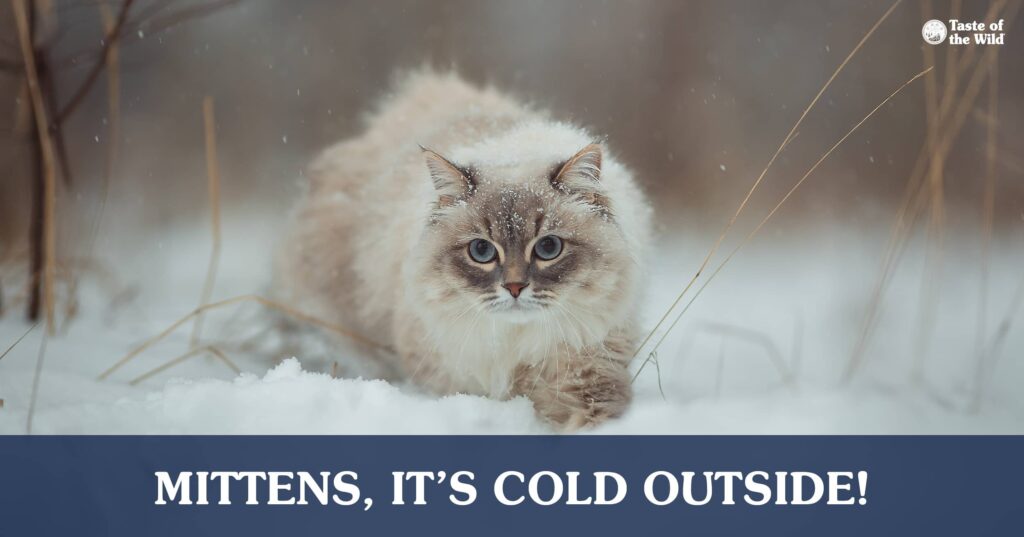
A cat walking outside through the snow.

Mittens, it’s cold outside. It’s time to discuss what kind of special care might be needed for cats this winter.

First, we need to look at what kind of life your cat leads to provide the best guidance. Are they an indoor-only cat? If so, there are a couple of changes you’ll need to make this coming season. Are they an indoor/outdoor cat? Leading a double life requires some extra precautions. Let’s dig through some tips before the snowplows have a chance to warm up their engines.

Indoor Cats Still See Changes in the Winter

All cats have a natural instinct to store energy and conserve fat reserves as soon as the weather becomes colder. You may notice Mittens sleeping or lazing about more in the winter as a result.

Cold weather may mean it’s cooler in your house during winter than the summer, and if that’s the case, you’ll notice your cat’s appetite increase. Studies suggest indoor and outdoor cats will eat up to 15 percent more in the winter due to the extra energy they need to keep warm. So, make sure you add some extra kibbles to your favorite feline’s food bowl. Consult with your local veterinarian if you have any questions about how much is too much.

Speaking of warmth, cats prefer to stay nice and toasty. If Mittens had opposable thumbs, they’d set the thermostat to around 70 degrees to stay cozy all winter long. However, since they’re not paying the utility bills, 70 degrees may not always be achievable. Your cat will do okay in rooms hovering between 50 and 60 degrees Fahrenheit, but be sure to provide them with plenty of blankets or other sources of heat. Your cat needs to maintain a body temp of more than 90 degrees in order to ward off hypothermia. Added tip: Have a fireplace? Make sure it’s covered by a glass screen. Mittens will want to sit as close as possible to the fire and you don’t want them to get burned.

Indoor cats will grow a winter coat if they are exposed to enough sunlight, because winter coats are a response to the amount of daylight we have during winter months and not necessarily the temperature. For longer-haired felines, reach for their brush more frequently to help them prevent any potential tangles or matting. No matter how many times a cat grooms themselves, longer fur can still get tangled.

Indoor/Outdoor Cats Need Double Care During Winter

Some cats just yearn to get outside, no matter the season. If you have an indoor/outdoor cat, many of the same recommendations are applicable: You’ll need to increase their kibbles during winter, and you’ll need to provide them with sources of heat to maintain that internal body temperature of 90 degrees.

But also remember that no cat should be left outside without a shelter once temperatures begin falling below 30 degrees Fahrenheit. You can make your own weather-proof cat shelter or you can purchase one from the store. Most pet stores, feed stores and big-box stores sell houses with your cat in mind.

You’ll also want to insulate the pet house with straw — not hay. Straw repels moisture and keeps your cat warm. Keep adding straw throughout the winter months, as your cat will likely begin to compress the straw over time.

It’s important to note that cats have a tendency to find warmth in unexpected spots in addition to the shelters or blankets you provide. Before starting your car in the morning, give your hood a few loud thumps and look to see if a cat is on the move. Your cat or even stray cats could be curled up near your engine in an attempt to stay warm.

Be sure to switch to heated food and water bowls during the winter to prevent water or wet food from freezing. Rubber bowls can be a less expensive alternative, as they won’t crack like plastic containers when water freezes in them, but food and water can still harden. This brings us to our next point — you’ll want to provide food and water daily and make sure that nothing is frozen if you’re not using a heated bowl. Remember: Cats will eat more the colder it gets. All that extra food is going to help sustain their internal temperature.

Lastly, even exclusively outdoor cats still need flea, tick and heartworm prevention medicine or collars. As crazy as it sounds, many parasites are active during the winter months, no matter how cold it may get. Year-round parasite preventives not only help safeguard your pet from disease, but they can help protect your family’s health as well.

Prep Your Winter Cats for Winter Storms

If there’s a winter storm on its way, help care for your outdoor kitties or neighborhood strays by avoiding salt or other snow/ice melt products that aren’t approved for pets. Non-approved snow removal methods can irritate food pads, and they can also be lethal to all animals when licked off paws or ingested from melting puddles. Antifreeze is another deadly chemical to keep out of your cat’s reach during winter.

Next, try to clear a path in and out of the cat’s outdoor shelter, add extra straw to the outdoor house and consider building a feed station to shield your cat’s food and water from wind and snow.

Finally, don’t forget to get all your necessities — including extra food for you and Mittens — prior to the storm rolling in. You’ll want to make sure all humans and pets are hunkered down before the bad weather arrives.

While we wish that every cat could stay safe and snug inside during the winter months, some cats love the winter weather and insist on being outside. But whether your cat experiences winter only from the warm side of the window, or they prefer walking on the wild side all year long, you can keep them safe and comfortable with just a few winter weather updates to their care.

Can My Dog Eat That? Ham

An interior graphic with text that reads ‘The Verdict: Can my dog eat ham? They probably shouldn’t’.

Welcome to “Can My Dog Eat That?,” our series that answers some obvious (and not-so-obvious) questions about what your dog can and can’t safely eat. Today we answer the question “Can dogs eat ham?” Read on!

You’ve been busy in the kitchen all day, cooking delicious foods like potatoes, roast turkey and sugar-glazed ham, and they’re ready to serve at the dinner table. You’re gone 30 seconds to get the side dishes, and you come back to find your drooling dog staring longingly at the ham. Or, if your dog’s a mischievous one, you find them on top of the table helping themselves.

So should you give in and throw your dog a tidbit of ham? Should you be concerned if they devoured half the ham before you could chase them away from the table? Well, anyone (human or canine) is going to feel bad after eating half a glazed ham. But there are a few reasons why even a small amount of ham isn’t a good idea for dogs.

Most Ham Isn’t Low Fat

Sure, you can buy 96 percent fat-free sliced ham, but most ham is not considered a low-fat food. Fat can be difficult for dogs to digest, and too much fat at one time can cause an upset digestive tract (e.g., vomiting and diarrhea). If your dog helped themselves to the holiday ham, there’s a good chance pancreatitis will ensue, as suddenly eating a high-fat meal is a common trigger. Not to mention, if your dog is regularly snacking on ham or other high-fat treats like coconut, the high fat intake can also lead to obesity.

Sugar, Salt and Preservatives, oh My

Depending on how it was prepared, ham can contain a high amount of sugar — which is not healthy for dogs. But the bigger problem is that ham is high in sodium (salt). The preservatives used to cure ham are also sodium-based. Too much salt in their diet can contribute to hypertension (high blood pressure) and heart disease. If your dog has chronic kidney disease, they should avoid ham (and other high-sodium foods) because hypertension can damage their kidneys further. Salt can also be toxic to dogs if they consume excess amounts of it, causing vomiting, diarrhea, dehydration, excessive thirst and urination.

How much sodium is in ham? According to one example on USDA FoodData Central, a 2 oz. portion of “maple glazed honey coat ham” contains 571 mg of sodium. That’s over twice the daily allowance of sodium (200 mg) recommended by the Committee on Nutrient Requirements of Dogs and Cats (for adult dogs weighing 33 pounds and consuming 1,000 calories per day). This means it doesn’t take much ham to put your dog over their recommended sodium intake for the day.

Ham Bones Are Not Chew Toys

A cooked ham bone may look like a tasty chewy treat for your dog, but any cooked bone can splinter into sharp pieces and puncture parts of their digestive tract. Pieces of bone could also cause a blockage in their digestive tract that requires surgery. Make sure you dispose of ham bones and anything used to wrap or tie meat (e.g., strings, bags, packaging) in a sealed trash bag and then in a container that your dog can’t get into.

The bottom line is that the very occasional tidbit of ham is not likely to cause problems for a healthy dog. Just don’t make ham a regular part of your dog’s diet — particularly if they’re already overweight. Give them a healthy treat instead.

An interior graphic with text that reads ‘The Verdict: Can my dog eat ham? They probably shouldn’t’.

RELATED POST: Can My Dog Eat That? Hot Dogs

Behind the Breed: Weimaraner

An interior graphic detailing three quick facts about Weimaraners.

Weimaraners get the nickname “Gray Ghost” because of their silvery-gray coat color, light-colored eyes and sneaky hunting abilities. The grand duke of Weimar, in Germany, developed Weimaraners (we see what he did there) in the early 19th century by crossing bloodhounds with other hunting dogs.

Weimaraners are a large, long-legged breed that can weigh as much as 90 pounds (males). Their deep chests make them at a higher risk of bloat, so any food-gobbling behaviors should be discouraged. They are obsessed with their people, which is why they’re often given the “Velcro dog” label. If you want a dog who’s by your side for every activity you do, a Weimaraner is the perfect dog for you — and they’re great with kids, too.

Much like German shorthaired pointers, these athletic and intelligent dogs make excellent running and hunting partners. Their abundant amounts of energy make them well suited to both a morning spent pointing at and retrieving game birds and an evening run in the woods.

To reiterate, exercise is life for Weimaraners. So unless you want a dirt track in your lawn because your Weimaraner is channeling their inner greyhound, it’s important to use up all of that energy with daily (or even twice daily) walks or runs. And because they’re also very smart, you need to provide plenty of mental enrichment, too. Weimaraners excel at agility, tracking and other dog sports, which is a good way to get them to exercise and use their brains.

One notable behavior that some, but not all, Weimaraners display is nooking. Thought to be a self-soothing or calming behavior, nooking is when the Weimaraner kneads or suckles on a blankie, soft toy or other soft object.

An interior graphic detailing three quick facts about Weimaraners.

A Taste of the Wild Guide to Dog Obesity

A man rubbing the belly of a dog lying on a bed.

Dog obesity is a serious issue facing dogs and their owners, and it’s only becoming more prevalent. A 2022 survey by the Association for Pet Obesity Prevalence revealed that 59 percent of dogs in the U.S. are classified as overweight, a 3 percent increase from 2018. Since only 36 percent of dog owners think that their best pal is overweight, the issue of dog obesity does not appear to be going anywhere anytime soon.

But how do you tell if your dog is overweight, or worse? What can you do about your dog’s body weight? And how much does it matter if your begging buddy is classified as obese? Our Taste of the Wild Guide to Dog Obesity can help answer some of your questions, but when in doubt about obesity in dogs, dog diets or any other health issues, consult your veterinarian.

How to Tell If Your Dog Is Overweight

A man rubbing the belly of a dog lying on a bed.

As proven by the survey we mentioned earlier, many dog owners don’t know if their dog is overweight. How do you tell if a little baggage around the belly is natural or if it’s excess for your dog? First, an adult dog’s weight isn’t the only thing you need to measure. You should start by consulting a Body Condition Score System (BCS) chart and comparing it to your dog’s ribs, waist and hips. Veterinarians recommend monitoring and evaluating your pet’s BCS once a month to make sure you stay ahead of the increasing pounds.

READ MORE ABOUT BODY CONDITION SCORING AND YOUR DOG

Do Overweight or Obese Dogs Really Need to Lighten Up?

A small dog standing on a scale.

If you determine that you do have an overweight dog on your paws, is that such a bad thing? Someone coined the term “fat and happy” for a reason, so is it really necessary that your overweight dog slims down? Well, yes. Extra pounds unequivocally mean extra health risks for your dog, and researchers have proven that dogs with an ideal BCS live an average of 2.5 years longer than overweight dogs of similar size and breed. If less weight means more years with your best friend, why wouldn’t you work toward that long and happy dog life? Here’s more information about that research along with some tips for getting started slimming down your overweight dog.

READ MORE ABOUT WHY OVERWEIGHT DOGS SHOULD SLIM DOWN

6 Tips to Stop Your Dog’s Begging and Help Them Lose Weight

A small dog begging with its front paws up on its owner's legs.

Talking about helping your overweight dog slim down is easy; actually doing it is much harder. Have you tried staring into those big begging eyes when they’re pleading for a sliver of sausage or a bite of bacon and saying “no”? Easier said than done.

We often can’t resist slipping them just a tiny bite of our dinners. But those bites add up, and when the scales start to tip, you need to shut them off cold turkey. It might be time to have them help you by training them not to beg in the first place.

Need some tips on curbing your dog’s begging habits? We have the blog for you.

READ MORE ABOUT TRAINING YOUR DOG NOT TO BEG

How to Tell If Your Dog Has Diabetes

An overweight older dog standing in front of a soccer ball outside.

Canine obesity leads to a plethora of health problems, and diabetes is one of the chief concerns when the walk becomes a waddle. But a dog doesn’t have to be overweight to have diabetes. Knowing the warning signs of diabetes can go a long way toward preventing it or letting the disease get out of hand, but prevention is always the best medicine.

Of course, sometimes your dog has diabetes, and it needs to be managed. The good news is that dog diabetes isn’t a death sentence; with proper care and management, even diabetic dogs can live long, healthy lives.

Here’s our post about the signs of diabetes and everything you should do to prevent diabetes in dogs, and care for those who have the disease.

READ MORE ABOUT THE WARNING SIGNS OF DIABETES IN DOGS

Increasing Numbers of Pudgy Pooches Are Tipping the Scales

Two overweight dogs lying on the floor next to each other.

Despite the best efforts of veterinarians, the number of overweight or obese dogs is increasing faster than the numbers on the scale. Canine obesity is an ever-increasing problem for a number of reasons, but the average dog’s diet is a leading culprit. Of course, diet isn’t just the cause; it’s also the solution. Knowing how to feed a healthy diet is key to keeping your dog healthy for years to come. But that knowledge seems to be lacking in many dog households these days!

Here’s a look at the growing trend of overweight dogs and what pet owners can do to reverse it.

READ MORE ABOUT OVERWEIGHT OR OBESE DOGS IN AMERICA

Excess Body Weight on Dogs Gets in the Way

A dog on a leash walking with its owner through a park.

As dog owners, our main goal is for our best friends to be happy and healthy. Knowing how to tell if they’re pleasantly plump or upsettingly obese is the first step toward fulfilling that goal.

But there’s more to the prevention of excess weight on dogs than simply noticing if the scales are tipping over. A healthy diet, plenty of exercise, regular vet visits and other good habits will help your dog live a long time, with a high quality of life, by your side.

And who could ask for more?

Why We’re Thankful for Our Pets

A dog lying with its head in its owner’s lap on the floor next to a Christmas tree.

What are you most grateful for this Thanksgiving season? If your pet(s) made the list, you’re not alone! Let’s dive into all the reasons we’re thankful for pets this season and beyond.

We’re Thankful That Pets Bring the Funny

Laughter relaxes our body, boosts our immune system and lowers our blood pressure, epinephrine and glucose levels. We never know what our pets will do next or when they’ll provide us with a good laugh. Just off the top of our thankful, chuckling heads, we’re thinking about:

  • Unexpected zoomies
  • Those times they think they’re ninjas, trying to sneak people food in plain sight
  • Talking to their favorite toy and carrying it around like a baby
  • The endless chasing of their elusive tails

It’s an endless parade of laughs and giggles trying to figure out what goes on in those cat and dog brains. And we love every minute of the comedy fest.

But they offer health benefits beyond the healing power of comedy. Research shows that simply being around our pets decreases levels of cortisol (a stress-related hormone), which leads to reduced feelings of loneliness, anxiety, depression and/or symptoms of PTSD. Petting an animal for at least 10 minutes at a time can provide us with comfort and pause. That brings us back to the present moment. Simply thinking about our favorite fluff can immediately boost our mood. Did you just think about your pet as you read that? Did you feel that glimmer of joy? We bet you did.

We’re Thankful for the Unconditional Love Pets Provide

Pets provide us with unconditional love, no matter how we look, who we voted for or how many Instagram followers we have. Returning home from a long day at work, our pets are the first to greet us with wet, slobbery kisses or headbutts. When we’ve had a bad day, our pets sense it and snuggle up to help provide us with comfort. They love us for who we are and the care we show them. Pets also show us how deeply we can love another being, too! They’re part of our family, after all.

We’re Thankful For All the Jobs Our Pets Do

Our pets may work many jobs, being there for us in ways that they might not even be aware of. With a pet, you don’t have to wonder if the mail has been delivered or if your houseguests have arrived. They’ll be the first to alert you to someone or something in the area. Guard pet on duty!

You’ll also never be without a furry bathroom attendant. They may not have opposable thumbs to fetch you another roll of toilet paper, but by golly they’ll make sure you’re not without company.

If you’re cold in bed, there’s always a fluffy foot (or arm, chest, back and neck) warmer ready to snuggle in and raise the temperatures. Sometimes whether you want it or not!

Lastly, they are great at listening to our problems and comforting us in our times of need; they maybe don’t understand, but they also don’t interrupt when we spill our hearts. They don’t know it, but many pets wear the furry hat of an in-home therapist. We are grateful for each and every hat they wear.

We’re Thankful Our Pets Get Us into Shape

To quote Sir Isaac Newton, a body in motion stays in motion. The more active we are with our pets, the better it is for their health and our health. Between walking the dog or dragging a ribbon around the house for the cat to chase, we’re getting those steps in! Need ideas for staying active with your pet in cooler weather? We’ve got you covered.

Adventures Await Us When Pets Are Around

Our pets are always up for an adventure, and we can learn from their examples! Cooking in the kitchen, a furry tail is close behind you. Ready to rake a pile of leaves? You know Rover’s nose is pressed up against the back door eager to help. There’s not much your animal won’t accompany you with around the house. Pets who love adventuring outside of the neighborhood also make great companions for running errands or sightseeing. Oh, the adventures that await us!

We’re Thankful to Pets for Helping Develop Our Younger Generations

Pets help teach our younger family members how to be responsible. Whether they’re helping refill the water bowl or they’re being diligent about playtime with Rover, our young ’uns learn to understand consistency and obligations through the power of pets. Caring for an animal gives a child a sense of feeling valued and grows their self-esteem. Pets can also teach children the importance of patience, trust, compassion and respect. These are just some of the many benefits of raising kids with pets.

Did we miss any reasons YOU might be grateful for your pet(s)? Follow us on Facebook, Instagram and X (formerly Twitter), and let us know why you’re grateful for your animal companion. Your pet photos and stories are something we’re also grateful for!

What Is Feline Herpesvirus in Cats?

A veterinarian using a stethoscope on a white cat lying on a table during an examination.

The vet just came in to deliver news that your favorite feline has FHV — feline herpesvirus. Initially, panic might set in as your thoughts are, “How? What does this mean for Mittens? What can I do to give my fur-baby the best life possible?” It can be a lot to take in. But know that Mittens can lead a long, healthy life with proper care. More than 50 percent of cats have FHV, with many of them showing few to no signs throughout their lifetimes.

What Is Feline Herpesvirus?

Feline herpesvirus is a common, uncurable virus that causes upper respiratory infections in cats. It’s contracted from other infected cats when your cat has come into contact with an infected feline’s saliva, nose or eye discharge. The virus can live on bedding and grooming tools for 1–2 days, so be sure to talk to your local pet groomer about your cat’s health prior to your visit and ensure that bedding is thoroughly cleaned if giving it to another cat owner. FHV is not transmittable to humans or dogs.

Common Signs of FHV

FHV symptoms can lead to upper respiratory infections or cat flu. While the infection can be acute, the virus goes into a latent stage in the nervous system and is only triggered when a cat becomes stressed. A cat with FHV can have mild to severe symptoms, including:

  • Eye discharge
  • Pink eye
  • Sneezing
  • Nasal inflammation
  • Runny nose
  • Drooling
  • Pain or irritation in the throat
  • Exhaustion
  • Loss of appetite
  • Fever
  • Coughing

Rare Symptoms of FHV

In rare instances, FHV can cause keratitis and FHV-associated dermatitis. Keratitis is essentially a chronic infection and inflammation of your cat’s cornea. Symptoms involve increased tearing, squinting or rubbing of the eye. Your local veterinarian can help determine if you’re dealing with an upper respiratory infection that has led to eye discharge or if you’re looking at keratitis. Keratitis requires additional medication to get your pet on a healthy track.

FHV-associated dermatitis is also rare. In addition to the common symptoms of FHV, cats with FHV-associated dermatitis develop lymph node enlargement or ulcers in the eyes, mouth, face, trunk, footpads or knees. Cats with FHV-associated dermatitis can usually expect a good prognosis as well. With the help of your veterinarian, cats can recover from FHV-associated dermatitis within three weeks or less. Keep in mind some cats may remain carriers or be prone to relapses. Veterinarians recommend being mindful of these symptoms and reaching out when signs first appear for the quickest recovery times.

Testing for FHV

Your local veterinarian can perform a thorough examination and polymerase chain reaction (PCR) test to see if your cat has FHV. The test is done by swabbing the mouth or nose or taking a swab of your cat’s eye discharge if present. Blood tests are not needed — they are not an accurate way to check for the disease. If you live in a multiple-cat household and one feline tests positive, it is best to get all cats evaluated for the disease.

Life After a Positive Diagnosis

After your cat has been diagnosed, your veterinarian will discuss antiviral or antibiotics options to clear up any infections. If your cat has a severe infection, your veterinarian may recommend hospitalizing your cat so they can receive nutritional support or intravenous fluid therapy they need in addition to antibiotics or antiviral medication.

Once your vet has established a plan to tackle the current infection, they will also discuss long-term care options for Mittens, which might include a change in diet or addition of feline probiotics.

Lastly, lowering your cat’s stress can play a huge factor in their overall health. Did you get new furniture? Change Mittens’ daily routine? Are you preparing for a move? Stressors such as household changes, illness, boarding or travel can reactivate the dormant stage of feline herpesvirus causing them to develop the symptoms listed above.

Talk to your veterinarian about anxiety-reducing supplements or medicines if your cat is persistently stressed and you have made all the positive household changes you can. Those daily options are rather inexpensive as well.

How to Protect Your Cat from FHV

All cats, no matter their age or breed, can contract FHV. Kittens and cats who have a weak immune system are at a higher risk of developing more severe symptoms if infected. The best way to protect your cat from feline herpesvirus is to get the FHV vaccine. Cats eight weeks and older are eligible for the vaccine. It is administered in two to three injections.

Veterinarians then administer a FHV booster every one to three years. These shots do not prevent FHV from being transmitted to your cat if they come in contact with the illness, but they will reduce your cat’s chances of becoming severely sick due to the virus.

Prior to introducing your cat to other felines, it is best to make sure the other cat/kitten has been tested for FHV. If your cat has not been tested, consider the same common courtesy and get Mittens tested before bringing them around other felines.

Along the same lines, prior to boarding, visiting the groomer or establishing care at a new veterinarian’s office, it is best to let them know Mittens has FHV. This will allow the employees to keep your pet, as well as all other cats who visit their establishment, healthy. Remember: FHV is highly contagious among cats.

So, while feline herpesvirus might have been a scary diagnosis to hear during your recent vet visit, you now know ways to keep your furry companion healthy long-term. It’s all about the right care during virus flares, a daily immune system booster and lowering the stress in Mittens’ life.

RELATED POST: Can your pet catch the flu from you?

Can My Dog Eat That? Cranberries

An interior graphic with text that reads ‘The Verdict: Can my dog eat cranberries? Yes. Plain and in moderation only’.

Welcome to “Can My Dog Eat That?,” our series that answers some obvious (and not-so-obvious) questions about what your dog can and can’t safely eat. Today we answer the question “Can dogs eat cranberries?” Read on!

We’re just a few short weeks from cranberry season! And by “cranberry season,” we mean “the holidays” because that’s when cranberries suddenly appear everywhere, from on the dinner table next to the turkey to the holiday decorations. So it’s the perfect time to examine whether you can share that can-shaped, sliceable purple goop (and all the other tasty cranberry concoctions, too) with your favorite begging buddy.

In short, unlike grapes, cranberries alone are not toxic to dogs. But as with nearly every other fruit or vegetable, there are preparation methods and other circumstances that make a simple “yea or nay,” not so simple. When fed properly, they’re a tasty, nutritious snack.

Cranberries Are a Superfood

First off, let’s look at any nutritional benefits of the tart red fruit that might benefit your dog. Cranberries are considered a “superfood.” For the uninitiated, a superfood is a food that has particularly high nutritional value. These nutrient-packed foods are key sources of antioxidants, omega fatty acids, fiber, vitamins, minerals and protein. Cranberries are no exception, as they offer high levels of vitamins C, K, E and B, not to mention manganese and copper.

In pet food, superfoods are considered “functional” ingredients. Functional ingredients provide bonus benefits beyond basic nutrition when they are part of a complete and balanced diet. Antioxidants, omega fatty acids and fiber provide some of these bonus benefits.

But Are Cranberries Super Good for Dogs?

You can feed your dog both fresh and dried cranberries without worry, if you do so in moderation. But preparation matters. They have to be plain, with the stems removed, and absolutely NOT from any kind of fruit mix. You see, dried cranberries are often mistaken for raisins, which are extremely toxic to dogs. No trail mix for Rufus!

Check the sugar levels of your cranberry offerings. Many dried cranberries have added sugar to take the edge off the tart flavor, and that sugar adds up quickly in such a little berry. Sugar or not, you should feed a medium or large dog only a small handful at most, and small dogs should only receive two or three in one sitting.

And while cranberry juice is known for helping humans get over urinary tract infections, it won’t help your dog. While a small amount of the tasty beverage won’t hurt your dog, they shouldn’t drink anywhere close to enough to help flush their urinary tract. Most cranberry juices are loaded with sugar so should just be avoided in general.

But Can My Dog Eat Cranberry Sauce?

This is why you’re reading this blog, isn’t it? Everyone at the table, your dog included, is eyeballing that jellied cylinder of cranberry sauce with either delight or disgust. If your dog is one of the delighted ones, should they partake? Just a slice?

Once again, a little bit of festive jellied cran won’t hurt your dog, but it’s probably best avoided since most recipes (canned and the more visually palatable homemade) are loaded with sugar. Too much sugar can cause vomiting or diarrhea in dogs, which is not something you want to deal with under the Thanksgiving Day table. For dogs with diabetes or other sugar-related health issues, it’s a much more serious issue.

Dogs and cranberries mix cautiously. If you absolutely must include your dog in the holiday spread, it’s best to offer up just a few plain cranberries. Fresh is best, and dried is OK if you’re absolutely sure they haven’t been mixed with dastardly raisins. It’s not the most festive answer, but neither is getting out the carpet cleaner at the holiday gathering!

An interior graphic with text that reads ‘The Verdict: Can my dog eat cranberries? Yes. Plain and in moderation only’.

RELATED POST: Can My Dog Eat That? Beverages!

Behind the Breed: Werewolves and Wolf-Dogs

An interior graphic detailing three quick facts about werewolf and wolf-dog hybrids.

You’re walking alone on a mossy path in a dark, overgrown forest. Up ahead in a clearing, a human figure appears in the moonlight. You take a step closer and… wait, did they just shapeshift into a wolf? Is that a… werewolf?!

OK, so werewolves aren’t real (right?) and they aren’t a dog breed. But we thought we’d expand our realm a little for this Behind the Breed edition by looking “Behind the Werewolf” to learn where and when werewolf folklore began. We’ll also delve into a real wolf hybrid. Read on — if you dare.

Werewolf Lore: The Ancient Origins of Werewolves

Werewolves are not a modern-day creation of horror movie scriptwriters. Descriptions of werewolf-like creatures have been around for thousands of years, including in the “The Epic of Gilgamesh,” one of the oldest written works known to exist. According to History.com, Gilgamesh rejects a potential suiter because she turned her previous mate into a wolf.

History.com editors tell us that humans turning into wolves also occurs in early Nordic folklore and Greek mythology. In the “Saga of the Volsungs,” a father and son become wolves by wearing wolf pelts, and in Greek mythology, an angered Zeus turns Lycaon and his sons into wolves. Lycaon comes from the Greek word lykos meaning wolf, as does the other name for a werewolf — lycanthrope (meaning wolf-man).

So where could these ideas of werewolves have come from? One theory is that rabies may have inspired werewolf folklore because a bite from a rabid canine can cause infected humans to become aggressive and animal-like in their behavior. People have been aware of rabies for at least 4,000 years — so it’s possible that this ancient disease inspired werewolf lore.

Wolf-Dog Hybrids Do Exist

A hybrid of a wolf and a human may not exist, but what about a wolf and a dog? Yep, those are real. Wolves (Canis lupus) and dogs (Canis lupus familiaris) are different species, but they are able to interbreed. According to the International Wolf Center, wolf-dog hybrids are different from wolfdogs who are not always a hybrid but usually a domestic dog with a relatively recent wolf ancestry.

Wolves and dogs are genetically very similar — they share more than 99 percent of their DNA. However, the International Wolf Center points out that the genetic differences they do have, due to selective breeding of dogs over thousands of years, have led to distinct behavioral, life cycle and physiological differences between the two species.

There is no way to predict which wolf vs. dog traits a hybrid will have, which makes owning a hybrid as a pet a controversial issue. The International Wolf Center advises that as well as possible legal issues with owning a hybrid (depending on the laws in your state, county or city), rabies vaccines are not approved for hybrids and wolf-dog hybrids can have very different physical and psychological needs compared to a domestic dog.

Dogs That Look Like Wolves

If you love how wolves look but want to avoid the potential problems that owning a wolf-dog hybrid can bring, why not adopt a domestic dog that looks like a wolf? The American Kennel Club lists these ten dog breeds as having wolf-like features. The Czechoslovakian vlcak (or Czechoslovakian wolfdog) has the closest resemblance to a wolf. The breed originated in the 1950s by breeding a German shepherd with a Carpathian wolf. Meeting one of these dogs in the forest would be a much better scenario than meeting a werewolf — or a wolf!

  • Alaskan klee kai
  • Alaskan malamute
  • Czechoslovakian vlcak
  • Finnish lapphund
  • German shepherd
  • Norwegian elkhound
  • Samoyed
  • Siberian husky
  • Swedish vallhund
  • Yakutian laika

An interior graphic detailing three quick facts about werewolf and wolf-dog hybrids.

National Barks: How to Become a B.A.R.K. Ranger

A dog with a ranger vest on walking through a forest.

National parks offer some of the most beautiful places in the United States for you and your dog to explore. It can also be a bit overstimulating for your dog in comparison to a trip to a local trail or park. This is why Healthy Parks Healthy People members created the B.A.R.K. Ranger program,  which helps guide your dog on a safe adventure. To get the most out of your trip taking your dog to a national park, we recommend checking out the B.A.R.K. Ranger program.

Bark or B.A.R.K.

Since each national park offers its own set of terrain, wildlife, layouts and rules, each B.A.R.K. Ranger program is uniquely designed around that specific park — the program is not a one-size fits all approach. The goal of the program is to increase awareness of positive dog behaviors and reduce the number of pet-related accidents within a park.

All breeds and ages are welcome, as long as your dog is friendly and leash trained.

B.A.R.K. stands for:

  • Bag your pet’s waste: many visitor centers offer poop bags if needed.
  • Always leash your pet: a 6’ or shorter leash is a must for your dog at all times.
  • Respect wildlife: no barking, digging, sniffing or chasing.
  • Know where you can go: learn which trails and areas are pet friendly.

Some programs require you and your canine to take a pledge, while others offer a “walk with a ranger” program. We recommend contacting the visitor center of your destination prior to arrival to understand what their B.A.R.K. Ranger Program en-taIls.

Dogs who go through each program are sworn in by park officials near the visitor center. You’ll receive a bandana, a wallet card with the B.A.R.K. Ranger pledge, a certificate and the option to purchase a special B.A.R.K. Ranger tag to add to your pet’s collar. Pets are not allowed inside most visitor center buildings, so plan accordingly.

How to Sign Your Dog Up to Be a B.A.R.K Ranger

You can pick up a B.A.R.K. Ranger booklet at the park’s visitor center upon your arrival, or you can reach out to the park prior to your travels to request a digital copy of the booklet. Complete the activities in the booklet at a pace your dog is comfortable with. If you need to take extra time on some activities over others, we encourage you to do so. It could be the difference between knowing how to safely exit a situation with unexpected wildlife or what trails/areas are safest for your pet to adventure out on.

Prior to the Program

You are responsible for your canine’s safety and the safety of others while taking your pet to a national park. Pets can and will become overstimulated with the many sights, smells and sounds within the park. Make sure your adventure partner is leash trained, in good health and acclimated around groups of people and knows how to walk on a trail prior to enrolling in a B.A.R.K. Ranger program. The program will enhance the positive behavior foundation you’ve set for your dog so you and everyone else involved can enjoy the pet-friendly portions of the parks. Need extra positive-behavior training before planning your National Barks trip? Check out our blog for all sorts of fun training articles.

Ready…Set…Woof

Are you and Fido ready to set off to a national park? Your furry companion is ready to become a B.A.R.K. Ranger and embark on a trip to remember. Adventures like these will provide all furry tails with a tale or two to share when they return home. Ready…set… woof — here you come!