

Lymphoma in Dogs

A brown dog sitting down next to text that reads, ‘Understanding Lymphoma’.

Thanks to advances in veterinary medicine, nutrition and good daily care from owners like you, dogs are living longer than ever before. But unfortunately, pets can be diagnosed with cancer, especially as grey creeps into the fur around their faces.

One of the most common pet cancers is lymphoma in dogs. As you might know, cancer occurs when there is uncontrolled division (and proliferation) of abnormal cells. In the case of dog lymphoma, a group of cells in the immune system called lymphocytes go haywire and continue to multiply.

Lymphoma can affect dogs of any breed and any age, but it’s more frequently diagnosed in middle-aged and older dogs.

RISK FACTORS

No one is sure what, exactly, causes lymphoma in dogs.

Since certain breeds, such as golden retrievers, tend to be more affected than others, it’s possible there’s a genetic component to lymphoma in dogs.

SIGNS TO WATCH FOR

Because lymphocytes can travel anywhere in the body, dog lymphoma may be widespread, or it can be localized to particular organs, including the gastrointestinal (GI) tract, spleen, liver, bone marrow, skin, central nervous system or other organs. As a result, the signs can vary, depending on what part of the body is affected. Some pets may just show general signs that they don’t feel well, such as lethargy and loss of appetite.

For lymphoma in dogs, it’s common to have one or more firm, swollen lymph nodes that can be seen or felt in locations such as the neck and behind the knee. The lymph nodes can enlarge quickly and potentially press against other body parts, compromising function. Lymph nodes in the neck, for example, can compress the trachea, making it difficult for the dog to breathe.

LYMPHOMA DIAGNOSIS IN DOGS

The diagnosis is usually made by taking a sample of the malignant cells, either through a fine-needle aspirate or a biopsy of an affected organ. By analyzing a biopsy sample, a specialist can determine whether the cancer is low, intermediate or high grade, depending on how rapidly the cells appear to be dividing. High-grade lymphoma in dogs is typically considered more malignant, but in some cases may be more responsive to treatment.

Other tests may be recommended such as blood tests (including feline leukemia testing in cats) and a urinalysis, to assess the pet’s overall health.

Once a diagnosis is made, dog lymphoma is typically classified by the anatomic area affected, type of lymphocyte (T-cell or B-cell) and by stages, to determine the extent of the disease, potential treatments and prognosis and to monitor response to therapy. Other tests may be needed, including a bone marrow biopsy, X-rays and an ultrasound.

The stages range from I to V, with a single lymph node involvement in stage I to bone marrow or other organ involvement in stage V. Each stage also has a substage, depending on whether the animal is showing signs of illness. Dogs may progress from one stage to the next over time.

PROGNOSIS AND TREATMENT

The prognosis for pets with lymphoma depends on a number of factors including overall health, stage of the disease and type of tumor.

Your veterinarian or a veterinary oncologist (a cancer specialist) can outline treatments that can help your pet feel more comfortable and potentially put the cancer in remission, although this is usually temporary.

Because dog lymphoma is generally considered a systemic disease, some type of chemotherapy is usually recommended. Dogs typically tolerate chemotherapy fairly well, without as many side effects as humans. If the cancer is localized to a specific area, surgery or radiation therapy may be options. Your veterinarian can help you decide the right approach for you and your pet.

Can Cats Eat Catnip?

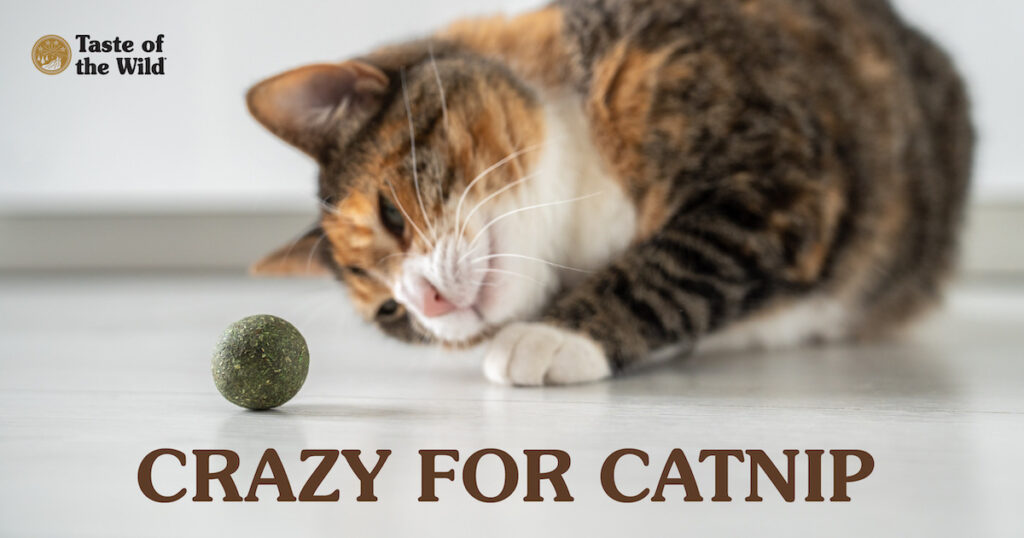
A black and tan striped cat lying on the floor staring at a ball of catnip.

If you’re wondering if your cat can have catnip, the answer is a resounding yes! Catnip is safe for cats and is a great way to add some entertainment to your cat’s (and your) life. But it’s a roll of the dice whether your cat will respond to catnip. Some cats don’t experience any effects, some cats drool and chill out, while other cats take off in a burst of energy and ricochet around the room!

Is Catnip Bad for Cats?

The good news is that catnip is nontoxic and safe for cats. In fact, it’s often used as a form of enrichment for indoor cats to help prevent boredom and stress and keep your cat happy. As well as fresh catnip, you can purchase dried catnip and catnip spray, as well as catnip balls, bubbles and chew sticks. You can also buy your kitty catnip-infused toys or toys that can be refilled with dried catnip.

About the Catnip Plant

Catnip (Nepeta cataria) is a perennial herb in the same mint family as peppermint and spearmint. It is native to Europe, Asia and Africa, and was thought to have been brought to North America by settlers. Catnip is now considered a pesky weed, but it also remains a favorite in the herb gardens of cat owners who like to grow fresh catnip.

The catnip plant contains several essential oils and other compounds that are stored in tiny bulbs that cover the leaves, stems and seedpods of the plant. The oils are released when a cat (or other animal) brushes up against the plant. The release of one compound in particular, nepetalactone, is why some cats react to catnip.

How Does Catnip Work?

The mood-altering effect of catnip is associated with a cat’s sense of smell. Nepetalactone, the active ingredient in catnip, rapidly changes from a liquid to a gas and binds to receptors in a cat’s nose. So the effect of nepetalactone on a cat’s brain is from the system responsible for a cat’s sense of smell — not from eating catnip.

Can Cats Overdose on Catnip?

No, cats can’t overdose on catnip, but they can get an upset tummy if they eat too much. There’s also no need to worry about your cat getting addicted to catnip. However, if cats are exposed to catnip too frequently, they can become accustomed to the effects. So it’s best to limit your cat’s access to catnip.

The Catnip Effect Isn’t Guaranteed

Only about 50 to 80 percent of cats are sensitive to nepetalactone, so not all cats will experience the catnip “buzz.” For some cats, catnip causes them to be very active and playful whereas other cats become calm and mellow. Most cats who are sensitive to nepetalactone will respond by displaying some of these behaviors:

  • Sniffing, licking and biting
  • Shaking their heads
  • Rubbing their heads, chins or cheeks against it
  • Rolling over
  • Drooling
  • Vocalizing
  • Kicking the catnip with their back paws

The euphoria that catnip brings cats doesn’t last long, typically 5–15 minutes. After that, they’ll be temporarily “immune” to the intoxicating effects of the ’nip for about two hours.

If your cat doesn’t respond to catnip, there are other plants you can try like silvervine and Tatarian honeysuckle. These plants are also nontoxic and non-addictive for cats and can also be used as a form of enrichment.

Can Kittens Have Catnip?

Kittens can experience catnip safely, but if they’re less than 3 to 6 months old, they typically won’t respond to it and may actually turn their nose up at it. Whether or not an older kitten will react to catnip depends on their parents — the reaction to catnip is hereditary. The catnip effect is caused by multiple genes, and without those genes, your cat will think catnip is just another boring plant.

How Much Catnip Is Too Much Catnip?

Eating too much catnip can cause an upset stomach. If your cat has overindulged, you may notice vomiting and diarrhea that will resolve over time. Contact your veterinarian if you’re worried about the vomiting and diarrhea, especially if you think your cat might be dehydrated. Limiting your cat’s access to catnip will help prevent future tummy problems.

Does Catnip Affect Other Animals?

Some big cats also react to catnip. Lions, jaguars, leopards and snow leopards appear to be sensitive to catnip, but tigers, not so much. Dogs can react mildly to catnip but it only has a sedative effect on them, which is why it’s sometimes used to reduce anxiety. Dogs won’t experience the burst of energy like some cats.

Catnip Benefits Go Beyond Feeling Gooood

Catnip is mostly used as enrichment for cats, but cats may have another reason for being attracted to it. Nepetalactone is an effective mosquito repellent, so it’s possible that cats rub their heads in catnip to fend off annoying and possibly harmful mosquitoes. Whatever the reason, some cats definitely go crazy for catnip!

What’s the Right Way to Remove a Tick?

Taste of the Wild

Only you know that special hollow, at the base of your dog’s neck, where you can scritch and send a hind paw banging on the floor, scratching at a phantom itch. But wait… what’s this? You part the hair. Eeewww, it’s a bloated tick.

If it’s an adult deer tick, it can latch on with a tenacity unmatched by most other ticks. First, the tick inserts its long mouthparts, which are barbed to firmly anchor it to the host. Then, the tick secretes a cement-like substance that bonds it to the skin until it’s satiated and ready to drop off.

Still, a deer tick must feed for 24 to 48 hours before it can transmit the organisms responsible for Lyme disease. Removing the tick as soon as you find it reduces your dog’s risk for Lyme or other tick-borne diseases. As part of Prevention of Lyme Disease in Dogs Month, we’re sharing the right — and not-so-right — ways to remove a tick.

Avoid these tick removal methods

There’s a lot of misinformation on the internet, including the following tick removal suggestions, which should be filed under “Bad ideas”:

  • Pinch the tick between your thumb and forefinger and pull it out — Many (but not all) ticks are infected with pathogens, or disease-causing agents. Pressing on the tick body may actually force pathogens in the tick gut into your pet.
  • Burn the tick with a lit match or lighter — Some claim applying heat to the tick body will make it back out of the skin. In reality, heat may cause the tick to regurgitate gut contents into the bite. And chances are good that you could burn your pet’s skin or hair.
  • Suffocate the tick with petroleum jelly, fingernail polish, alcohol or essential oils. Ticks generally only breathe between 1 and 15 times an hour out of spiracles, or openings on the sides of their bodies. While the tick may back out to escape the irritating solution, it will probably disgorge gut contents into the pet first.

So how to you get the darn thing off?

Tick removal the right way

If your dog is covered with hundreds of ticks, call your veterinarian. He or she can recommend a fast-acting tick-killing product for the majority of ticks, and the remaining ticks can be removed manually.

If you’ve only found a few ticks on your dog, removing them is relatively easy:

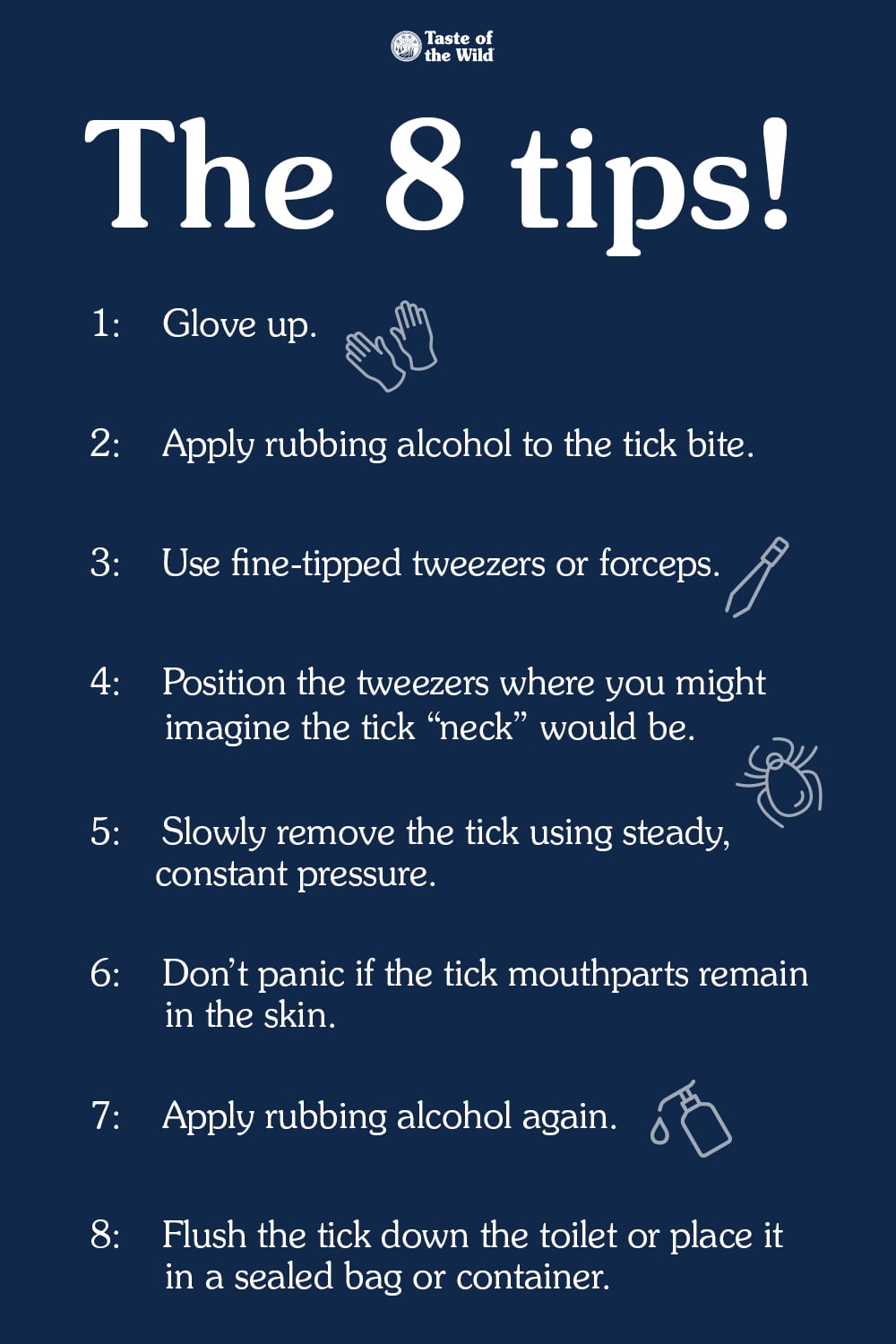
An interior graphic detailing eight tips for safely removing a tick from your pet.

Not all ticks carry disease-causing agents, but it’s a good idea to watch your dog for signs of tick-borne illnesses such as Lyme disease for a few weeks after tick removal. Signs of Lyme disease may include lethargy, loss of appetite and shifting-leg lameness. Remember, flea and tick prevention is always important. Your veterinarian can also recommend tick preventives to help kill ticks that come in contact with your dog.

Road Trip! RV Life with Pets

Taste of the Wild

Some people travel with garden gnomes, posting photos at famous landmarks. But we’re guessing snapshots of your dog or cat in front of an alien spaceship in Roswell, New Mexico, would garner a lot more attention.

Isn’t it time to indulge your pent-up wanderlust, load up the recreational vehicle with pets, then hit the road? All it takes is a little planning. Here are some suggestions to help make your wilderness adventure with your favorite four-footed friends a success.

Map your trip. Not every campsite accepts pets. Once you have a general idea of where you want to go, find pet-friendly RV parks or campsites along the way. Some campsites offer fenced-in play areas for dogs, which is a great way to wear off energy after a long drive.

Meet with your veterinarian. Your pet should be current on all vaccines. Many campsites will ask for proof of vaccination, so ask for vaccination records and other pertinent medical records. You typically won’t need a health certificate when driving with your pet, but it’s a good idea to check the U.S. Department of Agriculture for the states you’ll visit, just to be sure.

Now’s the time to stock up on medications as well as flea/tick/heartworm preventives to last the whole trip.

Help your pet feel at home. A few weeks before you travel, give your pet a chance to get accustomed to RV living. Start by letting them explore the RV interior in your driveway, so they can get used to where their food, water, beds or litter boxes are located. Provide them with positive reinforcement in the form of treats and praise.

Then, try a few short rides (now’s the best time to find out if they get carsick). If you’re towing a camper, your pet will need to ride in the car.  Make sure you have a seat-halter system or a way to secure their kennel to keep them safe. If you’re driving an RV, your pets will still need to be inside a secured kennel to help prevent injury if you make any sudden stops.

Get your pet’s identification in order. If your pet wanders away at a rest stop or campsite, a current ID tag is the best way to get them back to you. All pets should have an ID tag with your address and cell phone. If your pet has a microchip, check with the manufacturer to make sure they have your current contact information. It can’t hurt to pack a current photo of your pet in case you need to make Lost Pet posters.

Make a pet packing list. You don’t want to be stranded in the middle of the wilderness without a pet necessity. So, start making a list of everything your pet will need, such as: food, bowls, medications, beds, kennels, leashes, litter box, toys, poop bags, swimming life vest, pet sunscreen, playpen for campsite, and a pet first aid kit.

On the road. Schedule stops every few hours, so your pet gets a chance to stretch his or her legs and take care of potty business. Better yet, take a hike along the shoreline or into the woods. Always keep your dog on leash so it doesn’t bolt at an unfamiliar sound or sight.

At the campsite. Always be respectful of your neighbors, which means picking up after your dog, holding barking to a minimum and keeping your dog on a leash so it doesn’t snatch hot dogs off the neighbor’s grill, or worse, wander off.

If you leave your pet behind. You can plan short excursions without your pet, but try not to leave them in the RV for long periods of time. If the weather is hot, make sure to leave the air conditioner and fans on so your pet stays cool.

What are you waiting for? Time to start planning.

How to Help a Poisoned Pet

Taste of the Wild

Curious pets have a way of getting into things they shouldn’t. Maybe your dog nosed through the garbage can. Or your cat gnawed on a new houseplant. Or a pet pried open the bottle of human medications in your backpack.

Dogs and cats are often inadvertently poisoned by ingesting toxins, but like people, they can also be poisoned by inhaling noxious fumes or if their skin comes into contact with certain chemicals.

When exposed to toxins, a healthy pet can become ill before you know it. Of course, the severity and timing of signs varies depending on the toxin involved. Signs like lethargy or loss of appetite can be subtle or they can be severe, ranging from vomiting and diarrhea to collapse and seizures.

Would you know what to do, if you suspect your pet has been poisoned?

Practice poison prevention

Help protect your pet from poisoning with the following:

Know about potential poisons

When you’re aware that many common lilies can be toxic to cats, you can keep them out of your house.  Try to learn more about which plants are toxic to dogs and consult helpful resources like the Pet Poison Helpline to learn more about what plants, household and garden items may cause trouble. For cats, common toxins include acetaminophen, flea and tick medications containing pyrethrin, and human antidepressants. The list for dogs includes chocolate, the artificial sweetener xylitol and grapes.

Store toxins out of paw’s reach

Carefully place household, yard and automotive chemicals where pets can’t access them. Replace toxic house and garden plants with pet-safe versions. Secure rodenticides where mice can access them but pets can’t. All human and pet medications should be kept in a medicine cabinet or drawer. Never leave human foods in places where counter surfers can reach them.

Keep important numbers close

Program the following numbers into your phone, so they’re close at hand: your regular veterinarian (if potential poisoning happens during regular business hours), the closest 24-hour emergency veterinary clinic (for after hours) and ASPCA Poison Control or the Pet Poison Helpline.

Be prepared for an emergency

Keep 3 percent hydrogen peroxide in your medicine cabinet, in case your veterinarian asks you to induce vomiting in your dog. Replace the bottle when it reaches the expiration date. It may help to have a syringe on hand, for administration. Hydrogen peroxide is only for use in dogs; there is no at-home medication to induce vomiting in cats. Avoid internet suggestions for making your pet vomit, such as using vegetable oil or salt.

With any toxin exposure, act fast

If you suspect your pet has been poisoned, contact your veterinarian immediately, even if your pet is acting normal. The sooner your pet can be treated, the more likely it is for a good prognosis. Other important steps include:

Try to identify the toxin involved

If possible, bring the product packaging, plant, medication or photos of the poisoning site to the clinic. This will help the doctor better identify the toxin so the appropriate treatment can be started as soon as possible.

Bring a vomit sample to the vet in a clear, plastic bag

If you’re unsure what your pet may have gotten into, the vomit may contain materials that can help your veterinarian identify potential toxins.

Never induce vomiting or provide treatment unless directed by your veterinarian

Some toxins can cause damage to the esophagus, mouth or nose, or be aspirated into the lungs if vomiting is induced. Do not induce vomiting if your dog is unconscious, unable to stand, is having trouble breathing or is having a seizure. Giving your pet milk will not neutralize the toxin. And never give any human over-the-counter medicine as a treatment, unless you are asked to do so by your veterinarian.

Even if you’re careful, toxin exposure can happen. Knowing when your pet may be in trouble and seeking immediate veterinary help are the best ways to help keep your pet safe and healthy.

Enrichment Tips to Keep Your Indoor Cat Happy

Taste of the Wild

Life may seem a lot easier for indoor cats than their outdoor counterparts. Indoor cats don’t have to lift a paw to receive tasty, nutritious meals. They can snuggle in a warm bed in the middle of a blizzard. And they never have to worry about dodging cars or ferocious animals.

But the truth is, indoor cats need to express a lot of the natural instincts and behaviors like hiding, hunting, scratching and scent marking that outdoor cats accomplish organically. When deprived of these outlets, indoor cats can become stressed, potentially leading to illness and unwanted behaviors.

As part of National Cat Health Month, we’re sharing indoor cat enrichment tips to help you make sure your indoor kitty is as happy and comfortable as possible.

Make your cat feel more at home

Understanding your cat’s needs can help you make small changes that will have a big impact on his or her well-being. Here are a few examples:

A private sanctuary — As the actress Greta Garbo famously quipped, “I want to be alone.” Cats seek private time, too. Cats cope with noisy workmen, overzealous children and other household pets by escaping to a place where they can hide and feel safe. Ideally, provide each cat with a quiet room where it can sleep without feeling vulnerable. If possible, include a bed or box for hiding, food and water bowls, toys and other resources your cat may need.

A bird’s eye view — Many cats prefer to survey their kingdom from above. Cat trees and perches that attach to the wall or windowsill offer the opportunity to climb and observe the world from a safe place. Even better, position the cat tree near a window where your feline can keep an eye on the bird feeder outside.

The right litter boxes — Cats can be particular about their litter box preferences. As a rule of thumb, there should be one litter box per cat in the household, plus one more. Boxes should be about one and a half times the length of the cat (excluding the tail). Cats generally prefer uncovered boxes with unscented, scoopable litter. Boxes should be placed in private but easily accessible locations. You should clean litter at least once a day, and wash the box with mild dish soap once a week.

Physical and mental stimulation — Although cats often like routine, monotony can cause stress and lead to illness and behaviors such as overgrooming. Take time each day to get your cat moving, whether it’s a game of fetch or a laser pointer chase. Some cats can even be trained to walk on a leash. Food puzzles can help stimulate your cat’s mind and make them work for each meal. Toys should be rotated on a regular basis to keep things fresh.

Something to scratch — Cats like to scratch to shed dried nail husks and sharpen their nails. But even declawed cats need to stretch and mark the area with pheromones from the scent glands in their paws. Providing vertical or horizontal scratching posts can provide cats with a suitable place to flex their paws.

An opportunity to hunt — Cats rarely tire of the thrill of the chase. Help your cat express their predatory instincts with toys that mimic the hunting experience. Wands with feathers and bells, toys that squeak or race across the floor all give your cat a chance to stalk and pounce. Finish the game with treat rewards to satisfy the experience of eating prey.

Personal space — In multiple-cat households, competition for resources such as the litter box, food or toys can cause anxiety. Make sure to distribute these items around the house so cats have an opportunity to enjoy them without another cat (or dog) pushing them out of the way.

By minimizing stress and helping your cat express its natural behaviors, you can strengthen the bond between you and your indoor feline companion.

Indoor Cats vs. Outdoor Cats: Which Is Right for You?

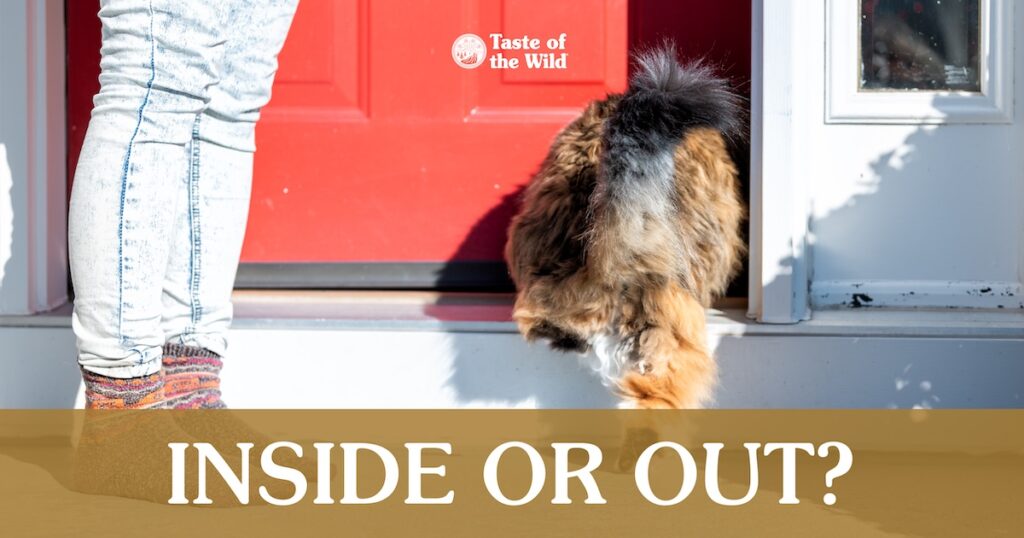
A long-haired cat walking through a front door from outside.

When adopting a cat, pet owners have a choice to make about where their cat is going to live. For some people there’s no question — they’ll be an indoor-only cat and that’s that. But some people may like their cat to have a hybrid lifestyle inside and out. To help you make the choice of what’s right for you and your cat, we’ve got the pros and cons of both lifestyles.

How Long Do Indoor Cats Live?

An indoor cat’s lifespan is typically around 10 to 15 years, which is significantly longer than the life expectancy of an outdoor cat (more on that later). This is mostly due to the safe environment that life indoors provides. Indoor cats are protected from inclement weather (e.g., rain, snow and temperature extremes), other cats and animals carrying diseases and parasites, and physical dangers like cars, predators and, unfortunately, cruel humans.

Are Indoor Cats Happy?

It’s likely a common question for cat owners — is my cat happy? Many common cat breeds like ragdolls thrive on an indoor lifestyle; others don’t. Indoor-only cats may be protected from the dangers lurking outside, but their confined life means they can be restricted in their ability to express natural and essential behaviors like stalking, catching prey, scratching and urine marking.

To keep indoor cats happy, it’s important that your indoor cat has the opportunity to express these behaviors and for you to — as much as possible — make the indoors as interesting and exciting as the outdoors. Some of the ways you can help enrich your cat’s lifestyle indoors include providing:

  • Scratching posts
  • A private sanctuary
  • Perches
  • Cat toys that provide physical and mental stimulation
  • Appropriate litter boxes
  • Toys that provide an opportunity to hunt

Keeping cats indoors does have a potential downside. Indoor cats are more likely to develop behavioral problems, which can put them at risk of being surrendered to animal shelters or euthanized. Providing indoor cats with enrichment activities and ensuring their needs are being met can help reduce behavioral problems.

How Long Do Outdoor Cats Live?

The lifespan of outdoor cats is typically less than 5 years. This decreased life expectancy is due to a variety of reasons, including a greater risk of injury from cars, dogs and wild animals, like coyotes, foxes, raccoons and birds of prey. Additionally, outdoor cats face increased exposure to serious diseases such as feline leukemia and feline immunodeficiency virus from stray or feral cats who aren’t vaccinated. They also have increased exposure to diseases from other animals such as avian influenza A (H5N1, also called bird flu) which can be fatal to cats. Outdoor cats can also be exposed to poisons like antifreeze and rodenticides.

Cats are territorial, so if they come across a stray cat or other free-roaming cats from the neighborhood, territorial fighting can occur. This can result in severe injuries, infections from bite wounds and disease transmission. Fraternizing with free-roaming community cats can also increase the risk of your cat coming home with fleas, ticks, ringworm or ear mites — some of which can be a risk to the health of you and your family, too. And of course, if you have a female cat that isn’t spayed, there’s a chance of unexpected kittens.

If you’re considering adopting a cat that has spent most or all of its life outside, the good news is that with patience and slow adjustments, many outdoor cats can become indoor cats.

What Do Outdoor Cats Eat?

Cats are carnivores (meat eaters) that excel at hunting. So don’t be surprised if your outdoor-roaming cat proudly presents you with a dead mouse or bird as a “gift,” or if you find them devouring said gift on the kitchen floor. If you allow your cat to go outside but don’t like the idea of them hunting, you can try adding a bell to their collar to help announce their presence before they pounce — although this isn’t always effective. Keeping them well-fed with cat food may also help reduce their hunting urge, but remember that hunting is a natural part of a cat’s behavior.

Do Cats Need to Go Outside?

Ultimately, it’s your choice. A cat owner’s decision on whether their cat should live inside or outside depends on the cat’s health and personality and whether the cat owner can provide an interesting indoor environment or a safe outdoor environment.

If you would like to provide your cat with a hybrid lifestyle, consider building or buying an outdoor cat house, cat run or catio that keeps them safe while enjoying the outdoors. It’s also a good idea to take pets inside at nighttime so they are protected from wildlife or other nighttime hazards.

Black Cats: Gods, Charms and Superstitions

Taste of the Wild

Black cats are plagued with superstitions. But where did they get such reputations, both good and bad? The answers span great lengths of time and place.

Rightly or wrongly, black cats are plagued with superstitions.

Harbingers of bad luck

In the Middle Ages, the Roman Catholic Church declared that cats were friends of the devil. As such, many believed a black cat could be a witch in disguise, a witch’s pet sent to keep tabs on humans or a witch’s “familiar,” a channel enabling witches to speak to the spiritual world. Black cats became forever entwined with witchcraft and were even killed with perceived witches during the Salem witch trials in Massachusetts.

Cats were also associated with death. Italians used to believe that if a black cat sat on your sickbed, it was a sign of imminent death. In North America, if a black cat crosses your path, it’s believed you’re in for bad luck (although the opposite is true in England, Ireland and Asia).

Bearers of good luck

Ancient Egyptians worshipped all cats, but perhaps black cats most of all because they resembled the deity Bastet, the goddess of the home, fertility and childbirth who often protected the home from disease and evil spirits.

Years later, British sailors believed having a black cat on board a ship would bring good luck and ensure safe passage (not to mention keeping the mice population to a minimum). Blackie, a mostly black cat aboard the HMS Prince of Wales, a Royal Navy battleship during World War II, gained fame when Prime Minister Winston Churchill leaned down to give the cat a rub. The cat was later renamed Churchill.

In some cultures, owning a black cat can bring you luck or love. Good luck is thought to come your way if you dream about a black cat, see one walking toward you or find a white hair on its black coat. A black cat who curls up on your porch is thought to bring you prosperity.

Many Asian countries, such as China and Japan, post maneki nekos — cat figurines with waving paws — outside restaurants and shops to bring good fortune. If the left paw is raised, the cat beckons people to enter. A raised right paw invites money, and both paws raised attracts customers and good fortune. If the mankei neko is black, even better — it’s thought to ward away evil, as well.

Overcoming superstitions

Although some people think black cats might have trouble being adopted because people cling to superstitions, it’s just not so, according to a study by the American Society for the Prevention of Cruelty to Animals (ASPCA). After reviewing 14 regions of the U.S, with about 300,000 adoptable dogs and cats, black cats had the highest adoption numbers, coming in at 31 percent of all feline adoptions, compared with 20 percent for gray cats and 18 percent for brown cats.

At the same time, shelters often take in more black cats than any other color, according to Emily Weiss, PhD, at the ASPCA. One reason is that the gene for black coat color is dominant, so there tend to be more black cats in the world. Another reason is that 22 different breeds of cats can have solid black coats, according to the Cat Fanciers Association (CFA).

As it turns out, black cats may have another thing going for them. It’s possible that the mutation that causes black coat coloring may be associated with the gene that gives humans resistance to viral infections like HIV. While it’s yet to be proven, that may mean black cats may be more resistant to certain diseases. What could be luckier than that?

When the Leaves Change Color, Can Your Pets See It?

Taste of the Wild

Autumn plays with all your senses, but none so much as your sense of sight, as deciduous trees burst into shades of brilliant red, vibrant orange and buttery yellow. This vivid array is enough to make you wonder: Does my dog or cat enjoy these colors like I do?

For decades, many people believed that dogs and cats were colorblind, or could only see shades of black, white and gray.  The truth is, they do see colors, but not in the way we do.

Your dog’s true colors

For people and pets, color perception begins at the retina, or the tissue lining the back of the eye. The retina contains two kinds of photoreceptor cells: rods, which perceive low and shifting light, and cones, which discern colors.

Humans have three kinds of cones, which can pick up red, blue and green wavelengths. Dogs only have two kinds of cones: those that are sensitive to blue and those that pick up yellow-green. That means dogs can’t see the full range of colors, or the richness or intensity, that humans do. Their world is essentially limited to shades of blue, yellow and gray.

Putting dogs to the test

To determine how dogs see colors, scientist Jay Neitz at the University of California, Santa Barbara, performed a unique test. Dogs were shown three panels of light, two of which were the same color. Dogs were rewarded with a treat when they touched their noses to the panel with the different color.

In this way, Neitz found the hues dogs could distinguish ranged from dark and light blue to dark and light yellow and shades of gray.

How about cats?

Cats, like humans, have three types of cones in their retinas but fewer cones overall. So they may see a similar range of colors that you do, but the colors tend to be less vibrant. Within that spectrum of colors, cats tend to see blue, violet, yellow and green better than red.

Seeing the light

While dogs and cats may have fewer cones than humans, they make up for it with more rods, helping them to see better in the dark than humans. Dogs can have up to three times the rods as humans, according to Alexandra Horowitz, author of Inside a Dog: What Dogs See, Smell and Know. Cats are even more suited to nocturnal wandering, with as many as eight times the rods as humans.

Dogs and cats can also see the type B ultraviolet (UVB) spectrum, meaning some colors, such as white, may fluoresce and be disturbing for animals.

Work with your pet’s color spectrum

How can you use this color knowledge to your advantage? First, understand that a red or orange toy may appear gray, brown or black to your pet, or just doesn’t “pop” from the environment like it does for you. A blue toy may capture your pet’s attention better.

If you want to create a soothing environment for your pet at home, again, work with your dog or cat’s visible spectrum. Choose wall paints, pillows and blankets in the blue, green or violet range of the spectrum, rather than oranges and reds. Avoid bright white when possible because it might light up or flare for your pet more than it does for you.

But what about all those red and orange leaves piled in your backyard? Your pet may not appreciate the colors, but he or she can certainly have fun leaping and rolling in all of them with you. Just remember to follow our Autumn Safety Tips to keep your pet safe!

Exercise and the Overweight Pet: A Common-Sense Approach

An overweight cat standing in the grass on a sunny day.

Has your pet ever been fat shamed? Maybe it was a casual dig at the dog park. Or an insensitive remark on social media. It can be easy to underestimate how many extra pounds your pet may be carrying because, frankly, pet obesity has become the new normal. That is why we’re pointing out that tomorrow is National Pet Obesity Awareness Day. Pet obesity is nothing to take lightly!

About 59.5 percent of cats and 55.8 percent of dogs are considered overweight or obese, according to the Association for Pet Obesity Prevention (APOP). Obesity can contribute to diabetes, joint problems such as arthritis, difficulty breathing and even a shorter life span.

If you’ve got a pet who needs to take care of their weight, you’ll likely need to change their diet — including feeding them fewer human food treats. But increasing the exercise is equally important because you want your pet to lose fat while retaining or building muscle mass. How much exercise is healthy? Here are some tips to help your pet drop those unwanted pounds and earn the praise and admiration he or she deserves.

First stop: your veterinary clinic

Your veterinarian will weigh your pet and show you how to objectively determine your pet’s ideal weight. Together, you can make a plan on how to approach your pet’s weight loss. Your veterinarian may recommend a therapeutic weight loss diet or determine the right quantity of your current food to help your pet lose weight while still receiving all the nutrition they need.

The doctor will also check to see if your pet has any underlying conditions, such as hypothyroidism (low thyroid hormone) in dogs, which, when treated, can help with weight loss. He or she will also examine your pet for underlying heart or orthopedic conditions that may impact your pet’s exercise plan.

Gradual weight loss is best

Your pet shouldn’t lose weight too fast. As a general rule, a dog can lose about 1 to 3 percent of their body weight per month, while a cat can lose 0.5 to 2 percent per month, according to APOP. But this may vary depending on your pet’s breed and weight. Overweight cats who lose weight too fast and go off their food are prone to fatty liver disease, a serious and sometimes fatal condition. If your cat doesn’t eat for a day or two, contact your veterinarian.

Begin exercise gradually, too

Your veterinarian will typically recommend short exercise sessions, then gradually extend the length of these sessions as your pet loses weight. For overweight or arthritic dogs, low-impact exercises like walking and swimming are good because they put less stress on the joints than running and jumping. If your pet has arthritis, ask your veterinarian about medications to help your dog exercise pain free.

Start with short walks on flat terrain, gradually extending the walk and adding hills. Let your dog warm up and do their business, then gently increase the speed of your walk so your dog is getting some heart-pounding aerobic exercise. If your dog starts panting too much or lagging behind, that’s your cue to slow down a bit. Dogs that are overweight, especially those that are brachycephalic, or flat-faced, can have trouble breathing and become overheated easily. It’s best to walk these dogs in the cool of the morning or evening.

Depending on your dog’s health status, your veterinarian may recommend an exercise regimen of perhaps 30-minute walks five times a week. Each week, you can gradually increase the amount of aerobic time during the walk. If your dog tolerates that well, you can build up to twice-a-day walks or jogging.

Another alternative is to schedule regular appointments at canine rehabilitation clinics, where they can put your dog through the paces on regular or underwater treadmills. You can even make use of digital pet activity monitors to help monitor your pet’s daily efforts.

Cat fitness

Cats can be slightly more challenging to exercise, but you can start with 5-minute play sessions, chasing a laser pointer or feather toy. A cat tree can encourage your cat to climb and stretch its muscles. Food puzzles make your cat work for their meals and provide mental stimulation. Another alternative is to hide kibble in different parts of the house so your cat has to “hunt” for their meal.

Monitor progress with monthly weigh-ins

Whether you weigh your pet at the veterinary office or on your own scale, it’s important to make sure your pet is making weight-loss progress. Too much or too little weight loss suggests a call to your veterinarian, who can make adjustments in diet or exercise to keep your pet on track.