Contact



 Where to Buy
 Contact Us

Have you ever looked at your cat lounging and wondered, “How old are you compared to me?” While they may have perfected the art of looking cute and loafing, their aging process is a little more complex than it seems. Cats journey through life at a different pace than we do. Think of them as advanced for their age; your furry friend truly has a knack for making every year count!
How Many Cat Years in One Human Year?
If your cat is older than 3, then every time you buy candles for your feline friend’s birthday party you should actually buy four. Here’s why!
Cats and humans age at very different rates, particularly during the first few years of life. Although many people are familiar with the belief that one cat year equals seven human years, this common rule is a myth that doesn’t accurately reflect how cats grow and mature. To better understand feline aging, let’s explore how to convert cat years to human years.
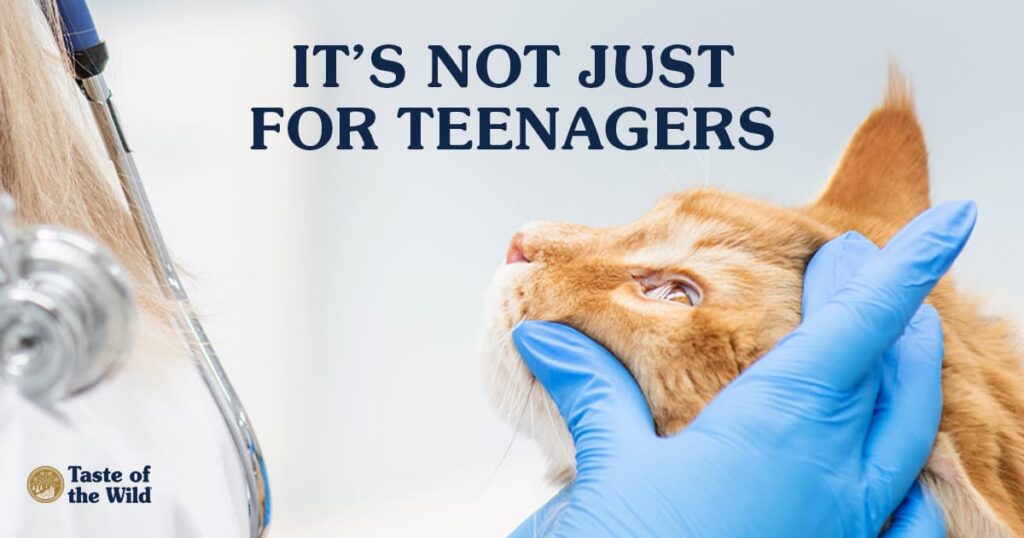
A cat’s first few years are marked by rapid growth and development. Kittens reach important physical and behavioral milestones much faster than human children. In fact, a one-year-old cat is roughly equal to a human teenager or young adult in terms of development. By the age of two, you can add nine more human years to their age; they are considered equivalent to a human in their mid-twenties. At this time, most cats have reached full physical maturity.
After the first two years, the aging process becomes more gradual. Veterinarians commonly estimate that each additional cat year is roughly equivalent to about four human years, although the exact ratio between human and cat years can vary.
How Old Is My Cat in Human Years?
Here’s a cat age chart to help you calculate your cat’s age:
- 1 cat year ~ 15 human years
- 2 cat years ~ 24 human years
- 3 cat years ~ 28 human years
- 4 cat years ~ 32 human years
- Each additional cat year ~ 4 human years
So if we keep going, a 5-year-old cat would be approximately 36 years old in human years, while a 9-year-old cat would be roughly equivalent to 52 human years. A senior cat that is 16 years old would be considered around 80 in human years, which means they are quite old for a cat.
How to Tell the Age of a Kitten
Determining the age of a kitten is important because it helps you provide the right nutrition, care and medical attention. While a veterinarian can give the most accurate estimate, several physical and behavioral clues can help you approximate a kitten’s age. Observing features such as eye color, ear position, teeth development, weight and mobility can provide valuable information about a kitten’s stage of growth.
Newborn kittens, from birth to about two weeks old, have their eyes closed and ears folded against their heads. Their eyes usually begin to open between seven and 14 days of age, revealing a blue color that remains for several weeks. By two to three weeks of age, their ears begin to stand upright, and they start becoming more aware of their surroundings.
Between three and six weeks old, kittens become increasingly active and coordinated. They begin walking, exploring and playing with their littermates and toys if provided. Their baby teeth start to emerge around two to four weeks of age, with most baby teeth present by six weeks. During this period, kittens also begin the weaning process, gradually transitioning from their mother’s milk to solid food.
From six to 12 weeks old, kittens experience rapid growth. Their eye color may start changing from blue to its permanent shade and they become more independent and energetic. By eight to 10 weeks, most kittens are fully weaned and capable of eating solid food exclusively. Weight can also serve as a rough guideline; many kittens gain approximately one pound per month during their first few months of life.
At six months old, a kitten has usually lost its baby teeth and grown its adult teeth. Additionally, female kittens may enter their first heat cycle as early as 4–6 months of age, although timing varies with season, breed, body condition and individual development.
Although these developmental milestones can provide useful estimates, individual kittens may grow at slightly different rates. If you are unsure of a kitten’s age, a veterinarian can assess factors such as teeth development, body size and overall health to provide a more accurate estimate.
A Young Cat’s Age in Human Years
Cats that are a little over two years old are usually considered young adults in human years. They have passed through the energetic kitten and adolescent stages, but they have not yet reached middle age. Most cats at this age are physically mature, with their full adult size, muscle tone and coat development. They are often active, curious and playful, though usually less chaotic than they were as kittens. Exploring, climbing, hunting toys and interacting with people are all part of a young cat’s game as it develops greater confidence and independence.
One way to recognize a young adult cat is by its physical condition. Cats between about two and four years old typically have bright, clear eyes, healthy skin and soft fur. Their teeth are usually white or only lightly stained, with little evidence of wear. They move smoothly and quickly, often displaying impressive agility when jumping or chasing objects.
Life Stages Help Determine Your Cat’s Care
A kitten’s health care needs are very different compared to a mature or senior cat’s needs. To help veterinarians ensure cats receive the proper care for their life stage, the American Animal Hospital Association and the American Association of Feline Practitioners developed guidelines that define four age-related stages as well as an end-of-life stage that covers all ages. The four age-related life stages are:
- Kitten: Birth to 1 year
- Young adult: 1–6 years
- Mature adult: 7–10 years
- Senior: Older than 10 years
According to these general guidelines, if your cat is older than 10, they are considered a senior. However, your veterinarian will tailor their recommendations for your cat based on their individual health and lifestyle.
How Long Do Cats Live?
The average cat’s life expectancy is typically 13 to 17 years. But it’s not uncommon for cats to reach their late teens or even early twenties. However, their life expectancy can vary based on several factors, including the breed of the cat, neuter status, health issues and whether it is an indoor or outdoor pet. A cat’s environment plays a significant role in determining its lifespan.
Most outdoor cats have a shorter lifespan of about 2 to 5 years. Outdoor cats face a higher risk of harm or injury from other cats and wild animals, such as coyotes. They are also more likely to be involved in accidents, such as being hit by a car.
Additionally, outdoor cats are at an increased risk of infections and infectious diseases, which can also pose a threat to indoor cats, humans and other animals. For instance, they can spread diseases like feline leukemia virus (FeLV) and feline immunodeficiency virus (FIV) to other cats, and rabies is a concern for humans. Outside cats also have a higher risk of being infected with parasites such as worms, fleas and ticks that can compromise their health.
The average indoor cat lifespan is longer than outside cats because they are shielded from many of the hazards that can shorten a cat’s life. They are also more likely to receive regular veterinary care and consistent nutrition. Because indoor cats experience fewer injuries and illnesses, they typically enjoy a longer, healthier life than cats that spend most of their time in the wild.
Some purebred cats are predisposed to inherited diseases that may affect lifespan, although longevity varies considerably. In contrast, mixed-breed cats often benefit from greater genetic diversity, which may reduce the likelihood of certain hereditary diseases and improve their resilience.
The oldest cat ever recorded by the Guinness Book of World Records was Creme Puff, a mixed tabby from Austin, Texas. Born on August 3, 1967, she lived for an incredible 38 years and 3 days.
Making Your Cat’s Years Count
Making your cat’s years count means focusing on their overall health, safety and well-being throughout their life. Providing a complete and balanced diet, maintaining a healthy weight and scheduling regular veterinary checkups can help prevent health problems and detect issues early.
Keeping your cat indoors or in a secure outdoor enclosure reduces the risk of injury and disease, while daily play and mental stimulation support both physical and emotional health. It is also important to pay attention to changes in appetite, weight, coat and skin, mobility or behavior, as these can be signs of underlying health concerns. As cats enter their senior years, more frequent wellness exams can help to make sure that age-related health issues are being addressed.
Understanding a cat’s age in human terms can help owners better recognize their pet’s life stage and evolving needs. Now that you know how your cat’s age converts, you may have other common cat questions. We’re here to help you learn more about your feline friend.