Contact

Support
Recipe Recommendations For Puppy Owners Health and Nutrition Tips All Dog Articles Personalized Feeding Guide Compare Recipes
Virtual Pet Park
Explore our wild world of adorable pet photos and videos.
Support
Recipe Recommendations Health and Nutrition Tips All Cat Articles Personalized Feeding Guide Compare Recipes
Virtual Pet Park
Explore our wild world of adorable pet photos and videos.
 Where to Buy
 Contact Us
Why Do Cats Loaf? Understanding the Cat Loaf Pose
Category: Training & Behavior
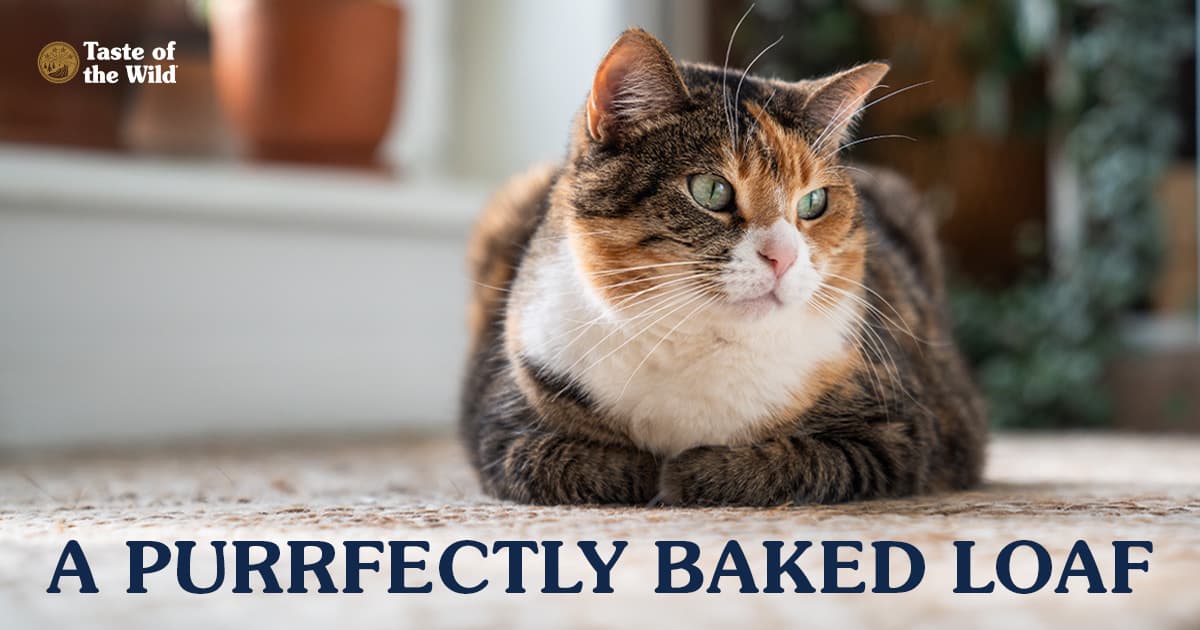
If you’ve ever looked over at your cat and found them tucked neatly into a compact, rectangular-shaped bundle, you’ve witnessed the adorable phenomenon known to cat lovers as “cat loafing.” With their paws hidden beneath their body and their tail wrapped snugly around or tucked under their body, cats in this position resemble a freshly baked loaf of bread. Let’s take a deeper look at what cat loafing is and what it means to your feline friend.
What Is Cat Loafing?
If you look at your cat when they’re loafing, their body is low to the ground, their back legs are tucked under their body, their tail is tucked under or wrapped tightly around their body and their front paws are tucked into their chest, just like a loaf of bread. There can be slight variations of this that we will talk about later.
What Does it Mean When a Cat Loafs?
There are several reasons why cats sit in a loaf position, but most of the time, it indicates that a cat is relaxed. However, like any cat behavior, there may be other explanations. Generally, loafing means that a cat feels comfortable and safe in its environment while still remaining alert.
What Does Loafing Mean for Cats?
Most of the time, loafing signals that a cat is relaxed but not fully asleep. It’s a comfortable resting position that allows them to stay calm while still being alert to their surroundings. If your cat’s eyes are half-closed, or they’re slowly blinking while loafing, that’s usually a strong sign they feel safe and content. You may have noticed other calming behaviors, such as your cat making biscuits or your cat purring.
By tucking four paws in, cats conserve body heat and can quickly spring into action if necessary. This is a practical way for them to rest and to help regulate their body temperature. This is especially common on cool floors or during cold weather. In this way, loafing serves a practical purpose to stay warm as well as a comfort-based one.
Another important meaning behind loafing is trust. Cats don’t fully tuck their paws underneath them in environments where they feel threatened or unsure. When your cat loafs near you, it often means they feel secure in your presence and don’t feel the need to stay in a ready-to-run position. It’s a subtle but meaningful compliment to you in cat body language.
Decoding the Cat Loaf Position
There are several variations of this cozy posture. Each one can tell you something about your cat’s mood, comfort level and alertness.
Full loaf: This is the classic loaf that we have described above; a cat lies on its stomach with their paws neatly tucked beneath them and their tail tightly wrapped around their body.
Partial loaf: The partial loaf position is slightly different from the full loaf, with only the paws partially tucked and slightly alert, ready to move if necessary.
Face loaf: This is the full loaf, but with the face tucked down, and the nose may be buried into their chest or somewhere soft.
Sphynx loaf: Think about the great Egyptian Sphynx statue with a lion’s body and the head of a woman. This is a relaxing position, but they remain alert with their head and ears up, with their paws stretched out in front of them.
Attack loaf: Don’t be fooled by this loaf position. The body is tucked down, but the ears are forward, the eyes are focused, the tail is off the ground, and they have the look that they are ready to pounce.
Meatloaf: When you see your cat in the meatloaf position, their back is arched and they have rounded edges. They may look more compact and may appear to be less relaxed than the other loaf positions.
Double loaf: Think of this as a two-for-one special! This position involves two cats loafing side by side; they may be seeking warmth, or they are just comfortable with each other and have gained each other’s trust.
Loaf boat: In this position, a cat sits with its paws tucked under its body, leaving one paw, usually the front, slightly outstretched, resembling an oar or the bow of a boat.
When a Cat Loaf Leads to Worry About Your Cat’s Health
Some cat owners grow concerned that their cat is loafing too much and that is a sign they are experiencing health problems. Along with the loaf position, make sure to look for any changes in behavior or other signs, such as aggression, reluctance to move or jump, an increase in sleeping and changes in litter box habits. Sometimes, the loaf position is to protect injuries to their vital organs, or if they are in pain. Other symptoms paired with loafing, such as diarrhea, muscle tremors, shivering, dilated pupils, loss of appetite, discomfort, vomiting or trembling mean that you should contact your veterinarian.
You know your feline friend better than anyone, so if you notice any unusual behavior, take the time to schedule a visit to your veterinarian and discuss your concerns. As a pet owner, your pet’s well-being is your top priority, so make sure that you have a vet look at any health issues they may have.
Overall, loafing is a very positive sign in many cats. It typically indicates that your cat is comfortable, calm and feeling safe in their environment. The loaf position can be observed in any breed and at any age; even older cats and young kittens will sometimes assume this posture. So the next time your feline companion turns into a perfect little loaf of bread, you can interpret it as a sign that your cat is happy and content.
The information in this blog has been developed with a Doctor of Veterinary Medicine and is designed to help educate pet parents. If you have questions or concerns about your pet’s health or nutrition, please talk with your veterinarian.