Diabetes in Dogs: Learn the Symptoms and How to Manage

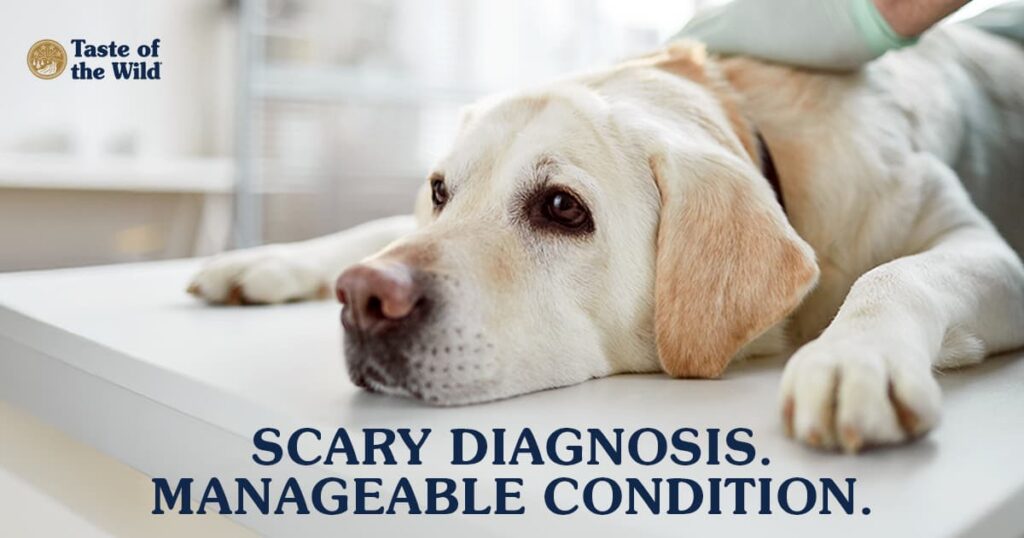
A yellow Labrador retriever lying down on a table while a veterinarian gently examines the dog with two hands.

Hearing that your dog has diabetes can be an overwhelming diagnosis for any pet parent. However, with the support of your veterinarian, diabetes is a manageable condition for many dogs, and understanding the causes, symptoms and treatment options can often help dog owners provide the best possible care for their diabetic companions.

Can Dogs Get Diabetes?

Diabetes mellitus (diabetes) is a serious and common disease that affects the way a dog’s body uses sugar, also known as glucose. Diabetes can affect dogs of any breed, age or size, although it is more common in middle-aged and older dogs. Female dogs, particularly unspayed females, are often diagnosed more frequently than males, and certain breeds, such as schnauzers, miniature poodles, dachshunds and beagles, are more at risk than others.

What Is Dog Diabetes?

Most dogs have insulin-dependent diabetes and insulin treatment is required. They are very similar to humans with type 1 diabetes in that the pancreas can no longer produce insulin. This means their blood sugar (glucose), which is a source of “fuel” or energy for the body’s cells, becomes elevated in the blood rather than being taken in by cells that need it. The glucose accumulation can, over time, cause serious health problems.

Without glucose, body cells experience an energy shortage, so the body breaks down muscle and stored fat to use for energy, resulting in weight loss. At the same time, excess glucose in the blood can damage important organs such as the kidneys, eyes, blood vessels and nerves. 

Untreated diabetes in dogs can turn into a life-threatening complication called diabetic ketoacidosis. This is a medical emergency, so watch for signs like weakness, vomiting, decreased appetite, sweet or fruity breath, abnormal breathing, dehydration or collapse. If your dog is experiencing any of these symptoms, you should take them to an emergency vet immediately. 

Overweight or obese dogs are at a greater risk of diabetes because excess body fat can interfere with the body’s ability to use insulin effectively. Additionally, some health conditions, such as pancreatitis, hormonal problems and long-term use of steroid medications, can increase the likelihood of developing diabetes. Dogs with diabetes are more prone to urinary tract infections (UTIs) because high blood sugar levels promote bacterial growth.

How Do Dogs Get Diabetes?

Diabetes in dogs develops when the body can no longer produce enough insulin to regulate blood sugar levels properly. Usually, it occurs as a result of progressive loss or dysfunction of insulin-producing pancreatic cells, leading to a condition similar to type 1 diabetes in humans. Immune-mediated damage may contribute in some cases. Without enough insulin, glucose cannot move from the bloodstream into the body’s cells for energy. As a result, sugar builds up in the blood. 

Signs of Diabetes in Dogs

One of the first signs of diabetes in dogs is excessive thirst. Pet parents may notice their dog is drinking more water than normal and experiencing frequent urination. Increased hunger is another symptom due to not receiving enough energy from glucose. Even if your dog is eating more, many diabetic dogs lose weight because the body starts breaking down fat and muscle for fuel. 

Other clinical signs of diabetes include poor haircoat, cloudy eyes or cataracts, chronic infection and lethargy. If glucose dips too low, your dog may show signs of weakness, confusion, seizures and even loss of consciousness, requiring emergency veterinary care. When glucose is too high, pets often drink and urinate more than usual and potentially develop other complications such as diabetic neuropathy.

Dog Diabetes Treatment

If you suspect your dog has diabetes, make an appointment with your veterinarian as soon as possible to avoid complications caused by high blood sugar. It is best to catch any underlying illness as early as you can. Your vet will likely perform blood work and a urine test to measure the amount of glucose. Diagnosis is based on persistent high blood glucose in both the urine and blood.

Treatment for canine diabetes generally focuses on regulating blood sugar levels through insulin therapy. Most diabetic dogs require daily insulin injections because their bodies cannot produce enough insulin naturally. To arrive at “just the right” insulin dose that keeps your dog’s diabetes controlled, periodic blood glucose monitoring is usually required. Insulin injections will typically be given twice a day around the time of their feeding.

In the past, dogs would typically spend a day at the veterinary clinic for a blood glucose curve. During that time, the veterinary staff would take blood glucose samples every two hours for up to 12 hours. The trouble with in-clinic glucose testing is that dogs often become stressed in the unfamiliar environment, which can artificially raise blood glucose levels. That’s why the American Animal Hospital Association recommends at-home glucose testing, when possible. Pets are usually less stressed at home, which means results will be more accurate. At-home testing can save you money. It can also help identify a hypoglycemic (low blood sugar) event, so your pet gets treatment faster. Continuous glucose monitors are available that attach to your dog’s back and allow you to monitor your dog’s glucose levels via your smartphone. 

Your veterinarian will discuss your dog’s diet, exercise, insulin injections and schedule for vet visits. They will adjust the amount of insulin you give your dog based on follow-up blood tests. It can be an overwhelming time as a pet owner, but rest assured, your veterinarian will carefully train you on how to administer insulin or any other medicines necessary to get your dog on a healthier track. They will also share best-care practices, ensuring you head home feeling confident, prepared and fully equipped to support your dog.

Follow the veterinarian’s instructions carefully and continue to monitor your dog between their checkups. If your dog’s symptoms worsen or something seems out of the ordinary, don’t be afraid to call your veterinarian between routine visits. They’re there to help! 

Managing Diabetes in Dogs

Even with blood glucose data, you should still watch your dog for signs that their diabetes may not be well controlled. It helps to keep a daily diary that lists information such as food and water consumption, insulin dose administered and general amount/frequency of urination. If possible, weigh your dog periodically. What kind of food your dog eats is important to managing their diabetes. Many diabetic dogs do well on a diet high in fiber and complex carbohydrates that includes high-quality protein. However, the diet should be individualized to the specific dog, and consistency is often more important than the exact diet type. Changes in weight, appetite, increased thirst, urination and even energy level should spark a call to your veterinarian.

Caring for a dog with diabetes can feel overwhelming at first, but understanding the condition is the first step toward helping your dog live a healthy and comfortable life. With proper treatment, monitoring and lifestyle adjustments, many diabetic dogs are able to continue enjoying relatively normal lives alongside their families.

Black Cats: Gods, Charms and Superstitions

Taste of the Wild

Black cats are plagued with superstitions. But where did they get such reputations, both good and bad? The answers span great lengths of time and place.

Rightly or wrongly, black cats are plagued with superstitions.

Harbingers of bad luck

In the Middle Ages, the Roman Catholic Church declared that cats were friends of the devil. As such, many believed a black cat could be a witch in disguise, a witch’s pet sent to keep tabs on humans or a witch’s “familiar,” a channel enabling witches to speak to the spiritual world. Black cats became forever entwined with witchcraft and were even killed with perceived witches during the Salem witch trials in Massachusetts.

Cats were also associated with death. Italians used to believe that if a black cat sat on your sickbed, it was a sign of imminent death. In North America, if a black cat crosses your path, it’s believed you’re in for bad luck (although the opposite is true in England, Ireland and Asia).

Bearers of good luck

Ancient Egyptians worshipped all cats, but perhaps black cats most of all because they resembled the deity Bastet, the goddess of the home, fertility and childbirth who often protected the home from disease and evil spirits.

Years later, British sailors believed having a black cat on board a ship would bring good luck and ensure safe passage (not to mention keeping the mice population to a minimum). Blackie, a mostly black cat aboard the HMS Prince of Wales, a Royal Navy battleship during World War II, gained fame when Prime Minister Winston Churchill leaned down to give the cat a rub. The cat was later renamed Churchill.

In some cultures, owning a black cat can bring you luck or love. Good luck is thought to come your way if you dream about a black cat, see one walking toward you or find a white hair on its black coat. A black cat who curls up on your porch is thought to bring you prosperity.

Many Asian countries, such as China and Japan, post maneki nekos — cat figurines with waving paws — outside restaurants and shops to bring good fortune. If the left paw is raised, the cat beckons people to enter. A raised right paw invites money, and both paws raised attracts customers and good fortune. If the mankei neko is black, even better — it’s thought to ward away evil, as well.

Overcoming superstitions

Although some people think black cats might have trouble being adopted because people cling to superstitions, it’s just not so, according to a study by the American Society for the Prevention of Cruelty to Animals (ASPCA). After reviewing 14 regions of the U.S, with about 300,000 adoptable dogs and cats, black cats had the highest adoption numbers, coming in at 31 percent of all feline adoptions, compared with 20 percent for gray cats and 18 percent for brown cats.

At the same time, shelters often take in more black cats than any other color, according to Emily Weiss, PhD, at the ASPCA. One reason is that the gene for black coat color is dominant, so there tend to be more black cats in the world. Another reason is that 22 different breeds of cats can have solid black coats, according to the Cat Fanciers Association (CFA).

As it turns out, black cats may have another thing going for them. It’s possible that the mutation that causes black coat coloring may be associated with the gene that gives humans resistance to viral infections like HIV. While it’s yet to be proven, that may mean black cats may be more resistant to certain diseases. What could be luckier than that?

When the Leaves Change Color, Can Your Pets See It?

Taste of the Wild

Autumn plays with all your senses, but none so much as your sense of sight, as deciduous trees burst into shades of brilliant red, vibrant orange and buttery yellow. This vivid array is enough to make you wonder: Does my dog or cat enjoy these colors like I do?

For decades, many people believed that dogs and cats were colorblind, or could only see shades of black, white and gray.  The truth is, they do see colors, but not in the way we do.

Your dog’s true colors

For people and pets, color perception begins at the retina, or the tissue lining the back of the eye. The retina contains two kinds of photoreceptor cells: rods, which perceive low and shifting light, and cones, which discern colors.

Humans have three kinds of cones, which can pick up red, blue and green wavelengths. Dogs only have two kinds of cones: those that are sensitive to blue and those that pick up yellow-green. That means dogs can’t see the full range of colors, or the richness or intensity, that humans do. Their world is essentially limited to shades of blue, yellow and gray.

Putting dogs to the test

To determine how dogs see colors, scientist Jay Neitz at the University of California, Santa Barbara, performed a unique test. Dogs were shown three panels of light, two of which were the same color. Dogs were rewarded with a treat when they touched their noses to the panel with the different color.

In this way, Neitz found the hues dogs could distinguish ranged from dark and light blue to dark and light yellow and shades of gray.

How about cats?

Cats, like humans, have three types of cones in their retinas but fewer cones overall. So they may see a similar range of colors that you do, but the colors tend to be less vibrant. Within that spectrum of colors, cats tend to see blue, violet, yellow and green better than red.

Seeing the light

While dogs and cats may have fewer cones than humans, they make up for it with more rods, helping them to see better in the dark than humans. Dogs can have up to three times the rods as humans, according to Alexandra Horowitz, author of Inside a Dog: What Dogs See, Smell and Know. Cats are even more suited to nocturnal wandering, with as many as eight times the rods as humans.

Dogs and cats can also see the type B ultraviolet (UVB) spectrum, meaning some colors, such as white, may fluoresce and be disturbing for animals.

Work with your pet’s color spectrum

How can you use this color knowledge to your advantage? First, understand that a red or orange toy may appear gray, brown or black to your pet, or just doesn’t “pop” from the environment like it does for you. A blue toy may capture your pet’s attention better.

If you want to create a soothing environment for your pet at home, again, work with your dog or cat’s visible spectrum. Choose wall paints, pillows and blankets in the blue, green or violet range of the spectrum, rather than oranges and reds. Avoid bright white when possible because it might light up or flare for your pet more than it does for you.

But what about all those red and orange leaves piled in your backyard? Your pet may not appreciate the colors, but he or she can certainly have fun leaping and rolling in all of them with you. Just remember to follow our Autumn Safety Tips to keep your pet safe!

Exercise and the Overweight Pet: A Common-Sense Approach

An overweight cat standing in the grass on a sunny day.

Has your pet ever been fat shamed? Maybe it was a casual dig at the dog park. Or an insensitive remark on social media. It can be easy to underestimate how many extra pounds your pet may be carrying because, frankly, pet obesity has become the new normal. That is why we’re pointing out that tomorrow is National Pet Obesity Awareness Day. Pet obesity is nothing to take lightly!

About 59.5 percent of cats and 55.8 percent of dogs are considered overweight or obese, according to the Association for Pet Obesity Prevention (APOP). Obesity can contribute to diabetes, joint problems such as arthritis, difficulty breathing and even a shorter life span.

If you’ve got a pet who needs to take care of their weight, you’ll likely need to change their diet — including feeding them fewer human food treats. But increasing the exercise is equally important because you want your pet to lose fat while retaining or building muscle mass. How much exercise is healthy? Here are some tips to help your pet drop those unwanted pounds and earn the praise and admiration he or she deserves.

First stop: your veterinary clinic

Your veterinarian will weigh your pet and show you how to objectively determine your pet’s ideal weight. Together, you can make a plan on how to approach your pet’s weight loss. Your veterinarian may recommend a therapeutic weight loss diet or determine the right quantity of your current food to help your pet lose weight while still receiving all the nutrition they need.

The doctor will also check to see if your pet has any underlying conditions, such as hypothyroidism (low thyroid hormone) in dogs, which, when treated, can help with weight loss. He or she will also examine your pet for underlying heart or orthopedic conditions that may impact your pet’s exercise plan.

Gradual weight loss is best

Your pet shouldn’t lose weight too fast. As a general rule, a dog can lose about 1 to 3 percent of their body weight per month, while a cat can lose 0.5 to 2 percent per month, according to APOP. But this may vary depending on your pet’s breed and weight. Overweight cats who lose weight too fast and go off their food are prone to fatty liver disease, a serious and sometimes fatal condition. If your cat doesn’t eat for a day or two, contact your veterinarian.

Begin exercise gradually, too

Your veterinarian will typically recommend short exercise sessions, then gradually extend the length of these sessions as your pet loses weight. For overweight or arthritic dogs, low-impact exercises like walking and swimming are good because they put less stress on the joints than running and jumping. If your pet has arthritis, ask your veterinarian about medications to help your dog exercise pain free.

Start with short walks on flat terrain, gradually extending the walk and adding hills. Let your dog warm up and do their business, then gently increase the speed of your walk so your dog is getting some heart-pounding aerobic exercise. If your dog starts panting too much or lagging behind, that’s your cue to slow down a bit. Dogs that are overweight, especially those that are brachycephalic, or flat-faced, can have trouble breathing and become overheated easily. It’s best to walk these dogs in the cool of the morning or evening.

Depending on your dog’s health status, your veterinarian may recommend an exercise regimen of perhaps 30-minute walks five times a week. Each week, you can gradually increase the amount of aerobic time during the walk. If your dog tolerates that well, you can build up to twice-a-day walks or jogging.

Another alternative is to schedule regular appointments at canine rehabilitation clinics, where they can put your dog through the paces on regular or underwater treadmills. You can even make use of digital pet activity monitors to help monitor your pet’s daily efforts.

Cat fitness

Cats can be slightly more challenging to exercise, but you can start with 5-minute play sessions, chasing a laser pointer or feather toy. A cat tree can encourage your cat to climb and stretch its muscles. Food puzzles make your cat work for their meals and provide mental stimulation. Another alternative is to hide kibble in different parts of the house so your cat has to “hunt” for their meal.

Monitor progress with monthly weigh-ins

Whether you weigh your pet at the veterinary office or on your own scale, it’s important to make sure your pet is making weight-loss progress. Too much or too little weight loss suggests a call to your veterinarian, who can make adjustments in diet or exercise to keep your pet on track.

World Rabies Day: 10 Things You Need to Know

Taste of the Wild

For dogs and cats, infection with the rabies virus is inevitably fatal. But the good news is, it’s entirely preventable with regular rabies vaccinations. Protecting your pet’s health is an important way to safeguard your family, since infected animals can spread the virus to people, too. As part of World Rabies Day on September 28, we’re offering 10 things you should know to help keep all your loved ones safe.

  1. The rabies virus is transmitted by exposure to the saliva of an infected animal. This usually occurs through a bite, although, less commonly, saliva can enter a scratch or open wound. Most pets that fall victim to rabies are unvaccinated and are infected by wild animals like bats, raccoons, skunks or foxes. That’s why you shouldn’t allow your pet to chase or fight wildlife.

    According to the Centers for Disease Control and Prevention (CDC), about 60 to 70 dogs and more than 250 cats in the U.S. die of rabies each year. Thanks to pet vaccinations, human deaths in the U.S. are relatively low, averaging about two people per year. The same can’t be said for rabies infections worldwide: Approximately 59,000 human deaths occur each year, in many cases from the bite of a rabid dog.

  2. Rabies occurs in 49 states, with Hawaii being the exception. The disease is especially prevalent on the East Coast from Maine to Florida and along the Mexican border.
  3. There’s no cure for rabies in pets. Once animals show signs of disease, they typically die in less than 10 days. And there’s no way to diagnose the disease in a live animal — it can only be done by examining brain tissue after an animal passes away.
  4. Animals can only transmit the virus after they show signs of disease. In the early stages, infected dogs and cats may appear nervous, aggressive or more friendly than normal. In time, they can become overly sensitive to light and sound. They may have seizures and lash out at others. Finally, they may drool excessively and experience a paralysis that first affects the head and neck before moving down the body, eventually paralyzing the muscles of the chest so they’re no longer able to breathe.
  5. Most states have laws that require rabies vaccinations for pets. Check with your veterinarian and know the state and local ordinances to make sure your pet’s rabies vaccination always stays current.
  6. Unvaccinated pets that bite a human or another pet usually require a 10-day quarantine. Infected animals can’t transmit the virus until they’re showing signs, and they usually die within 10 days after that. If the animal survives the 10 days, it means it wasn’t shedding the virus at the time of the bite.
  7. If your pet is bitten by a wild animal or another pet, contact your veterinarian immediately. Ask the owner of the other pet for proof of rabies vaccination. If they don’t have it or it was a wild animal, contact animal control to determine appropriate action. If your pet’s rabies vaccination is current, your veterinarian may recommend a booster vaccine.

    If your pet’s rabies vaccine has expired, the state may require a 6-month quarantine in an approved animal care center. Because the incubation period, or the time between the bite and the start of signs, is typically less than six months, this allows time to observe the pet and make sure it doesn’t show signs of infection before it is exposed to other pets and humans.

  8. Contact your veterinarian if your pet bites another pet or a person. You will need to provide proof of a rabies vaccination. As rabies laws vary regionally, your veterinarian can advise you as to what steps need to be taken in your state.
  9. Teach children to be gentle and respectful when handling pets. This helps reduce the risk of animal bites. Children should also ask the owner permission before petting other dogs or cats, for the same reason.
  10. If you or someone you are with is bitten by a potentially rabid animal, wash the wound with soap and water and call a physician or emergency room immediately. The doctor will treat the wound and decide if post-exposure prophylaxis, or an injection of plasma followed by a series of rabies vaccinations is needed.

By keeping your pet’s rabies vaccination current, limiting your pet’s exposure to wildlife and teaching children how to handle pets appropriately, you can minimize the risk of rabies infection for everyone in your household.

The Do’s and Don’ts of Pet Pain Relief

Taste of the Wild

Maybe your pup roughhoused at the dog park and is now favoring a leg. Or your cat drops food from her mouth as if it’s painful to chew. What’s the harm in exploring your medicine cabinet for a little pain relief? After all, over-the-counter pain medications such as aspirin are relatively harmless for people, so the same goes for pets, right?

Unfortunately, that kind of well-meaning thinking has led to potentially serious health problems for both cats and dogs. Since pets don’t metabolize these drugs like people do, medications such as aspirin, ibuprofen, naproxen and acetaminophen can be harmful or even deadly to your dog or cat.

As part of Animal Pain Awareness Month, we’re sharing some tips on pet pain relief to help keep your beloved ones safe.

Human NSAIDs and pets

Medications such as aspirin (Bufferin), ibuprofen (Advil, Motrin) and naproxen (Aleve) are considered non-steroidal anti-inflammatory drugs, or NSAIDs, but human NSAIDs, especially in high doses, can cause gastrointestinal ulcers, kidney failure, liver failure, bleeding problems and even neurological issues in pets. Cats are even more sensitive to NSAIDs than dogs. Signs of potential toxicity include vomiting, diarrhea, black/tarry stools, pale or yellow gums, changes in amount or frequency of urination, collapse and seizures.

While acetaminophen (Tylenol) is a pain reliever and fever reducer, it has no anti-inflammatory properties, so it is not considered an NSAID. It may be combined with aspirin in products such as Excedrin. While acetaminophen can be toxic to dogs, it’s often fatal for cats. Ingestion can lead to liver damage and a condition called methemoglobinemia, in which red blood cells cannot carry necessary oxygen to the body. In these cases, the blood may actually appear brown rather than the healthy red color of oxygenated blood. Signs include increased respiratory rate, pale or muddy gums, vomiting, swelling of the face or extremities and collapse.

If you see these signs after inadvertently giving your pet over-the-counter human pain relievers, or after your pet accidentally chewed through the bottle of pain relievers in your purse or backpack, contact your veterinarian immediately or call the ASPCA’s Poison Control Center.

Pain relief dos and don’ts

So how can you help a pet that you suspect may be in pain?

  • DO schedule an appointment with your veterinarian. Depending on the cause, the doctor may prescribe a veterinary NSAID for your pup that has been shown to be safe and effective in dogs. While there are no NSAIDs approved for long-term use in cats, your veterinarian may prescribe other medications for pain relief.
  • DON’T give your pet any over-the-counter pain medication without consulting your veterinarian first. Wouldn’t you rather ask now than end up at the emergency clinic later?
  • DON’T give your pet a veterinary NSAID that was prescribed for another pet. You may accidentally give the wrong dose, or this pet may have an underlying health condition or be on medications that aren’t compatible with the NSAID.
  • DO let your vet know what other medications your pet is taking. In particular, if they are already taking steroids such as prednisone or prednisolone, they shouldn’t start taking NSAIDs.
  • DON’T administer any additional NSAIDs if your pet is already taking a veterinary NSAID.
  • DO monitor them for potential side effects, if your dog is currently taking a veterinary NSAID. Loss of appetite, vomiting, diarrhea or lethargy are warning signs. Your veterinarian may also recommend periodic blood tests to make sure your dog’s liver and kidney values remain normal while on the medication.

When in doubt, your veterinarian is always your best resource for safeguarding your pet’s health.

Vet Visits for Cats: How to Keep Your Cat Calm

A close-up of a brown and black striped cat sitting inside a cat carrier.

“White coat syndrome” is a very real phenomenon. For people who suffer from this disorder, the mere sight of a doctor — usually clad in a white lab coat — is enough to send their blood pressure skyrocketing. A similar thing can happen to cats (and dogs), too. The stress of a trip to the veterinarian can lead to caterwauling during the car ride and the uncanny ability to brace their paws inside the carrier, defying extrication.

The result of these fears? Some pet parents feel bad for their cats and avoid taking them for annual checkups or don’t stick to the vaccination schedules advised by their veterinarian. These anxious cats may potentially miss out on an early diagnosis of an underlying medical condition if they do not have regular checkups. That’s why we’re sharing tips to help make vet visits less stressful for you and your cat.

Signs My Cat Has Anxiety

General signs of anxiety in cats usually involve changes in their behavior as well as physical symptoms. Common cat anxiety symptoms include refusing to eat, excessive grooming, becoming more reclusive and litter box issues. Other physical signs of an anxious cat include their hair standing on end, dilated pupils, cowering, ears flattened and head lowered, and holding their tail low and tight against their body. A change in a cat’s behavior can also be due to a health condition, so contact your veterinarian if you notice behavioral changes.

Temporary Cat Anxiety Treatment

If your cat’s appointment is within the next few days, and they have shown signs of severe anxiety during previous visits, ask your veterinarian for advice and if sedative medication is appropriate for your cat. The medication can be given to your cat a few hours before the appointment. There are also calming products such as pheromone sprays for feline anxiety on the market, but check with your veterinarian to make sure they won’t react negatively with any of your cat’s underlying health issues. Or you can consider working with a veterinarian who does house calls.

When it comes time for your cat’s actual appointment, find out if your clinic has “cat-only” examination rooms. Some clinics spray cat-friendly pheromones in rooms, and the staff know stress-free handling techniques to ease cat stress during wellness exams, vaccinations and other consultation visits. Depending on your cat’s medical condition and required treatments, your veterinarian may be able to follow up with you over the phone or by video conference instead of scheduling more appointments.

How to Calm a Cat Down for Their Next Checkup

As they say, “Prevention is better than cure,” so for a more long-term solution to your cat’s veterinary visit anxiety, the time to start taking action is weeks before their next appointment. The first step is controlled exposure to the dreaded cat carrier. There’s a good chance that the sight of the carrier is a trigger for anxious behaviors and a cue for your cat to bolt under the bed — especially if your cat only associates traumatic events with it, such as trips to the veterinarian or the groomer. But you can help change that emotional response by separating the carrier from stressful situations. And by exposing kittens to positive associations with the carrier at an early age, you can avoid difficult situations when they’re adults.

You do want to use a carrier: It’s safer for you and your cat for the trip to and from the clinic. The carrier should be large enough to allow your cat to stand up and turn around inside. Ideally, the carrier should have a removable top, whether it’s a hard-plastic model that can be unscrewed or a soft-sided carrier with a zipper at the top.

Make the Cat Carrier Hard to Resist

About a month before your appointment, start associating all things positive with the carrier.

Remove or open the top and place your cat’s favorite blanket inside, or an article of clothing that carries your scent. Cat pheromones, which can make cats feel calmer, are another option for spraying on the blanket. Then place the lower portion of the carrier in a room the cat frequents and leave it there, so the cat can explore it at their leisure.

Scatter treats, catnip or toys in the carrier to make the cat’s space even more enticing. You can also start to feed your cat outside the carrier and gradually, over the course of a few days, move the food bowl inside.

After your cat is comfortable being in the bottom part of the carrier, add the top, or zip the top closed, but leave the door open, so your cat can come and go. Once your cat is comfortable with that, try closing the door for short periods of time and dropping high-value treats inside so your cat associates awesome things with the carrier. Hopefully, over time the carrier becomes a normal part of your cat’s life.

Help Your Anxious Cat Become Accustomed to the Car

Now that time in the carrier with the door closed doesn’t trigger anxiety for your cat, pick up the crate and carry it a few feet, so your cat gets used to that feeling. Gradually increase the distance until you can place the carrier in the car.

Secure the carrier with a seat belt so it doesn’t slide around. Drop a few treats in the carrier and start the car, let it idle for a short period, then stop. For some cats, it helps to drape a light blanket or towel over the carrier, so they aren’t scared by unfamiliar sights. The next day, take a trial drive around the block and gradually increase the length of your drive.

Happy Veterinary Visits Can Help Relieve Cat Stress

From the cat’s view, a fear response to their veterinarian is reasonable: the clinic has a long list of cat anxiety triggers and physical pain if they need blood tests or other diagnostic tests. The clinic could be an environment of loud noises and other cats and pets — unfamiliar experiences that are known to raise anxiety in cats.

So call your veterinary clinic and see if you can schedule a few “happy” visits for your cat. These are five- or ten-minute visits during which clinic staff bring your kitty into an exam room and deliver treats in a calm setting to help your cat adjust to the sights and smells of the clinic and associate positive feelings with it. This is especially helpful if you have a kitten who hasn’t been to the veterinary clinic very often.

With a little help, your cat can learn that a vet visit doesn’t have to be scary. That, of course, can make your life a lot easier, too. And you can feel gratified that you’re providing your cat with the health care that could enhance and even extend their life.

Does Your Pet Need to See a Veterinary Nutritionist?

A close-up of a white dog looking into the camera.

The food bowl is the center of the universe for most pets. The whir of a can opener or the clatter of kibble tumbling onto a plate is enough to rouse any dog or cat from a dead sleep and send them bounding into the kitchen. When you think about it, does anything impact your pet’s health more, on a daily basis, than the food you feed it?

While the majority of dogs and cats do just fine when fed a complete and balanced commercial diet, there are some cases where you may want to seek the specialized advice of a pet nutritionist.

What is a veterinary nutritionist?

Just as human doctors specialize in particular types of medicine, from dermatology to surgery, these veterinarians select nutrition as their specialty. While your eyes may glaze over when you read about carbohydrates, proteins, essential fatty acids and other dietary ingredients, these doctors are fascinated by these topics.

After finishing 4 years of veterinary school, doctors must complete 1 year of general clinical experience and then an additional 2- to 3-year residency where they focus on the nutritional management of healthy pets and those with single or multiple diseases. To become board-certified, they must publish peer-reviewed research, write up detailed case reports and pass a grueling, 2-day written test.  At that point, they can add another title after their names: DACVN, which stands for Diplomate of the American College of Veterinary Nutrition.

Why consult a nutrition specialist?

There are several reasons why your veterinarian may refer you to a veterinary nutritionist or you might seek a specialist’s advice on your own.

Your pet needs a therapeutic diet. Certain medical conditions, such as kidney or cardiac disease, benefit from a specialized, therapeutic diet. In some cases, there may be a commercial diet available by prescription but your pet does not like the taste. If no commercial diet is available for your pet’s particular condition, a board-certified nutritionist can tailor one to your pet’s needs.

Your pet has multiple medical conditions. Perhaps your pet has food allergies and chronic kidney disease, for example. Again, a nutritionist can develop a specially formulated diet to address both conditions.

Your pet needs to be fed through a tube. Some conditions, such as fatty liver disease in cats, may require a special liquid diet devised for a feeding tube.

You prefer a homemade diet. While there may be recipes for homemade diets on the internet, many of them are “generic” formulas that aren’t tailored to your pet and can be deficient in necessary nutrients. For the health of your pet, any homemade diet should be developed by a board-certified veterinary nutritionist.

Your pet is carrying a few extra pounds. A nutritionist can develop a personalized weight loss plan that helps your pet lose the weight and keep it off.

You want to know more about your pet’s nutrition. If you’d like an expert to identify your pet’s specific nutritional needs and recommend an individualized feeding plan, a veterinary nutritionist is your best resource.

Interested in a consultation with a board-certified veterinary nutritionist? Just ask your veterinarian for a referral or consult the Diplomate Directory at www.acvn.org.

Disabled Dogs Get by With a Little Help

Taste of the Wild

In a world of designer dogs, there’s a special beauty to those who are, well, less than perfect. That includes the dogs with visible disabilities, who may have lost a limb or an eye, as well as those with less obvious impairments, such as deafness, anxiety or phobias.

Time and again, these dogs show us how to rise in the face of adversity and eschew self-pity as they clear off every item on the coffee table with one sweep of their happy tails. Thankfully, veterinarians and other animal health specialists are hard at work to help these dogs maintain mobility and live their fullest lives.

Canine prosthetics

Dogs may lose a limb for any number of reasons. With some types of cancer or leg fractures that are beyond repair, limb amputation can be life saving. Other dogs may simply be dealt the short stick genetically, resulting in birth defects that make walking a challenge. Still others, unfortunately, suffer from neglect by their owners.

In one instance, neighbors in South Carolina called the police to report that the Great Dane next door was tied up outdoors and emaciated. When the police arrived, they discovered the dog had chewed off the lower portion of his right rear leg to try to get away. After treatment and care from a local animal rescue organization, the dog regained strength but had trouble walking.

Enter Animal Ortho Care, a company in Sterling, Virginia, that creates custom-made thermoplastic prosthetics. Although many dogs adapt to three legs without a prosthetic, the company has created braces or prosthetic limbs for 20,000 animals, from dogs and cats to horses, sheep, birds and elephants, since it began in 2004.

Have wheels, will travel

Some dogs lose the use of their legs because of spinal cord injuries, degenerative conditions or other problems. In these cases, smaller dogs can be carried in modified infant slings or backpacks or even pulled in a wagon. If the dog has lost use of its rear limbs, the back end can be supported with portable slings or wheelchairs to help maintain mobility.

No sight or hearing? No problem

Pets may lose their eyesight because of trauma, cataracts or other conditions such as glaucoma (high eye pressure). Most adapt quite well, as long as you don’t move the furniture too often and don’t leave them unsupervised around stairs. Blind pets may be trained to follow sounds such as claps, clicks or whistles.

Loss of hearing is common in older dogs but may occur earlier from chronic ear infections and other causes. These dogs can also learn to follow hand signals in lieu of verbal commands.

With the help of dedicated health care professionals and patient owners, dogs with disabilities can maintain their mobility and live long, satisfying lives.

Can an Outdoor Cat Ever Become an Indoor Cat?

Taste of the Wild

Is a stray cat trying to adopt you? Does it appear at your doorstep day after day? Does it press against your ankles and gaze at you adoringly? If so, it’s possible that it could be happy living the rest of its life inside your home. Especially if the cat has been socialized, perhaps by a previous owner, and it’s comfortable around people.

Feral cats, on the other hand, have always lived in the wild, have never been socialized and may never be comfortable living in close proximity to humans. If this particular cat appears to be more friendly than scared, it may be possible for them to trade in the outdoor life for an indoor one.

The outdoor life comes with risks

Why keep cats indoors? The average lifespan for an indoor cat is 10 to 12 years longer than that of an outdoor cat, according to the American Humane Society. That’s because roaming cats can be hit by cars, attacked by predators, or exposed to deadly diseases or other potentially life-threatening dangers.

The first step: a veterinary exam

If you can tempt the cat into a carrier with some tasty tuna, the next stop is the local veterinary clinic. Your veterinarian can scan for a microchip to make sure the cat is, in fact, a stray and not a neighbor’s cat freeloading food and affection.

If there’s no microchip, it’s important for everyone’s safety to have the cat examined before introducing it to any family members, including your furry ones. The doctor can check for diseases, such as feline leukemia virus and feline immunodeficiency virus, which could be spread to current household cats.

At the same time, the veterinarian will evaluate the cat’s health and treat any internal and external parasites, so you’re not welcoming ear mites, fleas or roundworms into your home, too. Spaying or neutering the cat can help reduce roaming and decrease the incidence of marking within your home. Now’s the time to administer vaccines and implant a microchip, just in case the cat inadvertently slips out the door.

Catproof the house

If you haven’t already done so for other housecats, make sure your house is safe for your new cat. Remove any plants that may be toxic, put away string, thread and other small objects that may be swallowed, cover electrical cords that could be chewed and make sure windows and screens are secure.

Create a cat haven

Help your new cat become gradually acclimated to its new surroundings by limiting it to a bedroom for a week or two. This can help the cat become adjusted to using a litter box. Start with unscented, clumpable litter, and scoop the box daily. For now, avoid boxes with covers and self-cleaning mechanisms. Food and water bowls should be placed as far away from the litter box as possible.

To help create a cat haven, provide with creature comforts including a soft bed and a kennel or box to hide in. Pheromone sprays or diffusers can help ease anxiety and promote calm.

You’ll also want to provide opportunities for hunting and adventure, similar to what they had in the outdoors. A cat tree, placed near a window, can satisfy the cat’s need to climb, stretch and get a bird’s-eye view of, well, the birds outside. Treats that are hidden around the room can simulate the hunting experience. And a scratching post, sprinkled with a little catnip, can provide a better alternative for sharpening nails than your furniture.

Spend plenty of one-on-one time with your new cat, so he or she can get used to your company and to being touched or handled. Encourage play and exercise with feather dancers and other toys.

Introduce other pets gradually

After your new cat adjusts to being inside, allow the cat and other pets to sniff each other under the door. You can also rub a towel on one pet and place it in the room with the new cat (and vice versa) so they can learn each other’s scents.

After a week or so, open the bedroom door and allow the new cat to explore the rest of the house when other pets aren’t around. Gradually introduce the pets during supervised sessions, and allow the new cat to retreat to its own room when needed.

With a little patience, you can help a stray cat transition to indoor living so it can feel the kindness and love that comes with being part of your family.