

12 Tips for Raising a Healthy, Happy Kitten

Taste of the Wild

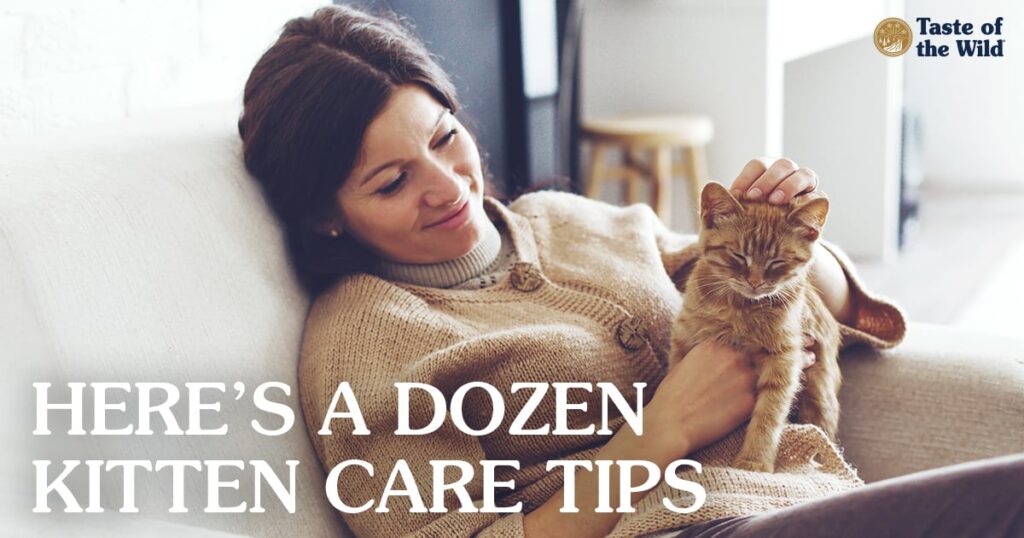
Do we detect the pitter-patter of tiny kitten paws in your house? If you’re adding a new feline family member, here are some important kitten care tips to help you make a successful start.

Age matters. The kitten socialization period, when they learn to interact with other animals and humans, ends at around 7 weeks of age. To encourage healthy social interactions and bonds, make sure kittens aren’t separated from the litter before this time.

Catproof the house. Remove toxic houseplants; put away string, yarn, buttons and other small objects that can be swallowed; and cover electrical cords that can be chewed.

Start a veterinary health program. Your veterinarian can recommend the right vaccines, parasite prevention and nutrition to help put your kitten on the road to good health.

Tag your kitten. It’s easy for small kittens to inadvertently slip out the door. Increase the chance they’ll be returned to you with an ID tag on a breakaway collar. This kind of collar snaps off if caught on a fence or branch to prevent choking, in which case a microchip can serve as a permanent form of identification.

Make gradual introductions. If you have other household pets, keep the kitten in a separate room, allowing pets to sniff each other under the door, then through a baby gate, and then gradually introduce supervised meetings over the course of a week.

Scratching is a normal behavior. Provide kittens with scratching posts so they can give in to their natural instincts. Start nail trims early so kittens are comfortable with having their paws handled.

Count the litter boxes. You need one box for every cat in the household, plus one more, in different locations. Large, uncovered boxes with low sides in easily accessible but private locations are best. Most cats prefer unscented, clumping litter that’s scooped every day.

Stay positive. Never punish a kitten because this can lead to fear, anxiety and aggression. Instead, reinforce good behavior with praise and a treat.

Make time for play. Purchase or make cat-safe toys, such as feather dancers and balls that can’t be chewed or swallowed. They don’t have to be expensive — kittens like hiding in cardboard boxes and paper grocery bags or batting around wads of crumpled paper.

Invest in good nutrition. Your veterinarian can recommend a diet that’s specially formulated to provide the energy and nutrients to help your kitten grow strong and healthy. Avoid the bottomless food bowl, which can lead to overeating and obesity.

Start brushing. Use a finger brush and pet toothpaste to get your kitten accustomed to dental care from an early age. Same goes for grooming: Brush medium- and long-haired cats to help prevent the development of painful mats.

Train your kitten. Most kittens are able to learn certain commands such as “come” and “sit.” Keep training sessions short, and reward the right behavior with treats and praise.

A Legacy of Healthy Pups Requires Nutrition They Can Trust

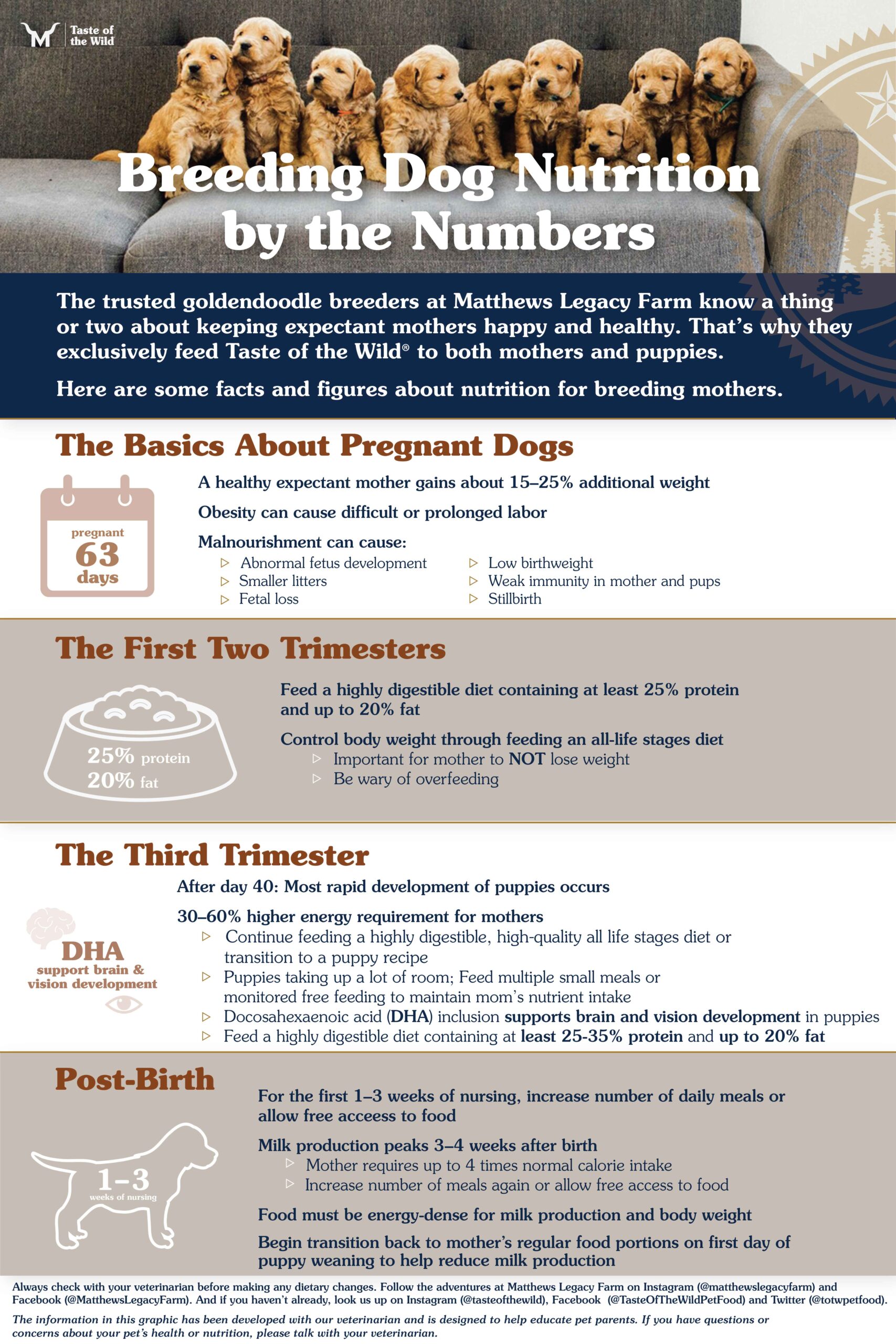
An interior infographic detailing various facts about breeding dog nutrition.

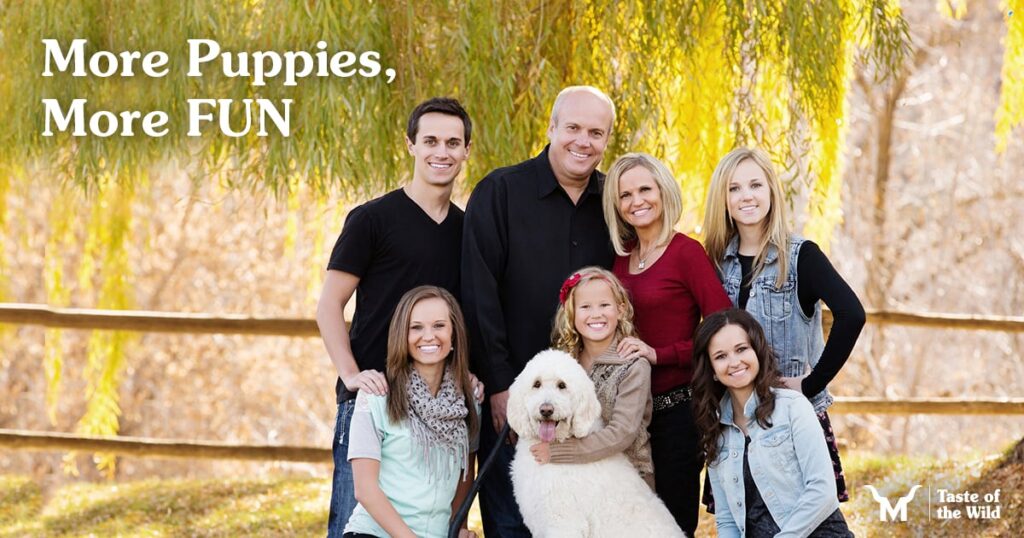
The Matthews family knows a thing or two about pet nutrition.

When your family motto is “Work hard, play hard,” and part of that work and a lot of that play involves multiple litters of goldendoodles at a time, you need to make sure that everyone — especially those on four legs — is happy and healthy. You need nutrition you can rely on and trust.

The Matthews have been breeding goldendoodles for several years, and they’ve relied upon Taste of the Wild since day one. McKinley Mantell and her sister, Tori Matthews, got a pet goldendoodle, Dixie, 12 years ago — way before goldendoodles were a wildly popular breed. Dixie gave McKinley and Tori a passion for the breed, and that passion became a dream to give other families the opportunity to love a doodle just as much as they loved theirs.

The sisters spent hours researching the best way to breed and raise goldendoodles. “We wanted to raise happy healthy puppies to be service dogs, emotional support dogs, and life-long companions.” Tori says. “We started with two female golden retrievers, Sadie and Rue, and fell in love with their happy personalities and even temperaments,” McKinley says. “We knew they’d be perfect mothers.” And so the Matthews Legacy Farm breeding program began.

When the sisters started the program, McKinley and her husband, Matt, had been feeding Taste of the Wild to their own goldendoodle, Bear. “We’d been looking for a brand with a clean nutrition panel,” Matt remembers. “So we tried Taste of the Wild, and we quickly noticed Bear’s thick, shiny coat. And she just seemed healthier.”

“If we were noticing how great it was working first hand for our own dog, then we knew it would be great for our program,” McKinley says.

A Caring Environment

Matthews Legacy Farm is an animal haven. The 15-acre plot where the farm sits is home to cows, horses, chickens, sheep, goats, pigs, and cats. “We have a little bit of everything,” McKinley says. “But they’re all pets. Every one of them.”

But let’s not forget the dogs. While Bear, Sadie and Rue are the constant canine companions, there have been up to 20 goldendoodle puppies goofing around the farm at one time. “Both dogs had litters, and one was huge. 11 puppies! That was fun,” McKinley remembers.

In addition to their own personal dogs, the Matthews created a “guardian program,” meaning that they place potential mothers in pre-screened homes. “This way, the mother has an amazing quality of life and a great family to create many lasting memories,” Matt says. Part of the screening process for a potential home is that the mother and any subsequent puppies be fed high-quality food. “We recommend Taste of the Wild.”

Wild at Home, Wherever Home Might Be

The Matthews have placed doodle puppies all over the United States (with their first international placements to Canada and Mexico coming this fall). No matter where the puppies make their new homes — from New York to Oregon to California to Washington, D.C.— one thing stays consistent: Every new pet family is sent home with a “Matthews Legacy Farm Puppy Package” that includes a toy, teething bone, shampoo, training treats, a bandana, poop bags and pee pads, puppy folder with records, birth certificate and training guide, all in a sturdy Matthews Legacy Farm canvas bag. And they also get two sample bags of Taste of the Wild Pacific Stream Puppy Recipe with Smoke-Flavored Salmon.

“There are a few reasons for this,” McKinley says. “With puppies going to a new home and leaving mom and siblings for the first time, having the same food helps them adapt to new family and strange living space more easily.” But it’s not just the puppies who are adapting to change; the new puppy parents are as well. “So taking the guesswork out of the puppies’ nutrition for the owners brings them comfort and helps them get started on the right foot.”

Another reason the Matthews prefer to send the puppies home with Taste of the Wild is a little more practical. “We love the distribution,” Matt says. “Whether they’re going to Vegas or New York, we’re confident that if the new owners want to stick with Taste of the Wild, it will be available to them. Whether it’s at the local store or online, we like knowing that it’s there.”

But another reason is because the puppies love the Pacific Stream Puppy recipe. “We start feeding puppies at 5 weeks,” Tori says. “We soak the food with warm water and they just jump right in, like it’s a natural-born instinct. We’ve never had to force-feed a puppy. They love the flavors. They just crave it.”

The new owners seem to recognize how much the pups love Taste of the Wild. The Matthews stay in touch with every family who has adopted their puppies, and whenever nutrition comes up, it usually turns out that they stuck with Taste of the Wild. “Every time we hear from owners and they say they’re still on Taste of the Wild, we consider it a success,” Matt says. “It tells me that we’re doing it right.”

As for the Matthews’ adult dogs, there isn’t a Taste of the Wild recipe that they don’t like. The pregnant mothers get switched to puppy recipes to get extra nutrients into mom and her milk while the other dogs have yet to turn down an adult recipe. “We try to mix it up for them from time to time,” Matt says. “And they just down it no matter what.”

More Puppies, More Fun on the Horizon

There is a lot of puppy action happening at Matthews Legacy Farm. With two litters due in July and two more by October, it’ll be worth your while to follow the family and all the puppies on Instagram and Facebook. And if you haven’t already, look us up on Instagram, Facebook and X.

An interior infographic detailing various facts about breeding dog nutrition.

A new puppy text graphic with a white, tan and black puppy lying in the grass.

Stuck at Home? Build a Backyard Agility Course

Taste of the Wild

Is your dog’s energy level cranked up a notch or two above the average pooch? Does he or she seem to have an insatiable need to run, even on a rainy day? Are you looking for new ways to keep your dog mentally stimulated? Could you stand a little more exercise, too? Then a backyard agility course may be the perfect outlet for the both of you.

Canine agility is a sport where you run next to your dog, directing them with commands and hand signals, through an obstacle course during a set amount of time. It’s a great way to help your dog expend excess energy and pick up new obedience tips while providing a mental challenge to help reduce boredom and anxiety. Best of all, this sport gets you off the couch and helps build a stronger bond between you and your dog.

First stop: a vet check

As always, your dog’s health and safety are priorities. Ask your veterinarian to examine your dog to make sure there aren’t any underlying conditions that could be exacerbated by this sport.

Since running the course obstacles could put stress on muscles and joints, it’s especially important to look for orthopedic conditions such as arthritis or ligament ruptures as well as spinal disease. A diagnosis doesn’t necessarily mean your dog can’t participate in agility, it just means you’ll need to adapt the course to keep your dog safe. Your veterinarian can provide guidance.

Learn about the sport

If possible, take a course in beginner agility or read books and articles to learn the basics. Because much of the sport relies on communication between you and your dog, teach your dog commands such as “watch me,” “look,” or the skill of touching his or her nose to your hand or a target. These are just some of the commands that will help you move your dog through the course.

At first, keep training sessions short, just five to ten minutes, then gradually lengthen the sessions. Make sure to lavish your dog with positive reinforcement in the form of praise and treats so he or she associates good things with your sessions.

Mapping your course

The obstacle course can be designed in a myriad of ways, depending on the size of your yard and the number of obstacles you choose. You can find agility starter kits online, which contain some of the basic obstacles, or you can make your own. Here are a few examples:

Weave poles — A series of lightweight, vertical poles that your dog zigzags through like a slalom skier. Poles should be flexible and bend if your dog bumps into them. Potential materials include PCV tubing, bamboo poles, ski poles, or even orange cones, initially placed about two feet apart.

Tunnels — Flexible, lightweight tunnels that your dog can run through. A children’s play tunnel may do the trick.

Jumps — Adjustable hurdles that your dog can leap over. You can build these out of almost anything, as long as the pole can be dislodged so your dog won’t be hurt if they bump it. Consider using two stacks of books or bricks with a broom handle laying across them. The height can be raised as your dog becomes more proficient.

Tire jumps — Basically, a vertically mounted ring your dog can jump through. Try securing a hula hoop or tire between two PVC pipes at a height that’s easy for your dog to leap through.

Teeter-totter — This is a plank with a fulcrum in the middle. Ideally, cover the plank with rubber or carpeting to prevent your dog from slipping. As your dog runs up this plank, the obstacle pivots in the middle like a seesaw, bringing the far end down so they walk safely onto the ground.

Start with a walk-through

Once you’ve set up the course, walk your dog through it slowly, helping them understand each obstacle. Use hand signals, vocal commands, praise and treats to help guide the way. Start with simple obstacles, then move on to more complicated ones.

Never force your dog through any obstacles that cause them fear or anxiety. For example, it might be scary for your dog to enter a dark tunnel initially. In this case, try leading them through with a trail of treats and lots of encouragement.

As your dog gets used to the course, you can gradually increase the speed or the height of the jumps. It’s a great way to build your dog’s confidence, strengthen your bond and get you both off the couch!

How to Foster a Dog: A Beginner’s Guide

A close-up of a woman holding a small white and black puppy in her arms.

Looking for a fulfilling job that doesn’t require a fancy resume and comes with lots of perks? Consider becoming a dog foster parent!

Scroll through pet adoption websites or the social media feeds of shelters and rescue groups, and you’ll see a vast array of dogs looking for furever homes. What you don’t usually see is the foster team that quietly works behind the scenes at the adoption center to help make sure these forever homes are found.

Dog foster parents provide a temporary home — and any special care needed — for homeless animals until they’re adopted. A dog may be in a foster home for a few weeks or a few months, depending on when they become adopted by their forever family.

How Much Does It Cost to Foster a Dog?

While the details of a foster program vary from shelter to shelter, most rescue operations go above and beyond to make fostering appealing. Donated supplies such as food, bowls, bedding and toys are often made available for foster parents. Shelters will typically cover veterinary costs as well.

Your time, attention and commitment are typically the only “costs” associated with fostering a dog. As well as their daily care at home, you will likely be asked to bring them to adoption events so they can meet potential adopters and find their permanent home. You’ll also need to make sure they are socialized well and take them to any veterinary appointments they may have.

The shelter may also ask you to send photos or videos of their cute or silly antics so they can show potential adopters what they’re like at home. Often, a dog acts differently in a quiet and calm home compared to the overstimulating and noisy shelter environment. However, sometimes, even after being placed in a foster home, shelter dogs are found to be “unadoptable.” The good news is there are programs suited for these unadoptable dogs.

Why Is Fostering Dogs Important?

There are many reasons why foster caregivers are needed for homeless dogs. Some rescue organizations don’t have brick-and-mortar buildings to house homeless pets and rely entirely on the kindness of foster families. For shelters that do have housing, they can become overcrowded, and placing some pets in foster care helps reduce the burden on the shelter. Additionally, dogs that have been in a shelter environment for a long time may need more personal interaction than they’ve had in their kennel, and foster parents can provide an enriching home environment for them.

Some dogs come from situations that did not provide proper socialization, and they may be fearful. By staying with nurturing foster parents, they can learn to trust and be calm around people and other dogs and cats. Similarly, some dogs may have behavior issues like separation anxiety, and they need a calm and patient support person to help them overcome their fears. Occasionally, dogs who underwent medical care may need a place to recover from injury or surgeries such as spays or neuters. Foster families also provide a place to raise newborn puppies until they’re ready for adoption.

Do You Get Paid to Foster Dogs?

No, being a pet foster is usually an unpaid, volunteer position. However, many foster volunteers are provided with all the supplies and resources needed to care for a dog (e.g., food, toys, bowls and bedding). The cost of veterinary care is typically covered by the shelter or rescue organization as well.

Even though you don’t get paid, there are many other reasons to become a foster parent for shelter animals. Here are just a few:

  • If you can’t commit to the responsibility of having a pet long-term, fostering gives you a “pet fix” when you need it.
  • It’s rewarding to know that the simple act of opening your home and providing a loving environment could save a dog’s life.
  • Helping a fearful or shy dog transform into a trusting, calm and loving pet is incredibly fulfilling.
  • What’s not to like about raising a litter of puppies (or kittens — cats need fosters, too!)?
  • If you have kids, fostering can teach them how to be respectful and responsible with pets.
  • Your other pets may like the companionship of a new playmate.
  • Foster pets can chase away loneliness (conveniently, that works both ways).

How Does Fostering a Dog Work?

If you have an open heart, patience and the time to commit to fostering a dog, why not look into pet rescues or shelters in your area? These organizations are happy to explain the rules of their foster programs. In most cases, it doesn’t require any special training, just a foster application and a commitment from you. The shelter will ask you lots of questions about your home, your schedule, any other pets that you might have, and much more. Once everything is approved, you can go home with your new foster dog.

A Foster Home Can Become a Dog’s Forever Home

When you bring a foster animal into your home, the goal is to provide them with a happy and safe space until they are adopted. But sometimes heartstrings get pulled and a dog’s foster journey doesn’t end that way. “Foster failure” is the name given to people who fall in love with their foster dog and just can’t let go. And that’s perfectly OK.

Dogs at Work: The Ever-Talented Canine Nose Also Detects Heat

A close-up of a brown dog's nose.

It changes temperatures. Can it also detect them?

According to an old wives’ tale, if your dog’s nose is warm and dry, it’s a sign of illness. But the truth is, there are more reliable ways to check your dog’s health: it turns out that nose temperature can change throughout the day.

While animals such as deer, cows, and horses always tend to have warm noses, it’s common for a dog’s nose to be a few degrees cooler when the environmental temperature is fairly warm. (When ambient temperatures are cold, dog noses tend to be a bit warmer.)

But a cooler nose in a warm environment makes sense: There’s no fur covering the skin on the snout and dogs often lick their noses, adding moisture which dissipates heat as it evaporates. That cooler nose temperature is what led researchers at Sweden’s Lund University and Hungary’s Eotvos Lorand University to wonder if there might be a purpose for it: Could it be used by dogs for heat detection?

Putting the idea to the test

The researchers trained three dogs to discriminate between two objects without seeing or smelling them. One object was at ambient temperature and the other at the warmer temperature of a furry animal. When tested, all three dogs were able to identify the objects emitting mild thermal radiation.

The scientists also performed magnetic resonance imaging on 13 dogs while they exposed them to objects that were either warm or ambient temperatures. The left parts of the dogs’ brains, which accept inputs from the nose, lit up when the dogs were exposed to warm objects. When objects at normal temperature were placed in front of their noses, no area of the dogs’ brains responded.

What does it all mean?

Combined, the two experiments demonstrate that dog noses can detect mild heat, and this causes a reaction in a specific area of their brains. The scientists speculate that this trait was probably inherited from wolf ancestors that used it to help track prey.

But dogs aren’t the only creatures with this unusual talent. Black fire beetles, some snakes and vampire bats also use heat detection to help hunt prey.

Researchers also surmise that the ability to detect heat is what makes dogs great hunters even if they’ve lost some of their other senses such as sight, smell or hearing. It’s possible that heat detection helps avalanche dogs and search and rescue dogs track down missing people.

While this ability to detect heat might explain a lot of things about dogs, one thing is still a mystery: How can they unerringly find a tennis ball under five feet of snow?

Should My Dog’s Diet Change for the Summer?

A dog standing on a sand dune on the beach.

Many dogs, like their owners, are more active in the summer — especially those who tend to hibernate during the snowier months. Simple logic might tell you that more activity means your dog needs more calories. So, should you switch to a summer dog diet? In most cases, it’s not necessary.

Do Dogs Eat Less in the Summer and More in the Winter?

Ever notice how you crave heavier “comfort” foods like lasagna in the winter but opt for lighter salads in the summer? The same phenomenon can occur in dogs, too.

In the winter months, dogs that are outdoors a lot tend to need more calories as the temperature drops to help them generate heat. The opposite is also true: in warmer temperatures, they tend to need fewer calories as the temperature increases.

That said, if your dog is involved in any high-intensity sports or competitions over the summer, it’s best to confer with your veterinarian about your dog’s nutritional needs.

In Most Cases, No Summer Dog Diet Changes Are Necessary

Rather than switching your dog to a “lighter” diet, a better option might be to feed them a slightly smaller amount. Again, your veterinarian can help you determine how many calories your dog needs in the summer.

You generally want to keep your dog’s diet consistent unless he or she has a special health condition such as allergies, obesity or arthritis that can be helped with a dietary change. In those cases, you want to make a gradual switch to the new diet because abrupt changes can lead to tummy upset, vomiting and diarrhea.

Monitor Your Dog’s Figure

One of the best ways to tell if your dog is eating the right amount is by using a body condition scoring system. Ideally, you should be able to feel your dog’s ribs, and there should be an obvious waist just after the rib cage when viewed from above. If your dog has lost its waist or the ribs are hidden under a thick layer of body fat, it’s time to cut back on the extra table scraps.

While it can be common for dogs to eat less food in the warmer months, a loss of appetite can also be a sign of disease. If you notice your dog’s ribs are showing and his or her appetite seems to have vanished, call your veterinarian.

Don’t Forget the Water in a Summer Dog Diet

Many people don’t realize that water is an important part of every dog’s diet. During the warmer months, make sure your dogs have plenty of fresh water available. That way, they’ll be well hydrated for all those outdoor adventures you’ll take together.

So, Should My Dog’s Diet Change for the Summer?

In most cases, your dog’s diet is probably fine as is, especially if they were healthy and happy heading into the summer season. If you ever have any questions about your dog’s diet, be sure to ask your veterinarian.

What Are The Early Signs of Cancer in Dogs?

A close-up of a black and white dog sitting happily in a sunny green meadow under a blue sky with white clouds.

Hopefully, you’ll never be faced with a cancer diagnosis for your dog, but unfortunately, it is a relatively common situation for many pet parents. So we’re sharing pet cancer signs to help you recognize when something may be amiss with your dog’s health — especially as early detection and treatment gives your dog the best hope for remission or even a cure.

Can Dogs Get Cancer?

Yes, dogs can develop cancer, including bone cancer, skin cancer and lymphoma. While some of the diseases that affect humans are not an issue for our furry friends, unfortunately, cancer affects both. As with humans, some pets have a genetic predisposition, and we have to watch our senior dogs more closely, too. 

Like humans, early diagnosis increases the chances that treatment outcomes will be good. Prevention is also important — like using pet sunscreen when your dog is outside. If you have doubts about the health status of your dog, prompt veterinary evaluation means the team can get the cancer diagnosed early and start helping your dog’s immune system fight as soon as possible.

Symptoms of Cancer in Dogs

Pet owners have a general sense of what’s normal for their animals. Noticing changes such as pain, discomfort, difficulty eating, persistent bad breath, abnormal bleeding, changes in bathroom habits or persistent sores can help with early recognition and lead to a definitive diagnosis.

Is There a Cancer Lump on My Dog?

Not every unusual lump you feel on your dog is cancer, but you should still have them examined by your veterinarian, and you should check for lumps regularly. Run your fingers over your dog’s skin at least once a month so you can identify any skin lumps or bumps that are growing or changing. Female dogs that have not been spayed are at greater risk for mammary cancer, so be sure to check for any unusual growths on their chests and bellies.

The lymphatic system is another area you can monitor with your fingers. The lymph nodes that are the easiest to find are just under the jaw, right below the ear and behind the knees. Normally, the lymph nodes feel like a small, pliable blip between your fingers. But if you feel enlarged lymph nodes, anything firmer or bigger than usual, talk to your veterinarian.

Cysts vs. Tumors in Dogs

Not all lumps indicate cancer! Your dog’s lump might be a cyst: a sac filled with fluid, air or other material. Tumors are abnormal growths of tissue. Your veterinarian can examine the cells to determine whether they are benign or malignant. Benign tumors may not require treatment, but some can become malignant tumors, and the tumor location may mean the dog’s quality of life will be improved by treating it. Cancer care could be in the form of surgery, chemotherapy or radiation.

Other Warning Signs of Cancer in Dogs

Of course, the signs of cancer vary depending on the organs or body parts affected, such as the skin, lungs, blood or bones. These signs can also signal other conditions, so don’t panic. Just see your veterinarian if you find any of the following:

  • Unexplained weight loss: If your dog starts looking thinner than usual, has a reduced appetite, and you haven’t started a new diet or exercise routine, it’s time for a checkup.
  • Chronic cough or difficulty breathing: Tumors that occur in or around the lungs can cause respiratory problems.
  • Lameness or limb swelling: If you run your hands along both of your dog’s front or rear legs at the same time, it’s easy to compare the affected limb with the other side and spot areas with unusual swellings along the bones. If your dog starts limping or is hesitant to bear weight on a limb, talk to your veterinarian.
  • Stinky breath or difficulty chewing: These can certainly be signs of periodontal disease, but dogs can get oral tumors, as well. If your dog will allow it, take a peek at the gums and under the tongue, checking for unusual growths.
  • Chronic vomiting or diarrhea: Not surprisingly, cancers of the digestive tract can lead to loose stools, upset stomachs and, in some cases, trouble with defecation. If the problem persists, or your dog starts losing weight, make an appointment.
  • Circling or seizures: A dog with a potential brain tumor may experience a sudden onset of seizures, especially in the older years, or may pace in circles over and over again. If you notice a change in your dog’s behavior, contact your vet.
  • Abdominal distension: Dogs might have swollen bellies from overindulging in the treat jar, but it can also be a sign of enlarged internal organs such as the liver.
  • Lethargy or weakness: Any time your dog seems less active than usual, lags behind on walks or just doesn’t want to interact with the family as much, there’s a good chance something’s not right. Again, behavioral changes have many possible causes, so check them out before they become worrisome.

When in doubt, see your veterinarian. It may be nothing. But if it’s something more serious, you want to catch it in the early stages.

Does a Working Dog Need Carbs?

A German shepherd sitting on rocks near a beach.

Is your dog considered a “high-energy” dog? Is he or she getting the energy they need from the food they consume? While some pet parents believe that a high-protein, moderate- to high-fat, low-carbohydrate diet is ideal for all working and sporting dogs, that’s not always the case.

If you have a canine athlete or service dog, it’s important to carefully consider their energy needs when selecting their food. Dogs who work hard for long periods of time will likely benefit from that high-protein, moderate- to high-fat, low-carbohydrate food that provides energy from fat sources. However, if your hard-driving pup is more of the “short-burst” variety, like service dogs or those who compete in sprinting or activities that include medium intensity for 30 minutes or less at a time, a balanced diet that provides moderate amounts of protein, fat and carbohydrates may offer more of what they need.

Nutritional needs vary from job to job

Fat, carbohydrates and protein provide the energy that your dog needs, whether he or she is tracking a lost individual, herding sheep, sniffing out digital crimes, or working hard on another type of job. The canine body’s preferred energy source — dietary fat or carbohydrate — depends on the type of activity being performed. Yet even hard working dogs benefit from carbohydrates in their food.

Your dog’s breed, age, gender and reproductive status, as well as the type of activities performed, determine whether a particular energy-dense performance food supplies the right nutrients. The characteristics of the food itself play a role, too.

While the nutritional requirements vary widely and are determined by the duration and intensity of activity performed, the type, duration and intensity of physical activity also influences which ratio of protein, fat and carbohydrates will benefit your dog. Some active dogs will benefit from a diet designed specifically for athletic canines. Others can be well-maintained on a high-quality adult maintenance dog food.

Fat and carbohydrates are preferred by hard working muscles

To appreciate how dietary carbohydrates add value to working and sporting dog nutrition and performance, it helps to know more about this nutrient category and its various roles in the body.

Carbohydrates are used for energy, including energy for exercise, or “work.” While certain amino acids from protein can be converted to energy during exercise, fat and carbohydrates are actually the preferred energy sources for working dog muscles.

Fat, in the form of free fatty acids, is the preferred fuel for muscles when dogs perform low-intensity aerobic (requiring oxygen) exercise, which is the activity type associated with endurance activities like search-and-rescue missions, sled pulling and hunting. In fact, dogs get approximately 70 percent to 90 percent of their energy for endurance-type work from fat metabolism. Although only a small amount of energy is obtained from carbs, some glycogen metabolism is always necessary for ongoing free fatty acid metabolism during aerobic activities.

As exercise intensity increases, as it does during sprinting, working canine muscles shift to more anaerobic (without oxygen) metabolism and draw on muscle and liver glycogen stores for energy. A dog’s body uses dietary carbohydrates to help maintain and replenish glycogen stores.

Although dogs don’t have a dietary requirement for carbohydrates, they do have a metabolic requirement for glucose. One of the simplest carbohydrates, glucose is the carbohydrate form that circulates in blood and is the primary carbohydrate used by the body’s cells for energy. In fact, a constant supply of glucose is necessary for the central nervous system to work properly.

Glucose is used during aerobic and anaerobic metabolism. What glucose isn’t used immediately for energy can be stored in the liver and muscles as glycogen. It can also be converted to and stored as fat. When blood glucose levels are low, glycogen in the liver and muscle can be used to supply fuel to cells. And glycogen present in heart muscle provides a valuable emergency source of energy for the heart.

When adequate carbohydrates are provided through food, protein remains available to provide indispensable (essential) amino acids, repair and build tissues, and support a healthy immune system rather than being used for energy. Although dogs can use certain amino acids to produce energy, the process is less efficient than using dietary carbohydrates because the body needs to process and remove nitrogen waste after breaking down amino acids.

Complex carbohydrates contribute dietary fiber that supports healthy gastrointestinal tract functions. Dietary fiber isn’t considered an essential requirement for dogs, but it does encourage growth of beneficial bacteria in the colon, help promote regular bowel movements and regulate colon pH. Bacteria in the large intestine (colon) are able to break down certain types of fiber even if dogs don’t directly digest dietary fiber. Fiber fermentation produces short-chain fatty acids that are an important energy source for the cells lining the gastrointestinal tract.

Ancient grains provide carbohydrates

The chief carbohydrate source found in most commercial pet foods is starch, the energy storage form used by plants. Ancient grains such as sorghum, barley, quinoa and millet, along with grains such as rice (brown and white), corn and wheat, are ingredients used in pet food to provide carbohydrates in the form of digestible starch.

These same ingredients also contribute indispensable amino acids, essential fatty acids, minerals and vitamins to pet foods.

Questions? Ask your veterinarian

As always, any time you have questions about your performance dog’s nutrition, talk with your veterinarian, who can not only evaluate your dog’s body condition but determine how much energy (calories) your dog should be consuming daily.

Why Do Dogs Bite?

A close-up of a dog sniffing a human hand.

If you’re a dog parent, you’ve probably felt the imprint of canine teeth on your skin — whether it’s the sharp pinch of puppy teeth or an inadvertent nip during a game of fetch. But it’s the more dangerous bites, the ones that cause serious injury, bacterial infections or transmit diseases, that are of most concern.

According to the CDC, 1 out of 5 people bitten by dogs need medical attention. Sadly, many of these bites didn’t have to happen. So we’re sharing tips on how to know when a dog might bite, how to avoid being bitten and how to curb biting behavior in puppies.

Why Do Dogs Bite?

First, it’s important to know that any dog can bite — no matter what breed, age, size or usual temperament. Biting is a normal dog behavior. Even the most mild-mannered dog, if pushed to the edge, will bite. Most bites typically occur in the home with the family dog. Many dogs, especially those who aren’t well socialized, may bite if they feel fearful or threatened. Sneaking up on a sleeping dog and startling them may elicit a bite. And many dogs will bite if they’re in pain or simply don’t feel well.

Some dogs, understandably, are uncomfortable when a small child (or anyone) grabs their ears, tug on their paws or yank at their hair or tails. People who invade the dog’s personal space, especially when the dog is eating, can also be at risk of a bite. Dogs can become protective of their food, toys or other things they find valuable.

Why Is My Dog Nibbling Me?

From play-biting to grooming you, there are a variety of reasons why your dog nibbles on you. If you have a young puppy, they may be teething; and gently gnawing on you helps relieve their discomfort. Puppies also use their mouths to explore their world, which includes you. Adult dog nipping can happen when they’re excited to play with you or they’re trying to get your attention. They may also be showing you some love by grooming you: “Just checking you don’t have fleas.”

How to Train Your Puppy Not to Bite

Little puppy bites or letting your pup mouth your hand may not bother you, but when you think about them doing the same thing as an adult dog, that’s a good reason to curb this puppy behavior now. The first step is socialization. Letting your puppy experience many different situations, environments and people as a pup will help reduce the chances of them becoming fearful or feeling threatened as an adult.

Puppy bite inhibition is a natural behavior that lets pups play with other dogs without causing injuries (most of the time). If they bite hard, the other puppies will yelp and play will stop for a moment. Puppies learn that if they want play to continue, they need to mouth and bite their playmates gently. You want to make sure they learn bite inhibition behavior for people, too.

One technique you can try to stop puppy biting is mimicking what puppies do. If your puppy bites or mouths you, yelp and stop playing. Wait a few moments, then continue playing again. If that doesn’t work, you can also try directing their attention away from you with a chew toy or tug toy. If they’re nipping because they’re overly excited, try putting them in a safe space to calm down and then initiate play again when they’re calm.

Why Does My Dog Bite Me Playfully?

This is a behavior that dogs learn as puppies. Pups that have learned bite inhibition know that they can playfully bite their littermates without causing them injury (most of the time). Generally, you can tell if a dog is play-biting by looking at their body language. Dogs playing will have a relaxed or playful stance, whereas an aggressive dog will have tensed muscles and may be exposing their teeth.

How to Get Your Dog to Stop Biting

Teaching your adult dog that biting — even play biting — is not acceptable uses techniques similar to those used for puppies. Stop playing and ignore them for a short period of time so they understand that biting behavior ends playtime. If your dog bites when they’re excited, have a toy ready so you can redirect their playful energy toward the toy. You should avoid roughhousing or using your hands around their head to initiate play as this can encourage biting behavior. Don’t use physical punishment for biting, as this can lead to fear and aggression, which can result in more than just a nip.

Avoid Aggressive Bites by Understanding Canine Body Language

Most dogs will try to communicate that they are uncomfortable with a situation before resorting to biting. While a growl often serves as a warning that a dog may be on the verge of biting, knowing canine body language can be helpful, too. Fearful dogs will often crouch near the ground, tuck their tails between their legs or roll on their backs, exposing their bellies to show they’re submissive. These dogs will often yawn and lick their lips repeatedly.

Aggressive bites, on the other hand, typically come from a dog who is standing tall and firm with their tail held high, and possibly the hair bristling down their spine. Aggressive dogs may show more of the whites of the eyes, bare their teeth and snap at the air.

If you notice your dog displaying these behaviors, remove them from the situation and give them plenty of space. Don’t punish them for showing those behaviors — that’s your cue that something is wrong. Punishing your dog may result in them going straight to biting next time.

Follow Proper Dog Etiquette to Avoid Bites

Many dog bites in children can be avoided simply by never leaving young children unsupervised with a dog — even the family dog. Beyond that, it’s important to teach children basic respect for all dogs. That means leaving dogs alone if they’re eating, playing with a toy or sleeping.

People of all ages should always ask the owner for permission before petting a strange dog, then let the dog approach and sniff them first. Other common rules for avoiding dog bites include:

  • Don’t roughhouse with dogs or tease them with your hands.
  • Never run from a dog or scream while running.
  • If a loose dog approaches, stand very still, stay calm and firmly command them to “sit” or “stay.”
  • When faced with a potentially aggressive dog, put an object, like a bicycle or garbage can, between you and the dog.
  • Avoid staring directly into a dog’s eyes, which they may interpret as threatening.
  • If you fall down near a dog, curl up into a ball and lock your fingers over your ears and the back of your neck.
  • Do not kick or hit an approaching dog.
  • Do not approach dogs that are behind a fence or in a yard on a chain.
  • Never try to break up a dog fight with your hands or other body parts — make loud noises or spray water from a hose.

By giving strange dogs space and treating family dogs with respect, hopefully, you and your family members can avoid dog bites. If you’re concerned about your dog’s biting behavior, ask for professional help from either your veterinarian, a certified applied animal behaviorist or a certified professional dog trainer.

Pet Diet Mistakes: 8 No-Nos When Feeding Your Pet

Taste of the Wild

For pets and their owners, the universal language of love is often spoken with food. A scrambled egg on top of kibble. A bite of your turkey sandwich. These are all ways we tell our pets we love them. And our pets dance on the kitchen floor to show us their love in return.

Harmless fun, right? Well, not always. See if you’re making any of these pet feeding mistakes.

The bottomless bowl. Most pets aren’t known for having self-control. If you leave food out all day, every day, it can lead to overweight pets, although cats are better at self-regulating than dogs. Pets will often eat out of boredom, even if they’re not really hungry. And it’s not just a matter of growing too fat for their collars — obesity can lead to diabetes, joint damage, heart disease and other health problems in pets.

The homemade diet. It sounds so wholesome, doesn’t it? But unless it’s been formulated by a board-certified veterinary nutritionist, a home-cooked diet can lack the right balance of protein, energy, vitamins and minerals for your pet. And pets with special nutritional needs, such as pregnant or nursing animals, puppies or kittens can develop serious health problems if they’re not fed a nutritionally balanced diet for their life stage.

The vegetarian diet. Cats are obligate carnivores, which means they need dietary meat to live. Dogs are able to produce certain amino acids such as taurine and arginine, some of the building blocks of protein, and therefore can be healthy with a meat-free diet. Cats, however, lack the enzymes to do so and need a meat source in their diets to obtain these required nutrients. That said, cats shouldn’t be fed a diet of meat alone. They also need carbohydrates and other nutritional ingredients for a balanced diet.

The dairy fallacy. Everyone knows cats love nothing better than to lick a bowl of cream, right? Not exactly. Most cats are lactose intolerant and dairy products can actually lead to vomiting and diarrhea.

The “I can’t resist those brown eyes” diet. Who can blame you? But feeding your pet table scraps and treats throughout the day can lead to digestive problems, weight gain and begging, which started the cycle in the first place. Remember: what’s on your plate isn’t always safe for your pet. Foods like grapes, raisins, chocolate and onions can be toxic for pets. If you really want to give human food as treats, opt for safe, low-calorie options such as raw apples or carrots. Treats should also account for no more than 10 percent of pet’s total daily calorie intake so you can make sure they get the full nutrition from their regular food.

The real-bone treat. Real bones from the butcher can harbor bacteria such as Salmonella that can sicken pets and people. Bones are also often harder than your dog’s teeth, and chewing on them can result in tooth fractures. Splintered bones, if swallowed, can cause damage to the digestive system that requires emergency surgery.

The follow-the-label diet. Just like people, adult pets have different activity and metabolism levels. That’s why the feeding recommendations on food packages could be too much, or too little, for some pets. It’s best to consult your veterinarian about the right food and amount for your pet. You can also check out the Pet Nutrition Alliance calorie calculator to determine exact calorie counts for your pets. Then, watch for changes in your pet’s body condition score so you can tell if your dog or cat needs to back away from the food bowl.

The single bowl approach. Having multiple pets share one food bowl is asking for trouble. Some pets may be food aggressive, resulting in that pet hogging all the food while the other one is forced into a hunger strike. Plus, changes in appetite can be a sign of a health problem, so it’s important for you to know just how much each of your pets is eating.

If you have any questions about your pet’s diet, always ask your veterinarian. They can help determine the right food — and the right amount — to keep your pet healthy and happy.