
Back-to-School for Your Pet: A Checklist to Alleviate Separation Anxiety in Dogs

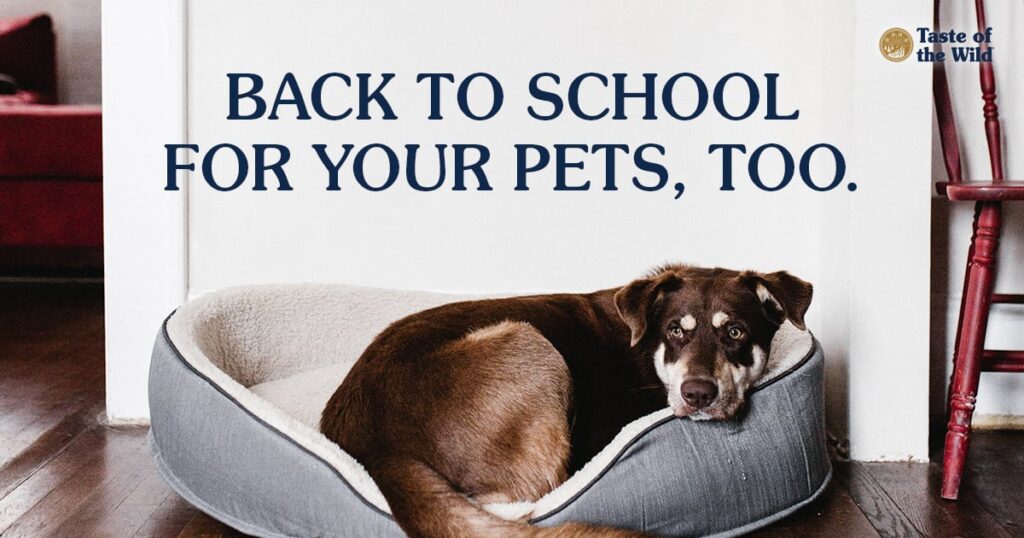
A brown and white dog lying in a dog bed on the floor.

Your dog has likely spent more time with the kids these last few months than usual, due to summer vacation. More time licking up the trail of cookie crumbs behind your child. More time rolling in the fresh-cut grass. More time curled up, fur to skin. But like all good things, summer comes to an end and back to school for the kids can lead to separation anxiety in dogs.

To help prevent your dog from feeling the angst of separation after the school bus leaves, we’ve compiled a back-to-school list for your pets. But like every school checklist, you want to work on it early, so your dog can gradually adjust to the new school year.

ESTABLISH A ROUTINE

Dogs are creatures of habit who are comforted by the predictable. They like their meals served at the same time every day. If your kids will rise earlier for school, start a few weeks before school starts and set the alarm a few minutes earlier each day to help your pet get used to the new schedule. Make sure to plan for one-on-one play time with your pet each day.

MAKE EXERCISE A PRIORITY

A tired dog is more likely to nap than mope or stress around the house all day. Make a point to walk your dog each day before the kids leave to help work off excess energy. More sleepy time is a great way to curb separation anxiety in dogs.

GIVE YOUR DOG ALONE TIME NOW TO ALLEVIATE SEPARATION ANXIETY LATER

If your dog currently goes everywhere with you or your kids, start leaving them home alone for small amounts of time each day. Go for a short walk or run a quick errand on your own, then gradually increase the amount of time you and the kids are away from your pet. If you return to signs of pet distress, such as urinary accidents, destructive chewing or neighbor complaints of nonstop barking, start with even shorter separation periods, such as just going out the door, counting to 10, then returning.

AVOID THE SOUND OF SILENCE

After a summer of full-time commotion in the household, quiet can be unsettling for dogs. Try leaving a radio on with soothing music, or a white-noise machine to eliminate distracting outdoor noises.

PROVIDE ENTERTAINMENT FOR YOUR DOG

Dogs can become destructive when left alone simply because they’re bored. Now’s the time to stock up on pet-safe toys (never leave your dog alone with any toy that can potentially be chewed into pieces and swallowed). Fill a Kong with something tasty, such as peanut butter, cottage cheese or chicken baby food (make sure there’s no garlic powder or onion powder) and place it in the freezer so it’s ready to keep your dog busy when the kids go out the door. Or leave interactive food puzzles to challenge your dog’s mind and body.

PLANT A CAMERA

If you’re away during the day, consider using a video camera to keep tabs on your pet. Some products even enable you to talk with your pet and dispense a treat. Watch for signs of stress in dogs, including panting, pacing or destructive behavior. If your dog seems anxious, consult your veterinarian.

EMPLOY PHERMONES

During nursing, the mother dog releases pheromones, which have a calming effect. Synthetic versions of these, in plug-in diffusers, sprays or collars, are available at pet stores or online. They might help give dogs a recess from separation anxiety while the kids are at school.

PLAN FOR COMPANIONSHIP

If your dog will be alone for long stretches of time, look into having a dog walker stop by your house. Or check out the nearby doggy day cares where they can play with other pets.

SEEK HELP FOR SEPARATION ANXIETY IN DOGS

If your dog is truly distressed when left alone, consult your veterinarian or veterinary behaviorist about separation anxiety in dogs. They can suggest the right behavioral therapy, and possibly medications, to help soothe your pet’s anxieties and make them more comfortable at home.

Remember that back to school for kids is also back to school for pets. It can be hard on our four-legged friends who don’t understand why that long yellow car is taking their pals away, but with a little prep work, they’ll be mentally and emotionally prepared for the switch!

Why Do Cats Need to Knead?

A close-up of two cat paws.

For some cats, kneading seems like the pinnacle of Zen contentment. They close their eyes and rhythmically press one paw, then the other, often extending and releasing their nails at the same time. In this meditative state, they may drool slightly or rev up their purring engine to the loudest setting. But what’s behind this behavior?

Instinctive nursing behavior

Shortly after birth, kittens often knead to stimulate their mother’s milk flow, a behavior dubbed “milk treading” by noted zoologist Desmond Morris. This behavior may continue into adulthood as a way to show contentment. Snuggled in your lap or in a soft bed, your cat may knead as a way to communicate how happy they are there. And the drool? Perhaps it’s a feline version of Pavlov’s dog: they salivate in anticipation of the milk they received as kittens.

Labeling “what’s mine”

Your cat has scent glands on their paw pads, so when they knead, they leave an olfactory message for other cats that says, “I was here” or “this is mine.” Contented cats may also rub their lips, cheeks or foreheads on their owners for the same reason, to leave a personal message from scent glands in those areas.

A calming influence

Cats may also knead when they’re feeling anxious, as a self-soothing behavior. For instance, cats in unfamiliar surroundings, such as a boarding facility or veterinary clinic, may knead to block out distractions and focus on a feeling of contentment.

Creating a nest

Just as dogs turn in circles before lying down, a behavior that may come from their wild ancestors who tamped down the grass to make a bed, cat kneading may be an instinctive behavior to clear a place to rest. You may even see them settle into the cat loaf position.

Kneading until it hurts

Some cats may get downright aggressive with their kneading, using all four paws, sinking claws into human skin and yowling loudly. The cats are often in a trance-like state with legs that twitch or move stiffly.

If that happens, avoid punishing the cat. Kneading is a natural behavior, and negative reinforcement will likely confuse the cat and cause additional stress. There are, however, a number of things you can do:

  • Keep your cat’s nails trimmed.
  • When your cat kneads on you, place a thicker blanket between you and your fur baby.
  • Redirect your cat’s behavior to a different area, such as a blanket or cushion.
  • Distract your cat with treats or a play session with their favorite toy.

If the kneading becomes excessive, it’s possible your cat is feeling stressed about something and resorts to kneading to soothe itself. Synthetic pheromones such as Feliway, available in sprays or plug-in diffusers, may help the cat feel calmer. Otherwise, consult your veterinarian for other strategies to help your cat.

Cats are mysterious, but knead not to be

The ways of a cat’s mind or the whys of what they choose to do might be an ever-unsolved mystery. But they don’t have to be! Our comprehensive guide to cat behavior might shed a little light on the subject of your inscrutable kitty’s thoughts and moods. We’ll help you use your cat’s tail to tell the tale of their mood, better understand what’s in a purr, examine what your cat does all day when you’re not around, and just grasp the concept of cat behavior a little better.

Dogs at Work: Portuguese Water Dogs

Taste of the Wild

Most people in the United States know of the Portuguese water dog (PWD) breed thanks to Bo and Sunny, the happy-go-lucky residents of the White House during the Obama administration. But long before that, they had a reputation as valuable crew members aboard Portuguese fishing vessels.

History of the PWD

No one is sure how Portie ancestors were first brought to Portugal. Some believe the Berbers, people from a Roman province in North Africa, sailed into port with the dogs on board. Others conjecture that the Goths, Germanic people of the Balkan area, first brought the dogs to shore.

Once in Portugal, fishermen recognized the value of the dogs and were quick to employ them on their ships. Since Porties have waterproof coats, webbed paws and are excellent swimmers, they were used to recover nets and tackle that fell overboard, drive fish into nets, swim messages from ship to shore or ship to ship and even guard the day’s catch once the ship was docked for the night. Retired fishermen were known to rent their dogs to pocket a little extra income.

As the fishing industry made use of new technologies, there was a less of a need for PWDs, and by the 1930s, their numbers had dwindled. Thankfully, a wealthy shipping magnate by the name of Vasco Bensaude started a breeding program to preserve the dogs.

Portuguese water dogs were first brought to the United States in 1958, and the American Kennel Club recognized them as part of the working dog group in 1984.  Today, Porties can be found diving into pools and running through sprinklers as family pets.  They have a reputation for being good with children, easy to train and eager to please.  It’s no surprise that the breed excels at water trials, but they can also be good at obedience and agility or as service or therapy dogs. A PWD named Dutch worked rescue and recovery at the World Trade Center site after 9/11.

An interior graphic detailing six fun facts about Portuguese water dogs.

Dog Ear Cleaning 101

A dog with long ears sitting on the beach at sunset.

If you bathe your dog at home, trim their nails and groom their coat, you may have thought about cleaning your dog’s ears at home, too. It is possible, but you should always ask your veterinarian first because it’s not always necessary. If your vet does recommend cleaning your dog’s ears at home, we’ve got some tips on how to do it safely.

Your Dog’s Ear Canal Is Self-Cleaning

Believe it or not, healthy dog ears come with a self-cleaning feature. In this process, known as epithelial migration, the skin in the ear canal gradually migrates outwards from the eardrum (the tympanic membrane), carrying with it excess debris.

So, if the ears aren’t bothering your dog and your furry friend gets regular checkups, it’s usually best to leave their ears alone.

Ear Infections Can Make Cleaning Your Dog’s Ears Necessary

Sometimes, however, underlying allergies, a secondary bacterial or fungal ear infection and other problems can disrupt the natural ear-cleaning process and make it necessary for you to clean your dog’s ears.

However, you should never put anything in your dog’s ears without first consulting with your vet. Some cleansers or medications may include ingredients that can be problematic if your dog’s eardrum is ruptured. Alcohol may sting and further inflame the skin.

My Dog Has Itchy Ears — Are They Infected?

If your dog is scratching at one or both ears and shaking their head, that’s usually a sign there’s a problem. Other symptoms of ear infections, ear mites or other problems include an unusual odor and a brownish, waxy buildup. The ear may also be painful to the touch.

If your dog is experiencing these symptoms, it’s time to take them for a checkup. Your vet can examine your dog’s ear canal, including the eardrum, and take samples of ear discharge to help diagnose what’s causing the problem.

In more complicated cases, your vet may need to perform an ear flush to enable proper examination and treatment. Sedation is usually recommended for your dog’s safety and comfort. Severe cases may require surgery, so it is important to control an ear infection if you want to avoid getting to this stage.

If your vet has recommended that you clean your dog’s ears due to an ear infection or another problem, we’ve got some tips to make it easier on both of you.

How to Clean Dog Ears

First, help your dog become accustomed to having their ears handled — ideally, before your dog ever has an ear problem. The next time your dog is sprawled on the couch relaxing with you, gently touch their ears and praise them for calm behavior. Over time, gradually advance to lifting your dog’s ear flap and looking inside the ear. Again, offer praise or a treat when your dog remains calm.

Notice how your dog’s ears look when they’re healthy. Depending on your dog’s skin pigmentation, the skin on the inside of the ear flap should typically be soft and pink, but not red, inflamed or thickened.

Before You Clean Your Dog’s Ears

Set up in an area that’s easy to clean up, such as a bathroom or outdoors. During ear cleaning, your dog may want to shake their head, releasing the ear cleaning solution and ear contents, so you may want to lay a towel down and also dress accordingly.

Use only the ear cleanser that has been prescribed by your vet. Again, you want to avoid any ingredients that could make your dog’s ear condition worse.

Add the Dog Ear Cleaning Solution

Use the ear cleaning solution that your vet recommends — do not use homemade dog ear cleaner unless told to do so by your vet. Homemade remedies may damage your dog’s ears.

Since dogs have L-shaped ear canals, you’ll want to gently pull up on the ear flap to slightly straighten the canal, then fill the ear canal with cleanser. Gently massage the base of your dog’s ear to help loosen any debris deep in the canal. Your dog may lean into this because it feels sooooo good. After a few minutes, allow your dog to shake their head, releasing the cleanser and any debris from the ear canal.

If this process seems messy and you’re wondering how to clean dog ears without solution, talk to your vet first. They can advise you on the best way to clean your dog’s ears, especially if they have frequent ear infections and routine ear cleaning is recommended.

Mop Up the Dog Ear Cleanser

Gently remove the remaining cleanser with soft gauze squares or cotton balls. Never put anything, including cotton swabs, into the ear canal, because this can pack debris deeper into the canal or damage the ear itself. Simply mop up what came out of the ear canal using gauze wrapped around your finger or a cotton ball.

Give Your Dog Lots of Hugs

The last step is to reward your dog for a job well done. Give them plenty of praise and perhaps a tasty treat so they always associate ear cleanings with a positive experience.

For more at-home grooming tips, read our Taste of the Wild guide to pet grooming.

Behind the Breed: Newfoundlands

Fun Facts About Newfoundland Dogs Blog Graphic

Have you ever wondered where a dog breed originated from? In our “Behind the Breed” series we’ll dive into the history, personality and physical appearance of a particular breed. We’ll also cover some of the FAQs about the breed and maybe some fun facts, too!

The Newfoundland dog size may be intimidating, but “Newfies” or “nanny dogs” are patient and gentle giants, especially with their tiny human family members. Their sweet disposition and their natural lifesaving abilities make the Newfoundland a true multipurpose dog!

Newfoundland Dogs Love Working in the Water

Named after the island off the east coast of Canada, the Newfoundland’s water-resistant double coat, rudder-like tail and webbed feet made them ideal shipmates. Powerful Newfies thought nothing of leaping into the icy Atlantic waters to haul fishing nets or rescue a sailor who fell overboard. They were also hard workers on shore, whether it meant pulling the day’s catch to town in a cart or hauling sleds through the snow.

With a reputation for being fierce in the water but docile companions on land, Newfies were brought to England and France, where they quickly gained popularity. The first official showing of the breed occurred in 1860, when six Newfoundlands were entered into the national dog show in Birmingham, England. Thanks to their prowess at water rescue, Newfoundland dogs soon became standard requirements for lifeguard stations along the British coast.

Newfoundland Dog History

How, exactly, the breed started is a mystery. Archeological digs in northern Newfoundland have uncovered evidence of a Viking settlement, including skeletons of large dogs, hinting that they may have arrived on board a Viking ship. Others theorize the breed developed from the Great Pyrenees that accompanied Spanish fishermen to the island.

The Newfoundland Dog Personality

Newfies are mostly gentle companions, lounging around the house and playing with kids, which makes sense, given that the Newfoundland personality is calm, devoted and protective. The sweet temperament of Newfies makes them excellent therapy dogs, and their gentleness with children is why they’re often referred to as “nanny dogs.” As a natural-born working dog, the Newfoundland excels at water trials, obedience, tracking, drafting, pulling carts and sledding.

Newfoundland Dog FAQs

What Are the Newfoundland Dog Colors?

According to the Newfoundland Club of America, coat color variations include solid black, brown and gray, and a mix of black and white called a Landseer Newfoundland.

Do Newfoundlands Drool?

Newfies are abundant droolers. So Newfoundland pet parents just starting their Newfie journey will need to invest in a drool rag and a bandana to help catch some of the endless drool before it spreads all over their home. The American Kennel Club even has them in their “Top 10 Droolers” list.

Do Newfoundlands Shed?

With their thick, double coat, Newfies can be moderate shedders, especially during the shedding season. Weekly grooming of their outer coat, and more frequent grooming sessions with a slicker brush (when needed), will help keep on top of a Newfoundland’s shedding.

How Big Do Newfoundlands Get?

With a height of up to 28 inches and a weight of up to 150 pounds, the Newfoundland dog size definitely meets the definition of a giant dog breed!

How Long Do Newfoundlands Live?

The Newfoundland lifespan is around 10 years.

Training Newfoundland Puppies

Like all puppies, a Newfoundland puppy should undergo early socialization so they are comfortable and confident as an adult. They are fairly easy to train because they love to please their people. Their size makes training even more important in some ways — you probably don’t want a 150-pound adult Newfoundland jumping up on you!

Large Size Dog Breeds Need Adequate Nutrition as Puppies

The Association of American Feed Control Officials (AAFCO) considers dogs to be large sized if they will weigh 70 pounds or more as mature lean adults. This is important to know when choosing food for Newfoundland puppies, as they need food that meets the growth requirements of large-sized dogs.

You can find the AAFCO statement on all commercial dog food labels. Here is example of an AAFCO statement for a formula that meets the requirements for growth of large size dogs, so it is a complete and balanced food for a growing Newfoundland pup:

Taste of the Wild Ancient Mountain Canine Recipe with Roasted Lamb is formulated to meet the nutritional levels established by the AAFCO Dog Food Nutrient Profiles for All Life Stages, including growth of large size dogs (70 lbs. or more as an adult).”

Newfoundland Fun Facts

  • A Newfoundland named Seaman who accompanied Lewis and Clark on their travels may be the reason Lewis named a tributary of the Blackroot River in Montana “Seaman’s Creek.”
  • Lara, President James Buchanan’s Newfoundland, was famous for sprawling on the White House floor for hours, with one eye open and the other closed.
  • A Newfoundland named Rigel is credited with saving a number of Titanic passengers. Rigel barked to alert the passenger ship Carpathia, which stopped and rescued survivors — including Rigel.

Fear of Fireworks: Help Your Pet Make It Through the Night

Taste of the Wild

The whistle, boom, crackle and whizz of fireworks, not to mention the pop-pop-pop-pop of firecrackers, are enough to send many pets into a frenzy. Up to half of pet dogs react with fear to fireworks, according to a recent article in the Journal of Veterinary Behavior. One study reported that more than 15 percent of those dogs take several days or longer to recover from the experience.

Fear of loud noises, also known as noise phobia or noise aversion, is more common in dogs than cats, but some cats might display their fear by burrowing into the laundry basket in the basement. Pets that are afraid of fireworks are also likely to dislike other noises such as thunder and gunshots. If you have a pet that would rather forego the fireworks, we have some tips to help soothe your pet’s fear.

Signs of noise phobia

Many dogs (and cats as well) may choose to hide during fireworks. But others may display anxiety in other ways: They pant, pace, tremble, drool, or seek attention by pawing, whining and climbing onto people. Some may have accidents in the house.

Since dogs aren’t sure where the noise is coming from, those that are indoors may try to escape by leaping through a window or bolting out a door. In fact, one in five pets goes missing after experiencing loud noises, according to the American Society for the Prevention of Cruelty to Animals (ASPCA). That’s why it’s important for your pet to have an ID tag and/or microchip that includes your current contact information before the fireworks begin.

Easing your pet’s anxieties

Whatever you do, try not to leave your pet alone on these stressful nights. Also, don’t give them any sedatives from your medicine cabinet without first consulting your veterinarian. Dogs and cats often don’t metabolize human medications the same way people do.

Finally, avoid punishing your pet if they’re acting out, this could exacerbate their fear. Here are some positive ways to help your pet:

An interior graphic detailing seven different methods to help soothe your pet's fear of fireworks.

Long-term management

To help lower your pet’s stress level long-term, your veterinarian may also recommend a form of desensitization and counterconditioning. An example of desensitization is to expose the dog to an audio recording of fireworks at a very low volume so it doesn’t provoke fear. Over time, the dog should begin to ignore it. Gradually, over the course of several weeks, increase the volume.

At the same time, you can add counterconditioning, which involves pairing a positive stimulus, such as a treat or play, with a negative stimulus, like the sound of fireworks. Ideally, the dog will eventually replace its fearful response to loud noises with a more comfortable association.

Why Are Grapes Bad for Dogs?

A Black and Brown Dog Staring at Hanging Grapes

Among the many foods that are on the no-no list for dogs are grapes and their relatives: raisins, sultanas and currants. Dogs should not eat grapes or any grape-based foods because they can cause severe kidney failure and even death. So what makes grapes so bad that even a single grape can cause health issues for dogs?

Are Grapes Acidic? Is That the Problem?

Grapes do have a pH on the lower side so they are acidic, but the issue with dogs eating grapes isn’t because they’re acidic. It’s likely due to one particular acid — tartaric acid. If that sounds familiar to all the bakers out there, it’s probably because you’ve used cream of tartar, which is made from tartaric acid, in your baking. Unlike people and some animals, dogs are especially sensitive to tartaric acid.

What Happens If a Dog Eats a Grape?

For a long time, no one knew exactly what made grapes toxic to dogs. The type of grape didn’t matter; dogs showed signs of vomiting, diarrhea, lethargy, lack of appetite, and later increased thirst and urination, whether the grapes were green or red, seeded or seedless grapes, fresh grapes or dried (raisins, sultanas and currants). And sometimes grape and raisin toxicity led to acute kidney failure or worse.

Then the connection between grapes and dogs exposed to cream of tartar and tamarinds was made. The ASPCA explains that the clinical signs, lab results and kidney lesions seen in the dogs exposed to cream of tartar and tamarind resembled those of dogs who ate grapes and raisins. This helped investigators realize that a common factor — tartaric acid — was the toxic substance behind the kidney problems.

What Are the Symptoms After a Dog Eats Grapes?

The symptoms of grape or raisin toxicity can vary among dogs, among grapes, and by how many grapes the dog ate. A dog’s health can be affected within hours of grape ingestion; typically dogs with grape poisoning vomit, have diarrhea, don’t want to eat, drool and just want to laze around. You may notice them drinking and urinating more. If kidney damage has already started, urine production may decrease (there may be little or no urine coming out).

Can Dogs Have Green Grapes? Can Dogs Have Red Grapes?

Red, green, purple, black or yellow; it doesn’t matter what color the grapes are, don’t let your dog eat them, as they can all potentially cause grape toxicity. They also shouldn’t eat dried grapes, like raisins, sultanas and currants, since these may also be toxic to dogs.

What to Do If Dogs Eat Grapes

If you know or suspect your dog ate a grape, you should immediately call your veterinarian. If your dog ate grapes or raisins (or any grape-based food) while your vet clinic is closed, call an after-hours emergency veterinary clinic, the ASPCA Animal Poison Control Center or the Pet Poison Helpline for advice on what to do. Do not try to induce vomiting unless a veterinarian has advised you to do so.

My Dog Ate Grapes but Seems Fine

If your dog eats raisins, grapes or any other grape-containing food, call your vet. Even if your dog isn’t showing signs of grape poisoning, you should still call your vet. If it’s been less than an hour or two, your vet may induce vomiting so the toxins (grapes or raisins) are removed from your dog’s stomach. Further treatment may still be required, though.

Sensitivity to grapes can vary among dogs, so it’s best to be safe and have your dog examined by your vet if they have ingested grapes or raisins — even if they seem fine or ate just one grape.

Can Dogs Have Wine?

Nope. Any alcohol is bad for dogs. Along with grape poisoning from the wine (it contains tartaric acid), dogs can experience ethanol poisoning, which leads to trouble breathing and seizures. So make sure you keep wine glasses and bottles well out of the reach of curious canines.

Can Dogs Have Grape Juice?

Another nope. Grape juice can also cause grape toxicity so don’t let your dog sneak a sip from your glass. Eating grapes, drinking liquids made from grapes and eating dried grape products can all cause toxicity in dogs and are all big no-nos.

The bottom line is that dog owners should never feed their dog grapes or any food with a grape-based ingredient in it (e.g., raisin bread is out). If your dog does eat grapes, call your vet immediately. If you would like to feed your dog some fruit, there are plenty of safe alternatives like plain cranberries, pineapple and blueberries.

Dogs at the Beach: Safety Tips for Summer Fun

Brown Dog Running on Beach with Tongue Out

Whether you’re boating, swimming, dock diving or just sailing a flying disc on the beach, chances are, your dog wants to share in the summer fun. And why not? With a few summer precautions to help keep your dog safe, everyone can get their paws wet at the beach. Here are some safety tips to make sure your dog stays safe while enjoying their day in the sun and sand.

First, Are Beach Dogs Allowed?

Before you head out for the day you’ll need to find out if the beach is dog-friendly and if there are any leash laws. You don’t want to get kicked off the beach right when your dog’s starting to enjoy themselves! If it is a dog-friendly beach, check whether there are any rules you need to follow. There may be restrictions on where your dog can go at certain times of the day or year and how short their leash needs to be.

If your dog is allowed to be off-leash on the beach, it’s a good idea to brush up on their obedience training before you go. A reliable recall is essential in such an open area with plenty of distractions like other dogs, people, toys and sea gulls. You don’t want to be chasing your dog down miles of coastline!

Check the Water Conditions

Before your dog dives in, make sure the waters are calm. Swim in an area that’s out of the way of boats and other watercraft and in areas that are less likely to have swift currents, riptides and undertows. And never leave your dog unsupervised in the water or while at the beach.

Dog Beach Essentials

Although you might assume that the dog paddle comes naturally to all dogs, it’s just not the case. Some breeds, especially those with flat faces, barrel chests and short legs, such as bulldogs and pugs, can have a hard time staying afloat. Even the best doggy paddlers can become exhausted and need a little help getting back to shore. A life jacket with a top handle for lifting dogs out of the water could be a life saver.

Hairless breeds and dogs with thin, white coats can be prone to sunburns, and like people, at risk for skin cancer. Even dogs with dark coats can burn in places where the skin is exposed, like the nose, ears and belly. Look for a fragrance-free pet sunscreen or a sunblock with broad-spectrum UVA and UVB barriers. Once applied, prevent your dog from licking at it until it soaks in.

Dogs on the Beach Need to Stay Cool

You’d never sit in the sun while wearing a fur coat, but that’s essentially what your dog is doing. Many breeds, especially brachycephalic (flat-nosed) dogs, can easily succumb to heatstroke, which is life-threatening. Make sure to provide plenty of shade and fresh water. If your dog begins panting excessively, soak a towel in cool water and put it next to their skin, or take your dog to an air-conditioned spot to cool off. Hot weather safety should be taken seriously!

Beach Dogs Need Plenty of Fresh Water

You wouldn’t drink sea water and your dog shouldn’t either. Drinking too much salt water can lead to vomiting, diarrhea and dehydration in dogs (not a fun car ride home from the beach). You can avoid the problem by bringing a collapsible bowl and plenty of fresh drinking water for your dog.

Can Dogs Eat Sand?

It’s inevitable that if your dog spends any time at the beach they’re going to get some sand in their mouth. It’s something you want to try to help your dog avoid though as ingesting too much sand can become life-threatening. Think about how hard wet sand can become when building sand castles — the same thing can happen in your dog’s intestines causing a blockage that may need to be surgically removed. To help avoid sand ingestion, bring toys that won’t attract wet sand and hose your dog off at the end of the day so they don’t groom the sand off their fur.

Protect the Paws at the Beach

Anyone who’s ever walked barefoot on hot sand knows how unforgiving it can be for tender feet. And sand, both in the water and out of it, can hide broken glass, fish hooks, shell shards and other dangerous objects. Pet owners can help keep their dog’s paws safe with canine beach shoes — they make a cute accessory too!

Rinse Your Beach Dog’s Coat

At the end of the day, shower off your dog with fresh water to eliminate the sand, salt or seaweed caught in their hair. Then it’s time to relax and rest with your exhausted, but happy, canine pal.

Behind the Breed: Bernese Mountain Dogs

Infographic of fun facts about Bernese mountain dogs

Bernese mountain dogs, affectionately called “Berners,” are named after the central region of Switzerland where they originated: the canton of Bern.

Ancestors of the Berner appeared in Switzerland more than 2,000 years ago, when Roman soldiers invaded the area, bringing with them tall, mastiff-like dogs with broad chests and muscled legs, which made them ideal for hauling carts. When crossed with the existing Swiss mountain dogs, it resulted in a strong breed that could thrive in the Alpine weather.

Over the years, these sturdy dogs did a wide range of jobs on the farm, from herding cows and pulling carts of cheese and milk to serving as watchdogs and farmer’s companions.

By the late 1800s, the numbers of Berners dwindled, partially because of the popularity of the Saint Bernard. But in 1892, an innkeeper named Franz Schertenleib rekindled interest in Swiss mountain dogs by selecting ideal examples for use as breeding stock.

He eventually showed two dogs to Professor Albert Heim, an expert on Swiss mountain dogs, who immediately recognized them as ancestors of the large mountain dogs that used to work farms across Europe. Heim worked with breeders to revitalize the breed, and the Bernese mountain dog was officially recognized in Europe in 1912.

In 1926, a Kansas farmer imported two Berners to the U.S. for use as farm dogs. The breed quickly gained popularity, and the American Kennel Club registered the first Bernese mountain dog in 1937 as a member of the Working Group.

Today, this strong breed often takes home trophies in agility, herding, tracking, rally and even drafting, which is a competition in which dogs pull carts. These gentle giants typically have a sweet and patient temperament, making them excellent therapy dogs, as well.

An interior graphic detailing six fun facts about Bernese mountain dogs.

Lymphoma in Dogs

A brown dog sitting down next to text that reads, ‘Understanding Lymphoma’.

Thanks to advances in veterinary medicine, nutrition and good daily care from owners like you, dogs are living longer than ever before. But unfortunately, pets can be diagnosed with cancer, especially as grey creeps into the fur around their faces.

One of the most common pet cancers is lymphoma in dogs. As you might know, cancer occurs when there is uncontrolled division (and proliferation) of abnormal cells. In the case of dog lymphoma, a group of cells in the immune system called lymphocytes go haywire and continue to multiply.

Lymphoma can affect dogs of any breed and any age, but it’s more frequently diagnosed in middle-aged and older dogs.

RISK FACTORS

No one is sure what, exactly, causes lymphoma in dogs.

Since certain breeds, such as golden retrievers, tend to be more affected than others, it’s possible there’s a genetic component to lymphoma in dogs.

SIGNS TO WATCH FOR

Because lymphocytes can travel anywhere in the body, dog lymphoma may be widespread, or it can be localized to particular organs, including the gastrointestinal (GI) tract, spleen, liver, bone marrow, skin, central nervous system or other organs. As a result, the signs can vary, depending on what part of the body is affected. Some pets may just show general signs that they don’t feel well, such as lethargy and loss of appetite.

For lymphoma in dogs, it’s common to have one or more firm, swollen lymph nodes that can be seen or felt in locations such as the neck and behind the knee. The lymph nodes can enlarge quickly and potentially press against other body parts, compromising function. Lymph nodes in the neck, for example, can compress the trachea, making it difficult for the dog to breathe.

LYMPHOMA DIAGNOSIS IN DOGS

The diagnosis is usually made by taking a sample of the malignant cells, either through a fine-needle aspirate or a biopsy of an affected organ. By analyzing a biopsy sample, a specialist can determine whether the cancer is low, intermediate or high grade, depending on how rapidly the cells appear to be dividing. High-grade lymphoma in dogs is typically considered more malignant, but in some cases may be more responsive to treatment.

Other tests may be recommended such as blood tests (including feline leukemia testing in cats) and a urinalysis, to assess the pet’s overall health.

Once a diagnosis is made, dog lymphoma is typically classified by the anatomic area affected, type of lymphocyte (T-cell or B-cell) and by stages, to determine the extent of the disease, potential treatments and prognosis and to monitor response to therapy. Other tests may be needed, including a bone marrow biopsy, X-rays and an ultrasound.

The stages range from I to V, with a single lymph node involvement in stage I to bone marrow or other organ involvement in stage V. Each stage also has a substage, depending on whether the animal is showing signs of illness. Dogs may progress from one stage to the next over time.

PROGNOSIS AND TREATMENT

The prognosis for pets with lymphoma depends on a number of factors including overall health, stage of the disease and type of tumor.

Your veterinarian or a veterinary oncologist (a cancer specialist) can outline treatments that can help your pet feel more comfortable and potentially put the cancer in remission, although this is usually temporary.

Because dog lymphoma is generally considered a systemic disease, some type of chemotherapy is usually recommended. Dogs typically tolerate chemotherapy fairly well, without as many side effects as humans. If the cancer is localized to a specific area, surgery or radiation therapy may be options. Your veterinarian can help you decide the right approach for you and your pet.