
Good Hunting Dogs Are Vital Partners in the Field

Dog in field hunting

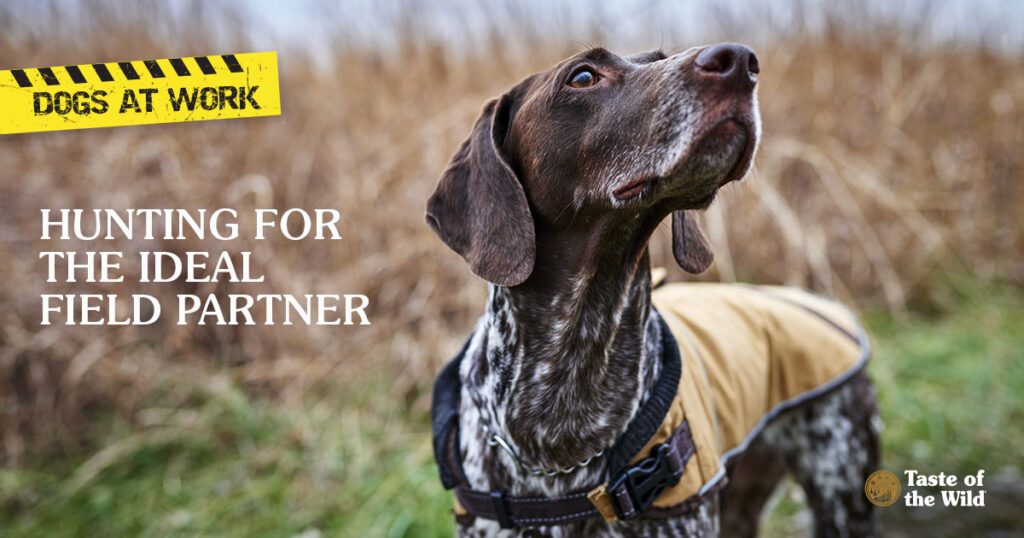
Hunting dogs, it seems, like nothing better than tracking down game such as a pheasant, retrieving it with a soft mouth and obediently laying it at the feet of their owners. But hunting and fetching are two different activities!

Other dogs love to fetch — almost as much as they adore the ensuing game of keep-away as they orbit around their owners, refusing to give up the tennis ball.

Are there certain breeds that are better than others at hunting? And how does a great hunting dog become one?

Types of Hunting Dogs

Hunting dogs generally fall into three categories: gun dogs, hounds and terriers.

If you want a dog to track, point, flush and retrieve birds or small game, consider a gun dog. Labrador retrievers are probably the most popular type of gun dog and often have the ability to remember where birds land so they can easily retrieve them later. Other types of gun dogs include golden or Chesapeake Bay retrievers; Brittany, springer or Boykin spaniels; German shorthair pointers; English setters and Portuguese water dogs.

Hounds channel their noses or eyes to track large game such as deer or bear. Scenthounds include breeds such as coonhounds, foxhounds and beagles, and are more commonly used to hunt than sighthounds such as greyhounds.

Finally, high-energy terriers like to chase after small game such as squirrels and even dig into tunnels in pursuit of their targets. Examples of this hunting category include Jack Russell terriers and wire fox terriers.

Qualities of a Good Hunter

Most of all, you’ll need a dog that’s physically capable of keeping up with fast-moving game and has the stamina to track for hours at a time. That means bulldogs are probably not your best bet. Some breeds are just born with physical attributes that help them be good hunters. Labrador retrievers, for example, have webbed paws and a thick tail that acts as a rudder when retrieving fowl in the water.

If you’re a serious hunter and plan to spend a lot of time in the field, it’s worth it to find a reputable breeder who is devoted to raising hunting dogs. These people will typically breed for pups without orthopedic problems such as hip dysplasia that could shorten their hunting lives.

You’ll want a dog with a good temperament that can work at your side in the fields but be a good family dog as well. Of course, obedience goes without saying. Positive-reinforcement training should start at eight weeks so your pup learns basic commands such as sit, stay, come, fetch, heel and drop it before he or she advances to scent tracking and soft mouth skills.

Some dogs have a fear of loud noises such as fireworks, thunder and, unfortunately, gunfire. Part of training your dog might include trips to a target-shooting facility to make sure the sound won’t upset your pup.

Gearing Up Your Dog

The best way to prepare your dog for a day in the fields is to keep exercising and training all year long. That way, he or she will be in peak condition when you hit the ground.

Before heading into the field, your dog may benefit from a grooming session to remove longer fur (including on the tail) that can collect burrs or get tangled in the underbrush. Trim nails so they don’t snag on roots or rocks. A comfortable hunting vest that protects the chest and belly can help prevent branches and thorns from scratching your dog’s skin raw. If it’s waterproof, all the better for diving into lakes and streams in search of game.

Don’t forget to bring fresh drinking water and extra dog food to help sustain your dog’s energy during the day.

Even if you don’t bag the limit, just being in the outdoors with your best friend makes for a great day.
Hypoallergenic Dog Food: How Does It Work?

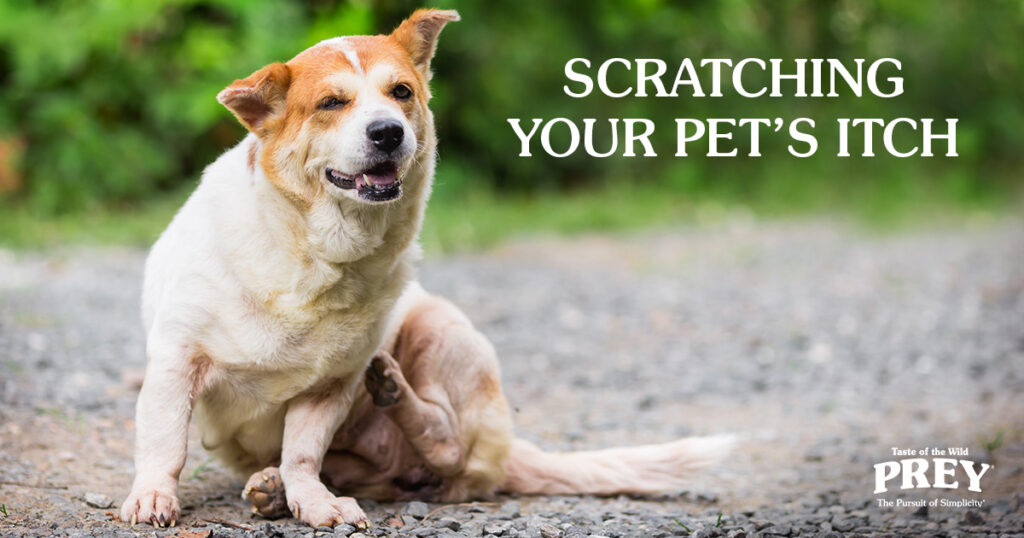
A close-up of a brown and white dog sitting on the ground outside scratching itself.

If you’re starting to research food allergies and hypoallergenic dog food, there are a few misconceptions that are important for you to be aware of. We’ll go through those and other information about food allergies in dogs — but if your dog is showing any signs of illness, your veterinarian should be your first call. 

Hypoallergenic Food for Dogs

The first thing to know about hypoallergenic diets for dogs is that, while it’s a relatively common term used by pet parents, no diet can truly be allergen-free. Instead, specialty dog food is formulated with ingredients that reduce the risk of an allergic reaction. These are known as hydrolyzed-protein diets and limited-ingredient diets. More on that later — let’s go over dog food allergies and food intolerances.

The Facts About Dog Food Allergies

A food allergy is an abnormal reaction to a normal food. This occurs when the dog’s immune system misidentifies a substance in the food, most commonly a protein, as a foreign invader and mounts an unnecessary immune response against it. This often leads to itchy skin and, for a small percentage of dogs, gastrointestinal signs like vomiting or diarrhea. A food allergy can occur suddenly after a dog has been eating the same ingredients for months or years with no problems.

Protein is the most common food allergen, with beef, dairy products, chicken and wheat topping the list. Other allergy-triggering protein ingredients include lamb, eggs and soy, but over time, dogs can develop allergies to any protein source they’re repeatedly exposed to. Dogs can also be allergic to preservatives, food additives or other ingredients in their diet. 

True Food Allergies in Dogs Are Rare

Food allergies are actually very uncommon in dogs. Flea and environmental allergies are far more likely, which is when dogs react to flea saliva or pollen, mold, dust mites and other environmental irritants. Dogs with food allergies tend to itch all year long, while those with environmental allergies often experience seasonal signs.

To complicate matters, dogs can be allergic to more than one allergen and have both food and environmental allergies. Some dog breeds, such as Labrador retrievers, golden retrievers and cocker spaniels, can be genetically predisposed to allergies.

Signs of Food Allergies in Dogs

Some dogs may experience gastrointestinal issues including vomiting, diarrhea, gas, loud intestinal rumbling and frequent bowel movements. They may also experience weight loss and irritability. However, the most common signs of a food allergy include: 

  • Nonseasonal itching
  • Scratching or chewing their face, ears, feet or groin
  • Red, irritated skin
  • Secondary skin infections
  • Chronic or recurring ear infections

Food Intolerance Is More Common in Dogs

While we’ve spent some time discussing a food allergy, it is far more likely that a dog has a food intolerance rather than a food allergy. A food intolerance doesn’t involve the immune system reacting to an ingredient in the diet (an allergic reaction). Instead, it usually occurs when a dog has trouble digesting a particular ingredient.

Diagnosing a Food Allergy or Food Intolerance in Dogs

The best way to help your dog is to start with a visit to your veterinarian. They can provide your dog with medications to help relieve the itch and other symptoms while you work together to determine what’s causing it. They will most likely start by ruling out parasites, infections, metabolic diseases and other possible causes of your dog’s symptoms. 

To check for a food allergy or intolerance, your veterinarian may recommend an elimination diet trial for 8 to 12 weeks. The goal is to remove potential allergens from the diet to see if your dog’s symptoms resolve. While there’s no such thing as a hypoallergenic diet, your veterinarian may recommend a limited-ingredient diet or a hydrolyzed-protein diet. 

A limited-ingredient diet typically includes a single carbohydrate source and a single protein source (e.g., pasture-raised Angus beef, cage-free turkey or trout raised in spring-fed water). Sometimes a single-protein diet also contains a novel protein that the dog hasn’t been exposed to before, like venison, duck or salmon. These diets provide all the essential nutrients dogs need and are formulated to provide complete and balanced nutrition, even with only a few ingredients. A limited-ingredient formula may also help dogs that have a sensitive digestive system or skin issues, even if they don’t have a food allergy. Hydrolyzed diets have the proteins broken down into pieces small enough to avoid detection by the immune system and are typically only available by prescription. Your veterinarian will choose the best dog food for your dog. 

During the elimination trial, it’s very important that your dog doesn’t eat anything else besides the assigned diet. That means no treats, rawhides, table scraps, flavored medications or even chew toys made from animal products. After the 8 to 12 week elimination period, a challenge period is started where the original diet is gradually introduced again. If your dog’s itching improves, then gets worse when they’re challenged, a food allergy diagnosis is typically made. There is no cure for a food allergy. Instead, your dog will need to stay on specialized dog foods for the remainder of their life and avoid anything that contains the allergen. 

What About Hypoallergenic Dog Treats?

Similar to hypoallergenic dog food, no treats can be truly hypoallergenic. However, like limited-ingredient diets, there are treats available which have ingredients that are less likely to cause a reaction or have the protein hydrolyzed into small pieces, so the immune system won’t recognize it. If your dog has food sensitivities or allergies, always ask your vet before feeding them any type of new food, including treats.

The Ethics of “Saving” Sick or Aging Pets: How Do You Know When to Let Go?

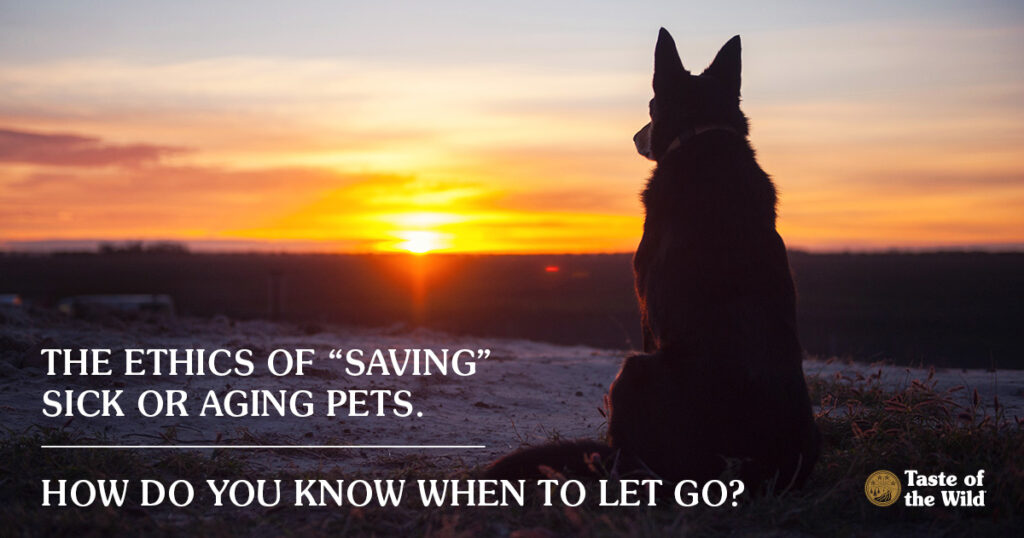
Ethics of “saving” sick or aging pets

Sir Walter Scott was not only a prolific poet and novelist, he was also “perhaps the most devoted dog lover that ever was,” according to a New York Times article published in 1898. In paintings, he is almost always portrayed with a dog. And his deerhound, Maida, is immortalized in the monument of Scott in Edinburgh, forever curled at his side.

Scott lamented about the brief lives of his canine companions: “I have sometimes thought of the final cause of dogs having such short lives and I am quite satisfied it is in compassion to the human race; for if we suffer so much in losing a dog after an acquaintance of ten or twelve years, what would it be if they were to live double that time?”

It’s a loss that all dog and cat lovers have to face at some point. But how do you know when it’s time to let go of your companion? And when can euthanasia, in fact, be the most kind and loving choice?

The Dilemma of Sick and Old Pets

Pets are living longer than ever before, thanks to advances in nutrition and veterinary medicine — and perhaps because more now sleep in our beds, rather than outside. And many of the same life-extending procedures available for humans can also be offered for pets. From brain surgery and chemotherapy to hip replacements and kidney transplants, there’s almost nothing you can’t do for your pet (at a price, of course).

But like human medicine, most of these advanced measures rarely come with guarantees of how much life — or quality of life, considering potential drug side effects or hospitalizations — they’ll buy for our pets.

Even if the pet is simply grey around the muzzle and slowing down from a degenerative disease, a common phenomenon in older pets, at what point is medical poking and prodding helping the pet or hindering comfort and happiness?

Subtract Your Emotions from the Equation

While these questions never have black-and-white answers, what makes them even harder is the fact that your pet is a loved family member, bound inexplicably to your heart. But perhaps the kindest thing you can do is to put aside how you feel and focus instead on how your pet feels. How can you minimize your pet’s suffering and make sure their remaining time is physically and mentally rewarding? To help accomplish this, there are numerous quality-of-life surveys, like this one, that help you objectively evaluate whether your pet is enjoying life or having a hard time of it.

You can also keep a daily diary to determine if your pet is having more bad days than good. Or select three of your pet’s favorite activities, whether it’s slurping up peanut butter, chasing a laser or retrieving the squeaky toy, and note when your pet loses the interest or ability to do the things he or she loves.

The Association for Pet Loss and Bereavement also offers resources and online chats to help you grapple with the difficult decision.

It’s Always a Personal Decision

Your veterinarian can be an invaluable resource in terms of evaluating your pet’s comfort level or simply serving as a sounding board to discuss how you feel. But inevitably, only you and your family can decide what’s right for your pet.

Knowing when to let go is, without a doubt, the toughest part of being a pet parent. But it’s also one of the most loving and compassionate ways we can repay our pets for a life of devoted companionship.

13 Tips for Camping with Your Dog

Out of the Doghouse and Under the Stars

Unplug your computer. Power down your phone. Disconnect from the stress of everyday life. And connect with your dog under a canopy of stars in the wilderness. What outdoor adventure is better than camping with your best friend?

But before you pack up and head out, consider these tips to help make your trip safe and fun for your furry pal:

1. Know the regulations before you go.

Rules about pets can vary from one campsite to the next — you don’t want to arrive only to learn dogs aren’t allowed. Check out websites for national parks, state and county parks, or the Forestry Service for dog-specific regulations.

2. Make sure your dog is the camping type.

Do you own a pug, Frenchie or other short-nosed (brachycephalic) breed? They can be prone to heatstroke and may be better left in your air-conditioned home. Same goes for dogs that tend to bark at the sound of every chirping cricket, croaking frog or snapping twig. Better to let them sleep peacefully at home than to keep the entire campsite awake.

3. Start with a veterinary check.

Make sure your pet is current on vaccines as well as heartworm, flea and tick preventives. Ask for a copy of your dog’s vaccine history to bring with you.

4. Update pet identification.

Any dog can take off after a deer or skunk and get lost. That’s why your dog’s ID tags should carry your cell phone number where you can be reached on the trip. Or you could create temporary tags with your campsite number, if applicable. To further ensure your dog is returned to you, add a microchip and a GPS collar.

5. Pack a doggie suitcase.

Include blankets, leashes, bowls, food, toys, poop bags and any medications your dog needs regularly.

6. Include a pet first aid kit.

Many of these items may be in your own first aid kit, but helpful items include gauze squares and a gauze roll (you can also wrap the gauze around the nose and behind the ears to create a muzzle, which is useful in the case of a snake bite), self-clinging bandages, flat-bladed tweezers for removing ticks and thorns, pet-safe sunscreen for dogs with thin or light coats or exposed patches of skin, Benadryl containing diphenhydramine only for allergic reactions to bee stings (give 1 mg/lb. and head to the veterinarian if there’s no improvement).

7. Make a cozy tent.

Consider bringing a stake and cable or lightweight pen or carrier to safely restrain your dog while you set up the tent. Place a waterproof tarp under the tent to help prevent moisture seeping in, and bring a pad and blanket so your dog can sleep comfortably with you.

8. Uphold campsite etiquette.

Neighboring campers may not want to share s’mores with your dog, so it’s best to keep your pet leashed. But never leave your dog alone in your car, tent or campsite.

9. Place dog food in a bear-proof container.

Or hang the food high in a tree, away from your tent. Only take food out during meal times and don’t leave treats in the tent or in your pockets.

10. Protect the paws.

If you’ll be walking on uneven, rocky terrain, consider outfitting your dog with booties to help protect tender paws from cuts and scrapes. It’s best to keep your dog on a leash and on the trail to minimize tick exposure and help prevent mishaps with rattlesnakes, porcupines and other critters.

11. Don’t forget the swimwear.

Unless your dog is a proven swimmer, consider a doggie life vest for times when you’re boating or swimming.

12. Bring fresh drinking water.

Carry a collapsible bowl and clean water for your dog. Lakes, ponds and streams can contain protozoa such as Giardia as well as bacteria and toxic algae that can make your dog sick.

13. Perform a daily tick check.

Run your hands over your dog’s body every night (especially the face, neck and ears) and remove any ticks immediately. Don’t forget to check yourself, too.

Now you’re ready to hike, swim and gather around the campfire with your best camping buddy.

Can My Dog Eat That? Candy

A brown dog sitting in a chair next to an orange plastic pumpkin bucket.

Welcome to “Can My Dog Eat That?,” our series that answers some obvious (and not-so-obvious) questions about what your dog can and can’t safely eat. You can view some of the previous foods we’ve looked at in our “Can my dog eat that?” guide. Today we answer the question “Can dogs eat candy?” Read on!

If people overindulge in candy, they may wind up with a stomachache (and some regrets). But dogs who eat chocolate or candy may not get away with it that easily. Candy is not a healthy treat for dogs, but more importantly, chocolate and some sugar-free candy are toxic to dogs — even a small amount can be dangerous. So keep your candy stash safely hidden from your dog!

Can Dogs Eat Chocolate?

No. Chocolate contains two potentially toxic substances for dogs: caffeine and theobromine, with theobromine being the greater concern. Both are rapidly absorbed from the small intestine and across the bladder wall, and returned to the bloodstream to recirculate again. Dogs can’t metabolize theobromine as easily as humans, which puts them at risk of theobromine reaching dangerous levels. 

As a general rule of thumb, the darker and more bitter the chocolate (e.g., cocoa powder, dark chocolate), the more theobromine it contains, and the more dangerous it can be. Unsweetened baker’s chocolate, for example, can contain around 450 mg of theobromine per ounce, compared with milk chocolate, which contains around 60 mg per ounce. Although white chocolate contains only a small amount of theobromine, it’s still best to keep it out of your dogs’ reach.

What to Do If Your Dog Eats Chocolate

If your dog eats any amount of chocolate, it’s important to contact a veterinarian or animal poison control immediately. They will want to know the type of chocolate eaten (e.g., dark chocolate, milk chocolate), an estimate of how much was eaten, your dog’s weight and how long ago the chocolate was consumed.

A dog’s size can make a difference to how chocolate affects them. For example, a Great Dane that eats a small amount of chocolate may show mild signs, but the same amount could be fatal for a Pomeranian. Timing can be critical, too; if your dog just ate the chocolate, your veterinarian may be able to induce vomiting before much of the chocolate is digested (do not induce vomiting at home unless directed to by your vet).

Signs of Chocolate Poisoning

Depending on the type of chocolate, the amount eaten and the size of your dog, signs of toxicity can range from mild to severe and life-threatening. Here are some of the most common signs of chocolate toxicity:

  • Increased thirst
  • Vomiting
  • Diarrhea
  • Lethargy
  • Panting and pacing
  • Restlessness or hyperactivity
  • Muscle spasms (tremors)
  • Irregular heart rhythm
  • Seizures

Don’t wait for these symptoms to appear. If you know or suspect your dog ate chocolate, call your veterinarian immediately. After assessing your dog’s condition, your veterinarian may induce vomiting, administer activated charcoal to coat the digestive tract and prevent further chocolate absorption, or recommend additional supportive care.

Can Dogs Eat Sugar?

Let’s break this down. Is sugar toxic to dogs? No. Should dogs eat sugar regularly? Also no. While sugar won’t cause a life-threatening illness, it still isn’t healthy for dogs. If they eat a large amount of sugar in one sitting, (e.g., they swiped a sheet cake off the counter and devoured it), it can upset your dog’s digestive system, causing vomiting, appetite loss and diarrhea. The only type of sugar dogs should eat is the natural sugar found in dog-safe foods (like in strawberries or pineapples). However, too much natural sugar can also be unhealthy, so remember to keep to the rule of limiting treats to only 10 percent of your dog’s daily calorie intake.

Why is too much sugar bad for dogs? If your dog regularly eats sugar-filled sweet treats, the high sugar content could contribute to weight gain and increased health risks like obesity, diabetes and dental problems. 

Sugar-Free Products Can Be Toxic to Dogs

The more serious, short-term concern for dogs is not sugar but the natural sweetener xylitol. It is often used in sugar-free foods like gum, candy, peanut butter, syrup and sweeteners as a sugar substitute. Xylitol can also be found in non-food items like toothpaste, mouthwash and chewable vitamins. 

Xylitol poisoning can cause the dog’s blood sugar levels to drop (causing hypoglycemia) and can also cause liver failure if toxic amounts are ingested. Before giving your dog any human food, make sure you check the label carefully for xylitol and its other names: birch sugar, wood sugar and birch bark extract. If you think your dog ingested candy or food that contains xylitol, contact your veterinarian or animal poison control immediately. 

Keep Dogs Away from Dangerous Halloween Candies

If you have kids (or even if you don’t), Halloween is probably the peak time for candy and chocolate to be in the house — baskets full of candy corn, Skittles, Twizzlers and other tasty Halloween treats. Not only do you need to watch out for chocolate and xylitol, you also need to look out for the other Halloween candy ingredients. Candies and chocolate can contain other potentially toxic ingredients, such as raisins (chocolate-covered raisins are out for two reasons!) and macadamia nuts. 

Too many fatty treats can lead to pancreatitis, a painful inflammation of the pancreas that may require hospitalization. And since dogs don’t bother unwrapping candy before feasting, eating large quantities of candy wrappers could cause a digestive tract obstruction that requires surgery to correct.

Can Dogs Eat Candy?

No. Dogs should definitely not eat chocolate or sugar-free varieties of candy containing xylitol because these are toxic to dogs and can cause serious health issues. Dogs should also avoid eating large amounts of sugary foods. The best plan is to keep candy and chocolate treats out of the reach of your dog and limit your dog’s sugar consumption. There are plenty of dog treats made just for dogs, so stick to those for your furry friend.

An interior graphic with text that reads, ‘Can my dog eat candy? No’.

Can Dogs Smell Cancer? Exploring Cancer-Sniffing Canines

An extreme close-up of a dog’s nose and nostrils, showing the unique skin texture.

When it comes to their sense of smell, a dog’s sniffing ability operates on a whole other level compared to ours. They can sniff out hidden treats, and there are even trained bed-bug sniffing dogs! But could a dog’s nose be so good that it could sniff out cancerous cells? 

Yes, some dogs do have special cancer-sniffing abilities — but usually it’s only if they’ve been trained. However, there are some cases of average dogs who have shown cancer detection abilities without being trained.  

Can Dogs Sense Cancer?

The first published evidence of a cancer-sniffing dog appeared in 1989 in the medical journal Lancet. Two physicians wrote a letter about a dog who became obsessed with a mole on his person’s leg. The mixed-breed dog constantly sniffed at the mole and eventually tried to bite it off. Although his owner wasn’t particularly concerned about the mole, her dog’s persistence convinced her to have it checked out. The mole was indeed a malignant melanoma (skin cancer). 

Since that time, dogs in special training programs have been able to detect cancer in human tissue, blood, urine and breath samples, enabling them to identify skin, bladder, prostate, colorectal, breast and lung cancers, in addition to ovarian cancer. 

The trained dogs can’t differentiate breast cancer from prostate cancer (or any other type of cancer), but the dogs can detect the scent of volatile organic compounds given off by the malignant (cancerous) cells in the human body. Only a doctor can diagnose a disease, but these highly trained cancer-detection dogs are able to contribute to valuable cancer research studies.

Can Untrained Dogs Smell Cancer?

There’s typically no need to tense up every time your dog runs their snout over your skin; dogs that can detect cancer generally only do so after intensive training. If your dog is licking your skin or focusing on a particular part of your body, it’s more likely that you spilled some food or there’s another substance there that smells or tastes interesting to your dog. However, there are rare, personal accounts of untrained dogs’ behaviors that convinced their owners to consult their doctor and confirm a diagnosis.

Can Dogs Detect Cancer by Licking?

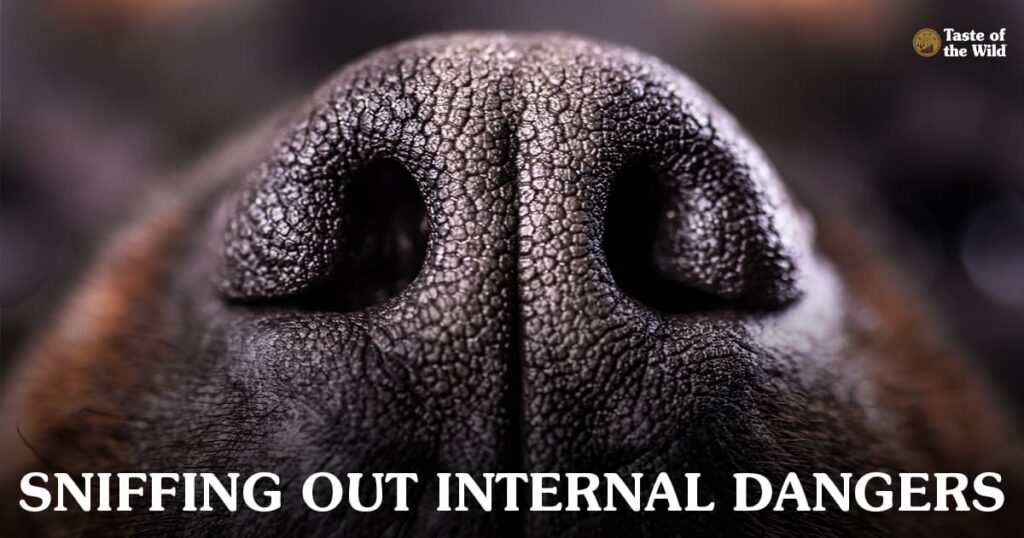
No, dogs that have been trained to detect cancer do so by sniffing not licking. Dogs have around fifty times as many scent receptors as humans, or about 300,000 of them. And unlike people, dogs have a second scent organ located on the bottom of the nasal passage called the vomeronasal or Jacobson’s organ, to aid in detecting even more scents. This powerful olfactory system enables them to detect scents like the volatile organic compounds given off by the cancer cells. 

However, in anecdotal stories of dogs alerting their owners to signs of potential cancers or tumors, they may have done so by licking, sniffing or nipping at a certain spot on their owner’s body.

How Do Dogs Act When They Smell Cancer?

In untrained dogs, there have been reports of dogs persistently licking, sniffing or nipping at cancerous skin lesions. Others have reported the dog sniffing or pawing at the area where the cancer was later found. 

In trained cancer detection dogs, how the dog acts depends on what they’ve been trained to detect. In general, trainers start by exposing the dog to blood samples or tissue samples from cancer patients. If the dog can alert to the correct sample, they are rewarded with praise and a treat or toy. Through positive reinforcement, the dog is rewarded each time they differentiate the cancer sample odors from other scents.

Can Dogs Tell When You’re Sick?

Your dog knows what you usually smell like, and when you’re sick your smell changes due to changes in your body chemistry and hormones. Some dogs may pick up on this change in smell and realize that something isn’t right. They may also notice that your routine has changed, and now you’re lying on the couch or in bed all day instead of going to work. Some dogs can also read human emotions and may notice that you’re not your usually happy self. 

If your dog comes over to comfort you when you’re sick, there can be a couple of different reasons for this. They may be trying to make you feel better, or they may feel worried about the change in your behavior and routine and need comforting themselves. Your instinct is, of course, to snuggle with your canine companion, and this positive reinforcement means that the next time you’re sick, they’ll want to snuggle with you again. But a little snuggle therapy is good for everyone.

What Is the Future for Cancer Medical Detection Dogs?

Currently, dogs are only trained to detect cancer in medical samples, not in people. These canine scent detection training centers collaborate with other cancer research scientists who are working to isolate the exact chemicals the dogs identify. Since the accuracy of the dogs can vary depending on a number of factors, including breed, level of training and handler bias, the hope is to eventually create an electronic sensor that can essentially replace the dogs.

But for now, these trained dogs are applying their noses to help researchers get one step closer to early detection of many human cancers. Amazing, isn’t it?

Train Your Dog to Herd Backyard Chickens

Taste of the Wild

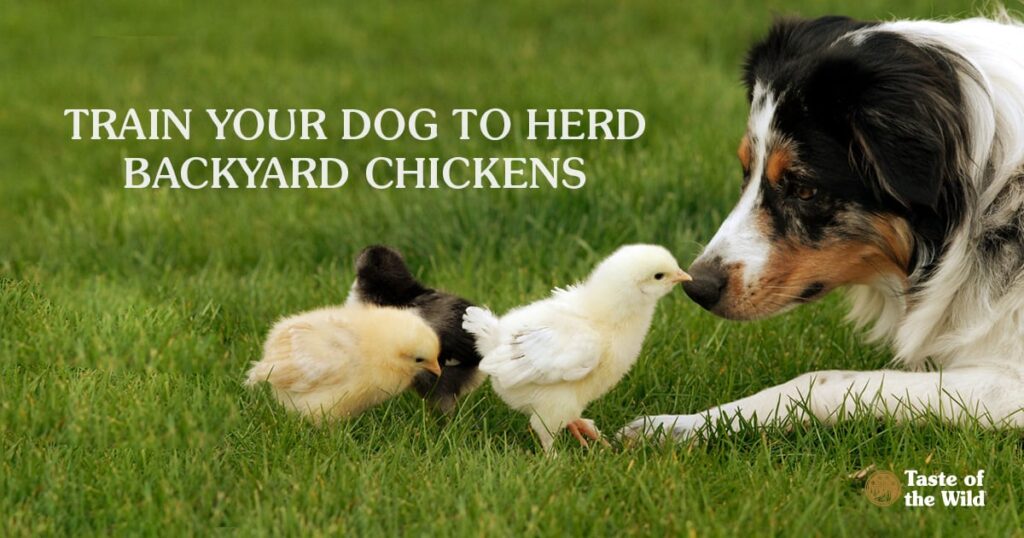
Backyard chicken herding can be a relief for the hobby farmer for two reasons: first, it allows your chickens to range freely in the yard without hassle from predators; and second, it provides stimulating exercise for your pooch.

However, while your dog may have natural herding instincts, in order to successfully herd chickens, he or she will need training to learn to be gentle around the fowl and successfully herd them back into their coop.

Is my dog right for herding?

Herding dogs possess natural instincts and high intelligence, making them ideal for household and farming tasks.

The most common chicken-herding dogs are:

  • Australian shepherd
  • Border collie
  • Shetland sheepdog
  • Great Pyrenees
  • Collie
  • Welsh corgi

Other dogs can certainly learn to herd chickens — it’s just a bit easier to start with a breed that naturally enjoys the task.

Training your dog

Teaching your dog new skills

According to dog behaviorist and expert trainer Carolyn Georgariou, the key to your dog becoming a herding master is learning how to leave it. While your dog should know all the basics, such as comeheellie downsit, and stay, knowing how to leave it is essential for your dog to remain well-behaved around your chickens. If your dog struggles with these commands, well . . . chicken herding might be a bit of a reach.

Once your dog has these basic instructions mastered, move on to more complex commands. The goal, as you introduce your dog to your chickens, is to be able to implement your basic directions while training for more complex, herding-specific commands.

Gauging your dog’s behavior

Natural herding instincts will be displayed early on for many herding dogs. To spot these signs, watch how he or she interacts with you or other animals. If he or she likes to circle around you in an attempt to influence you in a specific direction, it is a good sign that he or she will easily and effectively learn how to herd your chickens.

Some dogs may even naturally start herding after watching you interact with the chickens.

“I used my Australian shepherd to herd chickens,” said Kim Pezza, author of the Backyard Farming series. “She watched me put the birds in for a short time, then one day she looked at me as if to say, ‘I want to help.’ Every night for the rest of her life, she brought the chickens in from the woods… however I never really trained her.”

Play some catch

Not only is playing catch an excellent form of exercise, it also teaches your dog basic obedience skills and will help him or her develop his or her chasing instincts. To make this more applicable to herding chickens (and to prevent thinning your flock unintentionally), teach your dog to catch only on command.

Introducing your herder to the herd

Start the introduction process slowly to avoid aggression from your dog. If your dog seems anxious, take a break and reintroduce the chickens after he or she has calmed down. Repeating this process will lessen the chance of your dog becoming overexcited around your backyard fowl in the future.

Don’t let the herder hurt the herd

After you’ve introduced your dog to your chickens and have started training him or her to herd real animals, watch your dog’s body language. It will be clear if your dog is capable of and ready for this task.

A good herder should approach the chickens with his or her tail down and run circles around them. If your dog does this while remaining attentive to your commands, you can be confident in him or her. If not, you may need to continue training — or even scrap the idea entirely.

Remember, if your dog is not interested in herding chickens, he or she will not respond to any chicken-related training that you introduce to him or her.

All in a day’s work

It takes time and commitment to train a dog to herd animals, but once this process is completed, your herding dog can be a very helpful resource for you and your backyard farm. By honing his or her herding skills, you’ll soon find that your dog will be ready to help you raise your chickens.

What to Know Before Adopting a Former Police or Military Working Dog

Taste of the Wild

Over the years, adopting former police and military dogs has increased in popularity. However, many people are unaware of what the official adoption process is like. If you or someone you know are considering adopting a military working dog (MWD), read these tips to learn more about what adoption and ownership really entails.

What Is a Military Working Dog (MWD)?

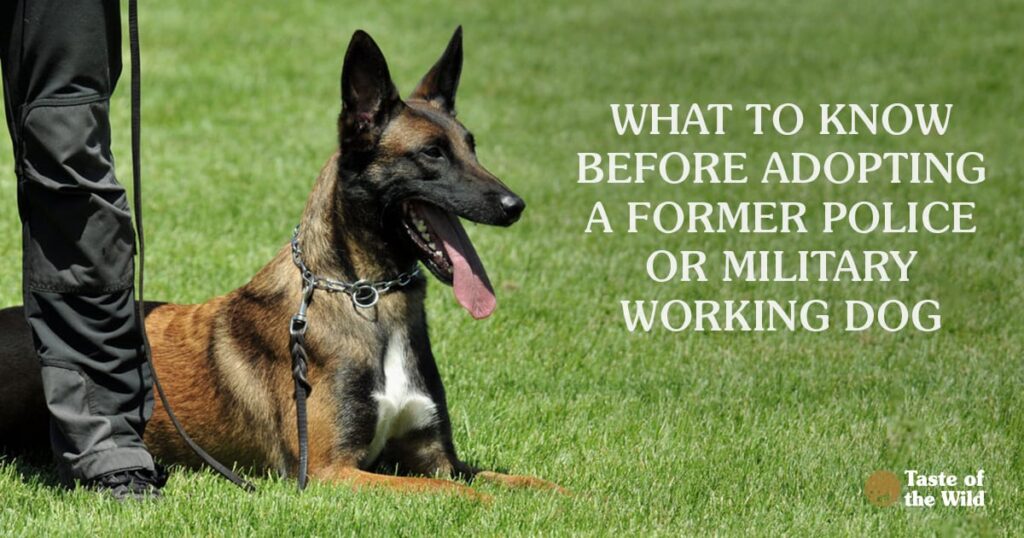
MWD is the official name for retired police and military dogs. MWDs have been retired from duty — usually due to the inability to perform required tasks, and sometimes due to health or age. Many have worked as field or training dogs, and have a unique set of skills honed for a specific purpose. In some cases, this can make potential owners nervous, but worry not — all adoptable dogs have to pass behavioral tests to ensure they’re outgoing companions and a good fit for civilian adoption.

Dogs with specialized skill sets or who don’t pass the civilian adoptability criteria are made available to their former trainers and nonprofit organizations for special needs MWDs.

Is an MWD Right for Me?

Some MWDs are young pups that were not cut out for military or police lifestyles, and others are older dogs in declining health. Many were never trained for combat missions, and civilian-available dogs are not considered any more dangerous than the average dog. Considering a former MWD for your family is much like considering any other adoptable dog. A few questions worth asking yourself might be:

  • Do I have a fenced-in yard?
  • Do I have enough room in my home for an active dog?
  • How much care and attention can I provide a dog?
  • What is my ideal dog like?
  • Who else lives in my home that might not be compatible with a new dog?

Once adopted, the MWDs lose any military benefits, meaning the family that adopts him or her must cover any health issues financially, just like any other pet.

Next Steps in MWD Adoption

All retired MWDs available for adoption are located at the Military Working Dog School, which operates out of Lackland Air Force Base in San Antonio, Texas. There is no fee to adopt a retired MWD, but you must pay for all transportation costs.

If you are selected as a candidate for adoption, you will need to provide proof that you meet all expectations for potential families (these are the standard expectations for any rescue animal: you have the appropriate space for a pet, permission from your landlord, and the ability to care for his or her health needs). Any family that is chosen for adoption will be required to meet with military personnel for an official interview.

Once you are chosen to move forward in the adoption process, you will wait for a scheduled appointment to visit the base and meet with the dogs that match your lifestyle and interests. Your selected dog will complete a veterinary exam before being released to your family.

Remember – Patience Is Required

Since MWD adoptions are both limited and popular, you will need to remain patient throughout the entire adoption process. The Lackland Air Force Base works hard to ensure that all MWDs go home with families that are able to give these special dogs a healthy, happy home.

Adopting a former MWD? Check out this post on nutrition for working dogs!

What does the guaranteed analysis tell me?

Taste of the Wild

The beauty of the guaranteed analysis is that it gives you a lot of information about what is inside a bag of pet food. Once you understand how to read it, you will be better equipped to compare different varieties of pet food.

By AAFCO regulations, the guaranteed analysis is only required to list four nutrients: crude protein, crude fat, crude fiber and moisture. However, many pet food companies list additional guarantees not only to provide you with more information about the food but also as a mark of quality. The more things that are guaranteed, the more things that regulatory agencies can test for and fault a company for if they do not meet the level on the label. Because of variances between different types of laboratory equipment, sometimes foods can be faulted even if they truly are not deficient in one of their guarantees. Additional guarantees mean that the company is working hard to manufacture a carefully determined formulation each and every time, and you can be assured that bag to bag, that product is likely to be more consistent than a product that only guarantees the four required nutrients.

The first nutrient listed is crude protein. This is a measurement of the guaranteed minimum level of protein in the food. If the food guarantees a minimum of 21 percent protein, it is not going to contain 32 percent protein. By AAFCO regulations, a diet that states a guarantee of 21 percent protein may have no less than 20.4 percent protein. There is not a specified maximum, but the protein is typically within 2 percent of the target. So a 21 percent protein formula would range from 21 percent to 23 percent, but would most often be right at 21 percent or slightly higher. Your dog will benefit from a food that has protein from animal protein sources. After you check the level of protein, look at the ingredient listing to see where that protein is coming from.

The next listing is crude fat. This is also a minimum guarantee, with a 10 percent allowed variance. So, if the guaranteed minimum fat content is 15 percent, the minimum allowed by AAFCO would be 13.5 percent. Most foods very closely target the fat level, so expect very little variance in this nutrient.

Next comes crude fiber. This is typically pretty low, 2–3 percent, and is a maximum level. In hairball formulas for cats and weight loss formulas, you will usually see a higher level of fiber, usually 6–8 percent. Higher fiber formulas will result in larger stools than low fiber formulas, but this is to be expected.

Finally, you will see the moisture guarantee. In dry formulas, this is typically 8–12 percent maximum, and in canned formulas it is typically 75–85 percent.

Protein and fat will show the widest variance among different types of pet foods. Cat foods have higher protein content than most dog foods. Formulas specifically designed for athletes, puppies, and low carbohydrate formulas for dogs will have high protein content and often high fat content as well.