


Can My Dog Eat That? Snow

A tan and white Siberian husky biting into deep snow in a frost-covered field.

Welcome to “Can My Dog Eat That?,” our series that answers some obvious (and not-so-obvious) questions about what your dog can and can’t safely eat. You can view some of the previous foods we’ve looked at in our “Can my dog eat that?” guide. Today we answer the question “Can dogs eat snow?” Read on!

It’s a romantic notion to head out into a winter wonderland and catch snowflakes on your tongue, isn’t it? Most people have probably done it at least once or twice in their lives. Dogs, too, seem to enjoy fresh snow on their tongues. The difference is that while people rarely chow down on snow, some dogs…do.

So, can ingesting snow hurt your dog?

No. Not in small amounts, anyway. Snow is just frozen water; for dogs it’s like a cool treat, like a slushy. However, eating too much snow does contain dangers, although they don’t necessarily come from the snow itself.

Is It Bad for Dogs to Eat Snow?

Dogs explore the world with their nose and mouths, so it’s only natural for them to test that frozen fluffy fun on their tongues, especially during the first snowfall of the cold weather season. Tasting snow is safe, especially if it’s a fresh new layer. The issues arise if your dog is one of those who plows through mouthfuls of the stuff. The deeper they go, the more chances that there’s something nefarious in the snow. Rocks, sticks, leaves or other ground debris can make their way into the lower layers, and you obviously don’t want your dog eating rocks and sticks.

Can Dogs Eat Snow That’s Colored?

We’ve all heard jokes about yellow snow, but many dogs will make a beeline right for it. Yellow snow is a smelly signifier that friends (or enemies!) have been hanging around, so it’s necessary to investigate. Light investigation with noses or tongues is pretty harmless, but you don’t want your dog eating big mouthfuls of yellow. You’re not sure who it came from, after all.

However, yellow isn’t the worst color in snow that your dog can ingest. Brown, black, pink, blue or pretty much any other color in snow is probably bad news. If the snow in question is covering pavement, there’s a good chance that cars have been there, and cars can leak all sorts of bad (yet colorful) toxins into the environment. Harmful chemicals like motor oil, wiper fluid and especially engine coolant can be deadly in even small amounts. Engine coolant (antifreeze) can be deadly in tiny doses, so be extremely wary of green, blue or orange spots of contaminated snow. You also want to avoid any discolored snow when walking your dog so that any of these hazardous substances don’t get onto your dog’s paw pads, and then they lick it off when they get home. Getting dog booties for your dog can help protect your dog’s paws. 

Salt used for de-icing walkways is often tinted blue but might not have any coloration at all. If mixed with the snow your dog is eating, it can cause indigestion in small amounts or be deadly in bulk. You should also keep your dog away from dirty snow. Brown, grey or black spots in snow might be dirt picked up from the ground, and it’s never a good idea for dirt and gravel to make its way into your pondering pup’s belly. 

Why Do Dogs Like to Eat Snow?

No one really knows why dogs love to gobble up snow. If they’re an active dog that enjoys outdoor activities in the winter (potentially requiring dietary changes), they may be thirsty, and the snow tastes fresher than what’s in their water bowl. Or perhaps they like the granular texture or the sensation of the cold snow melting in their mouth. Hydration or curiosity, whatever the reason, for most dogs it seems like it keeps them going back for more!

Can Dogs Eat Too Much Snow or Ice ?

Eating large amounts of snow or ice can cause a dog’s body temperature to drop to dangerously low levels (hypothermia), causing heart irregularities or even death. This would take a LOT of snow, but it’s definitely concerning behavior.

If your dog is eating that much snow or regularly eating a lot of snow, it could be a sign of something more serious, like kidney failure or Cushing’s disease, an abnormality of the adrenal gland. If you think that your furry friend is regularly eating too much snow, contact your vet for advice.

Should I Stop My Dog From Eating Snow?

In short, a little bit of fresh, clean snow probably won’t hurt your dog. But eating too much, digging too deep or eating colored snow puts your dog’s health at risk. If you suspect that your dog has ingested something they shouldn’t have, call the ASPCA Animal Poison Control Center immediately, or consult your veterinarian.

An interior graphic with text that reads ‘Can my dog eat snow? Yes! (in small amounts)’.

Can My Dog Eat That? Cinnamon

An interior graphic with text that reads ‘Can my dog eat cinnamon? Yes! (in small amounts)’.

Welcome to “Can My Dog Eat That?,” our series that answers some obvious (and not-so-obvious) questions about what your dog can and can’t safely eat. You can view some of the previous foods we’ve looked at in our “Can my dog eat that?” guide. Today we answer the question “Can dogs eat cinnamon?” Read on!

Cinnamon. It’s a spice that literally shaped the world once upon a time, and now it’s everywhere — it’s the perfect pumpkin pairing, the star of breakfast foods and a must-have for spiced drinks. With cinnamon used so frequently in human foods, there’s a good chance that your dog is going to sneak a sampling of cinnamon at some point, and this may have you wondering if it’s OK if dogs eat cinnamon.

Is Cinnamon Safe for Dogs?

Cinnamon isn’t toxic to dogs, so there’s no reason to panic if your dog swipes a snickerdoodle while you’re not looking. But (there’s always a but!) cinnamon is a spice, and dogs as a general rule don’t do well with spicy foods. Cinnamon, especially powdered cinnamon or cinnamon oil, is an irritant, and it’ll likely cause your dog to cough or sneeze at the very least. An upset stomach is a possibility if too much cinnamon is ingested.

Of course, how much cinnamon a dog can safely eat is all about the dosage and the dog’s size. A little ground cinnamon dusted on a cookie might not be an issue at all, but an entire cinnamon stick can make any dog sick, and small breeds really sick. Essential oils are super concentrated, so even a little cinnamon essential oil can cause stomach upset. Extended exposure of cinnamon essential oils to skin (including lips, mouth and tongue) or eyes can cause burns or rashes. Seems like it’s far from essential!

Is Cinnamon Bad for Dogs?

A small amount of cinnamon is generally OK for dogs — it’s what it’s mixed with that can be the problem. If cinnamon is involved, the food itself is probably sugary and sweet, and those foods are great big no-nos for your dog — think cookies, apple pie and pumpkin pancakes. Many foods with cinnamon also contain raisins, which are toxic to dogs and most certainly something to avoid. Here are some more cinnamon-containing foods that you might be wondering if it’s OK for your dog to eat.

Can Dogs Eat Cinnamon Rolls?

While the cinnamon itself might not hurt your dog, the rest of the cinnamon roll certainly isn’t good for them. Whatever the other ingredients are in ooey gooey, bakery-made cinnamon rolls, the high fat content alone can cause pancreatitis or an upset stomach. If your dog is eating high-calorie foods long-term, it can also lead to diabetes and obesity. So try to keep those gooey cinnamon rolls out of your dog’s reach.

Can Dogs Eat Cinnamon Toast Crunch™?

If your dog ate a couple of squares that dropped onto the floor while you were pouring cereal into your bowl, they’ll likely be OK. But if they sneak into the pantry and eat the whole box of cereal, you may want to call your veterinarian.

It’s not so much the cinnamon that’s the problem with Cinnamon Toast Crunch — although a whole box may cause an upset stomach — it’s the other ingredients. The sugar, fat and calorie content means it’s not the healthiest breakfast food for dogs to eat. So it’s best to keep the cereal box on the top shelf.

Can Dogs Eat Cinnamon Sticks?

If you catch your dog swirling a cinnamon stick in their water bowl, you should put an end to their spiced-drink dreams. Cinnamon sticks can irritate their mouth and eating a large amount can upset their tummy.

Can Dogs Eat Cinnamon Powder?

A sprinkle of powder on a cookie probably won’t hurt, but inhaling cinnamon powder or eating a full jar is nothing to sneeze at — you should probably contact your vet to be safe.

Can Dogs Eat Cinnamon Applesauce?

If your dog eats some cinnamon applesauce, the cinnamon content probably won’t cause a problem, but check what other ingredients are in the applesauce to make sure those aren’t toxic to dogs.

What Happens If a Dog Eats Too Much Cinnamon?

As with any questionable food (or non-food) item your dog might ingest, when in doubt, call your vet — especially if your dog is showing troubling symptoms like coughing or diarrhea. If your vet clinic isn’t open or your dog has ingested an alarming amount of cinnamon powder, cinnamon essential oil or other cinnamon products, call the Pet Poison Helpline.

So Is Cinnamon OK for Dogs to Eat?

Feeding dogs cinnamon in small amounts isn’t harmful and it is even an approved ingredient in pet food. There are nutritional benefits of cinnamon: for example, it has antioxidant and anti-inflammatory properties. However, most of the foods that use cinnamon as an ingredient are far from good for dogs, so it’s best to avoid sharing any cinnamon-flavored food with your dog.

An interior graphic with text that reads ‘Can my dog eat cinnamon? Yes! (in small amounts)’.

Can My Dog Eat That? Bananas

Taste of the Wild

Welcome to “Can My Dog Eat That?,” our series that answers some obvious (and not-so-obvious) questions about what your dog can and can’t safely eat. You can view some of the previous foods we’ve looked at in our “Can my dog eat that?” guide. Today we answer the question “Can dogs eat bananas?” Read on!

Yep, most dogs can eat a peeled banana, in moderation. Bananas are healthy snacks packed with nutrients, but there are a couple of things you should know before feeding this a‑peeling fruit to your dog.

A Healthy Treat

Bananas are a great healthy treat option for most dogs. They are high in potassium, magnesium, vitamin B6, vitamin C and also fiber — which is typically a good thing, but not in large amounts (see below).

Bananas are a low-calorie food, so they can be a good alternative for pudgy pooches who probably shouldn’t be eating any treats (but sometimes you just can’t say “No” to those eyes). Bananas may also be good for dogs with canine kidney disease who need low-protein, low-sodium and low‑phosphorus treat options. As with all new foods, it’s best to check with your veterinarian if bananas are OK to feed to your dog, especially if they have an underlying medical condition.

Remember, Too Much of a Good Thing…

While bananas are great as a healthy treat, too much banana can lead to some messy consequences. It’s best to stick to giving your dog just a few slices of banana at a time, because too much banana can cause gastrointestinal upset — in other words, vomiting and diarrhea. Bananas are also high in sugar, which is why they should only be used as a treat, not as a regular part of your dog’s diet.

Slip That Peel into the Compost Bin

Banana flesh is a definite go (in moderation), but the banana peel is a definite no. Banana peels aren’t toxic to dogs, but they are really hard to digest, which could cause a blockage in your dog’s gastrointestinal tract or an upset stomach.

Banana-Containing Things — Yay or Nay?

So what about the things that have banana in or around them? Like most things, it depends. Peanut butter-dipped banana is going to make your dog very happy. Just make sure it’s a dog-safe peanut butter that doesn’t contain xylitol. Another fun banana use is stuffing a toy with banana — it’s bound to keep your dog entertained for a while, and it’s great for mental stimulation. You can also freeze banana slices to mix it up a little and give your dog a different texture to munch on, or mash them for yet another entirely different texture.

On the other paw, banana bread and banana cake are probably in the nay category. Most banana bread and cake recipes call for a bunch of added sugar, which is not good for any dog, and especially a diabetic or obese dog. The banana bread or cake may also contain raisins or chocolate chips which are a definite “No!” for all dogs due to their toxicity. Dehydrated banana chips depend on how they were processed — if a lot of sugar was added, these should probably be a no, too.

Bananas are a healthy treat for most dogs. So if your veterinarian says it’s OK, see if your dog goes bananas over some banana in their bowl!

An interior graphic with text that reads ‘Can my dog eat bananas? Yes!’.

Can My Dog Eat Blueberries?

Taste of the Wild

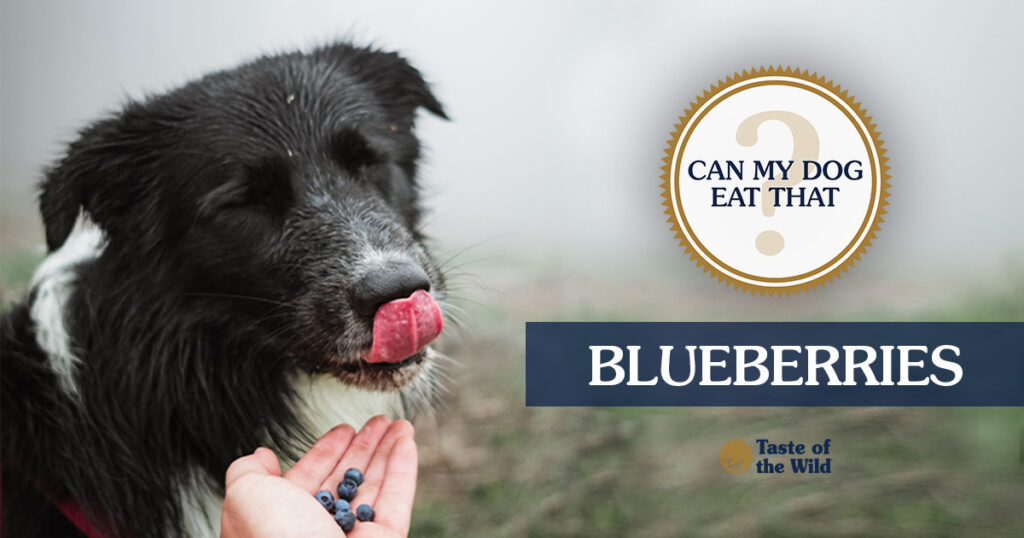
Welcome to “Can My Dog Eat That?,” our series that answers some obvious (and not-so-obvious) questions about what your dog can and can’t safely eat. You can view some of the previous foods we’ve looked at in our “Can my dog eat that?” guide. Today we answer the question “Can dogs eat blueberries?” Read on!

Can dogs have blueberries? For humans, blueberries are arguably a perfect snack. They’re loaded with nutrients like fiber and vitamin C. They’re low in calories because of a high water content. They’re poppable. And, possibly most importantly, they taste good!

But like with many delicious human foods, you’ll often see some puppy-dog eyes (both real and metaphorical) peering at you while you snack. Is it OK if dogs eat blueberries, though? Dogs can eat watermelon, strawberriespineapples and other fruits, so can your dog indulge in a few of these blue sweet treats, either whole or in any other format?

Are Blueberries Good for Dogs?

Yes, you can feed your dog blueberries in all forms. They’re a great fruit that’s often labeled as a superfood! Though it’s always a good idea to consider opting for blueberries as an ingredient in trusted dog food, you can feed your beggin’ buddy fresh or frozen blueberries in moderation. Be wary, though. Blueberries are generally small treats, but when dogs eat blueberries they are in danger of choking, especially small breeds or puppies. Frozen blueberries are especially a danger to small dogs.

When Dogs Eat Blueberries, They Eat a Superfood with Super Benefits

Because of all the nutrients blueberries offer in one tiny package, they’re often labeled as “superfoods.” These nutrient-packed fruits are a key source of antioxidants, fiber, vitamins and minerals. In pet food, superfoods are also functional ingredients. Functional ingredients provide bonus benefits beyond basic nutrition when they are part of a complete and balanced diet. Antioxidants and fiber provide some of these benefits.

Blueberries’ main claim as a superfood is that they are rife with antioxidants, which is good news for pet owners. Antioxidants protect your dog from the damaging effects of free radicals, which, if left unchecked, can result in health issues like cancer and heart disease. Antioxidants in superfoods like blueberries can work with the antioxidants naturally produced by the body to control these free radicals. Antioxidants also support the immune system and maintenance of healthy skin, and it’s been proven that they can help slow your dog’s mental aging.

But the benefits don’t stop there. The fiber offered by blueberries supports healthy digestion, which is something that both dogs and dog parents can appreciate. So offering your dog blueberries in food that is already good for them, like blueberry yogurt — homemade because store- bought blueberry yogurt is loaded with sugar or xylitol, which is deadly for dogs — can allow them to have a healthy snack that they love.

Can Dogs Eat Blueberry Muffins?

Though you can feed blueberries to your dog, it’s not a good idea to offer blueberry muffins, which are usually packed with sugar. When dogs eat too much, sugar they can suffer from vomiting and diarrhea, not to mention more long-term issues like diabetes.

Can Dogs Eat Dried Blueberries?

In lieu of fresh blueberries, dried blueberries can be a great snack, especially if you dry them yourself. If you buy store-bought dried blueberries, be sure to watch the sugar content, because it is usually high.

As Always, Treat in Moderation

Too many blueberries aren’t good for anyone, especially dogs. General consensus is that your dog’s  treats or snacks should consist of no more than 10 percent of your dog’s daily calorie intake. But for that 10 percent? You can’t go wrong with blueberries. If you’d prefer to offer blueberries as a portion of your dog’s regular food, we have a few suggestions. As always, if you have any questions about feeding fruits or vegetables to your dog, consult your veterinarian.

An interior graphic with text that reads ‘Can my dog eat blueberries? Yes!’.

Common Household Items That Are Pet Poisons

Taste of the Wild

Just like a new parent baby-proofing their home, pet owners are tasked with placing poisonous items out of a furry companion’s reach. Now, you’ve heard about certain plants being poisonous or over-the-counter medicines being fatal to a pet, but what about those items that aren’t such obvious dangers? Don’t fret. That’s where we can help. For Pet Poison Prevention Awareness Month, we’ve provided a checklist of surprisingly poisonous items so you make sure your dwelling is extra safe for Fido, Socks and Daisy.

COMMON HOUSEHOLD ITEMS THAT POSE UNCOMMON PROBLEMS FOR PETS

An interior graphic that details a number of common household items that can be dangerous to pets.

After going through this list, you may wonder, “How quickly can my four-legged friend become ill if they consume something toxic?” The answer is dependent on 1) which household item was ingested and 2) how much was consumed. If you suspect your pet has ingested something harmful, immediately contact your local vet or the 24-hour Pet Poison Helpline immediately.

Signs your pet could have ingested something toxic:

  • Diarrhea
  • Vomiting
  • Hypersalivating
  • Trouble breathing
  • Twitching or irregular body movements
  • Changes in appetite, drinking or urinating
  • Weakness or collapse associated with low blood sugar
  • Lethargy
  • Blood in their stool

RELATED POST: Can My Dog Eat That?: Grapes

Hit the Road to These Dog-Friendly Vacation Destinations

Taste of the Wild

Over the last couple of years, pets and their owners have bonded more than ever. We rely on each other during uncertain times for comfort and care. Now that we’re safely traveling again, both domestically and internationally, the idea of boarding Fido during vacation is unthinkable. They’re part of the family and need to soak up the sun, too! Keeping this in mind, we’ve located dog-friendly towns across the nation so you can begin mapping out your family road trip.

West Coast

Our first dog-friendly location is Bend, Oregon. Dog Fancy magazine even claimed this city as DogTown USA in 2012, due to its long list of dog-friendly businesses, events, trails and parks. A weekend itinerary could include:

  • McKay Cottage Restaurant – 62910 OB Riley Rd, Bend, OR 97701
    • Voted Best Breakfast in Bend since 2010, you’ll want to stop by McKay Cottage Restaurant to get your day started off right. From breakfast burritos to apple-cranberry oatmeal, they have a little something for everyone on the trip. Ask for a backyard table for a dog-friendly experience.
  • Riverbend Park – 799 SW Columbia St, Bend, OR 97702
    • A scenic hike at Riverbend Park provides miles of paved and unpaved terrain for you and your furry friend. The park also offers an off-leash area with river access for cooling down on a hot, summer day.
    • Bonus: The Old Mill District hosts various outdoor events that either begin, end or are stationed at Riverbend Park. Time your trip just right to see hot air balloons take off or a portion of the iconic Pole Pedal Paddle competition.
  • Deschutes River – Various entrance locations in Bend, OR
    • Looking to get out on the water while visiting? There’s no shortage of paddleboard rentals in Bend. Depending on the amount of time you’d like to spend boarding and level of difficulty you’d like to tackle, there’s an option for everyone along the Deschutes River to check out.
  • Campfire Hotel – 721 NE 3rd Street, Bend, OR 97701
    • You didn’t think we’d leave out lodging, did you? Grab s’mores for the family and Fido’s favorite treats for a stay at the Campfire Hotel. This outdoor-themed hotel provides much more than a place to lay your head. You can strum some music for your furry friend with free guitars AND enjoy a nice summer night by a giant firepit!

Midwest

Traveling nearly 2,000 miles east from Bend, we’ll come upon our Midwest vacation recommendation: Duluth, Minnesota. Bring along your passion of flying and your favorite hiking boots when completing Duluth’s itinerary:

  • Lake Country Air and Beaver Air Tours – 50000 Minnesota Ave, Duluth, MN 55802
    • Want to get a panoramic view of Duluth, Minnesota? You and Fido can experience a trip of a lifetime when you view famous landmarks such as North Shore, Spirit Mountain and more during a Lake Country Air tour.
    • Bonus: Dogs fly for free!
  • Elys Peak –
    • It’s time to stretch those legs and get paws on the ground! Continue to see breath-taking views when you hike 1.7 miles on Elys Peak. You and the doggo will enjoy small hills, valleys and plenty of river views to remind you both you’re on vacation!
  • Fitger’s Brewhouse Brewery and Grille – 600 E Superior St, Duluth, MN 55802
    • After an adventurous day, authentic Duluth food and drinks are awaiting you at Fitger’s Brewhouse Brewery and Grille. The pub has eight dog-friendly tables out on the patio. Previous guests have paw-sitively reviewed this location for its good food and friendly service — even noting how they provide water bowls for your furry friend.
  • Fitger’s Inn – 600 E Superior St, Duluth, MN 55802
    • Once you’re done with dinner, you won’t have far to travel with our lodging recommendation. The historic Fitger’s Inn is mere steps away from the brewhouse and provides a great place for you and Fido to catch some zzz’s. This inn provides lakefront views along with a salon and day spa for an owner’s relaxation.
    • Bonus: No additional pet fee!

Northern United States

Next, we’re jumping to the northern portion of the country. Have you ever heard of Block Island, Rhode Island? Get ready to dip your toes and paws in the sand when going through this itinerary:

  • Mansion Beach – Mansion Road, Block Island, RI 02807
    • If you’re on the hunt for some peace and quiet, Mansion Beach may be your first stop. Reviews suggest that it truly feels like a peaceful vacation destination. In addition to relaxing, this beach’s large waves are perfect for surfing or paddleboarding with Fido.
  • Kimberly’s – 238 Ocean Ave, Block Island, RI 02807
    • Being this close to the ocean, you’ll have access to some of the freshest seafood you’ll ever eat. So of course, we had to add Kimberly’s to the list. This dog-friendly restaurant sits on the waterfront and offers a tranquil place to grab dinner. Lobster mac and cheese, pan-seared salmon, miso-glazed cod and so much more.
  • Islandog – 104 Water St, New Shoreham, RI 02807
    • About 10 minutes down the road from Mansion Beach is a pet-themed gift shop called Islandog. This quirky, pet-friendly store embodies their motto: “Gifts for pets and their humans.” If Fido gets dirty and you need pet shampoo, you run out of poo bags or you simply want to treat yourselves to some unique souvenirs, Islandog has you covered!
  • The Blue Dory Inn – 61 Dodge St, New Shoreham, RI 02807
    • Wake up to views of Crescent Beach by staying at the Blue Dory Inn. The pet-friendly inn provides guests with a relaxing stay where wine, hors d’oeuvres and famous Block Island Barnacle cookies are enjoyed every afternoon. Plus, this quaint B&B is a short walking distance to the ferry, restaurants and island shops.
    • Bonus: Fido can meet the resident cat, Simon, along with other furry friends staying over at the Blue Dory Inn.

South

Way down the coast we find our final recommendation, Plant City, Florida. This city is even home to a dog-friendly amusement park! Visualize a vacation of adventure with:

  • Dinosaur World – 5145 Harvey Tew Rd, Plant City, FL 33565
    • Dinosaur World is home to fossils, life-sized dinosaur models and interactive exhibits for the whole family — furry Fido included! Think about the adorable family photos you’ll be able to take alongside a life-sized woolly mammoth statue.
    • Bonus: Water stations are provided throughout the park to keep Fido hydrated!
  • Metals & Nature – 1501 State Rd 60 W, Plant City, FL 33567
    • Enjoy a scenic two-acre stroll with Fido when you take them to Metals & Nature. Along your walk you’ll be amazed at the wrought-iron work and animals you’ll be able to meet. From a koi fishpond to peacocks strutting their stuff, Fido will have a ton of new friends by the end of your visit.
    • Bonus: Metals & Nature is home to trails and picnic tables, so pack a lunch to enjoy after your garden adventure!
  • Strawberry Hut Sandwich Shop – 1505 N Wheeler St, Plant City, FL 33563
    • Craving a Cuban sandwich or a milkshake? Strawberry Hut offers Cubans, salads, soup and milkshakes galore. This restaurant consists of a walk-up counter and five pet-friendly outdoor picnic tables.
  • Comfort Inn – 2003 S Frontage Rd, Plant City, FL 33563
    • Get the comfort of home in the form of a hotel room when you stay at Comfort Inn Plant City. Free Wi-Fi, complimentary breakfast and a grassy area for Fido to play make the stay that much better.

Can Dogs Eat Sweet Potatoes?

Verdict: Dogs May Eat Sweet Potatoes Graphic

Welcome to “Can My Dog Eat That?,” our series that answers some obvious (and not-so-obvious) questions about what your dog can and can’t safely eat. You can view some of the previous foods we’ve looked at in our “Can my dog eat that?” guide. Today we answer the question “Can dogs eat sweet potatoes?” Read on!

Sweet potatoes are a divisive food on the human table. It seems that people either love ’em or hate ’em, and there’s no in-between. In the dog world, however, it’s a “people food,” so chances are, your dog would scarf them down if given the opportunity.

But should you give your dog the opportunity? Can dogs eat sweet potatoes?

What is a sweet potato, anyway?

It might surprise you to hear this, but sweet potatoes are not potatoes at all. Or at least they’re not stem tubers, as most potatoes are classified. Sweet potatoes are actually root vegetables and only distantly related to your standard ’tater. But that’s not to say that they aren’t similar. Both sweet and regular (white) potatoes offer roughly the same calories, protein and carbs, but they differ in their additional benefits. White potatoes provide plenty of potassium, and the sweet potato’s bragging rights are attached to their copious amounts of vitamin A. Now, despite the name, a raw sweet potato isn’t actually sweet; it just tastes starchy, like the other kinds of potatoes. But when you start cooking sweet potatoes, the heat releases an enzyme that breaks down all that starch and turns it in to a form of sugar. This “sugar” isn’t half as sweet as the stuff you put in your coffee, but compared to a normal white potato, it seems like candy — which may explain why your dog would be so eager to eat a sweet potato.

Are Sweet Potatoes Good for Dogs?

Sweet potatoes can be very beneficial, providing energy while helping support gut health, thanks to the high levels of antioxidants. The vitamins like vitamin A in sweet potatoes help maintain healthy eyes and skin. The dietary fiber in sweet potatoes helps support the digestive system. Yes, sweet potatoes are good foods for dogs!

How Do I Cook Sweet Potatoes for Dogs?

Don’t feed your dog raw or whole sweet potatoes; the skin can be hard to bite through and isn’t great for the digestive tract, and if your dog bites large chunks of the ’tater, they could choke. Prepare them by baking, boiling or mashing them. DON’T candy sweet potatoes as you would for your family’s Thanksgiving dinner, though. When dogs eat sweet potatoes, they should be as plain as possible.

In fact, the best way to offer your dog sweet potatoes is as an ingredient in their dog food, to make sure that it’s part of a balanced diet. Many dog food recipes use sweet potatoes as a healthy source of carbohydrates, so check the ingredients panel on the bag or can. Your dog might already be enjoying sweet potato!

Can Dogs Eat Raw Sweet Potatoes?

No, your dog should never eat raw sweet potatoes. Unsweetened, cooked sweet potatoes are fine, but uncooked sweet potatoes are choking hazards and can cause intestinal blockages. Make sure those sweet potatoes are cooked!

Can Dogs Eat Sweet Potato Skins?

When feeding your dog sweet potatoes, make sure you remove the sweet potato skin. It isn’t poisonous, but the skin of sweet potatoes is hard to chew and can be a choking hazard or even block the intestines. Skin those sweet potatoes!

There’s a Caveat with the Sweet Potato

As with anyone’s diet, your dog’s diet should be judged for your individual dog. Diabetic or overweight dogs shouldn’t indulge in sweet potatoes outside of a reputable dog food recipe. If you have any questions about your dog’s diet and whether they can or can’t eat a sweet potato or two, contact your veterinarian.

Can my dog eat sweet potatoes?

They can, if the sweet potato is prepared properly and served in moderation, considering your individual dog’s diet needs. Introducing sweet potatoes as an occasional snack could be a welcome variation!

The Verdict?

Your dog will love them if you feed sweet potatoes in small amounts. Plenty of nutritional benefits for a pet of any size.

An interior graphic with text that reads ‘Can my dog eat sweet potatoes? Yes!’.

Should My Dog’s Diet Change for the Summer?

A dog standing on a sand dune on the beach.

Many dogs, like their owners, are more active in the summer — especially those who tend to hibernate during the snowier months. Simple logic might tell you that more activity means your dog needs more calories. So, should you switch to a summer dog diet? In most cases, it’s not necessary.

Do Dogs Eat Less in the Summer and More in the Winter?

Ever notice how you crave heavier “comfort” foods like lasagna in the winter but opt for lighter salads in the summer? The same phenomenon can occur in dogs, too.

In the winter months, dogs that are outdoors a lot tend to need more calories as the temperature drops to help them generate heat. The opposite is also true: in warmer temperatures, they tend to need fewer calories as the temperature increases.

That said, if your dog is involved in any high-intensity sports or competitions over the summer, it’s best to confer with your veterinarian about your dog’s nutritional needs.

In Most Cases, No Summer Dog Diet Changes Are Necessary

Rather than switching your dog to a “lighter” diet, a better option might be to feed them a slightly smaller amount. Again, your veterinarian can help you determine how many calories your dog needs in the summer.

You generally want to keep your dog’s diet consistent unless he or she has a special health condition such as allergies, obesity or arthritis that can be helped with a dietary change. In those cases, you want to make a gradual switch to the new diet because abrupt changes can lead to tummy upset, vomiting and diarrhea.

Monitor Your Dog’s Figure

One of the best ways to tell if your dog is eating the right amount is by using a body condition scoring system. Ideally, you should be able to feel your dog’s ribs, and there should be an obvious waist just after the rib cage when viewed from above. If your dog has lost its waist or the ribs are hidden under a thick layer of body fat, it’s time to cut back on the extra table scraps.

While it can be common for dogs to eat less food in the warmer months, a loss of appetite can also be a sign of disease. If you notice your dog’s ribs are showing and his or her appetite seems to have vanished, call your veterinarian.

Don’t Forget the Water in a Summer Dog Diet

Many people don’t realize that water is an important part of every dog’s diet. During the warmer months, make sure your dogs have plenty of fresh water available. That way, they’ll be well hydrated for all those outdoor adventures you’ll take together.

So, Should My Dog’s Diet Change for the Summer?

In most cases, your dog’s diet is probably fine as is, especially if they were healthy and happy heading into the summer season. If you ever have any questions about your dog’s diet, be sure to ask your veterinarian.

A Pet Nutrition Primer: 7 Things You Should Know

Taste of the Wild Pet Food

You want to do right by your pet. But pet food can be so complicated. What do the ingredients actually do? Does your cat need different nutrients than your dog? If you take vitamins, does that mean your pet should, too? The best way to get a foothold is to start learning some of the basics of pet nutrition.

1. All pets need dietary protein.

Proteins serve as a source of energy and are made of amino acids that help your pet’s body perform normal biological functions. Of the 20 or so amino acids, 10 of them are considered essential for dogs while 11 are essential for cats. Essential amino acids are those that must be provided in the diet because pets can’t produce them in their own bodies or simply can’t make enough of them. Dietary proteins come from many different ingredients, including meat, fish and poultry.

2. Fats are the most concentrated energy source.

Dietary fats typically come from animal fats and seed oils and are needed for proper cell structure and function. Fats provide essential fatty acids that aren’t produced in sufficient quantities by the body. And fats enhance the flavor and texture of food — which may be just what it takes to encourage that sick pet to eat.

Although fats don’t clog arteries in dogs and cats the way they can in humans, too much of them can be detrimental. Pets should not be fed table foods that are high in fat content, because sudden intake of high fat foods can trigger pancreatitis – a painful inflammation of the pancreas. Because fats are high in calories, another concern with feeding high fat foods or treats is obesity, especially in those couch-potato pets.

3. Carbohydrates help promote GI health.

Carbohydrates include starches, sugars and fiber from well-known sources such as sweet potatoes, potatoes and peas, but also from lentils and garbanzo beans. In addition to providing energy, carbohydrates such as fiber help the digestive system work properly.

Extra fiber is added to some diets to help overweight pets feel full so they’re less tempted to beg for more or scavenge for snacks. Your veterinarian may suggest supplemental fiber for your pet to help maintain healthy stool consistency. Plain canned pumpkin is commonly recommended.

4. Cats are obligate carnivores.

Remember those amino acids found in proteins? Two that are especially important for cats are taurine and arginine. Taurine deficiencies in cats can lead to blindness, heart failure, deafness and birth defects. Without arginine, cats have difficulty removing ammonia from the body, leading to drooling, vomiting, convulsions and even death.

Because plants can’t provide enough of the required amino acids for cats, our feline friends  usually can’t survive on vegetarian diets without additional supplementation of amino acids. In fact, adult cat foods need to have a minimum of 26 percent protein (dogs, by contrast, require 18 percent protein), and some of the amino acid requirements for cats are twice those for dogs. This is why cats should never be fed dog food.

5. Cats are usually lactose intolerant.

Despite all the storybook images of cats lapping up cream, cow’s milk can be difficult for most kitties to digest. They generally lack sufficient amounts of lactase, the enzyme that enables them to digest milk. While some cats may be fine with milk, it may cause vomiting or diarrhea in others.

6. Proteins are the cause of most food allergies.

Even so, a 2016 study by BMC veterinary research showed that the prevalence of food allergies in all pets who visited veterinarians was between one and two percent. If your pet is itchy, it’s more likely to be caused by fleas or environmental allergies.

7. Pets typically don’t need extra vitamins.

If your pet food label says that the diet was formulated to meet the Association of American Feed Control Officials (AAFCO) nutrient profile for your pet’s life stage, or that it has passed animal feeding trials, the diet should be complete and balanced with all the vitamins and minerals your pet requires.

If your pet has any health conditions — even if your dog or cat is just a bit pudgy — ask your veterinarian for dietary recommendations. He or she can steer you toward the best food for your pet.