


Can Dogs Eat Sweet Potatoes?

Verdict: Dogs May Eat Sweet Potatoes Graphic

Welcome to “Can My Dog Eat That?,” our series that answers some obvious (and not-so-obvious) questions about what your dog can and can’t safely eat. You can view some of the previous foods we’ve looked at in our “Can my dog eat that?” guide. Today we answer the question “Can dogs eat sweet potatoes?” Read on!

Sweet potatoes are a divisive food on the human table. It seems that people either love ’em or hate ’em, and there’s no in-between. In the dog world, however, it’s a “people food,” so chances are, your dog would scarf them down if given the opportunity.

But should you give your dog the opportunity? Can dogs eat sweet potatoes?

What is a sweet potato, anyway?

It might surprise you to hear this, but sweet potatoes are not potatoes at all. Or at least they’re not stem tubers, as most potatoes are classified. Sweet potatoes are actually root vegetables and only distantly related to your standard ’tater. But that’s not to say that they aren’t similar. Both sweet and regular (white) potatoes offer roughly the same calories, protein and carbs, but they differ in their additional benefits. White potatoes provide plenty of potassium, and the sweet potato’s bragging rights are attached to their copious amounts of vitamin A. Now, despite the name, a raw sweet potato isn’t actually sweet; it just tastes starchy, like the other kinds of potatoes. But when you start cooking sweet potatoes, the heat releases an enzyme that breaks down all that starch and turns it in to a form of sugar. This “sugar” isn’t half as sweet as the stuff you put in your coffee, but compared to a normal white potato, it seems like candy — which may explain why your dog would be so eager to eat a sweet potato.

Are Sweet Potatoes Good for Dogs?

Sweet potatoes can be very beneficial, providing energy while helping support gut health, thanks to the high levels of antioxidants. The vitamins like vitamin A in sweet potatoes help maintain healthy eyes and skin. The dietary fiber in sweet potatoes helps support the digestive system. Yes, sweet potatoes are good foods for dogs!

How Do I Cook Sweet Potatoes for Dogs?

Don’t feed your dog raw or whole sweet potatoes; the skin can be hard to bite through and isn’t great for the digestive tract, and if your dog bites large chunks of the ’tater, they could choke. Prepare them by baking, boiling or mashing them. DON’T candy sweet potatoes as you would for your family’s Thanksgiving dinner, though. When dogs eat sweet potatoes, they should be as plain as possible.

In fact, the best way to offer your dog sweet potatoes is as an ingredient in their dog food, to make sure that it’s part of a balanced diet. Many dog food recipes use sweet potatoes as a healthy source of carbohydrates, so check the ingredients panel on the bag or can. Your dog might already be enjoying sweet potato!

Can Dogs Eat Raw Sweet Potatoes?

No, your dog should never eat raw sweet potatoes. Unsweetened, cooked sweet potatoes are fine, but uncooked sweet potatoes are choking hazards and can cause intestinal blockages. Make sure those sweet potatoes are cooked!

Can Dogs Eat Sweet Potato Skins?

When feeding your dog sweet potatoes, make sure you remove the sweet potato skin. It isn’t poisonous, but the skin of sweet potatoes is hard to chew and can be a choking hazard or even block the intestines. Skin those sweet potatoes!

There’s a Caveat with the Sweet Potato

As with anyone’s diet, your dog’s diet should be judged for your individual dog. Diabetic or overweight dogs shouldn’t indulge in sweet potatoes outside of a reputable dog food recipe. If you have any questions about your dog’s diet and whether they can or can’t eat a sweet potato or two, contact your veterinarian.

Can my dog eat sweet potatoes?

They can, if the sweet potato is prepared properly and served in moderation, considering your individual dog’s diet needs. Introducing sweet potatoes as an occasional snack could be a welcome variation!

The Verdict?

Your dog will love them if you feed sweet potatoes in small amounts. Plenty of nutritional benefits for a pet of any size.

An interior graphic with text that reads ‘Can my dog eat sweet potatoes? Yes!’.

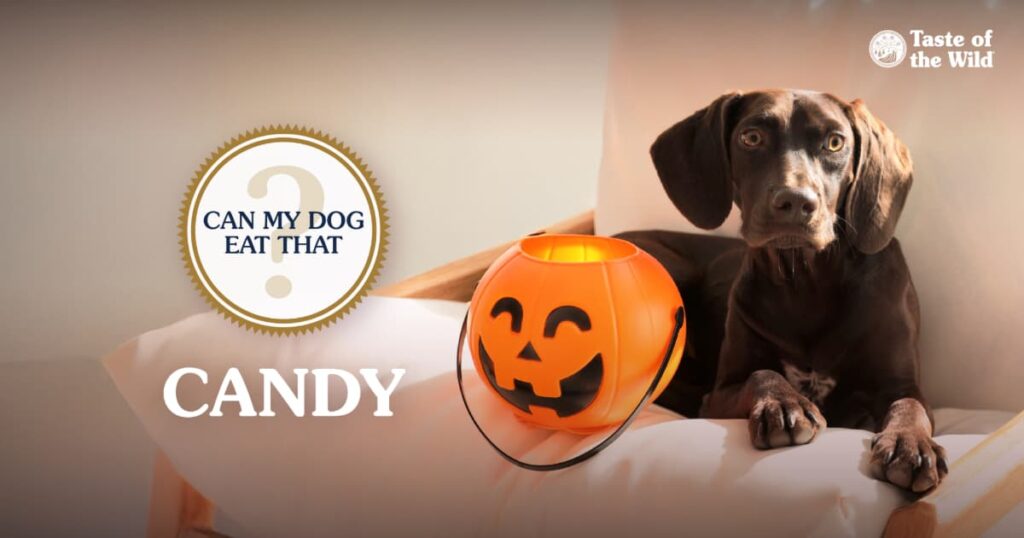
Can My Dog Eat That? Candy

A brown dog sitting in a chair next to an orange plastic pumpkin bucket.

Welcome to “Can My Dog Eat That?,” our series that answers some obvious (and not-so-obvious) questions about what your dog can and can’t safely eat. You can view some of the previous foods we’ve looked at in our “Can my dog eat that?” guide. Today we answer the question “Can dogs eat candy?” Read on!

If people overindulge in candy, they may wind up with a stomachache (and some regrets). But dogs who eat chocolate or candy may not get away with it that easily. Candy is not a healthy treat for dogs, but more importantly, chocolate and some sugar-free candy are toxic to dogs — even a small amount can be dangerous. So keep your candy stash safely hidden from your dog!

Can Dogs Eat Chocolate?

No. Chocolate contains two potentially toxic substances for dogs: caffeine and theobromine, with theobromine being the greater concern. Both are rapidly absorbed from the small intestine and across the bladder wall, and returned to the bloodstream to recirculate again. Dogs can’t metabolize theobromine as easily as humans, which puts them at risk of theobromine reaching dangerous levels. 

As a general rule of thumb, the darker and more bitter the chocolate (e.g., cocoa powder, dark chocolate), the more theobromine it contains, and the more dangerous it can be. Unsweetened baker’s chocolate, for example, can contain around 450 mg of theobromine per ounce, compared with milk chocolate, which contains around 60 mg per ounce. Although white chocolate contains only a small amount of theobromine, it’s still best to keep it out of your dogs’ reach.

What to Do If Your Dog Eats Chocolate

If your dog eats any amount of chocolate, it’s important to contact a veterinarian or animal poison control immediately. They will want to know the type of chocolate eaten (e.g., dark chocolate, milk chocolate), an estimate of how much was eaten, your dog’s weight and how long ago the chocolate was consumed.

A dog’s size can make a difference to how chocolate affects them. For example, a Great Dane that eats a small amount of chocolate may show mild signs, but the same amount could be fatal for a Pomeranian. Timing can be critical, too; if your dog just ate the chocolate, your veterinarian may be able to induce vomiting before much of the chocolate is digested (do not induce vomiting at home unless directed to by your vet).

Signs of Chocolate Poisoning

Depending on the type of chocolate, the amount eaten and the size of your dog, signs of toxicity can range from mild to severe and life-threatening. Here are some of the most common signs of chocolate toxicity:

  • Increased thirst
  • Vomiting
  • Diarrhea
  • Lethargy
  • Panting and pacing
  • Restlessness or hyperactivity
  • Muscle spasms (tremors)
  • Irregular heart rhythm
  • Seizures

Don’t wait for these symptoms to appear. If you know or suspect your dog ate chocolate, call your veterinarian immediately. After assessing your dog’s condition, your veterinarian may induce vomiting, administer activated charcoal to coat the digestive tract and prevent further chocolate absorption, or recommend additional supportive care.

Can Dogs Eat Sugar?

Let’s break this down. Is sugar toxic to dogs? No. Should dogs eat sugar regularly? Also no. While sugar won’t cause a life-threatening illness, it still isn’t healthy for dogs. If they eat a large amount of sugar in one sitting, (e.g., they swiped a sheet cake off the counter and devoured it), it can upset your dog’s digestive system, causing vomiting, appetite loss and diarrhea. The only type of sugar dogs should eat is the natural sugar found in dog-safe foods (like in strawberries or pineapples). However, too much natural sugar can also be unhealthy, so remember to keep to the rule of limiting treats to only 10 percent of your dog’s daily calorie intake.

Why is too much sugar bad for dogs? If your dog regularly eats sugar-filled sweet treats, the high sugar content could contribute to weight gain and increased health risks like obesity, diabetes and dental problems. 

Sugar-Free Products Can Be Toxic to Dogs

The more serious, short-term concern for dogs is not sugar but the natural sweetener xylitol. It is often used in sugar-free foods like gum, candy, peanut butter, syrup and sweeteners as a sugar substitute. Xylitol can also be found in non-food items like toothpaste, mouthwash and chewable vitamins. 

Xylitol poisoning can cause the dog’s blood sugar levels to drop (causing hypoglycemia) and can also cause liver failure if toxic amounts are ingested. Before giving your dog any human food, make sure you check the label carefully for xylitol and its other names: birch sugar, wood sugar and birch bark extract. If you think your dog ingested candy or food that contains xylitol, contact your veterinarian or animal poison control immediately. 

Keep Dogs Away from Dangerous Halloween Candies

If you have kids (or even if you don’t), Halloween is probably the peak time for candy and chocolate to be in the house — baskets full of candy corn, Skittles, Twizzlers and other tasty Halloween treats. Not only do you need to watch out for chocolate and xylitol, you also need to look out for the other Halloween candy ingredients. Candies and chocolate can contain other potentially toxic ingredients, such as raisins (chocolate-covered raisins are out for two reasons!) and macadamia nuts. 

Too many fatty treats can lead to pancreatitis, a painful inflammation of the pancreas that may require hospitalization. And since dogs don’t bother unwrapping candy before feasting, eating large quantities of candy wrappers could cause a digestive tract obstruction that requires surgery to correct.

Can Dogs Eat Candy?

No. Dogs should definitely not eat chocolate or sugar-free varieties of candy containing xylitol because these are toxic to dogs and can cause serious health issues. Dogs should also avoid eating large amounts of sugary foods. The best plan is to keep candy and chocolate treats out of the reach of your dog and limit your dog’s sugar consumption. There are plenty of dog treats made just for dogs, so stick to those for your furry friend.

An interior graphic with text that reads, ‘Can my dog eat candy? No’.