Contact

Support
Recipe Recommendations For Puppy Owners Health and Nutrition Tips All Dog Articles Personalized Feeding Guide Compare Recipes
Virtual Pet Park
Explore our wild world of adorable pet photos and videos.
Support
Recipe Recommendations Health and Nutrition Tips All Cat Articles Personalized Feeding Guide Compare Recipes
Virtual Pet Park
Explore our wild world of adorable pet photos and videos.
 Where to Buy
 Contact Us
Behind the Breed: Bichon Frise
Category: Behind the Breed
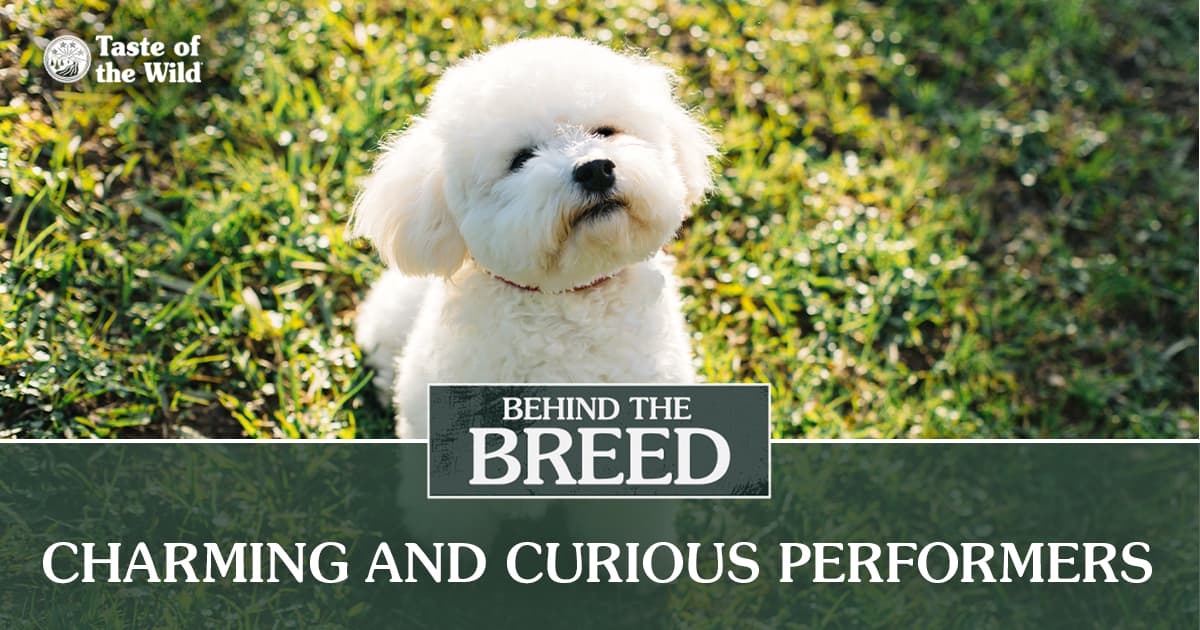
Have you ever wondered about the origins of a dog breed? In our “Behind the Breed” series we’ll dive into the history, personality and physical appearance of a particular breed. We’ll also cover some of the FAQs about the breed and maybe some fun facts, too!
With a fluffy white coat, dark eyes and a plumed tail, the bichon frise dog breed is easy to picture. This small canine companion is playful, affectionate and eager to meet people. A bichon frise may look like a delicate lapdog — but this lively pet enjoys tricks, family life and staying close to their favorite people.
Bichon Frise History
The bichon frise is related to a group of small dogs with Mediterranean roots that includes the Maltese, Havanese and Bolognese breeds. It is thought that the breed originated on the island of Tenerife in the Canary Islands, where it became known as the bichon Tenerife.
These intelligent dogs became favorites in French royal courts, but after the French Revolution changed life for aristocratic households, many bichons became performers. Their charm, agility and ability to learn tricks helped them entertain crowds in streets and circuses. The American Kennel Club recognized the bichon frise breed in the non-sporting group in 1973.
Wondering how to pronounce the name of the breed? It is commonly said “BEE-shon free-ZAY.” In French, “bichon frise” means small dog with curly hair.
What Is the Bichon Frise Temperament Like?
The typical bichon frise temperament is friendly, curious and upbeat. These social dogs often greet strangers as potential friends. A well-socialized bichon frise dog can do well with children, cats and other dogs when introductions are positive and interactions are supervised.
Similar to other lapdogs like the Cavalier King Charles spaniel, the bichon frise was developed to stay close to people. This affection can make a bichon an attentive, affectionate member of the household. Some may become bored, vocal or anxious when left alone for long periods, so gradual practice with short absences can help a puppy feel comfortable alone.
Exercise, Training and Play
Bichons are highly trainable and often enjoy obedience, agility and rally. Positive training with praise, food rewards and play works well for many dogs. Short sessions can keep a bichon frise puppy engaged while learning basic cues, and early socialization helps puppies adjust to new people, other pets, sounds and places.
The bichon frise has moderate exercise needs. Short walks, indoor games and safe opportunities to explore can support daily activity. Bichons are also known for quick bursts of energy, sometimes called “bichon blitzes,” when they race around the home or yard before settling down.
A bichon frise pup benefits from consistent routines, positive training and mental enrichment. Puzzle toys, scent games and practicing new tricks can help channel energy. Pet parents should keep sessions brief and age-appropriate, then gradually increase activity as the dog matures.
Bichon Frise Size, Colors and Appearance
The bichon frise is a small dog breed, with a balanced body and confident stance. Adults are typically 10 to 12 inches tall and weigh between 12 and 18 pounds. Bichon frise colors are limited compared with many other dog breeds. White is best known, although apricot, buff or cream may appear around the ears or in other areas. Without trimming, a bichon frise may look like a fluffy, adorable little cloud.
Do Bichon Frise Dogs Shed?
Bichon frises do lose some hair, but loose strands are often trapped in the curly double coat instead of falling around the home. This low-shedding quality is one reason the bichon frise appears on some lists of allergy-friendly dogs.
Low shedding does not mean low maintenance. Trapped hair can lead to tangles and matting, so the coat needs frequent brushing. Many pet parents brush daily and arrange regular grooming sessions with a professional groomer for bathing, clipping and shaping. Routine care also includes nail trims, ear checks and dental care.
Are Bichon Frise Dogs Hypoallergenic?
No dog is completely hypoallergenic. Some people with dog allergies may tolerate a bichon frise better than other dog breeds because less loose hair spreads through the home. Allergens are also found in dander, saliva, urine and skin. People with allergies should spend time around the breed before adoption and speak with a medical professional.
Bichon Frise Lifespan and Wellness
The typical bichon frise lifespan is about 14 to 15 years, although genetics, activity, preventive care and overall health influence any individual dog’s life expectancy. Regular visits with a veterinarian can keep vaccinations, parasite prevention and dental care on schedule with the dog’s life stage, while helping to identify any health changes early.
Potential bichon frise health issues include allergies, dental disease, kneecap problems, bladder stones and diabetes mellitus. These conditions do not affect every bichon, but pet parents should discuss health concerns with their vet.
Is a Bichon Frise Right for Your Family?
For families considering the bichon frise dog breed, grooming time and companionship are important traits to understand. These small dogs can adapt to apartments and many routines, but they need attention, exercise and interaction. Whether you welcome a puppy or adult through adoption, the bichon frise can become a cheerful, loving companion.
A reputable breeder or rescue website can help you learn about available dogs and responsible placement. For the right household, the bichon frise dog breed combines intelligence, affection and playful energy in one charming little dog.
The information in this blog has been developed with a Doctor of Veterinary Medicine and is designed to help educate pet parents. If you have questions or concerns about your pet’s health or nutrition, please talk with your veterinarian.