Contact

Support
Recipe Recommendations For Puppy Owners Health and Nutrition Tips All Dog Articles Personalized Feeding Guide Compare Recipes
Virtual Pet Park
Explore our wild world of adorable pet photos and videos.
Support
Recipe Recommendations Health and Nutrition Tips All Cat Articles Personalized Feeding Guide Compare Recipes
Virtual Pet Park
Explore our wild world of adorable pet photos and videos.
 Where to Buy
 Contact Us
Behind the Breed: Bullmastiff
Category: Behind the Breed
Have you ever wondered about the origins of a dog breed? In our “Behind the Breed” series we’ll dive into the history, personality and physical appearance of a particular breed. We’ll also cover some of the FAQs about the breed and maybe some fun facts, too!
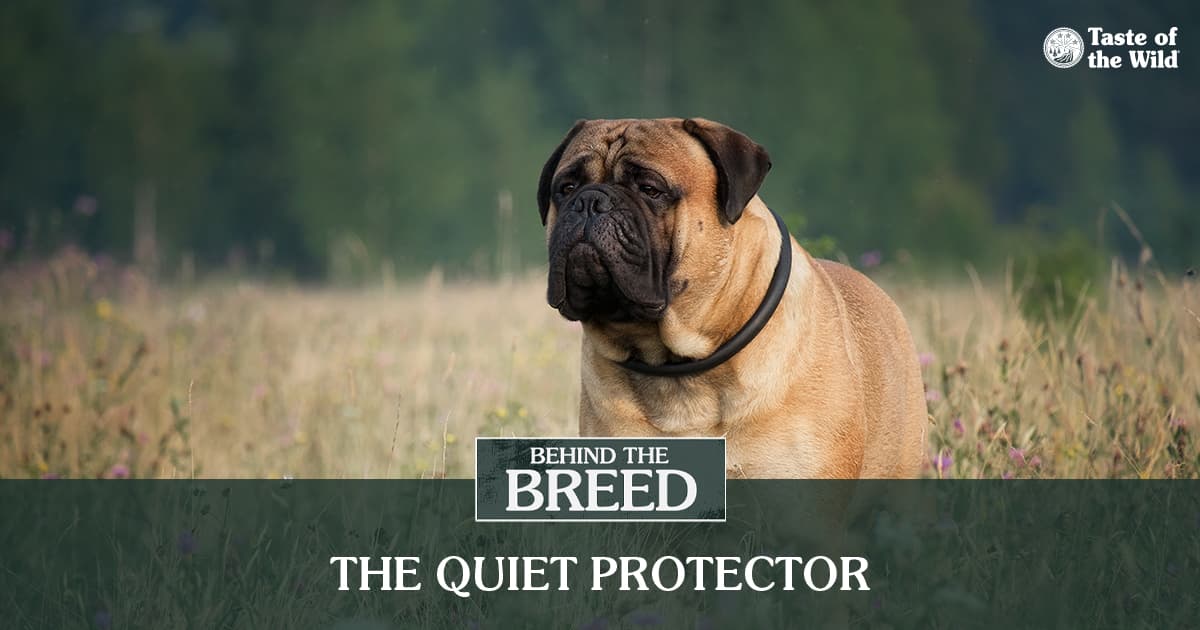
Fearless and imposing, the bullmastiff is a working dog with a clear purpose. Not known as a graceful dog — it’s hard to be when you’re so large — the bullmastiff is truly a gentle giant. Beneath their muscular build is a kind-hearted, affectionate and loyal companion who forms strong bonds with their family.
English Mastiff vs. Bullmastiff: What’s the Difference?
The English mastiff and bullmastiff are both large, loyal dogs, but they have different personalities and purposes. The English mastiff is bigger and generally calmer and more relaxed, making it a good family dog. Smaller in size, the bullmastiff personality tends to be more energetic and naturally protective. Both breeds are affectionate and devoted, but the English mastiff is usually more laid-back, while the bullmastiff is generally more alert and watchful.
The bullmastiff was originally bred in 19th-century England to guard large estates from poachers. Poaching on estates was an extensive problem, so gamekeepers crossed English mastiffs with the now-extinct Olde English bulldog to create a guard dog that would protect and defend deer and other game. They were trained to track without barking or biting, with the goal of holding poachers without injuring them until their masters could get to the intruders. As a result, the bullmastiff became known as the “Gamekeeper’s Night Dog.”
John D. Rockefeller brought bullmastiffs to the U.S. in the 1920s to guard his home in upstate New York. The American Kennel Club recognized the breed a few years later in 1934.
Bullmastiff Size: How Big Do They Get?
Among giant dogs, the bullmastiff is known for its powerful, muscular build. Bullmastiffs stand as high as 27 inches at the shoulder and weigh between 100 and 130 pounds. Their broad heads and short muzzles create an alert expression that reflects the confidence and quiet strength these natural guardians possess.
Bullmastiff Colors and Grooming Needs
A bullmastiff’s coat can be fawn, red or brindle, and range within those colors from very light red fawn to very dark reddish brown. They have a square, black muzzle that tapers toward their eyes, as well as dark ears and nails.
The bullmastiff has a short, dense coat that is relatively easy to maintain with regular brushing. While bullmastiffs do shed throughout the year, frequent grooming and occasional baths are usually sufficient to keep their coat in good condition. Their low-maintenance coat makes them a practical choice for owners who want a large dog with minimal grooming requirements.
How Long Is a Bullmastiff’s Lifespan?
Like other giant dog breeds, the bullmastiff has a relatively short lifespan that averages 7 to 9 years. There are several factors that influence their life expectancy, including nutrition, lifestyle, genetics, breeding history and healthcare. To prolong their life, bullmastiffs should maintain a healthy weight to reduce stress on their joints, engage in moderate exercise regularly and have routine veterinarian visits appropriate for the dog’s life stage.
Bullmastiff Health Issues
Like many large and giant breeds, bullmastiffs can be predisposed to several serious medical issues. Some of the medical conditions to watch out for with bullmastiffs include:
- Gastric dilatation-volvulus (GDV): This is a life-threatening bloat complication that occurs when the stomach twists on itself, cutting off blood supply to the organs. It requires immediate veterinary attention.
- Elbow and hip dysplasia: Due in part to their size and genetics, these are conditions in which the joints develop abnormally, leading to instability and arthritis.
- Arthritis: Underlying joint issues can cause arthritis to develop as they get older.
- Cancer: Bullmastiffs have an increased risk of lymphoma, osteosarcoma (bone cancer), mast cell tumors and hemangiosarcoma, an aggressive cancer that commonly affects the spleen, liver or heart.
- Heart disease: They have an increased risk of dilated cardiomyopathy (DCM), a disease in which the heart muscle becomes enlarged, making it less effective at pumping blood. This is a life-threatening condition, so early diagnosis and treatment can help improve their quality of life.
Not every bullmastiff will develop these conditions — they just occur more frequently in this breed. Regular veterinary checkups, maintaining a healthy weight and monitoring for any symptoms or behavioral changes can help detect problems early.
What Is the Bullmastiff Temperament Like?
Similar to the Rottweiler and cane corso breeds, the bullmastiff was bred to be a guard dog. They will set their property boundaries and defend them fiercely. Bullmastiffs don’t often bark and are quiet dogs, so their owners need to be alert for any changes in their behavior. They don’t always get along with other dogs, but they do thrive on obedience and training classes.
Bullmastiffs can be good with small children if they receive early training and close supervision, but their massive size creates risks of accidental bumps or rough play. They can weigh much more than a child and sometimes can be like a tornado in the living room, so make sure play doesn’t get too rough. Given the right amount of attention and socialization, bullmastiffs will become an integral part of their owners’ families.
How to Care for Bullmastiff Puppies
Bullmastiff puppies are intelligent, affectionate and loyal pups that quickly grow into powerful, large-breed companions. Because of their rapid growth, it is important to feed them a balanced diet that is specifically formulated to support healthy bone and joint development while preventing excessive weight gain. Bullmastiff pet parents should choose a complete and balanced food with an AAFCO nutritional adequacy statement indicating that it is appropriate for growth, including growth of large size dogs (70 lb. or more as an adult). As they get older, work with your veterinarian to choose a complete and balanced adult diet appropriate for their size, body condition, activity level, and individual health needs.
Bullmastiff puppies benefit greatly from early socialization by being safely introduced to a variety of people, places, sounds and experiences. Enrolling in puppy training classes can provide a valuable opportunity to build confidence, reinforce good manners and strengthen the bond between puppy and owner. Although bullmastiffs are naturally devoted and eager to please, they can also be strong-willed and independent, making proper training essential from an early age. Consistent, positive reinforcement and clear boundaries help them develop into well-mannered, confident adults that are reliable family companions.
The bullmastiff dog breed is a remarkable blend of strength, loyalty and gentle companionship. While their impressive size may seem intimidating at first, they are known for their calm temperament and deep devotion to their families. If you’re looking for a courageous protector with a kind heart, the bullmastiff may be the perfect addition to your home.
The information in this blog has been developed with a Doctor of Veterinary Medicine and is designed to help educate pet parents. If you have questions or concerns about your pet’s health or nutrition, please talk with your veterinarian.