Simple Living: Life Lessons From Your Pets

Living simply with pets

Ah, the carefree life of a dog or cat. Naps in a sliver of sunlight. Meals served to you without having to lift a paw. Tummy rubs. No stressful job, unhappy relationship or unpaid bills. What’s not to love?

If only your life could be less complicated. Well, maybe it can be! If we take a few cues from our best four-legged friends, we’d be surprised at what we can learn about living simply. Here are a few behaviors we can adopt to help create a healthier, more relaxing lifestyle.

Unplug. Pets get along just fine without digital devices. Turn off your smartphone. Back away from your laptop. And lock up your remote.  Devote time each day to an analog activity — like journaling, woodworking, photography or swimming — and experience the bliss of doing something you love without constant interruptions.

Play outside. Escape the couch, open the door and fill your lungs with fresh air. Saunter around the neighborhood or go to a nearby park (your pet would be happy to accompany you). Take up running, biking or any other activity that gets your body moving outside on a regular basis.

Wag more. Show people they make you happy. Welcome family members home with a hug at the door. Chances are, they’ll return the favor when you come home, too.

Minimize. Your pet doesn’t need a million different toys and neither do you. Purge and declutter your house. Choose only the things that are most important or useful to you and get rid of everything else.

Walk. Pets just don’t understand the concept (or need for) cars. The next time you need to run a short errand, leave the car keys behind. Stroll to the nearby hardware store or coffee shop. And like your pet, be open to meeting new friends along the way.

Practice clean eating. Simplify your eating. Savor whole, natural and real foods that aren’t processed or refined. Better yet, buy locally where you can be more informed about the way your food is raised. Many pet owners are now doing the same for their dogs and cats with limited ingredient diets.

One thing at a time. Have you ever witnessed your cat totally engrossed with the bird feeder outside the window? Or the way your dog gnaws on a toy for an entire hour? Their satisfaction may come, in part, from the fact that they’re not multitasking. (A good resolution to make yourself.)

Roll in the snow (or grass, or dirt or whatever you prefer). Stretch out in the yard and watch the birds flitting through the trees. Make a snow angel.

Explore your sense of smell. Close your eyes and really appreciate the scent of fresh laundry, pine needles, dark coffee or popovers baking in the oven.

Snuggle. And of course, as your dog or cat would tell you, there’s nothing better than cuddling up with someone you love.

A Winter Sport for Armchair Athletes: Ice Fishing With Your Dog

Taste of the Wild

For weeks, you and your dog have been cooped up inside, channel surfing. Isn’t it time you both went outside? Even if you’re not athletically inclined, ice fishing is the perfect sport to help break the monotony of winter. Here’s what you need to think about to help keep your dog safe and warm.

Does Your Dog Like the Outdoors?

Huskies and other arctic breeds are made for the snow, but your chihuahua, Chinese crested dog or pug, not so much. If your pup spends most of the time curled next to the radiator, they might really prefer to stay at home. For dogs with arthritis, the damp and cold can make their joints ache and slipping on the ice could lead to injury. In these cases, your dog may be more comfortable at home.

Pack Dog Gear

If you plan to be outside for any length of time, consider outfitting your dog with an insulated, waterproof coat. While it’s usually easy to walk on snow, ice can be another matter. Dog booties can provide traction and help prevent ice balls from forming in the tufts of hair between your dog’s toe pads. And don’t forget your dog’s leash.

If you’ll be inside an ice fishing house or tent, bring a blanket for your dog to cuddle into. Your pup will also need food and fresh water and perhaps a stuffed Kong to stay occupied while you’re waiting for a nibble.

Ice Safety Comes First

The ice should be fresh and clear and a minimum of 4 inches in depth for ice fishing if you’re traveling on foot, according to the Minnesota Department of Natural Resources. Of course, the ice should be much thicker, 8 to 12 inches, if you plan to take a car — and more if you have a truck.

Secure Your Dog While Setting Up Camp

You don’t want your dog running out to areas of open water while you’re busy setting up your equipment. So it’s best to keep your pup in the car until you’ve got everything situated. Then take your dog for a good walk to wear off energy before you settle down to some serious angling.

Ice Fishing “Al Fresco”

If you’re fishing outdoors, remember that it can be dangerous for your dog to run loose. Dogs can fall through weak spots in the ice or into holes left by other anglers. What’s more, some people pour antifreeze, which is often toxic to dogs, into the hole to prevent ice from forming before they return.

It’s also important to be considerate of other anglers. Some may not appreciate your dog getting tangled in their fishing lines, urinating on their tent or getting into a fight with their dogs. For your dog’s safety and that of others, keep your dog on a leash or on a cable attached to a spike that’s been drilled into the ice.

If you transported your equipment on a sled, line the sled with a blanket where your dog can curl up. If not, bring a rubber-backed rug so your dog can get off the ice (especially if your dog won’t tolerate booties).

Inside the Ice Fishing House

There are plenty of dogs who can fall down a 10” ice fishing hole. Especially if they’re chasing after a flickering fish. So position their bed far enough away from the hole that they won’t be tempted to leap into the hole or pounce on a perch that’s flapping on the ice. Dogs may also be attracted to peanut butter and other types of bait on your hooks, so keep them out of your pet’s reach. Finally, keep your dog away from the heater to prevent burns.

Your dog will appreciate spending quality time with you in the great outdoors. Or almost as much as he or she will love sharing your tasty perch dinner.

Hypoallergenic Dog Food: How Does It Work?

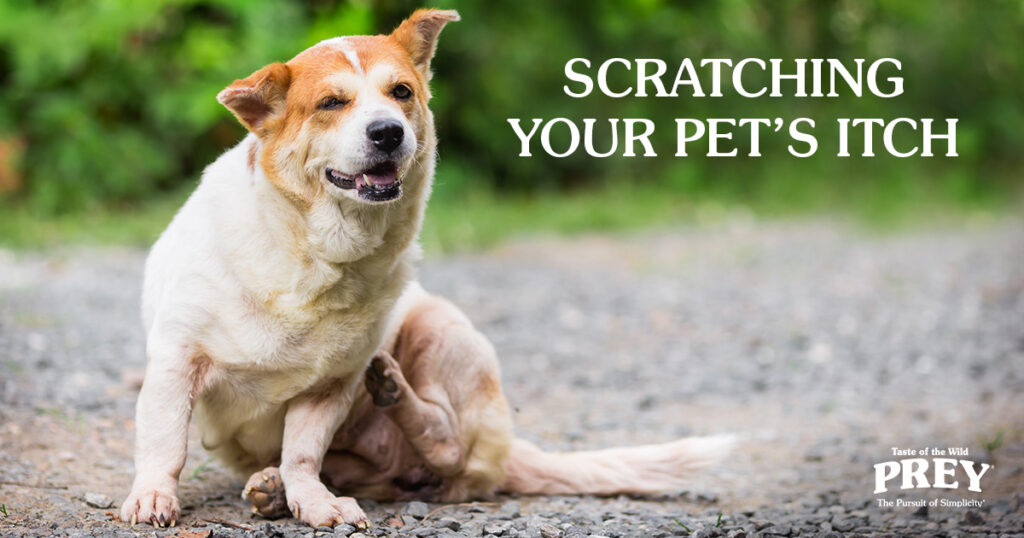
A close-up of a brown and white dog sitting on the ground outside scratching itself.

If you’re starting to research food allergies and hypoallergenic dog food, there are a few misconceptions that are important for you to be aware of. We’ll go through those and other information about food allergies in dogs — but if your dog is showing any signs of illness, your veterinarian should be your first call. 

Hypoallergenic Food for Dogs

The first thing to know about hypoallergenic diets for dogs is that, while it’s a relatively common term used by pet parents, no diet can truly be allergen-free. Instead, specialty dog food is formulated with ingredients that reduce the risk of an allergic reaction. These are known as hydrolyzed-protein diets and limited-ingredient diets. More on that later — let’s go over dog food allergies and food intolerances.

The Facts About Dog Food Allergies

A food allergy is an abnormal reaction to a normal food. This occurs when the dog’s immune system misidentifies a substance in the food, most commonly a protein, as a foreign invader and mounts an unnecessary immune response against it. This often leads to itchy skin and, for a small percentage of dogs, gastrointestinal signs like vomiting or diarrhea. A food allergy can occur suddenly after a dog has been eating the same ingredients for months or years with no problems.

Protein is the most common food allergen, with beef, dairy products, chicken and wheat topping the list. Other allergy-triggering protein ingredients include lamb, eggs and soy, but over time, dogs can develop allergies to any protein source they’re repeatedly exposed to. Dogs can also be allergic to preservatives, food additives or other ingredients in their diet. 

True Food Allergies in Dogs Are Rare

Food allergies are actually very uncommon in dogs. Flea and environmental allergies are far more likely, which is when dogs react to flea saliva or pollen, mold, dust mites and other environmental irritants. Dogs with food allergies tend to itch all year long, while those with environmental allergies often experience seasonal signs.

To complicate matters, dogs can be allergic to more than one allergen and have both food and environmental allergies. Some dog breeds, such as Labrador retrievers, golden retrievers and cocker spaniels, can be genetically predisposed to allergies.

Signs of Food Allergies in Dogs

Some dogs may experience gastrointestinal issues including vomiting, diarrhea, gas, loud intestinal rumbling and frequent bowel movements. They may also experience weight loss and irritability. However, the most common signs of a food allergy include: 

  • Nonseasonal itching
  • Scratching or chewing their face, ears, feet or groin
  • Red, irritated skin
  • Secondary skin infections
  • Chronic or recurring ear infections

Food Intolerance Is More Common in Dogs

While we’ve spent some time discussing a food allergy, it is far more likely that a dog has a food intolerance rather than a food allergy. A food intolerance doesn’t involve the immune system reacting to an ingredient in the diet (an allergic reaction). Instead, it usually occurs when a dog has trouble digesting a particular ingredient.

Diagnosing a Food Allergy or Food Intolerance in Dogs

The best way to help your dog is to start with a visit to your veterinarian. They can provide your dog with medications to help relieve the itch and other symptoms while you work together to determine what’s causing it. They will most likely start by ruling out parasites, infections, metabolic diseases and other possible causes of your dog’s symptoms. 

To check for a food allergy or intolerance, your veterinarian may recommend an elimination diet trial for 8 to 12 weeks. The goal is to remove potential allergens from the diet to see if your dog’s symptoms resolve. While there’s no such thing as a hypoallergenic diet, your veterinarian may recommend a limited-ingredient diet or a hydrolyzed-protein diet. 

A limited-ingredient diet typically includes a single carbohydrate source and a single protein source (e.g., pasture-raised Angus beef, cage-free turkey or trout raised in spring-fed water). Sometimes a single-protein diet also contains a novel protein that the dog hasn’t been exposed to before, like venison, duck or salmon. These diets provide all the essential nutrients dogs need and are formulated to provide complete and balanced nutrition, even with only a few ingredients. A limited-ingredient formula may also help dogs that have a sensitive digestive system or skin issues, even if they don’t have a food allergy. Hydrolyzed diets have the proteins broken down into pieces small enough to avoid detection by the immune system and are typically only available by prescription. Your veterinarian will choose the best dog food for your dog. 

During the elimination trial, it’s very important that your dog doesn’t eat anything else besides the assigned diet. That means no treats, rawhides, table scraps, flavored medications or even chew toys made from animal products. After the 8 to 12 week elimination period, a challenge period is started where the original diet is gradually introduced again. If your dog’s itching improves, then gets worse when they’re challenged, a food allergy diagnosis is typically made. There is no cure for a food allergy. Instead, your dog will need to stay on specialized dog foods for the remainder of their life and avoid anything that contains the allergen. 

What About Hypoallergenic Dog Treats?

Similar to hypoallergenic dog food, no treats can be truly hypoallergenic. However, like limited-ingredient diets, there are treats available which have ingredients that are less likely to cause a reaction or have the protein hydrolyzed into small pieces, so the immune system won’t recognize it. If your dog has food sensitivities or allergies, always ask your vet before feeding them any type of new food, including treats.

13 Tips for Camping with Your Dog

Out of the Doghouse and Under the Stars

Unplug your computer. Power down your phone. Disconnect from the stress of everyday life. And connect with your dog under a canopy of stars in the wilderness. What outdoor adventure is better than camping with your best friend?

But before you pack up and head out, consider these tips to help make your trip safe and fun for your furry pal:

1. Know the regulations before you go.

Rules about pets can vary from one campsite to the next — you don’t want to arrive only to learn dogs aren’t allowed. Check out websites for national parks, state and county parks, or the Forestry Service for dog-specific regulations.

2. Make sure your dog is the camping type.

Do you own a pug, Frenchie or other short-nosed (brachycephalic) breed? They can be prone to heatstroke and may be better left in your air-conditioned home. Same goes for dogs that tend to bark at the sound of every chirping cricket, croaking frog or snapping twig. Better to let them sleep peacefully at home than to keep the entire campsite awake.

3. Start with a veterinary check.

Make sure your pet is current on vaccines as well as heartworm, flea and tick preventives. Ask for a copy of your dog’s vaccine history to bring with you.

4. Update pet identification.

Any dog can take off after a deer or skunk and get lost. That’s why your dog’s ID tags should carry your cell phone number where you can be reached on the trip. Or you could create temporary tags with your campsite number, if applicable. To further ensure your dog is returned to you, add a microchip and a GPS collar.

5. Pack a doggie suitcase.

Include blankets, leashes, bowls, food, toys, poop bags and any medications your dog needs regularly.

6. Include a pet first aid kit.

Many of these items may be in your own first aid kit, but helpful items include gauze squares and a gauze roll (you can also wrap the gauze around the nose and behind the ears to create a muzzle, which is useful in the case of a snake bite), self-clinging bandages, flat-bladed tweezers for removing ticks and thorns, pet-safe sunscreen for dogs with thin or light coats or exposed patches of skin, Benadryl containing diphenhydramine only for allergic reactions to bee stings (give 1 mg/lb. and head to the veterinarian if there’s no improvement).

7. Make a cozy tent.

Consider bringing a stake and cable or lightweight pen or carrier to safely restrain your dog while you set up the tent. Place a waterproof tarp under the tent to help prevent moisture seeping in, and bring a pad and blanket so your dog can sleep comfortably with you.

8. Uphold campsite etiquette.

Neighboring campers may not want to share s’mores with your dog, so it’s best to keep your pet leashed. But never leave your dog alone in your car, tent or campsite.

9. Place dog food in a bear-proof container.

Or hang the food high in a tree, away from your tent. Only take food out during meal times and don’t leave treats in the tent or in your pockets.

10. Protect the paws.

If you’ll be walking on uneven, rocky terrain, consider outfitting your dog with booties to help protect tender paws from cuts and scrapes. It’s best to keep your dog on a leash and on the trail to minimize tick exposure and help prevent mishaps with rattlesnakes, porcupines and other critters.

11. Don’t forget the swimwear.

Unless your dog is a proven swimmer, consider a doggie life vest for times when you’re boating or swimming.

12. Bring fresh drinking water.

Carry a collapsible bowl and clean water for your dog. Lakes, ponds and streams can contain protozoa such as Giardia as well as bacteria and toxic algae that can make your dog sick.

13. Perform a daily tick check.

Run your hands over your dog’s body every night (especially the face, neck and ears) and remove any ticks immediately. Don’t forget to check yourself, too.

Now you’re ready to hike, swim and gather around the campfire with your best camping buddy.

Counting Calories for Your Pet

Taste of the Wild

If food is love, America’s pets are being loved to death.

Veterinary professionals estimate that 60 percent of cats and 56 percent of dogs in the U.S. are overweight or obese, according to a 2017 survey by the Association for Pet Obesity Prevention. Those extra pounds can lead to diabetes, arthritis, kidney disease, high blood pressure and even some kinds of cancer.

Getting your pet down to a healthy weight helps prevent disease, enhances your pet’s quality of life and can actually help your pet live longer. Counting your pet’s calories is one way to help your pet reach an acceptable weight.

What Is Your Pet’s Target Weight?

But how can you tell if your pet is on the wrong side of pleasantly plump? Your veterinarian can probably provide a more objective evaluation of your pet’s weight than you can. You can also check out the World Small Animal Veterinary Association site for directions on how to determine your dog’s or cat’s body condition score. It’s a way of visually assessing if your pet is underweight, overweight or just right.

Still not sure what your pet should weigh? The Association for Pet Obesity Prevention offers a reference chart of canine and feline target weight ranges for popular U.S. breeds. Once you know a healthy weight range for your pet, it’s easier to make a plan for achieving it.

Counting Calories

The amount of daily calories your pet needs will depend on a number of factors, including age, activity level, whether the pet is neutered or intact, any health issues and the amount of weight that needs to be lost. Your veterinarian can take those factors into consideration and calculate a daily calorie goal for your pet.

Ideally, your pet should lose weight gradually, trimming off about 3 to 5 percent of body weight per month. This is especially important for cats, who are at risk for a dangerous liver condition called hepatic lipidosis if their calorie intake is restricted too quickly.

When considering daily calorie counts, make sure to divide the total by the number of meals and subtract the calories from treats. Treats shouldn’t account for more than 10 percent of the daily calories. Don’t forget, pets usually love low-calorie treats such as green beans, carrots, bananas, apples (avoid seeds), pureed pumpkin and broccoli.

Always Measure Food

Do you just cut back on the quantity of your pet’s current diet or switch gradually to a weight-loss diet? Trimming your pet’s current diet runs the risk that your dog or cat may not receive all the nutrients they need. Also, if your pet is feeling hunger pangs, you know what that means: more begging that can be hard to resist.

The other option is to choose a diet designed for weight loss. Most of these diets are lower in fat and higher in protein and/or fiber to enable owners to feed more food with fewer calories. However, commercial pet foods marketed for weight control can vary widely, according to a study in the Journal of the American Veterinary Medical Association.

When comparing 93 weight control diets for dogs and cats, the study found that the amount of calories per cup or can of food varied, as did the feeding recommendations.

In fact, for many of the diets in the study, researchers felt pets might not lose weight and could possibly gain weight if pet owners followed the directions on the pet food label. That’s why it’s best to discuss diet choices with your veterinarian, as well.

Don’t Forget Exercise

Just like for people, exercise is important to help pets lose weight. But if your pet is extremely overweight or has other underlying health conditions, consult your veterinarian for advice on the right exercise program for your pet.

If your pet is in good health, you could start your dog with 30 minutes of exercise a day. Or plan to spend three 5-minute aerobic play sessions with your cat. There are even numerous pet activity monitors on the market that can help track calories and keep your pet on the road to a healthy weight.

Artificial Food Coloring: Is It Good for Your Pet?

artificial food coloring and pets

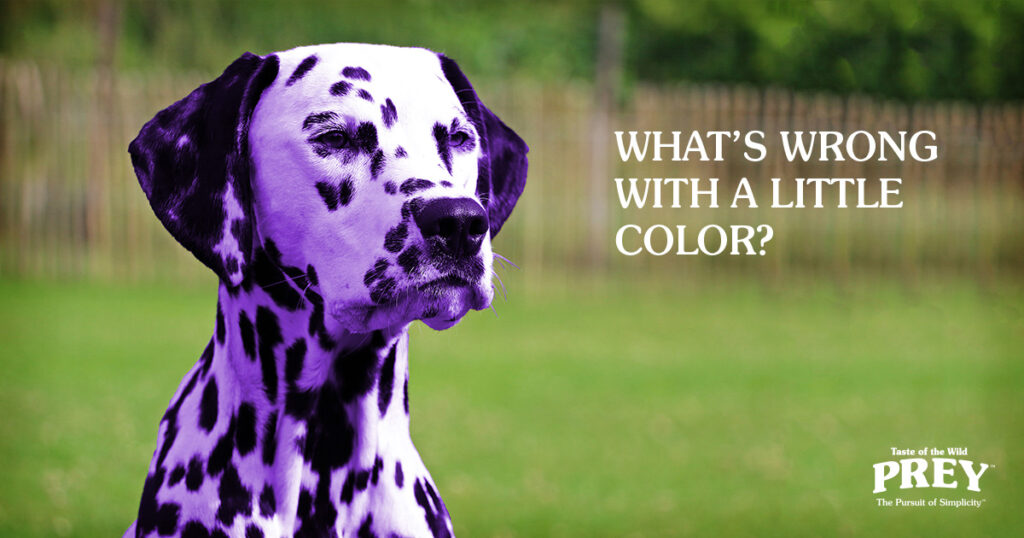
It’s no accident that pet food often comes in a rainbow of colors. When you open a bag, it’s comforting to see the golden yellow of chicken, the red of rare beef and the green of fresh vegetables — all hues that the original ingredients may lose during the manufacturing process. Often, these colors are added after the fact.

But given that dogs and cats can’t visualize the same spectrum of colors we can, the colors are really added to appeal to pet owners. Which raises the question, are artificial food colors really necessary? If they don’t add any nutritional value, could they actually do more harm than good?

A Troubling Past

In the 1880s, vendors found that food coloring could make their wares more appetizing. Unfortunately, the practice wasn’t always honest: Colors were added to conceal spoilage or discoloration in less-than-fresh food. Even more alarming, some of the colors contained toxins such as mercury, arsenic and lead, which often had more severe effects on people than the original food spoilage.

The Food and Drugs Act of 1906 banned the use of these toxic food colors. Most of the remaining approved food colorings were made from the byproducts of coal processing known as coal-tar dyes.

Eventually, even these colors were found to be problematic when, in the 1950s, trick-or-treaters in several cities became sick from eating candy made with a common orange dye made from coal tar. This orange color additive and a red food color were tested for safety and eventually banned.

This led to the Color Additives Amendments of 1960, which required more stringent government oversight and scientific evidence of safety for color additives used in human and animal foods.

The FDA Keeps Close Tabs

Today, the Food and Drug Administration regulates all color additives that are used in human and animal foods. All color additives must be listed with the FDA and fall into one of two categories: those that have to be certified by the FDA and those that don’t. Certified colors are man-made and include fewer than ten approved colors.

Colors that are exempt from certification are natural pigments from plants, minerals or animals. The FDA also provides strict guidelines for use of the colors including the types of foods that may use the coloring, the amount of coloring allowed and how the color must be identified on packaging. Still, the FDA continuously reviews all food colors for safety.

Can Colors Additives Be Dangerous?

A 2010 article by the Center for Science and the Public Interest claimed that food dyes posed human health risks for cancer, allergies and hyperactivity in children.

While research has suggested that some food colors, especially used in large amounts, may have cancer-causing effects, these are not among the current FDA-approved colors. If FDA-approved colors are used according to direction, they should be safe in both human and pet foods.

It’s relatively rare for people to have allergies to food colorings. The same goes for cats and dogs, who tend to have allergic reactions to proteins in their foods. Finally, research on whether food colorings cause hyperactivity in children is inconclusive.

Still, while we might assume that food colors that are safe for people are also safe for pets, there is a paucity of research to show just what effects color additives have on dogs and cats.

A Move From Artificial to Natural

A recent Nielsen Global Survey found artificial colors among the top three ingredients consumers prefer to avoid. In fact, most likely spurred by consumer demand, many global food companies such as General Mills, Kellogg’s, Kraft, Mars, Nestlé and Frito-Lay are finding natural alternatives for artificial colors in their products.

If you’re like other pet owners, you’re probably questioning the same ingredients in the food you feed your pets. While the current food colors approved by the FDA appear to be safe — at least so far — more and more pet owners will no doubt look for ingredient lists that don’t include the word “artificial.”

Channel Your Dog’s Pent-Up Energy with Agility Training

Taste of the Wild

If you have a high-energy pooch, you’ve probably walked them around the same blocks so many times that you dream about your daily path. Why not dial up the fun with an activity that provides you both with more physical and mental stimulation? For a lively way to strengthen the bond with your dog, few things beat agility training.

What Is Agility Training?

One of the fastest growing canine sports in the United States, agility running is a fast-paced, timed obstacle course that puts you and your dog to the test. It challenges your dog’s athletic ability and concentration as he or she leaps hurdles, barrels through tunnels, zigzags through lines of poles and clambers over seesaws. Agility also tests your capacity to guide your dog, providing some aerobic exercise in the bargain.

Those of you with a competitive streak can go against other teams at your experience level, from novice to master, or you can choose to participate recreationally. While the rules vary depending on the organization involved, points are generally given for speed and accuracy but subtracted for faults.

A “Sport for All Dogs”

Almost any dog can participate in agility competition, with more than 200 breeds — including mixes — currently competing, according to the United States Dog Agility Association (USDAA).

Today, the most common breeds seen on the course include herding dogs such as border collies, Shetland sheepdogs and Belgian Tervurens as well as Labrador retrievers, golden retrievers, Welsh corgis, cocker spaniels and even petite papillons. And some Jack Russell terriers can’t seem to contain their enthusiasm for the sport.

Is Agility Right for Your Pup?

One of the primary prerequisites of the sport is basic obedience. Your dog should have mastered commands such as “sit,” “stay” and “come.” Dogs that are happy to follow commands tend to be more successful at agility than those with a more independent nature.

While athleticism is a plus, it’s possible to gradually work your couch potato up to a more active level, barring any underlying physical limitations. Socialization is another issue: because there can be hundreds of dogs, handlers and spectators at these events, your dog should be comfortable with crowds and not easily distracted by barking dogs and cheering fans.

Start with a Veterinary Exam

Before you put your dog through the paces, ask your veterinarian if your dog is physically capable of this level of exercise. Dogs with underlying orthopedic conditions, such as hip dysplasia, may be better suited to more low-impact activities like swimming.

Overweight dogs may need to lose some weight first to reduce unnecessary stress on the joints. And flat-nosed brachycephalic breeds such as bulldogs that are breathing-challenged and overheat easily might be better off with regular walks during the cooler parts of the day.

If you have a young puppy, now may be the time to work on obedience and save the high-impact agility exercises for later, once the bones have fully developed.

Your veterinarian can also make sure your dog’s nails are trimmed to help reduce the risk of foot and toe injuries.

Be a Spectator or a Handler

To see agility at its best, check out any number of competitions held across the country. Or contact the USDAA to locate a community class for you and your dog. Do your kids want to be involved? No problem. Do you have a disability? Chances are, you can be a handler, too.

What are you waiting for? Agility can be a great way to challenge your pet’s mind and body (not to mention yours, too), while deepening your relationship. That’s what you’d call a win-win.

RELATED POST: Which Sport Is Right for My Dog?

Changing Your Pet Food: Why and How?

Taste of the Wild

There are many reasons to consider switching pet food flavors, types or brands.  But how do you go about changing your pet food, and how do you know it’s really time?

Your pet may eagerly devour a new type of pet food. But your pet’s digestive tract may not be as enthusiastic: Vomiting, diarrhea and gas are just a few of the potential consequences to a sudden food switch. That’s why food transitions should be made gradually, over the course of a week or more, to give your pet’s digestive tract a chance to adjust.

The Right Time to Change Foods

Your pet’s nutritional needs often change with different life stages. So it makes sense to move to a different food when your pet grows from a puppy or kitten to an adult and again when they enter their senior years.

Certain health conditions, such as kidney disease, diabetes or simply weight gain may necessitate a diet change. Or you may just have personal reasons for trying a new formula, such as ingredient or brand preferences (Taste of the Wild, for instance, has plenty of enticing selections) or just to save money. It’s important to note that if your pet suddenly stops “enjoying” the current food you purchase, you should consult your veterinarian before making a switch.

Whatever the reason, there are actually times when you may not want to change your pet’s food, and that’s when your dog or cat is really sick. A diet change may add more stress to a body that needs to focus on getting healthy.

It Takes a Little Patience

Whether you’re switching brands, changing from dry to canned food or simply changing flavors, the key is to make the transition gradually.

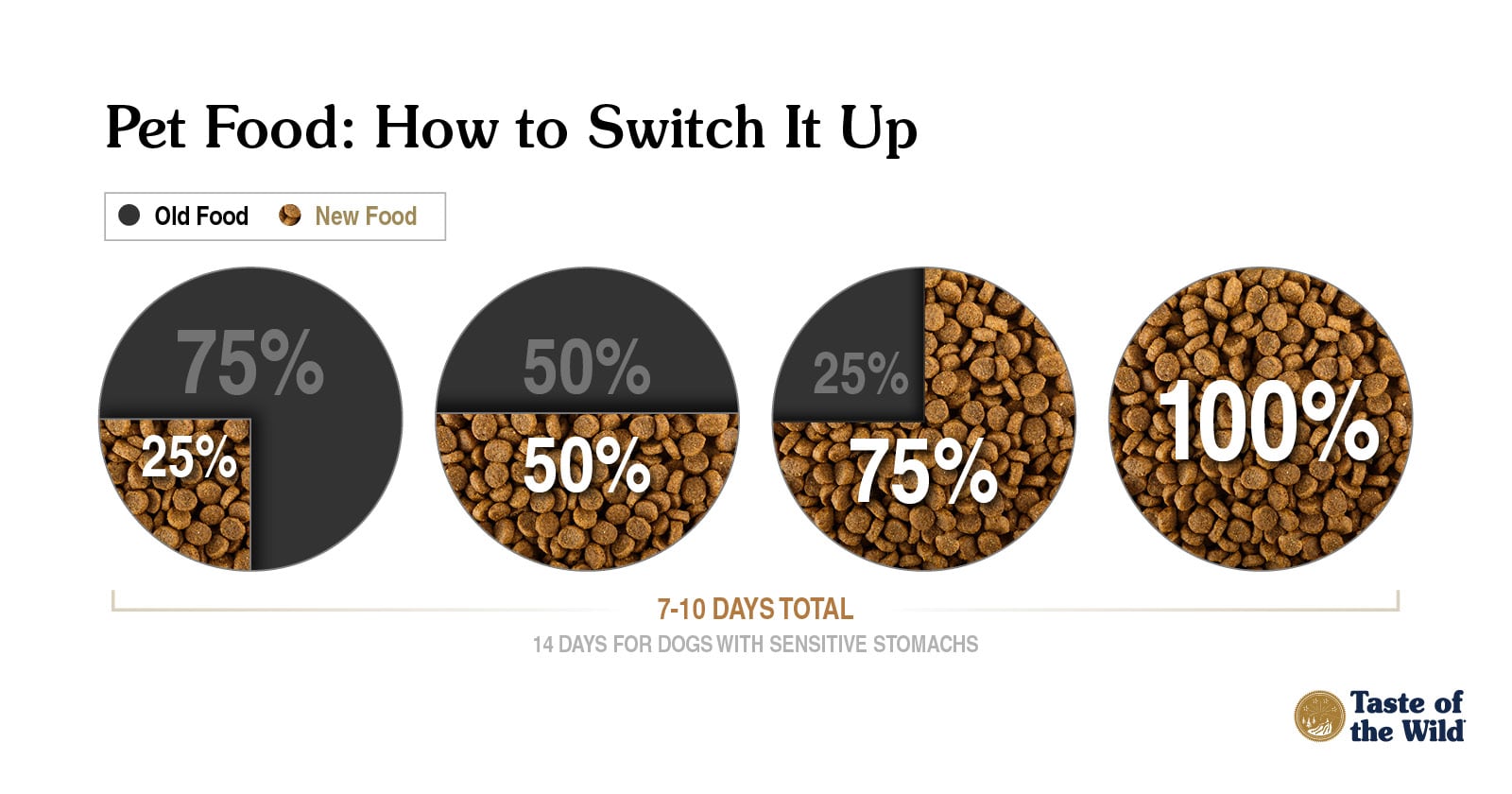
Start by adding a small amount of the new food while slightly reducing the previous food. That means the pet starts with about 75 percent of the previous food and 25 percent of the new food. Over the course of the next 7 to 10 days (14 days for dogs with sensitive stomachs), you can gradually alter the food proportions to 50 percent of the previous food with 50 percent of the new food, then 25 percent previous food with 75 percent new food until the pet is finally eating 100 percent of the new food.

An interior graphic depicting how to gradually introduce new food into your dog's diet across a 7- to 10-day period or 14 days for dogs with sensitive stomachs.

If your pet experiences any vomiting, loose stools, excessive gas or digestive noises, talk to your veterinarian. Usually, it’s better to slow the transition even further than to abruptly switch back to the previous diet.

Making the Pet Food Switch Easier

If you’ve been free-feeding your pet, this may be a good time to switch to regular meal times. Instead of leaving food out all day, place the bowl down, then remove whatever your pet hasn’t eaten after 20 or 30 minutes. For pets that may not be enthusiastic about the change, slight hunger pangs may prompt them be more accepting of the new food.

Since cats have a reputation for being finicky eaters, it helps to expose them to different types of foods as kittens. Try feeding them both dry and canned foods, as well as different sizes and shapes of kibble (with gradual transitions, of course). This may make food transitions easier later in life.

If your cat refuses the new food, you don’t want him or her to go without eating for more than 24 hours; this can lead to a serious medical condition called hepatic lipidosis, or fatty liver. When transitioning your cat to canned food, try warming the food slightly so the aroma can entice him or her. You can also try breaking up the daily food allotment into smaller, more frequent meals throughout the day or even employing food puzzles to help make meal time less ho-hum.

If you’re still having trouble, talk to your veterinarian. Some food transitions may lead to a bacterial imbalance in the digestive tract that can require added probiotics or even antibiotics. Your veterinarian can help get your pet back on track in no time.

RELATED POST: A Suddenly Picky Cat May Have Hepatic Lipidosis

Probiotics Maintain the Natural Balance for Your Pet

Taste of the Wild

The digestive tract is more than a conveyor belt for processing food. It’s also the largest immune organ in the body. As such, it’s believed to play an important role in your pet’s overall immune function and health. And probiotics are essential to helping it do the job.

Much of the digestive tract’s ability to affect immunity depends on the balance of beneficial and potentially harmful bacteria inside the digestive tract. Normally, these bacteria help digest food, absorb nutrients, support intestinal function, manufacture vitamins and modulate the immune system.

But the natural balance of these bacteria in your pet can be disrupted by a number of factors such as sudden diet changes, garbage ingestion, the stress of boarding or travel, and even antibiotics. This can cause an increase in harmful bacteria at the expense of beneficial bacteria, leading to diarrhea and sometimes vomiting.

Restoring the balance with probiotics

Oral administration of live, beneficial bacteria, or probiotics, in the right amounts may help boost the number of beneficial bacteria in the digestive tract and reduce the number of harmful bacteria. Although scientists are still learning about probiotics, studies in both human and veterinary medicine have shown promising results. Human studies, for example, indicate that probiotic administration may help with intestinal disease, diabetes, some skin allergies, weight loss, liver disease and more.

The nutritional benefits for pets may also extend beyond resolving diarrhea. One study in puppies, for example, showed that probiotics may help improve their immune response to vaccination.

How probiotics work

While probiotics are still being studied, it has been suggested that they work by making the intestinal environment less welcoming for harmful bacteria. These beneficial bacteria may make the surrounding area more acidic, take up adhesion sites on the intestinal lining, use up more nutrients and even produce compounds that might destroy the harmful bacteria.

All probiotics aren’t the same

The next time your pet has diarrhea, you might be tempted to feed him grocery store yogurt, with active bacterial cultures. But the same probiotics that may help people might not do the trick for animals. There is some evidence that species-specific probiotics, containing the particular strains of bacteria normally found in the dog or cat’s digestive tract, may deliver better results.

Of course, it doesn’t matter if the probiotic contains the right bacteria if they can’t survive manufacturing, storage or the acids in a pet’s gastrointestinal tract. So probiotics must undergo rigorous testing to ensure they’re viable in the animal. Testing is also important to make sure the bacterial strains are safe for the animal, capable of enhancing the bacterial balance in the gut, and ideally, able to positively impact the immune system.

Probiotics for pets are typically available in pill and powder form, or may be part of a nutritious diet. For example, every Taste of the Wild dry canine formula is enhanced with K9 Strain® Probiotics and every Taste of the Wild dry feline formula contains Viables® Probiotics. These strains are added after the cooking process to help ensure the beneficial bacteria are alive and able to support healthy digestion for your pet.

As always, if you have any questions about how probiotics can help your pet, talk to your veterinarian.

Know What You’re Feeding Your Pet: Making Sense of Pet Food Labels

Taste of the Wild

Walking down the pet food aisle — or aisles — in your favorite store can be an overwhelming experience. With thousands of options available, how do you know which food is right for your dog or cat? Reading the pet food label — and learning how to decode it — is a good place to start.

In this post, we’ll look briefly at what information is required on pet food labels. We’ll also identify which sections of the label many pet parents may be ignoring while placing too much emphasis on another.

Helpful, but limited, information for guiding pet food choices

The information found on pet food packages is either required or optional, and some sections are more helpful than others when choosing pet food. Under current federal and state regulations, all dog and cat food labels are required to include specific information stated in particular ways:

  • Brand and product name
  • Pet species (e.g., dog or cat) for which the product is intended
  • Net weight of the food in the package
  • Guaranteed analysis of specific nutrients
  • Nutritional adequacy statement, which tells the type and pet life stage the product is suited for
  • List of all ingredients in descending order by weight, including water
  • Feeding directions, if the food is labeled “complete and balanced” or “100% nutritious”
  • Calorie statement
  • Manufacturer’s or distributor’s name and address
  • While pet food labels are factual, they’re also used to capture your attention in order to provide additional information about product features and benefits.

Nutrients, not ingredients

If you’re like most pet parents, you look first at the ingredient list when choosing a pet food. All ingredients used in a pet food recipe are listed in order of their weight, so ingredients with high water content — fresh meats and vegetables, for example — are listed before similar amounts of dry ingredients (such as lamb meal or duck meal).

We strive to provide honest and accurate information about the ingredients used in Taste of the Wild recipes. But it’s also important to remember that our furry friends require and thrive on nutrients, not ingredients. Ingredients supply nutrients; they also provide mouth feel or texture, enhance flavor and preserve freshness.

Where do you really need to look?

According to Lisa Freeman, DVM, PhD, a board-certified veterinary nutritionist at Tufts University, the two most useful pieces of information on a pet food label are the nutritional adequacy statement and the manufacturer.

The nutritional adequacy statement, which is usually found in small print on the back or side of a pet food package, confirms three important facts:

  1. Whether the food is complete and balanced, or intended for sporadic or supplemental feeding.
  2. For which life stage the food is intended.
  3. How the company determined the food is complete and balanced.

You also want to choose a pet food made by a reputable and knowledgeable company that follows strict quality control protocols. While the name and address of the food manufacturer or distributor is required on the pet food label, you may need to do some homework to learn more about the company and their food safety system. The answers to these questions should sway your choice of pet food:

If the cat or dog food is determined to be complete and balanced by using AAFCO nutrient profiles rather than feeding trials, is that determination made by formulation or by analysis of the finished food?

Taste of the Wild recipes are determined to be complete and balanced by formulation, which is supported with testing of the finished food to verify the presence of key nutrients.

Where is Taste of the Wild pet food made?

Taste of the Wild dog and cat foods are made in one of five manufacturing facilities, all located in the United States.

What specific quality assurance measures are used to ensure consistency and quality of ingredients and the final pet food?

Because it matters what you feed your pet, we work hard to ensure that the production of all of our recipes adheres to strict quality and safety standards. To learn more about how the quality of Taste of the Wild pet food is assured, check out this information.