Road Trip! RV Life with Pets

Taste of the Wild

Some people travel with garden gnomes, posting photos at famous landmarks. But we’re guessing snapshots of your dog or cat in front of an alien spaceship in Roswell, New Mexico, would garner a lot more attention.

Isn’t it time to indulge your pent-up wanderlust, load up the recreational vehicle with pets, then hit the road? All it takes is a little planning. Here are some suggestions to help make your wilderness adventure with your favorite four-footed friends a success.

Map your trip. Not every campsite accepts pets. Once you have a general idea of where you want to go, find pet-friendly RV parks or campsites along the way. Some campsites offer fenced-in play areas for dogs, which is a great way to wear off energy after a long drive.

Meet with your veterinarian. Your pet should be current on all vaccines. Many campsites will ask for proof of vaccination, so ask for vaccination records and other pertinent medical records. You typically won’t need a health certificate when driving with your pet, but it’s a good idea to check the U.S. Department of Agriculture for the states you’ll visit, just to be sure.

Now’s the time to stock up on medications as well as flea/tick/heartworm preventives to last the whole trip.

Help your pet feel at home. A few weeks before you travel, give your pet a chance to get accustomed to RV living. Start by letting them explore the RV interior in your driveway, so they can get used to where their food, water, beds or litter boxes are located. Provide them with positive reinforcement in the form of treats and praise.

Then, try a few short rides (now’s the best time to find out if they get carsick). If you’re towing a camper, your pet will need to ride in the car.  Make sure you have a seat-halter system or a way to secure their kennel to keep them safe. If you’re driving an RV, your pets will still need to be inside a secured kennel to help prevent injury if you make any sudden stops.

Get your pet’s identification in order. If your pet wanders away at a rest stop or campsite, a current ID tag is the best way to get them back to you. All pets should have an ID tag with your address and cell phone. If your pet has a microchip, check with the manufacturer to make sure they have your current contact information. It can’t hurt to pack a current photo of your pet in case you need to make Lost Pet posters.

Make a pet packing list. You don’t want to be stranded in the middle of the wilderness without a pet necessity. So, start making a list of everything your pet will need, such as: food, bowls, medications, beds, kennels, leashes, litter box, toys, poop bags, swimming life vest, pet sunscreen, playpen for campsite, and a pet first aid kit.

On the road. Schedule stops every few hours, so your pet gets a chance to stretch his or her legs and take care of potty business. Better yet, take a hike along the shoreline or into the woods. Always keep your dog on leash so it doesn’t bolt at an unfamiliar sound or sight.

At the campsite. Always be respectful of your neighbors, which means picking up after your dog, holding barking to a minimum and keeping your dog on a leash so it doesn’t snatch hot dogs off the neighbor’s grill, or worse, wander off.

If you leave your pet behind. You can plan short excursions without your pet, but try not to leave them in the RV for long periods of time. If the weather is hot, make sure to leave the air conditioner and fans on so your pet stays cool.

What are you waiting for? Time to start planning.

How to Help a Poisoned Pet

Taste of the Wild

Curious pets have a way of getting into things they shouldn’t. Maybe your dog nosed through the garbage can. Or your cat gnawed on a new houseplant. Or a pet pried open the bottle of human medications in your backpack.

Dogs and cats are often inadvertently poisoned by ingesting toxins, but like people, they can also be poisoned by inhaling noxious fumes or if their skin comes into contact with certain chemicals.

When exposed to toxins, a healthy pet can become ill before you know it. Of course, the severity and timing of signs varies depending on the toxin involved. Signs like lethargy or loss of appetite can be subtle or they can be severe, ranging from vomiting and diarrhea to collapse and seizures.

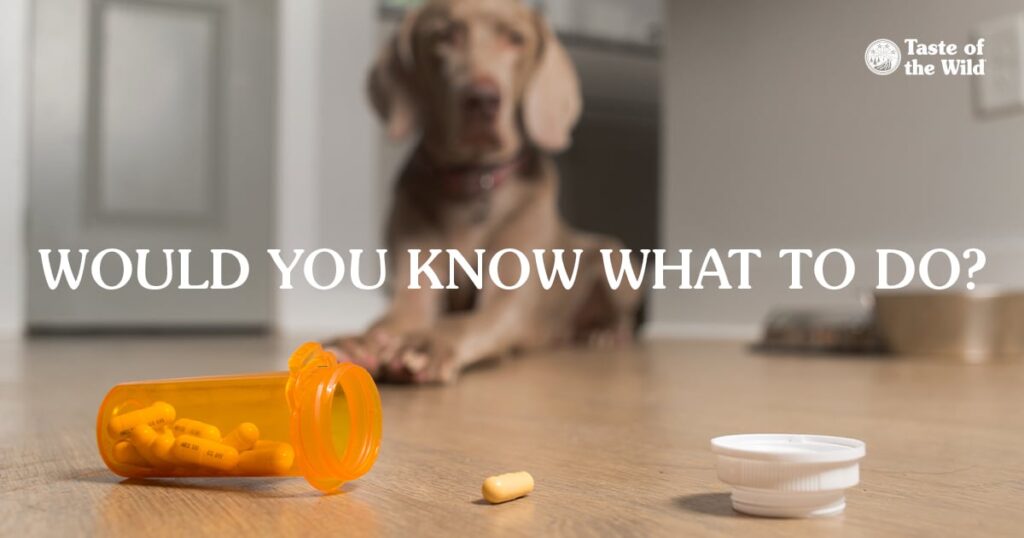
Would you know what to do, if you suspect your pet has been poisoned?

Practice poison prevention

Help protect your pet from poisoning with the following:

Know about potential poisons

When you’re aware that many common lilies can be toxic to cats, you can keep them out of your house.  Try to learn more about which plants are toxic to dogs and consult helpful resources like the Pet Poison Helpline to learn more about what plants, household and garden items may cause trouble. For cats, common toxins include acetaminophen, flea and tick medications containing pyrethrin, and human antidepressants. The list for dogs includes chocolate, the artificial sweetener xylitol and grapes.

Store toxins out of paw’s reach

Carefully place household, yard and automotive chemicals where pets can’t access them. Replace toxic house and garden plants with pet-safe versions. Secure rodenticides where mice can access them but pets can’t. All human and pet medications should be kept in a medicine cabinet or drawer. Never leave human foods in places where counter surfers can reach them.

Keep important numbers close

Program the following numbers into your phone, so they’re close at hand: your regular veterinarian (if potential poisoning happens during regular business hours), the closest 24-hour emergency veterinary clinic (for after hours) and ASPCA Poison Control or the Pet Poison Helpline.

Be prepared for an emergency

Keep 3 percent hydrogen peroxide in your medicine cabinet, in case your veterinarian asks you to induce vomiting in your dog. Replace the bottle when it reaches the expiration date. It may help to have a syringe on hand, for administration. Hydrogen peroxide is only for use in dogs; there is no at-home medication to induce vomiting in cats. Avoid internet suggestions for making your pet vomit, such as using vegetable oil or salt.

With any toxin exposure, act fast

If you suspect your pet has been poisoned, contact your veterinarian immediately, even if your pet is acting normal. The sooner your pet can be treated, the more likely it is for a good prognosis. Other important steps include:

Try to identify the toxin involved

If possible, bring the product packaging, plant, medication or photos of the poisoning site to the clinic. This will help the doctor better identify the toxin so the appropriate treatment can be started as soon as possible.

Bring a vomit sample to the vet in a clear, plastic bag

If you’re unsure what your pet may have gotten into, the vomit may contain materials that can help your veterinarian identify potential toxins.

Never induce vomiting or provide treatment unless directed by your veterinarian

Some toxins can cause damage to the esophagus, mouth or nose, or be aspirated into the lungs if vomiting is induced. Do not induce vomiting if your dog is unconscious, unable to stand, is having trouble breathing or is having a seizure. Giving your pet milk will not neutralize the toxin. And never give any human over-the-counter medicine as a treatment, unless you are asked to do so by your veterinarian.

Even if you’re careful, toxin exposure can happen. Knowing when your pet may be in trouble and seeking immediate veterinary help are the best ways to help keep your pet safe and healthy.

Helping Solve Digital Crimes: Electronic Storage Detection Dogs

Taste of the Wild

With the constant miniaturization of electronics, digital information can now be stored on a microSD card the size of a fingernail. Which makes it almost impossible for detectives to find when searching through a cluttered house or storage locker.

Enter electronic storage detection (ESD) dogs. It’s a new breed of service dog trained to sniff out cell phones, thumb drives, hard drives, computers and tablets, no matter how tiny they are.

More and more, ESD dogs are used across the country for cases such as political or corporate espionage, fraud, terrorism and other crimes. They can even sniff out hidden cameras in office buildings or the homes of CEOs, designed to pick up competitive intelligence. Nothing is safe from the finely honed nose of an ESD dog.

Training to pinpoint the scent

The idea for training Electronic Storage Detection (ESD) dogs began in 2012 as a joint effort among the Connecticut State Police computer crimes unit, their canine unit, and the forensic lab.

A chemist in the laboratory was able to isolate triphenylphosphine oxide (TPPO), a compound used to coat circuit boards in storage devices to prevent overheating. The canine unit started training dogs to recognize pure TPPO in a jar. Once the dogs imprinted on the scent, the trainers used smaller and smaller amounts of TPPO, hiding it in various areas for the dogs to find.

When a dog finds the scent, it’s trained to alert the handler by sitting down and pointing its nose toward the object. Successful dogs are rewarded with food.

In some cases, dogs may be trained to find another chemical, hydroxycyclohexyl phenyl ketone (HPK), a compound typically found on storage media such as CDs, DVDs and floppy disks.

While there are other ESD dog training services around the country, the Connecticut program generally requires about five weeks to imprint the dogs to the scent and six weeks to train dogs with their handlers as a team.

A job made for Labrador retrievers

To date, the vast majority of ESD dogs belong to a single breed: Labrador retrievers.

The breed’s easygoing temperament makes them ideal to search in areas crowded with people, without getting nervous or distracted. The dogs are also typically high energy, often food motivated, and have an insatiable drive to please people. For these dogs, a methodical search through a suspect’s house is generally all fun and games.

Training is ongoing

A properly trained ESD dog can find thumb drives, even when they’re disguised as lighters or cufflinks. They can track down a computer, when it’s turned off. Even when dogs nose out hard drives that have been erased, forensic specialists may be able to recover valuable files that have been deleted.

Of course, training doesn’t stop once they’ve successfully completed the program. Handlers need to continue putting dogs to the test to keep their training fresh. Even so, it’s not all hard work and no play. Dogs get to go home with their handlers, where there’s plenty of time for belly rubs and snoozes on the couch.

Are Small Dogs More Prone to Dental Disease?

Taste of the Wild

Periodontal disease is the most common health condition in dogs. By two years of age, about 80 percent of dogs are estimated to have some form of it, and the risk for periodontal disease continues to grow with age. But evidence also shows that small and toy breed dogs like dachshunds and pugs are more likely to experience dental disease than larger dogs — and it may happen at an earlier age.

Periodontal disease can be painful and negatively impact your dog’s health. It starts when a sticky, bacteria-laden material called plaque forms on the tooth surface. Within about 48 hours, plaque hardens into tartar, which typically can’t be removed with a toothbrush. Bacteria can invade the gum tissue, causing inflammation and destruction of the tooth-supporting structures, leading to tooth loss. Bacteria can also enter the bloodstream and impact other organs such as the heart.

Since smaller dogs may be more at risk for dental disease, it’s a good idea for owners of small dogs to start dental care early and seek veterinary help if dogs exhibit signs such as bad breath, inflamed or bleeding gums, loose or discolored teeth, difficulty eating or nasal discharge.

Why small breeds?

No one is sure why, exactly, smaller dogs appear to be more prone to dental disease. But it’s generally believed that the more compact heads and jaws of smaller dogs can lead to overcrowding of the teeth, meaning there is less space between the teeth and more places where food can lodge and collect bacteria.

It’s common for small dogs to retain baby teeth, which is one potential cause of overcrowding. If baby teeth aren’t shed naturally, two teeth inevitably squeeze into the space meant for a single tooth. Retained baby teeth should be professionally removed to free up space.

Small brachycephalic breeds, or dogs with flattened faces, such as pugs, Boston terriers and Pekingese, are likely to have teeth crowding as well as bite abnormalities. Their abbreviated jaws require the same number of teeth to fit into an even smaller space, leading to tooth rotation and crowding. Bite abnormalities, such as an underbite, can result in tooth and gum tissue damage.

Help protect your small dog

The best way to help prevent dental disease is to start with a visit to your veterinarian. He or she can examine your dog’s mouth and advise whether a professional cleaning and exam is needed. The cleaning will remove tartar from the visible part of the tooth as well as under the gumline.

The doctor will be able to examine each tooth and look for pockets and other abnormalities. Dental X-rays can help determine if there’s trouble under the gums. If necessary, teeth may be extracted to relieve pain or create more space.

The veterinary staff can also show you how to brush your dog’s teeth. Removing plaque on a daily basis, before it hardens into tartar, can help maintain dental health and potentially extend the time between veterinary dental cleanings.

The key is to gradually accustom your dog to the procedure and provide lots of treats and praise. In the first few sessions, gently rub under your dog’s chin and touch the muzzle. Gradually work up to touching the lips and rubbing along the gums. Next, add a bit of pet toothpaste to the tip of your finger. Then gradually transition to a finger brush or small child’s toothbrush.

You can also find dental care products that support dental health, including dental diets, dental chews, water additives, oral gels and sprays. Just look for the Veterinary Oral Health Council (VOHC) seal of approval, which tells you that the products have been proven to reduce plaque and tartar.

Good Neighbors: 9 Dog Breeds That Are Perfect for Apartment Living

Taste of the Wild

Who says you need a fenced-in yard before you can adopt a dog? There are plenty of dogs in apartments that adore the lifestyle as much as you do. All they need is a short walk and plenty of time to loll on the couch with you.

But not every dog breed will feel at home in a high-rise. Generally, you’ll want a breed with an easygoing personality and low to moderate exercise needs. Out of consideration for your neighbors, look for breeds that aren’t excessive barkers and who can greet tenants in the hallways and elevators with courtesy and a friendly tail wag.

Surprisingly, size is not always a determining factor, as long as the space allows and your building doesn’t have particular breed or size restrictions.  It’s a good idea to check to see if there are extra fees for pets (such as pet deposits) and if there’s a limit to how many pets you can have.

Here are just a few of the dog breeds that can fit happily into apartments.

Boston Terrier

Averaging around 15 pounds, Boston terriers are both adaptable and affectionate. They’re generally happy to cuddle with children and quick to make friends with neighbors and even cats. They don’t shed much, making it easy to keep your space tidy. Bostons are typically quiet, except when it comes to sleeping: They can be boisterous snorers.

Bichon Frisé

With a French name that means “curly coated,” bichons don’t shed much, which means less dander for those prone to allergies. While they don’t require a lot of exercise, they are known for the “bichon blitz,” a wild, full-speed race in which they lap the living room several times, then collapse into your comforter for a snooze. A word to the wise: bichons often need professional grooming and can be a challenge to housetrain.

Shiba Inu

The most popular companion dog in Japan, shiba inus rarely bark. Averaging 25 pounds or less, these independent dogs can be the perfect size for apartments. Available in several coat colors, such as sesame, cream, or black and tan, those with red coats are often likened to a fox. These adorable dogs typically blow coat twice a year and are escape artists, so be careful opening your apartment door.

Greyhound

These gentle dogs are often known as 45-mile-per-hour couch potatoes because after a high-speed dash around the dog park, they’re happy to couch surf with you while you binge Netflix. They’re generally quiet, affectionate and easy to groom. Even retired racers can be satisfied with a short walk and a long nap. Greyhound puppies, however, typically need quite a bit of exercise, so consider adopting an adult for your apartment.

Pekingese

Small in stature, the Pekingese is big on personality. These dogs like to rule the household, as they did in Chinese palaces long ago. They will also guard your apartment fiercely but aren’t overly yappy to disturb the neighbors. Pekingese get along well with children if they’re brought up with them, but otherwise prefer adult company.

Cavalier King Charles Spaniel

These toy dogs will follow their owners everywhere until they can use those big, brown eyes to earn a seat in your lap. They’re big on snuggling but prefer not to make a lot of noise. Always walk your Cavalier on a leash because they’re apt to chase after birds and squirrels without warning.

French Bulldog

Frenchies require very little exercise, and are the perfect match for who live in confined spaces. They love almost everyone they meet and are likely to flirt with your neighbors in the hallways. Frenchies can be destructive with their toys, so make sure not to give them anything that can be chewed up and accidentally swallowed.

Havanese

The national dog of Cuba, Havanese generally get along with other dogs, cats and children. Typically happy with a springy gait, these dogs are at their best in the company of their owners — consider another breed if you can’t spend much time at home. With low exercise requirements, the Havanese sheds very little and is a cheerful and loving addition to any apartment.

Pug

Beneath the wrinkled brow and worried expression beats the heart of a truly devoted companion. Eager to please, pugs are good sports about being dressed in embarrassing costumes, from dinosaurs to butterflies. They require little grooming or exercise, but you might need to have a vacuum at hand for shedding. If you need a full night’s sleep, consider sound cancellation headphones because pugs have a propensity for snoring.

And don’t forget about mixed breed dogs — there are plenty of good-natured mutts that also make perfect apartment roommates.

Dogs at Work: Mall Security Dogs

A dog on a leash sitting on the floor in a store.

If your idea of shopping center security is the bumbling, Segway-riding Paul Blart of the movie Mall Cop, think again. Many malls now have sophisticated, integrated security plans, which may include trained dogs and handlers.

Depending on the needs of the mall, security dogs may simply provide surveillance and crowd control, so shoppers and retailers can feel safe. Trained dogs add an extra visual and psychological deterrent against trouble.

But some malls also train dogs to put their keen sense of smell to work, detecting substances such as explosives, drugs and firearms. It’s all in a day’s work for mall security dogs.

Not a job for toy poodles

Mall security dogs not only have to look intimidating, they need to have the right temperament and a strong drive to guard, bark or attack on command. That’s why trainers typically rely on the intelligent and alert dogs of the working group, such as German shepherds, Belgian Malinois, Dutch shepherds, Dobermans and Rottweilers.

Training starts early

The foundation of any security-dog training program is socialization and obedience training as puppies. Socialization is necessary to help dogs feel comfortable around people, other dogs and crowds. And basic obedience training is a must before moving on to advanced guard training with controlled aggression.

Dogs are usually paired with a handler for guard training. The dog will learn to recognize a threat and attack on command, but equally important, they need to learn how to let go on command and transition from an aggressive to a calm demeanor.

Most detection training is done by teaching the dog to recognize and track a particular scent. Each time the dog successfully identifies the item, they are given positive reinforcement in the form of praise and treats or toys. But training doesn’t stop once the dog and handler are certified; learning must continue on an ongoing basis to keep security dogs responsive to commands.

On patrol at the largest mall in North America

How do you provide security across 5.6 million square feet of retail space? For the Mall of America in Minnesota, the largest shopping and entertainment complex in North America, mall security dogs are just part of the answer. Dogs can be on the job day or night, 7 days a week, patrolling inside the mall or in the parking areas outside. They sniff at any unattended items, trash cans and vehicles.

The mall also boasts one of the five largest K-9 explosive detection units in the United States. Occasionally, the unit is asked to sweep big events in locations outside of the mall.

People are discouraged from petting the dogs when they’re working, so they can concentrate at the job at hand. But when the work day is over, the dogs go home with their handlers so they have a life outside of work.

In addition to canine security and detection dogs, the Mall of America also relies on hundreds of cameras located throughout the mall, undercover officers and social media monitoring to identify any conversations relating to the mall, to name just a few security strategies. It’s all in place to help keep shoppers, retailers and our economy in motion.

Is It a Good Idea to Give a Puppy as a Gift?

Kitten Coming Out of Gift Box

For years, animal welfare organizations wagged a finger at the idea of giving a puppy as a gift. They warned that most of these puppies would be surrendered to shelters and left homeless because of impulsive gift-giving whims.

But one ASPCA study shows otherwise. In a survey of people who received pet gifts, 86 percent of those pets were still in the home, according to a survey by the American Society for the Prevention of Cruelty to Animals (ASPCA).  The gift didn’t have to be a surprise — people who knew about the gift in advance became every bit as attached to the pet. Even more remarkable, other studies showed that pets given as gifts were less likely to be relinquished than those acquired by the pet owners themselves.

That said, don’t forget that giving a puppy as a gift is essentially giving someone a lifelong family member, with lifelong responsibilities. It’s not something that’s easy to return, like an ugly sweater. Remember; it’s a pet, not just a gift puppy. Here are some tips to help you make the best decisions for person and pet when giving a puppy as a gift.

ASSUME NOTHING WHEN GIVING A PUPPY AS A GIFT

Just because someone used to have a pet doesn’t mean they want one now. Perhaps they’re still mourning their last pet and just aren’t ready yet. They may have extended travel plans. Or they may be planning on moving to an apartment or condo that isn’t pet friendly. And even though that mastiff puppy is adorable, don’t assume your grandma can handle it once it grows up.

NIX THE SURPRISE

Have an honest discussion with your friend or family member and tell them about your potential gift. Make sure they truly want a pet at this point in their lives and they have the financial means to care for it, including the budget for food, supplies and veterinary care it will need. If you’re considering a puppy as a gift for a child, it’s especially important to clear this with the parents, since they will likely shoulder much of the responsibility for the pet.

Consider your friend or family member’s lifestyle: do they have time to spend with the pet, or are they away at work for most of the day? And make sure no one in the house is allergic to pet dander.

CONSIDER A GIFT CERTIFICATE IN LIEU OF A PUPPY AS A GIFT

That way, the person can pick out their own puppy. Pets from rescues and shelters have typically received a medical exam along with any needed treatment and vaccines. They’re also usually spayed and neutered, which can reduce initial expenses for the new owner. Many rescue organizations foster new pets temporarily, so they can provide guidance on whether pets are good with kids, are amenable to living with other pets, or need patience and help with any issues.

A voucher for a reputable breeder is another option. If there’s a particular breed of puppy the person on your list prefers, work with them to find a good breeder. Reputable breeders go to great lengths to make sure their pets are healthy, free from genetic disorders and well socialized. They will also welcome you to tour their facility, so you can see for yourself that all animals receive proper care. That gives you the peace of mind that you’re not supporting a puppy mill.

A puppy supply basket can be a welcome gift. If you still want your gift to be a surprise, and you’re confident your friend or family member wants a pet, consider giving pet supplies instead. Giving supplies such as a pet bed, collar, leash, food dishes, toys, treats and grooming supplies can help allay some of the initial expenses that go with a new puppy.

With any luck, your gift can help bring years of furry companionship. And what could be a better present than that?

A new puppy text graphic with a white, tan and black puppy lying in the grass.

Tips to Stop Your Dog’s Begging

Dog Begging for Food

Big holiday dinners have enough stress without your dog staging theatrics under the table. You know the schtick: the forlorn, puppy-dog eyes. The whimper. The fidgety tap-dance with the front paws. A pool of drool on the floor for good measure. The barking. And when all else fails, the futile attempt to paw a bowl of stuffing off the table.

Of course, other dinner guests may not appreciate how dang cute your dog’s antics are. But there are other reasons why you’d want to discourage dog begging. Feeding dogs table scraps can lead to upset tummies. Many human foods can be toxic to dogs. Those extra calories can pack on extra pounds. And it simply encourages an annoying behavior.

But there is a way to curb dog begging, so everyone enjoys Thanksgiving dinner, including your dog. Just follow these suggestions if you’ve ever asked how to stop a dog from begging.

Consistency Will Stop Your Dog From Begging

If your dog is sometimes rewarded with a bite of dinner roll, and other times isn’t, this is not only confusing for your dog but it can create an “addictive” expectation, not unlike people playing slot machines. Your dog will keep trying, knowing that at some point, they’ll hit the jackpot with a bite of turkey.

Once you decide to stop rewarding begging, everyone in the family should stop, too. Being consistent with your dog helps them understand that much sooner that begging won’t get them anywhere.

To Stop Dog Begging, Start Training Early

If your dog has been begging for years, he or she won’t transform into the perfect well-behaved pup overnight. If you have time, it helps to start training sessions a few weeks before the big night.

Train Your Dog to a Mat to Stop Dog Begging

If there’s time, you can train your dog to “down, stay” on a mat in the dining room so they can be with the family without being a bother. Start with a non-skid mat, a clicker and some treats. Any time your dog shows interest in the mat, even if he or she just looks at it, press the clicker and give a treat. Each move closer to the mat is rewarded the same way. When your dog steps on the mat, click and treat.

Toss a treat away from the mat, and when your dog returns and steps on the mat, click and treat. Next, start saying “mat” right before your dog steps on it, so he or she starts associating the word with the mat. In this way, gradually reward your dog for lying down on the mat. Extend the amount of time between the time your dog lies down and when you click and treat. With patience, you can eventually get your dog to stay on the mat during dinner, and you can reward good behavior by tossing treats to the mat.

Providing a Distraction to Dog Begging

During dinner, give your dog something even better than table scraps, like a frozen, stuffed Kong. Or consider a food puzzle, which provides entertainment and keeps your pet busy as they work for every kibble.

Ignore Your Dog’s Begging

It’s an attention-seeking behavior. That’s why it’s not enough to simply stop feeding your dog at the table. You also need to stop rewarding your dog with attention. Even negative attention, such as a stern look or gently admonishing your dog by saying, “Stop begging,” actually encourages the behavior. Instead, avoid looking at your dog and act like he or she isn’t in the room.

Initially, the begging may actually get worse, because your dog may think it just needs to try harder to get your attention. But if you stick to your guns and keep ignoring your dog, the behavior will eventually go away.

Help Your Dog Avoid Temptation

If possible, take your dog for a long walk so they can work off all that extra energy and spend some quality time with you. Then put them in a separate room with their favorite toy or a stuffed Kong so they’re not even tempted to beg during dinner. Then they can join everyone again after the food is safely put away.

Dogs at Work: Canine Blood Donors

Taste of the Wild

You’ve heard of dogs saving lives thought heroic feats of in-the-moment action. But did you know pooches also pre-emptively save other dogs’ lives? It’s true. Canine blood donors often provide life-saving blood to dogs who are injured, seriously ill or in need of surgery.

Never heard of pet blood donation? Most people haven’t. About 70 percent of pet owners weren’t aware that dogs and cats could donate blood, according to a recent study in the British journal, Vet Record. Still, 89 percent said they’d be interested in having their pets donate blood, if they met the requirements. Could your dog be a blood donor?

Pets need blood, too

Dogs, like people, have different blood types, but in dogs, they’re called blood “groups.”  In most cases, dogs can receive blood from any group for the first transfusion, but after that, the blood must be “cross-matched” to that dog’s blood group to avoid a transfusion reaction. Some dogs, like some people, are universal blood donors, meaning their blood is compatible with any dog, regardless of that dog’s blood group.

While some veterinary clinics may occasionally tap an employee’s dog for a blood donation in an emergency, most smaller clinics don’t have the time or equipment to separate blood into various components and keep on top of blood typing. Larger clinics may have their own blood donor programs, but most clinics rely on veterinary school or regional blood banks for packed red blood cells, plasma or other blood products needed for transfusions.

Blood donation has its perks

As the owner of a blood donor, you have the satisfaction of knowing your dog may have helped save another dog’s life, not to mention saving a family from heartbreak. But many clinics and blood banks also have other ways to show you their gratitude.

While blood donors aren’t often paid for their contributions, your pet will most likely receive a free physical exam and extensive blood screening. In addition, you may receive discounts on veterinary care, food or flea-and-tick products. And your dog will be treated like a hero each time he or she makes a donation.

Does Your Dog Have What It Takes?

Eligibility requirements for blood donors can vary, depending on the clinic or blood bank. Typically, they look for healthy dogs with calm, easygoing temperaments who don’t mind being handled. (Since it’s a volunteer position, clinics will never force a fearful or squirmy dog to participate.)

Ideal candidates are usually one to seven years of age and at least 50 pounds so that a pint, or two cups, of blood can be drawn without impacting the dog’s health. Dogs need to be current on vaccines and will be screened to make sure they don’t have any infectious diseases that could be transmitted during a transfusion. Donors should not have received transfusions in the past or be on any medications other than standard parasite preventives.

As you can imagine, all these screening tests are time-consuming and expensive, so once a dog qualifies as a donor, owners are typically asked to commit to a number of donations or a certain amount of time.

Blood collection is simple

The procedure usually lasts for 20 to 30 minutes. Dogs usually don’t need sedation and are generally happy to lay still in exchange for praise and treats.

Typically, the dog is stretched out on its side in comfy blankets and a small area on the neck is shaved and cleaned. Blood is drawn from the jugular vein into a sterile collection set. Once the blood draw is done, the dog is lavished with treats and possibly toys or even subcutaneous fluid to replace the volume of blood that was removed. Donors may experience a little bruising at the blood sampling site, but this usually disappears in a few days. The dog starts making replacement blood immediately, so it’s an amazing, renewable resource that can truly save lives.

Diabetes in Dogs: Learn the Symptoms and How to Manage

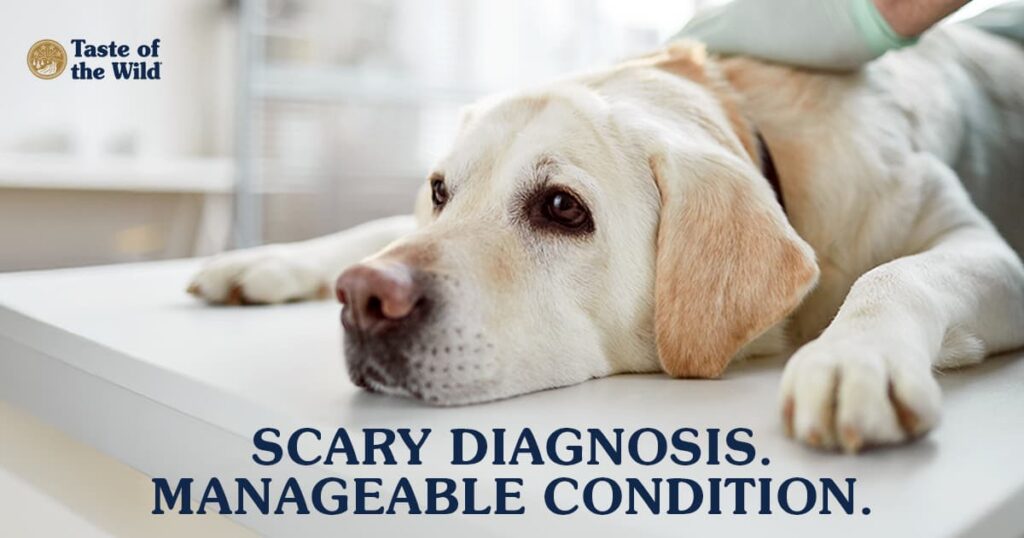
A yellow Labrador retriever lying down on a table while a veterinarian gently examines the dog with two hands.

Hearing that your dog has diabetes can be an overwhelming diagnosis for any pet parent. However, with the support of your veterinarian, diabetes is a manageable condition for many dogs, and understanding the causes, symptoms and treatment options can often help dog owners provide the best possible care for their diabetic companions.

Can Dogs Get Diabetes?

Diabetes mellitus (diabetes) is a serious and common disease that affects the way a dog’s body uses sugar, also known as glucose. Diabetes can affect dogs of any breed, age or size, although it is more common in middle-aged and older dogs. Female dogs, particularly unspayed females, are often diagnosed more frequently than males, and certain breeds, such as schnauzers, miniature poodles, dachshunds and beagles, are more at risk than others.

What Is Dog Diabetes?

Most dogs have insulin-dependent diabetes and insulin treatment is required. They are very similar to humans with type 1 diabetes in that the pancreas can no longer produce insulin. This means their blood sugar (glucose), which is a source of “fuel” or energy for the body’s cells, becomes elevated in the blood rather than being taken in by cells that need it. The glucose accumulation can, over time, cause serious health problems.

Without glucose, body cells experience an energy shortage, so the body breaks down muscle and stored fat to use for energy, resulting in weight loss. At the same time, excess glucose in the blood can damage important organs such as the kidneys, eyes, blood vessels and nerves. 

Untreated diabetes in dogs can turn into a life-threatening complication called diabetic ketoacidosis. This is a medical emergency, so watch for signs like weakness, vomiting, decreased appetite, sweet or fruity breath, abnormal breathing, dehydration or collapse. If your dog is experiencing any of these symptoms, you should take them to an emergency vet immediately. 

Overweight or obese dogs are at a greater risk of diabetes because excess body fat can interfere with the body’s ability to use insulin effectively. Additionally, some health conditions, such as pancreatitis, hormonal problems and long-term use of steroid medications, can increase the likelihood of developing diabetes. Dogs with diabetes are more prone to urinary tract infections (UTIs) because high blood sugar levels promote bacterial growth.

How Do Dogs Get Diabetes?

Diabetes in dogs develops when the body can no longer produce enough insulin to regulate blood sugar levels properly. Usually, it occurs as a result of progressive loss or dysfunction of insulin-producing pancreatic cells, leading to a condition similar to type 1 diabetes in humans. Immune-mediated damage may contribute in some cases. Without enough insulin, glucose cannot move from the bloodstream into the body’s cells for energy. As a result, sugar builds up in the blood. 

Signs of Diabetes in Dogs

One of the first signs of diabetes in dogs is excessive thirst. Pet parents may notice their dog is drinking more water than normal and experiencing frequent urination. Increased hunger is another symptom due to not receiving enough energy from glucose. Even if your dog is eating more, many diabetic dogs lose weight because the body starts breaking down fat and muscle for fuel. 

Other clinical signs of diabetes include poor haircoat, cloudy eyes or cataracts, chronic infection and lethargy. If glucose dips too low, your dog may show signs of weakness, confusion, seizures and even loss of consciousness, requiring emergency veterinary care. When glucose is too high, pets often drink and urinate more than usual and potentially develop other complications such as diabetic neuropathy.

Dog Diabetes Treatment

If you suspect your dog has diabetes, make an appointment with your veterinarian as soon as possible to avoid complications caused by high blood sugar. It is best to catch any underlying illness as early as you can. Your vet will likely perform blood work and a urine test to measure the amount of glucose. Diagnosis is based on persistent high blood glucose in both the urine and blood.

Treatment for canine diabetes generally focuses on regulating blood sugar levels through insulin therapy. Most diabetic dogs require daily insulin injections because their bodies cannot produce enough insulin naturally. To arrive at “just the right” insulin dose that keeps your dog’s diabetes controlled, periodic blood glucose monitoring is usually required. Insulin injections will typically be given twice a day around the time of their feeding.

In the past, dogs would typically spend a day at the veterinary clinic for a blood glucose curve. During that time, the veterinary staff would take blood glucose samples every two hours for up to 12 hours. The trouble with in-clinic glucose testing is that dogs often become stressed in the unfamiliar environment, which can artificially raise blood glucose levels. That’s why the American Animal Hospital Association recommends at-home glucose testing, when possible. Pets are usually less stressed at home, which means results will be more accurate. At-home testing can save you money. It can also help identify a hypoglycemic (low blood sugar) event, so your pet gets treatment faster. Continuous glucose monitors are available that attach to your dog’s back and allow you to monitor your dog’s glucose levels via your smartphone. 

Your veterinarian will discuss your dog’s diet, exercise, insulin injections and schedule for vet visits. They will adjust the amount of insulin you give your dog based on follow-up blood tests. It can be an overwhelming time as a pet owner, but rest assured, your veterinarian will carefully train you on how to administer insulin or any other medicines necessary to get your dog on a healthier track. They will also share best-care practices, ensuring you head home feeling confident, prepared and fully equipped to support your dog.

Follow the veterinarian’s instructions carefully and continue to monitor your dog between their checkups. If your dog’s symptoms worsen or something seems out of the ordinary, don’t be afraid to call your veterinarian between routine visits. They’re there to help! 

Managing Diabetes in Dogs

Even with blood glucose data, you should still watch your dog for signs that their diabetes may not be well controlled. It helps to keep a daily diary that lists information such as food and water consumption, insulin dose administered and general amount/frequency of urination. If possible, weigh your dog periodically. What kind of food your dog eats is important to managing their diabetes. Many diabetic dogs do well on a diet high in fiber and complex carbohydrates that includes high-quality protein. However, the diet should be individualized to the specific dog, and consistency is often more important than the exact diet type. Changes in weight, appetite, increased thirst, urination and even energy level should spark a call to your veterinarian.

Caring for a dog with diabetes can feel overwhelming at first, but understanding the condition is the first step toward helping your dog live a healthy and comfortable life. With proper treatment, monitoring and lifestyle adjustments, many diabetic dogs are able to continue enjoying relatively normal lives alongside their families.