

Pet Cams: When You’re Away, Are the Pets at Play?

Taste of the Wild Pet Food

Ever wonder what your pet does all day while you’re at work? Does your dog make a beeline for the forbidden couch? Is your cat licking your toothbrush that’s propped in the glass by the sink? Or do they stare out the window all day, patiently waiting for you to pull into the driveway?

Inquiring owners want to know. And now you can — thanks to a multitude of high-tech pet cameras recently released to the market.

Nanny cams and pets: Is it ethical to check in?

You can probably rationalize spying on your nanny — especially if you suspect she or he is Facetiming friends when they should be supervising your little ones. And remote monitoring of your home has become commonplace with the advent of digital door monitors.

But peeping on your beloved dog or cat? Are pets entitled to a little privacy? Are you just being nosy about your snouts’ day-to-day lives?

As it turns out, there are some perfectly logical reasons why you might want to look in on your pet.

Monitoring their safety

If your pet is recovering from surgery, for example, you may want to keep an eye on your pup to make sure he or she isn’t licking the incision. (With some pet cams, you can even tell your pet “leave it” from your office miles away.) Or if your pet has a medical condition such as epilepsy, you can monitor for seizures.

Home security

Some pet cams come with a bark alert, so you’ll be notified on your cell phone with each yap or woof. That way, you can know if someone’s at your door while you’re away. Or if your pup really is as vocal during the day as your neighbor claims.

Night moves

Does your cat prowl around the house in the wee hours of the night? Some pet cams have night vision and recording capabilities so you can keep tabs on your tabby, even when you’re asleep.

Calm their fears

Do you have a pet with separation anxiety or thunderstorm phobia? Pet cams may enable you to calm them down with your voice, or even spray some pheromones to help soothe their anxiety. In either case, you should consult your veterinarian about additional steps you can take to help them feel better.

Get them moving

All pets could use a little exercise during the day. Why not challenge yours to a laser dot chase game? With some pet cams, all you have to do is swipe your finger across your smartphone screen.

Behavior consult

Does your pet display an odd behavior, like compulsively licking the walls of your house, but then act completely normal when you take him or her to the veterinarian? With the right pet cam, you can catch the behavior on video and play it back for your veterinarian. Not sure what your pet is chewing on? Zoom in for a closer look.

Tighten your bond

You check in with your family throughout your work day, and that should include your pet, right? Many video cams offer person-to-pet video and two-way audio capabilities. You can even put them through their training paces from the job and reward them with a treat.

If you’re still worried about invading your pet’s privacy, one pet cam offers an option that lets your pet call the shots. When you’re available, a light goes on to notify your pet. Your pet, in turn, can push a button to initiate a call. The trouble is, will you, like Pavlov’s dog, spend your day staring at the phone, waiting for a signal from your pooch?

Winter Cat Safety: Keeping Your Tabby Toasty

Taste of the Wild

Pet cats have the right idea about winter. You’ll never find them shoveling or scraping ice off a windshield. They’re more likely to be inside, basking in a sliver of sunshine. Or curled under your down comforter. Which raises the question: What else can you do to make your kitty feel cozy during the cold winter months?

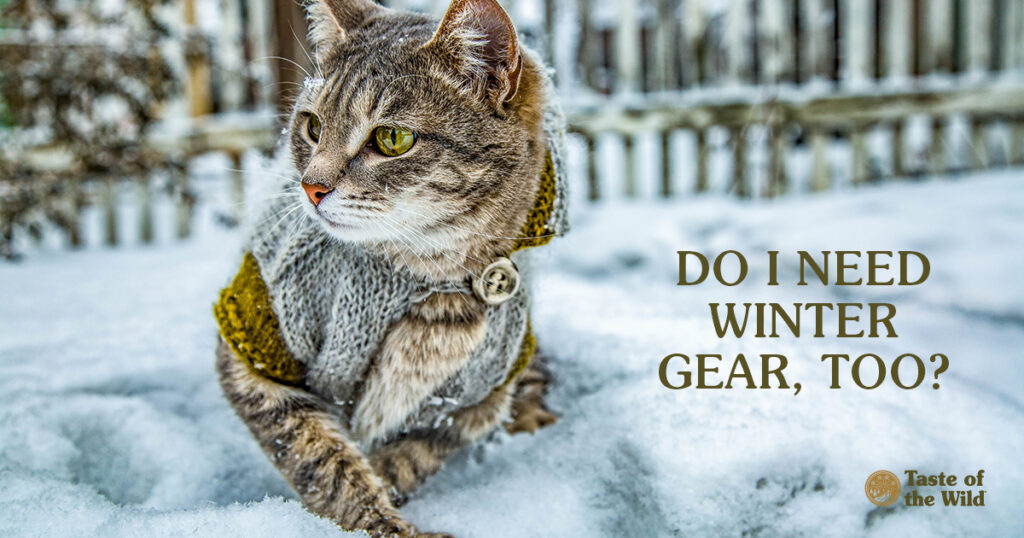
Invest in feline fashion — While a hairless cat breed such as the sphynx could use a wool sweater, other cats may appreciate some extra insulation, too. Especially if you keep the heat turned down low or it’s drafty near the windows. When you choose a sweater or coat, make sure it doesn’t restrict your cat’s movement and doesn’t include beading or strings that could be chewed off and swallowed.

Make a comfy bed — The cold and damp can bring out the aches in an arthritic cat’s joints. Since cats often hide signs of illness, you may not know that your cat is in pain. In fact, one study reviewed 100 random X-rays from cats aged 6 months to 20 years, and the researchers found evidence of arthritis in 91 percent of those cats. So why not provide a padded bed to help cushion those joints, just in case?

Add a little heat — Some cat beds are designed to be self-heating, meaning they absorb your cat’s body heat and reflect it back to the cat.  Other heated beds may use heating elements that are warmed in the microwave or plugged in like an electric blanket. A word of caution: hot water bottles and other heated elements should never be placed next to a cat’s skin. To help avoid burns, there should always be at least a towel between the heat source and the cat. Also, electric beds can be dangerous if your cat urinates in the bed or chews on electrical cords.

Trim out those mats — Cats’ fur, especially if it’s long, can become matted if it’s not brushed regularly. While it may be tempting to leave the mat in place for warmth, the mat may actually have the opposite effect by not allowing air to circulate between the skin and coat. If your cat’s fur is severely matted, ask your groomer or veterinarian for help.

Heat your cat’s food — You enjoy a warm meal when it’s blustery outside. So why shouldn’t your cat? It’s easy to slightly warm canned food (make sure it’s not too hot). Or you can heat up low-sodium chicken broth and pour it over your cat’s dry food for a belly-warming treat.

Move the litter box — Do you keep the litter box in the cold basement? Then consider moving it to a warmer spot, away from drafts, just for the winter.

Help the neighborhood stray — If there’s a stray cat that frequents your yard, consider trapping it and bringing it to shelter to reduce the risk of hypothermia and frostbite. As an alternative, provide a “cat house” lined with straw that’s sheltered from the wind and snow. Make sure the house is raised off the cold ground. If the kitty takes to it, provide food and fresh water daily. That simple kindness will make you feel warmer, too.

The Ethics of “Saving” Sick or Aging Pets: How Do You Know When to Let Go?

Ethics of “saving” sick or aging pets

Sir Walter Scott was not only a prolific poet and novelist, he was also “perhaps the most devoted dog lover that ever was,” according to a New York Times article published in 1898. In paintings, he is almost always portrayed with a dog. And his deerhound, Maida, is immortalized in the monument of Scott in Edinburgh, forever curled at his side.

Scott lamented about the brief lives of his canine companions: “I have sometimes thought of the final cause of dogs having such short lives and I am quite satisfied it is in compassion to the human race; for if we suffer so much in losing a dog after an acquaintance of ten or twelve years, what would it be if they were to live double that time?”

It’s a loss that all dog and cat lovers have to face at some point. But how do you know when it’s time to let go of your companion? And when can euthanasia, in fact, be the most kind and loving choice?

The Dilemma of Sick and Old Pets

Pets are living longer than ever before, thanks to advances in nutrition and veterinary medicine — and perhaps because more now sleep in our beds, rather than outside. And many of the same life-extending procedures available for humans can also be offered for pets. From brain surgery and chemotherapy to hip replacements and kidney transplants, there’s almost nothing you can’t do for your pet (at a price, of course).

But like human medicine, most of these advanced measures rarely come with guarantees of how much life — or quality of life, considering potential drug side effects or hospitalizations — they’ll buy for our pets.

Even if the pet is simply grey around the muzzle and slowing down from a degenerative disease, a common phenomenon in older pets, at what point is medical poking and prodding helping the pet or hindering comfort and happiness?

Subtract Your Emotions from the Equation

While these questions never have black-and-white answers, what makes them even harder is the fact that your pet is a loved family member, bound inexplicably to your heart. But perhaps the kindest thing you can do is to put aside how you feel and focus instead on how your pet feels. How can you minimize your pet’s suffering and make sure their remaining time is physically and mentally rewarding? To help accomplish this, there are numerous quality-of-life surveys, like this one, that help you objectively evaluate whether your pet is enjoying life or having a hard time of it.

You can also keep a daily diary to determine if your pet is having more bad days than good. Or select three of your pet’s favorite activities, whether it’s slurping up peanut butter, chasing a laser or retrieving the squeaky toy, and note when your pet loses the interest or ability to do the things he or she loves.

The Association for Pet Loss and Bereavement also offers resources and online chats to help you grapple with the difficult decision.

It’s Always a Personal Decision

Your veterinarian can be an invaluable resource in terms of evaluating your pet’s comfort level or simply serving as a sounding board to discuss how you feel. But inevitably, only you and your family can decide what’s right for your pet.

Knowing when to let go is, without a doubt, the toughest part of being a pet parent. But it’s also one of the most loving and compassionate ways we can repay our pets for a life of devoted companionship.

Your Cat’s Tail: A Translation

Taste of the Wild

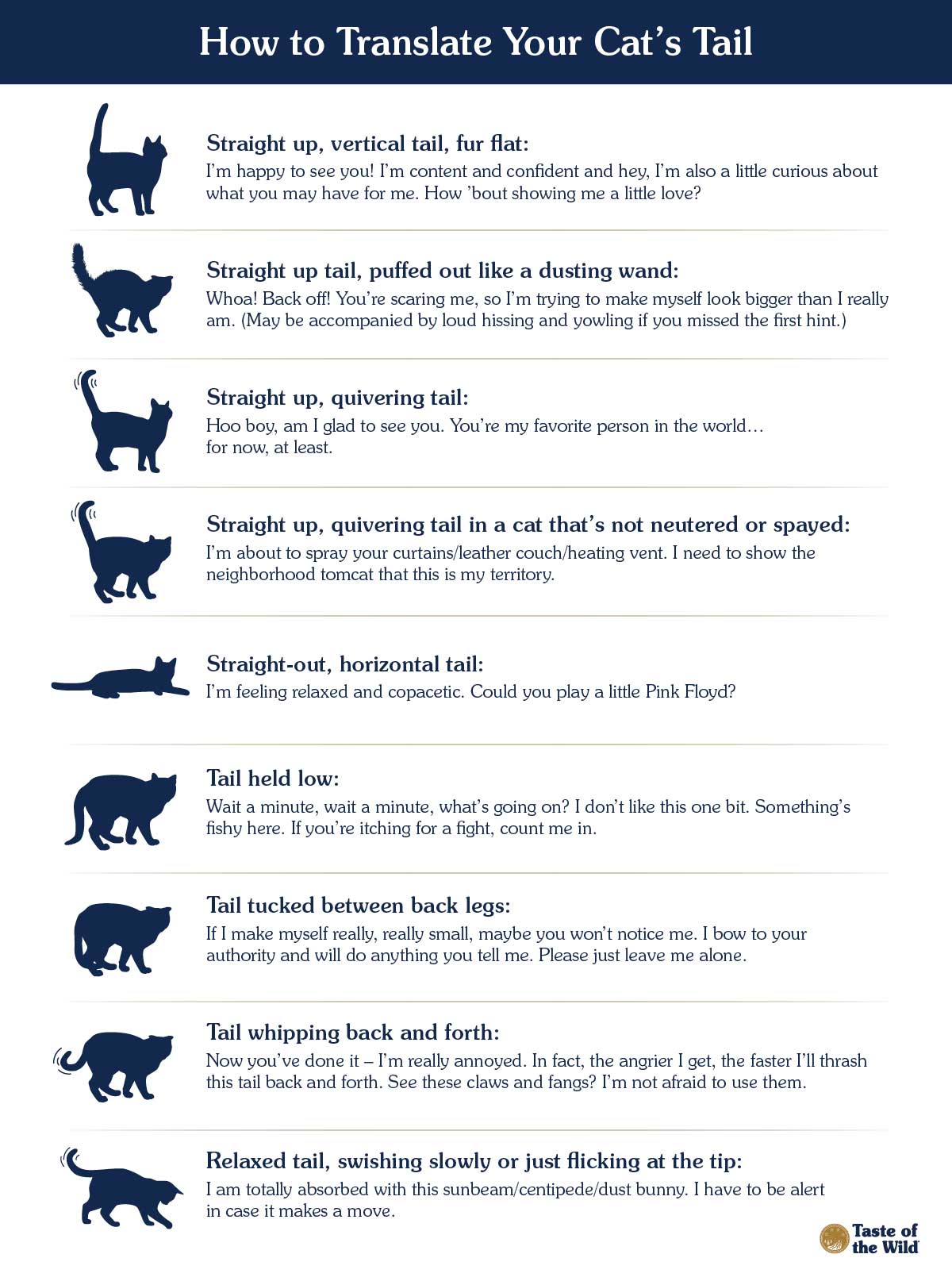
Does it seem that your cat intentionally keeps you guessing about what’s in his or her mind? Guess what: your cat is actually giving you hints — with its tail. In fact, tail position is one way cats communicate with other animals. If you know how to decode the language, you can understand what your cat is trying to say to you, too.

Of course, every cat is unique and may have his or her own way of communicating, but in general, here’s what your cat may be saying with its tail.

An interior graphic detailing how to translate your cat's tail with nine different tail positions and what these positions may indicate.

Of course, knowing what your cat is saying with his or her tail is just the start. Your cat also uses facial expressions and other body parts to communicate. Once you become more fluent in your cat’s body language, you’ll realize that he or she actually talks to you quite a bit — without saying a word.

Is My Cat Overweight? Cat Obesity Signs and Management

An extremely overweight gray and white cat walking outside in the sun.

A few extra pounds may not seem like a big deal, but carrying excess weight can have meaningful effects on the overall health and long-term well-being of your cat. Even gradual weight gain can influence how your cat moves, rests and regulates basic bodily functions, often before obvious changes are easy to spot. That’s why it’s important to regularly check your cat’s body condition and make sure all that fluff really is just fluff. 

What Is the Average Weight of a Cat?

There is no single number that defines a healthy cat’s weight. Your cat’s ideal weight depends on their breed, age, body frame, lean muscle mass and daily activity level. While many adult cats fall within a general range of 8 to 12 pounds, this is only a starting point and does not apply to every cat.

For example, two cats with the same body weight may fall into different weight categories based on muscle tone and fat distribution (e.g., a 20-pound Devon rex vs. a 20-pound Maine coon). This is why determining your cat’s ideal weight is best done with veterinary guidance, using both physical assessment and overall health history.

Are Overweight Cats Common?

Overweight and obese cats are increasingly common, and, unfortunately, that’s not good. An obese or overweight cat is at increased risk for a number of health conditions, including heart disease, arthritis, high blood pressure, diabetes, urinary tract diseases and liver disease. Excess weight also places added strain on their joints, which can make everyday movements like jumping, climbing and grooming more difficult.

Over time, reduced mobility may lead to lower activity levels, creating a cycle that makes further weight gain more likely. Obesity in cats has also been associated with a shorter life expectancy in cats, as chronic conditions linked to excess weight may develop earlier and progress more quickly. 

Because cats are naturally skilled at masking discomfort, weight-related issues may go unnoticed at first. Subtle changes in their behavior, such as less interest in play or hesitation when jumping, are often attributed to normal aging rather than the early effects of excess weight.

Is My Cat Overweight?

The best way to tell if your cat is overweight is to assess their body condition. Veterinarians use a standardized body condition score to classify whether a cat is underweight, at a healthy weight or overweight. This approach provides a consistent way to evaluate body fat and guide weight management decisions. Because body condition can change gradually, periodic at-home checks you can do yourself can also help identify early shifts.

A healthy weight is typically indicated when a cat’s ribs are easy to feel beneath a thin layer of fat, a slight waistline is visible when viewed from above and their abdomen gently tucks upward when viewed from the side.

First, gently run your hands along your cat’s sides. You should be able to feel their ribs easily beneath a thin layer of fat. If their ribs are difficult to feel or require firm pressure, excess weight may be present. Next, look at your cat from above. When viewed from this angle, a healthy cat typically shows a slight waist or indent behind their ribs. Now look at them from the side. A sagging belly or lack of abdominal tuck can indicate extra weight. Take your cat for a checkup if you’re concerned that they are showing signs of excess weight. 

Why Is My Cat Getting Fat?

The simple, scientific answer is that weight gain occurs when calorie intake consistently exceeds energy use. But why does this happen? Indoor cats are particularly prone to weight gain because they typically burn fewer calories than outdoor cats and may have fewer opportunities for spontaneous movement.

Common lifestyle contributors include free feeding, oversized portions, frequent treats (including human foods), reduced activity levels and changes following spaying or neutering. In homes with more than one cat, shared feeding spaces can also complicate portion control and lead to overeating.

Environmental factors play a role as well. Limited vertical space and predictable routines can reduce daily movement. Over time, even small calorie excesses can add up, leading to gradual weight gain that may go unnoticed if unchecked. That’s why it’s important to limit treats to less than 10 percent of your cat’s total daily calorie intake — no matter how much they complain about it. 

How to Help My Cat Lose Weight

If your veterinarian has advised that weight loss is needed for your cat, the goal should always be gradual progress rather than rapid restriction. Sudden reductions in food intake can be harmful and may increase the risk of hepatic lipidosis, which can be serious for cats. A steady, measured approach is safer and more sustainable.

Start by working with your vet to rule out underlying health issues, unexplained weight gain or age-related changes, particularly in older cats. Your vet can help determine a target weight, calculate appropriate calorie intake and recommend a feeding plan tailored to your cat’s needs.

Portion control plays an important role. Free feeding often leads to overeating, especially for indoor cats with limited opportunities for physical activity. Measuring the amount of food your cat has access to helps regulate calorie intake and reduces the risk of unintentional overfeeding. Any uneaten food in the bowl should be removed between meals to discourage grazing.

Feeding routines can also be adjusted to encourage movement and mental stimulation. Using a feeding toy, placing food on cat trees or feeding cats in separate rooms in a multi-cat household can help increase activity while preventing competition or food sharing.

Exercise supports both weight management and overall wellness. Interactive play, climbing, chasing toys or even exploring a cardboard box can help maintain lean muscle mass and support long-term weight loss. Short, regular play sessions throughout the day are often more effective than occasional longer sessions.

Monitoring is important to make sure your favorite feline is making weight-loss progress. Your veterinarian can make adjustments (if necessary) to your cat’s diet or exercise plan to help keep them on track toward a better quality of life and prevention of obesity-related diseases.

How to Train a Cat to Stay Off Counters & Tables

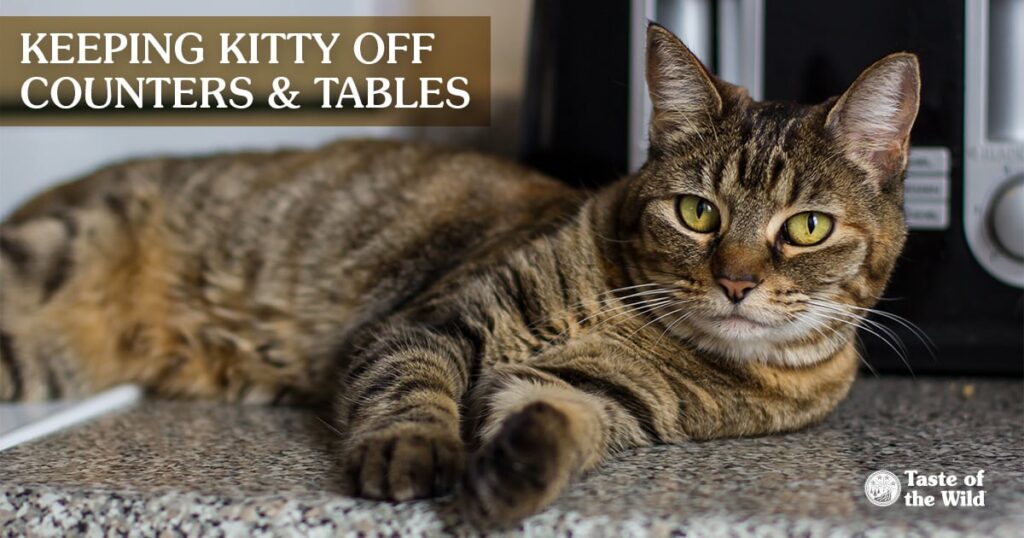
A cat lying on its side on a kitchen countertop.

Nothing is safe when cats jump on the countertops: cups spilled, picture frames tossed off the ledge and snacks eaten. No matter what you do, you can’t seem to make Fluffy stay off those alluring counters. So if you’re wondering how to correct common cat behaviors and stop your cat from jumping on the counter, read on!

Despite stereotypes of crying kittens stuck in trees, cats are agile and competent climbers. In the wild, they used this skill to hide from prey, rest in warm places away from predators and survey their territory. In your home, cats are still attempting to do these things, and it’s your breakables that pay the price.

What NOT to Do When Keeping Cats Off Tables or Kitchen Counters

  • Don’t scold or physically apply punishment when the cat jumps. Your cat might get off the counter that one time, but they won’t learn to stay down — they will only learn to be frightened of you.
  • After your cat jumps up, don’t shove them off of a ledge. They might fall and get hurt. Instead, keep a spray bottle handy. A light spritz of water every time your cat hops on the counter or table will discourage some cats in a hurry. Others might not care!
  • Don’t use loud or painful environmental punishers (like motion detectors that make loud noises). Your cat may become skittish and frightened of the entire room or house, not just that area.
  • Don’t leave food scraps on the table or kitchen counters. They’re like treats to cats!

​​Instead, consider these steps to discourage your cats from being kings of the countertops.

Step 1: Figure out why your cat is so drawn to those areas.

When wondering how to keep a cat off the table or how to stop a cat from jumping on counter tops, it helps to consider why they’re so interested in the first place. What are their reasons? Are they perching on the windowsill to watch birds? Snoozing on the warm fridge? Or just prowling around, looking for stuff to do and being destructive? All of these symptoms are your cat trying to talk to you about their environment. Maybe they just want a little of your attention, and that’s where you are.

Step 2: Provide substitutes to kitchen counters or tables.

Before you can successfully dissuade your cat from hanging out on the counters and tables, you will need to fulfill their needs in other ways. Perhaps a cat tree or climbing shelves, access to other windows, or a pet bed in a warm place would be a welcome substitute. Cat trees are readily available in every pet store. Just ask for cat trees or the cat tower aisle.

If your cat is knocking items off of shelves and tables, you may need to increase the mental stimulation of your home by providing new or different toys and games. Your cat’s behavior might be less than desirable because they have too much mental or physical energy.

Step 3: Make the countertops less alluring.

If your feline friend is drawn to the warmth and view of the window, close the blinds. If they like to snack, make sure the counters are clean and there are no dishes in the sink. If your cat likes to prowl the countertops, provide a cat counter deterrent! Temporarily cover them with aluminum foil to provide an unpleasant but harmless texture. When cats jump, they don’t like surprises, and the feel of unexpected aluminum foil will make them think twice next time. Double- sided tape can work the same way but isn’t great for some surfaces. Cats hate both textures!

Step 4: Provide playtime, every day.

Your cat needs to exercise for at least 10 minutes twice per day. Playing together will increase your bond and provide stimulation so Kitty won’t be so tempted by the interesting countertops. Try some tried-and-true kitty classics, like chasing a string or spraying toys with liquid catnip.

Step 5: Choose your battles.

Many cat owners choose to allow some kitchen counter climbing. Cats are natural climbers, and many cats like to be around their human families, drawn to high places in the room where their humans are hanging out. If your kitty simply can’t break their countertop habit, you may need to accept it as the price of admission for that cat’s love and companionship. Just frequently clean the kitchen counter so you’re not interacting with litter box residue!

Keep Your Cat Happy and Out of Trouble? Easy!

Wondering how to keep your cat off of counters and tables sometimes seems like a full-time job. But with a little investigation, some alternative climbing perches, positive reinforcement, and maybe even some clicker training methods, keeping your cat off the counter might be easier than you think.

What does the guaranteed analysis tell me?

Taste of the Wild

The beauty of the guaranteed analysis is that it gives you a lot of information about what is inside a bag of pet food. Once you understand how to read it, you will be better equipped to compare different varieties of pet food.

By AAFCO regulations, the guaranteed analysis is only required to list four nutrients: crude protein, crude fat, crude fiber and moisture. However, many pet food companies list additional guarantees not only to provide you with more information about the food but also as a mark of quality. The more things that are guaranteed, the more things that regulatory agencies can test for and fault a company for if they do not meet the level on the label. Because of variances between different types of laboratory equipment, sometimes foods can be faulted even if they truly are not deficient in one of their guarantees. Additional guarantees mean that the company is working hard to manufacture a carefully determined formulation each and every time, and you can be assured that bag to bag, that product is likely to be more consistent than a product that only guarantees the four required nutrients.

The first nutrient listed is crude protein. This is a measurement of the guaranteed minimum level of protein in the food. If the food guarantees a minimum of 21 percent protein, it is not going to contain 32 percent protein. By AAFCO regulations, a diet that states a guarantee of 21 percent protein may have no less than 20.4 percent protein. There is not a specified maximum, but the protein is typically within 2 percent of the target. So a 21 percent protein formula would range from 21 percent to 23 percent, but would most often be right at 21 percent or slightly higher. Your dog will benefit from a food that has protein from animal protein sources. After you check the level of protein, look at the ingredient listing to see where that protein is coming from.

The next listing is crude fat. This is also a minimum guarantee, with a 10 percent allowed variance. So, if the guaranteed minimum fat content is 15 percent, the minimum allowed by AAFCO would be 13.5 percent. Most foods very closely target the fat level, so expect very little variance in this nutrient.

Next comes crude fiber. This is typically pretty low, 2–3 percent, and is a maximum level. In hairball formulas for cats and weight loss formulas, you will usually see a higher level of fiber, usually 6–8 percent. Higher fiber formulas will result in larger stools than low fiber formulas, but this is to be expected.

Finally, you will see the moisture guarantee. In dry formulas, this is typically 8–12 percent maximum, and in canned formulas it is typically 75–85 percent.

Protein and fat will show the widest variance among different types of pet foods. Cat foods have higher protein content than most dog foods. Formulas specifically designed for athletes, puppies, and low carbohydrate formulas for dogs will have high protein content and often high fat content as well.