Contact


Support
Recipe Recommendations For Puppy Owners Health and Nutrition Tips All Dog Articles Personalized Feeding Guide Compare Recipes Food Cost Calculator
Virtual Pet Park
Explore our wild world of adorable pet photos and videos.
Support
Recipe Recommendations Health and Nutrition Tips All Cat Articles Personalized Feeding Guide Compare Recipes Food Cost Calculator
Virtual Pet Park
Explore our wild world of adorable pet photos and videos.
 Where to Buy
 Contact Us
Behind the Breed: Siberian Husky
Category: Behind the Breed
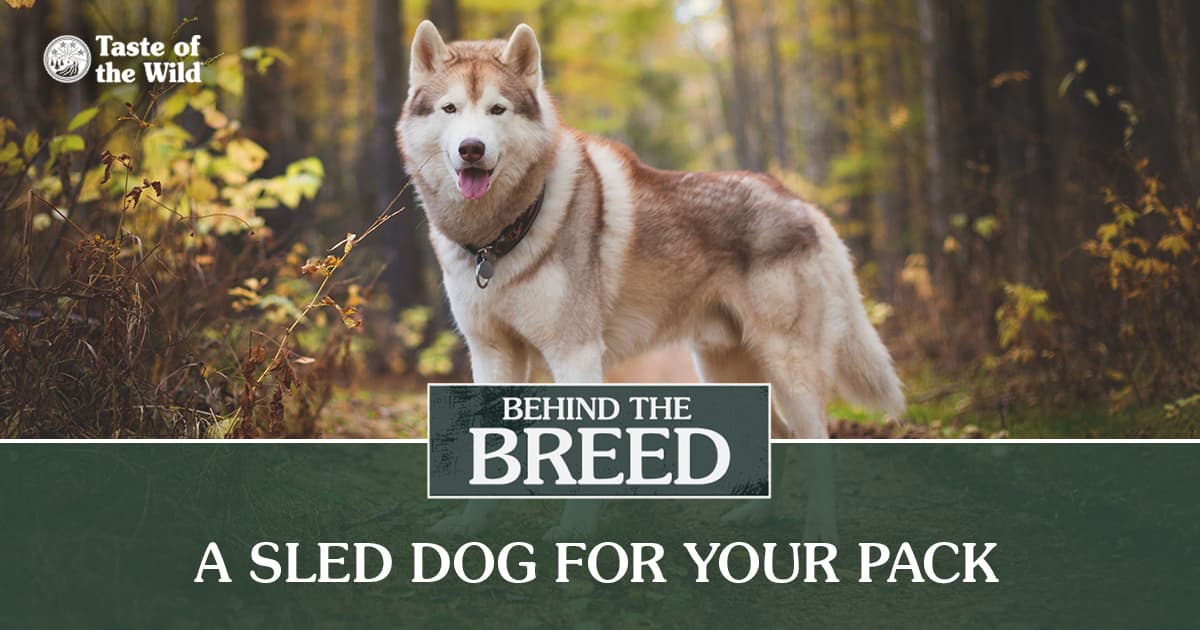
Have you ever wondered about the origins of a dog breed? In our “Behind the Breed” series we’ll dive into the history, personality and physical appearance of a particular breed. We’ll also cover some of the FAQs about the breed and maybe some fun facts, too!
Over the last 100 years, the Siberian husky has served as the quintessential representation of its arctic roots. With its trademark thick double coat of fur and unbelievable endurance and eagerness to work, these sled dogs enjoy working and playing in the snow as much as any working breed. Their friendly and loyal disposition also makes them ideal companions and family pets.
The History of the Siberian Husky
As their name suggests, Siberian huskies originated in northern Siberia, one of the coldest and most inhospitable regions of the world. There, they served as sled dogs and companions for the Chukchi people, carrying food and supplies between inland settlements. Over time, these semi-nomadic people were forced to extend their hunting territory to the sea. Thankfully, their huskies were uniquely capable to tow sleds laden with walrus meat over long distances in snow and arctic temperatures.
In the early 1900s, a Russian trader by the name of William Goosak brought Siberian huskies to Nome, Alaska, to help carry precious cargo during the Gold Rush. The dogs instantly became renowned for their sledding capabilities, especially after winning long-distance races such as the All-Alaska Sweepstakes.
The event that really put huskies on the map occurred in 1925, when a husky named Balto was part of a team of Siberian sled dogs that traveled more than 650 miles to Nome, Alaska, to carry lifesaving antitoxin for children suffering from an outbreak of diphtheria. Owned by the famous musher Leonhard Seppala, Balto is memorialized to this day with a statue in New York City’s Central Park.
This legendary journey is also commemorated each year through the Iditarod Trail Sled Dog Race, a nearly 1,000-mile sled dog race that runs from Anchorage, Alaska, to Nome.
Are There Different Types of Huskies?
Yes, the term “husky” is a general term that is often used to describe both the specific recognized breed and a broader term used to describe northern sled dogs. The Siberian husky is generally considered the classic husky breed recognized by the American Kennel Club, but other related northern dogs include the Alaskan husky (not a purebred), Greenland dog and Alaskan malamute. The Alaskan Klee Kai is another distinct breed that resembles a smaller version of the Siberian husky. Other popular husky mixes include the pomsky (Pomeranian-husky mix) and shepsky (German shepherd-husky mix).
Siberian Husky Size
Often thought of as a dog that looks like a wolf, the Siberian husky is a medium-sized breed that typically grows to around 20 to 23.5 inches in height and healthy dogs can weigh anywhere from 35-60 pounds, depending on the individual dog’s build. Their athletic frame and keen sense of scent make it easy for them to pull sleds, run long distances and carry out a variety of tasks as part of a rescue unit.
They also are known for their high energy, so it is essential that they get regular exercise. Daily walks, playtime and even some off-leash time in enclosed environments will do wonders for their quality of life.
Siberian Husky Temperament
Siberian huskies are an affectionate breed with a very friendly and gentle disposition. Their calm and loving nature generally means they can make excellent companions for kids and a great family dog. Unfortunately, many huskies are very eager to please and love attention, which makes them ineffective guard dogs for your home. Your Siberian husky is more likely to make friends with an intruder than scare them off. Huskies are also known to be pack animals, so they typically do well with other dogs in the home.
While most huskies are exceptionally friendly with people, they do still possess a very high prey drive. This means they may not be a great fit for homes with other small animals like birds, guinea pigs or even small cats. They also love mental stimulation as much as physical exercise, so things like chew toys and puzzle toys that require problem solving can offer a rewarding experience for huskies stuck inside the house.
How Long Do Huskies Live?
Generally speaking, the life expectancy for Siberian huskies is 12 to 15 years. Siberian husky breeders typically maintain some of the highest breed standards established by the American Kennel Club, but some hereditary health issues can occur. Some inherited health conditions they are predisposed to include:
- Hip Dysplasia: A condition that results in the hip socket forming abnormally.
- Hypothyroidism: A disease that causes the thyroid to underproduce a sufficient amount of hormones, which can result in weight gain, lethargy and an unhealthy coat of fur.
- Progressive Retinal Atrophy (PRA): An inherited degeneration of the retina that can lead to night blindness and eventually total vision loss.
- Cataracts: Cloudiness in the eye lens that can impair vision and potentially cause blindness.
- Idiopathic Epilepsy: Seizures that typically first manifest between six months and three years of age.
Do Huskies Shed?
Yes. Siberian huskies shed all year round and require regular grooming to manage their thick, heavy fur coat. Many owners recommend brushing your husky at least once a week and daily during the heavy seasonal coat-blowing periods (spring and fall). During these seasonal coat-blowing periods, huskies experience significant coat sheds where large clumps of their thick undercoat will completely fall out.
Huskies carry two thick layers of fur: a coarse topcoat and a soft, dense undercoat that insulates them from cold temperatures and provides some protection from the heat and sunlight. Shaving a husky may alter the coat’s appearance when it regrows and can increase exposure to sunlight. But all that hair can be hot! The best way to prevent overheating is to provide plenty of fresh water, access to shade or AC, and avoid exercising during extreme heat.
Is a Siberian Husky Right for You?
Siberian huskies can be the best dogs for both families and active pet owners looking for a breed that can keep up with a daily exercise routine. Huskies are very intelligent problem-solvers and get along well with people and other dogs. If you’re looking for a new family member that you can create a strong bond with, a Siberian husky puppy should be high on your list!
The information in this blog has been developed with a Doctor of Veterinary Medicine and is designed to help educate pet parents. If you have questions or concerns about your pet’s health or nutrition, please talk with your veterinarian.