

Is My Dog Overweight?

An interior graphic detailing a body condition score chart for dogs with cartoon depictions of underweight, ideal weight and overweight dogs.

When Fido looks up at you with those big, beautiful eyes asking for one more handful of treats, it can be hard to say no — even if they were just asking for treats two hours earlier. Wanting a full, happy, healthy life for your dog is every pet owner’s ultimate desire. But how do you know if your doggo is getting too heavy? Or how do you know what the ideal weight even is for their breed?

Body Condition Score

Rather than calculating your dog’s body mass index (BMI), veterinarians recommend pet parents look to the body condition score (BCS). Your pet’s BCS is found by evaluating fat on their ribs, waist and hips. Veterinarians recommend monitoring and evaluating your pet’s BCS once a month to stay on top of any potential issues. An ideal weight will lower your pet’s chance of arthritis, diabetes, high blood pressure, breathing problems, kidney disease and, in some cases, cancer. Making sure your pet is at their optimal weight can also reduce the concern of joint injuries associated with excess weight.
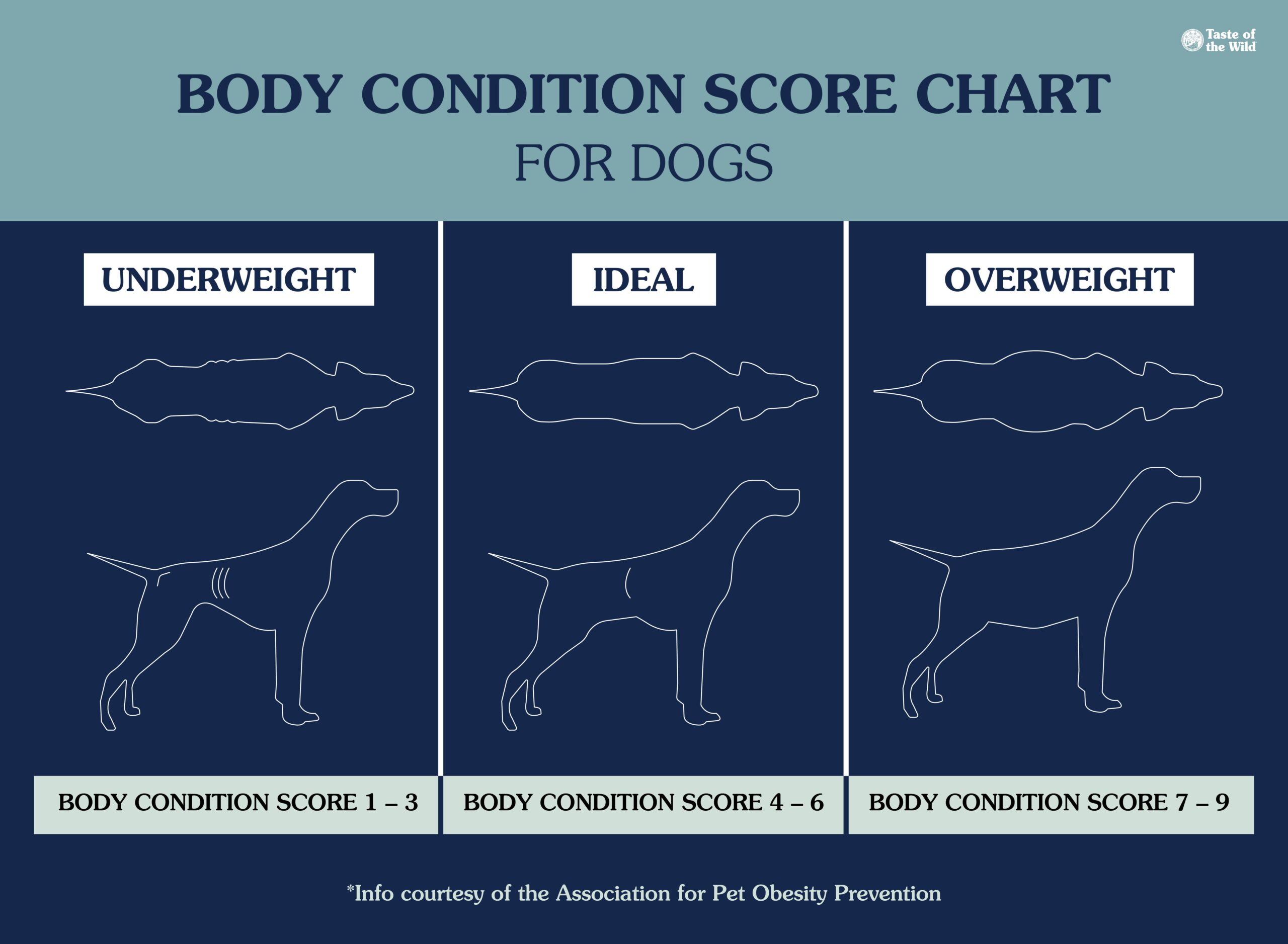
An interior graphic detailing a body condition score chart for dogs with cartoon depictions of underweight, ideal weight and overweight dogs.

How to Evaluate Your Dog’s Ribs

When evaluating the ribs, you should ideally be able to lay your fingers flat to feel the bones. If you need to press your fingertips into their body to locate their ribs, your pet is closer to a 6 out of 9 on the scale. If you have difficulty finding your pet’s rib cage with your fingertips, they’re more likely a 7 out of 9 on the scale. If you can’t find your dog’s rib cage at all using your fingertips, they’re pushing an 8 or 9 on the scale.

Moving in the opposite direction, if you can easily feel your dog’s ribcage and can barely see them, they’re a 4 out of 9. A dog whose ribcage is very visible upon sight and touch are likely under their ideal weight. There are some dog breeds who naturally have very lean body types, like greyhounds, who are an exception to this rule.

A Visible Waist Is Key

Looking past your dog’s ribcage, there should be a visible waist. On fluffier breeds, you should be able to feel their waist or see it when they are wet. Evaluating your pet from the side, you should see a “tuck” by the abdomen starting where the chest ends and going up toward the hips.

If your pet’s belly hangs lower and there’s not much of a tuck, they are likely on the overweight or obese portion of the scale. If the opposite situation occurs and you’re seeing no belly fat and a prominent tuck, they could be underweight.

Hips, It’s All in the Hips

Lastly, let’s evaluate your pet’s love handles — yes, doggos can get love handles just like we humans do. Ideally, you should be able to feel your pet’s hips easily, with no squishy layers on either side. If you can easily see your pet’s hip bones or there is no muscle felt, they are likely underweight.

Re-Evaluating Your Dog’s Diet

After gauging Fido’s body condition score, what do you think? Has Fido lost too much weight in the last month? Consider how active they’ve been and if their appetite has changed. Make an appointment with your veterinarian to discuss potential underlying conditions that may be affecting your dog’s weight. Fido’s weight loss could be a sign of digestive issues, dental problems, parasites or other underlying medical conditions that require immediate attention.

Does Fido seem a little too pudgy? It may be time to look at how much you’re feeding your dog as well as the types of foods you’re giving them. Reach for complete and balanced dog foods and visit with your veterinarian or nutritionist to discuss how much you should feed your pet based on their breed, age and current weight. Automatic pet feeders can be a solution in helping control the portion size of kibble Fido eats throughout their day. Consider adding an extra walk or two throughout the day, too, to help them shed the extra pounds. Bonus: an extra walk means extra bonding time with Fido!

The right steps today can make for a healthier tomorrow.
Exercise and the Overweight Pet: A Common-Sense Approach

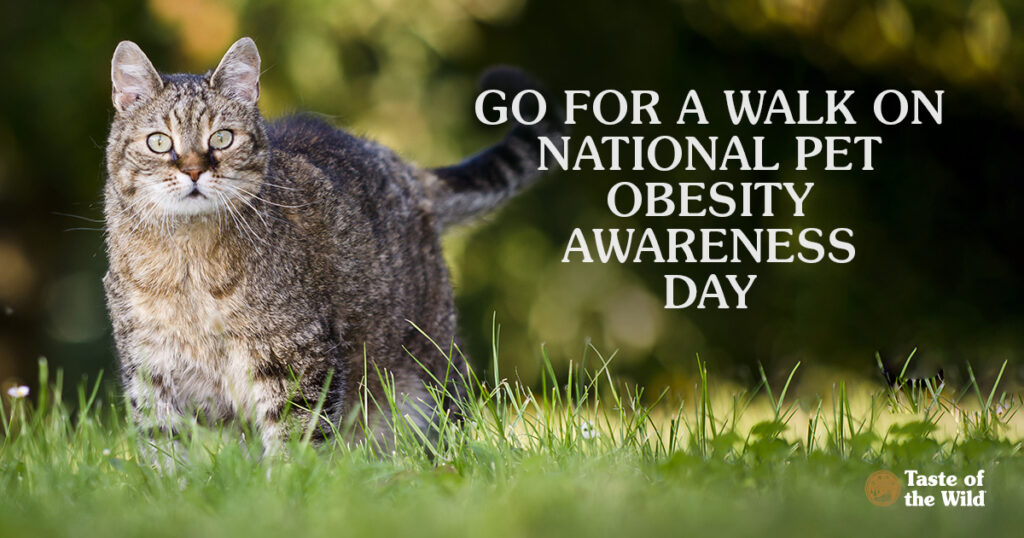
An overweight cat standing in the grass on a sunny day.

Has your pet ever been fat shamed? Maybe it was a casual dig at the dog park. Or an insensitive remark on social media. It can be easy to underestimate how many extra pounds your pet may be carrying because, frankly, pet obesity has become the new normal. That is why we’re pointing out that tomorrow is National Pet Obesity Awareness Day. Pet obesity is nothing to take lightly!

About 59.5 percent of cats and 55.8 percent of dogs are considered overweight or obese, according to the Association for Pet Obesity Prevention (APOP). Obesity can contribute to diabetes, joint problems such as arthritis, difficulty breathing and even a shorter life span.

If you’ve got a pet who needs to take care of their weight, you’ll likely need to change their diet — including feeding them fewer human food treats. But increasing the exercise is equally important because you want your pet to lose fat while retaining or building muscle mass. How much exercise is healthy? Here are some tips to help your pet drop those unwanted pounds and earn the praise and admiration he or she deserves.

First stop: your veterinary clinic

Your veterinarian will weigh your pet and show you how to objectively determine your pet’s ideal weight. Together, you can make a plan on how to approach your pet’s weight loss. Your veterinarian may recommend a therapeutic weight loss diet or determine the right quantity of your current food to help your pet lose weight while still receiving all the nutrition they need.

The doctor will also check to see if your pet has any underlying conditions, such as hypothyroidism (low thyroid hormone) in dogs, which, when treated, can help with weight loss. He or she will also examine your pet for underlying heart or orthopedic conditions that may impact your pet’s exercise plan.

Gradual weight loss is best

Your pet shouldn’t lose weight too fast. As a general rule, a dog can lose about 1 to 3 percent of their body weight per month, while a cat can lose 0.5 to 2 percent per month, according to APOP. But this may vary depending on your pet’s breed and weight. Overweight cats who lose weight too fast and go off their food are prone to fatty liver disease, a serious and sometimes fatal condition. If your cat doesn’t eat for a day or two, contact your veterinarian.

Begin exercise gradually, too

Your veterinarian will typically recommend short exercise sessions, then gradually extend the length of these sessions as your pet loses weight. For overweight or arthritic dogs, low-impact exercises like walking and swimming are good because they put less stress on the joints than running and jumping. If your pet has arthritis, ask your veterinarian about medications to help your dog exercise pain free.

Start with short walks on flat terrain, gradually extending the walk and adding hills. Let your dog warm up and do their business, then gently increase the speed of your walk so your dog is getting some heart-pounding aerobic exercise. If your dog starts panting too much or lagging behind, that’s your cue to slow down a bit. Dogs that are overweight, especially those that are brachycephalic, or flat-faced, can have trouble breathing and become overheated easily. It’s best to walk these dogs in the cool of the morning or evening.

Depending on your dog’s health status, your veterinarian may recommend an exercise regimen of perhaps 30-minute walks five times a week. Each week, you can gradually increase the amount of aerobic time during the walk. If your dog tolerates that well, you can build up to twice-a-day walks or jogging.

Another alternative is to schedule regular appointments at canine rehabilitation clinics, where they can put your dog through the paces on regular or underwater treadmills. You can even make use of digital pet activity monitors to help monitor your pet’s daily efforts.

Cat fitness

Cats can be slightly more challenging to exercise, but you can start with 5-minute play sessions, chasing a laser pointer or feather toy. A cat tree can encourage your cat to climb and stretch its muscles. Food puzzles make your cat work for their meals and provide mental stimulation. Another alternative is to hide kibble in different parts of the house so your cat has to “hunt” for their meal.

Monitor progress with monthly weigh-ins

Whether you weigh your pet at the veterinary office or on your own scale, it’s important to make sure your pet is making weight-loss progress. Too much or too little weight loss suggests a call to your veterinarian, who can make adjustments in diet or exercise to keep your pet on track.

Is My Cat Overweight? Cat Obesity Signs and Management

An extremely overweight gray and white cat walking outside in the sun.

A few extra pounds may not seem like a big deal, but carrying excess weight can have meaningful effects on the overall health and long-term well-being of your cat. Even gradual weight gain can influence how your cat moves, rests and regulates basic bodily functions, often before obvious changes are easy to spot. That’s why it’s important to regularly check your cat’s body condition and make sure all that fluff really is just fluff. 

What Is the Average Weight of a Cat?

There is no single number that defines a healthy cat’s weight. Your cat’s ideal weight depends on their breed, age, body frame, lean muscle mass and daily activity level. While many adult cats fall within a general range of 8 to 12 pounds, this is only a starting point and does not apply to every cat.

For example, two cats with the same body weight may fall into different weight categories based on muscle tone and fat distribution (e.g., a 20-pound Devon rex vs. a 20-pound Maine coon). This is why determining your cat’s ideal weight is best done with veterinary guidance, using both physical assessment and overall health history.

Are Overweight Cats Common?

Overweight and obese cats are increasingly common, and, unfortunately, that’s not good. An obese or overweight cat is at increased risk for a number of health conditions, including heart disease, arthritis, high blood pressure, diabetes, urinary tract diseases and liver disease. Excess weight also places added strain on their joints, which can make everyday movements like jumping, climbing and grooming more difficult.

Over time, reduced mobility may lead to lower activity levels, creating a cycle that makes further weight gain more likely. Obesity in cats has also been associated with a shorter life expectancy in cats, as chronic conditions linked to excess weight may develop earlier and progress more quickly. 

Because cats are naturally skilled at masking discomfort, weight-related issues may go unnoticed at first. Subtle changes in their behavior, such as less interest in play or hesitation when jumping, are often attributed to normal aging rather than the early effects of excess weight.

Is My Cat Overweight?

The best way to tell if your cat is overweight is to assess their body condition. Veterinarians use a standardized body condition score to classify whether a cat is underweight, at a healthy weight or overweight. This approach provides a consistent way to evaluate body fat and guide weight management decisions. Because body condition can change gradually, periodic at-home checks you can do yourself can also help identify early shifts.

A healthy weight is typically indicated when a cat’s ribs are easy to feel beneath a thin layer of fat, a slight waistline is visible when viewed from above and their abdomen gently tucks upward when viewed from the side.

First, gently run your hands along your cat’s sides. You should be able to feel their ribs easily beneath a thin layer of fat. If their ribs are difficult to feel or require firm pressure, excess weight may be present. Next, look at your cat from above. When viewed from this angle, a healthy cat typically shows a slight waist or indent behind their ribs. Now look at them from the side. A sagging belly or lack of abdominal tuck can indicate extra weight. Take your cat for a checkup if you’re concerned that they are showing signs of excess weight. 

Why Is My Cat Getting Fat?

The simple, scientific answer is that weight gain occurs when calorie intake consistently exceeds energy use. But why does this happen? Indoor cats are particularly prone to weight gain because they typically burn fewer calories than outdoor cats and may have fewer opportunities for spontaneous movement.

Common lifestyle contributors include free feeding, oversized portions, frequent treats (including human foods), reduced activity levels and changes following spaying or neutering. In homes with more than one cat, shared feeding spaces can also complicate portion control and lead to overeating.

Environmental factors play a role as well. Limited vertical space and predictable routines can reduce daily movement. Over time, even small calorie excesses can add up, leading to gradual weight gain that may go unnoticed if unchecked. That’s why it’s important to limit treats to less than 10 percent of your cat’s total daily calorie intake — no matter how much they complain about it. 

How to Help My Cat Lose Weight

If your veterinarian has advised that weight loss is needed for your cat, the goal should always be gradual progress rather than rapid restriction. Sudden reductions in food intake can be harmful and may increase the risk of hepatic lipidosis, which can be serious for cats. A steady, measured approach is safer and more sustainable.

Start by working with your vet to rule out underlying health issues, unexplained weight gain or age-related changes, particularly in older cats. Your vet can help determine a target weight, calculate appropriate calorie intake and recommend a feeding plan tailored to your cat’s needs.

Portion control plays an important role. Free feeding often leads to overeating, especially for indoor cats with limited opportunities for physical activity. Measuring the amount of food your cat has access to helps regulate calorie intake and reduces the risk of unintentional overfeeding. Any uneaten food in the bowl should be removed between meals to discourage grazing.

Feeding routines can also be adjusted to encourage movement and mental stimulation. Using a feeding toy, placing food on cat trees or feeding cats in separate rooms in a multi-cat household can help increase activity while preventing competition or food sharing.

Exercise supports both weight management and overall wellness. Interactive play, climbing, chasing toys or even exploring a cardboard box can help maintain lean muscle mass and support long-term weight loss. Short, regular play sessions throughout the day are often more effective than occasional longer sessions.

Monitoring is important to make sure your favorite feline is making weight-loss progress. Your veterinarian can make adjustments (if necessary) to your cat’s diet or exercise plan to help keep them on track toward a better quality of life and prevention of obesity-related diseases.