


What Is the Best Protein for Dogs?

A yellow Labrador retriever sitting in a kitchen looking down at three empty stainless steel dog bowls on the floor.

All dogs need protein in their diet, but the meat- and protein-related claims made on dog food packaging can be confusing. And, in reality, few ingredients used in pet food provide only one type of nutrient. We’ll review what you really need to know about protein and its various sources in dog food.

The Importance of Dietary Protein for Dogs

Let’s start with some dog nutrition basics and why protein is necessary in dog food. Dietary protein is really all about amino acids. Many animal nutritionists will tell you that dogs don’t have a protein requirement; they have a requirement for amino acids in the proper amounts and ratios. Of the 20 or so amino acids, 10 are considered essential for dogs — that means they must be provided in the diet because dogs can’t produce them in their body or can’t make enough of them.

The primary function of protein is to provide essential and nonessential amino acids for muscle development and repair, enzymes, key hormones (like insulin) and antibodies. Proteins are the primary structural parts of muscles, cartilage, tendons, ligaments, skin and hair. Proteins from food are also the body’s primary source of nitrogen, which is critical for making nonessential amino acids, nucleic acids of DNA and RNA, and certain neurotransmitters. Finally, amino acids from protein can be converted into glucose and other energy forms for the body to use to maintain itself and during growth, gestation and lactation. That’s a lot of important functions!

Here’s something to keep in mind: Once a food or ingredient is digested and its nutrients are absorbed through the lining of the small intestine, the original source of the nutrients no longer matters. In the case of amino acids, your dog’s body doesn’t care where the amino acids come from for its use — whether they’re made by the body or supplied in the diet as single amino acids or as intact proteins.

Protein Sources Add Flavor to a Dog’s Diet

Protein sources in dog food also provide flavor. When protein sources are cooked along with fats and carbohydrates, different flavors can be created. Animal nutritionists agree that as the protein content of food increases, the food generally becomes more palatable and acceptable to dogs.

Protein Ingredients That Dog Food Is Made From

Pet food manufacturers can use many different ingredients to supply the protein and amino acids found in dog foods. Essentially, protein ingredients can be grouped into one of three categories:

  • Animal-based ingredients
  • Plant-based ingredients
  • Amino acid supplements

Several protein sources are often combined in pet foods to improve the overall quality and amino acid profile of the finished diet. This practice is known as protein complementation, and it’s used because different protein ingredients contain different amounts of essential and nonessential amino acids. That’s why it’s common to see dog foods with one or more animal proteins, plant proteins and amino acid supplements.

Typical pet food ingredients with high-protein concentrations are meat, meat meal, meat broth, eggs and fish. Taste of the Wild dog food recipes use a variety of different animal proteins, including:

  • Beef
  • Bison
  • Chicken
  • Duck
  • Eggs
  • Fish
  • Lamb
  • Pork
  • Quail
  • Salmon
  • Trout
  • Turkey
  • Venison
  • Water buffalo
  • Wild boar

Animal-based ingredients aren’t the only protein source for pet foods. Plant-based ingredients — such as ancient grains (like quinoa and chia seed) and legumes (like peas, lentils and chickpeas) — are also used for their protein and amino acid content. When added to a dog’s diet, these ingredients not only bring variety, they contribute phytonutrients that are considered beneficial to overall health.

Finally, amino acid fortification is commonly used to improve the protein quality and amino acid profile of dog foods. The three essential amino acids in dietary proteins that are most often in short supply are methionine, lysine and tryptophan. The other amino acid commonly fortified in pet food, especially cat foods, is taurine. Although most dogs can make sufficient amounts of taurine to meet their body’s requirements, some pet food brands, including Taste of the Wild, choose to fortify their recipes with taurine.

How Much Protein Is in Dog Food?

If your dog eats a complete and balanced diet that includes a statement from the Association of American Feed Control Officials (AAFCO) on the label, that food has been formulated to meet the nutritional needs of the pet that the food is intended for. The formula contains all the essential nutrients required (including essential amino acids), and the nutrients are present in the correct ratios for the life stage of that animal (i.e., gestation/lactation, growth, maintenance or all life stages).

How Much Protein Does a Dog Need?

AAFCO sets a minimum crude protein requirement for dog foods of 22.5% on a dry matter basis for growth and reproduction diets and 18% on a dry matter basis for adult dog maintenance diets. How much protein your dog needs depends on their age, activity level, life stage, health conditions, weight management needs and the protein quality of the diet. Excess protein in the diet is broken down and used for energy.

Keep in mind that due to health issues, some dogs may have special dietary needs that require specific protein requirements. For example, lower protein levels are recommended for dogs with chronic kidney disease. On the other hand, high-protein dog food is sometimes recommended for highly active dogs or performance dogs with high energy levels. Always consult with your veterinarian on the appropriate diet needs for your dog and exactly how much protein they should be eating.

What Is the Best Protein for Dogs?

If you have questions about your dog’s food, including the protein sources used in it, talk with your veterinarian. They can assess your dog’s nutritional needs based on age, body condition, activity level and any medical issues. Your vet can also recommend appropriate dog foods, including how much you should be feeding for proper health.
The Lifestyle of Overweight Dogs: A Sobering Study

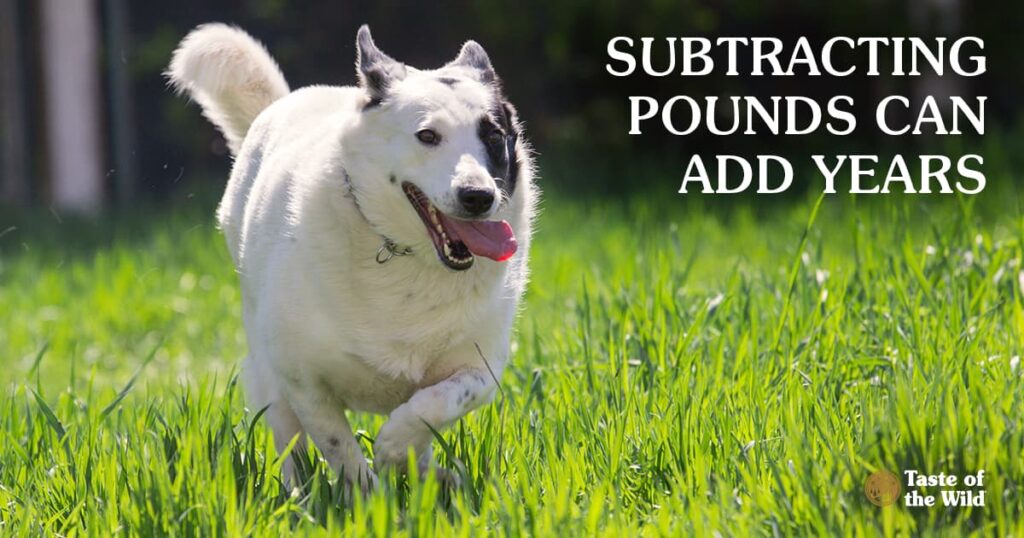
An overweight dog running through the grass outside in the sun.

People aren’t the only ones who need to worry about a mid-life spare tire. Obesity in dogs is a major problem, too. But it’s not just a matter of letting the collar out a few notches or buying a roomier dog bed — a recent study of chubby middle-aged dogs shows that curbing obesity in dogs could actually add years to their lives.

Less Overweight Dogs = More Years

Researchers examined the medical records of more than 50,700 middle-aged, spayed or neutered dogs, comparing the life spans of overweight pups against their normal-weight counterparts. Published in the Journal of Veterinary Internal Medicine, the study found that dogs with ideal body weights lived up to 2.5 years longer.

The scientists compared 12 purebred breeds — representing five general sizes — including chihuahuas, Pomeranians, shih tzus, dachshunds, Yorkshire terriers, cocker spaniels, beagles, boxers, German shepherds, golden retrievers, Labrador retrievers and pit bull terriers. All overweight dogs, on average, lived shorter life spans than normal-weight dogs, ranging from 2.5 years shorter for Yorkshire terriers to just a few months less for German shepherds.

Overweight Dogs Are A Common Problem

In the United States, approximately 56 percent of dogs and 60 percent of cats are overweight or obese, according to the Association for Pet Obesity Prevention. A dog or cat is considered overweight if it’s 10 to 19 percent heavier than its ideal body weight. When that figure creeps up to 20 percent or more, the pet falls into the obese category.

If you’re not sure what your pet should weigh, ask your veterinarian. These BMI charts for dogs can also help you determine if your pet is perhaps a little too roly-poly.

Extra Pounds, Extra Health Risks for Overweight Dogs

Obesity is considered a chronic inflammatory condition, contributing to changes in insulin resistance, metabolism and appetite control. Those few extra pounds can put your dog at risk of a range of diseases and conditions including cruciate ligament tears, arthritis, diabetes and even certain types of cancer.

Added weight can also contribute to respiratory, heart and kidney problems. Is it any wonder overweight pets may not live as long as leaner dogs and cats? Or that the international veterinary and human medical communities have recommended that obesity be classified as a disease?

Getting an Overweight Dog Back on Track

Helping your pet return to an ideal weight is one of the most loving things you can do to improve his or her health. As with people, it’s a matter of fewer calories in and more calories burned. Here are some simple steps you can take:

1. Talk to your veterinarian to determine what your pet really should weigh.
2. The doctor may recommend a specific diet and the daily amount your pet should be fed. Most weight-loss diets typically provide more protein and fiber and less calories and fats than maintenance diets. Feeding a high-fiber diet can also help your pet feel fuller and less inclined to beg.
3. Avoid the bottomless bowl syndrome. Instead of keeping your pet’s dish full all day, start using a measuring cup to make sure your dog or cat only gets what it needs.
4. Account for snacks. Every rawhide, table scrap and spoonful of peanut butter contains calories. If you can’t resist food treats, opt for healthier, lower calorie snacks such as sliced bananas, green beans or carrots. Make sure everyone in your family is on board with the treat-reduction program.
5. Increase the physical activity. Leash walks, swimming, a game of fetch or even regular play dates at the dog park are fun ways to help your dog work out. If your pet is extremely overweight, talk to your veterinarian about how to gradually increase exercise so your pet doesn’t overdo it at first.
6. Weigh your pet regularly. A healthy goal for your pet is a 1–2 percent reduction in body weight per week.
7. Avoid the yo-yo syndrome. Once your dog loses weight, returning to its couch-surfing days will make it easier for the pounds to creep back. The positive changes you’ve made in terms of food control and exercise need to be a permanent part of your pet’s life.

Granted, weight loss can be a long, slow process. But when you think about it, every small weight loss — even if it’s just a half pound — could mean better health and more time with your dog. And what could be more motivating than that?

What to Do If Your Dog Has Been Stung By a Bee

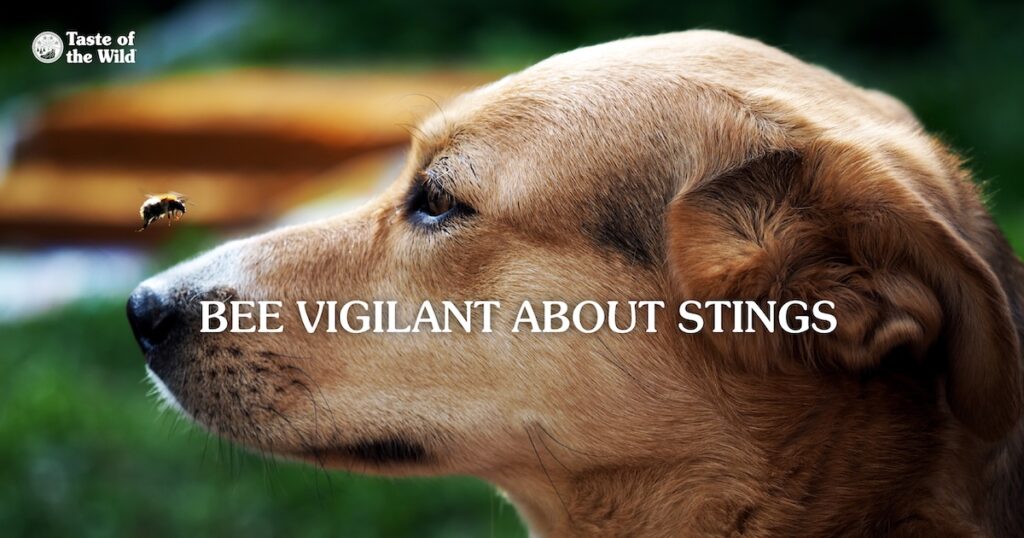
A close-up of a dog watching a bee hovering right above its nose.

Bees (and wasps and hornets) are helpful to the environment, which is why many people plant bee-friendly gardens teeming with nectar-filled blossoms to attract them. But to most dogs, bees are not so helpful. Bees won’t hesitate to sting any dog that noses around, paws at or otherwise disturbs their crucial pollinating work. For dogs who can’t leave well enough alone, insect stings are a painful way of being told to “buzz off.”

Pain, however, can be the least of the worries for some dogs. Bee stings may lead to a severe, life-threatening allergic reaction that can lead to anaphylactic shock and even death. Here’s what you need to know when a curious canine results in you exclaiming, “Ah! My dog ate a bee!” or “Help! My dog stepped on a bee!”

Signs of Dog Bee Stings

Curious dogs are often stung on their face or in their mouth, resulting in a flurry of yelping and pawing at the muzzle or other affected area. Other signs can range from mild to severe, depending on the location of the sting, whether they received multiple stings and whether they have an allergy to the bee venom. Lucky dogs will get by with just a mild reaction localized to the sting site: redness, mild swelling, heat and potentially itching. This usually goes away on its own within a day or so.

Signs of a potentially serious allergic reaction usually develop within 10 to 30 minutes of the sting and include swelling of the eyes and face, which can lead to difficulty breathing. Other signs include drooling, vomiting, diarrhea, weakness and collapsing.

Signs of anaphylactic bee reactions can develop quickly, so it’s important to watch your dog and be prepared to seek veterinary care immediately. In rare instances, these allergic reactions may occur 12 to 14 hours after the sting.

How to Know If Your Dog Was Stung by a Wasp or a Bee

Are all stings the same? Not exactly. Bees have a barbed stinger that detaches from the bee and remains in the dog’s skin. For several minutes after the sting, the venom sac on the stinger can continue to pulsate, injecting venom into the area. Wasps, hornets and yellow jackets (which are specific types of wasps), however, don’t have barbed stingers. They retain their stingers and can sting multiple times. This can be especially problematic if your dog uncovers a wasp nest, because the stings can increase exponentially in number.

Dog Bee Sting Treatment

For bee stings, if you can find the implanted stinger, remove it as soon as possible by scraping a credit card along the skin or by using tweezers to pull the stinger out. For both bee stings and wasp stings, help minimize swelling by applying a cool compress to the area, made by wrapping a towel around ice, an ice pack or a bag of frozen vegetables. You can also mix baking soda with water to create a paste that can be applied to the skin to help neutralize the acidic venom. If possible, bandage the area to prevent your dog from licking the paste.

Do not give your dog any medication without consulting your veterinarian first. If you’re concerned about your dog, contact your vet immediately.

Severe Reactions to Bee and Wasp Stings

If your dog is stung multiple times or experiences a severe reaction, such as facial swelling or difficulty breathing, it’s important to contact your vet immediately. Depending on your dog’s condition, your pet may need to be hospitalized and the vet may give your dog antihistamines, steroids or epinephrine as well as intravenous fluids and oxygen.

Be Prepared for Future Bee or Wasp Stings

For pets that have a history of severe allergic reactions to bee stings, including anaphylactic shock, your veterinarian may recommend keeping an EpiPen (an epinephrine automatic injector) on hand. However, an EpiPen must be properly dosed to the size of your pet. Although the EpiPen Jr. delivers a smaller dose, it may still be too much for small dogs and cats. Talk to your veterinarian about options for your pet.

Watch Out for Bees in the Fall

Bees and wasps are often more aggressive in the fall. And who can blame them? They’re busy preparing their hives for winter. Flowers and other food sources are harder to find. And hives are overcrowded. So they’re more likely to lose patience with a curious dog and slap prying noses with a sharp sting.

Seeing dogs stung by bees, especially dogs that have anaphylactic reactions to stings, is a scary sight. To keep your dog safe, try to keep curious noses away from areas that bees and wasps like to buzz about. Just like snake bites, a bee or wasp sting can quickly become an emergency situation, so always contact your veterinarian immediately if your dog shows signs of a severe reaction.