Contact

 Where to Buy
 Contact Us
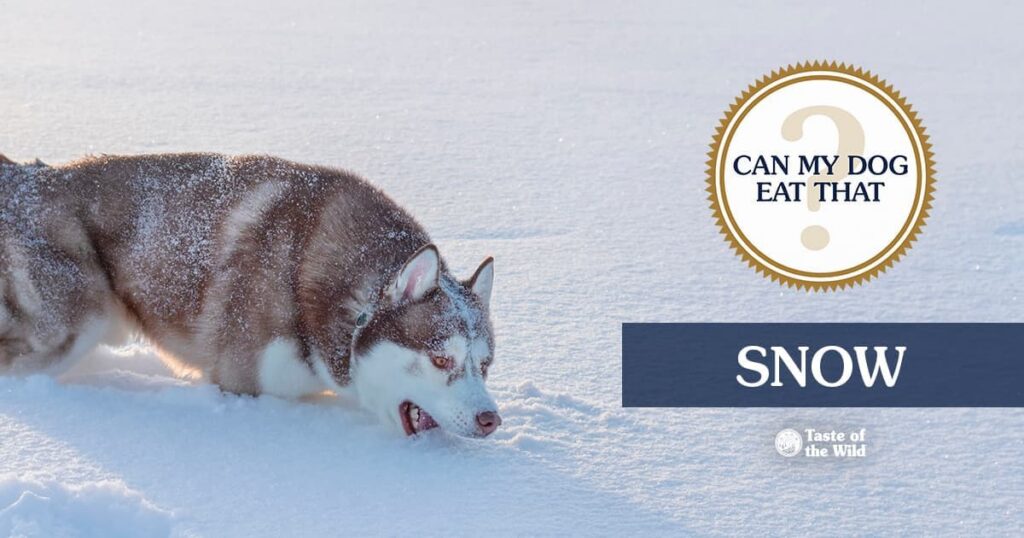
Welcome to “Can My Dog Eat That?,” our series that answers some obvious (and not-so-obvious) questions about what your dog can and can’t safely eat. You can view some of the previous foods we’ve looked at in our “Can my dog eat that?” guide. Today we answer the question “Can dogs eat snow?” Read on!
It’s a romantic notion to head out into a winter wonderland and catch snowflakes on your tongue, isn’t it? Most people have probably done it at least once or twice in their lives. Dogs, too, seem to enjoy fresh snow on their tongues. The difference is that while people rarely chow down on snow, some dogs…do.
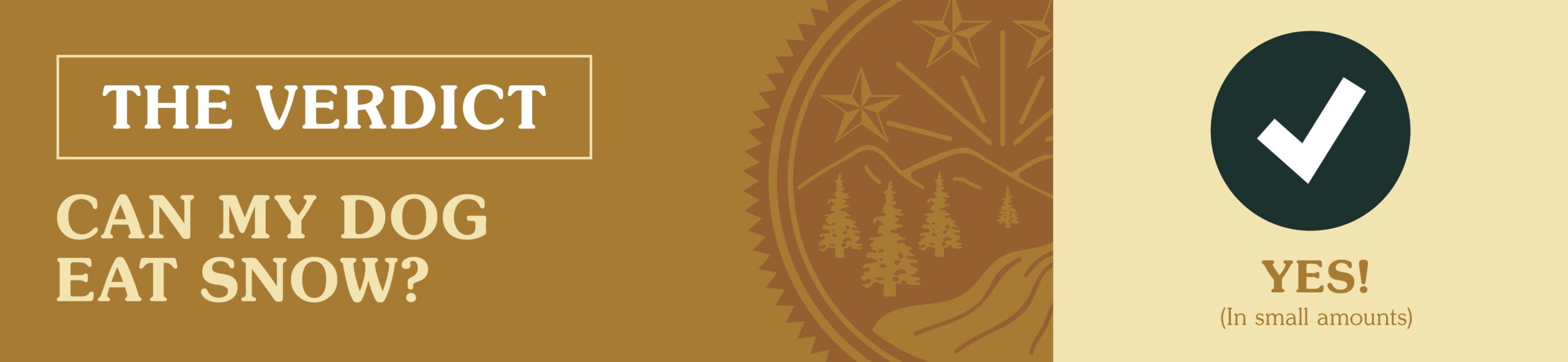
So, can ingesting snow hurt your dog?
No. Not in small amounts, anyway. Snow is just frozen water; for dogs it’s like a cool treat, like a slushy. However, eating too much snow does contain dangers, although they don’t necessarily come from the snow itself.
Is It Bad for Dogs to Eat Snow?
Dogs explore the world with their nose and mouths, so it’s only natural for them to test that frozen fluffy fun on their tongues, especially during the first snowfall of the cold weather season. Tasting snow is safe, especially if it’s a fresh new layer. The issues arise if your dog is one of those who plows through mouthfuls of the stuff. The deeper they go, the more chances that there’s something nefarious in the snow. Rocks, sticks, leaves or other ground debris can make their way into the lower layers, and you obviously don’t want your dog eating rocks and sticks.
Can Dogs Eat Snow That’s Colored?
We’ve all heard jokes about yellow snow, but many dogs will make a beeline right for it. Yellow snow is a smelly signifier that friends (or enemies!) have been hanging around, so it’s necessary to investigate. Light investigation with noses or tongues is pretty harmless, but you don’t want your dog eating big mouthfuls of yellow. You’re not sure who it came from, after all.
However, yellow isn’t the worst color in snow that your dog can ingest. Brown, black, pink, blue or pretty much any other color in snow is probably bad news. If the snow in question is covering pavement, there’s a good chance that cars have been there, and cars can leak all sorts of bad (yet colorful) toxins into the environment. Harmful chemicals like motor oil, wiper fluid and especially engine coolant can be deadly in even small amounts. Engine coolant (antifreeze) can be deadly in tiny doses, so be extremely wary of green, blue or orange spots of contaminated snow. You also want to avoid any discolored snow when walking your dog so that any of these hazardous substances don’t get onto your dog’s paw pads, and then they lick it off when they get home. Getting dog booties for your dog can help protect your dog’s paws.
Salt used for de-icing walkways is often tinted blue but might not have any coloration at all. If mixed with the snow your dog is eating, it can cause indigestion in small amounts or be deadly in bulk. You should also keep your dog away from dirty snow. Brown, grey or black spots in snow might be dirt picked up from the ground, and it’s never a good idea for dirt and gravel to make its way into your pondering pup’s belly.
Why Do Dogs Like to Eat Snow?
No one really knows why dogs love to gobble up snow. If they’re an active dog that enjoys outdoor activities in the winter (potentially requiring dietary changes), they may be thirsty, and the snow tastes fresher than what’s in their water bowl. Or perhaps they like the granular texture or the sensation of the cold snow melting in their mouth. Hydration or curiosity, whatever the reason, for most dogs it seems like it keeps them going back for more!
Can Dogs Eat Too Much Snow or Ice ?
Eating large amounts of snow or ice can cause a dog’s body temperature to drop to dangerously low levels (hypothermia), causing heart irregularities or even death. This would take a LOT of snow, but it’s definitely concerning behavior.
If your dog is eating that much snow or regularly eating a lot of snow, it could be a sign of something more serious, like kidney failure or Cushing’s disease, an abnormality of the adrenal gland. If you think that your furry friend is regularly eating too much snow, contact your vet for advice.
Should I Stop My Dog From Eating Snow?
In short, a little bit of fresh, clean snow probably won’t hurt your dog. But eating too much, digging too deep or eating colored snow puts your dog’s health at risk. If you suspect that your dog has ingested something they shouldn’t have, call the ASPCA Animal Poison Control Center immediately, or consult your veterinarian.