

How to Get Rid of Cat Pee Smell

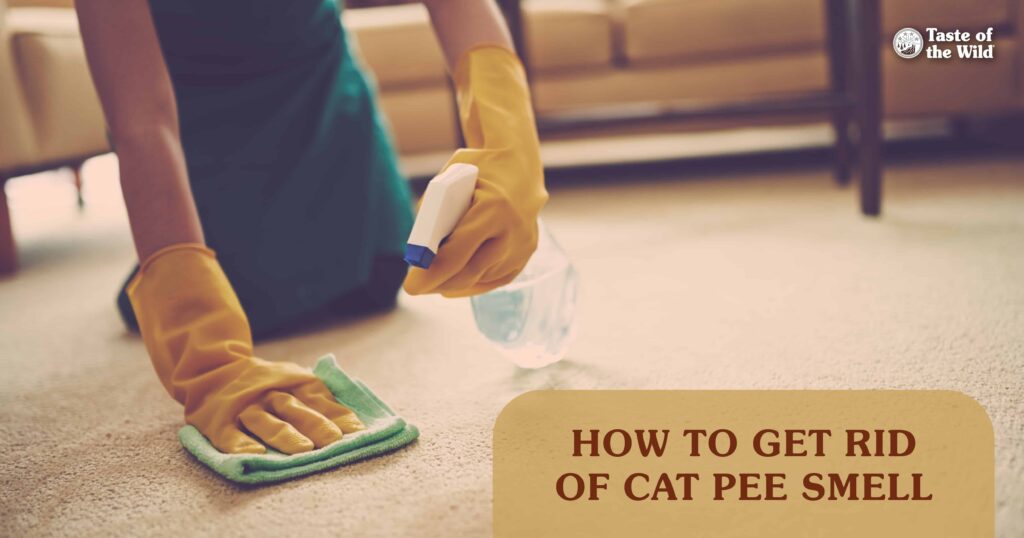
Two hands wearing yellow rubber gloves holding a spray bottle and a rag over white carpet.

It’s an eye-watering smell that’s instantly recognizable — cat pee. Litter typically does a great job at deodorizing cat pee, so when you smell it in your house, you know something’s not right. And so the hunt for the source of the stench begins. Behind the couch? The laundry basket? Under the bed — or worse, on the bed?

In situations like this, it’s good to be prepared and have the supplies you need to remove cat urine odor and stains as quickly as possible. The sooner you clean cat urine up, the easier it is to eliminate that lingering cat pee odor. To help you know what to do when a urine cat-astrophe inevitably happens, we’ve got some cat pee cleaning tips and some advice on how to prevent urinary accidents in the first place. So bookmark this page for future reference!

Why Does Cat Pee Stink So Bad?

Although cat pee has a very strong and distinctive smell, normal cat urine is actually about 95 percent water. The tell-tale acidic smell of cat pee comes from urea, uric acid, creatinine and ammonia, which are the natural waste products of broken-down protein in the urine. If you notice a strong ammonia smell coming from the litter box, that’s caused by urea in the pee being broken down into ammonia by bacteria in the environment. If you smell ammonia coming from the litter box, that’s a good sign that the litter needs your attention.

Even More Reasons for That Cat Urine Smell

Cat urine generally smells worse than dog urine because it’s more concentrated and it contains felinine. Found only in the urine of domestic cats and their close relatives (e.g., bobcats and lynx), felinine is a sulfur-containing amino acid that is actually odorless. But it breaks down into highly volatile and stinky compounds. Unneutered male cats (tom cats) typically have smellier urine due to testosterone and higher amounts of felinine in their pee.

If You Smell It, Clean It

If your cat has had an “accident,” don’t wait to clean it. Dried urine stains are harder to remove and the smell will become stronger the longer the cat urine is left there. As well as removing the smell so you can breathe fresh air again, quickly removing the urine stain and odor helps ensure your cat doesn’t use the same spot again next time. If they (or another cat in your home) can smell cat urine, they’ll likely keep using it as their new place to pee.

What Not to Do to Get Rid of Cat Urine Odor and Stains

We’re going to go over a few “don’ts” first. Don’t scrub or rub the urine — you’ll just make it soak in even further. Don’t use a steam cleaner by itself because the heat can make the cat urine stains and smells even worse. Don’t use any ammonia-based products because your cat may be attracted by the ammonia smell and pee in the same area again. Don’t punish your cat. There is typically a reason a cat pees outside their box, and you need to work out what that is (more on that later).

How to Clean Up Cat Urine

The Ohio State University Indoor Pet Initiative has some useful tips on cleaning urine off different surfaces. The supplies you should keep on hand include white vinegar, paper towels, club soda and possibly an enzyme cleaner. Here is a summary of their cat urine cleaning tips plus recommendations from the Sleep Foundation on removing cat urine from a mattress.

How to Get the Cat Pee Smell Out of Clothes

Machine wash your laundry using a cup of white vinegar and no detergent. Once the cycle is done, repeat the wash using regular detergent.

How to Get the Cat Pee Smell Out of Carpet

Use a towel or paper towels to blot up as much of the urine as you can. Cover the area with paper towels or a towel and stand on them — do this several times. Saturate the area with carpet cleaner or a few drops of dish detergent mixed with water and let it sit for an hour or two. Rinse the spot by gently blotting and using a wet sponge with water to rinse again. Soak the area with club soda for 10 minutes then blot up the club soda and put a pile of paper towels on the spot again with something heavy on top overnight. The next morning, spray the area with an enzyme cleaner. If your cat continues to use the area, you may need to replace the padding underneath the carpet.

How to Clean Cat Pee Off Linoleum or Hardwood

For linoleum, use paper towels or a mop soaked in soapy water to wipe up the pee. Rinse the area with warm water and then wipe with a sponge moistened with white vinegar and let the floor air dry. For hardwood floors, blot the urine then use an enzyme cleaner. If the smell remains, you may need to sand, bleach and refinish the hardwood floor.

How to Get Cat Pee Smell Out of a Mattress

If your cat pees on your mattress, the Sleep Foundation recommends blotting with paper towels or a towel to soak up as much liquid as possible. Mix a solution of half water and half distilled vinegar in a spray bottle, spray the area and then blot again. Cover the area with a generous layer of baking soda and let it sit on the mattress for as long as possible (at least 8 hours). Vacuum off the baking soda and repeat the vinegar and baking soda process until the odor and stains are gone. They recommend using an enzyme cleaner if the vinegar and baking soda don’t work.

Why Do Cats Pee Outside Their Litter Box?

If your cat is urinating everywhere but their kitty litter box, you should investigate why. It could be a health issue, a dirty litter box, behavioral issues or territorial marking. The quicker you address the problem, the easier it will be to get your cat using the correct place again.

Health conditions like bladder stones and crystals, bacterial urinary tract infections and feline idiopathic cystitis cause pain and an increased urgency to go. Your cat may associate their litter box with this pain so they urinate elsewhere. If your cat is urinating more than usual due to some other health reason, your litter box cleaning schedule may not be keeping up with the amount of urine as they’re producing and they won’t use it.

A change of lifestyle, routine or diet can cause stress which may cause urinary accidents. A perception of a threat to your cat’s territory like an outdoor cat in the yard or new pets or people in your home can trigger urine spraying.

If you have an older cat, arthritis may be making it harder to get into the litter box, so make sure you get one with low sides. Older cats can also suffer cognitive dysfunction (like dementia in people) and forget where the box is.

Cats Like a Clean Litter Box

To keep litter boxes inviting places to use, it’s recommended that you scoop the litter daily, change all of the litter weekly and do a deep clean every few weeks. A general rule is to have one litter box per cat plus an extra one. It should be placed in a quiet, private area that’s away from their food.

It’s an unpleasant task, but make sure you’re paying attention to what’s going on in the box to watch out for health issues. Does the urine smell worse, are there larger or smaller amounts of urine, has the frequency of using the box changed?

Accidents happen, but regular inappropriate urination isn’t normal. If you notice any changes in your cat’s urinary habits, contact your veterinarian so they can check if your cat is healthy and help get your cat peeing in the correct place again.

Why Is My Cat Peeing Everywhere?

A close-up of a gray and black striped cat sitting on a round white rug next to a gray and white litter box and litter scoop.

Of all the problems we might encounter while sharing our lives with cats, one of the most troublesome is litter box issues. Changes in your cat’s behavior regarding their peeing habits should not be left untreated — and not just for the hygiene concerns and the hassle of cleaning up cat pee. Cats have been dubbed the masters of disguise for their skill at masking the signs of illness, and if your cat is peeing outside the litter box or peeing more frequently, it may be your cat’s way of hinting at medical problems.

Why Is My Cat Peeing Outside the Litter Box?

When your cat snubs the litter box, it’s usually not out of revenge. Suddenly peeing in new places may be your cat trying to tell you something’s wrong — litter box problems are one of several possible stress-related behaviors cats exhibit. 

Urinating outside the litter box can also be a sign of a medical condition, like feline lower urinary tract disease, urinary tract crystals or stones, a urinary tract infection or even a partial blockage of the urethra, the tube that carries urine from the bladder to the outside. Urinary accidents can also happen because of conditions that make your cat pee more frequently or with greater urgency, such as kidney disease, diabetes and hyperthyroidism (too much thyroid hormone).

Frequent and apparently painful urination can be the sign of a partial or full blockage of the urethra, the tube that channels urine from the bladder to the outside. This tends to occur more often in male cats because their urethras are typically longer and narrower than those of female cats.

These cats tend to void smaller amounts of urine than their large-volume counterparts. They may strain, cry out in pain and even leave evidence of bloody urine. Because the cat may associate the litter box itself with pain, it may avoid the box entirely and urinate in other areas of the house.

How Many Times a Day Should a Cat Pee?

In general, cats pee around two to four times a day. So if you’re finding more urine in the litter box, it usually means your cat is drinking more, too. On average, a healthy 10-pound cat usually drinks about one cup of water a day.

If you suspect that your cat is urinating more, try to determine how much they drink in 24 hours to see if excessive thirst is the cause. Measure fresh water into a bowl in the morning and then keep track of how many times you refill the bowl, measuring each time. The next morning, measure how much is left in the bowl. (For homes with more than one cat, you may need to isolate the cat in question in their own room during this time.) If your cat drinks more than a cup of water per 10 pounds of body weight each day, you should call your veterinarian.

Why Is My Cat Peeing So Much?

A number of diseases in cats can result in increased thirst which then leads to increased urination. The most common are kidney disease, diabetes and hyperthyroidism, an overproduction of thyroid hormone. Of course, hot weather can make your cat drink more too — not all cases of increased urination indicate a health problem.

While you may be tempted to limit your cat’s water so there’s less to clean up in the litter box, you should never do this without consulting your veterinarian first. This can lead to severe dehydration and other problems. It’s better to keep filling the water bowl to keep up with your cat’s thirst.

When to See Your Vet About Litter Box Problems or Increased Urination

If you suspect your cat has a urinary blockage, that is a life-threatening medical emergency, and your cat needs to see the veterinarian immediately. If confirmed by the veterinarian, your cat will most likely require anesthesia and emergency care to unblock the urethra.

If your cat’s not straining to urinate but just appears to be urinating more, it’s still important to schedule a veterinary visit in the near future. Your veterinarian may recommend blood tests, a urinalysis and possibly X-rays or other tests to help determine the underlying cause of the problem.

Why Do Cats Pee on Things? Is It Marking? 

If your cat is urinating outside the litter box and your vet has ruled out a medical condition, they may try to determine if your cat is marking or just urinating. Cats may “spray” in the house to communicate to other cats in the household or neighborhood cats that may stroll through your yard. It’s a way of marking their territory. Urine marking differs from urination in a number of ways. Typically, cats mark on vertical surfaces, often backing up to the couch or doorway with their tail up and quivering. The volume of liquid is usually smaller than what you’d typically find in the litter box. And the urine often contains additional substances that lend a muskier scent to the spray.

Although any cat may mark, including female, neutered or spayed cats, it generally happens more in intact (unneutered) male cats. If your cat is marking, you’ll need to remove the scent and work with your veterinarian to help eliminate this behavior.

Why Is My Cat Peeing on the Floor?

If there are no underlying medical reasons and your cat isn’t marking, it could just be that your cat is fussy about their litter box. You can make environmental changes that will address your cat’s concerns:

  • Abide by the 1 + 1 rule. You should have multiple boxes: one litter box for every cat in the household plus one more. So, if you have three cats, you should have at least four litter boxes.
  • Size matters. The litter box should be at least 1.5 times the length of your cat (excluding the tail). If you have an older cat, consider a box with lower sides. Many cats will avoid covered boxes.
  • Keep it clean. A dirty litter box drives cats elsewhere to get themselves clean. Scoop the litter at least once a day or even more often if you have multiple cats — clumping litter might make your task much easier. Discard the litter about once a week and wash the litter box with a mild dishwashing soap.
  • Try different litters, including unscented litter. Does your cat prefer a different texture or smell? 
  • Access. Older cats with painful arthritis may avoid the litter box if the sides are too high to climb over or if they have to ascend or descend flights of stairs to get there. Kittens have to be able to get to the box and climb in.
  • Location, location, location. Most cats like privacy, so avoid placing the litter box in high-traffic areas.

Does My Cat Have a Behavior Problem?

Sometimes, cats turn their tails up at the litter box because they’re stressed. Any changes in the household, such as the addition of a new baby, construction workers in the house or bullying by another cat in the family, can upset the cat’s routine, and anxious cats can have accidents. If this is the case, work with your veterinarian to devise a plan to help minimize your cat’s stress — and hopefully, their inappropriate urination activities.

When it comes to cat urine, everyone in the house notices a cat’s litter box habits, which means early intervention to make sure any medical issues are under control and your cat’s well-being and quality of life is maintained.