
Can My Dog Eat Grapes?

Interior graphic with text that reads ‘Can my dog eat grapes? Never!’.

Welcome to “Can My Dog Eat That?,” our new series that answers some obvious (and not-so-obvious) questions about what your dog can and can’t safely eat. Read on!

A grape or two might seem like a harmless snack for your dog. After all, it’s just fruit, and mostly water at that. But what happens if your dog eats grapes? Unlike other fruits like cranberries or blueberries, grapes can be toxic to dogs, potentially leading to acute kidney failure and even death. Grape and raisin poisoning are real dangers for dogs.

This applies to all types of grapes, whether they’re red, green, seeded or seedless, organic or grown conventionally. But fresh grapes aren’t the only problem. Grapes that have been dried — otherwise known as raisins, sultanas (light brown, seedless raisins) and Zante currents — can be problematic as well.

The same goes for foods in your pantry that contain raisins, including cookies, bars and breads, granola mix, trail mix and raisin bran cereal. It’s not clear if grape jelly, grape juice or wine could be hazardous, but why take the risk?

What makes even a few grapes toxic?

Until recently, no one knew why, exactly, dogs and grapes shouldn’t mix. But veterinarians at the ASPCA Animal Poison Control Center discovered that tartaric acid (the ingredient cream of tartar is made from) might be the culprit. The amount of tartaric acid in grapes can vary depending on the type of grape, the degree of ripeness and the growing conditions.

In addition to varying levels within the grapes, dogs can have individual responses to the fruit, making it frustratingly difficult to determine how many will be a problem. Dogs have had a toxic reaction after eating as little as 0.32 ounces of grapes and 0.05 ounces of raisins per pound of body weight. It’s not a food you want your dog eating!

If your dog has eaten grapes or raisins, call your veterinarian or the closest veterinary emergency clinic immediately.

Symptoms when dogs eat grapes

It doesn’t take long for signs of toxicity to appear. Within hours of eating grapes or raisins, dogs may vomit and refuse to eat. If your dog surfed your countertop without your knowledge, you may find the telltale signs of grapes in the vomit. The dog may also have diarrhea, show signs of abdominal pain, drooling, dehydration and lethargy. They may drink and urinate more than normal, or in more advanced cases, they may produce little or no urine.

Seek veterinary help immediately

Since kidney damage can happen quickly, it’s best to call your veterinarian as soon as possible. While there’s no specific test to determine if your dog is experiencing grape toxicity, it’s generally diagnosed based on the history of grape consumption or grapes found in the vomit.

When your dog eats grapes or raisins within the last hour or two and hasn’t vomited yet, the doctor will probably recommend that vomiting be induced to get the toxins out of the stomach. Once that’s accomplished, your dog may be given activated charcoal by mouth, which may help prevent further absorption of toxins into your dog’s system.

In cases of grape or raisin toxicity, some dogs may need aggressive therapy, including hospitalization and intravenous fluids. The veterinarian may recommend blood work and urinalyses to monitor kidney function. Dogs may also benefit from stomach protectants, medications to control vomiting and nutritional support.

While ingestion of grapes should always be avoided in dogs, other fruits can be healthy and safe snacks for your pooch. Consider offering apple slices (remove the seeds), cantaloupe, blueberries, strawberries or bananas instead.

Can One Grape Kill a Dog?

Can one grape kill a dog? Yes, one grape can be extremely harmful. Grape toxicity is a real threat no matter how many grapes a dog eats. When dogs eat grapes, grape poisoning is always a possibility. Grapes or raisins, quite simply, are toxic to dogs, whether it’s one grape, green grapes, seedless grapes, red grapes, etc. If you suspect that grape poisoning has occurred and you cannot seek immediate treatment, you can call  Pet Poison Helpline at 855-764-7661 for immediate advice. Your dog’s health, and kidney failure specifically, is always a concern when your dog ate a grape.

To learn more about why grapes are bad for dogs, check out this article.

An interior graphic with text that reads ‘Can my dog eat grapes? Never!’.

Should I Be Worried About My Vomiting Pet?

Taste of the Wild

Stomach issues are the top reason cats are brought to the veterinarian, according to a Healthy Paws analysis of more than 870,000 pet insurance claims from June 1, 2020, to June 1, 2021. For dogs, stomach issues came in third, behind skin problems and pain.

While we know a vomiting pet generally prefers to expel stomach contents on expensive carpets or on your bed in the middle of the night, we don’t always realize what’s causing the problem. So how do you know when it’s something serious?

Causes of vomiting

A broad range of things can cause your pet to vomit, from something as simple as an abrupt change in food or motion sickness from a car ride to more serious causes, such as toxin ingestion, infections like parvovirus or a gastrointestinal foreign body.

Check your house or yard for anything your pet might have accidentally gotten into: medications, mushrooms, the garbage can, super glue and any toys or objects that may have been partially or completely swallowed. Sometimes you may find clues in the vomit, such as potentially toxic house plants that may have been ingested. If you think your pet has eaten something it shouldn’t, call your veterinarian or contact the Pet Poison Helpline at (855) 764-7661.

Mild vomiting

If your pet vomits once or twice and stops, you can remove their food and limit their water for 6 to 8 hours to give the digestive tract a chance to calm down. If they continue to vomit or if they become lethargic, contact your veterinarian.

Although not necessarily recommended, dogs can go for a day or two without eating. However, food shouldn’t be withheld from cats for more than about 12 hours. Cats can develop a condition called hepatic lipidosis, or fatty liver disease, and it can be difficult to entice them to eat again. But a few hours without food is typically not a problem.

During this time, you don’t want your pet to become dehydrated. The easiest way to check their hydration is to run your finger over their gums (do not attempt this if your pet is not fond of having their mouth handled). In a hydrated pet, there should be enough saliva so that your finger slides easily. Dehydrated pets will have dry, sticky gums. You can also try to gently pull up the skin at the nape of your pet’s neck. In a hydrated pet, the skin should snap back into place quickly. If your pet is dehydrated, the tent of skin will take longer to return to its original shape.

You can allow your pet to lick ice cubes, so they ingest a small amount of water at a time. Lapping up large amounts of water quickly may cause your pet to vomit. If you’re concerned, contact your veterinarian.

If your pet hasn’t vomited for 6 to 8 hours, you can begin to offer small amounts of water. As a rule of thumb, you can provide 1 teaspoon of water per pound of body weight every 2 to 3 hours.

Once your pet drinks water without vomiting, you can feed them small, frequent meals, using a bland diet such as boiled hamburger or chicken and rice or food made for sensitive stomachs. If your pet refuses to eat or begins to vomit again, call your veterinarian.

Severe vomiting

Some pets will continue to vomit, even when there’s nothing left in their stomachs, and they just wretch up bile. Prolonged vomiting can lead to dehydration, so it’s important to take your dog or cat to the veterinarian. Even if your pet vomits on a regular basis, such as once or twice a week, it’s worth investigating to see if there’s an underlying disease process causing it.

Depending on your pet’s history, signs and physical exam, the veterinarian may order blood work, X-rays and/or other diagnostic tests. Treatment will vary, depending on the cause, but may include surgery in the case of a gastrointestinal obstruction, fluids to correct dehydration, medications to reduce vomiting or other treatments. Hopefully, your pet (and your expensive carpet) will be back to normal in no time.

RELATED POST: Cancer Signs: What to Watch for in Pets

Why Are Grapes Bad for Dogs?

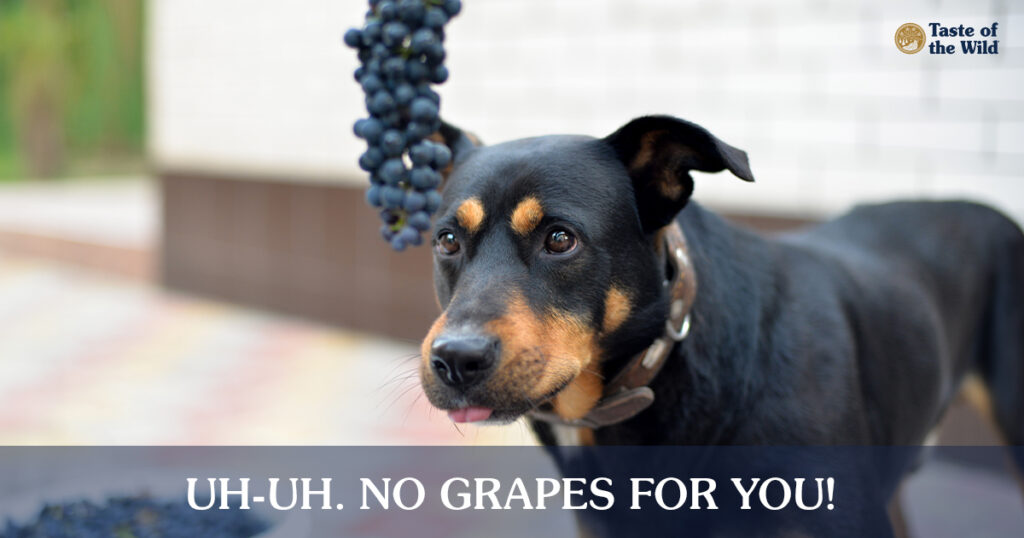
A Black and Brown Dog Staring at Hanging Grapes

Among the many foods that are on the no-no list for dogs are grapes and their relatives: raisins, sultanas and currants. Dogs should not eat grapes or any grape-based foods because they can cause severe kidney failure and even death. So what makes grapes so bad that even a single grape can cause health issues for dogs?

Are Grapes Acidic? Is That the Problem?

Grapes do have a pH on the lower side so they are acidic, but the issue with dogs eating grapes isn’t because they’re acidic. It’s likely due to one particular acid — tartaric acid. If that sounds familiar to all the bakers out there, it’s probably because you’ve used cream of tartar, which is made from tartaric acid, in your baking. Unlike people and some animals, dogs are especially sensitive to tartaric acid.

What Happens If a Dog Eats a Grape?

For a long time, no one knew exactly what made grapes toxic to dogs. The type of grape didn’t matter; dogs showed signs of vomiting, diarrhea, lethargy, lack of appetite, and later increased thirst and urination, whether the grapes were green or red, seeded or seedless grapes, fresh grapes or dried (raisins, sultanas and currants). And sometimes grape and raisin toxicity led to acute kidney failure or worse.

Then the connection between grapes and dogs exposed to cream of tartar and tamarinds was made. The ASPCA explains that the clinical signs, lab results and kidney lesions seen in the dogs exposed to cream of tartar and tamarind resembled those of dogs who ate grapes and raisins. This helped investigators realize that a common factor — tartaric acid — was the toxic substance behind the kidney problems.

What Are the Symptoms After a Dog Eats Grapes?

The symptoms of grape or raisin toxicity can vary among dogs, among grapes, and by how many grapes the dog ate. A dog’s health can be affected within hours of grape ingestion; typically dogs with grape poisoning vomit, have diarrhea, don’t want to eat, drool and just want to laze around. You may notice them drinking and urinating more. If kidney damage has already started, urine production may decrease (there may be little or no urine coming out).

Can Dogs Have Green Grapes? Can Dogs Have Red Grapes?

Red, green, purple, black or yellow; it doesn’t matter what color the grapes are, don’t let your dog eat them, as they can all potentially cause grape toxicity. They also shouldn’t eat dried grapes, like raisins, sultanas and currants, since these may also be toxic to dogs.

What to Do If Dogs Eat Grapes

If you know or suspect your dog ate a grape, you should immediately call your veterinarian. If your dog ate grapes or raisins (or any grape-based food) while your vet clinic is closed, call an after-hours emergency veterinary clinic, the ASPCA Animal Poison Control Center (1-888-426-4435) or the Pet Poison Helpline (1-855-764-7661) for advice on what to do. Do not try to induce vomiting unless a veterinarian has advised you to do so.

My Dog Ate Grapes but Seems Fine

If your dog eats raisins, grapes or any other grape-containing food, call your vet. Even if your dog isn’t showing signs of grape poisoning, you should still call your vet. If it’s been less than an hour or two, your vet may induce vomiting so the toxins (grapes or raisins) are removed from your dog’s stomach. Further treatment may still be required, though.

Sensitivity to grapes can vary among dogs, so it’s best to be safe and have your dog examined by your vet if they have ingested grapes or raisins — even if they seem fine or ate just one grape.

Can Dogs Have Wine?

Nope. Any alcohol is bad for dogs. Along with grape poisoning from the wine (it contains tartaric acid), dogs can experience ethanol poisoning, which leads to trouble breathing and seizures. So make sure you keep wine glasses and bottles well out of the reach of curious canines.

Can Dogs Have Grape Juice?

Another nope. Grape juice can also cause grape toxicity so don’t let your dog sneak a sip from your glass. Eating grapes, drinking liquids made from grapes and eating dried grape products can all cause toxicity in dogs and are all big no-nos.

The bottom line is that dog owners should never feed their dog grapes or any food with a grape-based ingredient in it (e.g., raisin bread is out). If your dog does eat grapes, call your vet immediately. If you would like to feed your dog some fruit, there are plenty of safe alternatives like plain cranberries, pineapple and blueberries.

Are Small Dogs More Prone to Dental Disease?

Taste of the Wild

Periodontal disease is the most common health condition in dogs. By two years of age, about 80 percent of dogs are estimated to have some form of it, and the risk for periodontal disease continues to grow with age. But evidence also shows that small and toy breed dogs like dachshunds and pugs are more likely to experience dental disease than larger dogs — and it may happen at an earlier age.

Periodontal disease can be painful and negatively impact your dog’s health. It starts when a sticky, bacteria-laden material called plaque forms on the tooth surface. Within about 48 hours, plaque hardens into tartar, which typically can’t be removed with a toothbrush. Bacteria can invade the gum tissue, causing inflammation and destruction of the tooth-supporting structures, leading to tooth loss. Bacteria can also enter the bloodstream and impact other organs such as the heart.

Since smaller dogs may be more at risk for dental disease, it’s a good idea for owners of small dogs to start dental care early and seek veterinary help if dogs exhibit signs such as bad breath, inflamed or bleeding gums, loose or discolored teeth, difficulty eating or nasal discharge.

Why small breeds?

No one is sure why, exactly, smaller dogs appear to be more prone to dental disease. But it’s generally believed that the more compact heads and jaws of smaller dogs can lead to overcrowding of the teeth, meaning there is less space between the teeth and more places where food can lodge and collect bacteria.

It’s common for small dogs to retain baby teeth, which is one potential cause of overcrowding. If baby teeth aren’t shed naturally, two teeth inevitably squeeze into the space meant for a single tooth. Retained baby teeth should be professionally removed to free up space.

Small brachycephalic breeds, or dogs with flattened faces, such as pugs, Boston terriers and Pekingese, are likely to have teeth crowding as well as bite abnormalities. Their abbreviated jaws require the same number of teeth to fit into an even smaller space, leading to tooth rotation and crowding. Bite abnormalities, such as an underbite, can result in tooth and gum tissue damage.

Help protect your small dog

The best way to help prevent dental disease is to start with a visit to your veterinarian. He or she can examine your dog’s mouth and advise whether a professional cleaning and exam is needed. The cleaning will remove tartar from the visible part of the tooth as well as under the gumline.

The doctor will be able to examine each tooth and look for pockets and other abnormalities. Dental X-rays can help determine if there’s trouble under the gums. If necessary, teeth may be extracted to relieve pain or create more space.

The veterinary staff can also show you how to brush your dog’s teeth. Removing plaque on a daily basis, before it hardens into tartar, can help maintain dental health and potentially extend the time between veterinary dental cleanings.

The key is to gradually accustom your dog to the procedure and provide lots of treats and praise. In the first few sessions, gently rub under your dog’s chin and touch the muzzle. Gradually work up to touching the lips and rubbing along the gums. Next, add a bit of pet toothpaste to the tip of your finger. Then gradually transition to a finger brush or small child’s toothbrush.

You can also find dental care products that support dental health, including dental diets, dental chews, water additives, oral gels and sprays. Just look for the Veterinary Oral Health Council (VOHC) seal of approval, which tells you that the products have been proven to reduce plaque and tartar.

Tips to Stop Your Dog’s Begging

Dog Begging for Food

Big holiday dinners have enough stress without your dog staging theatrics under the table. You know the schtick: the forlorn, puppy-dog eyes. The whimper. The fidgety tap-dance with the front paws. A pool of drool on the floor for good measure. The barking. And when all else fails, the futile attempt to paw a bowl of stuffing off the table.

Of course, other dinner guests may not appreciate how dang cute your dog’s antics are. But there are other reasons why you’d want to discourage dog begging. Feeding dogs table scraps can lead to upset tummies. Many human foods can be toxic to dogs. Those extra calories can pack on extra pounds. And it simply encourages an annoying behavior.

But there is a way to curb dog begging, so everyone enjoys Thanksgiving dinner, including your dog. Just follow these suggestions if you’ve ever asked how to stop a dog from begging.

Consistency Will Stop Your Dog From Begging

If your dog is sometimes rewarded with a bite of dinner roll, and other times isn’t, this is not only confusing for your dog but it can create an “addictive” expectation, not unlike people playing slot machines. Your dog will keep trying, knowing that at some point, they’ll hit the jackpot with a bite of turkey.

Once you decide to stop rewarding begging, everyone in the family should stop, too. Being consistent with your dog helps them understand that much sooner that begging won’t get them anywhere.

To Stop Dog Begging, Start Training Early

If your dog has been begging for years, he or she won’t transform into the perfect well-behaved pup overnight. If you have time, it helps to start training sessions a few weeks before the big night.

Train Your Dog to a Mat to Stop Dog Begging

If there’s time, you can train your dog to “down, stay” on a mat in the dining room so they can be with the family without being a bother. Start with a non-skid mat, a clicker and some treats. Any time your dog shows interest in the mat, even if he or she just looks at it, press the clicker and give a treat. Each move closer to the mat is rewarded the same way. When your dog steps on the mat, click and treat.

Toss a treat away from the mat, and when your dog returns and steps on the mat, click and treat. Next, start saying “mat” right before your dog steps on it, so he or she starts associating the word with the mat. In this way, gradually reward your dog for lying down on the mat. Extend the amount of time between the time your dog lies down and when you click and treat. With patience, you can eventually get your dog to stay on the mat during dinner, and you can reward good behavior by tossing treats to the mat.

Providing a Distraction to Dog Begging

During dinner, give your dog something even better than table scraps, like a frozen, stuffed Kong. Or consider a food puzzle, which provides entertainment and keeps your pet busy as they work for every kibble.

Ignore Your Dog’s Begging

It’s an attention-seeking behavior. That’s why it’s not enough to simply stop feeding your dog at the table. You also need to stop rewarding your dog with attention. Even negative attention, such as a stern look or gently admonishing your dog by saying, “Stop begging,” actually encourages the behavior. Instead, avoid looking at your dog and act like he or she isn’t in the room.

Initially, the begging may actually get worse, because your dog may think it just needs to try harder to get your attention. But if you stick to your guns and keep ignoring your dog, the behavior will eventually go away.

Help Your Dog Avoid Temptation

If possible, take your dog for a long walk so they can work off all that extra energy and spend some quality time with you. Then put them in a separate room with their favorite toy or a stuffed Kong so they’re not even tempted to beg during dinner. Then they can join everyone again after the food is safely put away.

Dogs at Work: Canine Blood Donors

Taste of the Wild

You’ve heard of dogs saving lives thought heroic feats of in-the-moment action. But did you know pooches also pre-emptively save other dogs’ lives? It’s true. Canine blood donors often provide life-saving blood to dogs who are injured, seriously ill or in need of surgery.

Never heard of pet blood donation? Most people haven’t. About 70 percent of pet owners weren’t aware that dogs and cats could donate blood, according to a recent study in the British journal, Vet Record. Still, 89 percent said they’d be interested in having their pets donate blood, if they met the requirements. Could your dog be a blood donor?

Pets need blood, too

Dogs, like people, have different blood types, but in dogs, they’re called blood “groups.”  In most cases, dogs can receive blood from any group for the first transfusion, but after that, the blood must be “cross-matched” to that dog’s blood group to avoid a transfusion reaction. Some dogs, like some people, are universal blood donors, meaning their blood is compatible with any dog, regardless of that dog’s blood group.

While some veterinary clinics may occasionally tap an employee’s dog for a blood donation in an emergency, most smaller clinics don’t have the time or equipment to separate blood into various components and keep on top of blood typing. Larger clinics may have their own blood donor programs, but most clinics rely on veterinary school or regional blood banks for packed red blood cells, plasma or other blood products needed for transfusions.

Blood donation has its perks

As the owner of a blood donor, you have the satisfaction of knowing your dog may have helped save another dog’s life, not to mention saving a family from heartbreak. But many clinics and blood banks also have other ways to show you their gratitude.

While blood donors aren’t often paid for their contributions, your pet will most likely receive a free physical exam and extensive blood screening. In addition, you may receive discounts on veterinary care, food or flea-and-tick products. And your dog will be treated like a hero each time he or she makes a donation.

Does Your Dog Have What It Takes?

Eligibility requirements for blood donors can vary, depending on the clinic or blood bank. Typically, they look for healthy dogs with calm, easygoing temperaments who don’t mind being handled. (Since it’s a volunteer position, clinics will never force a fearful or squirmy dog to participate.)

Ideal candidates are usually one to seven years of age and at least 50 pounds so that a pint, or two cups, of blood can be drawn without impacting the dog’s health. Dogs need to be current on vaccines and will be screened to make sure they don’t have any infectious diseases that could be transmitted during a transfusion. Donors should not have received transfusions in the past or be on any medications other than standard parasite preventives.

As you can imagine, all these screening tests are time-consuming and expensive, so once a dog qualifies as a donor, owners are typically asked to commit to a number of donations or a certain amount of time.

Blood collection is simple

The procedure usually lasts for 20 to 30 minutes. Dogs usually don’t need sedation and are generally happy to lay still in exchange for praise and treats.

Typically, the dog is stretched out on its side in comfy blankets and a small area on the neck is shaved and cleaned. Blood is drawn from the jugular vein into a sterile collection set. Once the blood draw is done, the dog is lavished with treats and possibly toys or even subcutaneous fluid to replace the volume of blood that was removed. Donors may experience a little bruising at the blood sampling site, but this usually disappears in a few days. The dog starts making replacement blood immediately, so it’s an amazing, renewable resource that can truly save lives.

World Rabies Day: 10 Things You Need to Know

Taste of the Wild

For dogs and cats, infection with the rabies virus is inevitably fatal. But the good news is, it’s entirely preventable with regular rabies vaccinations. Protecting your pet’s health is an important way to safeguard your family, since infected animals can spread the virus to people, too. As part of World Rabies Day on September 28, we’re offering 10 things you should know to help keep all your loved ones safe.

  1. The rabies virus is transmitted by exposure to the saliva of an infected animal. This usually occurs through a bite, although, less commonly, saliva can enter a scratch or open wound. Most pets that fall victim to rabies are unvaccinated and are infected by wild animals like bats, raccoons, skunks or foxes. That’s why you shouldn’t allow your pet to chase or fight wildlife.

    According to the Centers for Disease Control and Prevention (CDC), about 60 to 70 dogs and more than 250 cats in the U.S. die of rabies each year. Thanks to pet vaccinations, human deaths in the U.S. are relatively low, averaging about two people per year. The same can’t be said for rabies infections worldwide: Approximately 59,000 human deaths occur each year, in many cases from the bite of a rabid dog.

  2. Rabies occurs in 49 states, with Hawaii being the exception. The disease is especially prevalent on the East Coast from Maine to Florida and along the Mexican border.
  3. There’s no cure for rabies in pets. Once animals show signs of disease, they typically die in less than 10 days. And there’s no way to diagnose the disease in a live animal — it can only be done by examining brain tissue after an animal passes away.
  4. Animals can only transmit the virus after they show signs of disease. In the early stages, infected dogs and cats may appear nervous, aggressive or more friendly than normal. In time, they can become overly sensitive to light and sound. They may have seizures and lash out at others. Finally, they may drool excessively and experience a paralysis that first affects the head and neck before moving down the body, eventually paralyzing the muscles of the chest so they’re no longer able to breathe.
  5. Most states have laws that require rabies vaccinations for pets. Check with your veterinarian and know the state and local ordinances to make sure your pet’s rabies vaccination always stays current.
  6. Unvaccinated pets that bite a human or another pet usually require a 10-day quarantine. Infected animals can’t transmit the virus until they’re showing signs, and they usually die within 10 days after that. If the animal survives the 10 days, it means it wasn’t shedding the virus at the time of the bite.
  7. If your pet is bitten by a wild animal or another pet, contact your veterinarian immediately. Ask the owner of the other pet for proof of rabies vaccination. If they don’t have it or it was a wild animal, contact animal control to determine appropriate action. If your pet’s rabies vaccination is current, your veterinarian may recommend a booster vaccine.

    If your pet’s rabies vaccine has expired, the state may require a 6-month quarantine in an approved animal care center. Because the incubation period, or the time between the bite and the start of signs, is typically less than six months, this allows time to observe the pet and make sure it doesn’t show signs of infection before it is exposed to other pets and humans.

  8. Contact your veterinarian if your pet bites another pet or a person. You will need to provide proof of a rabies vaccination. As rabies laws vary regionally, your veterinarian can advise you as to what steps need to be taken in your state.
  9. Teach children to be gentle and respectful when handling pets. This helps reduce the risk of animal bites. Children should also ask the owner permission before petting other dogs or cats, for the same reason.
  10. If you or someone you are with is bitten by a potentially rabid animal, wash the wound with soap and water and call a physician or emergency room immediately. The doctor will treat the wound and decide if post-exposure prophylaxis, or an injection of plasma followed by a series of rabies vaccinations is needed.

By keeping your pet’s rabies vaccination current, limiting your pet’s exposure to wildlife and teaching children how to handle pets appropriately, you can minimize the risk of rabies infection for everyone in your household.

Cancer Signs: What to Watch for in Pets

Taste of the Wild

If you’re lucky, you’ll never be faced with a diagnosis of cancer for a pet. But about 1 in 10 dogs and 1 in 5 cats will be diagnosed with cancer in the U.S. this year, according to the Animal Cancer Foundation. We’re sharing pet cancer signs to help you recognize when something may be amiss. After all, early diagnosis and treatment give your pet the best hope for a remission or, in some cases, even a cure.

Of course, the signs of cancer vary depending on the organs or body parts affected, such as the skin, blood or bones. These signs can also signal other conditions, so don’t panic. Just see your veterinarian if you find any of the following:

Unexplained weight loss: If your pet starts looking thinner than usual, and you haven’t started a new diet or exercise routine, it’s time for a checkup.

Enlarged lymph nodes: The lymph nodes that are the easiest to find are just under the jaw, right below the ear and behind the knees. Normally, the lymph nodes feel like a small, pliable blip between your fingers. But if you feel anything firmer or bigger than usual, talk to your veterinarian.

Skin lumps and bumps: You should run your fingers over your pet’s skin at least once a month so you can identify any lumps that are growing or changing. Female pets that have not been spayed are at greater risk for mammary cancer, so be sure to check for any unusual growths on their chests and bellies.

Chronic coughing or difficulty breathing: Tumors that occur in or around the lungs can cause respiratory problems.

Lameness or limb swelling: If you run your hands along both of your pet’s front or rear legs at the same time, it’s easy to compare and spot areas with unusual swellings along the bones. If your pet starts favoring a limb, or is hesitant to bear weight on it, talk to your veterinarian.

Stinky breath or difficulty chewing: These can certainly be signs of periodontal disease, but pets can get tumors in their mouths, as well. If your pet will allow it, take a peek at the gums and under the tongue, checking for unusual growths.

Chronic vomiting or diarrhea: Not surprisingly, cancers of the digestive tract can lead to loose stools, upset stomachs and in some cases, trouble defecating. If the problem persists, or your pet starts losing weight, make an appointment.

Circling or seizures: A pet with a potential brain tumor may experience a sudden onset of seizures, especially in the older years, or may pace in circles over and over again.

Abdominal distension: Pets might have swollen bellies from overindulging in the treat jar, but it can also be a sign of an enlarged organ, such as the liver.

Lethargy:  Any time your pet seems less active than usual, lags behind on walks or just doesn’t want to interact with the family as much, there’s a good chance something’s not right.

When in doubt, see your veterinarian. It may be nothing. But if it’s something more serious, you’ll be glad you caught it early.

What Is the Best Protein for Dogs?

A yellow Labrador retriever sitting in a kitchen looking down at three empty stainless steel dog bowls on the floor.

All dogs need protein in their diet, but the meat- and protein-related claims made on dog food packaging can be confusing. And, in reality, few ingredients used in pet food provide only one type of nutrient. We’ll review what you really need to know about protein and its various sources in dog food.

The Importance of Dietary Protein for Dogs

Let’s start with some dog nutrition basics and why protein is necessary in dog food. Dietary protein is really all about amino acids. Many animal nutritionists will tell you that dogs don’t have a protein requirement; they have a requirement for amino acids in the proper amounts and ratios. Of the 20 or so amino acids, 10 are considered essential for dogs — that means they must be provided in the diet because dogs can’t produce them in their body or can’t make enough of them.

The primary function of protein is to provide essential and nonessential amino acids for muscle development and repair, enzymes, key hormones (like insulin) and antibodies. Proteins are the primary structural parts of muscles, cartilage, tendons, ligaments, skin and hair. Proteins from food are also the body’s primary source of nitrogen, which is critical for making nonessential amino acids, nucleic acids of DNA and RNA, and certain neurotransmitters. Finally, amino acids from protein can be converted into glucose and other energy forms for the body to use to maintain itself and during growth, gestation and lactation. That’s a lot of important functions!

Here’s something to keep in mind: Once a food or ingredient is digested and its nutrients are absorbed through the lining of the small intestine, the original source of the nutrients no longer matters. In the case of amino acids, your dog’s body doesn’t care where the amino acids come from for its use — whether they’re made by the body or supplied in the diet as single amino acids or as intact proteins.

Protein Sources Add Flavor to a Dog’s Diet

Protein sources in dog food also provide flavor. When protein sources are cooked along with fats and carbohydrates, different flavors can be created. Animal nutritionists agree that as the protein content of food increases, the food generally becomes more palatable and acceptable to dogs.

Protein Ingredients That Dog Food Is Made From

Pet food manufacturers can use many different ingredients to supply the protein and amino acids found in dog foods. Essentially, protein ingredients can be grouped into one of three categories:

  • Animal-based ingredients
  • Plant-based ingredients
  • Amino acid supplements

Several protein sources are often combined in pet foods to improve the overall quality and amino acid profile of the finished diet. This practice is known as protein complementation, and it’s used because different protein ingredients contain different amounts of essential and nonessential amino acids. That’s why it’s common to see dog foods with one or more animal proteins, plant proteins and amino acid supplements.

Typical pet food ingredients with high-protein concentrations are meat, meat meal, meat broth, eggs and fish. Taste of the Wild dog food recipes use a variety of different animal proteins, including:

  • Beef
  • Bison
  • Chicken
  • Duck
  • Eggs
  • Fish
  • Lamb
  • Pork
  • Quail
  • Salmon
  • Trout
  • Turkey
  • Venison
  • Water buffalo
  • Wild boar

Animal-based ingredients aren’t the only protein source for pet foods. Plant-based ingredients — such as ancient grains (like quinoa and chia seed) and legumes (like peas, lentils and chickpeas) — are also used for their protein and amino acid content. When added to a dog’s diet, these ingredients not only bring variety, they contribute phytonutrients that are considered beneficial to overall health.

Finally, amino acid fortification is commonly used to improve the protein quality and amino acid profile of dog foods. The three essential amino acids in dietary proteins that are most often in short supply are methionine, lysine and tryptophan. The other amino acid commonly fortified in pet food, especially cat foods, is taurine. Although most dogs can make sufficient amounts of taurine to meet their body’s requirements, some pet food brands, including Taste of the Wild, choose to fortify their recipes with taurine.

How Much Protein Is in Dog Food?

If your dog eats a complete and balanced diet that includes a statement from the Association of American Feed Control Officials (AAFCO) on the label, that food has been formulated to meet the nutritional needs of the pet that the food is intended for. The formula contains all the essential nutrients required (including essential amino acids), and the nutrients are present in the correct ratios for the life stage of that animal (i.e., gestation/lactation, growth, maintenance or all life stages).

How Much Protein Does a Dog Need?

AAFCO sets a minimum crude protein requirement for dog foods of 22.5% on a dry matter basis for growth and reproduction diets and 18% on a dry matter basis for adult dog maintenance diets. How much protein your dog needs depends on their age, activity level, life stage, health conditions, weight management needs and the protein quality of the diet. Excess protein in the diet is broken down and used for energy.

Keep in mind that due to health issues, some dogs may have special dietary needs that require specific protein requirements. For example, lower protein levels are recommended for dogs with chronic kidney disease. On the other hand, high-protein dog food is sometimes recommended for highly active dogs or performance dogs with high energy levels. Always consult with your veterinarian on the appropriate diet needs for your dog and exactly how much protein they should be eating.

What Is the Best Protein for Dogs?

If you have questions about your dog’s food, including the protein sources used in it, talk with your veterinarian. They can assess your dog’s nutritional needs based on age, body condition, activity level and any medical issues. Your vet can also recommend appropriate dog foods, including how much you should be feeding for proper health.

The Lifestyle of Overweight Dogs: A Sobering Study

An overweight dog running through the grass outside in the sun.

People aren’t the only ones who need to worry about a mid-life spare tire. Obesity in dogs is a major problem, too. But it’s not just a matter of letting the collar out a few notches or buying a roomier dog bed — a recent study of chubby middle-aged dogs shows that curbing obesity in dogs could actually add years to their lives.

Less Overweight Dogs = More Years

Researchers examined the medical records of more than 50,700 middle-aged, spayed or neutered dogs, comparing the life spans of overweight pups against their normal-weight counterparts. Published in the Journal of Veterinary Internal Medicine, the study found that dogs with ideal body weights lived up to 2.5 years longer.

The scientists compared 12 purebred breeds — representing five general sizes — including chihuahuas, Pomeranians, shih tzus, dachshunds, Yorkshire terriers, cocker spaniels, beagles, boxers, German shepherds, golden retrievers, Labrador retrievers and pit bull terriers. All overweight dogs, on average, lived shorter life spans than normal-weight dogs, ranging from 2.5 years shorter for Yorkshire terriers to just a few months less for German shepherds.

Overweight Dogs Are A Common Problem

In the United States, approximately 56 percent of dogs and 60 percent of cats are overweight or obese, according to the Association for Pet Obesity Prevention. A dog or cat is considered overweight if it’s 10 to 19 percent heavier than its ideal body weight. When that figure creeps up to 20 percent or more, the pet falls into the obese category.

If you’re not sure what your pet should weigh, ask your veterinarian. These BMI charts for dogs can also help you determine if your pet is perhaps a little too roly-poly.

Extra Pounds, Extra Health Risks for Overweight Dogs

Obesity is considered a chronic inflammatory condition, contributing to changes in insulin resistance, metabolism and appetite control. Those few extra pounds can put your dog at risk of a range of diseases and conditions including cruciate ligament tears, arthritis, diabetes and even certain types of cancer.

Added weight can also contribute to respiratory, heart and kidney problems. Is it any wonder overweight pets may not live as long as leaner dogs and cats? Or that the international veterinary and human medical communities have recommended that obesity be classified as a disease?

Getting an Overweight Dog Back on Track

Helping your pet return to an ideal weight is one of the most loving things you can do to improve his or her health. As with people, it’s a matter of fewer calories in and more calories burned. Here are some simple steps you can take:

1. Talk to your veterinarian to determine what your pet really should weigh.
2. The doctor may recommend a specific diet and the daily amount your pet should be fed. Most weight-loss diets typically provide more protein and fiber and less calories and fats than maintenance diets. Feeding a high-fiber diet can also help your pet feel fuller and less inclined to beg.
3. Avoid the bottomless bowl syndrome. Instead of keeping your pet’s dish full all day, start using a measuring cup to make sure your dog or cat only gets what it needs.
4. Account for snacks. Every rawhide, table scrap and spoonful of peanut butter contains calories. If you can’t resist food treats, opt for healthier, lower calorie snacks such as sliced bananas, green beans or carrots. Make sure everyone in your family is on board with the treat-reduction program.
5. Increase the physical activity. Leash walks, swimming, a game of fetch or even regular play dates at the dog park are fun ways to help your dog work out. If your pet is extremely overweight, talk to your veterinarian about how to gradually increase exercise so your pet doesn’t overdo it at first.
6. Weigh your pet regularly. A healthy goal for your pet is a 1–2 percent reduction in body weight per week.
7. Avoid the yo-yo syndrome. Once your dog loses weight, returning to its couch-surfing days will make it easier for the pounds to creep back. The positive changes you’ve made in terms of food control and exercise need to be a permanent part of your pet’s life.

Granted, weight loss can be a long, slow process. But when you think about it, every small weight loss — even if it’s just a half pound — could mean better health and more time with your dog. And what could be more motivating than that?