

Behind the Breed: Australian Shepherd

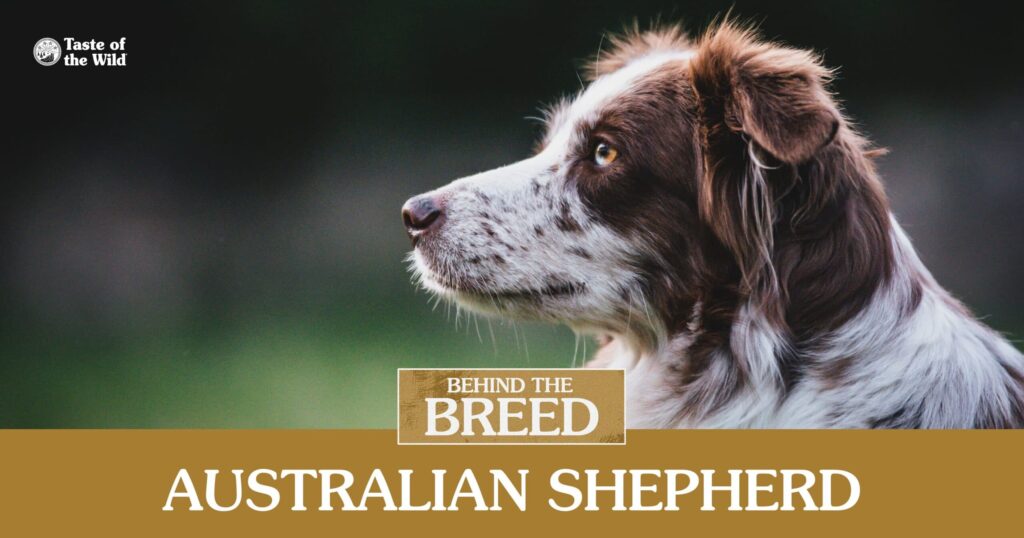
A view from the side of a brown and white Australian shepherd.

Have you ever wondered about the origins of a dog breed? In our “Behind the Breed” series we’ll dive into the history, personality and physical appearance of a particular breed. We’ll also cover some of the FAQs about the breed and maybe some fun facts, too!

History of the Australian Shepherd Breed

First things first: Australian shepherds aren’t really Australian, and it’s unlikely that you’ll find many in Australia, as they are actually a United States breed. The origins of Aussies, as they’re affectionately known, start in the Basque region of Spain. In the 1800s, Basque shepherds took the dogs to pastures in the Australian Outback, where they were crossed with border collies and other dogs, and gained a popular following. As news of these remarkable, energetic herding dogs spread around the world, ranchers, most notably in California, started importing the dogs to work on their ranches, where they perfected today’s standard of the breed. So you could say that Aussies have some serious mileage on them.

Aussies Are Hard Workin’ Tricksters

Beyond their use as working dogs, the breed gained popularity by performing both herding feats and tricks at traveling rodeos. In the 1950s and 1960s, Jay Sisler, a popular rodeo owner and performer, popularized his touring rodeo by promoting it with his trained Aussies. The breed’s instinctive need to have a job quickly made them popular as seeing eye dogs, hearing dogs, search and rescue dogs and even explosive detection dogs. Australian shepherds also excel at trick training, obedience trials, agility and many other dog sports. 

Are Australian Shepherds Smart Like a Border Collie?

Yes, Aussies are very smart. An Australian shepherd puppy is generally easy to train (as are adults). But they are one of the dog breeds who definitely need jobs, as being productive is ingrained into their DNA. If they’re not stimulated, Australian shepherds will act out, which could be bad news for your couch cushions. Frequent exercise is also a requirement for Aussies — meaning this breed is best for active people. But given a good vocation, these dogs can be content family pets. Just keep them busy, or they’ll wear you out!

Australian Shepherd Size and Life Expectancy

Male Aussies weigh up to 65 pounds and can be up to 23 inches at the shoulders, while females are slightly smaller at 55 pounds and up to 21 inches tall. The Australian shepherd’s lifespan is around 12 to 15 years. They are generally healthy dogs, but relatively common breed issues include hip or elbow dysplasia, epilepsy and eye conditions (e.g., progressive retinal atrophy).

Mini Australian shepherds range from 20 to 40 pounds and 13 to 18 inches tall. Mini Aussies didn’t lose their natural herding instincts with the size; they have an affinity for horses that means they can be commonly found at horse shows.

Australian Shepherd Colors and Appearance

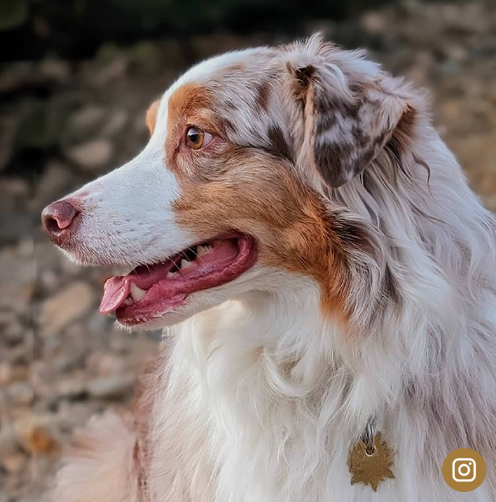
Australian shepherds have four “acceptable” coat colors by AKC standards: black, blue merle, red and red merle. Their coats can also have white markings. The outer coats of Australian shepherds are usually a moderate length and coarse, while the undercoat is soft. They need regular weekly brushing sessions and maybe even more during shedding season, when you might want to use a specialized undercoat rake to help remove that loose fur from their double coat.

Their tails are either naturally bobbed or docked by their owners; and their ears break forward and over, giving them a friendly look. Their eyes can be any color combination, and many Aussies will have two different colored eyes. Blue eyes are common in Australian shepherds that have the merle gene.

Australian Shepherd Temperament

Aussies are an intelligent, medium-sized breed that possess strong herding instincts (hence the name). They are very active dogs that love stimulation and being a part of the daily grind, often enjoying car rides and being with their owners. Their herding dog instincts mean that early socialization of an Australian shepherd puppy is important, so they learn from a young age that other animals and kids don’t need to be herded into a corner of the yard! If you can supply these high-energy dogs with physical exercise and a variety of mental stimulation options, they make great family dogs.

From herding livestock to service dogs to family pets, Australian shepherds seem to be able to master it all. They’re a playful, loyal and energetic breed that thrives on mental stimulation and consistent structure — even as a family pet. If you have an active lifestyle and can provide plenty of mental challenges for your canine companion, an Aussie puppy or dog might be the one for you!
Behind the Breed: Dachshund

Dachshund Quick Facts Infographic

Have you ever wondered where a dog breed originated from? In our “Behind the Breed” series we’ll dive into the history, personality and physical appearance of a particular breed. We’ll also cover some of the FAQs about the breed and maybe some fun facts, too!

Known comically as “wiener” or “sausage dogs,” dachshunds’ low-to-the-ground silhouettes house big and fierce personalities. Much like Chihuahuas, Pomeranians and French bulldogs, many owners will tell you that these lovable dogs don’t know they are short.

History of the Dachshund Breed

Dachshunds originated in Germany where they were bred to chase and flush out badgers and other ground dwellers (dachshund is a German word that literally means “badger dog”). Members of the hound group, the breed can trace its roots back more than 600 years. It was created by German breeders who crossed elements of several German, French and English hounds and terriers to get an effective hunter of badgers and other vermin. Despite their small size, dachshunds are brave and determined, and they’re still considered a multipurpose hunting breed that can do it all — go to the ground, track, flush and retrieve game.

Once Called the Badger Dog by The American Kennel Club (AKC)

Dachshunds were once sarcastically considered the symbol of Germany; many political cartoons depicted the dachshund in propaganda papers during WWI and WWII. During this time the AKC renamed the dachshund “badger dogs,” while many dachshund owners started calling their pets “liberty hounds.” However, those depictions softened during the Munich Summer Olympic Games in 1972, when Germany chose a stuffed toy dachshund named Waldi as its mascot.

Coat Types: Smooth-, Wire- and Long-Haired Dachshunds

Dachshunds have three coat varieties — smooth-haired, wire-haired and long-haired. Smooth-coated dachshunds are believed to be the original coat type, while wire-haired dachshunds were introduced in the late 1800s. The long-haired variety resulted from selective breeding of the smooth coat.

All three coats need slightly different treatments, but all need some form of grooming. The long-haired dachshund’s coat requires more frequent hair brushing than their smooth-haired counterparts. Some pet parents say that long-haired dachshunds have a calmer personality than smooth dachshunds, while wire-haired are more outgoing and have a terrier-like temperament due to infusion of terrier genetics.

The Many Dachshund Colors

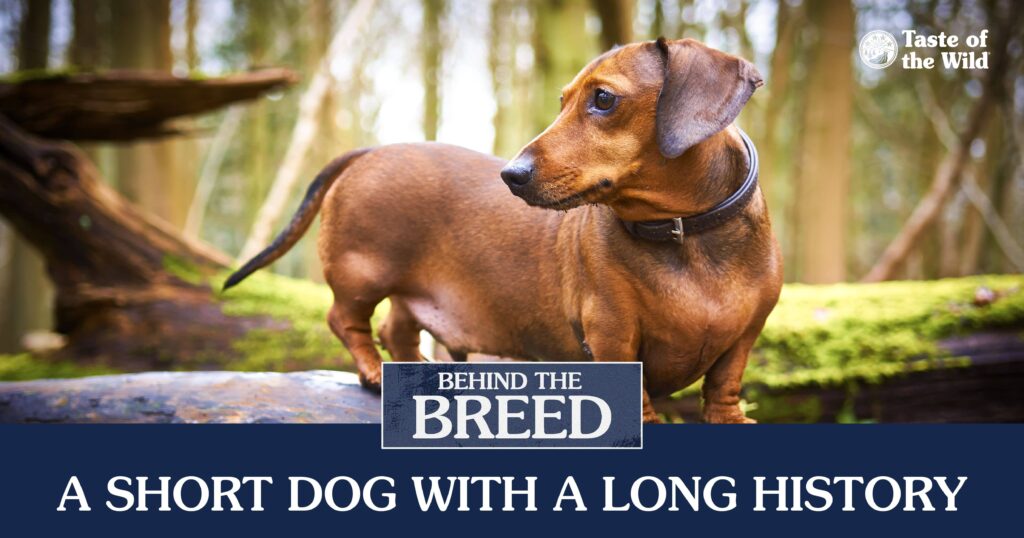
The dachshund coat can be either red, cream, black and tan, black and cream, chocolate and tan, blue and tan or Isabella (fawn) and tan. The coat may also be marked with patterns such as merle, sable, dapple, piebald or brindle. Light-colored dachshunds can have amber or green eyes compared to the more standard brown. When two dapples are bred together, they can produce a double dapple that usually has blue eyes but can have brown eyes as well. But it should be noted that double dapples and piebald are not recognized in the breed standard that describes the ideal dachshund.

Two Sizes: Standard and Mini Dachshund

Dachshunds come in two sizes: standard and miniature, which are defined by their weight. Standards typically weigh from 16 to 32 pounds when fully grown, while mini dachshunds generally weigh from 8 to 11 pounds. Both sizes share the breed’s characteristic long body and short legs, making them unique and adorable companions.

The Dachshund Lifespan Is Long

Like many small dog breeds, the dachshund has a longer life expectancy than bigger dogs, typically between 12 and 16 years. However, in 2021, a dachshund named Funny held the Guinness World Record for “oldest dog living,” reaching the age of 21.

Dachshund Puppies Need Socialization

Like many dogs, as long as dachshund puppies are socialized early, they make good family dogs and are great with children, but it is recommended that you never leave a dachshund puppy unsupervised with children. They typically like being the top dog in multi-pet households.

Dachshunds Are a Fun Breed But Not Without Complications

Dachshunds are playful but can be quite stubborn and are often aggressive to strangers. They were bred to be hunting dogs, and like all hunting dogs, they tend to bark — so be prepared for a lot of noise. But considering their small stature, their bark sounds like it comes from a bigger dog, making them good watchdogs.

Because of their breeding, they are skilled and accomplished diggers and can wreak havoc on gardens and backyards — but given enough regular exercise and playtime, dachshunds can become beloved pets in any household.

Typically dachshunds are a healthy breed, but like all dogs, they can have health problems such as diabetes and dental issues. Their long backs make them prone to spinal problems, often exacerbated by jumping and landing roughly. Senior dachshunds can benefit from ramps and other assistance.

Some dachshund health problems can be avoided with modest exercise — the recommended amount is two walks for a moderate distance each day. Obesity places a greater strain on the spinal region, so keeping them trim and fit and monitoring their food intake is a must to ensure a healthy life. Always consult with your veterinarian about your dachshund’s health.

With their short legs, floppy ears, bold personalities, protective traits and affectionate nature, along with their energy and stubbornness, a dachshund is an endearing dog for many pet parents.

Fun Facts About Dachshunds

  • Famous people who have owned a dachshund include John F. Kennedy, Pablo Picasso, Grover Cleveland, Clark Gable, William Randolph Hearst and Andy Warhol.
  • Dachshunds have gone by many names such as: badger dogs, liberty hounds, doxie and wiener dogs.
  • The Dachshund Club of America was founded in 1895.
  • The original name for the hot dog may have been dachshund sausage.

Behind the Breed: German Shepherd

Fun Facts About German Shepherds List

Have you ever wondered where a dog breed originated from? In our “Behind the Breed” series we’ll dive into the history, personality and physical appearance of a particular breed. We’ll also cover some of the FAQs about the breed and maybe some fun facts, too!

German shepherd dogs have many fans. The breed has consistently been in the top five of the American Kennel Club’s (AKC) annual rankings for the most popular dog breed, and it’s easy to see why. They’re one of the smartest dog breeds, known for their strength and loyalty and they’re very protective of their families.

History of German Shepherds

Just like Rottweilers, German shepherds were originally used as herding dogs in Germany. At the end of the 19th century, a German cavalry officer admired German herding dogs but noted they varied in appearance by region of the country. He made it his mission to create the ideal herding dog. In 1908, three German shepherds were imported to the United States and the German Shepherd Dog Club of America was founded in 1913.

When the United States entered World War I, Germany was considered the enemy, so the AKC renamed the breed “Shepherd Dog,” and the British followed suit, calling the dogs “Alsatian Wolf Dogs.” In 1930, the Shepherd Club of America had a change of heart, inserting the word “German” before “Shepherd” in their name. They are still commonly referred to as Alsatians in the United Kingdom.

Are German Shepherds Smart?

As one of the smartest dog breeds, these multi-talented dogs are eager to work, and they’ve held a wide array of jobs over the decades. Originally bred as herders, their intelligence has also led them to be trained as service dogs, guide dogs and guard dogs, as well as police dogs that apprehend criminals and detect illegal substances. They’ve also joined the military and worked as search-and-rescue dogs. Whew!

When they’re not on the job, German shepherd dogs are known to be outstanding athletes, snagging the blue ribbon in sports such as agility, rally, tracking, obedience and herding.

Are German Shepherds Good with Kids?

German shepherds are loyal and protective dogs that love to work and defend their families. The German shepherd’s temperament is not naturally aggressive, but they do need to be socialized and trained as puppies to ensure they’re well-behaved adults. German shepherds are high-energy dogs that need plenty of physical exercise and mental stimulation, so they are perfect for active families that have the time to give them the attention they need.

German Shepherd Size

German shepherd dogs can vary in size from 50 to 90 pounds and max out at around 26 inches tall. They are considered a medium to large dog that belongs to the herding group. Due to their large size, care should be taken around small children that might get accidentally bumped by their German shepherd friend.

Types Of German Shepherds

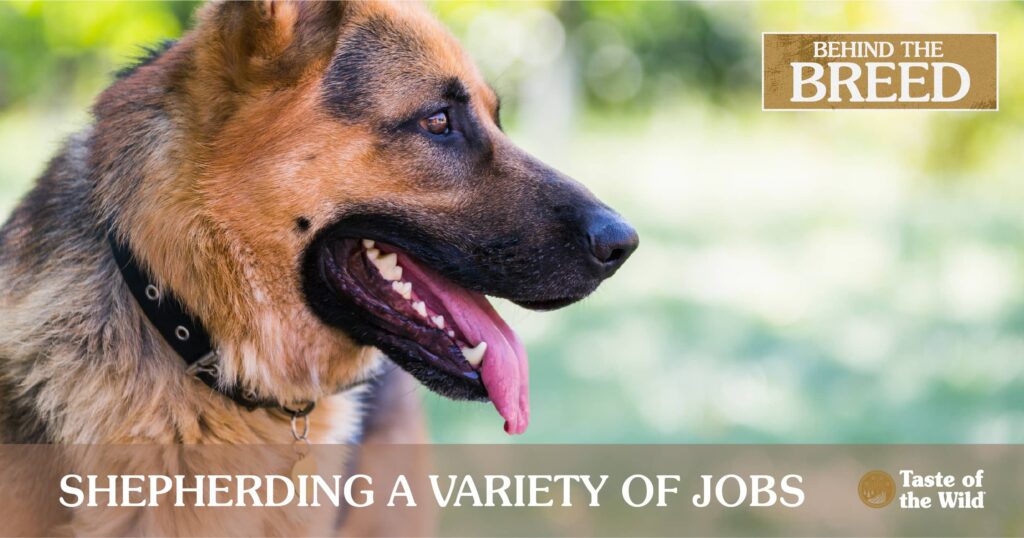
German shepherd dogs come in a variety of colors. The most common colors in the breed standards are black and tan as well as sable. They can also have rarer coat colors, including all black, all white, and Isabella blue (liver-sable). Isabella, black and white German shepherds are produced when the parents pass on two recessive genes for that color.

Do German Shepherds Shed?

German shepherds have a double coat — a soft undercoat and a coarse outercoat. They are considered heavy shedders, so you’ll need to have that comb handy. They tend to shed year round with even heavier seasonal shedding twice a year. Daily grooming will help limit a fuzzy layer of hair all over your couch (and the people in your home).

German Shepherd Lifespan

According to the AKC, the lifespan of German shepherd dogs is between 12 to 14 years. German shepherds are susceptible to a number of health conditions, including elbow and hip dysplasia, degenerative myelopathy (causes paralysis of the back legs) and eye and ear problems. A reputable breeder will screen for these conditions. Just like Saint Bernards, German shepherd dogs are susceptible to gastric dilatation-volvulus (GDV) — a life-threatening condition that occurs when the stomach becomes gas-filled, distended and twisted on itself, resulting in an obstruction.

An intelligent dog that is loyal and protective of their family is what you’ll get with a German shepherd. They’re an athletic breed that excel as working dogs. Just make sure you’re prepared for their high energy and grooming needs.